The Best Marine GPS Fish Finders
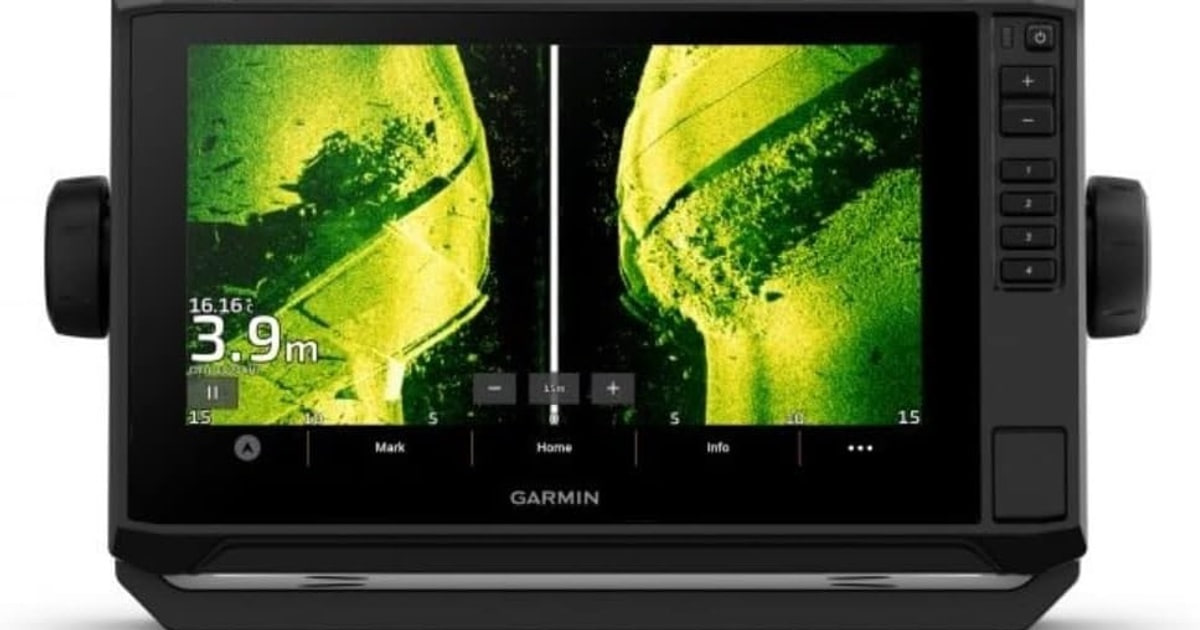
A fish finder earns its keep on the slow days. When nothing's biting, the screen tells you whether you're sitting over flat mud or a submerged brush pile with bait stacked above it. Modern units bundle three things: sonar that draws the bottom, imaging that shows structure off to the sides, and GPS that lets you drop a waypoint and come back to the same rock next season. The good ones make all of that readable at a glance, in sunlight, at speed.
Here's the part nobody advertises. No fish finder finds fish for you. It shows returns, you learn to read them, and that takes a while. Screens still wash out in low sun. Touchscreens get fussy with wet hands, something Outdoor Life's editors flag for offshore and cold-weather anglers. And several of the best displays ship without a transducer, so the box you order isn't a complete system. Plan on the transducer, the mount, and probably a chart upgrade too.
So we focused on units that are easy to read, easy to run, and easy to grow into. That means a screen you can see in midday glare, charts already loaded so you're not hunting for a map card, and a sonar setup that still makes sense two boats from now. We weighed manufacturer spec sheets, published reviews, and recurring themes in owner feedback. We think that the Garmin ECHOMAP UHD2 73sv is the best marine GPS fish finder for most people, and that the Lowrance Elite FS 9 is the one to buy if you plan to add live, forward-facing sonar.
Everything we recommend

The most complete package here, if 7 inches is enough screen
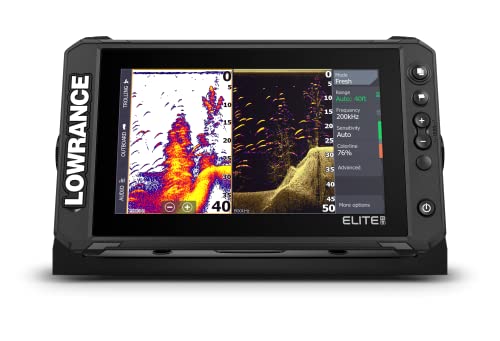
A bigger screen and a clear path to live sonar, minus a transducer

A big, bright screen and CHIRP sonar, without the chartplotter

The one to buy if the boat is getting more electronics
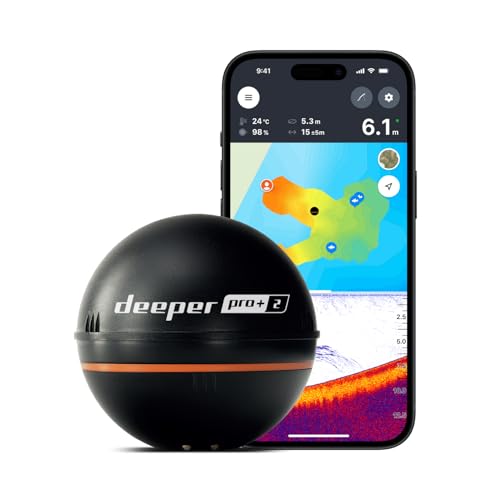
Sonar and mapping without a boat, a transom, or a single wire
Prices as of Oct 25, 6:48 AM PT · Details
At a glance
| Product | Screen size | Charts included | Price | |
|---|---|---|---|---|
| Deeper PRO+ 2 Sonar Fish Finder -Also great | — | — | $159.99 |
| Garmin Striker Vivid 7cvBudget pick | 7 in | Quickdraw Contours | $419.99 |
| Garmin ECHOMAP UHD2 73sv with GT54 TransducerTop pick | 7 in | Navionics+ U.S. Inland | $999.99 |
 | Humminbird 411450-1CHO Helix 12 Chirp MEGA SI+Also consider | 12.1 in | Humminbird Basemap | Check price |
| Lowrance Elite FS 9 Fish FinderRunner-up | 9 in | C-MAP Contour+ | $949 |
 | Raymarine 7063700NAG - Axiom+ 9 RV 9"Also in lineup | 9 in | — | Check price |
| Garmin 010-02366-61 GPSMAP 943xsv SideVüUpgrade pick | 9 in | Pre-loaded mapping | $1,599.99 |
Prices as of Oct 25, 6:48 AM PT · Details
How we picked
Screen and readability. We leaned toward 7 inches and up, since Field & Stream's testers found bigger displays make side-scan imagery far easier to read in direct sun. Below 5 inches, split screens stop being useful.
Sonar coverage. We wanted CHIRP for target separation, and down and side imaging on anything meant for structure fishing. Spec sheets had to state the frequencies, not just the marketing name.
Built-in charting. Preloaded contours counted heavily, because Boating Magazine notes built-in charting spares you a mapping card for every region. Units with no charts had to make up for it elsewhere.
Wet-hands controls. Outdoor Life's editors flag touchscreen-only units as harder to run with wet or gloved hands. We noted which displays are touch-only so you can weigh that against how and where you fish.
Room to grow. We checked each spec sheet for NMEA 2000, Ethernet, and live-sonar compatibility. Those decide whether a display serves one boat or follows you to the next three.
Top pick
The most complete package here, if 7 inches is enough screen
Garmin ECHOMAP UHD2 73sv with GT54 Transducer
This is the rare unit that shows up ready to fish: a bright 7-inch touchscreen, a GT54 transducer in the box, and Garmin Navionics+ inland maps already loaded. You get traditional CHIRP, ClearVü down imaging, and SideVü side imaging without buying anything else.
$999.99fromAmazonPrices as of Oct 25, 6:48 AM PT · Details
It's the only unit here that arrives as a complete system. The GT54-TM transducer comes in the box, and the charts are already on it. Garmin says the mapping covers more than 18,000 lakes with contours down to a foot. So you unbox it, mount the transducer, run the cable, and go fishing. Nothing else in this lineup makes that first weekend so painless.
Seven inches sounds modest until you split the screen. Field & Stream's testers found that 7-inch and larger displays make side-scan imagery meaningfully easier to read in direct sun than 4- and 5-inch screens. That matters here, because SideVü is where you'll spend your time. On a small lake you can run the bank, watch both sides, and mark every laydown you want to come back to.
The three sonar views work together instead of competing. Traditional CHIRP tells you depth and where fish sit in the water column. ClearVü draws what's directly under the boat with photo-like clarity. SideVü sweeps out to the edges. Salt Water Sportsman notes that dual-channel CHIRP lets a unit run traditional sonar and imaging at once without the two signals stepping on each other.
The wireless side is more useful than it sounds. Built-in Wi-Fi shares sonar, waypoints, and routes with a second ECHOMAP UHD2, so a console screen and a bow screen stay in sync. It also talks to a Garmin Force trolling motor, which means you can steer to a waypoint from the display. If you're already in the Garmin world, that saves real fiddling.
Flaws but not dealbreakers
Seven inches is the ceiling, and it's a real one. Split the screen three ways and each pane gets small. If you fish big water and want charts and side imaging up at the same time, a 9-inch display earns its dash space.
The other limit is networking. This is a Wi-Fi-and-trolling-motor unit, not a full NMEA 2000 hub. If you want a display feeding radar, autopilot, and engine data around a bigger boat, look at the GPSMAP instead. The charts are inland, too, so coastal anglers will need a different set.
Runner-up
A bigger screen and a clear path to live sonar, minus a transducer
Lowrance Elite FS 9 Fish Finder
The Elite FS 9 gives you two more inches of touchscreen, preloaded C-MAP Contour+ charts, and an obvious upgrade path: it's ready for Active Imaging and ActiveTarget 2 whenever you are. You'll need to buy a transducer, which is annoying, but it lets you match one to your hull and your water.
$949fromAmazonPrices as of Oct 25, 6:48 AM PT · Details
Nine inches changes how you use a screen. You can run a chart page and a side-scan page next to each other and still read both while the boat's moving. On a console mount, that's the difference between glancing down and squinting. Lowrance sizes this one for the console or the bow, and the multi-touch panel pinches and swipes the way your phone does.
This is the pick if forward-facing sonar is in your future. The Elite FS platform supports ActiveTarget 2 and ActiveTarget 2 XL, so you can add live sonar later without replacing the display. Bassmaster reports that Elite Series pros lean on forward-facing systems to track individual bass in real time rather than reading a scrolling history. That's the direction serious bass fishing has gone, and this unit is already pointed that way.
The preloaded C-MAP Contour+ charts do the work a separate map card would. Ledges, drop-offs, and ditches show up as contour lines before you ever wet a line. Boating Magazine points out that built-in charting spares you from buying a mapping card for every region you fish. On strange water, that's the difference between prospecting blind and showing up with a plan.
It networks properly, too. Wireless, NMEA 2000, and Ethernet are all built in, so this display can share sonar, charts, and waypoints with a second screen. If you're building a boat with a bow unit and a console unit, that's the backbone. Not every display in this class gives you Ethernet, and you'll miss it the day you add the second screen.
Flaws but not dealbreakers
No transducer in the box. That's the headline drawback, and it means your first order isn't your last. It's also the reason the platform stays flexible, since you get to pick the transducer that suits your hull. First-time buyers should just know what they're walking into.
The C-MAP Contour+ coverage leans toward lakes, so saltwater anglers should check their home water before committing. And while the touchscreen is good, it's still a touchscreen. Outdoor Life's editors note these get harder to run with wet or gloved hands, which is worth a thought if you fish cold mornings.
Budget pick
A big, bright screen and CHIRP sonar, without the chartplotter
Garmin Striker Vivid 7cv
The Striker Vivid 7cv keeps the 7-inch screen and includes the GT20 transducer, but it drops the preloaded charts. You still get CHIRP traditional sonar, ClearVü down imaging, GPS waypoints, and Quickdraw Contours mapping that builds your own depth maps as you idle around.
$419.99fromAmazonPrices as of Oct 25, 6:48 AM PT · Details
You keep the thing that matters most on a small boat: screen size. Seven inches of color, with Garmin's Vivid palettes that pull fish arches and structure apart visually. On a jon boat or a 16-foot aluminum, that's plenty of display. The tilt-and-swivel bailmount lets you angle it out of the sun and pop it off at the ramp.
Quickdraw Contours is the sleeper feature. As you idle, the unit records depth and draws its own contour map of the water under you. Do that for a few trips on your home lake and you've built charting no card sells, because nobody ever surveyed that pond. Wired has written about how crowd-sourced contour tools now fill in water that official charts skip entirely.
What you give up is side imaging. The GT20 transducer runs traditional CHIRP and ClearVü only, so you see below the boat, not beside it. For dock shooting, brush piles, and vertical jigging, that's honestly fine. For sweeping a long flat to find one isolated stump, you'll wish you had SideVü.
The Wi-Fi link to Garmin's ActiveCaptain app is more than a spec line. You can push waypoints to your phone, pull down software updates, and grab community-built Quickdraw maps for lakes other anglers have already run. It's a cheap way to show up on new water with something to go on, and it costs you nothing extra.
Flaws but not dealbreakers
There's no preloaded charting, so out of the box you're navigating with waypoints and whatever you draw yourself. That's fine on a lake you know cold. It's less fine on a big reservoir with real navigation hazards.
It's also not a networking unit. No NMEA 2000, no Ethernet, no second display, no trolling motor control. Think of it as a self-contained fish finder for one boat, one screen, one angler.
Upgrade pick
The one to buy if the boat is getting more electronics
Garmin 010-02366-61 GPSMAP 943xsv SideVü
The GPSMAP 943xsv is a proper multifunction display: 9 inches, ultra high-definition scanning sonar, preloaded mapping, and Panoptix live-sonar support. It's built to sit on an NMEA 2000 network alongside radar, autopilot, and engine data rather than work by itself.
$1,599.99fromAmazonPrices as of Oct 25, 6:48 AM PT · Details
Buy this when the fish finder is only part of the plan. Owners describe wiring it into an existing NMEA 2000 network, sharing a transducer with another Garmin unit, and dropping it into the dash cutout their old plotter left behind. That's the job it's built for. The National Marine Electronics Association describes NMEA 2000 as the standard that lets one display pass GPS, sonar, and engine data to every other screen aboard.
Panoptix support is the other reason to stretch. Garmin's LiveScope Plus draws sonar returns as they happen, so you watch a fish swim toward your lure instead of reading where it was three seconds ago. Bassmaster reports that tournament anglers now lean on that view heavily. The 943xsv is ready for it, and you add the live transducer when you're ready.
Nine inches of improved display optics matters offshore, where you're reading a chart at speed with salt on the glass. It's also enough room to keep a chart page, a CHIRP page, and SideVü up at once without any of them turning useless. Owner feedback on this unit comes back to the graphics quality again and again, and to the sense that they won't outgrow it.
Sport Fishing Magazine explains why frequency choice matters out there: 800 kHz to 1.2 MHz gives you fine detail in the shallows, while 50 to 200 kHz pushes down for deep bottom. A chartplotter-grade unit like this one lets you work both ends. That's what you want if you're on a shallow flat one morning and a deep offshore ledge the next.
Flaws but not dealbreakers
No transducer is included, and it catches people out. Owners regularly mention learning that only after the box arrived. If you already run Garmin, you may be able to share a transducer you own. Otherwise, plan for one up front.
It's also more unit than most freshwater anglers need. Fish one lake from one boat with no plans for radar or autopilot, and all that networking just sits there unused. It's physically large, too, so measure the dash before you order.
Also great
Sonar and mapping without a boat, a transom, or a single wire
Deeper PRO+ 2 Sonar Fish Finder -
The PRO+ 2 is a castable sonar ball about the size of a tennis ball: tie it to your line, cast it out, and it beams readings to your phone over its own Wi-Fi. Built-in GPS means you can map depth contours from shore, a dock, or a kayak.
$159.99fromAmazonPrices as of Oct 25, 6:48 AM PT · Details
Picture a bank angler working an unfamiliar pond. Cast the Deeper past the drop, reel it back slowly, and watch the bottom take shape on your phone. Deeper says it reads accurately down to 330 feet and casts up to 260 feet out. For shore fishing, kayaks, and ice holes, that's the whole game, and you never touch a transom.
Three beam widths are what separate it from cheap castable sonar. The wide beam covers ground while you're searching. The narrow beam tightens up for detail, with target separation Deeper puts at 0.4 inches, fine enough to watch your own jig. Switching between them is how you go from scanning a whole bay to picking apart one brush pile.
The GPS is the real surprise. Most portable sonars just flash a depth number at you. This one logs position, so a few passes from a kayak build a bathymetric map you keep in the app. Wired has covered how crowd-sourced contour mapping fills in water that official charts ignore, and small ponds are exactly that kind of water.
Flaws but not dealbreakers
It's a phone-dependent system, which means a phone in the rain, a phone in the cold, and a battery you're suddenly watching. The nine-hour runtime on the sonar itself is generous. Your phone's probably isn't.
Range and integration are the hard limits. You fish where you can cast, not where you can drive. There's no NMEA 2000, no chartplotter, no second screen, and nothing here talks to a trolling motor. As the only fish finder on a boat, it isn't enough.
Who this is for
This guide is for anglers buying a fish finder they'll actually mount and use, on a bass boat, a center console, a skiff, or a kayak. If you fish a handful of lakes from a small boat and want charts, imaging, and GPS on one screen, the top pick covers you. If you fish from the bank or drill holes through ice, skip the mounted units entirely and start with the castable one. And if you're building out a helm, the upgrade pick is the only one here designed to run a network.
It's less useful if you already have a networked helm and just need one more matching screen. We also drew some lines on purpose. This guide doesn't cover standalone ice-fishing flashers, radar, handheld chartplotters, or transducers and mounts sold on their own. Live, forward-facing sonar systems like LiveScope, MEGA Live, and ActiveTarget are treated as upgrades to a compatible display, not as products you buy first.
How we picked
Screen: we favored 7 inches and up, because Field & Stream's testers found bigger displays make side-scan imagery far easier to read in direct sun. Sonar: CHIRP was the baseline for target separation, with down and side imaging expected on anything sold for structure fishing. Charts: preloaded contours counted, since Boating Magazine notes built-in charting saves buying a map card per region. Controls: touchscreens are lovely until your hands are wet, so we noted which units are touch-only. Growth: NMEA 2000, Ethernet, and live-sonar compatibility decide whether a display lasts one boat or three.
Other marine gps fish finders worth considering
If you want the biggest screen and the longest side-imaging reach: The Humminbird 411450-1CHO Helix 12 Chirp MEGA SI+ — The Humminbird Helix 12 CHIRP MEGA SI+ GPS G4N puts a 12.1-inch display in front of you, running MEGA Side Imaging+, which Humminbird says scans up to 240 feet to each side. That's a 480-foot swath in a single pass, and it's why structure and bass anglers keep coming back to Helix units. You also get MEGA Down Imaging+, Dual Spectrum CHIRP, internal GPS with Humminbird Basemap, AutoChart Live, NMEA 2000, Ethernet, Bluetooth, and One-Boat Network integration with Minn Kota and Cannon gear. The catch is which version this is. It's the control-head-only model, so there's no transducer in the box at all. Humminbird aims it at anglers pairing it with MEGA Imaging built into a Minn Kota trolling motor, adding MEGA 360, or sharing sonar from a display they already own. If none of that describes you, you're buying a screen and then buying a whole sonar setup after it.
The competition
This is what our research turned up in this category, not a census of everything for sale. Fish finder lineups turn over constantly, and manufacturers sell the same display in half a dozen transducer bundles. The unit below is worth knowing about even though it didn't make the picks.
The Raymarine 7063700NAG - Axiom+ 9 RV 9" — The Raymarine Axiom+ 9 RV pairs a 9-inch chartplotter display with Navionics+ North America charts. Raymarine's RealVision 3D merges CHIRP DownVision and SideVision into a single rotatable 3D view of the water instead of two flat images, and that's a genuinely different way to look at a ledge or a wreck. Some anglers love it. Two things kept it out of the picks. It ships without a transducer, and the 3D view needs a specific one, so the real cost of entry is higher than the display alone suggests. Raymarine also has a smaller footprint in freshwater than Garmin, Lowrance, or Humminbird, which means fewer anglers nearby running the same gear when you have a question. If your helm is already Raymarine, though, this is the natural match.
Installation notes
Where you put the transducer decides how good your sonar looks. Game & Fish's testing found transom mounts pick up more interference from prop wash at speed than thru-hull mounts do, so if your screen turns to static above idle, the mount is usually the culprit. Set the face of the transducer level with or just below the hull bottom, on the side where the prop pushes water down, and route the cable well away from the engine harness. Rinse everything with fresh water after saltwater trips, including the display bezel. Check the mounting screws now and then, because vibration works them loose, and a transducer that's kicked back an inch reads like a broken unit.
Questions we get
What's the best fish finder for a kayak?
For a kayak with room to mount a screen and a battery, the Garmin Striker Vivid 7cv is the easy answer, since the transducer is included and the bailmount comes off in seconds. If you'd rather not wire anything at all, the Deeper PRO+ 2 casts from the kayak and sends everything to your phone. Kayak anglers who plan to add live sonar later should look at the Elite FS 9 instead.
Is CHIRP sonar worth paying extra for?
Yes, and at this point it's hard to avoid. Lowrance explains that CHIRP sweeps a continuous range of frequencies rather than pinging one, which gives sharper target separation than older single-frequency sonar. In practice that means two fish holding close together show as two marks instead of one blob. Every mounted unit in this guide runs some form of it.
What's the difference between side imaging and down imaging?
Down imaging looks straight beneath the hull and draws a detailed picture of what you just passed over. Side imaging fans out to the left and right, so you can cover a wide band of bottom in one pass. Humminbird says its MEGA Side Imaging+ reaches up to 240 feet per side, a 480-foot swath. Use side imaging to find structure, then down imaging or traditional CHIRP to work it.
Can I use a fish finder without owning a boat?
Yes. The Deeper PRO+ 2 is built exactly for that, and Deeper says it casts up to 260 feet from shore, a dock, or an ice hole. It carries its own GPS, so you can build depth maps of the bank you fish most. You give up the range and the networking of a mounted system, but you keep the part that finds fish.
Do I need to buy separate maps or charts?
It depends on the unit. Boating Magazine notes that preloaded systems like Garmin Navionics+, Lowrance C-MAP, and Humminbird LakeMaster save you from buying a mapping card for each region. The ECHOMAP UHD2 73sv, Elite FS 9, and Axiom+ 9 RV all come with charts loaded. The Striker Vivid 7cv doesn't, though its Quickdraw Contours feature lets you draw your own as you idle.
What screen size do I need for my boat?
On a small boat, 7 inches is a sensible floor and usually plenty. Field & Stream's testers found 7-inch and larger displays make side-scan imagery noticeably easier to read in direct sunlight than 4- and 5-inch screens. Move up to 9 inches if you want charts and imaging side by side without either going squinty. Twelve inches makes sense on a big console, or if you're running one screen instead of two.
Why you should trust us
For this guide:
- We read manufacturer spec sheets and listing details from Garmin, Lowrance, Humminbird, Raymarine, and Deeper, and compared how each one describes its sonar, charting, and networking.
- We drew on published reporting from Field & Stream, Outdoor Life, Bassmaster, Boating Magazine, Sport Fishing Magazine, Salt Water Sportsman, Game & Fish, and Wired for how these systems behave on the water.
- We looked at recurring themes in owner feedback, especially confusion about which displays ship without a transducer and how touchscreens hold up with wet hands.
- We read owner reviews on every listing, weighted toward the critical ones, because that is where the recurring failures show up.
- We have a systematic way of automatically fetching the latest prices, so the numbers on this page stay current.
- This is a research-focused guide, so the team may not own every product listed — though we often do own the top winners, which gives us extra context for the recommendations.
- We don't accept free products, and the retailer commission never changes which product we recommend.
Sources
Best Fish Finders and GPS Combos — Field & Stream, Field & Stream
Best Fish Finders, Tested by Our Editors — Outdoor Life, Outdoor Life
How CHIRP Sonar Works and Why It Matters — Lowrance, Lowrance
Garmin LiveScope Live Scanning Sonar Overview, Garmin
MEGA Side Imaging+ and MEGA Live Sonar — Humminbird, Humminbird
RealVision 3D Sonar — Raymarine, Raymarine
Best Marine Electronics and Fish Finders — Boating Magazine, Boating Magazine
Best Fish Finder GPS Combos for Every Budget — Salt Water Sportsman, Salt Water Sportsman
How Forward-Facing Sonar Is Changing Bass Fishing — Bassmaster, Bassmaster
Fish Finder Buying Guide: Frequency, Cone Angle, and Transducers — Sport Fishing Magazine, Sport Fishing Magazine
NMEA 2000 Standard Overview — National Marine Electronics Association, National Marine Electronics Association
Deeper PRO+ 2 Castable Sonar Specifications, Deeper
Amazon product listings and owner reviews for all 7 products
Manufacturer specification pages for each product
Some passages in this guide may be paraphrased with AI help.
Product prices and availability are accurate as of the date/time indicated and are subject to change. Any price and availability information displayed on Amazon.com at the time of purchase will apply to the purchase of this product.
More like this.
Continue exploring electronics reviews and recommendations.

The Best Portable Kayak Fish Finders
A fish finder changes how you fish from a kayak. You stop guessing at depth and start reading the bottom - the drop-off, the weed edge, the brush pile…

The Best Marine Binoculars
On a boat, binoculars aren't a luxury item. They're how you read a channel marker before you're on top of it, how you tell a crab pot buoy from a…

The Best Metal Detectors for Finding Gold
Gold hides in ground that fights you. The dirt in most active goldfields is loaded with iron, and that iron talks back to a detector all day long - …

The Best Stud Finders and Wall Scanners
Hanging anything heavy starts with the same question: where's the wood? Drywall on its own won't hold a TV mount, a floating shelf, or a loaded bookcase.…

The Best Hiking GPS Devices
A hiking GPS earns its place in your pack on the days your phone can't help. Cold drains a phone battery fast. Rain turns a touchscreen into a smudge. And…

The Best GPS Trackers for Vehicles
A GPS tracker earns its keep on ordinary days, not dramatic ones. You want to know your kid got to practice. You want to see whether the work van sat idle…