The Best Ring Lights for Content Creators
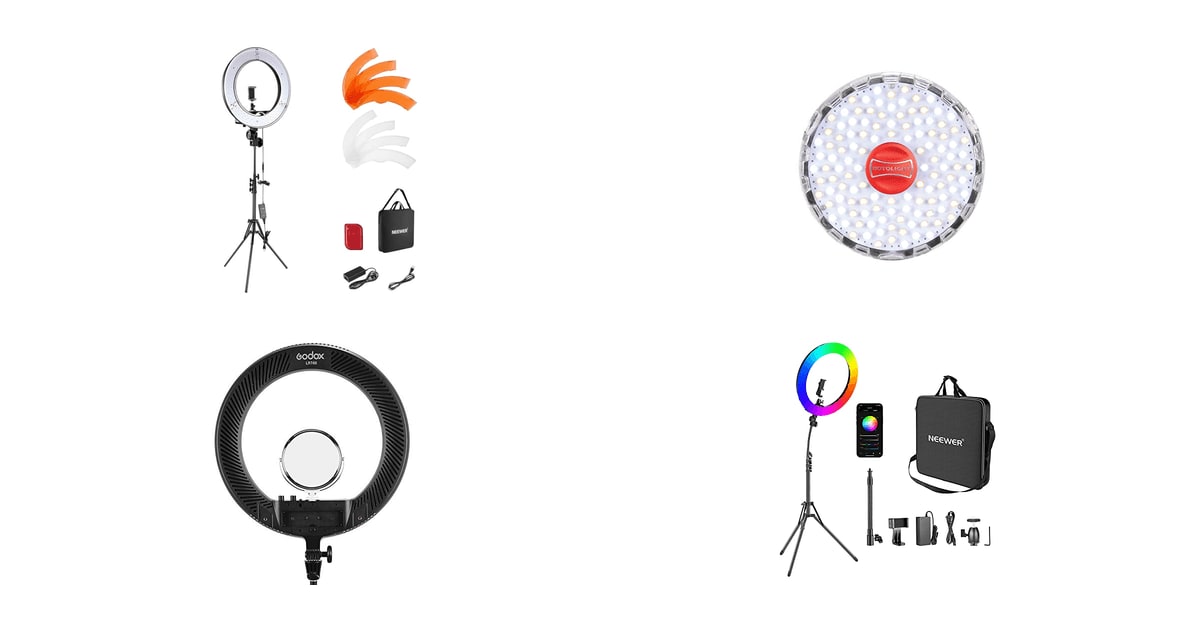
A ring light does one job: it puts even light straight onto your face so your camera isn't guessing. That matters most in the rooms creators actually work in — a spare bedroom, a desk under a yellow ceiling fixture, a kitchen table before the sun's up. Get it right and your skin looks like your skin, your eyes pick up a round catchlight, and the shadow under your chin disappears. Get it wrong and you look green, blown out, or lit from below like a campfire ghost story.
No ring light is a complete lighting setup, though. The light is flat by design, so it smooths out texture and can leave a face looking a little featureless — great for makeup demos, less great when you want depth and mood. If you wear glasses, you'll see a ring in your lenses at some angles, and you'll spend a minute tilting the light to hide it. Big 18-inch models eat desk space and tie you to an outlet. Cheap ones can strobe on camera.
Most of that is manageable once you know it's coming. What you're really buying is a diameter, a color temperature range, and a stand that reaches your eye level. Everything else — remotes, filters, phone clamps — is convenience, and it's nice when it's in the box. We think that the Neewer 18-inch Ring Light Kit is the best ring light for most people, and that the Rotolight NEO is the one to buy if your work depends on true-to-life skin tone.
Everything we recommend

Plenty of light and a full kit, if you have the desk space

Enough light for calls and close-up work, with no floor stand

Broadcast-grade color in a light that fits on a camera
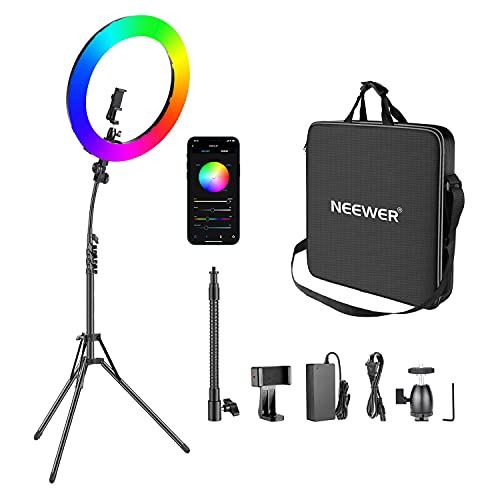
Color effects and precise white balance, in one 18-inch light
At a glance
| Product | Diameter | Color Temp | Price | |
|---|---|---|---|---|
| NEEWER Ring Light 18inch Kit: 55W 5600KTop pick | 18-Inch | 5600K | $96.04On sale |
| Rotolight NEO On-Camera LED LightUpgrade pick | — | — | $299.90 |
 | Godox LR160 LED Ring Light- BlackAlso consider | — | 3300K-8000K | $199 |
| Neewer 18-inch RGB Ring Light with APPAlso great | 18-Inch | 3200K-5600K | $98.99 |
| UBeesize 12’’ Ring Light with Overhead PhoneBudget pick | 12-Inch | — | $38.75 |
How we picked
Size and catchlight. Diameter drives how big the ring in your eyes looks, and B&H treats that catchlight as the visual cue audiences read as professional. We favored 12 inches and up, with 18 inches as the sweet spot for face-and-shoulders coverage.
Color accuracy. We leaned on published measurements and manufacturer CRI and TLCI ratings, treating 90 as the floor for believable skin tone and 95-plus as the professional tier. Digital Camera World's lab data shows most inexpensive lights sit below that floor.
Temperature control. Spec sheets told us which lights move between roughly 3200K and 5600K. TechRadar's point is that precise bi-color control matters more than peak brightness in rooms mixing daylight and lamps, and we weighted it that way.
Stand and mounting. We compared stated stand heights, clamps, phone holders, and ball heads, since a light you can't raise to eye level is the wrong light no matter how bright it gets.
Flicker and slow motion. Published lab reviews from RTINGS.com flag PWM flicker in cheaper LEDs, which appears as strobing at 120fps and above. We noted where that limits a light to normal-speed footage.
Top pickOn sale
Plenty of light and a full kit, if you have the desk space
NEEWER Ring Light 18inch Kit: 55W 5600K
The RL-18 is an 18-inch daylight ring light that ships with a 61-inch stand, a phone holder, a camera ball head, filters, and a bag. It's the size most creators land on eventually, and there's nothing else you need to buy before you start filming.
$96.04fromAmazonList priceEighteen inches is the size most creators should buy. Diameter sets how big the catchlight in your eyes looks, and B&H points out that audiences read a bigger, rounder catchlight as a signal of a more polished production. It also wraps enough light around your face and shoulders that you're not pinned to one spot. Smaller rings work, but you'll sit closer, and you'll notice every time you lean back.
The bundled parts are the reason this one's easy to recommend. You get a 61-inch aluminum stand, a cold-shoe ball head for a camera, a phone holder, a soft tube so you can angle the ring where you want it, white and orange filters, and a carrying bag. That stand height matters more than you'd guess — you need the ring at eye level whether you film sitting or standing.
The output is honest daylight. At 55W and 5600K, it lands in the 5500K–6000K window TechRadar and most tutorial shooters recommend, which is close to midday sun. Dimming runs the full range from 0 to 100 percent, so you can pull it down for a dark room instead of nuking your face. In a room with a window, you'll still have enough punch to matter.
Heat is the quiet win here. The 240 surface-mount LEDs run cool enough that you can film a long tutorial without the light turning into a space heater, and Neewer says there's no UV or infrared output. If you do lash, tattoo, or makeup work with a client sitting under the light for an hour, that's the difference between a comfortable session and a miserable one.
Flaws but not dealbreakers
It's daylight only. There's no bi-color dial, so when you're mixing in warm lamp light, you're stuck clipping the orange filter on and giving up some brightness. That's fine in a room you control and irritating in a living room at night.
It's also big, and it's tied to a wall outlet. An 18-inch ring on a 61-inch stand takes real floor space, and it has to come down every time you want the room back. One packing quirk trips people up: the stand ships in its own box at the bottom of the carton, and owners regularly assume it's missing before they dig for it.
Budget pick
Enough light for calls and close-up work, with no floor stand
UBeesize 12’’ Ring Light with Overhead Phone
This 12-inch ring clamps to a desk on a bendable metal arm, with an overhead mount that swings the light and your phone above your work surface. Three color settings and ten brightness levels cover video calls, straight-to-camera clips, and top-down demos.
$38.75fromAmazonThis one clamps to your desk, and that's the whole idea. There are no tripod legs to trip over and no stand to break down, so it works in a bedroom corner or a shared apartment where a floor stand just isn't happening. The gooseneck arm bends where you point it, so hitting eye level stays easy even when your chair height changes.
The overhead mount is the part people underuse. The arm swings the light and your phone directly above the desk, which is exactly the setup for craft demos, unboxings, recipe shots, and anything where the camera looks straight down. A floor-stand ring light can't do that without buying extra hardware, and this one comes ready for it.
Controls stay simple: three color temperatures — crisp white, daylight, and warm — plus ten brightness steps. That's enough to match a room without wading through a menu. A 360-degree quarter-inch ball head sits on top, so a webcam, a compact camera, a GoPro, or a small mic can ride up there instead of your phone.
For meetings, this is honestly all most people need. If your ceiling fixture is putting bags under your eyes on every call, a 12-inch ring at eye level fixes that in about a minute. YouTube's creator guidance points to a light at eye level directly in front of you as the reliable way to kill under-chin shadow, and that's precisely what this does.
Flaws but not dealbreakers
Twelve inches is a real step down from eighteen. The catchlight is smaller, the falloff is quicker, and you'll want to sit closer — around three feet rather than four — to get flattering coverage across your whole face.
Inexpensive LEDs also cut corners you won't see until you film. Published lab measurements put most budget ring lights around TLCI 80 to 88, under the 90-plus threshold reviewers treat as the floor for accurate skin tone, and RTINGS.com flags PWM flicker in this tier that shows up as strobing at 120fps and above. For a call or a straight-to-camera clip, none of that matters. Check your desk edge too — the clamp needs something solid to grab.
UBeesize covers it with a one-year warranty.
Upgrade pick
Broadcast-grade color in a light that fits on a camera
Rotolight NEO On-Camera LED Light
The NEO is a small round on-camera LED with color accuracy that beats everything else here. Independent measurements published by Videomaker put it at TLCI 97 and CRI 96, which is the tier broadcast crews work in and well above what most ring lights manage.
$299.90fromAmazonThe NEO's appeal comes down to two numbers. Those Videomaker measurements are among the highest recorded for a light of this shape, and here's what that buys you in practice: reds stay red, a foundation shade looks like the shade in the pan, and you don't lose an evening in the color panel rescuing skin that went sallow on camera.
It goes where a floor stand can't. The NEO mounts to a camera's shoe on a 360-degree swivel, runs from the included AC adapter or a D-Tap cable off a V-mount battery, and it's light enough that you forget it's in the bag. That's the setup for interviews on location, run-and-gun vlogging, and anything you shoot away from a desk.
You also get a four-pack of filters, which is more useful than it sounds. Correcting toward tungsten or cutting the output with diffusion is how you match a room's existing lamps instead of fighting them. Mixed-light rooms are where most footage falls apart, and having the right gel on hand beats fixing it later.
This is the light to buy when the work is paid. Makeup artists, product shooters, and anyone handing footage to a client feel the gap between broadcast-tier color and merely acceptable color, and they feel it on every job. If you're filming hobby videos for friends, you probably won't, and that's a fine reason to spend less.
Flaws but not dealbreakers
The NEO is small, and that shows up in the shot. The ring in your subject's eyes is barely there next to what an 18-inch fixture leaves, and you have to sit close to get useful output on a face. Think of it as one piece of a setup rather than the whole thing.
It's also the most expensive light here, and it arrives bare — no stand, no phone clamp, no bag. Plan on buying a way to mount it, and know that a D-Tap battery is another purchase if you want to run it away from an outlet.
Rotolight covers the NEO with a limited one-year warranty.
Also great
Color effects and precise white balance, in one 18-inch light
Neewer 18-inch RGB Ring Light with APP
This 18-inch fixture runs as a normal bi-color key from 3200K to 5600K, then switches to full RGB when you want a colored wash on the wall behind you. Neewer rates it at CRI 97-plus, and you control it from a phone app or the LCD on the back.
$98.99fromAmazonThis is the same 18-inch footprint as our top pick with two things added: color and control. The 288 LEDs split into white, warm, and RGB banks, so the light does normal key-light duty most of the time and turns into a color source when your shot needs one. For a lot of streamers, that's two fixtures collapsed into one.
For a streaming setup, that second job saves you money and a stand. Turn the ring toward the wall behind you, pick a hue, and your background stops looking like a rental you moved into last week. Nine scene effects handle the usual pulses and flickers, which earn their keep on a gaming channel and gather dust on a tutorial channel.
Bi-color control is the real upgrade. Rooms that mix window light with a lamp are where footage goes wrong, and TechRadar's take is that precise temperature control beats raw brightness in exactly that situation. Dialing toward 3200K to match a warm lamp — instead of clipping on a filter and hoping — keeps your skin tone consistent from shot to shot.
The kit is complete, which matters when you're setting up a corner of a room from scratch. You get the aluminum stand adjustable from about 19 inches to 59 inches, a phone holder, a mini ball head, a soft tube, a shutter remote, a power adapter, and a bag. The LCD shows brightness, temperature, hue, and saturation at a glance.
Flaws but not dealbreakers
RGB modes run dimmer than white light — that's just how these fixtures work — so treat color as an effect and not as your key.
There's also more to learn here, and more to get wrong. If you shoot straightforward tutorials or spend your day on calls, the color modes are overhead you'll never touch, and a plain daylight ring gets you the same face-forward result with fewer settings to fiddle with. It's 18 inches on a stand reaching 59 inches, so plan for the floor space either way.
Who this is for
Buy a ring light if you point a camera at your own face in a room you can't control. That covers YouTube tutorials and talking-head video, Twitch streams, makeup and lash work, TikToks shot on a phone, video podcasts, and the daily grind of Zoom calls. The common problem is the same in all of them: overhead room light drops shadow under your eyes and chin, and a ring at eye level erases it. If you shoot at night, or in a windowless corner, the fix is even more obvious.
Skip it if you already have a big window and you film during daylight — you likely need a reflector, not a fixture. Skip it too if you want sculpted, directional light with a bright side and a shadow side; a softbox off to one side does that far better. This guide covers single-fixture ring lights in the 12- to 18-inch range for face-forward video. It doesn't cover multi-light kits, rectangular panel lights, or pocket-sized on-camera cubes.
How we picked
We started from what actually changes your footage. Size: diameter sets your catchlight and how much of you gets covered, so we looked hardest at 12 inches and up. Color accuracy: CRI and TLCI at 90 or better for believable skin, 95-plus for paid work. Temperature control: the ability to move between about 3200K and 5600K, which matters more than raw output in a room mixing lamp light and daylight. Stand and mounting: stated heights, clamps, ball heads, and phone holders, because a light stuck below eye level is the wrong light. Flicker: published lab data on PWM behavior, which decides whether a light survives slow-motion footage at 120fps and up.
Other ring lights for content creators worth considering
If you want a ring light you can run off camera batteries: The Godox LR160 LED Ring Light- Black ($199) — The Godox LR160 is the compact option here, and it's the only one that takes two NP-F970 batteries as well as a DC adapter — handy when the outlet is across the room or you're shooting somewhere without one. Its bi-color range is the widest in this guide, 3300K to 8000K, with dimming from 10 to 100 percent. Godox includes a mirror and a smartphone holder, which is why beauty and macro creators like it at a cramped desk. You give up a stand, and the batteries aren't included, so it's less of a grab-and-go kit than it first looks.
The competition
This is what our research surfaced, not a census of the market. Ring lights turn over fast, and there are dozens of near-identical 18-inch kits selling under different brand names with the same components inside. Every product in our shortlist that's genuinely a ring light ended up above, either as a pick or as an also-consider. The rest of what we pulled in turned out to be panel lights or multi-light kits, which are a different tool for a different job.
Setup and placement
Put the ring at eye level, straight in front of you, and sit about three to four feet back. PCMag's guidance lines up with what you'll see in your own preview: past five or six feet, output falls off sharply and the light stops overpowering your room. YouTube's creator guidance says the same thing about eye level — that's the placement that kills the shadow under your chin. If you wear glasses, tilt the light slightly up and angle it down, or push it a few degrees off-axis, then check your lenses before you record rather than after. Wipe the diffusion cover with a dry cloth, run below full brightness when you can, and coil the cable loosely instead of wrapping it around the stand.
Questions we get
What size ring light do I need for YouTube videos?
Eighteen inches is the safe answer for talking-head video. It covers your face and shoulders, leaves a big round catchlight in your eyes, and gives you room to shift in your chair without falling out of the light. A 12-inch ring is fine if you sit close and your desk is small. Below that, you're really just lighting a selfie.
Can I use a ring light if I wear glasses?
Yes, but you have to aim it. A ring pointed straight at you shows up as a circle in your lenses. Raise it slightly above eye level and angle it down, or push it a few degrees to one side, and the reflection usually drops out of frame. Check your camera preview before you hit record.
How far should I sit from my ring light?
Three to four feet is the range PCMag recommends, and it's a good default. Much closer and the light gets harsh and the ring reflection gets obvious. Past five or six feet, brightness drops off steeply and the light can't beat your room's ambient light. If you need to sit farther back, get a bigger fixture rather than cranking a small one to full.
What CRI or TLCI rating should I look for?
Treat 90 as the minimum for believable skin tone and 95-plus as the professional tier. Below that, foundation shades and warm skin tones shift in ways you'll spend real time correcting later. Published lab measurements suggest inexpensive ring lights often land around 80 to 88 TLCI. If you're shooting makeup, product, or anything a client pays for, hold out for the higher numbers.
What's the difference between a ring light and a softbox?
A ring light is flat and frontal — even, shadowless, easy, and a little featureless. A softbox sits off to one side and gives you shape: a bright side, a shadow side, more depth. Ring lights suit makeup, tutorials, and calls; softboxes suit interviews and anything you want to look cinematic. Plenty of creators run a ring as the key and a softbox as fill.
Are RGB ring lights worth it?
For streamers and gaming channels, yes — a color wash on the wall behind you does a lot of work from a single fixture. For tutorials, interviews, and video calls, not really. You'll shoot at a neutral daylight setting almost every time and the color modes will sit unused. If you're torn, buy on color accuracy and stand height first.
Why you should trust us
For this guide:
- We read published reviews and lab-measurement writeups from outlets including Videomaker, RTINGS.com, PCMag, TechRadar, and Digital Camera World for color accuracy and flicker data.
- We compared manufacturer spec sheets across the lineup for diameter, wattage, color temperature range, stand height, and what's actually included in the box.
- We looked for recurring themes in owner feedback, particularly around packaging confusion, stand stability, and how these lights hold up over long sessions.
- We read owner reviews on every listing, weighted toward the critical ones, because that is where the recurring failures show up.
- We have a systematic way of automatically fetching the latest prices, so the numbers on this page stay current.
- This is a research-focused guide, so the team may not own every product listed — though we often do own the top winners, which gives us extra context for the recommendations.
- We don't accept free products, and the retailer commission never changes which product we recommend.
Sources
Best Ring Lights for Streaming and Video — Wirecutter (NYT), Wirecutter
Best Ring Lights 2026 — Tom's Guide, Tom's Guide
Best Ring Lights for Photography and Video — Digital Camera World, Digital Camera World
Rotolight Neo 3 Full Review — Videomaker, Videomaker
Best Ring Lights for Creators — PCMag, PCMag
Elgato Ring Light Product Specifications — Elgato Official, Elgato (Manufacturer)
Best Ring Lights for YouTube and Streaming — TechRadar, TechRadar
Lume Cube Ring Light Pro Specifications — Lume Cube Official, Lume Cube (Manufacturer)
Ring Light Buying Guide — B&H Photo, B&H Photo
Lighting for Video Calls and Creators — YouTube Creator Academy, YouTube Creator Academy
LED Lighting Flicker and Slow-Motion Video — RTINGS.com, RTINGS.com
Global Ring Light Market Size and Forecast 2024–2029 — Grand View Research, Grand View Research
Amazon product listings and owner reviews for all 5 products
Manufacturer specification pages for each product
Some passages in this guide may be paraphrased with AI help. Prices are refreshed automatically.
More like this.
Continue exploring electronics reviews and recommendations.

The Best Phone Tripods and Ring Lights
Good video comes down to two boring things: your phone has to hold still, and your face has to be lit. That's it. Everything else - the camera in your…

The Best Sleep Tracker Rings
A sleep ring earns its place by being something you forget you're wearing. That's the whole pitch. A watch on your wrist gets in the way when you roll…

The Best Car Subwoofers
Factory car audio almost always gives up first at the bottom. You turn up a track with real low end, and the door speakers buzz and smear instead of…

The Best Camera Lens Attachments for iPhone
Your iPhone already has three cameras, so the question isn't whether you need more glass - it's whether an add-on lens gets you something the phone…

The Best Document Scanners for Home Offices
A document scanner earns its space on your desk in the boring moments. You come home with a folder of school forms, a year of receipts, or the closing…

The Best AI Smart Glasses
Smart glasses only work if you'd wear them anyway. That's the whole trick. The camera sits where your eyes already point, so you catch the toddler's first…