The Best Probiotic Supplements
Most people buy a probiotic hoping for something simple: less bloating after dinner, a more predictable morning, a gut that bounces back faster after antibiotics. What you're actually buying is live bacteria that have to survive a stomach acidic enough to break down a steak. So the big number on the front of the bottle matters less than you'd think. What matters is which strains are inside, whether the count is guaranteed at expiration instead of at the factory, and whether the capsule gets those bacteria past your stomach alive.
Here's the honest part. No probiotic rebuilds your microbiome for good. The benefits generally last only as long as you keep taking the capsules, and the strongest clinical evidence is tied to specific strains for specific problems, like antibiotic-related diarrhea or IBS symptoms, not to a vague sense of wellness. Supplements also aren't regulated like drugs in the US, so label quality varies a lot from brand to brand. And nearly everyone gets some extra gas in the first week or two. That's normal, but it's still no fun.
So buy for a goal, not for a number. If you're generally healthy and want daily maintenance, a diverse synbiotic with a protective capsule is the sensible default. If you're on antibiotics or just finished a course, one well-studied strain will do more for you than thirty vaguely described ones. And if a doctor has told you it's IBS, pick the strain with trial data behind it. We think that the Seed DS-01 Daily Synbiotic is the best probiotic supplement for most people, and that the Culturelle Pro Strength Daily Probiotics is the one to buy if you're recovering from antibiotics or want to spend less.
Everything we recommend
A well-documented daily synbiotic built to survive your stomach

The most-studied strain there is, for a lot less money

For IBS symptoms, backed by the trials that matter
At a glance
| Product | CFU Count | Probiotic Strains | Price | |
|---|---|---|---|---|
| Seed DS-01 Daily Synbiotic - Prebiotic andTop pick | 53.6B CFU | 24 Strains | $59.99 |
| Culturelle Pro Strength Daily Probiotics For DigestiveBudget pick | 12B CFU | 1 Strain | $30.99 |
 | Garden of Life Raw Probiotics Ultimate CareAlso in lineup | 100B CFU | 34 Strains | $41.99 |
 | Ritual Synbiotic+ ProbioticAlso consider | 11B CFU | 2 Strains | $59.99 |
| Align Probiotic SupplementAlso great | — | 1 Strain | $28.22On sale |
How we picked
Named strains, real data. We favored products built on strains with published human trials behind them, listed by full scientific designation rather than hidden in a proprietary blend. A formula with one well-documented strain beat a formula with twenty anonymous ones.
Surviving the trip. Spec sheets and manufacturer documentation told us how each capsule protects its contents through stomach acid and bile. Nested capsules, delayed-release designs and strains with documented acid tolerance ranked above plain capsules.
Count at expiration. We looked for a CFU or AFU figure guaranteed through the expiration date, not at manufacture. Independent testing organizations have repeatedly found uncertified products falling far short of their labeled counts by the time you swallow them.
Verification and label honesty. Third-party certification from NSF International or USP, published batch testing, and traceable ingredient sourcing all counted in a category the FDA doesn't police like it does drugs.
Living with it. Owner feedback shaped how we weighed refrigeration requirements, capsule size, adjustment-period gas and ongoing cost, since a probiotic only works if you keep taking it for months.
Top pick
A well-documented daily synbiotic built to survive your stomach
Seed DS-01 Daily Synbiotic - Prebiotic and
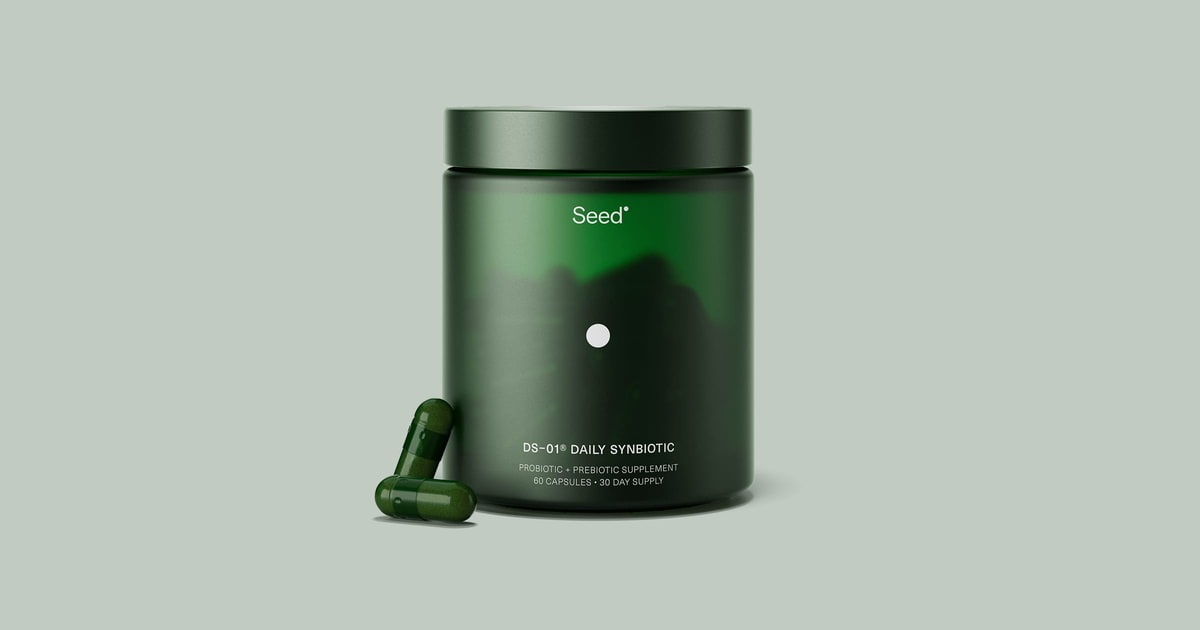
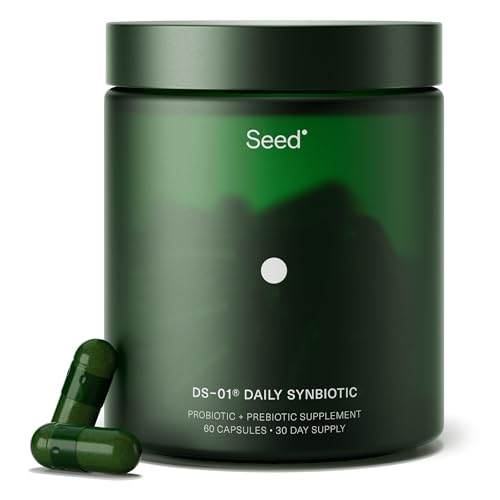
Seed's DS-01 puts 24 studied strains and a plant-based prebiotic into a capsule-within-a-capsule designed to shield the bacteria from stomach acid. It's daily maintenance for people who want strain-level disclosure, a count guaranteed through expiration, and nothing to keep in the fridge.
$59.99fromAmazonThe capsule is the whole point. Seed's ViaCap design nests a small probiotic capsule inside a larger prebiotic one, so the bacteria stay wrapped up through the acid bath of your stomach and the bile in your small intestine. That's where most probiotics quietly die. A supplement that doesn't reach your colon alive isn't doing much for you, no matter how good the label looks.
You can see exactly what you're taking. Every one of the 24 strains is listed by its full scientific designation, and the 53.6 billion AFU count is guaranteed through the expiration date rather than the manufacturing date. That distinction matters more than almost anything else on a probiotic label. Plenty of products lose most of their viable organisms on the shelf, and you'd never know from the front of the box.
It's a synbiotic, so the bacteria arrive with lunch. The outer capsule is a plant-based prebiotic made from pomegranate rind extract, which gives the incoming strains something to feed on once they land. Colonization is the hard part of any probiotic, and pairing bacteria with their food source is a reasonable way to improve the odds. You get both in one dose instead of buying a separate fiber supplement.
The strains are grouped around goals, not just piled in. Seed organizes the formula into blends aimed at digestion, gut barrier integrity, skin, cardiovascular health and micronutrient synthesis. Whether every one of those claims pans out for you is another question. But it's a coherent design rather than a scattershot strain count, and the company was built with a gastroenterologist and microbiologist advisory board behind the formula.
Flaws but not dealbreakers
You'll pay more for this than for anything else here. It's a premium daily supplement, and the benefits of any probiotic only stick around while you keep taking it. That makes the ongoing cost a real part of the decision, not a footnote. If you know you'll quit after a month, the cheaper option you actually stay on is the better buy.
The first couple of weeks can be gassy. Owners commonly report bloating and rumbling when they start, which is why Seed tells you to take one capsule a day for three days before going to two. Follow that ramp-up. It usually settles down within a week or two, but if you're already dealing with a sensitive gut, ease in even more slowly.
If you equate CFU with power, the number will nag at you. At 53.6 billion AFU it's well short of the 100 billion CFU products on the shelf, and it takes two capsules a day to get there. Seed's argument is that survivability and strain selection beat raw count, which the research generally supports. Still, it's a hard sell if you've been trained to shop by the biggest number.
Budget pick
The most-studied strain there is, for a lot less money
Culturelle Pro Strength Daily Probiotics For Digestive
Culturelle is built around Lactobacillus rhamnosus GG, the single most-researched probiotic strain, plus a bit of inulin to feed it. One bottle covers two months, it doesn't need refrigeration, and it costs a small fraction of what the premium subscriptions run.
$30.99fromAmazonOne strain, an enormous pile of research. LGG has been studied in more than 1,000 published trials over several decades, which makes it the closest thing this category has to a known quantity. That's the trade you're making here. You're giving up strain variety in exchange for a strain whose safety and effects have been picked over more thoroughly than anything else you can buy.
This is the one to have on hand for antibiotics. A Cochrane systematic review pooling 39 randomized trials found LGG cut the risk of antibiotic-associated diarrhea by roughly half. If you're facing a course of broad-spectrum antibiotics, or you're already three days in and regretting it, that's the most directly useful evidence in this whole guide. No other strain here has a stronger case for that specific job.
There's a prebiotic in the capsule too. Culturelle includes inulin, a fiber that preferentially feeds Lactobacillus species, which nudges this from a plain single-strain product toward a modest synbiotic. It's not the elaborate delivery engineering you get from Seed or Ritual. But LGG is documented to hold up through stomach acid on its own, so the simple capsule isn't the liability it might be for a fussier strain.
It fits into a normal life without any ceremony. One capsule a day, no refrigeration, no subscription, and you can grab a bottle at most pharmacies and grocery stores. It's vegetarian, and it's free of gluten, milk and soy, which matters if you're avoiding dairy — some probiotic strains are grown on milk-based media. A two-month bottle also means fewer chances to run out and fall off the habit.
Flaws but not dealbreakers
One strain means one lens. LGG is excellent at what it's good at and unremarkable elsewhere. If you're dealing with significant dysbiosis after a long illness, or you want the broad microbiome coverage that a 24- or 34-strain formula aims for, this isn't that product. Its evidence for IBS, gut barrier issues and metabolic health is much thinner than its evidence for diarrhea.
There's no NSF or USP seal on the bottle. Those independent certifications verify that what's on the label is actually in the capsule, and in a loosely regulated category that's worth something. Culturelle has decades of reputation behind it and a large, consistent base of satisfied buyers, so this isn't a red flag. It's just a box that some competitors tick and this one doesn't.
The delivery is ordinary. You get a standard vegetable capsule, not a nested or delayed-release design, so nothing is protecting the contents beyond the strain's own hardiness. Take it with food to give it a better shot. On an empty stomach, more of the dose dies on the way down.
Also greatOn sale
For IBS symptoms, backed by the trials that matter
Align Probiotic Supplement
Align is one strain, Bifidobacterium longum infantis 35624, and it carries more randomized-trial evidence for irritable bowel syndrome than anything else on a drugstore shelf. If cramping, bloating and unpredictable bathroom trips are your actual problem, this is the matching tool.
$28.22fromAmazonList priceThe strain was picked for one job and it does that job. Multiple large randomized trials of B. infantis 35624 found meaningful improvements in composite IBS symptom scores, covering bloating, abdominal pain, urgency and bowel frequency, compared with placebo. Those results have been repeated in later research. Across IBS subtypes, this strain is the reference point that newer probiotics get measured against.
The low count isn't a manufacturing shortcut. One billion CFU looks tiny next to the 100 billion on other bottles, and people hold it against Align constantly. But one billion is the dose that was actually tested and shown to work. Cranking it higher would need fresh trials to prove any added benefit, and nobody has published those. Matching the trial dose is the conservative, defensible choice.
Doctors have been recommending it for a long time. Align has been a standard gastroenterologist suggestion for IBS management for well over a decade, which means if your GI hands you a sticky note, there's a good chance this is what's on it. You don't need a prescription, and it's stocked at pharmacies nationwide. That accessibility matters when you want to start today.
Nothing about the routine is complicated. One shelf-stable capsule a day, no fridge, no ramp-up schedule, no powder to stir into anything. It's gluten-free. For a condition where consistency over weeks is the entire point, a supplement you can throw in a bag and forget about is a genuine advantage.
Flaws but not dealbreakers
Outside IBS, it's the wrong tool. For rebuilding after antibiotics, general immune support or broad microbiome diversity, a single billion CFU of one Bifidobacterium strain isn't going to accomplish much. Culturelle or Seed are better matched to those goals. Buy Align for the symptom picture it was studied for, not as an all-purpose daily gut supplement.
You'll wait weeks to learn whether it helps. In the clinical trials, symptom improvements generally showed up around the four-to-eight-week mark of daily use. That's a long time to keep taking something on faith. Give it the full stretch before you judge it, and don't stack it with three other new supplements or you won't know what did what.
The packaging keeps changing, and it confuses people. Even the listing name warns you. Owners regularly report getting a box that looks nothing like the last one and wondering whether they got a counterfeit. Buy from a seller you trust, check the strain name on the label, and don't panic over a redesign.
Who this is for
This guide is for adults picking a daily oral probiotic for digestive comfort, regularity, or recovery after a course of antibiotics. If you've got a specific complaint, buy for that complaint: LGG for antibiotic-related diarrhea, B. infantis 35624 for IBS, a broad multi-strain synbiotic for general maintenance. Mismatching the strain to the goal is the most common way people waste money here. And if you're healthy, eating plenty of fiber and fermented food, you may not need a supplement at all.
Skip this and talk to a doctor first if you're immunocompromised, seriously ill, recovering from surgery, or have a central line, since live cultures carry real risk in those situations. Same goes for kids, pregnancy and anyone with a suspected case of SIBO, which some probiotic formulas can make worse. We're only covering capsules meant for daily adult use, not powders, gummies, refrigerated children's formulas, vaginal-health-specific products, or anything sold as a treatment for a diagnosed disease.
How we picked
We built the shortlist from spec sheets, published clinical literature and owner feedback, then weighed five things. Named strains: the label has to list full strain designations with human trials behind them, not a mystery blend. Survivability: the capsule needs to get the bacteria past stomach acid and bile, whether through a nested design, delayed release or a strain that's simply tough. Count at expiration: the only number worth trusting is the one guaranteed on the day you swallow it. Verification: NSF or USP certification, published batch testing and traceable sourcing all carry weight in a category that isn't regulated like medicine. Livability: refrigeration, capsule size, the first-week gas and the ongoing cost all decide whether you're still taking it in three months, which is roughly when the benefits show up.
Other probiotic supplements worth considering
If you want to see the clinical data behind what you're swallowing: The Ritual Synbiotic+ Probiotic ($59.99) — Ritual's Synbiotic+ is the most transparent product here. The company publishes the full protocol, endpoints and results of its own sponsored human trial on gut comfort, limitations included, and it discloses country of origin and supplier for every ingredient. The formula is unusual too: LGG and BB-12 as the probiotics, a bacteriophage-based prebiotic called PreforPro, and tributyrin as a postbiotic, which is a precursor to butyrate, the fuel colon cells actually run on. It comes in a delayed-release nested capsule with a minty tab so it doesn't smell like a supplement. What you give up is potency and variety. At 11 billion CFU across two strains, it's the lightest formula in this guide, and it costs about what the top pick does. It's a maintenance product for a gut that's already doing fine, not a rebuild after a rough course of antibiotics.
The competition
This is what our research surfaced, not a survey of every probiotic on the market. The category is enormous and much of it is interchangeable. The product below is a serious, well-regarded formula that lost to a pick for a specific reason, and it may still be the right call depending on what you're dealing with.
The Garden of Life Raw Probiotics Ultimate Care ($41.99) — Garden of Life Raw Probiotics Ultimate Care is the heavyweight here: 100 billion CFU across 34 strains, spanning Lactobacillus, Bifidobacterium, Streptococcus thermophilus and the beneficial yeast Saccharomyces boulardii, plus a protein-digesting enzyme blend and whole-food ingredients. It's non-GMO and gluten-free, and the original research reports NSF International certification, which is one of the more rigorous independent checks in supplements. It lost on practicality. The formula needs to stay cold, and there's no way for you to know whether it sat on a warm truck or a July porch before it reached your door, which can quietly gut the viable count you paid for. That much potency also hits hard, and owners with sensitive stomachs report real cramping and bloating for the first two or three weeks. The capsules are big, too. Still, if you're rebuilding after a serious illness or a long antibiotic course, you buy from a fast-shipping seller and you'll actually keep it refrigerated, this is the most aggressive option in the lineup.
How to take them
Take your probiotic with a meal that has some fat in it, or within about half an hour of one. Food buffers your stomach acid, and that's the single easiest thing you can do to get more bacteria through alive. If you're on antibiotics, start the probiotic on day one rather than waiting until you finish, and space each dose at least two hours from the antibiotic so the drug doesn't wipe out what you just swallowed. Keep going for about four weeks after the course ends, since microbiome diversity takes months to recover. For general gut health, plan on eight to twelve weeks of consistent daily use before you judge anything. Store shelf-stable bottles somewhere cool and dry, away from a sunny windowsill or a steamy bathroom cabinet.
Questions we get
How many CFUs should a probiotic have?
For everyday maintenance in a healthy adult, most published research supports somewhere between 1 and 10 billion CFU a day. Strain identity matters far more than the raw number, which is why Align's single billion beats a 50-billion bottle of vaguely described strains for IBS symptoms. For intensive rebuilding after a long antibiotic course or serious illness, 20 to 100 billion from a diverse multi-strain formula makes more sense. Whatever the number, check that it's guaranteed at expiration.
Do probiotics actually work, or is it marketing?
For specific strains treating specific problems, they demonstrably work. LGG has a large body of evidence for preventing antibiotic-associated diarrhea, B. infantis 35624 has repeated trial support for IBS symptoms, and S. boulardii has good data for traveler's diarrhea. The broader claim that probiotics improve gut health in healthy people with no particular complaint is much shakier. Pick a product with named strains studied for your actual concern, not the one with the biggest number on the front.
What should I take after antibiotics?
Culturelle is our recommendation. A Cochrane review pooling 39 randomized trials found LGG cut antibiotic-associated diarrhea risk by roughly half. Start on the first day of the antibiotic course rather than after it ends, keep each dose at least two hours away from the antibiotic, and continue for about four weeks past the last pill. Gut diversity can take one to six months to bounce back, so don't stop the day the prescription runs out.
Do I need to refrigerate my probiotic?
Only if the label says so. Garden of Life Raw Probiotics needs cold storage from the warehouse to your kitchen, which is a real cold-chain gamble when you order online. Seed, Culturelle, Ritual and Align are all shelf-stable by design, using freeze-drying, moisture-resistant packaging and protective capsules instead. Refrigerated does not mean stronger. If you travel or your routine is chaotic, shelf-stable is the safer bet.
What's the difference between a probiotic and a synbiotic?
A probiotic is live beneficial bacteria or yeast. A prebiotic is a fiber those organisms eat. A synbiotic puts both in one product, on the logic that bacteria arriving with their food source are more likely to stick around. Seed pairs 24 strains with a pomegranate rind prebiotic capsule, and Ritual goes a step further by adding tributyrin, a postbiotic that supplies the byproduct a healthy gut would make on its own.
How long until I notice something?
It depends on what you're after. Protection against antibiotic-related diarrhea with LGG can kick in within the first day or two of concurrent use. IBS relief with B. infantis 35624 showed up around four to eight weeks in the trials. General gut health changes usually need eight to twelve weeks of daily use. And the effects fade once you stop, so pick something you can afford to keep buying.
Why you should trust us
For this guide:
- We read the manufacturer spec sheets and listing documentation for every product here, focusing on named strains, guaranteed counts at expiration, capsule design and third-party certification.
- We reviewed the published clinical literature behind the headline strains, including the Cochrane systematic review on LGG and antibiotic-associated diarrhea and the randomized trials of B. infantis 35624 in IBS.
- We read through owner feedback for recurring themes, especially first-week bloating, capsule size, packaging confusion and whether refrigerated products arrive cold.
- We read owner reviews on every listing, weighted toward the critical ones, because that is where the recurring failures show up.
- We have a systematic way of automatically fetching the latest prices, so the numbers on this page stay current.
- This is a research-focused guide, so the team may not own every product listed — though we often do own the top winners, which gives us extra context for the recommendations.
- We don't accept free products, and the retailer commission never changes which product we recommend.
Sources
Best Probiotic Supplements — Healthline, Healthline
Best Probiotics — Wirecutter / New York Times, Wirecutter / New York Times
Probiotic Supplements Review — ConsumerLab, ConsumerLab
Best Probiotics 2026 — Forbes Health, Forbes Health
Best Probiotic Supplements — Verywell Health, Verywell Health
Probiotics: What You Need To Know — NIH National Center for Complementary and Integrative Health, NIH NCCIH
Gut Microbiota for Health — European Society of Neurogastroenterology and Motility, ESNM Gut Microbiota for Health
Probiotics for the Prevention of Antibiotic-Associated Diarrhea — Cochrane Database of Systematic Reviews, Cochrane Library
Amazon product listings and owner reviews for all 5 products
Manufacturer specification pages for each product
Some passages in this guide may be paraphrased with AI help. Prices are refreshed automatically.
More like this.
Continue exploring health reviews and recommendations.

The Best Probiotics and Fermented Foods for Gut Health
Your gut doesn't care much about marketing. It responds to what you feed it, most days, over months. So the useful question isn't which probiotic is…

The Best Fish Oil Supplements
Fish oil is one of those supplements people buy once, take for a week, and then forget in a cabinet. Usually it's the burps. A fishy aftertaste that shows…

The Best Pre-Workout Supplements
Pre-workout is mostly caffeine, and that's fine. What separates a good tub from a bad one is whether the rest of the label does anything. The ingredients…

The Best Magnesium Glycinate Supplements for Sleep
Magnesium is one of the few supplements with a real, if modest, case behind it for sleep. Roughly half of American adults fall short of the recommended…

The Best Calming Treats and Supplements for Anxious Pets
Anxiety in pets rarely looks dramatic. It's the dog who paces by the door for three hours after you leave, or the cat who licks a bald patch into her…

The Best Heated Compression Knee Massagers
Knee pain rarely shows up at a convenient moment. It's the first ten minutes after you get out of bed, or the ache that settles in after a long drive, a…