The Best Fish Oil Supplements
Fish oil is one of those supplements people buy once, take for a week, and then forget in a cabinet. Usually it's the burps. A fishy aftertaste that shows up an hour after breakfast is enough to end most people's omega-3 habit. The other problem is the label. A bottle can shout "1,000 mg fish oil" on the front while the Supplement Facts panel quietly lists 120 mg of EPA and DHA combined — and EPA and DHA are the parts your body actually uses. So the number that matters is almost never the number on the front.
Here's the honest caveat: no fish oil is a cure, and the research is messier than the marketing. The evidence is strongest for lowering high triglycerides, and that takes doses most over-the-counter bottles can't reach without swallowing a small handful of softgels. For general heart protection in healthy adults, the results are mixed, and eating fish twice a week is still the first recommendation. Every oil here also oxidizes over time, which is why freshness and storage matter more than most brands admit.
What separates a good bottle from a bad one is boring stuff: how much EPA and DHA you actually get, the molecular form, and whether an outside lab checked the batch. We think that the Nordic Naturals Ultimate Omega is the best fish oil supplement for most people, and that the Sports Research Triple Strength Omega-3 is the one to buy if you want the same certified quality for less money in a single daily softgel.
Everything we recommend

The safest all-around choice, if you don't mind big softgels
Nearly the same quality for less, in one softgel a day
Adds CoQ10 and sport-level screening, at the highest price here
Liquid, so you can dose it for kids or dodge capsules entirely
At a glance
| Product | Omega-3 Per Serving | Servings | Price | |
|---|---|---|---|---|
| Nordic Naturals Ultimate OmegaTop pick | 1280mg | 45 servings | $32.39 |
| THORNE - Omega-3 with CoQ10 - FishUpgrade pick | — | — | $55 |
| Carlson - The Very Finest Fish OilAlso great | 1600mg | — | $59.42 |
| Sports Research® Omega-3 Fish Oil 1250 -Budget pick | 1040mg | 90 servings | $30.25 |
 | Viva Naturals Omega-3 Fish OilAlso consider | 2500mg | — | $23.92 |
How we picked
Actual EPA and DHA. We read every Supplement Facts panel for milligrams of EPA and DHA per serving, not total fish oil or total omega-3. Anything that hid the breakdown behind an "omega-3 blend" line was out.
Molecular form. Published absorption research puts triglyceride and re-esterified triglyceride forms roughly 70 percent ahead of ethyl ester. We only considered products that state TG or rTG form on the label or in their documentation.
Third-party certification. We required IFOS, NSF Certified for Sport, USP or an equivalent independent program. Manufacturer self-testing doesn't count, because nobody outside the company sees the result.
Freshness and purity. We looked for published TOTOX oxidation scores under the accepted threshold and documented testing for mercury, lead, PCBs and dioxins. Owner reports of rancid or strongly fishy bottles counted against a product.
Sourcing and taste. We favored small, short-lived fish like anchovy, sardine and pollock over large predators, and we weighed how often owners mention fishy burps, since that's what makes people quit.
Top pick
The safest all-around choice, if you don't mind big softgels
Nordic Naturals Ultimate Omega
Nordic Naturals Ultimate Omega gives you 1,280 mg of EPA and DHA in two lemon-flavored softgels, in the same triglyceride form your body gets from fish. It's the brand with the longest, most consistent record of independent purity and freshness testing.
$32.39fromAmazonYou get a real dose, not a padded label. Two softgels deliver 1,280 mg of combined EPA and DHA. That clears the roughly 1 gram a day the American Heart Association points to for people with diagnosed coronary heart disease, and it's far more than the 250 to 500 mg most general-wellness guidelines suggest. You're not counting out five capsules to hit a target. Two, with a meal, and you're done.
The triglyceride form is the part worth paying for. Nordic Naturals uses the native triglyceride molecule found in fish tissue rather than the cheaper ethyl ester concentrate. Absorption research puts the difference around 70 percent in favor of triglyceride form, especially when you take it with food. If you're going to swallow something daily for years, you want the version your gut handles best.
Independent testing backs the label, batch after batch. IFOS certification covers potency accuracy, heavy metals, PCBs and dioxins, and freshness measured by TOTOX score. Nordic Naturals has held top-tier ratings across those parameters for years, and independent lab reviews have repeatedly confirmed the EPA and DHA content matches what's printed. That consistency over time is rarer in this category than you'd hope.
It doesn't taste like fish, which means you'll keep taking it. The lemon flavoring is light — not candy-sweet, just enough to cover the oil. Owners who've bounced off other brands over repeat-back burps generally report this one goes down clean. Compliance is the whole game with omega-3s, since the benefit comes from months of steady intake, not a good week.
The sourcing story holds up. The oil comes from wild-caught anchovies and sardines, small short-lived fish that sit low on the food chain and accumulate far fewer contaminants than tuna or swordfish. Nordic Naturals publishes more about where its fish come from than most brands bother to, and the fisheries it uses carry sustainability certification.
Flaws but not dealbreakers
The softgels are big. If you struggle with pills, two of these twice the size of a vitamin D capsule is a real hurdle. Taking them with a full glass of water and food helps, but there's no getting around the dimensions. Anyone who genuinely can't swallow large capsules should skip to the liquid.
You pay a premium for the name and the paperwork. Per gram of EPA and DHA, this costs noticeably more than the value-tier options here. The extra buys certification history and reliable freshness, which is worth it to a lot of people. It's still more than you strictly have to spend to get triglyceride-form, independently tested fish oil.
It's fish oil and nothing else. There's no vitamin D3, no CoQ10, no astaxanthin. If you were hoping to consolidate a few bottles into one, this isn't that product — you'll be buying those separately.
Budget pick
Nearly the same quality for less, in one softgel a day
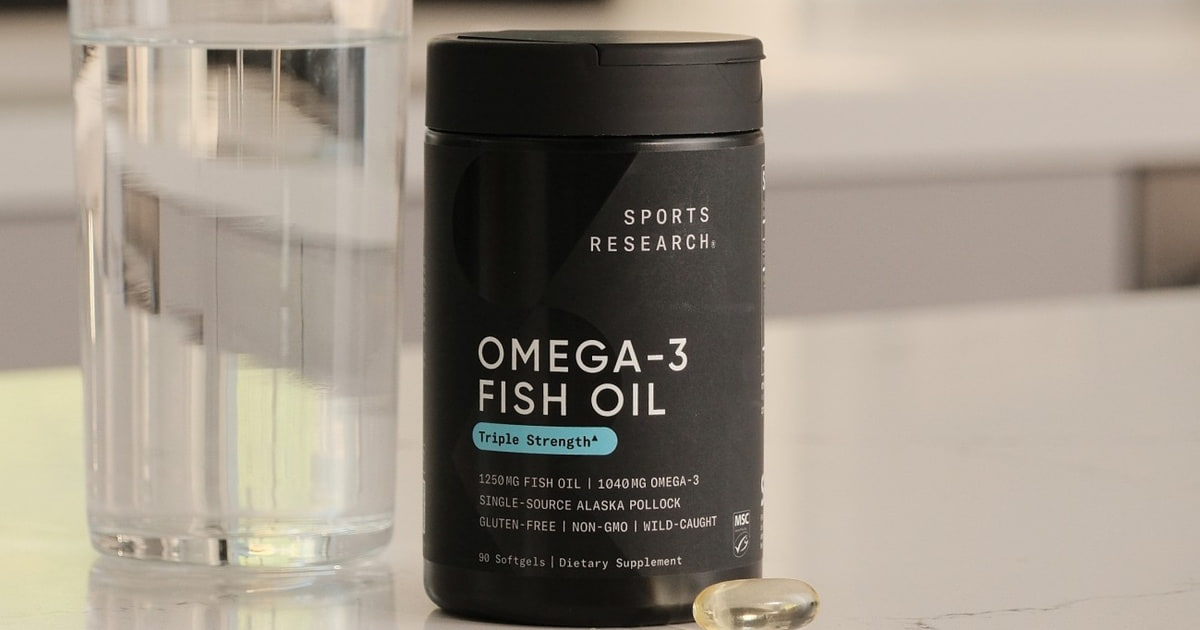
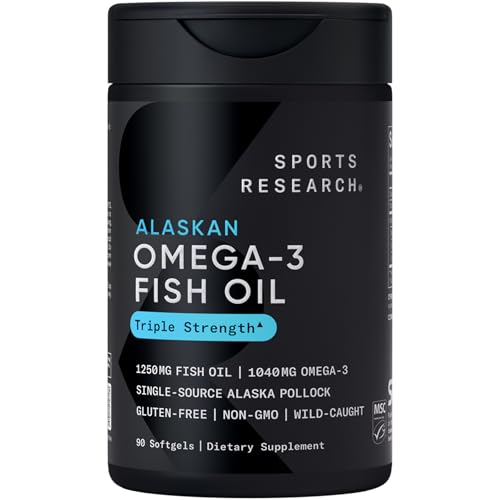
Sports Research® Omega-3 Fish Oil 1250 -
Sports Research Triple Strength packs 950 mg of EPA and DHA into a single softgel, in triglyceride form, from MSC-certified Alaska Pollock. It costs meaningfully less per gram of omega-3s than the premium brands and it's engineered not to repeat on you.
$30.25fromAmazonOne softgel a day is the whole routine. Each capsule carries 1,250 mg of fish oil with 690 mg EPA and 260 mg DHA. For general wellness that's a complete daily dose, and if you're aiming higher for joint or triglyceride support you can take two or three without your morning turning into a pill-swallowing exercise. Fewer capsules means fewer skipped days.
It's triglyceride form and IFOS 5-star rated, same as the pricier bottles. Sports Research doesn't cut the corner most budget brands cut. The oil goes through a ten-step molecular distillation, and third-party testing covers heavy metals, oxidation and actual potency. You're getting the two things that matter most — absorbable form and outside verification — without the premium-brand markup.
The burpless design actually works. The softgel is built to pass the stomach and dissolve further down, which is what kills the fishy repeat. This is the single most common reason people quit fish oil, so a design that solves it is worth more than another 100 mg on the label. Owners who've abandoned other brands over aftertaste tend to stick with this one.
The sourcing is legitimate even though it's not anchovy. Alaska Pollock from the Bering Sea is MSC certified and comes from one of the most tightly managed fisheries anywhere. It's a small, short-lived fish, which is what actually matters for contaminant load. The species is less traditional in supplements, but the fundamentals are the same.
Flaws but not dealbreakers
The EPA-to-DHA ratio leans hard toward EPA. At 690 mg EPA to 260 mg DHA, this is built more for inflammation and cardiovascular support than for brain or eye health. If you're supplementing during pregnancy or specifically for cognitive support, you want more DHA than this gives you.
The enteric-style coating delays when the oil releases. That's the trade for no burps. It shouldn't change how much you absorb, but if you're sensitive to supplements hitting your system on a schedule, it's worth knowing the timing shifts later.
It carries fewer certification badges than Thorne. There's no NSF Certified for Sport mark here, which matters if you compete in a tested sport. For everyone else, IFOS and MSC cover the ground that counts.
Upgrade pick
Adds CoQ10 and sport-level screening, at the highest price here
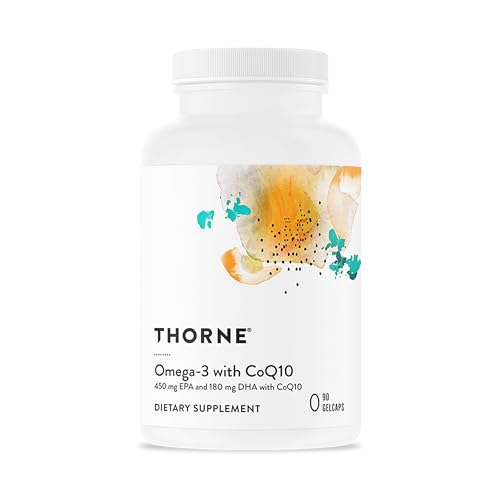
THORNE - Omega-3 with CoQ10 - Fish
Thorne pairs its fish oil with 30 mg of CoQ10, a nutrient statins are known to deplete, and carries NSF Certified for Sport screening for banned substances. It's the pick for people whose doctor is watching their heart numbers, or whose sport tests them.
$55fromAmazonThe CoQ10 pairing makes sense if you're on a statin. Statins reliably lower the body's own CoQ10 levels, and CoQ10 absorbs better when it's taken with fat — which fish oil conveniently is. Getting both in one softgel is genuinely tidier than buying two bottles. Talk it through with your cardiologist first, but the logic behind the formulation is sound.
NSF Certified for Sport is the strictest badge in this guide. That certification screens for more than 270 substances banned in competitive sport, on top of confirming what's on the label is in the bottle. If you're drug-tested — collegiate, professional, or a serious masters athlete — this removes a category of risk nothing else here addresses.
Thorne's manufacturing reputation is why clinicians reach for it. The oil comes from sustainably sourced cold-water fish and goes through molecular distillation to strip PCBs and heavy metals. Thorne is stocked by professional sports organizations and recommended heavily by practitioners, and that reputation is built on batch-level consistency rather than marketing.
It's clean of the stuff people react to. No gluten, no dairy, no filler ingredients padding the softgel. If you've had trouble pinning down what in a supplement stack disagrees with you, a short ingredient list is a real advantage.
Flaws but not dealbreakers
It's the most expensive option here, by a wide margin. You're paying for CoQ10 and NSF certification. If you don't take a statin and nobody tests you for banned substances, you're paying for two things you won't use.
The EPA and DHA per serving trails the single-ingredient picks. To reach the doses used in triglyceride research, you'd take more softgels of this than of Nordic Naturals or Sports Research, which compounds the cost problem.
Thirty milligrams of CoQ10 is a small dose. Standalone CoQ10 therapy usually runs 100 to 300 mg a day. This is a supportive amount, not a replacement for dedicated CoQ10 if your doctor has recommended one.
Also great
Liquid, so you can dose it for kids or dodge capsules entirely
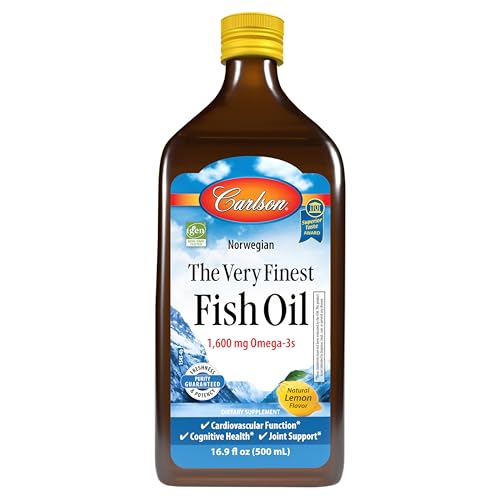
Carlson - The Very Finest Fish Oil
Carlson's lemon-flavored liquid delivers 1,600 mg of omega-3s per teaspoon, the highest per-serving dose here, and you can stir it into a smoothie. It's the answer for anyone who can't or won't swallow softgels.
$59.42fromAmazonA teaspoon replaces a fistful of capsules. At 1,600 mg of omega-3s per teaspoon, this is the most concentrated single serving in the guide. If your doctor has you aiming at the higher doses used for triglycerides, measuring out a couple of teaspoons beats counting six or eight softgels every morning.
You can dose it for whoever needs it. Half a teaspoon for a kid, a full one for you, whatever an older parent's doctor specified — one bottle covers a household. It stirs into juice, yogurt or a smoothie without losing potency, which is how most caregivers get omega-3s into someone who won't take a pill.
For a liquid, the freshness controls are unusually good. Liquids oxidize faster than capsules because air hits the oil every time you open the bottle. Carlson uses nitrogen-flushed glass packaging to slow that down, and the product carries IFOS and IGEN certification for freshness, purity and potency. Independent testing has consistently placed its oxidation numbers well under the accepted threshold.
It genuinely doesn't taste bad. The lemon flavor is clean rather than sugary, and people who've gagged their way through other liquid fish oils tend to be surprised by this one. Norwegian wild-caught cod, sustainably sourced, is behind it.
Flaws but not dealbreakers
You have to refrigerate it once it's open. That rules it out for travel and for anyone whose supplement routine depends on the bottle sitting visibly on the counter. Forget it on the counter for a stretch and you're gambling with rancidity.
Glass is heavy and it breaks. A nearly 17-ounce glass bottle is not a bag-friendly object, and a drop on a tile floor ends the bottle and your morning.
Measuring is a step, and steps get skipped. A spoon, a rinse, and a sticky cap versus grabbing two capsules. Small friction, but it's the kind that quietly ends supplement routines.
Who this is for
Buy fish oil if you rarely eat fatty fish, if your doctor has flagged high triglycerides, or if you train hard and want help with post-exercise inflammation. Those are the cases with the most evidence behind them. If you already eat salmon or sardines a couple of times a week, a supplement adds less than the marketing suggests. And if you're pregnant, on blood thinners, or heading into surgery, this is a conversation for your doctor first — omega-3s have a mild blood-thinning effect at higher doses, and prenatal DHA targets are specific enough that you shouldn't guess.
This guide covers over-the-counter fish oil for adults. It doesn't cover prescription omega-3 drugs like icosapent ethyl, which carry stronger evidence for treating clinically high triglycerides and may be covered by insurance. It also doesn't cover algae-based omega-3s for vegans, krill oil, or cod liver oil, all of which are different products with different dosing math. If you need more than about 2 grams of EPA and DHA a day, talk to a physician rather than scaling up a supplement on your own.
How we picked
We built the shortlist around five things. Actual EPA and DHA: we read Supplement Facts panels for real milligrams per serving, ignoring the big number on the front of the bottle. Molecular form: triglyceride or re-esterified triglyceride only, since published absorption work puts ethyl ester well behind. Certification: IFOS, NSF Certified for Sport or an equivalent outside program, because self-testing proves nothing. Freshness: published oxidation scores under the accepted limit, plus contaminant testing for mercury, lead, PCBs and dioxins. Sourcing and taste: small short-lived fish over large predators, and a hard look at how often owners complain about fishy burps — the flaw that ends more supplement routines than any other.
Other fish oil supplements worth considering
If you want the highest omega-3 number per serving for the least money: The Viva Naturals Omega-3 Fish Oil ($23.92) — Viva Naturals Triple Strength is an inexpensive way into legitimately tested fish oil. Two softgels give you 2,500 mg of fish oil with 1,500 mg EPA, 570 mg DHA and 50 mg DPA, in re-esterified triglyceride form, with IFOS and Labdoor certification behind it. The oil comes from sardines, anchovies and mackerel, purified to keep mercury and PCBs under IFOS limits. What you give up: rTG form is a step behind native triglyceride in absorption studies, some owners still report an occasional fishy aftertaste, and the brand's track record is shorter than Nordic Naturals' or Carlson's. For a first bottle, or for anyone who'd rather spend less and take it consistently than spend more and quit, it's a sensible buy.
The competition
Here's what our research surfaced, not a survey of everything on the shelf. The fish oil aisle runs to hundreds of bottles, and plenty of decent ones aren't here. Everything above earned a spot, so there's nothing left over to write off — which is itself a useful signal. Once you filter for real EPA and DHA numbers, triglyceride form and an independent certification, the field shrinks fast, and what's left tends to be genuinely good.
Storage and freshness
Oxidized fish oil isn't just useless, it may work against you, so treat freshness as part of the product. Keep softgels somewhere cool and dark — a cabinet, not a sunny windowsill or the shelf above the stove. Refrigerate any liquid the moment you open it, and finish the bottle within a couple of months rather than nursing it for a year. If you want to check a bottle you've had a while, cut a softgel open and smell it: fresh oil smells faintly oceanic or of nothing much, while rancid oil smells sour, sharp or vaguely like paint. A bitter or metallic aftertaste after swallowing is the same warning. Take your dose with a meal that contains some fat, which improves absorption and cuts down on burps. Toss anything past its printed expiration.
Questions we get
What's the difference between EPA and DHA, and which one do I need?
Both are long-chain omega-3s, but they do different jobs. EPA is the one tied most closely to anti-inflammatory effects and cardiovascular benefits, including lowering triglycerides. DHA is a structural fat in your brain and retina, so it matters most for cognition, vision and fetal development. For general health a balanced product is fine; lean toward higher EPA for heart and joint concerns, and higher DHA during pregnancy or for cognitive support.
How much should I take each day?
For general maintenance, most guidelines land on 250 to 500 mg of combined EPA and DHA a day, which you can also get from eating fatty fish twice a week. If you have diagnosed coronary heart disease, the American Heart Association points to roughly 1 gram a day. Clinically high triglycerides are treated with 2 to 4 grams daily, and that range belongs under medical supervision — especially if you take blood thinners.
Is triglyceride form really better than ethyl ester?
Yes, and the difference is big enough to matter. Pharmacokinetic studies show triglyceride-form omega-3s absorb roughly 70 percent better than ethyl ester, particularly when taken with a fat-containing meal. Native triglyceride is the gold standard, and re-esterified triglyceride performs close behind it. Ethyl ester, common in cheaper bottles, needs extra work from your gut and leaves less omega-3 in your blood per milligram swallowed.
What does IFOS certification actually mean?
IFOS is an independent Canadian testing program that grades fish oil on potency accuracy, purity, freshness, stability and overall compliance. The top tier requires oxidation levels stricter than most regulatory minimums, and certified products publish batch-level results. It isn't the only credible standard — NSF Certified for Sport is just as rigorous and adds banned-substance screening — but you shouldn't buy fish oil with no outside certification at all.
Can I take it every day, or should I cycle it?
Take it every day. There's no tolerance effect to cycle around, because the benefit comes from EPA and DHA gradually building up in your cell membranes over weeks and months. Stop and that builds back down. The one caution is at doses above about 3 grams a day, where the mild blood-thinning effect becomes relevant if you're on anticoagulants or scheduling surgery.
How do I tell if my fish oil has gone rancid?
Smell is the most reliable test. Cut open a softgel — fresh oil smells mildly oceanic or almost neutral, while rancid oil smells sour, unpleasantly fishy or faintly like paint. A bitter or metallic aftertaste after swallowing points the same way, as does a liquid that's darkened or turned cloudy. When in doubt, throw it out; oxidized oil offers no benefit and may cause harm.
Why you should trust us
For this guide:
- We compared Supplement Facts panels across the lineup to find actual EPA and DHA milligrams per serving rather than headline fish oil totals.
- We read published independent testing and certification documentation covering molecular form, oxidation scores and contaminant screening.
- We reviewed recurring themes in owner feedback, especially reports of fishy aftertaste, capsule size and freshness on arrival.
- We read owner reviews on every listing, weighted toward the critical ones, because that is where the recurring failures show up.
- We have a systematic way of automatically fetching the latest prices, so the numbers on this page stay current.
- This is a research-focused guide, so the team may not own every product listed — though we often do own the top winners, which gives us extra context for the recommendations.
- We don't accept free products, and the retailer commission never changes which product we recommend.
Sources
Omega-3 Fatty Acids Fact Sheet for Health Professionals, NIH Office of Dietary Supplements
Fish Oil — Drugs & Supplements, Mayo Clinic
Omega-3 Supplements: In Depth, National Center for Complementary and Integrative Health (NCCIH)
Best Fish Oil Supplements 2026, Wirecutter / New York Times
Fish Oil Supplement Testing & Reviews, ConsumerLab.com
IFOS Certified Products Database, International Fish Oil Standards (IFOS) / Nutrasource
Fish and Omega-3 Fatty Acids, American Heart Association
Effect of Lipid Formulation on Omega-3 Bioavailability, JAMA Network Open
Amazon product listings and owner reviews for all 5 products
Manufacturer specification pages for each product
Some passages in this guide may be paraphrased with AI help. Prices are refreshed automatically.
More like this.
Continue exploring health reviews and recommendations.

The Best Magnesium Glycinate Supplements for Sleep
Magnesium is one of the few supplements with a real, if modest, case behind it for sleep. Roughly half of American adults fall short of the recommended…

The Best Probiotic Supplements
Most people buy a probiotic hoping for something simple: less bloating after dinner, a more predictable morning, a gut that bounces back faster after…

The Best Pre-Workout Supplements
Pre-workout is mostly caffeine, and that's fine. What separates a good tub from a bad one is whether the rest of the label does anything. The ingredients…

The Best Calming Treats and Supplements for Anxious Pets
Anxiety in pets rarely looks dramatic. It's the dog who paces by the door for three hours after you leave, or the cat who licks a bald patch into her…

The Best Synthetic Motor Oils
Motor oil is the simplest insurance your engine will ever get. It cushions bearings, carries away heat, and picks up the soot and varnish that would…

The 6 Best Oil Drain Pans on Amazon in 2026: Tested & Reviewed for DIY Mechanics
Find the best oil drain pan for your garage - from ultra-low-profile picks for motorcycles to 12-quart options for SUVs. Expert-tested, ranked by capacity and design.