The Best Kettlebells for Home Workouts
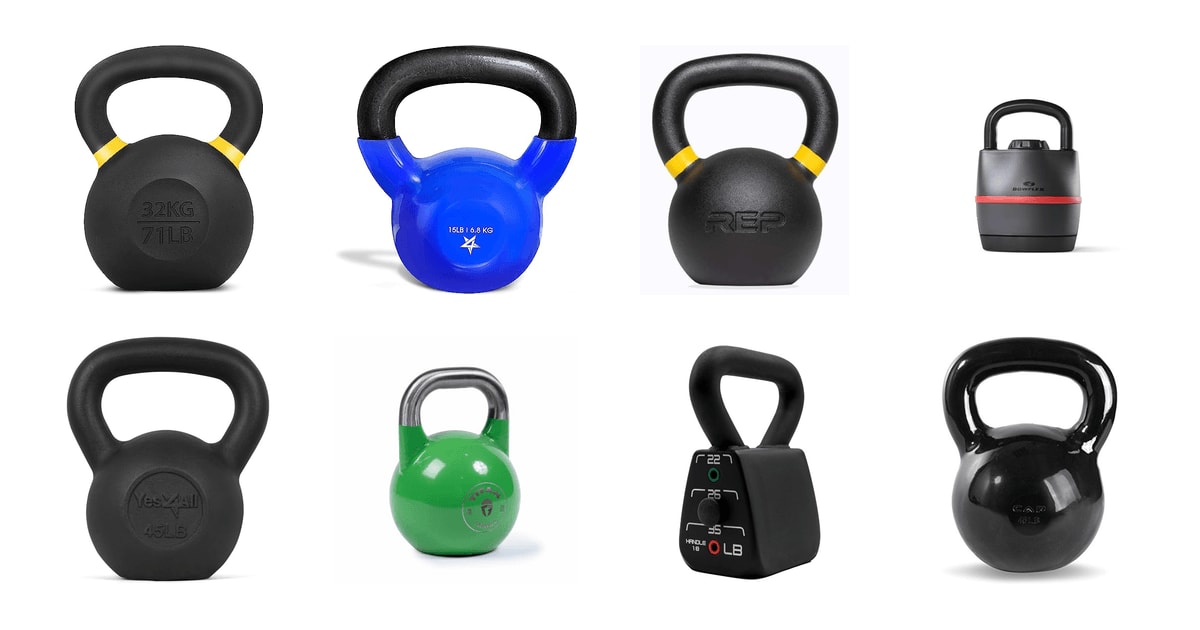
Most home gym gear ends up as a coat rack. A kettlebell doesn't. One bell sits in a corner, takes up less room than a laundry basket, and covers swings, goblet squats, presses, rows and get-ups with no setup at all. The research is flattering, too. A systematic review of eleven randomized trials in Sports Medicine tied kettlebell training to better aerobic capacity, strength and balance, and an ACE-commissioned study clocked the work at roughly 20 calories a minute — about what you'd burn running a six-minute mile.
Here's the honest part: nothing in this category is precise. Standard cast iron bells run a few percent off their stated weight, and equipment testing at Women's Health found budget models landing 3 to 5 percent from the label — fine for swings, nowhere near the roughly 1 percent competition bells promise. Finishes vary from bell to bell, sometimes within the same order. One bell won't carry you forever, either. And iron on a hard floor is loud, which your downstairs neighbor will mention.
So buy for the casting, the handle and the base, not the badge. A bell cast in one piece, with no weld where the handle meets the body, is the most reliable thing you can pay for — Garage Gym Reviews pinned welded handles as the source of most failures in its sample. A flat, machined bottom keeps the bell from rocking under you during get-ups. We think that the REP Fitness Kettlebell is the best kettlebell for home workouts for most people, and that the Yes4All Solid Cast Iron Kettlebell is the one to buy if it's your first bell and you'd rather not spend much to find out whether you like the format.
Everything we recommend

A grippy matte finish and a size for every stage of training

One-piece iron that covers the basics without the polish

Same shell and handle at every weight you add

Six bells in one, if floor space is your real constraint
At a glance
| Product | Weight | Material | Price | |
|---|---|---|---|---|
 | Yes4All Powder Coated KettlebellAlso consider | 71 lb | Cast Iron | $137.75 |
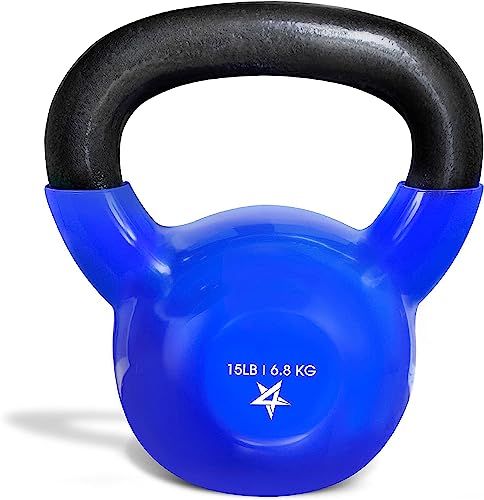 | Yes4All KettlebellAlso in lineup | 15 lb | Cast Iron | $20.82On sale |
| REP Fitness KettlebellTop pick | 16 kg | Cast Iron | $74.99 |
| BowFlex SelectTech 840 Adjustable KettlebellAlso great | 8-40 lb | — | $149 |
| Yes4All Solid Cast Iron Kettlebell Weights SetBudget pick | 45 lb | Cast Iron | $58.58On sale |
| Titan Fitness 26 KG Competition KettlebellUpgrade pick | 26 kg | — | $156.99 |
 | PowerBlock Pro Adjustable Light KettlebellAlso consider | 18-35 lb | Steel | $199 |
 | CAP Barbell Black Enamel Coated Cast IronAlso in lineup | 45 lb | Cast Iron | $169.99 |
How we picked
Single-piece casting. We prioritized bells cast in one piece, with no weld seam between handle and body. Garage Gym Reviews identified that seam as the most common failure point, so anything welded or filled started at a disadvantage.
Handle and grip. We compared stated handle diameters against the 33 to 35 mm competition standard and read owner feedback on how each finish behaves with sweaty hands. BarBend's testing showing enamel smoothing faster than powder coat shaped how we weighted finish type.
Base stability. Testing published by Wirecutter found machined flat bases wobble far less during get-ups and floor presses than molded or rounded ones. We treated a genuinely flat bottom as a safety requirement, not a nice extra.
Weight accuracy. We looked at each manufacturer's stated tolerance. Women's Health found budget bells landing 3 to 5 percent off label, which is fine for general training but disqualifying if you want competition-grade consistency.
Room to progress. A good bell should be the first of several. We favored lines with small increments across a wide range, using NSCA starting guidance — 8 to 12 kg for women, 12 to 16 kg for men — as the entry point.
Top pick
A grippy matte finish and a size for every stage of training
REP Fitness Kettlebell
A gravity-cast, single-piece cast iron bell with a textured matte coat and a color-coded ring at the base. It comes in nearly every weight from 1 kg to 48 kg, so you can start light and keep buying into the same handle and finish for years.
$74.99fromAmazonThe casting is the part that matters, and REP gets it right. Each bell is gravity cast in one piece, so there's no weld seam where the handle meets the body. Garage Gym Reviews called single-cast construction the most reliable predictor of a bell's lifespan, with welded-handle models accounting for most of the failures in its sample. Drop this on a garage floor for a decade and it picks up scuffs, not cracks.
Then there's the finish. REP uses a textured matte coat that stays grippy for high-rep swings without tearing up your palms, and it doesn't turn slick once your hands sweat. BarBend's equipment testing found powder-coat bells held their grip texture past 100 hours of use, while enamel-coated budget models had measurably smoothed out by 60. In a living room, you shouldn't need chalk. Here you won't.
The size lineup is the other reason to start here. REP sells 1, 4, 6, 8, 10, 12, 16, 18, 20, 22, 24, 28, 32 kg and up, which means small, sane jumps instead of doubling your load. Buy a 16 kg now, add a 24 kg later, and the grip and finish match what your hands already know. Each base carries a color-coded ring, so you grab the right one without reading it.
The flat base is a quiet safety feature. Testing published by Wirecutter found bells with machined flat bottoms wobbled noticeably less during Turkish get-ups and floor presses than molded or rounded ones. When you're parking a bell on your chest and rolling to your elbow, that's the difference between a smooth rep and a scary one. It also means the bell stands upright against a wall instead of rolling into your shin.
Flaws but not dealbreakers
The handle gets thicker as the bells get heavier, which is how most cast iron lines work and the opposite of what competition bells do. Owners of the 20 kg and up specifically call out the fatter grip. It's not a flaw so much as a fact of the format, but your snatch technique won't transfer cleanly from a 16 to a 32.
The matte texture runs coarse out of the box. For sets of ten swings it's ideal. For a long snatch ladder with dry, bare hands, it can rub you raw. And REP bells cost more than the generic cast iron you'll find in the same weight — that's what you're paying for the finish and the tighter casting.
Budget pickOn sale
One-piece iron that covers the basics without the polish
Yes4All Solid Cast Iron Kettlebell Weights Set
A solid cast iron bell with a wide handle, a flat bottom and a baked paint finish, sold from 5 to 80 pounds. It does everything a first kettlebell needs to do, as long as you can live with a bit of cosmetic roulette.
$58.58fromAmazonList priceFor a first bell, construction is what you're actually buying, and this one is honest. It's cast in a single piece — no weld at the handle, no filler packed into the base — which is the same structural setup as bells that cost several times more. The baked paint holds up better than you'd expect and wipes clean. Owners who've had these for years report scuffed paint, not broken bells.
The handle is wide enough to take both hands comfortably, which matters more than it sounds: two-handed swings are the movement most people do most, and a cramped handle makes them miserable. The flat bottom stays put for renegade rows and lets you line bells up along a wall. Yes4All states a ±3 percent weight tolerance, which is standard for this tier and irrelevant for swings and goblet squats.
The weight range is the sneaky advantage. You can climb in 5-pound steps at the light end, a gentler ramp than the 4 kg jumps most kettlebell lines force on you. NSCA guidance puts new lifters around 8 to 12 kg for women and 12 to 16 kg for men on swings and goblet squats, and you'll find that weight here plus the next two up. If you decide kettlebells aren't for you, you're out very little.
Flaws but not dealbreakers
The finish is a lottery. Buy two of the same bell and you may get one smooth and one rough, and a stray paint burr on the handle isn't unusual. A few minutes with sandpaper fixes it, but you shouldn't have to.
Painted cast iron rusts if you sweat on it and walk away, or park it on a damp garage floor. Wipe it down. And the ±3 percent tolerance means your 45-pounder might really be a 46 — no issue for training, annoying if you want a matched pair for double work.
Upgrade pick
Same shell and handle at every weight you add
Titan Fitness 26 KG Competition Kettlebell
A steel competition-style bell with a 35 mm handle and an identical 8.3-inch shell at every weight, cast hollow to size instead of packed with filler. Buy it if you want your technique to carry over unchanged as you get stronger.
$156.99fromAmazonPick up a 16 kg cast iron bell, then a 32, and they feel like two different tools — bigger body, fatter handle, different rack position on your forearm. Competition bells fix that. Every bell in this Titan line measures 210 mm across and 290 mm tall with a 35 mm handle, so the only thing that changes as you move up is the number on the side.
That consistency is the entire argument for the format. Sport federations including the IKSF hold competition handles to 33 to 35 mm across all weight classes, while standard cast iron handles wander anywhere from roughly 28 to 38 mm. If you're grooving a snatch or a long cycle clean and jerk, a handle that changes size under you isn't a preference issue. It's a technique problem you'll have to unlearn later.
The hollow-core casting is the other reason to spend up. Titan casts each bell to its weight rather than pouring filler into a shell, so the balance stays consistent instead of feeling sloshy at the bottom of a swing. Owners coming off cast iron sets describe it as a clear step up in feel — no seam under the palm, a handle that takes chalk well and still grips fine without it.
It's also the easiest bell here to manage in a crowded corner. The weights follow sport color conventions and are laser-etched in kilograms, which sounds trivial until you're mid-circuit trying to find the green one. Titan runs the line from 8 kg up to 48 kg, so you can start here and never switch systems, which is the whole point of buying into a uniform shell.
Flaws but not dealbreakers
Competition bells are judged on accuracy, and these aren't certified to the ±1 percent tolerance that sanctioned sport requires. Owners who've weighed them report landing a fraction of a kilo over. Close enough for training, but don't buy these expecting a certified set.
The bare steel handle is less forgiving than a coated one. With chalk it's excellent; with dry hands and a lot of volume it can slip. And because every bell is the same size, the light ones are physically as big as the heavy ones — goblet squatting a 12 kg the size of a 32 feels odd for the first week.
Also great
Six bells in one, if floor space is your real constraint
BowFlex SelectTech 840 Adjustable Kettlebell
One dial-adjustable unit covering 8, 12, 20, 25, 35 and 40 pounds, so an entire starter rack occupies the footprint of a single bell. It's the answer for apartments, closets, and anyone who doesn't want six lumps of iron underfoot.
$149fromAmazonIf you live in an apartment, this is the one that actually fits. Six weights live inside one shell and you change between them by turning a dial on top — Bowflex states under five seconds per change, and owners consistently describe it as quick and positive, with a firm click at each setting. A circuit that would otherwise need a rack of bells needs this and about two square feet.
The range is well chosen for how people actually start. Eight pounds is light enough for halos and single-arm presses; 40 is heavy enough for two-handed swings long after most beginners think they've plateaued. NSCA guidance puts new lifters at roughly 18 to 26 pounds for women and 26 to 35 for men on the fundamentals, so this thing brackets the entire beginner arc with room left over.
Owners report the loaded plates stay locked — no rattle at the bottom of a swing, no shifting mid-set. That's the failure mode to worry about with any adjustable, and it's where cheaper strap-and-plate designs come apart. The handle has room for two hands, which plenty of adjustable kettlebells can't manage, and the shell is smooth enough to rest on your forearm in the rack position without an edge digging in.
Flaws but not dealbreakers
The plastic shell doesn't want to be dropped. You can't bail out of a botched snatch the way you can with iron, and slamming it down between sets is off the table — which rules out some of the fastest kettlebell conditioning work.
It's bulkier than an iron bell of the same weight and shaped differently, so it sits wider on your forearm when racked. Forty pounds is a hard ceiling, and there's no way to add more once you outgrow it. The app membership bundled with it is a free trial that becomes a subscription if you don't cancel.
Who this is for
Buy a kettlebell if you want strength and conditioning work that fits in a corner and needs no assembly. It's a good fit if you're starting out at home, if you're short on space, or if you already lift and want swings and get-ups without driving to a gym. Start with one bell in the range NSCA suggests for beginners — roughly 8 to 12 kg for women and 12 to 16 kg for men — and add a heavier one once swings stop feeling like work. A light bell and a heavy bell will cover the overwhelming majority of home programming.
Skip it if you're chasing maximal barbell strength; kettlebells complement that work rather than replace it. This guide covers single fixed-weight bells and adjustable units you can buy on Amazon, in the weights most people actually train with. It doesn't cover storage racks, competition-certified matched sets for sanctioned sport, or the soft and sand-filled bells sold for travel.
How we picked
We weighed each bell against the things that decide whether it lasts and whether you'll enjoy using it. Casting: one solid piece, no weld at the handle and no filler in the base, since that seam is where bells fail. Grip: a handle wide enough for two hands, in a finish that stays textured when your palms are wet — powder and matte coats hold up better than enamel over time. Base: flat and machined, so the bell doesn't rock under you during get-ups and floor presses. Accuracy: a stated tolerance we could check against the manufacturer's own spec, with competition-grade consistency judged separately from general training. Range: small enough increments across enough weights that your second and third bells match your first.
Other kettlebells for home workouts worth considering
If you want the smallest adjustable footprint: The PowerBlock Pro Adjustable Light Kettlebell ($199) — PowerBlock's Pro Adjustable Light Kettlebell packs 18, 22, 26 and 35 pounds into an all-steel body you change with a magnetic selector pin — no dial, no tools, just pull and reseat. Owners who already run PowerBlock dumbbells report the same rock-solid feel, with no rattle at the bottom of a swing, and the flat side sits comfortably against your forearm. It carries a five-year warranty. What you give up is range: it starts at 18 pounds, which is already too heavy for a true beginner's overhead press, and tops out lower than the Bowflex. The contoured shape also feels unusual overhead until you adapt.
If you want one heavy bell for two-handed swings: The Yes4All Powder Coated Kettlebell ($137.75) — The Yes4All Powder Coated Kettlebell in 71 pounds is a lot of iron for the money, with a powder-coat surface that grips better than the company's glossier finishes and a non-slip flat bottom that keeps it upright between sets. Owners who buy it as a top-end bell for heavy swings and deadlifts are generally happy with the horn and the coating. Two caveats: Yes4All states the real weight can land anywhere from about 69 to 73 pounds, which is a wide window, and owners note the coarseness of the coat varies between bells. It's a swing-and-carry bell, not a pressing bell.
The competition
This is what our research surfaced among widely available kettlebells, not a census of the market. Plenty of good bells from smaller makers never show up in a mainstream search, and two of the brands most often praised in published roundups sell mainly through their own sites. The models below are worth understanding even though they didn't win a spot.
The CAP Barbell Black Enamel Coated Cast Iron ($169.99) — CAP Barbell's cast iron kettlebell is the one you've seen in every big-box sporting goods aisle for years, and it's a legitimately solid bell: no weld, no seam, a wide handle and a flat bottom, sold from 5 to 50 pounds in 5-pound steps and 60 to 80 pounds in tens. The catch is the finish. CAP's own listing describes it as both enamel-coated and powder-coated, and BarBend's testing found enamel surfaces smoothing measurably faster than powder coat. Owner feedback on handle smoothness and paint quality is more mixed here than with our budget pick. If you can put hands on one locally and it feels right, it'll serve you fine.
The Yes4All Kettlebell ($20.82) — The vinyl-coated Yes4All kettlebell is built on the same one-piece cast iron core as our budget pick, wrapped in PVC that quiets the bell and protects your floors — genuinely useful if you train on hardwood in a second-floor apartment. It's compact, easy to clean, and the range runs from 5 to 100 pounds. But vinyl is the weakest of the common finishes for grip: the handle measures about 1.2 inches across with a smooth, slick surface, and owners of both versions consistently say the bare cast iron sibling grips better with sweaty hands. Buy this one if floor protection and noise matter more to you than grip.
Care and storage
Cast iron rusts, and sweat is what does it. Wipe your bell down after every session and store it indoors — a damp garage floor is the fastest way to ruin a finish. If you see orange, scrub it with a green pad and rub in a thin coat of mineral oil or paste wax; it'll look like new. New bells sometimes arrive with a paint burr on the handle, and a few passes with fine sandpaper fixes that for good. Protect your floor with a rubber mat or a sheet of plywood, since even a controlled set-down puts real force through a small footprint. Adjustables need different care: don't drop them, and check that the dial or selector pin is fully seated before every set.
Questions we get
What weight kettlebell should a beginner start with?
NSCA guidance puts new lifters at roughly 8 to 12 kg (18 to 26 pounds) for women and 12 to 16 kg (26 to 35 pounds) for men on foundational movements like the swing and goblet squat. Err heavier than feels comfortable for swings — the movement is driven by your hips, and a bell that's too light teaches you to lift with your arms. Err lighter for anything overhead.
Cast iron or competition steel for a beginner?
Cast iron, almost always. It costs less per pound, the coated handle is kinder to bare hands, and the varying handle sizes won't matter until you're doing high-volume snatch work. Competition bells earn their keep when you're training a specific technique across several weights and want the handle and shell identical every time.
Is one kettlebell enough for a complete workout?
One bell gets you surprisingly far — swings, goblet squats, presses, rows, get-ups and carries all work with a single moderate weight. But you'll notice the ceiling quickly, because the weight that's right for a press is far too light for a swing. A light bell and a heavy bell cover about 90 percent of common home programming.
Are adjustable kettlebells worth it compared to buying individual bells?
If space is tight, yes. One adjustable replaces four to six fixed bells for meaningfully less than buying those bells separately, and it takes up one bell's worth of floor. The trade-offs are real: you can't drop them, they're bulkier than the iron equivalent, and they cap out lower. If you have room, fixed bells feel better and last essentially forever.
Are vinyl-coated kettlebells safe on hardwood floors?
Safer than bare iron, yes — the PVC shell muffles noise and spreads the impact of a set-down. It's not a license to drop them. Vinyl is the weakest finish for grip, though, so you're trading handle security for floor protection. A rubber mat under a powder-coated bell gets you both.
Which finish holds up best over time?
Powder coat and e-coat. BarBend's equipment testing found powder-coat bells kept a consistent grip texture past 100 hours of use, while enamel-coated budget models had measurably smoothed by around 60 hours. Enamel and vinyl still work fine for casual training; they just get slicker sooner, and a slick handle at the top of a swing is the one thing you don't want.
Why you should trust us
For this guide:
- We read the manufacturer specifications and listing details for every bell here, comparing casting method, handle diameter, finish type, base design and stated weight tolerance.
- We compared published equipment testing and reporting from BarBend, Garage Gym Reviews, Wirecutter and Women's Health, alongside training guidance from the NSCA and handle standards published by kettlebell sport federations.
- We read owner feedback across all eight models to find the complaints that repeat — finish inconsistency between identical bells, rust on painted iron, and handle texture — rather than isolated one-off problems.
- We read owner reviews on every listing, weighted toward the critical ones, because that is where the recurring failures show up.
- We have a systematic way of automatically fetching the latest prices, so the numbers on this page stay current.
- This is a research-focused guide, so the team may not own every product listed — though we often do own the top winners, which gives us extra context for the recommendations.
- We don't accept free products, and the retailer commission never changes which product we recommend.
Sources
ACE Research: Kettlebells — Twice the Results in Half the Time?, American Council on Exercise (ACE)
Best Kettlebells of 2026 — BarBend, BarBend
Best Kettlebells Reviewed — Garage Gym Reviews, Garage Gym Reviews
The Best Kettlebells — Wirecutter / The New York Times, Wirecutter
Best Kettlebells for Every Level — Men's Health, Men's Health
Best Kettlebells 2026 — Women's Health, Women's Health
Kettlebell Training Research — Journal of Strength and Conditioning Research, Journal of Strength and Conditioning Research (NSCA)
Best Kettlebells — Breaking Muscle, Breaking Muscle
Rogue Fitness Kettlebell Product Specifications, Rogue Fitness (Manufacturer)
Bowflex SelectTech 840 Adjustable Kettlebell Specifications, Bowflex (Manufacturer)
Global Kettlebell Market Size & Forecast, Grand View Research
Effects of Kettlebell Training on Strength and Aerobic Capacity — Sports Medicine, Sports Medicine Journal (Springer)
Amazon product listings and owner reviews for all 8 products
Manufacturer specification pages for each product
Some passages in this guide may be paraphrased with AI help. Prices are refreshed automatically.
More like this.
Continue exploring health reviews and recommendations.

The Best Resistance Bands for Home Workouts
Resistance bands do something a rack of dumbbells can't: they fold into a drawer. That's most of the appeal. You can train your chest, back, legs and…

The Best Compression Clothing for Workout Recovery
Compression clothing sits in an odd spot in your gym bag. It isn't a shoe or a barbell, and it won't make you faster on the day you wear it. What it does…

The Best Gym Bags And Workout Backpacks
Your gym bag has one job: get your stuff from the door to the locker and back without turning into a science experiment. That means room for shoes that…

The Best Workout Gloves and Lifting Grips
Your hands are the weak link in most lifts long before your back or legs are. Skin tears at the base of the fingers, calluses catch on knurling, and a bar…

The Best Pre-Workout Supplements
Pre-workout is mostly caffeine, and that's fine. What separates a good tub from a bad one is whether the rest of the label does anything. The ingredients…

The Best Fitness Trackers and Activity Bands
A fitness tracker earns its keep in the small moments. You glance down and see you've been sitting for three hours. You wake up and find out why you feel…