The Best Swimming Gear and Pool Accessories
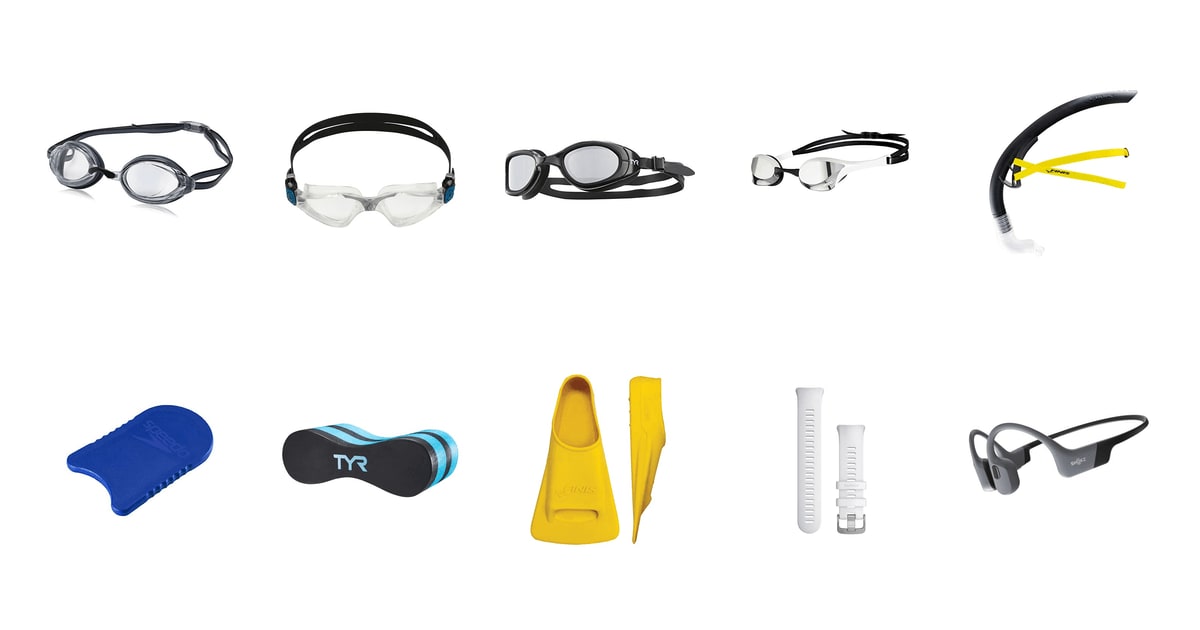
Most swim gear does exactly one job. Goggles keep water out of your eyes and let you find the wall. A kickboard floats. Fins make your legs work harder than they want to. That simplicity is why the failures sting: a goggle that leaks turns a 40-minute set into 40 minutes of stopping at the wall to reseal. You only notice this stuff when it's wrong. So the whole game is finding pieces that stay quietly out of your way.
Here's the part nobody selling goggles leads with: anti-fog is a consumable. Every pair in this guide will fog eventually, and no coating survives a thumb dragged across the inside of the lens. Owners of budget and premium goggles describe the same arc — clear for a few weeks, then a haze that rinsing won't fix. Arena's Swipe film stretches that window further than a sprayed-on coating does, but it doesn't stop the clock. Plan on replacing goggles the way you replace running shoes.
This guide covers the gear an adult lap swimmer actually reaches for: goggles first, then the training aids that make a coached set possible. We leaned on manufacturer specifications, published gear reviews from swim outlets, and the patterns that show up again and again in owner feedback. We think that the Speedo Vanquisher 2.0 is the best swim goggle for most people, and that the TYR Special Ops 2.0 is the one to buy if most of your laps happen outdoors.
Everything we recommend

The goggle most swimmers can just buy and stop thinking about
Polarized lenses for outdoor laps, at the cost of indoor clarity

The lowest-profile racing fit, with anti-fog you refresh yourself
A plain foam board that makes long kick sets less of a chore
At a glance
| Product | Product Type | Best For | Price | |
|---|---|---|---|---|
| Speedo Unisex-Adult Swim Goggles Vanquisher 2.0Top pick | Swim Goggles | — | $21.25 |
 | Aqua Sphere Kayenne Swim Goggles with ClearAlso consider | Swim Goggles | All-Day Wear | $35.04On sale |
| TYR Special Ops 2.0 Swim Goggles withRunner-up | Swim Goggles | — | $22.98On sale |
| ARENA Unisex Cobra Ultra Swipe Racing SwimUpgrade pick | Racing Swim Goggles | High-Performance Racing | $79.75 |
 | FINIS Stability Swimmer's Snorkel Center-Mount Snorkel SetAlso consider | Swimmer's Snorkel | Laps & Training | $48 |
| Speedo Unisex-Adult Swim Training Kickboard AdultAlso great | Training Kickboard | Swim Training | $34 |
 | TYR Junior Pull Float - Pull BuoyAlso in lineup | Pull Float | Upper Body Strength | $22.50 |
 | FINIS Zoomers Gold Swim Training Fins -Also consider | Swim Training Fins | Speed & Conditioning | $44 |
 | SHOKZ OpenSwim Pro - Open-Ear Bluetooth &Also consider | Swimming Headphones | — | $229.95 |
How we picked
Seal and fit. We prioritized goggles whose seal comes from gasket shape rather than strap tension, because that's what separates a comfortable hour from a headache. Owner feedback about pressure rings, leaking and face width did more to shape the ranking than any spec sheet.
Anti-fog staying power. Published reviews and owner reports agree that coatings degrade, so we looked at how long clarity typically holds and whether it can be renewed at all. Arena's Swipe film is the only mechanism here you can reactivate mid-swim.
Lens and light. We matched lens type to where people actually swim: clear or light tints for indoor pools, polarized and UV-blocking lenses for outdoor and open water. A dark lens indoors is a downgrade, not an upgrade.
Hardware durability. Straps, clips and buckles fail before lenses do, and owner reports told us which models break where. We weighted repeated, specific complaints — snapped side clips, cracked rear clips — heavily.
Foam and material quality. For training aids we looked for dense EVA that keeps its buoyancy, using specifications for thickness and owner reports of long-term use rather than marketing language about performance.
Top pick
The goggle most swimmers can just buy and stop thinking about
Speedo Unisex-Adult Swim Goggles Vanquisher 2.0
The Vanquisher 2.0 shows up on more heads at a lap pool than anything else, and there's a reason. It seals on a wide range of faces, the anti-fog works while it lasts, and it's inexpensive enough that keeping a backup pair in your bag makes sense.
$21.25fromAmazonThis is the goggle coaches hand to someone on their first day, and it's still the goggle they're wearing five years later. The design is unglamorous: a low-profile inner-eye gasket that sits inside the socket rather than around it, cushioned silicone seals, and five nose bridges so you can dial in the width. Nothing here is clever. It's just the fundamentals done right, which is harder than it sounds.
The seal is the reason people keep coming back. Because the gasket nests in the eye socket, you can press the cups on a dry face and get suction before you've even tightened the strap. That matters more than it sounds — a goggle that seals unstrapped is a goggle you can wear loose. Owners with narrow faces, a group that struggles with most goggles, consistently say these are the ones that finally stopped leaking.
The lenses are UV-treated and anti-fog coated, which covers the two things that actually ruin a swim outdoors. If you're doing morning laps in an uncovered pool, that's enough. It's not polarized, so you'll still squint at midday, but you won't be swimming half-blind either. For an indoor pool, the clear lens is the right call: you can read a pace clock and see the T on the bottom without guessing.
You'll also find these in more tints and colors than anything else in the category, and they're all the same goggle underneath. That's genuinely useful. Buy a clear pair for the indoor pool and a smoke pair for outdoors, and both will fit your face identically — no second break-in, no swapping nose bridges around. Two pairs of these still land well under one pair of racing goggles.
Flaws but not dealbreakers
The anti-fog doesn't last. Owners who swim several times a week report the coating starting to give up after a couple dozen sessions, and once it's gone it's gone. Rinsing with hot water or wiping the inside of the lens kills it much faster. That's true of nearly every coated goggle, but it's worth knowing before you decide these were defective.
The other recurring complaint is hardware. The clip joining the two strap halves at the back of the head is the usual failure point, and several owners describe it cracking well before the lenses or gaskets wear out. Swapping the nose bridge is also fiddlier than it should be — the piece has to be worked into the frame, and more than a few people gave up assuming theirs was faulty.
The narrow, in-socket fit that makes these seal so well on average faces works against wider ones. If standard goggles already leave you with deep pressure rings or a headache after 20 minutes, this isn't the shape that fixes it.
Runner-upOn sale
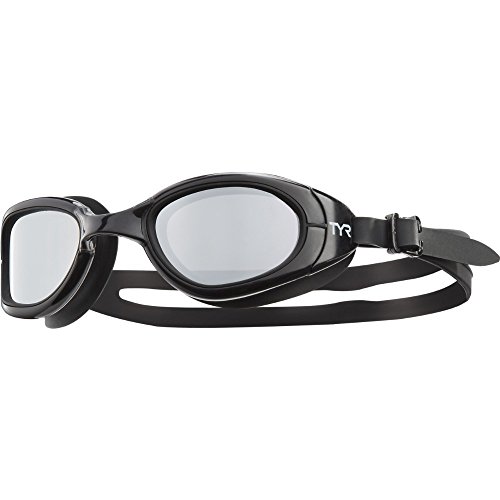
Polarized lenses for outdoor laps, at the cost of indoor clarity
TYR Special Ops 2.0 Swim Goggles with
The Special Ops 2.0 is built for swimmers who spend their sessions under the sun. Polarized lenses cut the glare coming off the surface, which matters when you're sighting a buoy in open water or trying to find a lane line in an outdoor pool at noon.
$22.98fromAmazonList priceGlare off water isn't like glare off a road. It comes at you horizontally, right where you're looking when you lift your head to sight, and it turns a swim buoy into a white smear. TYR specifies that the polarized lens filters out 99.9% of that surface reflection. If you train outdoors or do open-water work, that's the single biggest comfort upgrade available in a goggle — you stop finishing sessions with tired eyes.
The one-piece frame is the other reason triathletes keep buying these. There's no separate nose bridge to pop loose mid-set and no hinge to work itself out of adjustment. Owners who've gone through many pairs describe the same experience: they don't leak, and they don't need fussing with once you've set the strap. The Durafit silicone gaskets are soft enough that most people don't come out of the water with deep rings around their eyes.
The peripheral view is wide for a goggle this close to the face, which is what you want when you're swimming with other people nearby. In a crowded lane or a mass start, being able to see someone beside you without rotating your whole head is a real safety advantage. The Speed Adjustment button lets you tug the strap tighter one-handed while treading water.
For an indoor swimmer, none of this argues for these over the Vanquisher, and the tint actively works against you. But if you're splitting your season between an outdoor pool and a lake, these handle both. That's not something a clear training goggle does well in reverse.
Flaws but not dealbreakers
Polarized and dark lenses are wrong for indoor pools. Under typical natatorium lighting you'll lose contrast on lane markings, wall targets and the pace clock, and swimmers who use these year-round often end up owning a clear pair too.
Side clips are the weak spot. Owners report the plastic clips where the strap meets the frame snapping — sometimes on more than one pair — and it usually happens well before the lenses show wear. The frame itself holds up fine, which makes the failure more annoying.
The embedded anti-fog is inconsistent. Plenty of owners get months of clear swimming; others describe one lens hazing over within the first ten minutes of the first swim. That kind of unit-to-unit spread is a real risk to weigh, and it's the main reason these sit second rather than first.
Upgrade pick
The lowest-profile racing fit, with anti-fog you refresh yourself
ARENA Unisex Cobra Ultra Swipe Racing Swim
The Cobra Ultra Swipe is a racing goggle — low, narrow, and made to stay put off a dive block. Its Swipe film lets you clear fog by rubbing the inside of the lens underwater, which is the only anti-fog approach here you can actually renew mid-session.
$79.75fromAmazonEvery other goggle asks you to protect the coating on the inside of the lens. Arena inverts that. You reactivate the Swipe film by swiping the inner lens about five times with a fingertip while the goggles are underwater, and the fog clears. It's a strange thing to do the first few times — it feels like you're wrecking them — but it's the mechanism, not a workaround.
If you race, the fit is the real purchase. These sit deeper in the eye socket than anything else here and use long molded side temples that brace against your head, so they don't shift on a dive entry. Parents of age-group swimmers make the same point repeatedly: goggles that stay on off the block eliminate an entire category of ruined races. Five interchangeable nose bridges let you tune the width precisely.
The polycarbonate lens is harder than the acrylic used on cheaper goggles, so it takes less damage from being tossed in a mesh bag with fins and a snorkel. The mirrored versions are built for bright light — read Arena's own lens guidance before choosing, because a strong mirror in an indoor pool is too dark for comfort.
Some swimmers buy these purely because nothing else fits. The socket-deep shape suits faces that find standard goggles either too shallow or too wide, and once the seal is right the pressure spreads out instead of concentrating on the orbital bone. Several longtime users of other brands describe switching for that reason alone.
Flaws but not dealbreakers
This is the most expensive goggle in the guide by a wide margin, and it is not a good recreational goggle. The narrow racing profile presses in a way that most casual lap swimmers find uncomfortable after half an hour, and the wide field of view Arena advertises comes from sitting close to the eye, not from a big lens.
The Swipe film isn't magic. Owners who've worn them through multi-day meets report the anti-fog fading and eventually stopping working, and the swiping trick only helps while there's film left to activate. Expect a longer clear window than a sprayed coating, not a permanent one.
There's a learning curve. Fitting the right nose bridge, setting the temple angle and getting comfortable with the swipe motion all take a few sessions. If you want to unbox a goggle and swim, this isn't it.
Also great
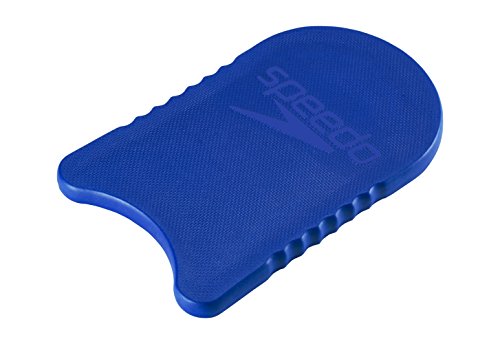
A plain foam board that makes long kick sets less of a chore
Speedo Unisex-Adult Swim Training Kickboard Adult
Speedo's adult kickboard is textured EVA foam with finger scallops on the sides and grooves underneath, and that's the whole story. It floats consistently, it doesn't turn slick when wet, and it's the board you'll see stacked on the deck at most pools.
$34fromAmazonA kickboard is the one training aid worth owning even if you never do a structured workout. Holding one puts your shoulders in a fixed position and forces your legs to do the work, which is how you find out that your kick has been coasting. The scalloped sides here matter more than they look: they let you grip from the edges rather than clamping the top, so your shoulders stay lower and your neck stops craning.
The foam is firm and dense rather than soft, which is what keeps buoyancy consistent over years instead of months. Cheap low-density boards compress, waterlog slightly and start riding lower, and you feel it as your hips sinking. Owners who've had this board through several seasons and a lot of travel describe it holding its shape, and the textured surface keeps it from squirting out from under wet hands.
It's also useful well outside of training. Physical therapy patients and people rehabbing a hip or knee use these for supported leg work, and the size is generous enough to lean on without fighting to keep it under you. At roughly a foot and a half across it's a full-size adult board, which is worth noting if you're buying for a smaller swimmer.
Flaws but not dealbreakers
New boards can smell strongly of plastic, and the smell transfers to whatever it shares a gym bag with. It fades, but the first week or two is unpleasant enough that several owners mention it unprompted. Airing it out somewhere other than your bag helps.
The firm foam that keeps buoyancy stable is less forgiving on your shoulders than a softer board, and if you already have shoulder mobility issues, long kick sets with your arms extended will find them. There's also no thumb cutout, so you can't use it for the advanced technique drills that require one.
Who this is for
This guide is for adults swimming laps: a few mornings a week at the local pool, a masters practice, a triathlon build, or the first six weeks of learning to swim properly. If that's you, start with goggles and add training aids as your coach or your workout asks for them. Kids need their own sizing across nearly every category here, so treat these as adult recommendations only.
We're not covering swimsuits, caps, swim spa equipment, pool chemicals or scuba gear, and we're not covering swim watches — the only Garmin listing in this lineup is a replacement band, not a watch. If you already own goggles that seal and don't fog within the first ten minutes, you don't need to replace them. Buy again when the anti-fog fails early or when the gasket stops sealing without you cranking the strap down.
How we picked
Seal and fit: we favored goggles that suction on a dry face before the strap is tightened, and we read owner feedback closely for face-width complaints. Anti-fog: every coating fails, so we looked at how long clarity typically lasts and whether it can be renewed. Lens and light: clear lenses for indoor pools, polarized and UV-blocking for outdoors and open water. Hardware durability: clips and straps break long before lenses, and repeated reports of the same snapped part counted against a model. Foam and materials: dense EVA that holds buoyancy over seasons, judged from thickness specs and long-term owner accounts.
Other swimming gear and pool accessories worth considering
If you want goggles for a wider or larger face: The Aqua Sphere Kayenne Swim Goggles with Clear ($35.04) — The Aqua Sphere Kayenne uses a curved panoramic lens and a much bigger facial footprint than any racing goggle, so it seals around the eye socket instead of inside it. If standard goggles leave you with deep marks, a pressure headache or a slow leak you spend all session managing, this is the shape to try. Swimmers who dislike the closed-in feeling of low-profile goggles also tend to prefer it. You give up hydrodynamics — the bulkier frame catches water at speed, so it's a poor racing choice — and this listing has a thin track record compared with the others here.
If you want to build a faster kick: The FINIS Zoomers Gold Swim Training Fins - ($44) — FINIS Zoomers Gold are short-blade fins, and the short blade is the entire point. Long recreational fins reward a slow, wide, low-cadence kick, which is the opposite of what you want in a race. These force a compact, quick flutter and open up stiff ankles over a few weeks. Owners consistently warn that they run small, so size up if you're between sizes, and expect calf soreness if you use them for a whole workout right away. They also give less propulsion than you'd expect from a fin, which surprises first-timers.
If you want to fix your stroke rather than just swim more: The FINIS Stability Swimmer's Snorkel Center-Mount Snorkel Set ($48) — The FINIS Stability Snorkel mounts in the center of your face and removes breathing from the equation, so you can concentrate on catch timing and body alignment without rolling your head. Swimmers who've used the older bracket-style version describe the cushioned forehead rest as a genuine improvement over the pressure point it replaced. Two cautions from owners: the head strap runs short and won't reach around every head, and some units start taking on water at the mouthpiece after a few swims. It's also not for speed work — the restricted airflow is intentional.
If you want music while you swim: The SHOKZ OpenSwim Pro - Open-Ear Bluetooth & ($229.95) — The SHOKZ OpenSwim Pro is the only realistic answer for in-water audio, because ordinary wireless earbuds aren't built to be submerged and Bluetooth doesn't travel through water at all. Shokz rates it IP68, good for two meters for two hours, and it stores music onboard so your phone stays dry on the deck. Battery life is specified at nine hours. Bone conduction sounds thinner than in-ear headphones, especially with a swim cap over it, and you have to remember to load MP3s before you leave the house — Bluetooth mode is land-only. It's the most expensive thing in this guide.
The competition
This is what our research surfaced in this lineup, not a census of everything sold. Plenty of good goggles, boards and fins aren't here simply because they weren't in front of us.
The TYR Junior Pull Float - Pull Buoy ($22.50) — The TYR Junior Pull Float is a well-made pull buoy and a genuinely useful one — the figure-8 shape lifts your hips into a flatter line, which is the whole reason to swim with a buoy. The catch is in the name. This listing is the junior version, roughly 4.75 inches of EVA foam, and there's no adult size offered on it. Some adult masters swimmers deliberately prefer the smaller float because it stays out of the way on flip turns and lifts the legs just enough, and if that's you, it's a fine buy. Larger swimmers should expect it to feel undersized between the thighs.
Care and maintenance
Never touch the inside of a goggle lens — not with a towel, not with a fingertip, not once. That single habit does more for anti-fog life than anything else, and the only exception is the Arena Swipe film, which is designed to be rubbed. Rinse everything in cool fresh water after each swim, never hot, and let goggles dry face-down and out of direct sun. Don't leave them in a car in summer; heat warps gaskets and cooks coatings. Loosen the strap before pulling goggles off over your head rather than yanking them forward, since the rear clip is where most pairs break. Rinse and fully dry foam gear and fins too, because trapped chlorine breaks down rubber and foam faster than the water ever does.
Questions we get
What swim gear does a beginner actually need?
Goggles and a suit you can swim laps in. That's it to get started. A kickboard and a pull buoy are the next two things worth buying, because together they unlock most of the drill sets a coach would give you. Everything else — fins, snorkel, watch, headphones — can wait until you know what you're training for.
How often should I replace my goggles?
Replace them when the anti-fog quits within the first few minutes of a swim, or when you have to overtighten the strap to stop a leak. For someone swimming several times a week, that's usually a matter of months, not years. Buying two pairs at once and rotating them stretches both, since the coating degrades partly from staying wet.
How do I stop my goggles from fogging mid-swim?
Don't touch the inner lens, rinse with cold water after every session, and store them out of heat and sunlight. If you have a race coming up, one application of anti-fog spray to a dry inner lens right beforehand will usually get you through it. On the Arena Cobra Ultra Swipe, the fix is different: swipe the inside of the lens about five times underwater to reactivate the film.
Are mirrored lenses better for indoor pools?
No, they're worse. Mirrored and dark tints are made for bright sun, and under indoor lighting they cost you contrast on lane lines, wall targets and the pace clock. Buy clear or a very light tint for indoor swimming. If you split time between an indoor pool and an outdoor one, it's cheaper to own two pairs than to compromise on one.
What goggles work for a wide face?
The Aqua Sphere Kayenne is the one to try first. Its curved panoramic lens seals around the eye socket rather than inside it, which suits faces that low-profile racing goggles leave leaking or aching. The Arena Cobra Ultra Swipe is worth a look too, since its five interchangeable nose bridges cover a wider range of eye spacing than most goggles allow.
Can I swim with regular wireless earbuds?
No. Standard earbuds aren't rated for submersion and will usually fail permanently, and Bluetooth doesn't transmit through water anyway, so even a waterproof pair would go silent the moment your head went under. You need a device with onboard storage and a full submersion rating, like the SHOKZ OpenSwim Pro in MP3 mode.
Why you should trust us
For this guide:
- We read manufacturer specifications and published swim-gear reviews for every product in this lineup, comparing lens types, seal designs, foam density and waterproofing ratings.
- We looked for repeated themes in owner feedback — snapped strap clips, anti-fog failing early, fins running small, short snorkel straps — and treated a complaint as real only when it showed up across many independent accounts.
- We did not use, install or measure any of this gear ourselves, and nothing in this guide describes first-hand results.
- We read owner reviews on every listing, weighted toward the critical ones, because that is where the recurring failures show up.
- We have a systematic way of automatically fetching the latest prices, so the numbers on this page stay current.
- This is a research-focused guide, so the team may not own every product listed — though we often do own the top winners, which gives us extra context for the recommendations.
- We don't accept free products, and the retailer commission never changes which product we recommend.
Sources
Best Swim Goggles — Wirecutter / New York Times, Wirecutter / New York Times
Best Robotic Pool Cleaners — Consumer Reports, Consumer Reports
The Health Benefits of Swimming — Harvard Health Publishing, Harvard Health Publishing
SFIA Sports Participation Report 2025, SFIA
Swim Gear Reviews — SwimSwam, SwimSwam
Best Swim Goggles — OutdoorGearLab, OutdoorGearLab
Garmin Swim 2 In-Depth Review — DC Rainmaker, DC Rainmaker
USA Swimming Coaching Resources, USA Swimming
Amazon product listings and owner reviews for all 9 products
Manufacturer specification pages for each product
Some passages in this guide may be paraphrased with AI help. Prices are refreshed automatically.
More like this.
Continue exploring health reviews and recommendations.

The Best Pool Floats and Accessories
A pool float has one job: keep you comfortable long enough that you stop checking your phone. The ones that do it well are boring in the right ways. They…

The Best Road Cycling Accessories and Gear
Road riding gear splits into two piles. There's the stuff you notice every ride - a helmet that doesn't cook your head on a July climb, shoes that don't…

The Best Swimming Goggles
A pair of goggles is the difference between a swim you enjoy and one you cut short. When the seal works, you stop thinking about your face entirely and…

The Best Pool Cleaning Robots
A pool robot buys back your Saturday morning. Instead of dragging a pole around the deck and pushing dirt into corners, you drop a machine in the water,…
The Best Agility Ladders, Cones, and Speed Training Gear
Footwork gear is cheap, portable, and easy to overthink. A ladder, a stack of cones, and a few low hurdles cover almost everything a youth coach, a high…

The Best Pickleball Gear for Beginners
Pickleball is easy to start and hard to shop for. You show up at a public court, borrow somebody's spare paddle, have a great time, and then discover…