The Best Road Cycling Accessories and Gear
Road riding gear splits into two piles. There's the stuff you notice every ride — a helmet that doesn't cook your head on a July climb, shoes that don't leave your feet numb at hour three — and the stuff that quietly changes your decisions. A radar light tells you a car's coming before you hear it. A computer tells you whether you're going too hard for the next twenty miles. Both piles matter, and both are easy to overspend on.
None of it makes you faster on its own. A power meter records what you did; it won't do the intervals for you. Radar doesn't stop a driver who isn't looking, and no helmet prevents every concussion. Everything here needs charging, pairing and the occasional firmware wrangle, and the ecosystems still don't fully cooperate — Wahoo and Garmin talk to each other better than they used to, but you'll hit gaps.
So buy in the order that actually changes your riding. Awareness first, then data, then the comfort pieces that make long days bearable. If you ride open roads with traffic, safety gear pays off on the first ride. If you're building toward a gran fondo or a crit season, the numbers start to matter more. We think that the Garmin Varia RTL515 is the best road cycling accessory for most people, and that the Wahoo ELEMNT Bolt V3 is the one to buy if you'd rather start with ride data and navigation.
Everything we recommend

Radar warnings on open roads, if you'll charge one more device

Simple buttons and fast setup, minus the touchscreen
A huge screen and days of battery, if you want the depth

Rotational protection and real airflow, in a light shell
At a glance
| Product | Product Type | Battery Life / Key Spec | Price | |
|---|---|---|---|---|
| Garmin Edge® 1040 SolarUpgrade pick | GPS Bike Computer | Up To 100 Hours | $599.99On sale |
| Wahoo ELEMNT Bolt V3 GPS Cycling/Bike ComputerBudget pick | Cycling/Bike Computer | — | $341.95 |
| Giro Aether Spherical MIPS Matte Black SmallAlso great | Helmet | Approx. 270g | $165 |
 | Favero Assioma Duo Power Meter PedalAlso consider | Power Meter Pedal | 50 Hours | $539.97 |
| Garmin Varia RTL515Top pick | Rearview Radar | 153 Yards | $157.99On sale |
 | Lezyne Mega Drive 1800i Headlight Lite Grey/HiAlso in lineup | Headlight | 1800i LM | $99.95 |
 | CASTELLI Gabba Ros Special Edition Jersey -Also consider | Jersey | GORE-TEX INFINIUM | $174.95 |
 | Shimano S-Phyre RC902 Road Bike Shoes BlackAlso in lineup | Road Bike Shoes | 2 BOA (Li2) | $575.84 |
How we picked
Awareness and visibility. We prioritized gear that helps drivers see you and helps you see them coming. Published safety survey data and manufacturer detection specs mattered more here than features.
Battery and charging. We compared claimed run times and charging methods across every listing, favoring standard USB charging over proprietary cables. Anything you have to charge mid-weekend loses points.
Plays well with others. ANT+ and Bluetooth support, plus real integration with Strava, Komoot, Ride with GPS and TrainingPeaks. A device that strands your data isn't worth the bar space.
Weight and comfort. We read spec sheets for grams and owner feedback for how gear actually feels at hour four. On long rides, comfort and weight are the same conversation.
Independent evidence. Where a lab or a reviewer had measured something — lumens, accuracy, rotational protection, airflow — we leaned on that over the marketing claim.
Top pickOn sale
Radar warnings on open roads, if you'll charge one more device
Garmin Varia RTL515
The Varia RTL515 is a rear-facing radar and taillight in one small unit. It spots vehicles up to 153 yards back and pushes the alert to your bike computer, phone or watch, and owners tend to describe it as the accessory they won't ride without.
$157.99fromAmazonList priceKnowing a car is coming changes how you ride. Garmin rates detection at up to 140 meters — about 153 yards — which at real closing speeds works out to several seconds of warning. That's enough to hold your line, ease out of the drops, or wave a group into single file before anything gets tense. Owners describe the same shift again and again: less neck-craning, more attention on the road ahead.
The safety case isn't just a feeling. A Cycling UK survey found that 78% of riders who added rear radar felt significantly safer on open roads, and 43% noticed a drop in close passes. That tracks. The taillight is visible up to a mile in daylight, and you ride more predictably when nothing behind you is a surprise. Drivers give more room to cyclists who aren't swerving.
It plugs into gear you probably already own. It pairs with Garmin Edge computers and watches, with the Wahoo ELEMNT Bolt over ANT+, and with your phone through the Varia app, which can overlay alerts onto Ride with GPS. No head unit at all? The phone app still works — mount it where you can see it and you get tones and vibration.
It's also just a good taillight. The compact vertical body clamps to a round seatpost without adapters, the battery covers a weekend of riding on a charge, and the daytime flash is the aggressive kind drivers actually register. Even if you ignored the radar completely, you'd have a competent rear light. The radar is the part that makes you stop leaving home without it.
Flaws but not dealbreakers
Aero seatposts are the catch. The mount is built around round posts, so a D-shaped or teardrop post means hunting down a third-party adapter. Aim matters too — a unit tilted off-axis misses cars or throws false alerts. Check your post shape before you order.
There's no attachment point for a safety leash, which is a fair gripe on a device this expensive. And it's one more thing to plug in. On a big riding weekend, charge it when you charge your computer.
Budget pick
Simple buttons and fast setup, minus the touchscreen
Wahoo ELEMNT Bolt V3 GPS Cycling/Bike Computer
The ELEMNT Bolt V3 is a small, button-driven computer that handles what most road riders actually use: turn-by-turn navigation, automatic route downloads from Strava and Komoot, and instant uploads when you're done. Setup happens on your phone, which makes it the easiest one here to live with.
$341.95fromAmazonSetup is the whole pitch. You configure everything — screens, data fields, sensors — in the companion app on your phone, and the computer just mirrors it. Riders coming from a phone-based Strava or Wahoo workflow are usually out riding with it the same afternoon. Compare that to your first evening with a fully loaded Garmin, which is genuinely a menu-learning exercise.
Buttons beat a touchscreen more often than you'd expect. In full-finger winter gloves, or with rain and sweat on the screen, physical buttons keep doing what you tell them. Owners say that's exactly why they chose it. The trade-off is real, though. Panning the map to scout a detour is slower, and some riders coming from touch devices never quite stop missing it.
Navigation is better than the size suggests. It builds turn-by-turn prompts from GPX and TCX files and from routes saved in Strava, Ride with GPS or Komoot, and those routes download automatically once your accounts are linked. Take Me To generates a route to any point you pick on the map, which is how you get home when a ride goes sideways.
It also talks to the Varia. Pair the radar over ANT+ and approaching cars appear on the screen with LED indications along the top edge — the same experience Garmin owners get, on a computer that costs a lot less than the 1040 Solar. If you're buying the radar and a head unit together, this is the more affordable route to the full setup.
Flaws but not dealbreakers
Reliability isn't spotless. A minority of owners report GPS cutting out mid-ride, a side button failing after a couple of months, or elevation gain that drifts from reality. Most people never see any of it, but it comes up often enough to be worth knowing before you commit.
Out of the box, screen brightness is set for battery life rather than sunlight, so daytime legibility looks poor until you change the setting. And customizing screens really does require the phone app — expect to watch a how-to video or two in your first week.
Upgrade pickOn sale
A huge screen and days of battery, if you want the depth
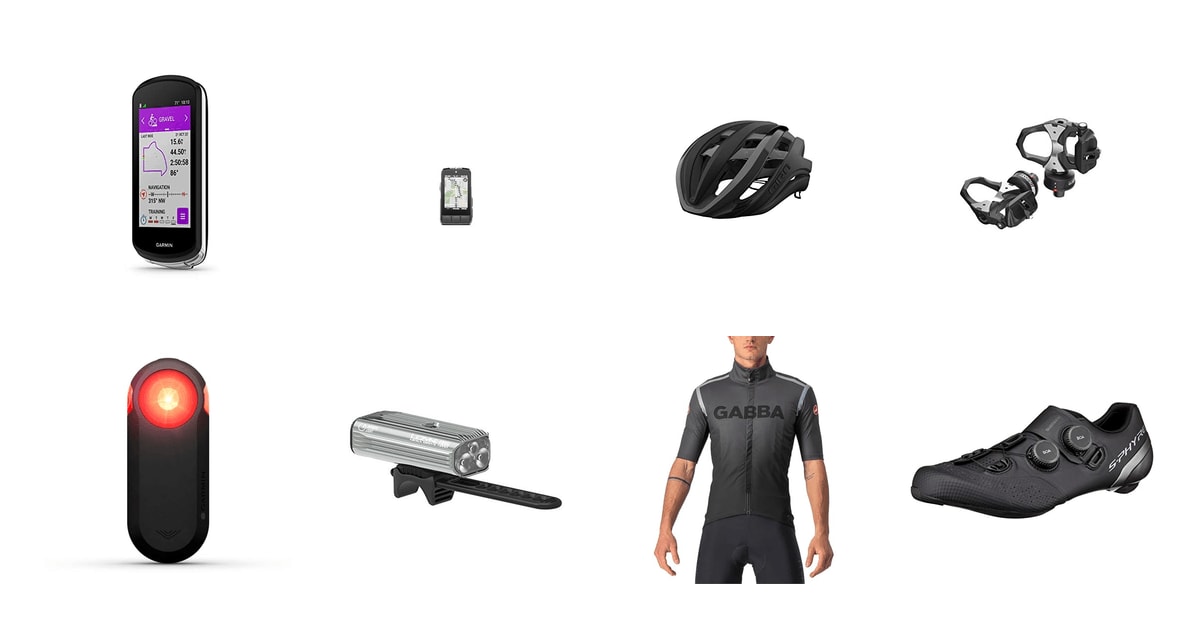
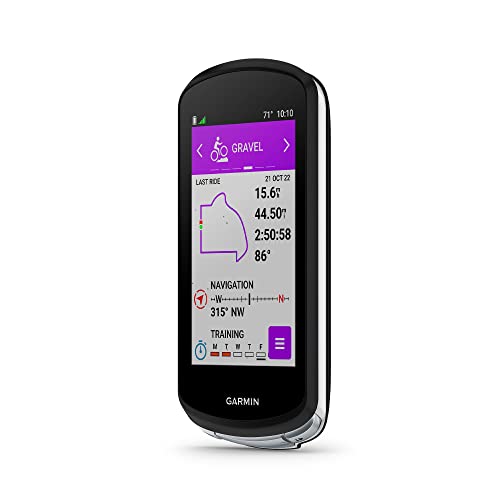
Garmin Edge® 1040 Solar
Garmin's flagship pairs a big, bright touchscreen with the longest battery life in this category, plus multi-band GNSS and training analytics that measure your strengths against a specific course. It's the deep end of the pool, and it only pays off if you swim there.
$599.99fromAmazonList priceBattery anxiety basically disappears. Garmin rates the 1040 Solar at up to 100 hours in battery saver and up to 45 hours in demanding use, and the Power Glass lens tops it up while you ride — as much as 42 extra minutes per hour of daylight in battery saver mode. For a week of touring, or a 200-mile day, that's the difference between planning around outlets and never thinking about it.
The screen is the other reason to buy it. It's much bigger than the Bolt's, which makes maps readable at speed and data fields legible without squinting through sweat. Riders upgrading from smaller Edge units mention the size first, then admit it looks enormous on the bars for about a week before they stop noticing.
Multi-band GNSS helps exactly where GPS usually struggles: downtown blocks, heavy tree cover, deep valleys. Pair power and heart-rate sensors and you unlock the analytics that justify the step up — a profile of your strengths as a rider measured against a course's demands, plus power guide targets that pace you up a climb instead of leaving you to guess.
But you have to want this much device. The interface is simpler than it used to be, and you can edit data fields from your phone. It's still a lot. The owners who love it are usually already deep in Garmin's world — a watch, a chest strap, years of Connect history. If you mainly want speed, distance and a route line, you're paying for capability you'll never open.
Flaws but not dealbreakers
Solar isn't magic. Garmin's figures assume direct, sustained sunlight, and at least one owner reports gaining essentially nothing after leaving it in the sun for days. Treat it as a modest extension of an already enormous battery, not a charging method.
The onboard temperature reading runs inaccurate, which matters if you use it to decide what to wear at the trailhead. And this is the most expensive unit here by a wide margin, so it only makes sense if the training features are the point.
Also great
Rotational protection and real airflow, in a light shell
Giro Aether Spherical MIPS Matte Black Small
The Aether uses Giro's Spherical construction — two liners in a ball-and-socket arrangement that rotate against each other in a crash — instead of the usual plastic slip-plane. It's roughly 270 grams, vents like a much airier helmet, and the fit dial adjusts tension and height separately.
$165fromAmazonRotational protection is the thing worth paying for in a helmet. Virginia Tech's helmet lab work indicates that MIPS Spherical designs can cut the rotational energy reaching the brain by as much as 43% compared with standard EPS foam. Most crashes aren't clean vertical impacts. You go down at an angle, and that twisting is what does the damage. The Aether is built around that specific problem.
The ball-and-socket design also solves a comfort complaint. Conventional MIPS puts a plastic liner between your head and the foam, and plenty of riders find it tugs hair or sits strangely. Here the two foam liners slide against each other instead, so nothing extra touches your scalp. It just feels like a well-padded helmet, which is the highest praise a helmet gets.
Airflow holds up when you need it. CyclingTips measured roughly 9% more airflow through the Aether's 28-vent layout than the previous generation, and the deep internal channeling pulls air across your scalp rather than skimming past it. On a slow, sweaty July climb — the moment vents actually earn their keep, because you're not moving fast enough to cool yourself — you'll feel the difference.
Fit is where helmets are really won or lost. The Roc Loc 5+ Air system lets you set tension and vertical position independently, so you can get the cradle sitting where you want it without cranking the dial down hard. That's more useful than it sounds if you've ever owned a helmet that only stayed put when it hurt.
Flaws but not dealbreakers
It's expensive for a helmet, and a big chunk of what you're paying for is a protection system you hope never to use. Cheaper helmets meet the same certification standards. They just don't do as well in independent rotational testing, which is a bet you have to decide how to weigh.
This listing covers a single size and finish, so check the size chart before ordering. A helmet that fits badly protects worse than a modest one that fits well. Replace it after any impact, and every few years regardless — the foam degrades whether you crash or not.
Who this is for
This guide is for people who ride a road bike on real roads and are ready to move past the bare minimum. That includes the rider who just bought a proper bike and is figuring out what to add next, the club racer chasing small gains, and the commuter who also does long weekend rides. If you already own a head unit, a radar and a power meter, there's less here for you — the upgrades get incremental fast.
We're covering accessories and apparel, not bikes, wheels, trainers or tools. And we're only writing about products we could confirm on Amazon, which means a lot of good gear isn't here. If you're on a tight budget, buy in this order: a certified helmet that fits, then lights, then a computer, then power. Skip the power meter entirely unless you're going to follow a structured plan. It's a lot of money for numbers you'll ignore.
How we picked
We weighed each product against a handful of things that matter on a real ride. Awareness: does it help you see traffic, or help traffic see you, with evidence behind the claim? Battery and charging: how long does it run, and does it use a cable you already carry? Compatibility: ANT+ and Bluetooth support plus genuine hooks into Strava, Komoot, Ride with GPS and TrainingPeaks, because data you can't move is data you'll lose. Weight and comfort: grams from the spec sheet, comfort from owner feedback at hour four. Independent evidence: where a lab or a reviewer measured lumens, power accuracy, airflow or rotational protection, we trusted that over the box copy.
Other road cycling accessories and gear worth considering
If you want to train with power: The Favero Assioma Duo Power Meter Pedal ($539.97) — The Favero Assioma DUO is the sensible entry point into dual-sided power. It measures both legs at ±1.0% accuracy across temperatures from -10°C to 60°C, and DC Rainmaker has validated it across more than 10,000 real-world miles. Installation is genuinely a hex key and five minutes, so moving it between your road bike and your trainer bike is trivial, and the rechargeable batteries run about 50 hours. Power training works: one 16-week controlled trial found riders using power meters improved FTP by 8.2% more than matched athletes going on feel. What you give up is pedal choice — you're committed to this cleat system — and yet another charging ritual.
If you ride through cold, wet weather: The CASTELLI Gabba Ros Special Edition Jersey - ($174.95) — The Castelli Gabba RoS is a pro peloton staple for one reason: it works as a jersey when it's merely cool and as a shell when it turns nasty, so you're not stopping to layer. The GORE-TEX INFINIUM WINDSTOPPER fabric blocks wind on the front-facing panels and stretches where you need it, and Road.cc found it stayed breathable and non-clammy through rain up to 12mm per hour, beating six purpose-built rain jackets on thermal regulation at high output. The full-length zip and two rear pockets mean it replaces a jersey rather than covering one. It's water-resistant, not waterproof — a genuine downpour will eventually get through — and the form fit is unforgiving if you're between sizes.
The competition
Here's what our research surfaced beyond the picks. This isn't a survey of everything on the market — it's the rest of the lineup we looked at, and why each one didn't make the cut for most riders.
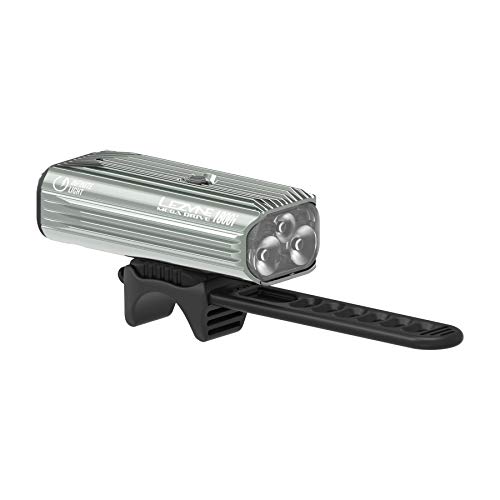
The Lezyne Mega Drive 1800i Headlight Lite Grey/Hi ($99.95) — The Lezyne Mega Drive 1800i is a serious front light. BikeRadar measured 1,743 actual lumens against its 1,800-lumen rating, which is unusually honest for the category, and it charges over USB and works with Lezyne's external power pack for very long nights. It didn't become a pick because it's big and heavy for a road bike, the clamp-and-strap mount is basic, and it does nothing smart — no radar, no app-driven automation. Worth noting: at least one owner reports receiving a lower-output version in an 1800-labeled box, so check what's printed on the light itself. If you ride unlit rural roads after dark, the raw output still makes a strong case.
The Shimano S-Phyre RC902 Road Bike Shoes Black ($575.84) — The Shimano S-Phyre RC902 is about as good as road shoes get. VeloNews rates the carbon sole at a stiffness index of 12, the maximum, matching custom-carbon shoes from Sidi and Specialized that cost considerably more, and the two BOA Li2 dials give you precise micro-adjustment on the fly. The Dynalast shape and Silvadur anti-odor treatment are nice touches on long, hot days. We didn't make it a pick because a sole that stiff is wasted on most weekend riders and can feel harsh on rough pavement, and because buying performance road shoes sight-unseen is a gamble — the fit is narrow, and a half-size error is an expensive return. Racers who already know their Shimano size should absolutely consider them.
Setup and maintenance
Get the boring part right once and this gear mostly takes care of itself. Charge everything on the same night so you're never hunting for a cable at 6 a.m. Pair your sensors to your computer once, then check for firmware updates every month or two — most connection headaches are stale firmware on one side of the link. Aim your radar so it's level and pointing straight back, since a tilted unit misses cars and throws false alerts. Wipe road grit off pedal power meter contacts before charging. Wash technical fabrics in cold water with no fabric softener, which clogs the membrane. And replace your helmet after any impact, even one that leaves no visible crack — the foam only works once.
Questions we get
What road cycling accessories should a beginner buy first?
Start with a certified helmet that fits properly, then front and rear lights, then a bike computer if you want to track and navigate. Radar is the strongest safety upgrade after that if you ride roads with traffic. Save power meters and premium shoes for when you know you'll use them — they don't help until you're following a plan.
Is a rear radar taillight worth the money?
For open-road riding, it's the single accessory most riders say they'd buy again. A Cycling UK survey found 78% of riders who adopted rear radar felt significantly safer, and 43% saw fewer close passes. It doesn't stop a distracted driver, but knowing a car is coming lets you position yourself early instead of reacting late.
Do I need a power meter to get faster?
No, but it helps if you train with structure. A 16-week controlled trial found riders using power improved FTP by 8.2% more than matched athletes training by feel. The catch is that the meter does nothing on its own — if you're not following intervals or a plan, you're just collecting numbers you won't act on.
What's the difference between Wahoo ELEMNT and Garmin Edge computers?
Wahoo optimizes for simplicity: you configure everything in the phone app, and the device stays out of your way. Garmin optimizes for depth, with more analytics, more sensor types and a much larger settings tree. If you want to ride today with minimal fuss, go Wahoo. If you want course-specific pacing and detailed physiological metrics, go Garmin.
Can I use my phone instead of a bike computer?
You can, and for shorter rides it's fine. The problems show up on long days: battery drain, a screen you can't read in direct sun, weather exposure and the risk of a mount failure. A dedicated computer also pairs with ANT+ sensors like radar and power meters that phones handle less reliably.
How long does a road cycling helmet last?
Replace it immediately after any crash where your head hits something, even if you can't see damage — the foam compresses once and doesn't recover. Absent a crash, most manufacturers suggest replacing every three to five years, since sweat, UV and heat degrade the liner over time. If the straps are frayed or the fit system is loose, it's already past due.
Why you should trust us
For this guide:
- We read published reviews and lab reports from BikeRadar, DC Rainmaker, Road.cc, CyclingTips and VeloNews alongside each manufacturer's own specifications, plus Virginia Tech Helmet Lab research on rotational protection.
- We compared claimed battery life, connectivity, detection range and weight across every listing in this guide rather than taking any single spec at face value.
- We read through owner feedback looking for repeated themes — mount compatibility, GPS dropouts, solar charging expectations — instead of weighting isolated complaints.
- We read owner reviews on every listing, weighted toward the critical ones, because that is where the recurring failures show up.
- We have a systematic way of automatically fetching the latest prices, so the numbers on this page stay current.
- This is a research-focused guide, so the team may not own every product listed — though we often do own the top winners, which gives us extra context for the recommendations.
- We don't accept free products, and the retailer commission never changes which product we recommend.
Sources
Best Cycling Computers 2026 — BikeRadar, BikeRadar
Favero Assioma DUO Long-Term Review — DC Rainmaker, DC Rainmaker
Bicycle Helmet Ratings 2025 — Virginia Tech Helmet Lab, Virginia Tech Helmet Lab
Wahoo ELEMNT Bolt v2 Review — Cycling Weekly, Cycling Weekly
Garmin Varia RTL515 Review — Road.cc, Road.cc
Best Road Cycling Helmets 2026 — CyclingTips, CyclingTips
Best Cycling Lights 2026 — BikeRadar, BikeRadar
Best Road Cycling Shoes 2026 — VeloNews, VeloNews
Castelli Gabba RoS Long-Term Review — Road.cc, Road.cc
Power Meter Training Effectiveness — Journal of Sports Sciences, Journal of Sports Sciences
Cycling Accessories Market Report 2025 — Statista, Statista
Cycling Safety and Radar Lights Survey 2025 — Cycling UK, Cycling UK
Amazon product listings and owner reviews for all 8 products
Manufacturer specification pages for each product
Some passages in this guide may be paraphrased with AI help. Prices are refreshed automatically.
More like this.
Continue exploring health reviews and recommendations.

The Best Cycling Jerseys and Bib Shorts for Road Riding
Almost every complaint about a long road ride comes back to two things: what's under you and what's on your back. A good chamois keeps the miles from…

The Best Swimming Gear and Pool Accessories
Most swim gear does exactly one job. Goggles keep water out of your eyes and let you find the wall. A kickboard floats. Fins make your legs work harder…

The Best Overlanding and Off-Road Electronics
The moment your phone drops to no service is the moment overlanding gear stops being a hobby purchase. Out past the last cell tower, the stuff bolted to…

The Best Off-Road Recovery Boards
Getting stuck isn't really an if. Drop a tire into a sand wash, sink into spring mud on a forest road, or spin out on a snowed-in trailhead approach, and…

The Best Pickleball Gear for Beginners
Pickleball is easy to start and hard to shop for. You show up at a public court, borrow somebody's spare paddle, have a great time, and then discover…
The Best Agility Ladders, Cones, and Speed Training Gear
Footwork gear is cheap, portable, and easy to overthink. A ladder, a stack of cones, and a few low hurdles cover almost everything a youth coach, a high…