The Best Pickleball Gear for Beginners
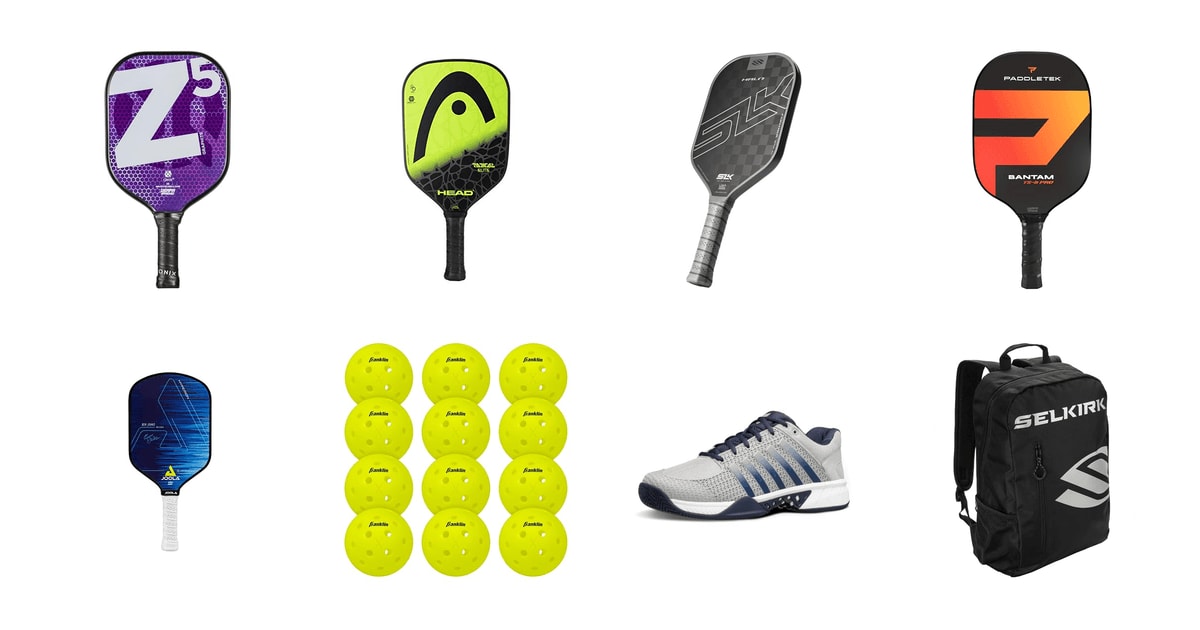
Pickleball is easy to start and hard to shop for. You show up at a public court, borrow somebody's spare paddle, have a great time, and then discover there are four hundred paddles for sale and every one of them claims to be perfect for new players. The truth is simpler than the marketing. A beginner needs a paddle that's forgiving on off-center hits, a ball that matches the surface you play on, and shoes that don't let your ankle roll when you shuffle sideways at the net.
Here's the honest part: no paddle will make you good, and the differences between decent paddles are smaller than the price gaps suggest. Owners who upgrade from a solid entry paddle to a premium one usually describe a modest gain in spin and feel, not a transformation. Paddles also wear out. The polymer core softens over months of hard play, and heavy players report replacing paddles every year or two regardless of what they paid. Buy for comfort and control first, and don't agonize.
Most of the gear questions sort themselves out once you know two rules: get a 16mm polymer core if your elbow is anything less than bulletproof, and never play outdoors with an indoor ball. We think that the Selkirk SLK Halo Control XL is the best beginner pickleball paddle for most people, and that the ONIX Graphite Z5 is the one to buy if you want a proven, widely recommended first paddle without spending much.
Everything we recommend

Carbon-face control and extra reach, at a sane price

The paddle half your local court is already using

The quiet, cushioned option if your elbow already hurts

Pro-level spin you'll grow into, if you're sure you'll stick with it
At a glance
| Product | Gear Type | Skill Level/Material | Price | |
|---|---|---|---|---|
| ONIX Graphite Z5 Graphite Carbon Fiber PickleballBudget pick | Paddle | Nomex Honeycomb Core | $64.94On sale |
 | HEAD Fiberglass Pickleball Paddle - Radical EliteAlso in lineup | Paddle | Intermediate | $49.95 |
| Selkirk Sport SLK Halo Control XL PickleballTop pick | Paddle | Carbon Fiber | $99.99 |
| Paddletek Bantam TS-5 Pro Pickleball PaddleAlso great | Paddle | Honeycomb Core | $99.99On sale |
| JOOLA Ben Johns Hyperion CAS 16 PickleballUpgrade pick | Paddle | Polypropylene Honeycomb | $119.95 |
 | Franklin Sports x-40 Performance Outdoor Pickleballs -Also consider | Ball | Single-Piece | $29.04On sale |
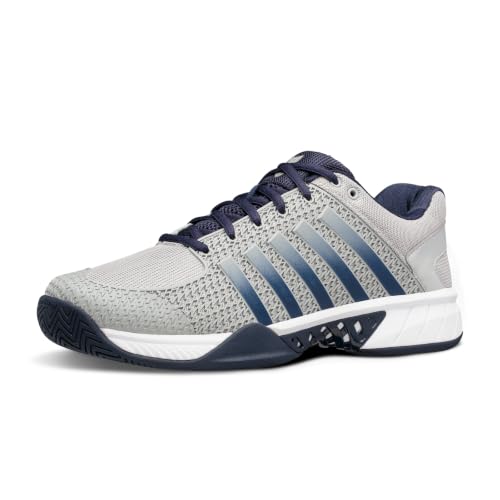 | K-Swiss Men’s Express Light Pickleball ShoesAlso consider | Shoes | Stability Shoe | $115 |
 | Selkirk Sport Day BackpackAlso consider | Bag | +V11 Max Polyfiber | $48.98 |
How we picked
Core and thickness. We prioritized 16mm polymer honeycomb cores, which spec sheets and injury-focused guides agree transmit less vibration than 13mm or Nomex constructions. That matters because pickleball elbow is the most common way new players get sidelined.
Weight in the hand. We looked for paddles in the 7.5 to 8.0 ounce range, where comparative reviews at OutdoorGearLab found beginner testers scored highest on control drills. Ultra-light and heavy paddles both cost accuracy.
Face material. Graphite and carbon fiber faces rated higher on ease of control in Good Housekeeping's editor panel than fiberglass, and every paddle here uses a composite face. We ruled out wood entirely.
USAP approval. USA Pickleball's equipment standards cap paddles at 17 inches long and 7 inches wide with a rigid surface, and plenty of clubs enforce approval even for open play. Every paddle in this guide is approved.
Grip and comfort. We checked listed grip circumference against the 4 to 4.5 inch range that fits most adults, and weighed owner feedback on cushioning and slip. A grip that's too small is a wrist injury waiting to happen.
Top pick
Carbon-face control and extra reach, at a sane price
Selkirk Sport SLK Halo Control XL Pickleball
The SLK Halo Control XL pairs a raw 18k carbon fiber face with a 16mm polymer core, which is the combination most instructors point beginners toward. It weighs 7.7 to 8.0 ounces, right in the range that's easiest to control without feeling like a frying pan.
$99.99fromAmazonThis paddle checks every box on the beginner list without asking you to pay premium-tier money. The 16mm core is the thick one, which matters more than most spec-sheet items. Thicker cores damp vibration at impact, and reviewers who track arm fatigue consistently steer new players away from thin 13mm paddles for that reason. The weight lands between 7.7 and 8.0 ounces — the mid-weight band that beginner testers at OutdoorGearLab scored highest on control drills.
The elongated XL shape gives you about 16.4 inches of length instead of the usual 15.5. That extra inch shows up on the shots you'll miss most as a beginner: the ball hit slightly wide, the reach volley at the kitchen line, the lunge for a dink you got caught leaning on. You give up a little maneuverability in fast hand battles, but you won't be in many of those for a while.
Raw carbon fiber has a gritty, unpainted surface that bites the ball. That's how spin gets generated, and it's the single biggest reason to skip cheaper painted-face paddles. You may not be hitting topspin drives yet. But when you start learning them in a few months, the paddle will already do its part, and you won't be shopping again.
The 5.75-inch handle is the quiet win for anyone coming from tennis. Long handles let you use a two-handed backhand, which is a huge comfort for tennis converts who've spent years hitting one. The faux leather grip is padded and tacky, and owners with sweaty hands report it holds up through long sessions. If you have big hands, the 4.25-inch circumference should feel right.
Flaws but not dealbreakers
Control paddles trade away power by design. If you like to swing hard and hit winners, this one will feel muted, and you'll have to generate pace yourself rather than getting free pop off the face. That's the correct trade for a beginner learning placement, but it's a real trade.
Raw carbon faces are grippy because they're textured, and texture wears down. Owners of raw-face paddles across brands describe the surface going smoother over months of play, with spin dropping off before anything else fails. Wiping the face with a damp microfiber cloth slows it, but it's a consumable surface, not a permanent one.
The elongated shape narrows the paddle to 7.4 inches wide. That means a slightly tighter sweet spot side to side than a wide-body paddle, so genuinely wild mishits near the edge will feel dead.
Budget pickOn sale
The paddle half your local court is already using
ONIX Graphite Z5 Graphite Carbon Fiber Pickleball
The ONIX Z5 has been the default first paddle for years, and for good reason: the wide graphite face is easy to make contact with, and the tennis-style handle feels familiar to anyone with racket-sport history. It's USA Pickleball approved and costs a fraction of premium paddles.
$64.94fromAmazonList priceWalk onto any public court in the country and you'll see a Z5. That popularity isn't marketing — it's the wide-body shape. At 8.3 inches across, it gives you more paddle in the places beginners actually make contact, which is to say not the middle. Owners who bought it as a first paddle regularly describe it as the reason they stopped hitting balls off the frame.
It's the most forgiving shape here, and forgiveness is what a beginner needs most. The graphite face is smooth and quick off the ball, giving you decent pop without much swing. The tennis-inspired handle shape is a real comfort for anyone whose muscle memory came from a racket. Several owners specifically mention buying it for a parent or spouse transitioning from tennis and having it click immediately.
The Z5 uses a Nomex honeycomb core rather than polymer, which is a meaningful difference. Nomex is stiffer and louder, and it transmits more of the impact to your arm. In exchange you get a crisper, poppier feel that some players prefer. If your arm is healthy and you like feedback from the paddle, it's a fair trade — but see the flaws below.
Flaws but not dealbreakers
The Nomex core is the reason we made this the budget pick rather than the top pick. Nomex transmits more shock than polymer, and it's noticeably louder on contact. If you have any history of tennis elbow, joint sensitivity, or general arm soreness, pick a polymer-core paddle instead.
The grip is the most common complaint. It's a 4.25-inch circumference that runs slightly small, and the stock cushion wears out faster than the paddle does. An overgrip fixes both problems for very little money, and plenty of owners do exactly that within the first month.
The graphite face is smoother than raw carbon, so there's less grit for spin. You'll feel that ceiling eventually if you get serious about topspin.
Also greatOn sale
The quiet, cushioned option if your elbow already hurts
Paddletek Bantam TS-5 Pro Pickleball Paddle
The Paddletek Bantam TS-5 Pro pairs a thick polymer honeycomb core with an oversized sweet spot and a shock guard along the edge. It's the paddle to look at if arm pain, joint sensitivity, or a noise-conscious neighborhood is shaping your decision.
$99.99fromAmazonList priceIf pickleball elbow is your worry, this is the paddle in the lineup built around that problem. The polymer honeycomb core absorbs more impact shock than the Nomex or aluminum cores used in older designs, and Paddletek adds a 1/8-inch shock guard around the edge on top of that. Reviewers who focus on joint-sensitive players have recommended Paddletek's Bantam line for years on exactly this basis.
Polymer cores are also quieter, which matters more than you'd think. A lot of neighborhoods have gotten twitchy about pickleball noise, and some HOA courts have posted rules about it. This paddle is on the softer end of the sound spectrum. If you're playing on a court that backs up to houses, it's a small kindness that costs you nothing.
The face is UV-coated textured fiberglass rather than carbon. Fiberglass is livelier — it gives you more pop for the same swing — so this paddle feels less muted than our top pick. The texture handles spin duty. It's a fair combination if you'd rather the paddle help you get depth on your shots while you're still building a swing.
The extra-large sweet spot is the other reason to consider it. Between the wide 7.875-inch face and the way the core is tuned, off-center hits stay in play more often than they should. For a first paddle, that's worth as much as any premium material.
Flaws but not dealbreakers
Paddletek offers this in several weights and grip sizes, and the listing options can be confusing. The standard-weight, standard-grip version is the one most beginners want, but check what you're actually ordering — grip circumference is not a thing you can fix by getting used to it.
Fiberglass faces generate less spin than raw carbon over the long run. If you expect to be drilling topspin dinks a year from now, you'll feel the difference.
A few owners report receiving paddles that appeared used rather than new. That's a fulfillment issue rather than a product one, but check the face and grip when yours arrives and return it if the texture looks worn.
Upgrade pick
Pro-level spin you'll grow into, if you're sure you'll stick with it
JOOLA Ben Johns Hyperion CAS 16 Pickleball
The JOOLA Ben Johns Hyperion CAS 16 uses a sandblasted carbon abrasion surface over a 16mm polypropylene core, and it's the paddle that made carbon spin technology mainstream. It's more paddle than a first-week beginner needs, and that's rather the point.
$119.95fromAmazonThe Hyperion is the paddle that changed what recreational players expect. JOOLA built it with Ben Johns, the top-ranked professional in the sport, and its sandblasted carbon abrasion surface set the template that most premium paddles now follow. If you've watched pickleball and wondered how anyone puts that much spin on a plastic ball, this surface is a large part of the answer.
Buy this one only if you already know you're going to keep playing. It's the most expensive paddle here by a wide margin, and a brand-new player won't use most of what it does. The gritty face rewards a brushing swing path you haven't built yet. But if you're a tennis or badminton player with real racket skills transferring over, you may skip the beginner phase entirely — several owners with long tennis backgrounds describe the transition taking weeks, not months.
The 16mm polypropylene core does the same vibration-damping job as our top pick, so this isn't a harsh paddle despite its performance reputation. JOOLA's hybrid-ply construction layers different materials front and back — a softer top layer tuned for dinking and blocking, stiffer layers underneath for drives. The practical result is a paddle that feels controlled at the kitchen and still hits hard from the baseline.
The elongated handle with its perforated anti-slip grip is built for two-handed backhands and sweaty palms. It's a comfortable paddle to hold for two hours.
Flaws but not dealbreakers
Durability is the recurring complaint, and it's a real one. Owners who play several times a week report the core softening — what players call core crush — within months rather than years, and the abrasive face going smooth on a similar timeline. JOOLA does handle warranty claims, but a paddle at this price wearing out in a season is a legitimate frustration.
It's heavier in the hand than the numbers suggest, with weight distributed toward the head. Some players like that for power. If you're older, have limited wrist strength, or are recovering from any arm injury, it's more paddle than you want.
You're paying a meaningful premium for a pro endorsement and a technology that competitors have since matched. The performance is genuine. The value proposition for a beginner is not.
Who this is for
This guide is for someone buying their first real pickleball setup — a paddle, the right balls, and shoes that won't roll an ankle. That includes complete beginners, tennis and badminton players making the switch, retirees looking for a low-impact social sport, and parents outfitting a family for weekend games. If you've been playing with a borrowed wooden paddle from a rec center bin, anything here is a large step up.
It's not for competitive players chasing a specific power or spin profile — at that point you should be demoing paddles, not reading about them. We also don't cover indoor balls, portable nets, or court accessories in depth, and we've limited the shoe recommendation to one purpose-built court shoe rather than surveying the whole category. If you're not sure you'll stick with the sport, start with the budget paddle and the balls, borrow shoes for a few sessions, and upgrade when the habit sticks.
How we picked
We built the shortlist around the things that actually change a beginner's experience. Core: 16mm polymer honeycomb, because thicker cores damp the vibration that leads to pickleball elbow, and polymer absorbs more shock than Nomex or aluminum. Weight: 7.5 to 8.0 ounces, the mid-weight band where beginner testers in published comparisons score highest on control. Face: graphite or carbon fiber over fiberglass, and never wood — editor panels rate composite faces higher on ease of control. Approval: USA Pickleball certification, since many clubs require it even for recreational play. Grip: a 4 to 4.5 inch circumference with real cushioning, because the wrong size causes injuries that no amount of paddle quality fixes.
Other pickleball gear for beginners worth considering
If you play outdoors, which is most people: The Franklin Sports x-40 Performance Outdoor Pickleballs - ($29.04) — The Franklin X-40 is the official ball of USA Pickleball and the US Open, and it's what you'll find in the bin at nearly every public court. The 40 machine-drilled holes and harder single-piece plastic are tuned for wind, asphalt and concrete — outdoor balls and indoor balls are genuinely different products, and using a 26-hole indoor ball outside is one of the most common beginner mistakes. Practicing with the tournament standard also means zero adjustment if you ever enter a sanctioned event. The downside is that hard outdoor balls crack in cold weather, so buy a multi-pack and expect attrition.
If you're still playing in running shoes: The K-Swiss Men’s Express Light Pickleball Shoes ($115) — Stop. The K-Swiss Express Light is a purpose-built court shoe with lateral stability, a non-marking outsole and DragGuard reinforcement at the toe and heel where pickleball players scuff. Running shoes are built to move you forward and offer almost no side-to-side support, which is exactly the movement pickleball demands at the kitchen line. Owners consistently describe these as light and comfortable for long sessions, though several note the outsole wears through quickly if you play on abrasive outdoor courts several times a week. They also fit narrower and stiffer than a running shoe, so expect an adjustment period.
If you want one bag that goes from work to the court: The Selkirk Sport Day Backpack ($48.98) — The Selkirk Day Backpack holds a couple of paddles, balls and a change of clothes in a compact 13-by-16-inch shell, with a 15-inch laptop sleeve and a mesh bottle pocket. It's the right size for someone who plays two or three times a week and doesn't need a tour duffel. Owners like the build quality and the padded front pocket, but a few find it tight — there's no fence clip, and if you carry a lot of gear you'll want something larger. It's a nice-to-have rather than a day-one purchase.
The competition
Here's what our research surfaced among widely available beginner gear — not everything on the market, and not every paddle your local pro shop stocks. Pickleball equipment turns over fast, and new models arrive constantly. These are the products that came up repeatedly in published reviews and buying guides but didn't make the picks.
The HEAD Fiberglass Pickleball Paddle - Radical Elite ($49.95) — The HEAD Radical Elite is a genuinely decent, inexpensive paddle from a brand with real racket-sport pedigree, and its polypropylene honeycomb core is the right material. Two things kept it out of the picks. The core is 13mm rather than 16mm, so it transmits more vibration than we'd like for anyone worried about their arm. And the fiberglass face is smooth, with no meaningful grit — owners who care about spin flag this specifically. It's a fine paddle for casual family play or a first month of lessons, and the cushioned Ergo grip is comfortable. But if you're buying one paddle to keep, the extra thickness and textured face elsewhere are worth it.
Care and replacement
Paddles are consumables, not heirlooms. The polymer core gradually softens with every impact, and players who hit several times a week often notice a dead, muted feel after a year or so — that's core crush, and it's not repairable. Textured carbon faces wear smoother on a similar timeline, and spin is the first thing to go. Wipe the face with a damp microfiber cloth after outdoor sessions to clear grit and skin oil, and never leave a paddle in a hot car, since heat delaminates the face over time. Replace the overgrip when it gets slick — it costs almost nothing and prevents the death grip that causes elbow pain. Store outdoor balls indoors; hard plastic gets brittle in the cold and cracks on the first solid hit.
Questions we get
How much should I spend on my first pickleball paddle?
Aim for the middle. A solid entry-level composite paddle costs a fraction of a premium one and will teach you the sport correctly. Wirecutter has noted that the average price of recommended beginner paddles has climbed as carbon fiber filtered down from the pro tier, so you get more paddle for your money than you would have a few years ago. Don't buy premium until you know your playing style.
What's the difference between indoor and outdoor pickleballs?
Outdoor balls have 40 smaller holes and harder plastic, built to hold a line in wind and survive asphalt. Indoor balls have 26 larger holes and softer plastic tuned for smooth gym floors. They are not interchangeable — an indoor ball used outside blows around and feels mushy, and an outdoor ball indoors is loud and hard to control. Buy for the surface you actually play on.
Do I really need pickleball shoes, or can I play in running shoes?
Get court shoes. Running shoes are built for forward motion and have soft, tall midsoles that let your ankle roll during the sharp lateral shuffles pickleball demands at the non-volley zone. Court shoes designed for pickleball or tennis provide substantially more lateral stability, per Tennis Warehouse's guidance. It's a simple way to keep yourself off the injury list.
Is a heavier or lighter paddle better for beginners?
Mid-weight, roughly 7.5 to 8.0 ounces. OutdoorGearLab's comparative reviews found beginner testers scored highest on control accuracy with paddles in that range, beating both ultra-light paddles under 7.3 ounces and heavy ones over 8.5. Light paddles are quick but unstable on contact; heavy ones hit hard but tire your arm and slow your hands.
What grip size should I choose?
Most adults fit a 4 to 4.5 inch circumference, and 4.25 inches is the common middle. A quick check: hold the paddle and see if your index finger fits in the gap between your fingertips and palm. Too small and you'll squeeze, which is a direct route to elbow pain. If a grip runs slightly small, an overgrip adds about an eighth of an inch.
Does USAP approval matter if I'm just playing for fun?
More than you'd expect. USA Pickleball's standards cap paddles at 17 inches long and 7 inches wide with a rigid, non-compressible surface, and many clubs and facilities require approved paddles even for open play. Every paddle in this guide is approved, so it's not something you have to think about. It only becomes a problem if you buy an off-brand paddle that isn't.
Why you should trust us
For this guide:
- We compared manufacturer spec sheets across the lineup for core thickness, face material, weight range and grip circumference, and checked each paddle against USA Pickleball's published equipment standards.
- We read comparative reviews from OutdoorGearLab, Good Housekeeping and Wirecutter alongside buying guides from Pickleball Central and The Pickler to identify which specs actually correlate with beginner control and arm comfort.
- We reviewed recurring themes in owner feedback — grip wear, core softening, face texture loss and outsole durability — to shape the flaws and caveats in each recommendation.
- We read owner reviews on every listing, weighted toward the critical ones, because that is where the recurring failures show up.
- We have a systematic way of automatically fetching the latest prices, so the numbers on this page stay current.
- This is a research-focused guide, so the team may not own every product listed — though we often do own the top winners, which gives us extra context for the recommendations.
- We don't accept free products, and the retailer commission never changes which product we recommend.
Sources
Best Pickleball Paddles 2026 — Wirecutter (NYT), Wirecutter
Best Pickleball Paddles, Tested by Editors — Good Housekeeping, Good Housekeeping
Best Pickleball Paddles for All Skill Levels — CNET, CNET
Best Pickleball Paddles — OutdoorGearLab, OutdoorGearLab
Equipment Standards & USAP-Approved Paddle List — USA Pickleball, USA Pickleball
2024 Pickleball Participation & Industry Report — Sports & Fitness Industry Association, SFIA
Pickleball Paddle Buying Guide for Beginners — The Pickler, The Pickler
Pickleball Paddle Core Thickness Explained — The Pickler, The Pickler
Pickleball Paddle Buying Guide — Pickleball Central, Pickleball Central
Best Pickleball Shoes for Court Play — Tennis Warehouse, Tennis Warehouse
Places to Play Pickleball Near You — USA Pickleball Court Finder, USA Pickleball
Amazon product listings and owner reviews for all 8 products
Manufacturer specification pages for each product
Some passages in this guide may be paraphrased with AI help. Prices are refreshed automatically.
More like this.
Continue exploring health reviews and recommendations.

The Best Fishing Gear for Beginners
Fishing asks less of you than almost any other outdoor hobby. You need something to cast with, something to tie on the end, and a place to stand. But the…

The Best Pickleball Shoes for Court Support
Pickleball punishes your feet in a way running never does. You're not going forward - you're shuffling sideways, stopping hard at the kitchen line, and…

The Best Pickleball Ball Machines
A ball machine is the only practice partner that never gets tired, never checks its phone, and never wants to just play games instead of drilling. That's…

The Best Pickleball Sets for Your Backyard
A pickleball set lives or dies on how fast you can get it out of the closet. If the net takes twenty minutes to assemble, you'll play twice all summer. If…

The Best Graphite Pickleball Paddles
Pickleball is mostly a soft game. You dink, you reset, and you wait for the one ball you can actually attack. The face material on your paddle decides how…

The Best Portable Pickleball Nets
A portable pickleball net turns a driveway, a flat patch of grass, or a tennis court with faded lines into a place to play. That's the appeal. But the net…