The Best Smart Wi-Fi Garage Door Openers
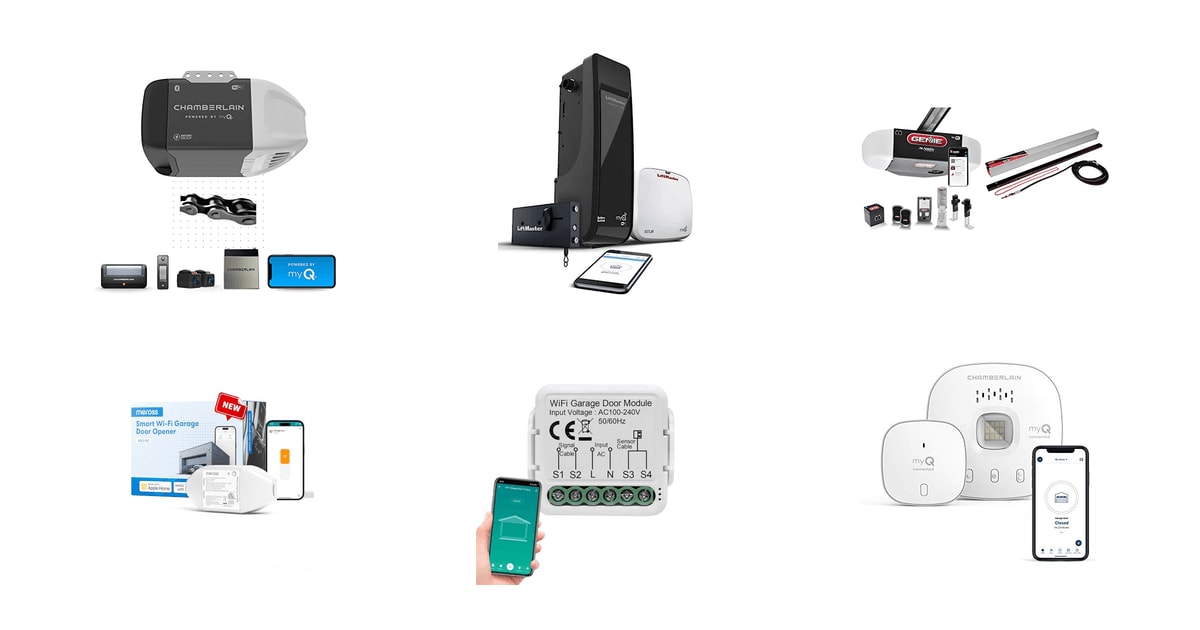
A garage door is the biggest moving thing most people own, and it's also the door you're most likely to leave open by accident. A smart opener fixes that. You get a phone alert when the door's been up for an hour, you can close it from a hotel room, and you can let a delivery driver drop a package inside instead of on the porch. Some of these are full replacement openers with Wi-Fi built in. Others are small retrofit boxes that bolt onto the opener you already have and cost a fraction as much.
Here's the honest part: none of this is as tidy as the marketing suggests. Almost every device on this list needs a 2.4 GHz Wi-Fi network, so if your router only broadcasts 5 GHz you'll be digging through settings before you dig through the box. Detached garages at the far end of a driveway are a coin flip for signal. And the big ecosystem, Chamberlain's myQ, closed off free third-party API access, which broke direct Home Assistant and IFTTT connections that people had relied on for years.
Retrofit or replace is the first fork in the road. If your current opener works and isn't ancient, a controller is the cheaper, faster answer. If the motor grinds or the door shakes the ceiling above a bedroom, replace it and get quiet as part of the deal. We think that the Chamberlain C2212T is the best smart Wi-Fi garage door opener for most people, and that the Meross MSG150HK is the one to buy if your opener still works fine and you just want it on your phone.
Everything we recommend

Smart control and a backup battery, without the premium ask
Native Apple Home control on the opener you already own

Wall-mounted, whisper quiet, and it locks the door behind you
The simplest way to add myQ to a decades-old opener
At a glance
| Product | Price | |
|---|---|---|
| Chamberlain C2212T Smart Wi-Fi Garage Door OpenerTop pick | $309.99 |
| 98022 Premium Series By LiftMasterUpgrade pick | $675.65 |
 | Genie StealthDrive Connect Model 7155-TKV Smartphone-Controlled Ultra-QuietAlso consider | $401.96 |
| meross Smart Garage Door Opener RemoteBudget pick | $69.99 |
 | Smart WiFi Garage Door OpenerAlso in lineup | $23.59 |
| CHAMBERLAIN Smart Garage Control - Wireless GarageAlso great | $64.99 |
How we picked
Retrofit or replace. We separated full replacement openers from small controllers that bolt onto an existing unit, because the right answer depends entirely on whether your current motor still runs. A controller has to be a genuine shortcut, not a half-measure.
Ecosystem and fees. We looked at which voice assistants and home apps each product supports natively, and whether any feature sits behind a subscription. Remote access and alerts should be free, and we noted where myQ's third-party restrictions limit what you can build.
Noise and drive type. Published measurements put belt and DC wall-mount openers around 54 to 58 dB against 60 to 65 dB for chain drives. We treated that gap as decisive for any garage sharing a wall or ceiling with a bedroom.
Power and door size. We checked motor rating against door type, since heavy wood, oversized, and 8-foot doors need more than a standard 1/2-HP unit. Battery backup was close to a requirement, and it's legally mandated for new openers in some states.
Security and access. Every modern opener here uses rolling-code encryption, so we focused on what's above that baseline: encrypted cloud communication, access history, guest sharing, and automatic locking. Owner reports of doors opening on their own counted heavily against a product.
Top pick
Smart control and a backup battery, without the premium ask
Chamberlain C2212T Smart Wi-Fi Garage Door Opener
This is a complete replacement opener with myQ Wi-Fi and Bluetooth built in, plus a battery that keeps the door working through a power outage. It's a chain drive, so it's not the quietest option here, but it's the most straightforward upgrade for a garage that needs a new motor.
$309.99fromAmazonIf your old opener has died, this is the one to replace it with. You get smartphone control, alerts, and scheduling out of the box, with no extra hub to buy or hide. The myQ app handles the basics well: check whether the door is open from anywhere, close it, set a nightly auto-close so you stop lying in bed wondering. Bluetooth pairing shortens the setup, which matters when you're standing on a ladder with a phone in one hand.
The battery backup is the feature people underrate until the power goes out. Without one, a dead outlet means pulling the emergency release cord and lifting a heavy door by hand, in the dark, probably in the weather that caused the outage. Some states require battery backup on new residential openers now. Either way, you'll want it.
Chain drive is the trade-off. Chain models run somewhere around 60 to 65 dB where belt drives land closer to 54 to 58, and that gap is noticeable if there's a bedroom over the garage. Owners of this one still describe it as considerably quieter than whatever forty-year-old unit it replaced, which is the comparison most people are actually making. If your garage is detached or separated from living space, the noise is a non-issue.
Installation is a real project, not an afternoon errand. Plan on a few hours, and get a second person for the rail lift. Chamberlain runs the instructions through an app rather than a paper manual, which is genuinely clearer with 3D steps but means keeping a phone charged and propped up nearby. Retirees and first-timers do finish this job. Just don't start it at 4 p.m. on a Sunday.
Flaws but not dealbreakers
A handful of owners hit a wall connecting to Wi-Fi or linking the opener to a car's built-in controls. It usually traces back to 2.4 GHz band settings or a weak signal at the ceiling, but it can turn a finished install into an evening of router fiddling.
The chain is the loudest drive type in this guide. If quiet is your top priority, spend up for a belt or jackshaft model instead of trying to muffle this one.
myQ's third-party lockdown applies here. If you were planning to wire this into Home Assistant or a custom automation stack for free, you can't.
Chamberlain does not state a warranty term in this listing.
Budget pick
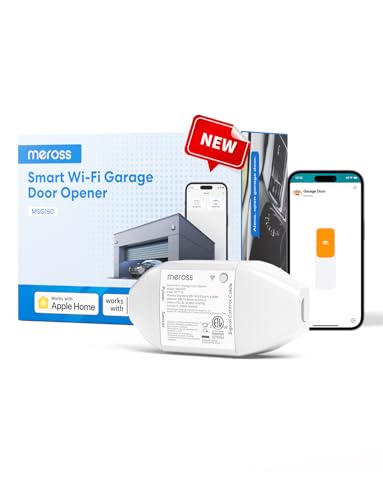
Native Apple Home control on the opener you already own
meross Smart Garage Door Opener Remote
This small retrofit box adds app control, voice control, and open-door alerts to most Chamberlain, LiftMaster, and Craftsman openers. It works natively with Apple Home, Alexa, and Google Assistant, and there's no subscription for any of it, including remote access.
$69.99fromAmazonIf your opener works, buy this instead of a new opener. Professional installation of a replacement opener costs more in labor alone than this controller costs outright. You mount a small hub, connect it to the opener's terminals, and you're done. Meross designed the MSG150HK without a separate wired door sensor, which removes the fiddliest part of most retrofit installs.
For Apple households, this is close to the only game in town. Native HomeKit support means the door shows up in the Home app alongside your lights, works with Siri on your watch and in CarPlay, and can be part of a scene. Response is quick, roughly a second or two through the Home app according to published reviews. No bridge, no hub, no monthly fee.
The alerts are the everyday payoff. You can be told when the door's been open too long, when it's still open at midnight, or every single time it moves. You can also have it close itself on a schedule. If you have teenagers or a partner who forgets, this quietly ends an entire category of household argument.
One catch worth knowing before you order: it's built for Chamberlain, LiftMaster, and Craftsman openers using Security+ 1.0 or 2.0. Other brands aren't supported. And if you want Apple Home control from outside the house, you need a home hub — a HomePod or Apple TV — sitting on your network. Without one, Siri and the Home app only work while you're on your own Wi-Fi.
Flaws but not dealbreakers
A small number of owners report the door opening on its own overnight with no automation configured. That's rare, and Meross support has a reputation for replacing bad units quickly, but it's the kind of failure you can't shrug off on a garage door. Set the open-alert notifications on day one.
The app can be inconsistent about reporting door status. It reliably warns you when the door's been left open, but a few owners describe it occasionally showing the wrong state.
The HomePod-or-Apple-TV requirement for remote Apple Home access catches people off guard. Read that line twice before you buy.
Upgrade pick
Wall-mounted, whisper quiet, and it locks the door behind you
98022 Premium Series By LiftMaster
This jackshaft opener mounts on the wall beside the door instead of on the ceiling, so there's no rail overhead and much less noise and vibration. It has built-in Wi-Fi, battery backup, and an automatic deadbolt that locks the door after every close.
$675.65fromAmazonNothing else here changes the feel of a garage the way this does. The motor lives on the wall next to the torsion bar, so the ceiling stays clear — room for a car lift, overhead storage, or just a high-lift door track. Owners who moved from a ceiling unit consistently mention the reclaimed space before they mention anything else.
The DC motor is the quietest option in this guide. There's no rail, no chain slapping, no belt running the length of the ceiling. Vibration doesn't transfer through joists into the room above. If your bedroom or nursery sits over the garage and you leave for work at 5 a.m., this is the reason to spend the money.
The automatic lock is a genuine security upgrade, not a spec-sheet flourish. After the door closes, a deadbolt drives into the track, so the door can't be forced or pried up from the bottom. Combine that with myQ alerts and access history and you have a much harder target than a standard opener. It also meets California's SB-969 battery backup requirement.
It handles doors that other openers struggle with. Owners running 16-foot double doors and high-lift setups report daily, heavy-cycle use without trouble. If your door is oversized, heavy, or wood, this is the safer buy.
Flaws but not dealbreakers
It's the most expensive unit here by a wide margin, and a jackshaft opener requires a torsion-spring door. If yours uses extension springs along the side tracks, this won't work.
A few owners have fought persistent safety-sensor alignment errors that turned out to be a faulty logic board, and getting that resolved under warranty took real persistence. The failure is uncommon, but it's frustrating on a premium product.
You're locked into myQ. That means no free Home Assistant integration and a paid subscription for some third-party connections.
Also great
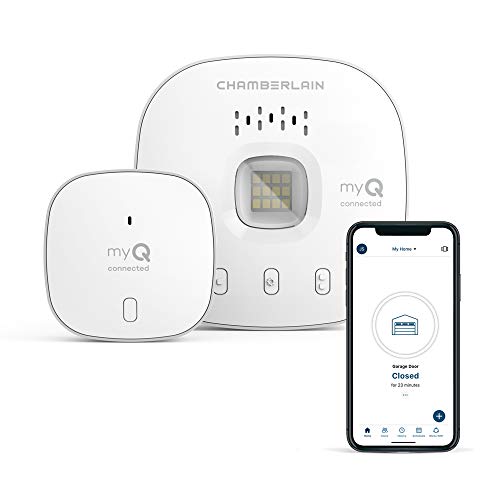
The simplest way to add myQ to a decades-old opener
CHAMBERLAIN Smart Garage Control - Wireless Garage
Chamberlain's retrofit hub adds myQ app control and alerts to most opener brands made after 1993, using a wireless door sensor and no wiring at all. It's the only pick here that supports Amazon Key in-garage delivery.
$64.99fromAmazonThis works with openers old enough to vote. People with 1990s Craftsman and Genie units regularly report it pairing on the first try. There's no wiring into a control board — the hub plugs into an outlet, a battery-powered sensor sticks to the door, and the hub talks to the opener over radio the way a remote does. Most installs run under half an hour.
In-garage delivery is the reason a lot of people buy this specific hub. If you're a Prime member, Amazon can open the door, set the package inside, and close it, which solves porch theft in a way no camera does. That integration is exclusive to myQ hardware, so no other retrofit on this list can do it.
The everyday features are the ones you'd expect and want: close from anywhere, share access with family, set a nightly auto-close schedule, and see history of when the door moved. For a household that just wants to stop worrying whether the door is shut, that's the whole job done.
Compatibility has a real edge case. It needs photoelectric safety sensors that stay powered continuously. Some openers cut power to the sensors between cycles, and this hub can't work with those. Chamberlain spells that out, but it's buried at the bottom of the listing where people skip it.
Flaws but not dealbreakers
The hub's wireless link to the door sensor is the weak point. Owners with the hub far from the door, or with metal and concrete in between, report dropped connections and a sensor that goes unresponsive. Some end up buying a second hub for a second door rather than trying to cover both from one spot.
Everything runs through myQ's cloud. When the service has a bad day, or your internet drops, the app stops working — your wall button and remotes still do, but the smart features go dark.
The third-party restrictions bite hardest here. If you bought this expecting free Home Assistant or IFTTT control, that door closed.
Who this is for
Buy now if your opener has failed, if it's loud enough to wake someone up, or if you've ever driven to work wondering whether the door was left up. That last one is the most common reason people end up here, and the fix costs less than most people expect — a retrofit controller and twenty minutes. If you rent, or your opener works perfectly and you have no complaints beyond wanting phone control, skip the replacement openers entirely and get a controller.
This guide covers residential Wi-Fi openers and retrofit controllers for standard sectional garage doors, both ceiling-mounted and wall-mounted. It doesn't cover commercial operators, gate openers, or the accessories that orbit these systems — keypads, extra remotes, laser parking guides. Two situations deserve a warning. If your garage is detached and far from the router, check your signal at the ceiling before you buy anything, because every product here lives or dies on 2.4 GHz Wi-Fi reaching that spot. And if your door uses extension springs rather than a torsion bar, a wall-mount jackshaft opener isn't an option for you.
How we picked
We weighed a handful of things that actually change how one of these feels to live with. Retrofit or replace: whether a small controller can do the job your working opener already does, saving you the cost of a new motor and professional labor. Ecosystem and fees: native support for Apple Home, Alexa, and Google Assistant, and no subscription for remote access, alerts, or sharing — with a hard look at where myQ's closed API cuts off integrations people used to get free. Noise: belt and DC wall-mount motors run roughly 54 to 58 dB against 60 to 65 for chain drives, which is the difference between hearing the door and being woken by it. Power and door size: enough motor for heavy, wide, or 8-foot doors, plus battery backup so an outage doesn't leave you hand-lifting the door. Security: rolling-code encryption as the floor, then encrypted cloud traffic, access logs, guest sharing, and automatic locking above it.
Other smart wi-fi garage door openers worth considering
If you want a quiet belt drive and want to avoid myQ entirely: The Genie StealthDrive Connect Model 7155-TKV Smartphone-Controlled Ultra-Quiet ($401.96) — Genie's StealthDrive Connect pairs a 1-1/4 HPC DC motor with a steel-reinforced belt, and it runs on Aladdin Connect rather than myQ — so Chamberlain's API decisions don't affect you. It works with Alexa and Google Assistant, includes battery backup rated for about 50 cycles after an outage, and this bundle ships with the extension kit for 8-foot doors, which is a real hassle saved if you have tall doors. Owners consistently call it the quietest opener they've owned. The knock is the rail: the 5-piece snap-together system installs quickly but several owners describe it as flimsy compared to the motor it's attached to. It also lacks native Apple Home support, so HomeKit users are better off with a Meross controller on a different opener.
The competition
Here's what our research surfaced, not everything sold. The smart garage category churns constantly, and several products worth knowing about — geofencing controllers, Matter-certified openers arriving as the 1.3 spec rolls out — weren't part of this lineup.
The Smart WiFi Garage Door Opener ($23.59) — The Bryxium universal Wi-Fi controller is the widest net here for compatibility, claiming support for over 200 brands and 1,600 models, which makes it the obvious candidate if you own a Genie, Craftsman, or off-brand opener that Meross won't touch. It runs through Tuya and Smart Life rather than a Bryxium-branded app, supports Alexa and Google Assistant with no subscription, and includes geofencing so the door can open as you pull in. We didn't make it a pick because it's a new listing with very little owner history behind it, and one of the few reports already describes the unit dropping Wi-Fi after a couple of months. It also skips Apple Home. If your opener isn't a Chamberlain-family unit and you're comfortable being an early adopter, it's the most flexible option on this page.
Installation notes
Before you order anything, walk into your garage with your phone and check the Wi-Fi signal at the ceiling above the door — that's where the radio will live, and it's usually the worst spot in the house. Confirm your router broadcasts a 2.4 GHz band, since almost nothing in this category works on 5 GHz alone. For a full opener replacement, set aside most of a day and find a second person for the rail lift; the manual is often an app, so keep a phone charged and propped where you can see it. For retrofit controllers, the fussy part is the door sensor, not the wiring. Mount it where the hub has a clear shot to it. Once everything's running, turn on the door-left-open alert immediately, and test the auto-reverse by blocking the photo eye. That safety feature is why these doors cause far fewer injuries than they otherwise would.
Questions we get
Do I need to replace my whole opener to make it smart, or can I just add a controller?
If your opener runs fine, add a controller. A retrofit hub costs a fraction of a new opener and skips the labor bill entirely, and installation usually takes well under an hour. Replace the whole unit only if the motor is failing, the door is too loud for the room above it, or you want battery backup and don't have it.
What's the best smart garage door opener that works with Apple HomeKit without a subscription?
The Meross MSG150HK. It shows up natively in the Apple Home app with no bridge or hub device required, and every feature — remote access, automations, alerts — is free. One requirement people miss: to control it from outside the house through Apple Home, you need a HomePod or Apple TV acting as a home hub on your network.
Does myQ require a monthly subscription?
Not for the core features. Opening, closing, alerts, scheduling, and sharing access all work free in the myQ app. What changed is third-party integration — Chamberlain restricted free API access, which broke direct Home Assistant and IFTTT connections and put some of that behind a paid tier. If a custom automation stack matters to you, look at Genie's Aladdin Connect or a Meross controller instead.
Can these work without internet or if my Wi-Fi goes down?
The door still opens. Your wall button, your remotes, and your keypad all work over radio and don't touch the internet. What you lose is the phone app, remote access, alerts, and voice control, since those route through the manufacturer's cloud. Battery backup covers the separate problem of a power outage.
What's the difference between a belt drive and a chain drive?
Noise, mostly. Belt drives use a reinforced rubber belt and run around 54 to 58 dB, while chain drives use a metal chain and land closer to 60 to 65 dB. That's a real difference if there's a bedroom over the garage. Chains are cheaper and hold up fine, so if your garage is detached or nobody sleeps nearby, save the money.
Are smart garage door openers safe from hacking or code theft?
The old code-grabbing attacks don't work anymore. Every modern opener uses rolling-code encryption, which generates a new code with each button press, so a captured signal is useless. The bigger risks now are account-level: use a strong password, turn on two-factor authentication if the app offers it, and don't leave a remote clipped to a visor in an unlocked car.
Why you should trust us
For this guide:
- We compared manufacturer specifications, listing details, and published reviews from outlets including CNET, PCMag, Wirecutter, Tom's Guide, and Consumer Reports for every product in this lineup.
- We read owner feedback across each listing for recurring themes around installation difficulty, Wi-Fi reliability, and noise, and weighted repeated complaints more heavily than isolated ones.
- We reviewed Chamberlain's and LiftMaster's own documentation on myQ integration policy and encryption, along with the Connectivity Standards Alliance's Matter 1.3 garage door specification.
- We read owner reviews on every listing, weighted toward the critical ones, because that is where the recurring failures show up.
- We have a systematic way of automatically fetching the latest prices, so the numbers on this page stay current.
- This is a research-focused guide, so the team may not own every product listed — though we often do own the top winners, which gives us extra context for the recommendations.
- We don't accept free products, and the retailer commission never changes which product we recommend.
Sources
Best Smart Garage Door Openers — Wirecutter (NYT), Wirecutter
Best Smart Garage Door Openers 2026 — CNET, CNET
Best Garage Door Openers 2026 — Tom's Guide, Tom's Guide
Best Smart Garage Door Controllers — PCMag, PCMag
Best Garage Door Openers 2026 — Bob Vila, Bob Vila
Best Smart Garage Door Openers — SafeWise, SafeWise
Garage Door Safety — U.S. Consumer Product Safety Commission, U.S. Consumer Product Safety Commission (CPSC)
Matter Smart Home Protocol — Connectivity Standards Alliance, Connectivity Standards Alliance (CSA)
Smart Home & Access Control Market Outlook — Statista, Statista
LiftMaster 85503 Product Specifications — LiftMaster, LiftMaster
Meross MSG100HK Full Review — 9to5Mac, 9to5Mac
Garage Door Opener Buying Guide — Consumer Reports, Consumer Reports
Amazon product listings and owner reviews for all 6 products
Manufacturer specification pages for each product
Some passages in this guide may be paraphrased with AI help. Prices are refreshed automatically.
More like this.
Continue exploring home reviews and recommendations.

The Best Garage Door Insulation Kits
A bare steel garage door is basically a heat sink bolted to your house. In July it soaks up sun all afternoon and radiates it into the space where your…

The Best Smart Door Locks and Keyless Entry Systems
A smart lock earns its keep in the small moments. You're carrying groceries in both arms and the door opens anyway. Your kid gets home from school and you…

The Best Electric Wine Openers
Opening a bottle shouldn't be a workout. But if your hands ache, or you're pouring for eight people at once, a waiter's corkscrew gets old fast. An…

The Best Can Openers
A can opener is one of those tools you don't think about until it fails you. Then you're standing over a half-open can of tomatoes, working the wheel back…

The Best Cordless Drill Sets for Home Improvement
A cordless drill is the tool you'll reach for more than any other, and most of the time you're not doing anything heroic with it. You're hanging a curtain…

The Best Home Espresso and Matcha Machines
Most mornings you don't want a hobby. You want a drink that tastes like the one you'd pay for down the street, and you want it before the school run.…