The Best Garage Door Insulation Kits
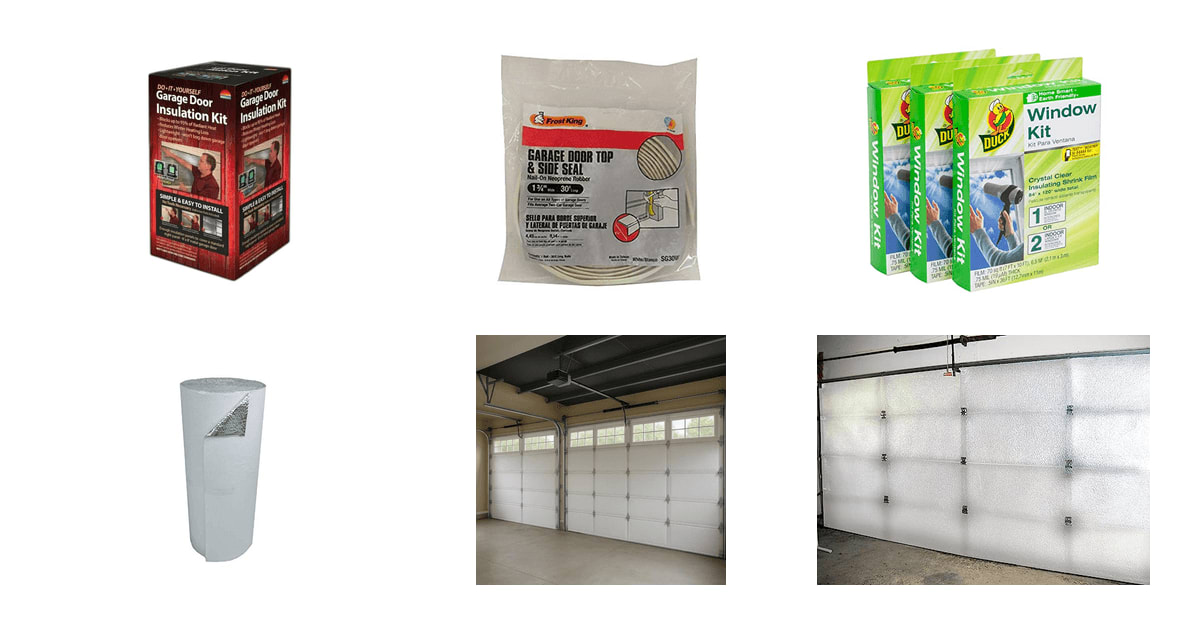
A bare steel garage door is basically a heat sink bolted to your house. In July it soaks up sun all afternoon and radiates it into the space where your car, your bikes and sometimes your washing machine live. In January it does the reverse. If your garage shares a wall with the house, that swing follows you indoors — the bedroom above the garage runs cold, the mudroom stays chilly. A good insulation kit won't turn the garage into a conditioned room, but it takes the edge off both extremes.
Here's the honest part. None of these kits does what real wall insulation does. They're thin — a fraction of an inch, not three and a half — so the R-value claims on the box tell you less than you'd hope, and none of them is independently certified. They also do nothing about the gap around your door, which is where a surprising amount of air moves. Owners who insulate the panels and skip the perimeter often report a smaller change than they expected. Plan on doing both.
Most of these kits install with adhesive pads or double-sided tape, and the tape is where projects go sideways. Panels that get pressed on too fast peel off in a week. Budget an afternoon and work slowly. We think the Reach Barrier kit is the best garage door insulation kit for most people, and that the NASA TECH two-car kit is the one to buy if you have a single wide 18-foot door rather than two separate bays.
Everything we recommend
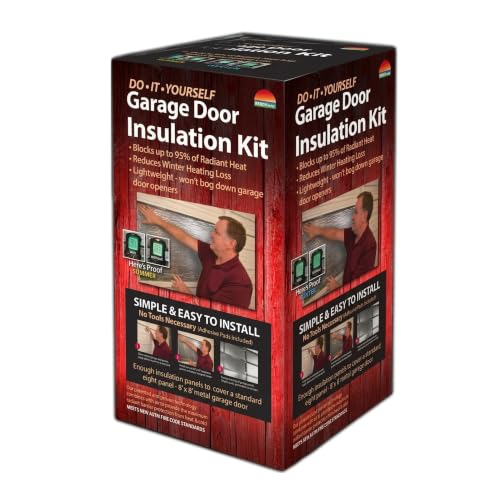
Pre-cut panels, no tools, and it works both directions

One box covers a full two-car door, hardware included

Seals the gap that undermines everything else you do
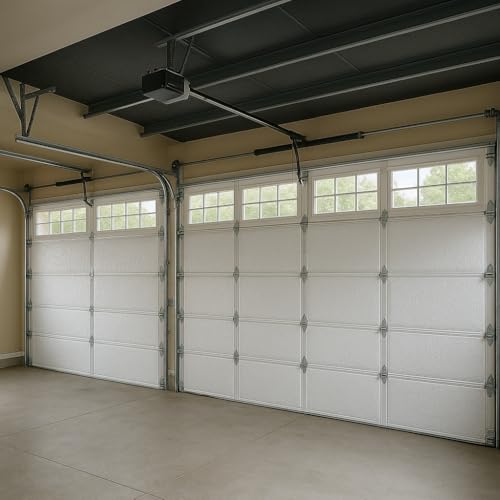
Foam core and a clean white face, for one door
At a glance
| Product | Coverage Size | R-Value | Price | |
|---|---|---|---|---|
| Reach Barrier Garage Door Insulation KitTop pick | 8ft x 8ft | — | $58.88 |
| Frost King SG30W Frost King Plastic GarageBudget pick | 1-3/4in x 30ft | — | $20 |
 | Duck Brand Window Insulation Kit for IndoorAlso in lineup | 84in x 120in | — | $35.99 |
 | Us Energy Products 48" x 100' DoubleAlso consider | 48in x 100ft | R8 | $194.89On sale |
| SmartGARAGE - Reflective Garage Door Insulation KitUpgrade pick | 21in x 440in | R-8 | $99.95 |
| NASA TECH White Reflective Foam Core 2Runner-up | 18ft x 8ft | R8 | $116.87 |
How we picked
How it moves heat. We separated pure radiant barriers from foam-core hybrids, because they solve different problems. Reflective-only kits suit hot-climate solar gain; foam cores earn their place where winters are cold.
Fit and coverage. We compared stated panel sizes and roll dimensions against standard door openings of 8x7, 8x8, 16x7, 18x7 and 18x8 feet. A kit that requires trimming every panel loses ground to one that drops in.
What's in the box. We checked spec sheets for included adhesive, tape, blades and instructions. Owner feedback consistently flagged short tape supply as the top frustration, so we weighted completeness heavily.
Added weight. Garage doors are spring-balanced, so we favored kits that add only a few pounds per door. Listed weights and owner accounts of avoiding spring adjustment both fed into this.
Holding up over time. We looked for owner reports past the first season — adhesive still holding, panels still flat, no sagging. Multi-year follow-ups carried more weight than first-week impressions.
Top pick
Pre-cut panels, no tools, and it works both directions
Reach Barrier Garage Door Insulation Kit
Eight pre-cut 24-by-48-inch reflective panels that stick to a standard single-car door with the included adhesive squares. You need no tools, no cutting in most cases, and it reflects heat whether it's coming in or trying to get out.
$58.88fromAmazonThe pre-cut sizing is the whole point. Each panel is 24 by 48 inches, which drops into one bay of a standard sectional door. Owners routinely say they didn't cut anything — they just folded the edges and stuck them down. If your door has an odd bay depth, scissors handle it. That sounds like a small thing until you compare it to a 100-foot roll you have to measure, mark and slice eight times.
Both faces of each panel carry reflective film, with two bubble layers between them. So it pushes back on solar gain in summer and slows heat leaving a warm garage in winter. Owners in the Carolinas and the Southeast — the hardest test for adhesive — report panels still holding after triple-digit summers, and one three-year follow-up describes the same panels still doing their job.
The panels weigh very little, and that matters more than it sounds. Your door is balanced against springs, and every pound you add works against that balance. At 5/32 of an inch and about three pounds for the whole kit, this is the lightest way to insulate a door. Several owners specifically chose it to avoid a spring adjustment, and a few worked around hurricane bracing without trouble.
If you're in Texas, Florida or Arizona, this is the mechanism you want. Most of the heat coming through a dark steel door on a summer afternoon is radiant — absorbed by the skin and re-radiated inward. A reflective barrier addresses that directly, and it's the reason a thin product can outperform its thickness in a hot climate.
Flaws but not dealbreakers
Silver shows. If your door has window inserts, the reflective face is visible from the street, and more than one owner realized this only after the panels were up. If that bothers you, a white-faced kit is the better look.
The included adhesive squares are a common shortfall. Owners regularly buy extra pads or tape from a hardware store to finish the job, especially if they're re-sticking a panel that shifted. Buy a roll of double-sided tape at the same time and you'll avoid a second trip.
This is a radiant barrier, not mass insulation. It won't give you the conductive resistance of a foam-core panel, and if you spend winter evenings in an unheated Minnesota garage, you'll notice the difference. Expectations set around "dramatic" temperature drops tend to end in mild disappointment; the honest description is noticeably better, not transformed.
Runner-up
One box covers a full two-car door, hardware included
NASA TECH White Reflective Foam Core 2
Four rolls of white foam-core reflective insulation sized for an 18-by-8-foot door, plus tape, a razor and a squeegee. It's the only kit here that handles a wide two-car opening in a single purchase without buying doubles.
$116.87fromAmazonIf you have one wide door rather than two singles, this is the simplest path. The kit covers 18 by 8 feet and also fits 18 by 7 — measure your door height before you order, because that's the one detail people get wrong. Four separate rolls means cleaner seams at the panel joints than a single sheet draped across hardware, which is how the ugly installs happen.
Foam core changes what the product actually does. The white-and-foil construction adds mass between the reflective layers, so it slows conductive heat loss in addition to bouncing radiant heat. The manufacturer rates it R-8. Take that number as a claim rather than a lab result, but the physical difference from pure bubble foil is real, and it's the reason this is the better choice for a cold winter than a foil-only kit.
The white facing makes a difference you'll live with daily. Instead of a wall of silver, you get a finished-looking interior, and owners consistently mention the appearance alongside the temperature change. The material is also a vapor barrier, which matters if your garage runs humid.
US Energy Products has a long track record here and backs the kit with a replacement offer for damaged rolls. Owners describe customer service that actually answers the phone. For a product where a short roll or a torn panel would otherwise wreck your Saturday, that counts.
Flaws but not dealbreakers
The included double-sided tape is the weak link, and owners are blunt about it. You have to peel the liner and let the adhesive tack up before pressing, and rushing that step is the most common way an install fails. A meaningful number of owners skipped the supplied tape entirely and bought heavy-duty 3M tape instead. Do that from the start and you'll save yourself a re-do.
Plan on three to four hours, not two, and ideally a second set of hands. Cutting each roll to fit the panel recesses, aligning four strips and working the tape takes real time. Owners who described the install as easy also described it as long.
Returns are not friction-free. At least one owner reported a return charge that wasn't obvious up front. Measure carefully and be sure before you cut.
Budget pick
Seals the gap that undermines everything else you do
Frost King SG30W Frost King Plastic Garage
Thirty feet of flexible plastic weatherstrip for the top rail and both side jambs of a standard door. It adds no R-value at all — it closes the perimeter gap that lets outside air walk straight past your new panels.
$20fromAmazonAir sealing is the step people skip, and it's the one with the fastest payback. A quarter-inch gap running the length of your door frame moves more air than any panel kit can compensate for. This costs a fraction of what any panel kit here does, it takes an afternoon, and it makes every other product here work better. Do it first.
The plastic stays flexible in cold weather, which is the whole job. Owners in northern climates report driving nails through it without cracking and getting years of service on garage doors, barn doors and gates. One long-time owner has used the same product across multiple doors for years running.
It's designed to compensate for uneven concrete and irregular jamb faces, so it cushions as it seals. You can nail it or adhere it. Several owners went with construction adhesive instead of the supplied fasteners and had no trouble, though nails are the more forgiving choice if you ever want to redo it.
There's a simple way to find out whether you need this. On a windy day, close the door and hold a stick of incense near the top rail and side jambs. If the smoke drifts, you have a gap. Almost everyone does.
Flaws but not dealbreakers
It contributes nothing to the door's R-value. If you buy this expecting insulated panels, you'll be disappointed — a few owners clearly did. Think of it as one half of a two-part system.
Plastic doesn't last like EPDM rubber. In a harsh climate, expect to replace it every few years. At what it costs, that's an easy trade.
One owner reported receiving foam rather than the plastic strip described. Check what's in the box before you start nailing.
Upgrade pick
Foam core and a clean white face, for one door
SmartGARAGE - Reflective Garage Door Insulation Kit
A 5mm closed-cell foam core sandwiched between engineered foil and white film, cut for a single-car door. It gives you the foam-core performance of the two-car kit in a single-bay size, with a finished look instead of bare silver.
$99.95fromAmazonThis is the kit to buy if you want foam-core construction but only have one single-car door. The foam layer adds mass the pure bubble-foil kits don't have, and the foil face is rated to reflect 95% of radiant heat. The manufacturer states R-8. As with every kit in this category, that's a manufacturer number, not a third-party certification.
The rigidity is the practical advantage. A foam sandwich holds its shape against the door bay instead of sagging or buckling over time the way a thin bubble panel can. Owners describe the finished result as looking professional, and the white film face is a genuine upgrade over a garage lined in reflective silver.
Owners in hot climates report the clearest results. In Florida and Orlando specifically, people describe garage temperatures dropping enough to change whether they'll work out there in the afternoon. The manufacturer's claim of a 15-degree drop drew skepticism from owners who then said it held up — take it as a directional signal, not a guarantee.
It's a one-door kit. For a two-car garage you need two, and for a three-car garage, three. That math is why some owners balk, and it's fair to weigh the total against a single two-car box before you commit.
Flaws but not dealbreakers
The tape is short and it's aggressive. Owners repeatedly report running low before finishing and describe the double-sided tape as so tacky it grabs your fingertips before it reaches the door. Wet fingers help. Buy extra tape up front.
INSULATION MARKETPLACE is a newer name than Reach Barrier or US Energy Products, and stock has been thin. If you need a specific quantity for a multi-bay garage, confirm availability before you plan the weekend.
Some owners feel the material is thinner than the price suggests, and a few noted they couldn't return it once they'd marked panels for cutting. Check the fit against your bays before you take scissors to anything.
Who this is for
Buy a kit if you have an attached garage in a climate with real summers or real winters, and especially if there's a bedroom or living space above it. That's where the payoff is most direct: you're insulating a boundary that touches conditioned space. A detached garage is worth doing too if you use it as a workshop or gym, though the benefit there is comfort rather than a lower utility bill.
Skip it if your door is already an insulated multi-layer steel unit, or if it's mechanically failing — rusted through, cracked panels, worn hardware. Adding insulation to a door that needs replacing is money in the wrong place. This guide covers DIY panel kits, bulk reflective roll material, perimeter weatherstrip and window film for glazed sections. It doesn't cover fiberglass batt kits, spray foam, or replacing the door itself.
How we picked
We built the shortlist around what actually changes how a garage feels. Heat mechanism: reflective foil for solar gain, foam-core hybrids where conductive loss through the panel matters. Fit: pre-cut panels that match standard bay dimensions beat bulk material you have to measure and cut, unless your door is non-standard. Completeness: adhesive pads or tape included, enough of it to finish, plus a blade and instructions where cutting is required. Weight: a few pounds per door, light enough that your springs and opener don't need attention. Durability: owner reports past the first summer, with panels still adhered and flat.
Other garage door insulation kits worth considering
If you want to insulate an oversized or custom door: The Us Energy Products 48" x 100' Double ($194.89) — This is 100 linear feet of 48-inch double-bubble foil in a single roll — enough to cover a non-standard RV door, a 10-foot commercial opening, or three separate bays without hunting for a pre-cut kit that fits. Owners use it well beyond garage doors: metal roofs, RV skirting, shed floors, and stacked layers over west-facing windows in Texas summers. What you give up is convenience. There's no tape, no adhesive and no blade in the box, so you're sourcing hardware separately and adding time. A few owners received rolls that ran short of the stated length, though the company replaced them promptly. For a standard 8x8 door, this is more material and more work than you need.
The competition
This is what the research turned up across pre-cut kits, bulk material and air sealing — not a survey of everything sold. One product here is a different category entirely, and we've flagged it rather than pretending it competes.
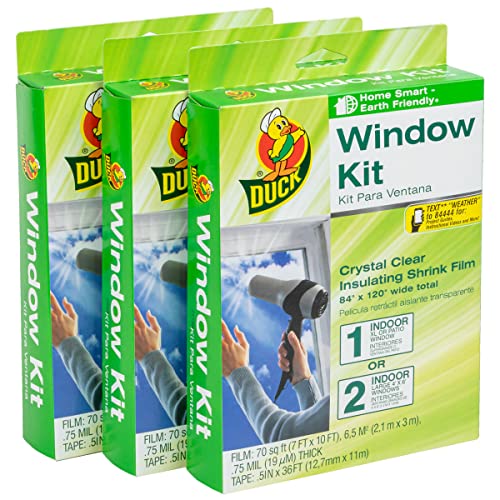
The Duck Brand Window Insulation Kit for Indoor ($35.99) — Duck Brand's extra-large window insulation kit is shrink film for windows, not garage door panels. It's a good product at what it does — three sheets of 84-by-120-inch film, clear enough after heat-shrinking that you keep the daylight, and owners in old drafty houses swear by it every winter. If your garage has single-pane windows or a glazed door section, this is the right fix for that specific surface. But it can't insulate a steel panel, it has to be reapplied each season, and the film is thin enough that rushing the heat-shrink step leaves wrinkles. Buy it as a supplement to a panel kit, never instead of one.
Installation notes
Clean the door first. Adhesive fails on dust, oil and moisture more often than it fails on its own, and a wipe-down takes five minutes. Measure each bay individually — sectional doors aren't always consistent top to bottom. If your kit uses heavy-duty double-sided tape, peel the liner and let it tack up before you press, and don't fight it with dry fingers. Buy extra tape before you start; running short partway through is the single most common complaint across every kit here. When you're done, disconnect the opener, lift the door to waist height and let go. A balanced door holds position. If it drops or climbs, call someone about the springs before you use it again.
Questions we get
What R-value should I look for in a cold climate?
Aim for a kit with a stated R-8, like the foam-core options here. A bare steel door is effectively R-0, so even a modest improvement is dramatic in relative terms. Keep in mind these ratings are manufacturer figures, not third-party certified. And seal the perimeter regardless — air moving around the door undercuts whatever the panels do.
What's the best kit for a two-car garage?
It depends on your door. If you have one wide 18-foot door, the NASA TECH kit covers it in a single box with hardware included. If you have two separate single-car doors, two Reach Barrier kits give you equivalent coverage with a much faster install, since the panels are pre-cut.
Will this damage my metal door?
No. Every kit here attaches with adhesive pads or double-sided tape — nothing that punctures the door skin. The Reach Barrier and SmartGARAGE pad systems are the gentlest option. Avoid construction adhesive or epoxy, which can pull paint and void a warranty on an insulated steel door.
Will the extra weight strain my opener?
For a standard kit, no. Panel kits add only a few pounds per door, well inside the capacity of any half-horsepower opener in decent shape. If you have an older third-horsepower unit or a door already near its spring limit, check the nameplate rating first and do the balance test after installing.
Does insulating the door cut noise?
A little. Foam-core panels add mass, which takes the edge off traffic and neighborhood sound — noticeable, not dramatic. Sealing the perimeter helps too, since high-frequency sound travels straight through an air gap. For real soundproofing you'd need mass-loaded vinyl or much thicker material.
Can I just use regular wall insulation batts instead?
You can, but don't. Standard batts are three and a half inches thick, far deeper than a garage door recess, and they'd add twenty to thirty pounds — enough to unbalance the door and strain the opener and springs. They also won't stay put through daily cycling without some improvised retention system. Garage door kits are thin and light for exactly these reasons.
Is it worth insulating an old door instead of replacing it?
If the door is mechanically sound, insulating it is almost always the better return. A kit costs a small fraction of a new insulated door installed, and it can last a decade. The exception is a door with rust, cracked panels or failing hardware — at that point you're insulating something that needs replacing anyway.
Why you should trust us
For this guide:
- We compared manufacturer spec sheets across all six listings, checking panel dimensions, stated R-values, material construction and what hardware each box includes.
- We read owner feedback for recurring themes rather than one-off complaints, which is how the short-tape problem and the double-sided tape failures surfaced across multiple products.
- We cross-checked coverage claims against standard garage door openings so the fit guidance here matches real door sizes rather than marketing copy.
- We read owner reviews on every listing, weighted toward the critical ones, because that is where the recurring failures show up.
- We have a systematic way of automatically fetching the latest prices, so the numbers on this page stay current.
- This is a research-focused guide, so the team may not own every product listed — though we often do own the top winners, which gives us extra context for the recommendations.
- We don't accept free products, and the retailer commission never changes which product we recommend.
Sources
How to Insulate a Garage Door — Step-by-step installation guide and R-value comparisons across insulation types, The Family Handyman
Best Garage Door Insulation Kits Reviewed — Tested kit roundup with climate-specific performance analysis, This Old House
Best Garage Door Insulation Kit — Expert testing and purchasing recommendations by climate type, Popular Mechanics
Insulation — U.S. Department of Energy guidance on home insulation R-values, energy savings estimates, and recommended installation sequence, U.S. Department of Energy
Amazon product listings and owner reviews for all 6 products
Manufacturer specification pages for each product
Some passages in this guide may be paraphrased with AI help. Prices are refreshed automatically.
More like this.
Continue exploring home reviews and recommendations.

The Best Smart Wi-Fi Garage Door Openers
A garage door is the biggest moving thing most people own, and it's also the door you're most likely to leave open by accident. A smart opener fixes that.…

The Best Window Insulation Kits and Draft Stoppers
A drafty house doesn't announce itself. You just notice that the room with the big window stays cold no matter how high you set the thermostat, or that…

The Best Attic Stair Insulation Covers
A pull-down attic stair is a hole in your ceiling with a thin piece of plywood over it. That panel does almost nothing thermally - think single-pane…

The Best Spray Foam Insulation Cans
A can of foam is a small fix for one of the biggest problems in your house. Air leakage accounts for 25 to 40 percent of heating and cooling losses in a…

The Best Water Heater Insulation Blankets
Your water heater sits there all day keeping 40 or 50 gallons hot, whether you're home or not. If the tank is old, a lot of that heat leaks straight into…

The Best Door Threshold Seals and Weatherstripping
You can feel a bad door seal before you can see it. Stand near the front door on a cold morning and there's a cool ribbon of air across your ankles. In…