The Best Electric Wine Openers
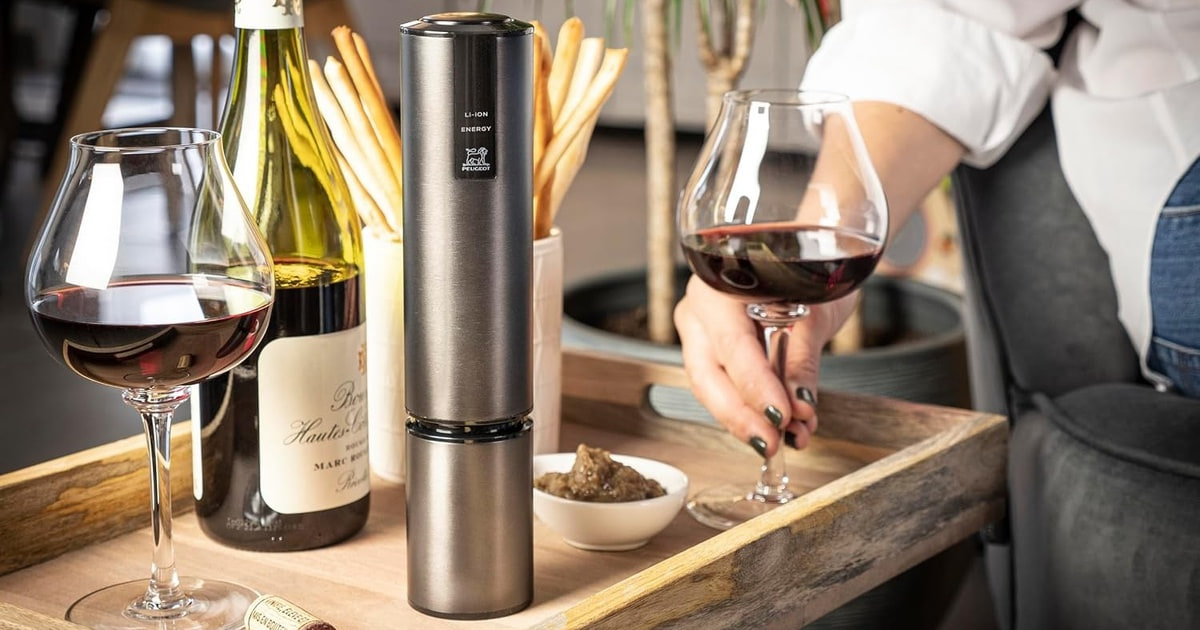
Opening a bottle shouldn't be a workout. But if your hands ache, or you're pouring for eight people at once, a waiter's corkscrew gets old fast. An electric opener takes over the hard part: you set it on the neck, press a button, and the cork slides out. Serious Eats' gear team puts most electric openers at five to eight seconds per bottle, roughly three times faster than the average manual technique. That's the whole pitch, and for a lot of people it's enough.
Here's the honest part. No electric opener is invincible. Synthetic corks are the usual culprit, and Wine Folly points to them as the most common cause of failures, because their density and springiness demand more torque than these motors were built for. Old, crumbly corks can shred on the way out. Every model here runs on a battery pack that fades with age. And when a cork does jam inside the screw, you're prying it out by hand.
So the things that matter aren't exotic. You want enough torque for the corks you actually drink, a battery that gets through a dinner party, a foil cutter attached to the same tool, and a base you can drop the opener into instead of a cable you'll lose in a drawer. We think that the Secura Electric Wine Opener is the best electric wine opener for most people, and that the Cuisinart CWO-25 is the one to buy if you drink a lot of wines with synthetic corks.
Everything we recommend

Fast, simple, and the one most kitchens should just buy

More bottles per charge, and it shrugs off synthetic corks

A quieter, better-built corkscrew, if you can pay for it

A soft-grip handle and a tidy base, in a familiar brand
Prices as of Oct 23, 7:21 AM PT · Details
At a glance
| Product | Bottles per charge | Foil cutter | Price | |
|---|---|---|---|---|
| Secura Electric Wine OpenerTop pick | — | — | $23.47 |
| Oster Cordless Electric Wine Bottle Opener withAlso great | Up to 30 | Included | $26.93On sale |
| Cuisinart CWO-25 Electric Wine OpenerRunner-up | Up to 50 | Included | $29.95 |
 | Waring WO50 Cordless Wine OpenerAlso in lineup | Up to 80 | — | $99.99 |
| Peugeot Elis Touch Rechargeable Electric CorkscrewUpgrade pick | — | — | $81.45 |
 | Rabbit Automatic Electric Corkscrew - Hands-Free WineAlso consider | 30+ | Built-in | $59.95 |
 | Wine Enthusiast 2-in-1 Electric Blue Automatic WineAlso consider | Up to 40 | 6-blade, included | Check price |
Prices as of Oct 23, 7:21 AM PT · Details
How we picked
Cork-pulling power. We prioritized openers whose manufacturers state that they handle synthetic corks as well as natural ones, since Wine Folly identifies synthetics as the most common cause of failure. Models that stay silent on the question got marked down.
Battery and charging. We compared published bottles-per-charge figures and how each model charges. Following Food & Wine's advice, we favored openers that sit in a dock over ones that rely on a loose USB cable.
Build and housing. Consumer Reports has found that metal-housed openers show less motor strain over repeated use than plastic-bodied competitors, so we weighted stainless and metal construction. Owner feedback about jamming and stuck corks counted against a model.
Grip and weight. A lot of buyers are here because manual corkscrews hurt. We looked at listed weight, body shape and grip material, and gave credit to openers a person can lift and place with one hand.
What's in the box. A built-in or included foil cutter saves roughly 10 to 15 seconds a bottle according to Wirecutter's testers, so we treated it as close to mandatory. Stoppers, aerators and presentation cases were a bonus, not a requirement.
Top pick
Fast, simple, and the one most kitchens should just buy
Secura Electric Wine Opener
The Secura is a cordless stainless-steel corkscrew that pulls a cork with one button and comes with a foil cutter and a charging base. It's compact enough to leave out next to the wine rack, and it's one of the most widely bought openers you can get.
$23.47fromAmazonPrices as of Oct 23, 7:21 AM PT · Details
The Secura gets out of your way, which is the whole point. You put it on the bottle, hold the button, and the cork comes out. There's no lever, no twisting, no bracing the bottle against your hip. Secura says it fits most standard bottle sizes, so you're not checking necks before you pour. If you've been avoiding wine because the corkscrew is a hassle, this fixes that.
The Good Housekeeping Institute's Kitchen Appliances Lab compared a dozen electric openers on extraction speed, noise and grip comfort, and named the Secura its best value pick. The built-in foil cutter matters more than it sounds like it should: Wirecutter's testers found that an attached cutter shaves roughly 10 to 15 seconds off each bottle compared with hunting down a separate one. Over a dinner party, that adds up.
The charging base is the other quiet win. Food & Wine's entertaining guide recommends docked openers over cable-only ones, because a dock cuts cord clutter and nudges you into recharging without thinking about it. The Secura's base is small, about 11 inches tall with the opener seated in it, so it parks next to a wine fridge or on a credenza and looks like it belongs there.
It also travels well, at least electrically. Secura lists a wide 100–240V input range, which covers the mains voltage in most of the world. The stainless finish wipes clean with a cloth, and the whole thing weighs a bit over a pound, so an older relative with weak grip can lift it one-handed. That combination is why we'd hand this to almost anyone.
Flaws but not dealbreakers
Secura doesn't publish a bottles-per-charge number, which is annoying when the Cuisinart and Oster both do. Owner feedback across electric openers in general points to batteries as the first thing to go, and Secura's own instructions tell you to top the opener up every three months even if you're not using it. Forget that for a winter and you may find it dead when guests arrive.
Like every motorized corkscrew here, it can lose a fight with a dried-out cork from the back of the cellar. If the cork crumbles, the screw grabs part of it and you're finishing the job with your fingers. That's the category, not this model — but it's worth knowing before you use it on a bottle you care about.
Secura's listing states 12 months of coverage along with customer service support.
Runner-up
More bottles per charge, and it shrugs off synthetic corks
Cuisinart CWO-25 Electric Wine Opener
The Cuisinart CWO-25 uncorks up to 50 bottles per charge and is rated for synthetic as well as natural corks. Two buttons — remove and eject — give you a little more control than a single-button opener, and the foil cutter stores in the charging base.
$29.95fromAmazonPrices as of Oct 23, 7:21 AM PT · Details
Cuisinart rates the CWO-25 for 50 bottles on one charge from its NiMH pack, which is well ahead of the 30 that Oster and Rabbit claim. If you host, that's the difference between charging before a party and not thinking about it. The base doubles as storage for the foil cutter, so the one piece everyone loses stays with the tool.
This is the pick if synthetic corks are a regular part of your life. Cuisinart says outright that it powers through synthetic or natural corks without breakage, and that's the failure mode Wine Folly flags as the most common in this category. Plenty of good everyday bottles now use molded plastic closures. If half your rack is that kind of wine, buy this one instead of the Secura.
The two-button setup — remove, then eject — takes one extra press, but it means the cork comes off the screw when you want it to, over the trash, instead of dangling while you carry the opener across the kitchen. Owners who've struggled with manual corkscrews single this out as the part that finally made opening wine easy. The stainless body wipes clean with a damp cloth.
It's also the pick we'd send as a gift to someone who trusts brand names. Cuisinart is a fixture on kitchen counters, service is easy to reach, and owners who've had a unit fail describe getting a replacement without much fuss. That's not glamorous, but a motorized gadget you'll own for years is exactly where a real support line earns its keep.
Flaws but not dealbreakers
NiMH batteries don't age as gracefully as lithium-ion. The most common complaint from owners is a unit that starts strong and then slows down, holds less charge, and occasionally splits a cork instead of pulling it. That's a couple of years in for most people, not a couple of weeks, but it's the clearest pattern in the feedback.
At 2 pounds it's heavier than the Secura and noticeably heavier than the Rabbit. If grip strength is the reason you're shopping, lift-and-place matters, and this one asks a bit more of your wrist.
Upgrade pick
A quieter, better-built corkscrew, if you can pay for it
Peugeot Elis Touch Rechargeable Electric Corkscrew
The Peugeot Elis Touch is the nicest-feeling opener here. You press it down on the bottle and it starts on its own, pulling traditional or synthetic corks without a button, and it arrives in a presentation case with a charging base and foil cutter.
$81.45fromAmazonPrices as of Oct 23, 7:21 AM PT · Details
Peugeot has been making corkscrews since 1810, and the company says the Elis line uses the same steel gear mechanisms as its manual screws, which is what makes the motor smoother and quieter in use. Noise is an underrated thing to care about. An opener that whirs like a power drill is fine alone in the kitchen and less fine two feet from a dinner conversation.
The touch start is the detail you'll notice every single time. There's no button to find — you press the corkscrew down onto the bottle and it goes. To release the cork, you tap the button on top. LED lights on the body tell you where the battery stands, so you're not guessing whether it'll make it through the evening.
Peugeot says it fits any bottle and removes any type of cork, traditional or synthetic, without breaking them. That matters most on the bottles you've been saving, where a shredded cork is a genuine loss. Consumer Reports has also found that metal-housed openers show less motor strain over repeated use than plastic-bodied ones, and the Elis is built to that standard rather than to a price.
It's the one to buy as a serious gift. It ships in a case with the charging base and a foil cutter already inside, so there's no assembling a present out of parts. For a wedding or a milestone birthday, that presentation is doing real work, and the recipient gets something that looks right sitting on a counter for years.
Flaws but not dealbreakers
It's the most expensive opener in this guide by a wide margin, and the extraction itself isn't meaningfully faster than the Secura's. You're paying for build quality, quiet operation and the look of the thing, not for speed.
Peugeot's listing doesn't finish the sentence about how many bottles a full charge opens, so there's no number to compare against Cuisinart's 50 or Oster's 30. Far fewer owners have weighed in on this model than on the mass-market ones, too, which means less long-term feedback to lean on.
Also greatOn sale
A soft-grip handle and a tidy base, in a familiar brand
Oster Cordless Electric Wine Bottle Opener with
The Oster opens up to 30 bottles per charge, cuts foil with an included cutter, and sits in a recharging base. Its soft-grip handle and simple push-button operation make it a good fit for anyone whose hands don't cooperate with a manual corkscrew.
$26.93fromAmazonTypical pricePrices as of Oct 23, 7:21 AM PT · Details
The handle is the reason to pick this one. Oster wraps the body in a soft grip, and the whole thing is shaped to be held rather than pinched. If arthritis or a weak wrist is what sent you shopping for an electric opener, that texture does more for you day to day than any spec on the box. One push of the button and the cork's out.
Everything you need comes in the box: the foil cutter, the recharging base, and a body that looks like a proper piece of barware instead of a gadget. Oster claims up to 30 bottles per charge, with a 6 to 8 hour recharge. For a household that opens a bottle or two a week, that's a top-up every couple of months.
It's also one of the most widely owned openers on the market, which is worth something on a product with a motor inside. Problems with a design this common surface fast and loudly, and the pattern here is a lot of people quietly using theirs for years. If you want the safe, boring choice from a name you already have in your kitchen, this is it.
Flaws but not dealbreakers
It's UL approved for 110–120 volts only, so it won't work abroad without a converter. The Secura's 100–240V range handles that without extra hardware.
Thirty bottles is the lowest per-charge claim among the models here that publish one, and a 6 to 8 hour recharge means you can't rescue a dead opener an hour before guests show up. At about 2 pounds and roughly 15 inches tall on its base, it also takes up more counter than the Secura does.
Who this is for
Buy one of these if opening wine has become a chore. That's most often people with arthritis or reduced grip strength, anyone who hosts and opens four bottles in an evening, and households where one person always gets handed the corkscrew. These are also easy gifts — they arrive looking like a present and they get used. If you open a bottle a month and your waiter's corkscrew works fine, you don't need one.
This guide covers motorized corkscrews that pull a cork out of a standard wine bottle. It doesn't cover manual openers, lever pulls, or the whole world of wine gadgets beyond opening. Preservation systems that pour through the cork solve a different problem, and we call that out where it comes up. Nothing here works on a champagne cork, and no electric opener should go near a bottle whose cork has already started to crumble.
How we picked
We built the shortlist around five things. Cork compatibility: the opener has to be rated for synthetic corks, not just natural ones, because that's where these motors usually give up. Battery and charging: we compared published bottles-per-charge claims and favored a charging dock over a loose cable, since a dock keeps the opener topped up without you thinking about it. Build: metal housings hold up better than plastic under repeated use, and owner reports of jamming or stuck corks knocked models down. Grip and weight: if your hands are the reason you're buying this, a soft handle and a light body matter more than any number. Accessories: an included foil cutter is close to non-negotiable, and a stopper or presentation case earns bonus points if you're buying this as a gift.
Other electric wine openers worth considering
If you want a gift-ready set that also saves what you don't finish: The Wine Enthusiast 2-in-1 Electric Blue Automatic Wine — The Wine Enthusiast 2-in-1 set is seven pieces: the opener, a stainless charging base, two vacuum stoppers with a day-set ring, a six-blade foil cutter, an aerating pourer and a wall charger. The opener starts when you place it on the bottle — no button — and Wine Enthusiast says it opens and seals up to 40 bottles per charge, with a battery display so you know where you stand. What you give up is simplicity. It's more parts to store and lose, and the motor doesn't have the track record that the Secura or the Cuisinart has. But if you're shipping this to a housewarming, the whole kit shows up looking intentional.
If you want the lightest opener that still does everything: The Rabbit Automatic Electric Corkscrew - Hands-Free Wine — The Rabbit automatic corkscrew weighs about 0.6 pounds and is a slim 9.5-inch cylinder, which makes it the easiest one here to hold with a bad wrist or pack for a weekend. It starts on contact, ejects the cork on its own, works with plastic corks, and has the foil cutter built right in. Rabbit rates it for 30-plus bottles per charge. The catch is how it charges: a micro-USB wall charger, no dock. Food & Wine's argument for docks is that they cut clutter and keep you in the habit of recharging, and a cable that lives in a drawer doesn't do either.
The competition
This is what our research surfaced, not a census of everything sold. We looked at the models that show up repeatedly in published reviews and in the buying guides from Good Housekeeping, Serious Eats, Food & Wine and Consumer Reports, plus the ones with enough owner feedback to draw a pattern from. One more deserves a mention.
The Waring WO50 Cordless Wine Opener — The Waring WO50 has the most appealing spec sheet in the group: up to 80 corks on one charge, brushed stainless accents, a rubberized handset, a removable foil cutter, and the metal-forward construction that Consumer Reports associates with less motor strain over time. On paper it's the entertainer's pick. Owner feedback is where it comes apart. The recurring complaint is jamming — a unit that works beautifully for a handful of bottles and then traps the cork inside, with the usual fixes not helping. It's also the heaviest and tallest thing here, at 3.25 pounds and about 15.5 inches on its base. If you want metal housing and the biggest per-charge number and you're willing to gamble on getting a good one, it's still a real option. We'd rather send you to the Cuisinart.
Care and maintenance
None of these are dishwasher-safe, and none should be dunked. Wipe the housing with a damp cloth and dry it — stainless bodies clean up in seconds. Cut and remove the foil completely before you start, since a stray ring of foil is what usually catches in the screw. If a cork sticks, run the eject function first and only then work it free by hand; forcing the screw is how motors burn out. Keep the opener on its base but don't leave the base permanently plugged in, since owners report shorter battery life from constant charging. If you go a stretch without opening anything, charge it every few months anyway — Secura asks for exactly that, and it's good practice for any of them.
Questions we get
Are electric wine openers worth buying?
If you open wine often, or if a manual corkscrew hurts your hands, yes. Serious Eats' gear team puts most electric openers at five to eight seconds a bottle, about three times faster than the average manual technique, and there's no bracing or pulling involved. If you open a bottle now and then and your corkscrew works fine, skip it.
What's the best electric wine opener for arthritis or weak grip?
Look at weight and handle shape first. The Oster's soft-grip body is easy to hold, and the Rabbit is the lightest here at roughly 0.6 pounds. Openers that start on contact — the Peugeot Elis Touch and the Wine Enthusiast set — save you from having to hold a button down at all.
Can electric wine openers remove synthetic corks?
The good ones can, but this is the most common failure point in the category. Wine Folly explains why: synthetic corks are denser and springier than natural cork, so they need more torque than many motors were designed to supply. Cuisinart, Peugeot and Rabbit all state plainly that their openers handle synthetics, which is what you want to see before you buy.
How many bottles will one charge open?
It depends on the model, and the published claims vary a lot. Oster and Rabbit say about 30 bottles, the Wine Enthusiast set says 40, and the Cuisinart CWO-25 says 50. Treat those as best-case numbers — a battery a few years old won't match its listed figure, and stubborn corks drain it faster.
Do electric wine openers work on champagne corks?
No. Sparkling wine uses a mushroom-shaped cork held down by a wire cage, and there's nothing for a corkscrew to grip. You open those by hand: remove the foil, loosen the cage, hold the cork and twist the bottle. Every opener in this guide is for still wine with a standard straight cork.
Is a wine preservation system better than an electric opener?
They solve different problems. An electric opener removes the cork so you can drink the bottle now. A needle-based preservation system pours through the cork without removing it, and Coravin says wine stored that way keeps for weeks. If you open expensive bottles for a single glass, that's a genuinely different tool — and it costs far more than any corkscrew here.
Why you should trust us
For this guide:
- We read the manufacturer specifications and listing details for every opener in this guide, including stated bottles-per-charge figures, cork compatibility, voltage and what ships in the box.
- We compared published findings from the Good Housekeeping Institute, Consumer Reports, Serious Eats, Wirecutter and Food & Wine on extraction speed, noise, housing materials and charging design.
- We read through owner feedback for each model to find the recurring themes — jamming, batteries that fade, and corks that split — rather than one-off complaints.
- We read owner reviews on every listing, weighted toward the critical ones, because that is where the recurring failures show up.
- We have a systematic way of automatically fetching the latest prices, so the numbers on this page stay current.
- This is a research-focused guide, so the team may not own every product listed — though we often do own the top winners, which gives us extra context for the recommendations.
- We don't accept free products, and the retailer commission never changes which product we recommend.
Sources
Best Electric Wine Openers of 2026 - Wine Enthusiast, Wine Enthusiast
We Tested 12 Electric Wine Openers — Here's What Won - Good Housekeeping, Good Housekeeping Institute
The Best Wine Openers - Wirecutter, Wirecutter (NYT)
Electric Wine Opener Reviews and Ratings - Consumer Reports, Consumer Reports
Coravin Timeless Six+ Review - Wine Spectator, Wine Spectator
Peugeot Elis Electric Corkscrew Product Specifications, Peugeot Saveurs (manufacturer)
How Electric Wine Openers Work - Serious Eats Gear Guide, Serious Eats
Cuisinart CWO-120 Wine Opener Manual and Specs, Cuisinart (manufacturer)
Best Kitchen Gadgets for Entertainers - Food & Wine, Food & Wine
Corkscrew Compatibility: Natural vs. Synthetic Corks - Wine Folly, Wine Folly
Amazon product listings and owner reviews for all 7 products
Manufacturer specification pages for each product
Some passages in this guide may be paraphrased with AI help.
Product prices and availability are accurate as of the date/time indicated and are subject to change. Any price and availability information displayed on Amazon.com at the time of purchase will apply to the purchase of this product.
More like this.
Continue exploring home reviews and recommendations.

The Best Can Openers
A can opener is one of those tools you don't think about until it fails you. Then you're standing over a half-open can of tomatoes, working the wheel back…

The Best Smart Wi-Fi Garage Door Openers
A garage door is the biggest moving thing most people own, and it's also the door you're most likely to leave open by accident. A smart opener fixes that.…

The Best Wine Coolers and Beverage Refrigerators
A wine cooler does one job: it holds a steady, cellar-ish temperature so your bottles don't cook on a kitchen counter or freeze in the back of the fridge.…

The Best Electric Spin Scrubbers for Bathrooms
Cleaning a shower by hand is mostly a lower-body problem. You kneel on tile, you lean into the tub, and your back files a complaint about ten minutes in.…

The Best Cordless Electric Snow Blowers
Snow clearing is a chore with a narrow window. You want the driveway open before work, in the dark, in the cold, without a trip to the gas station the…

The Best Electric Snow Shovels
An electric snow shovel isn't a snow blower, and that's the whole point. You carry it out one-handed, walk it down the sidewalk, and a spinning paddle…