The Best Robot Lawn Mowers
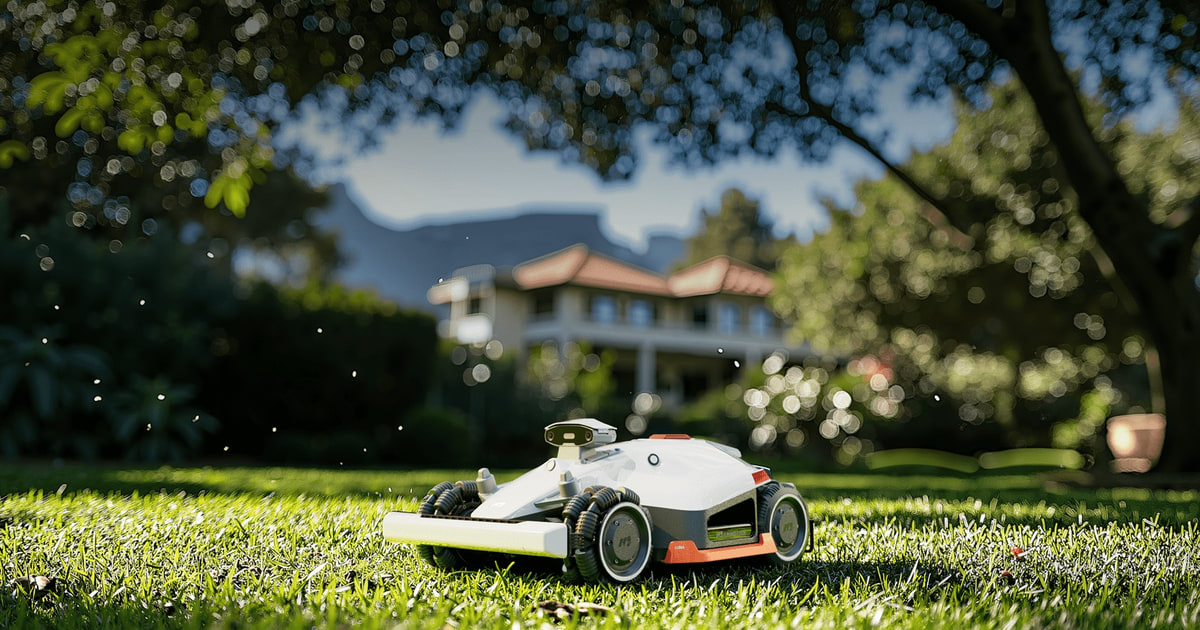
A robot mower changes the chore, not just the tool. Instead of one sweaty hour every Saturday, a small machine shaves a couple of millimeters off your grass most days and drops the clippings back as fertilizer. You stop thinking about it, and the lawn just stays at the height you picked. The clippings are fine enough to vanish, so you rake nothing and bag nothing. And because these run on a battery, your neighbors hear something closer to a conversation than a leaf blower.
No robot mower handles everything, though. They all leave a strip along fences, walls and beds, so you'll still trim edges by hand every few weeks. They're slow by design, and if the grass gets away from you — a rainy week, a vacation — they bog down and leave patches you'll have to clean up yourself. Wire-free models lean on a satellite fix, so heavy tree cover and tall houses can confuse them. And every one of these is a small computer that lives outdoors.
So the question isn't whether a robot mower beats a gas mower. It's whether your yard is the kind these machines are good at: reasonably open, not too chopped up, and the size the spec sheet claims. Slope rating and coverage area do most of the work in narrowing the field. We think that the Segway Navimow i110N is the best robot lawn mower for most people, and that the Mammotion LUBA 2 AWD 5000HX is the one to buy if your lawn is big, steep, or both.
Everything we recommend

Wire-free setup and quiet mowing for a normal suburban lawn

All-wheel drive for steep, rutted, awkward yards
Half-acre coverage with no reference antenna to mount
At a glance
| Product | Coverage Area | Max Slope | Price | |
|---|---|---|---|---|
| Mammotion LUBA 2 AWD 5000HX Robot LawnUpgrade pick | 1.48 Acres | 80% (38°) | $2,299 |
| Segway Navimow i110N Robot Lawn Mower PerimeterTop pick | 1/4 Acre | — | $1,099 |
| Bundle of WORX Landroid Vision Cloud RobotAlso great | 1/2 Acre | — | $1,448.99 |
 | Gardena Sileno Life: Robot Lawnmower for AreaAlso in lineup | 1250 m² | 35% | $2,650.85 |
How we picked
Slope and terrain. We treated the grade rating as the first filter, since most budget models stop at 25–35% and hilly yards eat them alive. Anything we recommend for slopes had to be backed by both a manufacturer rating and a published review of the mower climbing something steep.
Coverage per charge. We compared rated square footage and per-charge coverage against real lot sizes, from a quarter-acre suburban plot up to a couple of acres. A mower that technically covers your lawn but needs three charge cycles to do it isn't a good match.
Setup and navigation. We looked at what it actually takes to get each one running: burying a perimeter wire, mounting a satellite antenna, or just walking the boundary with a phone. Consumer Reports found RTK systems map boundaries much faster and more precisely than camera-only navigation, so we favored RTK where the budget allowed.
Obstacle handling. We read spec sheets for camera field of view, recognized object types and stopping behavior, then checked owner reports for how those claims hold up around dogs, hoses and forgotten toys. Bumper-only detection wasn't enough.
Noise and neighbors. Robot mowers run at roughly 58–65 dB versus 89–95 dB for a gas walk-behind, according to the Good Housekeeping Institute. We gave weight to the quieter end of that range, because a quiet mower is one you can schedule at dawn.
Top pick
Wire-free setup and quiet mowing for a normal suburban lawn
Segway Navimow i110N Robot Lawn Mower Perimeter
The Navimow i110N maps your lawn from your phone — no boundary wire to bury — then works through it zone by zone until it's finished. It's quiet enough for early mornings, and its camera recognizes most of what a yard throws at it.
$1,099fromAmazonWire-free setup is the whole point, and this one gets it right. You walk the mower around your lawn with your phone and it saves the boundary, then assist-mapping fills in the shape for you. There's no trench to dig and no cable to slice with a spade next spring. If you move a bed or fence off a corner later, you edit the map instead of digging up your yard again.
The navigation pairs RTK satellite positioning with a camera, which matters more than it sounds. Consumer Reports found that RTK-equipped mowers mapped boundaries far faster and more precisely than camera-only systems. The camera then covers the gaps — under a tree, tight against a house wall — where the satellite fix gets shaky. You get centimeter-level accuracy in the open and a sensible fallback in the shade.
Segway rates the 140-degree camera for more than 150 kinds of common yard objects. That's the practical difference between a mower that bumps into things and one that goes around them. It's the feature to care about if you've got a dog, kids who leave toys out, or patio furniture you'd rather not find shoved into the flower bed.
It's quiet, and that changes when you can run it. At 58 dB it sits about where a normal conversation does, while gas walk-behinds run in the high 80s and low 90s. You can schedule it for six in the morning without earning a note from your HOA. It also changes mowing direction after each full pass, so you don't get the same tracks pressed into the grass week after week.
Flaws but not dealbreakers
Setup is the part people struggle with. The GNSS antenna needs a clear view of the sky, and owners who mounted it low or under branches report the mower wandering or refusing to start a job. Plan on an afternoon to get the placement right, and read the instructions before you improvise a spot.
It's rated for about a quarter acre, and it shows that limit in thick or shaggy grass. Owners with bumpy yards or dense southern turf describe it bogging down and skipping patches. Software updates have been uneven too — some owners have had maps drift after an update and needed support to straighten it out. GPS tracking also isn't included; the 4G anti-theft module is a separate add-on.
Segway covers the Navimow i110N with a three-year warranty.
Upgrade pick
All-wheel drive for steep, rutted, awkward yards
Mammotion LUBA 2 AWD 5000HX Robot Lawn
The LUBA 2 AWD 5000HX is an all-wheel-drive mower rated for 80% slopes and more than an acre of coverage. If your property has hills, ruts and thick grass that have stopped every other machine, this is the one built for that job.
$2,299fromAmazonMost robot mowers quit somewhere around a 35% grade. This one is rated for 80%, roughly 38 degrees, with a 165-watt motor driving all four wheels. Tom's Guide watched it climb a 65% incline without the wheels slipping, the steepest result the outlet had recorded from a robot mower. On a yard with a real hill in it, that spec decides whether you own a mower or a lawn ornament.
It's built for the messy yard, not the tidy one. All-wheel drive keeps it moving through ruts, soft ground and grass that got away from you. Owners with steep, uneven acreage describe it as the first mower that stopped getting stuck every few days. The 15.8-inch dual-blade deck also means fewer passes, and it covers roughly 13,000 square feet before heading back to the dock.
You get room to grow, too. It handles up to 50 separate zones, so the front yard, the back, the strip along the road and a no-go ring around the pool all live in one map. It resumes where it stopped after charging. And you can choose the pattern — parallel, checkerboard, diamond grid — if you care how the stripes look from the porch.
The vision system is what keeps it working under trees. RTK positioning is only as good as the sky above it, and a mature oak will drop the fix. Mammotion pairs RTK with camera-based positioning so the mower holds its place in shade instead of stalling and pinging your phone. Cutting height runs from 2.2 to 4 inches, tall enough for warm-season grass that hates being scalped.
Flaws but not dealbreakers
It's big and heavy at 41 pounds, and it takes up real space in a garage or shed. It's also by far the most expensive mower here, and much of what you're paying for is terrain ability you'll never use on a flat lot.
Anti-theft is a mixed story. There's GPS tracking, a lost mode and built-in 4G, but an owner whose mower was stolen described getting little practical help from the company in recovering it. Treat the tracking as a deterrent rather than a recovery service, and set the PIN on day one.
Blades are a consumable, and a dual-disk deck means more of them to swap. Owners report changing them after about a month of regular mowing. That's normal for the category, but it's a recurring errand, not a one-time purchase.
Also great
Half-acre coverage with no reference antenna to mount
Bundle of WORX Landroid Vision Cloud Robot
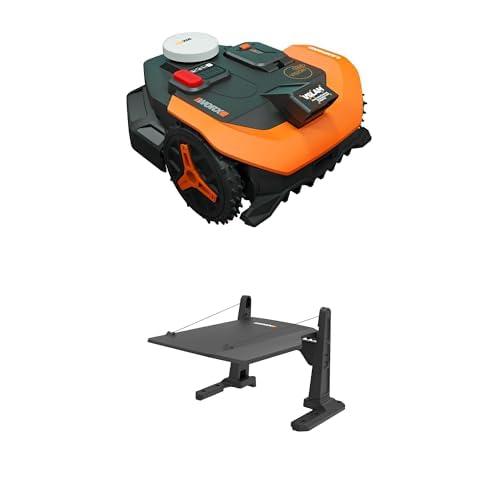
This bundle pairs the Landroid Vision Cloud with a weatherproof garage for the charging dock. It pulls its RTK correction from the cloud instead of a rooftop antenna, so setup is mostly opening the app and letting the camera learn the shape of your lawn.
$1,448.99fromAmazonSkipping the antenna removes the hardest part of a wire-free install. Every other satellite mower here wants a reference antenna with clear sky above it, mounted on your house or a pole in the yard. Worx pulls that correction data from the cloud instead, with no subscription attached. If the idea of drilling into fascia board is what's kept you from buying one of these, this is the way around it.
The mapping is camera-first. Vision AI reads lawn shape and boundary types on its own, follows edges more closely than older Landroids did, and plans smooth paths instead of wandering. Worx rates the onboard processing at 10 trillion operations per second, which in practice means obstacle handling that reacts and steers rather than bumps and reverses. It's rated for half an acre, twice what our top pick covers.
The garage in this bundle isn't filler. The dock lives outside all season, and a shelter keeps sun off the plastic and rain away from the charging contacts. It screws together in a few minutes and holds up in wind. Most robot mower owners end up buying some kind of cover eventually, so having the right one in the box saves you a second order.
Flaws but not dealbreakers
This machine is new enough that there isn't much owner feedback to lean on. With the Navimow and the LUBA you can read long accounts of what fails and how support responded. Here you're mostly trusting the manufacturer's own claims about mapping and obstacle avoidance.
Cloud-delivered RTK is elegant until your yard has weak cell coverage or your home network drops. And camera-led navigation is more sensitive to light than satellite-only systems, so if you plan to run it at dusk or in deep shade, try that schedule early rather than assuming it'll work.
Who this is for
Buy one of these if you've got a mostly open lawn between a quarter acre and roughly two acres, and you're tired of the weekly ritual. They're a particularly good deal if your yard is awkward for you but easy for a machine — a steep bank you dread, or a back lot you keep putting off. They also make sense if you want to stop storing gas in the garage. Robot mowers cost far less to run than a gas mower once you count fuel, oil and blade sharpening.
Skip them if your lawn is tiny and takes ten minutes with a push mower, or if it's carved into a dozen narrow strips separated by paths and gates. Skip them too if you want crisp edges without touching a trimmer, because none of these mow flush to a fence or wall. This guide covers residential robot mowers you set up yourself, not commercial units or ride-on equipment, and it only covers products we could confirm are actually mowers rather than parts or covers for them.
How we picked
We started with the specs that can't be talked around and then checked them against published reviews and owner feedback. Slope: the grade rating decides whether a hilly yard is even in play, and most budget models tap out around 35%. Coverage: rated area and per-charge square footage had to match real lot sizes, not marketing maximums. Setup: wire-free RTK models skip the buried perimeter cable, which is a real hidden cost once you factor in professional installation. Obstacles: camera-based recognition beats bumper-only detection if there's a dog or a toddler in the picture. Noise: at 58–65 dB these are quiet enough to run before breakfast, and we favored the quiet end.
The competition
This is what our research turned up on Amazon, not a survey of everything sold. Several well-regarded models — the Husqvarna Automower line and the EcoFlow BLADE among them — weren't available as listings we could confirm, so they aren't covered here. The one mower below is a real machine, just not one we'd steer most readers toward.
The Gardena Sileno Life: Robot Lawnmower for Area ($2,650.85) — The Gardena Sileno Life 1250 is a competent wire-guided mower for a flat, midsize lawn. It's quiet, it handles slopes to 35%, and its Easy-Pass feature gets it through narrow gaps between yard sections without leaving ruts. The catch is the setup: it ships with 250 meters of perimeter cable you or an installer has to lay, and professional installation is a cost most buyers forget to budget for. This particular listing is also the FR/NL version, so documentation and service support are aimed at European buyers. It's worth a look if you specifically want a wired mower and don't mind that.
Installation and upkeep
Give yourself a full afternoon for setup, not an hour. Wire-free models need their antenna high with an open view of the sky — a roof gable works, a fence post under a tree doesn't — and getting that wrong causes most of the frustration owners describe. Walk the boundary slowly and keep it about a foot and a half off fences and walls, since none of these cut flush to an edge. After that, the ongoing work is small: swap blades every month or so of regular mowing, brush grass off the underside when it cakes up, and pull the mower and dock inside before the first hard freeze. Mow often enough that you're taking a few millimeters at a time. Let the grass get long and you'll be cleaning up after the machine instead of the other way around.
Questions we get
Can a robot mower work without a perimeter wire?
Yes. RTK satellite models like the Navimow i110N and the LUBA 2 AWD map a virtual boundary from your phone, and there's no cable to bury. Most need a small reference antenna mounted with a clear view of the sky, though the Landroid Vision Cloud gets that correction data over the network instead. Wire-free models cost more upfront, but you save the labor of a wire install.
What's the best robot mower for a sloped or hilly yard?
The Mammotion LUBA 2 AWD 5000HX, and it isn't close among the mowers here. It's rated for an 80% grade with all-wheel drive, and Tom's Guide watched it climb a 65% incline without slipping. Most other models cap out near 35%, which is a modest bank, not a hill.
Can robot mowers run in the rain?
They're built to get wet and most have rain sensors that send them back to the dock. But mowing wet grass gives you a worse cut and clumps that stick under the deck. If you can, schedule around the weather and let the lawn dry.
Will it mow right up to my fence?
No. Every model needs a blade-free margin, typically a foot and a half to two feet from a wall, fence or bed edge. Newer camera-guided models follow edges more closely than older ones, but you'll still be running a string trimmer around the perimeter every few weeks. Plan for that before you buy.
Are they safe around pets and kids?
The blades sit under the deck and stop when the mower is lifted or tipped, so the basic safety design is sound. Camera-based obstacle detection adds a real margin — the Navimow's camera recognizes more than 150 kinds of yard objects and steers around them rather than nudging them. Still, don't treat one as babysitter-proof, and schedule mowing for times when the yard is empty.
How often do the blades need replacing?
Roughly every month of regular mowing, though it depends on how tough your grass is and how much sand and grit the mower picks up. Most of these ship with a set of spares in the box. It's a two-minute job with a screwdriver, and dull blades tear grass instead of cutting it, so don't stretch the interval.
Why you should trust us
For this guide:
- We compared manufacturer specifications for slope rating, coverage area, cutting width and navigation hardware across every mower in this guide.
- We read published reviews from Consumer Reports, Tom's Guide and the Good Housekeeping Institute on navigation accuracy, slope performance and noise levels.
- We read through owner feedback for recurring themes around antenna placement, software updates, thick-grass performance and after-sale support.
- We read owner reviews on every listing, weighted toward the critical ones, because that is where the recurring failures show up.
- We have a systematic way of automatically fetching the latest prices, so the numbers on this page stay current.
- This is a research-focused guide, so the team may not own every product listed — though we often do own the top winners, which gives us extra context for the recommendations.
- We don't accept free products, and the retailer commission never changes which product we recommend.
Sources
Best Robot Lawn Mowers – Wirecutter, The New York Times, Wirecutter
Robot Lawn Mower Ratings & Reviews – Consumer Reports, Consumer Reports
Mammotion Luba 2 AWD Review – Tom's Guide, Tom's Guide
Segway Navimow i105E Review – TechRadar, TechRadar
EcoFlow BLADE Robot Lawn Mower Review – Wired, Wired
Husqvarna Automower 450XH Official Product Page, Husqvarna
Mammotion Luba 2 AWD Official Specs, Mammotion
Worx Landroid AI Obstacle Avoidance – Worx Official, Worx
Robot Lawn Mower Market Report 2024–2030 – Grand View Research, Grand View Research
Best Robot Lawn Mowers 2026 – Good Housekeeping, Good Housekeeping
Are Robot Lawn Mowers Worth It? – Bob Vila, Bob Vila
Greenworks Optimow Review – Gardening Know How, Gardening Know How
Amazon product listings and owner reviews for all 4 products
Manufacturer specification pages for each product
Some passages in this guide may be paraphrased with AI help. Prices are refreshed automatically.
More like this.
Continue exploring lifestyle reviews and recommendations.

The Best Lawn Mowers
Mowing is a chore you repeat 25 or 30 times a season, so the small annoyances matter more than the spec sheet. How hard is it to start? Can you get up the…

The Best Lawn Mowers
You'll push a mower across your yard 25 or 30 times a year, so the small annoyances matter more than any spec. The handle that won't fold flat enough to…

The Best Lawn Mowers
Mowing is a chore you repeat 25 or 30 times a season, so small annoyances compound fast. A mower that starts on the first try, cuts evenly, and doesn't…

The Best Cordless Lawn Mowers
A cordless mower asks almost nothing of you. You pull the safety key, squeeze the bail, and it goes - no primer bulb, no pull cord, no stale fuel to drain…

The Best Hose-End Sprayers for Lawn Fertilizer
Liquid fertilizer is the fastest way to green up a lawn, and a hose-end sprayer is what makes it practical. You screw it onto the hose, pour concentrate…

The Best Zero-Turn Mower Accessories and Attachments
A zero-turn mower is a big purchase, and most of them ship set up for one job: throwing clippings out the side. The accessories that matter change what…