The Best Books on Building Habits
Most habit advice fails you in the same place. You know what you want to do differently — move more, drink less, actually finish the side project — and you know why it matters. What you don't have is a way to make the new behavior survive a bad week. That's the gap a good habits book fills. It won't hand you motivation. It gives you a structure for the days when you have none, which is most days, and that's the whole point.
Here's the honest catch: none of these books can make you do the thing. They're all built on research, and they all lean on the same handful of findings — cues, small starts, rewards, repetition — so if you read several in a row you'll notice the overlap fast. They also skew toward people who already have some slack in their lives. If your schedule is chaos or your energy is gone, a book about designing your environment can feel a little glib. Read one, apply it, and don't expect the next one to say something new.
So pick based on what's actually stopping you. If you want a system you can apply to almost anything, start there. If you've tried and quit before, you want the book that makes starting nearly impossible to fail at. We think that Atomic Habits is the best habits book for most people, and that Tiny Habits is the one to buy if you've failed at this before and need the smallest possible first step.
Everything we recommend
The most usable system, if you want one book only

The gentlest start, built for people who've quit before

The best explanation of why habits work at all

Fixes the belief underneath the habit, not the habit
At a glance
| Product | Length | Format | Price | |
|---|---|---|---|---|
| Atomic Habits: An Easy & Proven WayTop pick | 320 pages | Hardcover | $18.57On sale |
| The Power of Habit: Why We DoAlso great | 416 pages | Paperback | $11.26On sale |
| Tiny Habits: The Small Changes That ChangeRunner-up | 320 pages | Hardcover | $17.68On sale |
| Mindset: The New Psychology of Success PaperbackUpgrade pick | 320 pages | Paperback | $10.65On sale |
 | Grit: The Power of Passion and PerseveranceAlso consider | 352 pages | Hardcover | $11.48On sale |
How we picked
Actually usable. We looked for books that give you something to do, not just something to think about. Published reviews and owner feedback both flag the same divide — frameworks people apply versus ideas people admire and forget.
Grounded in research. Every book here rests on peer-reviewed work rather than the author's personal story. We checked what each one is built on: behavioral research labs, published psychology, or reported case studies.
Readable end to end. A book you abandon halfway helps nobody. We weighted reader feedback about pacing, chapter structure and whether people finished, and we noted where reviewers say a book drags.
Distinct contribution. These books overlap heavily, so we favored ones that add something the others don't — a system, a starting method, an explanation, or a belief shift — over a fourth restatement of the same findings.
Holds up over time. We preferred books that owners still reference months later. Long-run feedback tends to separate the ideas that stuck from the ones that felt good during the read.
Top pickOn sale
The most usable system, if you want one book only
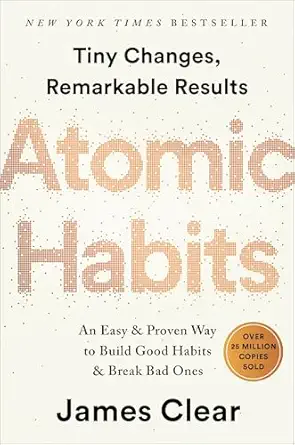
Atomic Habits: An Easy & Proven Way
James Clear's Atomic Habits turns habit change into a four-step checklist you can run on any behavior — make it obvious, attractive, easy, and satisfying. It's the rare self-help book that's organized like a manual, so you can flip back to the part you need instead of rereading it.
$18.57fromAmazonList priceIf you only read one book about habits, read this one. Clear's framework covers the whole job: how to start a habit, how to keep it going, and how to kill one you don't want. Nothing else here is as complete. The four laws give you a diagnostic — when a habit falls apart, you can usually point to which of the four broke. That's more useful than a pep talk, and it's why the book keeps getting handed around offices and group chats.
The individual tactics are the part you'll actually use. Habit stacking pins a new behavior to something you already do, so you don't have to remember it. The two-minute rule shrinks the task until starting is trivial. Environment design moves the friction around — phone in another room, running shoes by the door. None of these are complicated. They're just specific enough that you can do them tonight.
Clear writes plainly, and the book is built for skimming. Every chapter ends with a summary, the diagrams are simple, and the structure means you can reread twenty pages instead of three hundred. Readers who bounce off dense nonfiction tend to get through this one. That matters more than it sounds — a book you finish beats a better book you abandon.
The reframe from goals to systems is the part that sticks. Clear's argument is that you don't rise to your goals, you fall to your systems, and once you've heard it you can't unhear it. It shifts your attention from the outcome you want to the daily process that would produce it. Owners often say this was the idea that changed how they think, not any single tactic.
Flaws but not dealbreakers
The ideas aren't original to Clear, and he'd tell you so. Cue-routine-reward comes from earlier work, deliberate practice comes from academic psychology, and the small-steps philosophy predates the book. What Clear did was organize it. If you've already read widely in this space, a lot of this will feel like review with better packaging.
The book assumes a fair amount of control over your own day. Design your environment, stack your habits, tweak your cues — that's easier advice to follow if you're not working nights or managing a household on no sleep. Some readers find the examples a bit tidy compared with their actual lives.
Runner-upOn sale
The gentlest start, built for people who've quit before
Tiny Habits: The Small Changes That Change
BJ Fogg's Tiny Habits shrinks the first step until failure is basically off the table — two push-ups, one flossed tooth. It's the book to hand someone who's tried to change and stopped, because it removes willpower from the equation almost entirely.
$17.68fromAmazonList priceFogg's core move is to make the habit so small it feels silly. Not thirty minutes of yoga. Two breaths. The logic is that willpower is unreliable, so you should design a behavior that doesn't need any. If you've abandoned a habit in week two before, you already know why this matters — the thing you quit was probably too big on day one, and you never got to find out whether you'd have liked it.
The recipe format does a lot of the work. After I [something I already do], I will [tiny new thing]. Anchoring the new behavior to an existing one solves the remembering problem, which is where most habits actually die. You'll design your first one before you're far into the book, and that early win is deliberate.
Then there's the celebration part, which feels ridiculous until you try it. Fogg wants you to generate a small burst of genuine good feeling right after the behavior — a fist pump, a quiet nice. Readers consistently flag this as the thing they expected to skip and didn't. It's the emotional glue that the more mechanical books skip over.
Fogg's tone reads like a coach who's seen a lot of people fail and isn't judging you for it. He's spent years running behavior programs, and the book carries that patience. If Clear's framework feels like an engineering manual, this one feels like someone sitting next to you while you set up the first small thing.
Flaws but not dealbreakers
It's repetitive. The central idea takes about thirty pages to explain, and the book runs three hundred. Some readers find the middle stretch — more examples, more variations on the same recipe — slow going, and a few say it starts to feel like a workshop transcript rather than a book.
Tiny is the strength and the ceiling. Two push-ups will get you started, but the book is thinner on what to do six months in when you want to train seriously. Pair it with the top pick if you need the follow-through.
Also greatOn sale
The best explanation of why habits work at all
The Power of Habit: Why We Do
Charles Duhigg's The Power of Habit is reporting, not instruction — it's the book that explains the cue-routine-reward loop underneath everything else on this list. Read it if you want to understand your own behavior before you start rearranging it.
$11.26fromAmazonList priceThis one's built differently from the rest. Duhigg is a reporter, and the book moves through stories — a research lab, a football team, a company turnaround, a civil rights campaign. You're not getting a step-by-step plan. You're getting the science of why the plan works, told through people it happened to, which is why it sticks in your head long after a framework would have faded.
The habit loop is the single most useful idea in the category. Cue, routine, reward. Once you have that lens, you start seeing it everywhere — in the snack you reach for at four in the afternoon, in the way you check your phone the second you sit down. Duhigg's Golden Rule of change follows from it: keep the cue, keep the reward, swap the routine. That's a genuinely different approach from white-knuckling.
The keystone habit chapters are worth the book on their own. Duhigg's argument is that certain habits pull others along behind them — start exercising and you tend to eat better, sleep better, spend more carefully. If you're overwhelmed by everything you want to change, this gives you a reason to pick one thing and let it do some of the work.
The organizational half is the part people don't expect to like. Duhigg spends real time on how habits operate inside companies and crowds, which sounds like a detour and isn't. If you manage anyone, or you're trying to change something in a household rather than in yourself, it's the most directly useful section here.
Flaws but not dealbreakers
It's the least actionable book on the list. Duhigg tells you how habits work and gives you a framework for swapping routines, but there's no exercise waiting at the end of the chapter. Readers who want a plan sometimes finish it feeling informed and unchanged.
At over four hundred pages it's also the longest, and the storytelling is what makes it long. Some of the case studies stretch further than the point requires. If you're impatient, you'll be tempted to skim, and skimming costs you the thing the book is good at.
Upgrade pickOn sale
Fixes the belief underneath the habit, not the habit
Mindset: The New Psychology of Success Paperback
Carol Dweck's Mindset isn't a habits book, and that's the point. It goes after the belief that you're just not a disciplined person — the one that quietly sabotages every system you set up — and replaces it with a more accurate view of how ability actually develops.
$10.65fromAmazonList priceHabit systems fail when you've already decided you're the kind of person who can't stick to things. That belief is what Dweck spent decades studying. Her split between fixed and growth mindset sounds simple written down, and it lands harder in practice, because you'll recognize your own excuses in her examples. Most readers report an uncomfortable moment somewhere in the first hundred pages.
What makes this an upgrade rather than a starting point is what it changes. The other books adjust your behavior. This one adjusts how you interpret a setback — whether a missed week means you failed or means you're mid-process. If you've built good systems and still quit them, this is probably the missing piece.
The parenting and teaching chapters have had an outsized effect outside the house. Dweck's work on praise — commend the effort, not the talent — reshaped how a lot of classrooms and coaches operate. If you've got kids, this section alone justifies the read, and it's the part parents most often say they came back to.
Dweck writes like an academic who learned to be readable, and it works. Thirty-plus years of research come through as conversation rather than literature review. You'll finish with a different view of what talent even is, which is a stranger and more durable takeaway than a habit tracker.
Flaws but not dealbreakers
It repeats itself, and readers say so consistently. The core distinction is established early, then illustrated in domain after domain — sports, business, relationships, school. The message holds up. The page count doesn't quite earn itself.
It's also the least practical book here by a distance. There's no system, no template, no exercise. You come away with a better frame and no instructions for Monday morning, so it works best alongside one of the picks rather than instead of one.
Who this is for
This guide is for you if there's a specific behavior you want to change and you've decided that trying harder isn't working. That's the right instinct. Every book here argues, in its own way, that discipline is a design problem rather than a character problem, and each gives you a different lever to pull. You don't need all of them. One, applied for a month, beats five read in a row.
It isn't for everyone. If you're dealing with something clinical — a substance problem, an eating disorder, depression that makes getting up hard — these books aren't a substitute for treatment, and none of the authors claims otherwise. And if you've already read two or three books in this space, expect diminishing returns. We're covering general-audience books on habit formation and the psychology behind it, not workbooks, planners, journals or the academic literature these authors draw from.
How we picked
We weighed four things across published reviews, publisher information and reader feedback. Actually usable: the book has to give you a method you can run this week, not just a well-argued idea. Grounded in research: we favored books built on behavioral or psychological research over ones built on the author's own story. Readable end to end: we tracked where readers say a book drags and whether they finished it, because an abandoned book changes nothing. Distinct contribution: with this much overlap between titles, each pick has to add a lever the others don't — a full system, a gentler start, an explanation of the underlying mechanism, or a fix for the beliefs that undercut all of it.
Other books on building habits worth considering
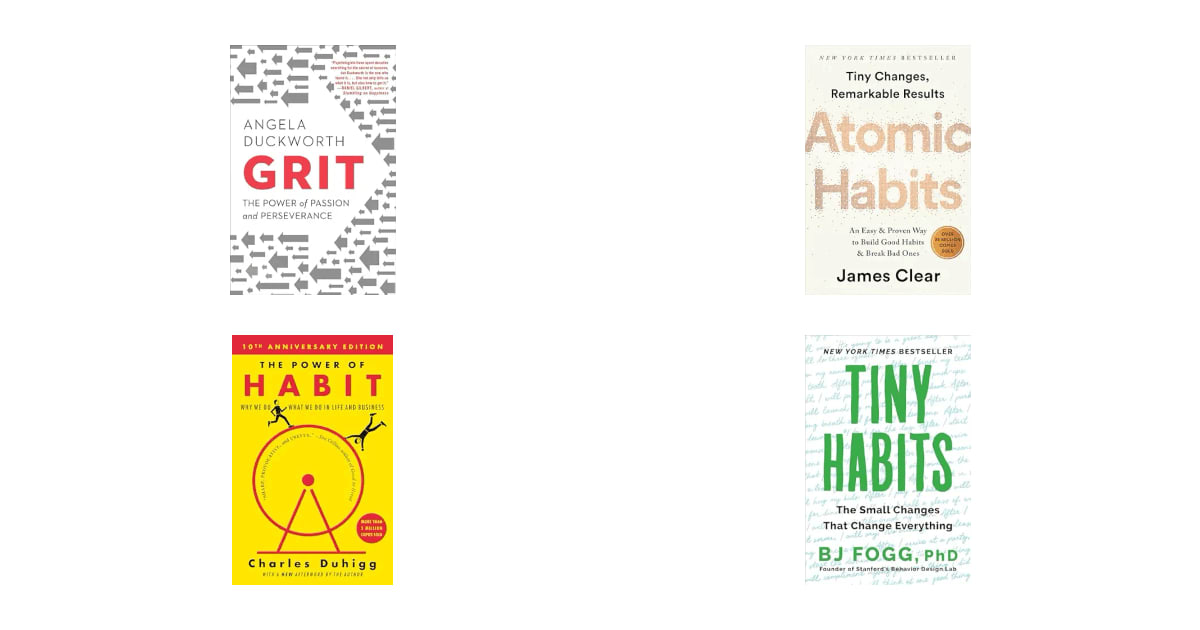
If you want the psychology of sticking with something for years: The Grit: The Power of Passion and Perseverance ($11.48) — Angela Duckworth's Grit is about persistence at a scale the habit books don't touch — not the next six weeks but the next decade. Her argument is that sustained passion and effort predict achievement better than raw talent, and she backs it with research on West Point cadets, spelling bee finalists and career changers. Readers describe it as motivating in a durable way, and the deliberate practice section genuinely improves how you approach getting better at anything. What it gives up is immediacy. There's no system here to start on Monday, and Duckworth's critics fairly point out that the book underplays how much circumstance and access shape who gets to be gritty. Read it for perspective, not procedure.
The competition
This guide covers the books that came up most often in published reviews and reader discussion of habit formation — not everything published on the subject. There's a long tail of workbooks, memoirs and productivity titles that touch on habits, and any of them might suit you better. These are the ones with enough of a track record that we could tell what people actually think after living with the ideas.
How to actually apply these
Reading a habits book and changing a habit are separate activities, and the second one is the hard part. Pick one behavior. Just one. Then apply something from the book within a couple of days, while it's still fresh — design a tiny version of it, anchor it to something you already do every morning, and make the cue impossible to miss. Track it however you like, but track it, because the record is what keeps you honest during the boring middle stretch. Expect to miss days; every author here says the same thing, which is that missing once is normal and missing twice is how habits die. When you skip, restart the next day at the smallest possible version rather than trying to make up ground. And give it a couple of months before you judge whether it's working.
Questions we get
Which book should I read first if I've failed at habits before?
Start with Tiny Habits. Fogg wrote it specifically for people who've tried and stopped, and the whole method is built so that failing is hard — you're doing two push-ups, not thirty minutes at the gym. Once you've strung together a few weeks of small wins, move to Atomic Habits for the fuller system. Building confidence first, structure second, works better than the reverse.
Do I need to read all of them?
No. One book, applied properly, will do more than five books read back to back. If you're only reading one, make it Atomic Habits — it's the most complete and the most immediately usable. The others are worth adding when you hit a specific wall: Tiny Habits if starting is the problem, Mindset if your own beliefs keep undercutting you.
How are these different from ordinary self-help?
They're built on research rather than the author's biography. Tiny Habits comes out of a Stanford behavior lab, Mindset represents decades of psychology research, Grit draws on studies across very different populations, and The Power of Habit is reported from the underlying neuroscience. You get an explanation of why change is hard alongside the advice, which makes the advice easier to trust and adapt.
Can these help me break a bad habit, not just build a good one?
Atomic Habits and The Power of Habit both handle this directly. Clear inverts his four laws — make the bad habit invisible, unattractive, difficult and unsatisfying — which gives you a checklist for elimination. Duhigg's approach keeps the cue and the reward and swaps only the routine in between, which tends to work better than pure resistance. Tiny Habits comes at it sideways, crowding out the bad behavior with a small good one.
How long until a new habit feels automatic?
Longer than the popular twenty-one-day figure suggests. The research Clear cites puts the range anywhere from about eighteen days to well past two hundred, with roughly two months as a typical middle. Simple habits land at the short end and complex ones take much longer. You'll usually notice small improvements in the first week, though, which is enough to keep going on.
Are any of these useful for kids?
Mindset is the most directly useful — Dweck has specific guidance on how to praise children so they don't learn to avoid hard things. Tiny Habits works well with kids too, because the celebration step makes success feel good rather than dutiful, and Grit has a chapter on raising persistent children. The other two are written for adults, but the principles adapt. Mostly, kids copy what they see you do.
Why you should trust us
For this guide:
- We read published reviews and reader feedback for each of these books, looking for what people said months after finishing rather than in the first flush of enthusiasm.
- We compared the books against each other on where their ideas overlap and where each one adds something the others don't cover.
- We checked publisher information on length, format and edition, since how long a book is turns out to matter for whether people finish it.
- We read owner reviews on every listing, weighted toward the critical ones, because that is where the recurring failures show up.
- We have a systematic way of automatically fetching the latest prices, so the numbers on this page stay current.
- This is a research-focused guide, so the team may not own every product listed — though we often do own the top winners, which gives us extra context for the recommendations.
- We don't accept free products, and the retailer commission never changes which product we recommend.
Sources
Amazon product listings and owner reviews for all 5 products
Manufacturer specification pages for each product
Some passages in this guide may be paraphrased with AI help. Prices are refreshed automatically.
More like this.
Continue exploring lifestyle reviews and recommendations.

The Best Personal Finance Books for Building Wealth
Money advice fails for boring reasons. You know you should save more, you know index funds beat stock picking, and then it's Tuesday, you're tired, and…

The Best Books on Building a Career in the Age of AI
Your job is changing whether or not you've done anything about it. Tools that write, summarize, code and forecast are moving into work that used to be…

The Best Protein Powders for Muscle Building
Protein powder is a convenience food, not a magic one. If you're lifting three or four times a week, you need somewhere between 1.6 and 2.2 grams of…

The Best Book Subscription Box Editions
A subscription box book isn't just a book. It's the copy that shows up on your porch in a cover you can't get at the bookstore. Some of these editions are…

The Best Books for Anxiety and Mental Health
An anxiety book has one job: to give you something to do at 3 a.m. when your chest is tight and your brain won't stop looping. That's a different job than…

The Best Books on Procrastination and Focus
Procrastination doesn't feel like laziness when you're in it. It feels like dread, or fog, or a sudden urgent need to clean the kitchen. A good book on…