The Best Books for Anxiety and Mental Health
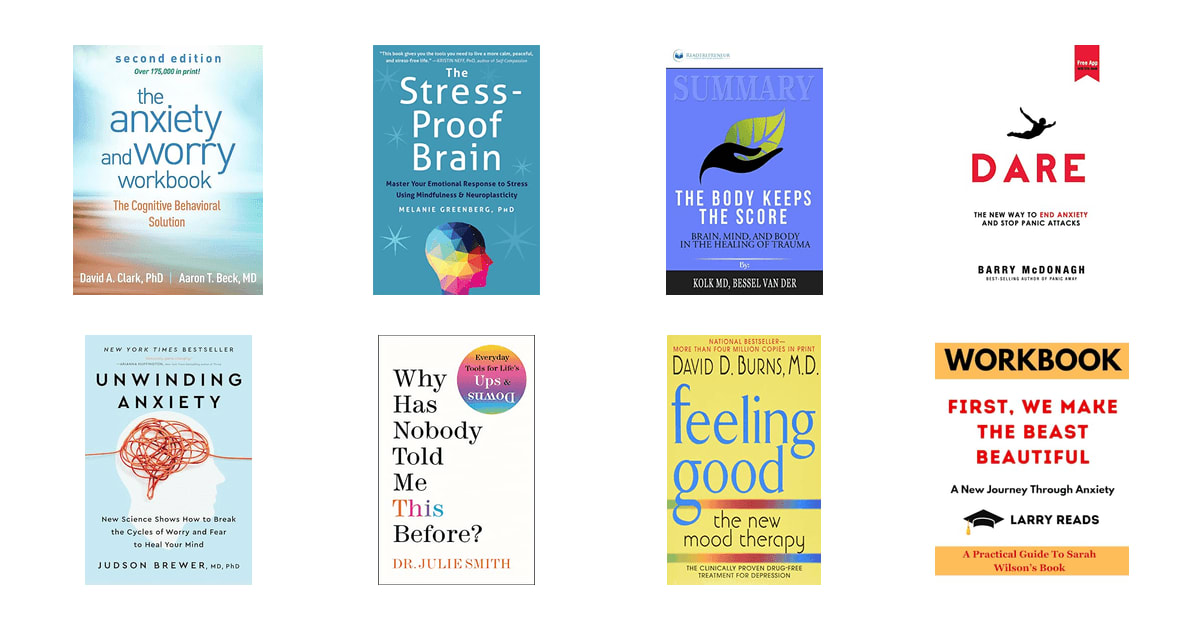
An anxiety book has one job: to give you something to do at 3 a.m. when your chest is tight and your brain won't stop looping. That's a different job than a textbook does. The good ones explain what's happening in your body in words you can still retrieve under pressure, then hand you a step you can actually take. Format matters more than you'd expect. A workbook asks for weeks of sit-down time. A narrative book rides along on your commute and leaves the applying to you.
Here's the honest part. No book on this list can diagnose you, adjust a medication, or notice when you've quietly stopped leaving the house. Research supports reading as a real intervention for mild-to-moderate anxiety, but mostly when you work through it instead of skimming it — and skimming is what most of us do. Every title here flattens something, too. The broad guides go shallow. The deep clinical programs go slow. If your symptoms are severe, treat any of these as a supplement to care, not a swap for it.
So pick for your situation rather than for the hype. If panic attacks are the problem, you want a method short enough to run mid-episode. If worry hums along all day, you want structure and repetition. If you've never read anything like this, you want plain language and short chapters. We think that Dare is the best anxiety book for most people, and that Unwinding Anxiety is the one to buy if you need the science explained before anyone asks you to change a habit.
Everything we recommend

A method simple enough to run mid-panic attack

The science first, if you need the mechanism before the method

Plain-language tools for someone who's never read a therapy book

Clinician-grade CBT, if you'll do the weeks of work

The old CBT benchmark therapists still hand out
At a glance
| Product | Format | Publisher | Price | |
|---|---|---|---|---|
| Dare: The New Way to End AnxietyTop pick | Book | BMD Publishing | $15.86On sale |
| Unwinding Anxiety: New Science Shows How toRunner-up | Book | Avery | $13.22On sale |
| The Anxiety and Worry Workbook: The CognitiveUpgrade pick | Book | The Guilford Press | $22.30On sale |
 | Summary of The Body Keeps the Score:Also in lineup | Book | Important Publishing | $87.96 |
| Why Has Nobody Told Me This Before?:Budget pick | Kindle eBook | HarperOne | $11.99 |
| David D.Also great | Book | Harper Collins | $39.99 |
 | The Stress-Proof Brain: Master Your Emotional ResponseAlso consider | Book | — | $13.12On sale |
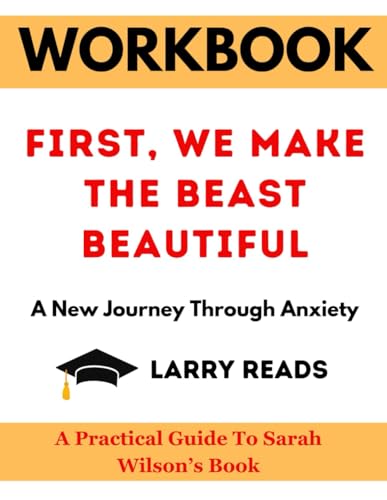 | Workbook for FirstAlso in lineup | Book | Independently published | $11.99 |
How we picked
Who wrote it. We gave weight to clinical psychologists, psychiatrists and active researchers over wellness personalities. Where an author isn't a clinician, we say so and explain what the book leans on instead.
Evidence behind the method. We looked for approaches with trial support or broad clinical endorsement — CBT, ACT, mindfulness-based stress reduction. Books built on a named, testable method beat books built on general encouragement.
How much it asks of you. We separated books you read from programs you work through, because the right answer depends on how much sit-down time you honestly have. A workbook nobody finishes helps nobody.
Usable in the moment. For panic and acute spikes, we favored methods short enough to recall when you're already frightened. Published reviews and owner feedback both flag this as the difference between a book that helps and one that sits on the nightstand.
Follow-through. We read owner feedback for recurring patterns — where people stalled, which chapters they returned to, which books they said they'd finished. Consistent complaints about density or repetition shaped the flaws we call out.
Top pickOn sale
A method simple enough to run mid-panic attack
Dare: The New Way to End Anxiety
This is a short, plainspoken book built around one four-step response to panic: move toward the fear instead of fighting it. If your anxiety shows up as sudden attacks rather than a steady hum, it gives you something to do in the moment, not homework for later.
$15.86fromAmazonList priceThe whole method fits into four steps you can actually recall mid-panic. Barry McDonagh built the book around a single response — defuse, allow, run toward, engage — then repeats it across short chapters you can flip to when your heart's already going. That's the design choice that matters. Most anxiety advice fails in the moment because you can't retrieve it in the moment. This you can, which is why it works as a first line of defense.
It goes after the second wave of fear, not the first. The premise is that a panic attack runs on your reaction to the sensation rather than the sensation itself. So instead of breathing tricks meant to shut the feeling down, McDonagh has you move toward it and strip it of the power to escalate. Owners who'd already cycled through breathing apps and grounding exercises often say this reframe was the thing that finally broke the loop.
You don't need a clinical vocabulary to use any of it. There are no thought records, no exposure hierarchies, no worksheets waiting for you on a Tuesday night. The chapters are short, the language is conversational, and you can start applying the method before you've finished the first third of the book. If you've bounced off denser titles and felt worse for it, that accessibility is the entire point.
It works better as the first book you read than the last. Plenty of readers use it to get panic under control, then move on to something more structured for the daily worry underneath. Published reviews and owner feedback point the same direction: it's strongest as a fast intervention and a confidence builder. Pair it with a workbook later and you've covered both halves of the problem.
Flaws but not dealbreakers
It's thin if your problem is steady, low-grade worry. The DARE response aims at spikes — panic, acute waves, the sudden dread that arrives in a supermarket aisle. Generalized worry that hums along all day responds better to the structured cognitive work you'll find in a proper CBT workbook. Owners with that pattern often report the book helps during an episode but doesn't give them enough to practice between episodes.
The evidence here is testimony, not citation. McDonagh isn't a clinician, and the book leans on reader experience rather than trial data. That's not a reason to skip it, since the underlying acceptance approach overlaps heavily with what ACT therapists teach. But if you want research you can go look up yourself, Unwinding Anxiety or the Clark and Beck workbook will satisfy you more.
Runner-upOn sale
The science first, if you need the mechanism before the method
Unwinding Anxiety: New Science Shows How to
Judson Brewer is a psychiatrist and neuroscientist, and this book explains anxiety as a habit loop your brain has learned to reward. It's more explanation than exercise, but if understanding the machinery is what unlocks change for you, this is the clearest version of that argument.
$13.22fromAmazonList priceIt reframes anxiety as a habit, which makes it something you can unlearn. Brewer's argument is that worry gets reinforced like any other behavior: trigger, behavior, reward. Worrying feels like doing something about the problem, so your brain files it as useful and runs it again. Once you can spot that loop in your own day — the phone check, the mental rehearsal, the reassurance text — it gets much harder to do on autopilot.
The credentials are real, and you can feel them in the writing. Brewer runs research at Brown on mindfulness training for anxiety and addiction, and the book draws on that work rather than on anecdote alone. Published reviews consistently single it out as the most rigorous anxiety title written for a general audience. If you're the sort of reader who wants a mechanism before a method, this is where to start.
A companion app carries the practice off the page. That matters, because the core skill — noticing a craving or a worry without acting on it — is a practice, not a fact you learn once and keep. Owners who use both the book and the app tend to describe real change. Owners who read it the way you'd read a popular science book tend to report it was interesting and not much else.
It reads easily for a book this dense. Brewer moves between patient stories, his own missteps and the underlying research, and the chapters end roughly where you want them to. That's rarer than it sounds in this genre. You can get through it over a week of evenings, which matters if a clinical workbook is the kind of thing you'd buy and never open.
Flaws but not dealbreakers
It explains more than it prescribes. You'll finish with a sharp model of why you worry and a fairly short list of things to do about it tomorrow morning. If you want checkboxes and weekly assignments, this isn't that book. Readers who need external structure often pair it with something like the Clark and Beck workbook, which supplies exactly what this one leaves to you.
You have to build a mindfulness habit alongside it. The whole approach rests on being able to sit with an urge without feeding it, and that takes practice you won't get from reading. If meditation has never stuck for you, be honest about that before buying. And if you already know the habit-loop framework, big stretches will feel like review.
Budget pick
Plain-language tools for someone who's never read a therapy book
Why Has Nobody Told Me This Before?:
Dr. Julie Smith is a clinical psychologist, and this reads like the advice she'd give you in a first session, broken into short chapters you can take in any order. It covers anxiety alongside low mood, self-criticism and grief, so it's the one to buy when you're not yet sure what you're dealing with.
$11.99fromAmazonIt assumes you know nothing, and that's the feature. There's no jargon to decode and no expectation that you've been to therapy. Smith takes concepts a clinician would spend a session unpacking and states them in ordinary language, then tells you what to do with them. If a friend asked where to start and had never read anything like this, you'd hand them this book without hesitating.
The chapters are short enough to read on a bad day. Each one is built around a single tool, so you can open to the section on self-criticism or panic and get something usable in a few minutes. That's a real advantage when concentration is the first thing anxiety takes from you. Owners often describe returning to specific chapters rather than reading it straight through, which is how it's designed to work.
It covers the whole neighborhood, not one house. Anxiety rarely shows up alone. Low mood, harsh self-talk, grief and shaky confidence usually travel with it, and this book has a chapter for each. If you can only buy one title and your symptoms are still a bit blurry, breadth beats depth here. You can always go narrow later once you know what you're aiming at.
The listing here is the Kindle edition, which keeps it in your pocket. That's a practical point rather than a small one. The moments you most need a two-page chapter on rumination are usually the moments you're not near a bookshelf. Having it on your phone, searchable, means you'll actually reach for it instead of remembering it later.
Flaws but not dealbreakers
Breadth costs depth. Covering anxiety, mood, grief and confidence in one volume means no single topic gets the full treatment. If your anxiety is moderate to severe, or specific enough that you already know its name, you'll outgrow this book quickly. It's an entry point, and it doesn't pretend otherwise.
If you've done therapy, you'll recognize most of it. Readers who've already worked through a CBT program or a few self-help titles tend to report that it's sensible and familiar rather than revelatory. That's not a knock on the writing. It just means the book is doing its job for a reader who isn't you.
Upgrade pickOn sale
Clinician-grade CBT, if you'll do the weeks of work
The Anxiety and Worry Workbook: The Cognitive
Written by David A. Clark and Aaron T. Beck, whose research shaped modern cognitive therapy, this is a structured program you work through with worksheets rather than a book you read. Expect weeks rather than evenings, and expect it to ask more of you than anything else here.
$22.30fromAmazonList priceThe authorship is about as strong as this genre gets. Beck's work is the foundation most CBT rests on, and Clark has spent decades researching anxiety specifically. That pedigree shows up as precision: the exercises are the ones a therapist would assign, in the order they'd assign them. Published reviews and clinical reading lists treat it as the reference workbook for self-directed cognitive therapy.
Structure is the whole point, and it's what lets you see progress. You fill in thought records, track avoidance, and run small behavioral experiments across weeks. Because it's written down, you can look back and notice that the thing you were sure would happen didn't. That evidence trail is exactly what a narrative book can't give you, and it's why therapists assign this between sessions.
It separates the anxieties that usually blur together. Generalized worry, social anxiety and health anxiety feel the same from the inside but respond to different work. The book treats them distinctly, so you're not applying a social-anxiety exercise to a 2 a.m. spiral about a headache. If you've tried general advice and it slid off, that specificity is likely why.
The physical format is built for writing in. It's an oversized paperback, closer to a school workbook than a novel, with room on the page for your own answers. That sounds trivial until you're trying to cram a thought record into a margin. Owners who treat it like a course, with a pen and a set evening, are the ones who report finishing it.
Flaws but not dealbreakers
It asks for real commitment, and plenty of people don't finish. This isn't something you dip into on a bus. Owner feedback splits cleanly between readers who scheduled time for it and got a lot out of it, and readers who bought it with good intentions and stalled around the third chapter. Be honest about which one you are before you buy.
It's dense, clinical and costs more than most books here. The tone is careful and academic rather than warm, which some readers find reassuring and others find cold. If you're in acute distress right now, start with Dare and come back to this once the spikes are manageable. It rewards steady work, not crisis reading.
Also great
The old CBT benchmark therapists still hand out
David D.
David Burns's cognitive therapy classic is still among the most commonly recommended books in outpatient practice, and it covers depression, anxiety and procrastination in a single program. It's dated in places and dense throughout, but nobody has really improved on its cognitive-restructuring core.
$39.99fromAmazonNo self-help book has more clinical mileage behind it. Surveys of mental health professionals have put it at or near the top of recommended reading for decades, and published trials found it effective for mild-to-moderate depression, with results that held up against short-term medication in some studies. That's an unusual amount of evidence for a book you can buy off a shelf.
The cognitive distortions list is the part you'll actually keep. All-or-nothing thinking, catastrophizing, mind reading, should statements — once you can name the move your brain just made, it loses some of its authority. Readers who remember nothing else from the book tend to remember these. It's the single most portable idea in cognitive therapy, and this is where most people meet it.
It treats anxiety and low mood as the same machinery. Burns doesn't split them into separate problems, which is realistic, because they usually arrive together and feed each other. There's also a long section on procrastination that's more useful than it has any right to be. If your anxiety comes bundled with avoidance and a flat mood, that combined approach fits better than an anxiety-only title.
It's a compact paperback you can throw in a bag. The edition here is small enough to carry, which matters for a book you're meant to return to rather than finish once. Owners frequently describe keeping a copy for years and re-reading specific chapters when things get bad again. That's a fair way to use it.
Flaws but not dealbreakers
The examples show their age. The book was written decades ago, and the anecdotes — the careers, the household dynamics, the tone toward women — read like it. The underlying method hasn't aged, but you'll be doing some translating. Younger readers in particular report that the cultural framing pulls them out of it.
It's a program, not a read. The chapters build, the exercises expect a pen, and skimming gets you almost nothing. Between this and the Clark and Beck workbook you have two serious CBT commitments, and there's little reason to run both at once. Pick the one whose tone you can stand for six weeks.
Who this is for
This guide is for someone with mild-to-moderate anxiety, chronic stress or a rough stretch who wants a structured place to start. That includes people waiting on a therapy referral, people already in therapy who want something to work on between sessions, and people who'd rather try tools before medication. It also covers the beginner who's never opened a mental health book and doesn't know a thought record from a body scan. Most of these titles are cheap enough that pairing two is reasonable.
It isn't for a crisis. If you're having thoughts of harming yourself, or your symptoms have taken over eating, sleeping and leaving the house, a book is not the intervention you need first — call a clinician or a crisis line. We're also only covering anxiety, stress and general mental health here, so you won't find books on OCD, bipolar disorder, addiction or grief specifically. And a couple of listings in this category are third-party summaries and companion workbooks rather than the original texts; we flag those below so you know what you're buying.
How we picked
Who wrote it: we favored clinical psychologists, psychiatrists and working researchers, and we say plainly when an author isn't one. Evidence: methods with trial support or wide clinical endorsement — CBT, ACT, mindfulness-based stress reduction — beat general encouragement. Effort: we separated books you read from programs you work through, because a workbook you never finish is worse than a short book you do. In the moment: for panic, the method has to be simple enough to recall while you're frightened, which rules out most thought-record exercises. Follow-through: recurring owner complaints about density, repetition or stalling out shaped which flaws we flag and which books we'd hand a beginner.
Other books for anxiety and mental health worth considering
If your problem is work, not panic: The The Stress-Proof Brain: Master Your Emotional Response ($13.12) — Melanie Greenberg's The Stress-Proof Brain is aimed squarely at chronic occupational stress — the Sunday-night dread, the inbox that never empties, the year that turned into burnout. Rather than telling you to remove the stressors, which most people can't, she focuses on changing how your brain processes pressure it can't avoid, drawing on mindfulness-based stress reduction and neuroplasticity research. That's a genuinely useful angle if general anxiety books have felt beside the point. What you give up is range: it's less helpful for panic attacks or trauma, several exercises need quiet time that busy weeks don't offer, and the mindfulness material overlaps with what Brewer covers. Buy it when work is the specific thing grinding you down.
The competition
This is what our research surfaced in this category, not a survey of everything published on anxiety. Two of the listings below deserve a specific caution: they're third-party companions to famous books rather than the famous books themselves, which isn't always obvious from a search result. Neither is a scam, and both have a reader they'd suit. Just know what's in your cart.
The Summary of The Body Keeps the Score: ($87.96) — This is a third-party summary of Bessel van der Kolk's The Body Keeps the Score, not the original. The original is the defining popular book on how trauma reshapes the brain and body, and on why approaches like EMDR, yoga and somatic work help — and it's genuinely long. A condensed guide has an audience: students, clinicians and caregivers who want a fast orientation to the framework before committing to the full text. But summaries strip out the case histories that make van der Kolk's argument land, and this one can cost more than the complete book. If trauma is the reason you're shopping, buy the original.
The Workbook for First ($11.99) — This is a companion workbook built around Sarah Wilson's memoir First, We Make the Beast Beautiful, again produced independently of the original author. Wilson's central idea is worth meeting: that anxiety can mark sensitivity and creative depth rather than pure malfunction, which is a real counterweight to purely clinical framings. The workbook turns that into exercises and reflection prompts, and the large format leaves room to write. It's least useful on its own — the reflection questions assume the memoir's arguments — and it's nowhere near as rigorous as the Clark and Beck program if your symptoms are moderate or worse. Consider it if you've read Wilson and want to sit with her ideas longer.
How to get the most out of these books
The most reliable approach is pairing: one narrative book for motivation and insight, one workbook for actual skill-building. That mirrors how many outpatient programs structure things, and it beats reading three narrative books in a row. Go slow. A workbook chapter a week with the exercises done is worth more than the whole thing skimmed in a weekend. Write in the margins — you're building an evidence trail against your own predictions, and it only works if it's on paper. Expect to reread. Most people return to two or three chapters repeatedly and never touch the rest, which is fine. And if you're in therapy, tell your clinician what you're working through so the two efforts pull the same direction.
Questions we get
What's the best book for anxiety?
Dare by Barry McDonagh is our top pick, especially if your anxiety arrives as panic attacks or acute waves. It's short, it's readable, and the method is simple enough to use while you're frightened. For steady generalized worry with a structured, clinician-endorsed approach, Feeling Good by David Burns is the more thorough choice.
What books do therapists actually recommend?
Feeling Good and The Anxiety and Worry Workbook come up most often as between-session assignments. Both are CBT-based and both have published trial evidence behind their methods. If you're already seeing someone, ask which format fits your treatment plan rather than guessing.
What's the difference between a CBT workbook and a regular self-help book?
A workbook gives you structured exercises — thought records, behavioral experiments, tracking — meant to change patterns over weeks of practice. A narrative book gives you insight and motivation, then leaves you to translate it into daily habits on your own. Workbooks demand more and usually deliver more, but only if you finish them.
Can a book really help, or do I need therapy?
Research supports reading as a genuine intervention for mild-to-moderate anxiety, particularly when you work through the material rather than skim it. For moderate-to-severe anxiety, books work best as a supplement to professional care, not a replacement. If your symptoms are disrupting sleep, work or relationships, start with a clinician and use a book alongside.
Which book is best for panic attacks specifically?
Dare, without much competition here. Its acceptance-based method targets the secondary fear that turns a spike of adrenaline into a full attack, and it's designed to be recalled in the moment rather than practiced later. Readers who've cycled through breathing exercises without success often report this reframe was what finally helped.
Which book is best for a complete beginner?
Why Has Nobody Told Me This Before? by Dr. Julie Smith. The chapters are short, the language is plain, and it assumes no prior therapy or clinical knowledge at all. It also covers low mood, grief and self-criticism, which is useful when you're not yet sure what you're dealing with.
Why you should trust us
For this guide:
- We read the publisher descriptions, author credentials and format details for every title here, then compared them against how each book is characterized in published reviews and clinical reading lists.
- We looked at owner feedback for recurring themes — where readers stalled, which chapters they returned to, and whether they described finishing the book — rather than weighing individual reactions.
- We compared the listings side by side for what a reader is actually buying, which is how we identified the third-party summary and companion workbook in this category.
- We read owner reviews on every listing, weighted toward the critical ones, because that is where the recurring failures show up.
- We have a systematic way of automatically fetching the latest prices, so the numbers on this page stay current.
- This is a research-focused guide, so the team may not own every product listed — though we often do own the top winners, which gives us extra context for the recommendations.
- We don't accept free products, and the retailer commission never changes which product we recommend.
Sources
Best Books for Anxiety - Verywell Mind, Verywell Mind
Bibliotherapy for Anxiety: Does Reading Self-Help Books Work? - Psychology Today, Psychology Today
The Body Keeps the Score - NYT Bestseller History, The New York Times
Anxiety Disorders - National Institute of Mental Health (NIMH), NIMH
Cognitive Behavioral Therapy Effectiveness for Anxiety - American Psychological Association, American Psychological Association
Judson Brewer Research on Habit Loops and Anxiety - Brown University, Brown University
Acceptance and Commitment Therapy for Anxiety - Association for Contextual Behavioral Science, ACBS
Burnout: Emily Nagoski Interview - NPR Health Shots, NPR
Amazon product listings and owner reviews for all 8 products
Manufacturer specification pages for each product
Some passages in this guide may be paraphrased with AI help. Prices are refreshed automatically.
More like this.
Continue exploring lifestyle reviews and recommendations.

The Best Self-Help Books for Mental Health
A mental health book has to work on your worst week, not your best one. That's the real test. You'll pick it up at 11 at night, read four pages, and put…

The Best Health and Longevity Books
Most health books tell you to eat better and move more. The useful ones tell you what to eat, how to move, and how to know it's working. That's the…

The Best Dog Anxiety Calming Vests
Thunder rolls in around dinnertime, and your dog is already under the bed. Maybe it's fireworks, maybe it's the sound of a suitcase zipper, maybe it's the…

The Best Water Flossers for Gum Health
Your gums bleed a little when you brush, and your dentist keeps asking whether you floss. You've got plenty of company. The CDC reports that 47.2% of U.S.…

The Best Probiotics and Fermented Foods for Gut Health
Your gut doesn't care much about marketing. It responds to what you feed it, most days, over months. So the useful question isn't which probiotic is…

The Best Romantasy Books
Romantasy is fantasy where the love story carries as much weight as the magic system, and that balance is exactly what makes buying one tricky. You're not…