The Best Ceiling Fans With Lights
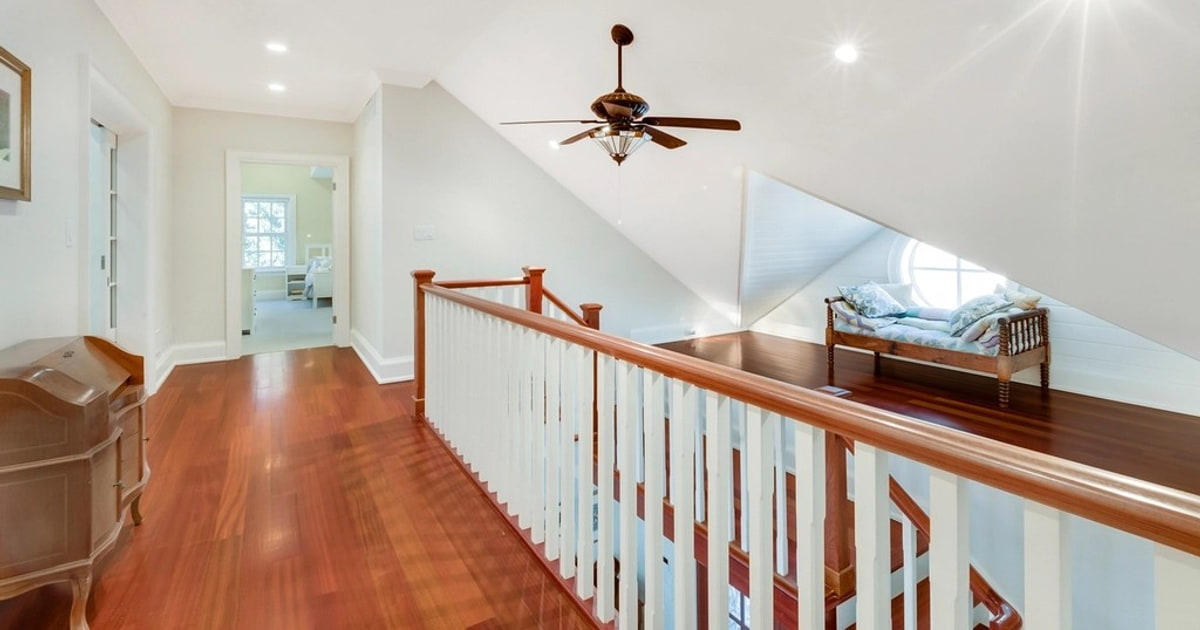
A ceiling fan doesn't cool a room. It cools you, by moving air across your skin, and that difference is bigger than it sounds. The Department of Energy says you can raise the thermostat 4°F with a fan running and feel no change in comfort. Flip the blades to clockwise in winter and you push the warm air that's pooled at the ceiling back down, which can cut heating costs by up to 10%. In most rooms, the fan is also the only light fixture, so it's doing two jobs at once.
Here's the honest part: nothing in this category is good at everything. Big blades move more air, but they hang lower and they're harder to fit under an 8-foot ceiling. Quiet DC motors sip power, but the electronics are usually the first thing to fail. Integrated LED panels mean you'll never buy a bulb again — until the panel dies and you're replacing the whole light. And almost any fan will wobble if the ceiling box isn't rated for one. The install trips people up more than the fan does.
So start with the room. Match the blade span to the square footage, then decide how much you care about noise, light output and voice control. We think that the Hunter Dempsey 52-inch is the best ceiling fan for most people, and that the Monte Carlo Maverick II is the one to buy if you want a DC motor and a dimmable, high-color-quality light over your living room.
Everything we recommend

A quiet flush mount that suits most rooms and low ceilings

Quieter and thriftier, but the light output is modest

Made for small rooms, with a lifetime motor warranty

The quietest option here, if you'll pay for the silence

Rated for real rain, but you buy the light separately
Prices as of Oct 22, 7:36 AM PT · Details
At a glance
| Product | Blade Span | Airflow (CFM) | Price | |
|---|---|---|---|---|
| Hunter DempseyTop pick | 52" | — | $269.99 |
| Big Ass Fans Haiku Ceiling Fan LUpgrade pick | 44" | — | $849 |
 | Hampton Bay Morland 52 in. Smart Indoor/CoveredAlso in lineup | 52 in | — | $129.91 |
 | Fanimation Kute 52 inch Indoor/Outdoor Ceiling FanAlso consider | 52" | 6,701 CFM | $469.98 |
| MINKA-AIRE F896-52-CL Xtreme H2O 52 Inch OutdoorAlso great | 52 Inch | — | $539 |
| Monte Carlo 3MAVR52BKD Maverick II Energy StarRunner-up | 52 in | 4707 CFM | $949 |
| Westinghouse Casanova Supreme Ceiling Fan with LightBudget pick | 42 Inch | 2812 CFM | $82.75On sale |
Prices as of Oct 22, 7:36 AM PT · Details
How we picked
Blade span and room size. We matched published blade spans against the sizing tables from This Old House, which call for 44 to 50 inches in a 144- to 225-square-foot room and 50 to 54 inches up to 400. Any fan whose listed coverage didn't line up with its span got flagged.
Motor type and draw. We compared published wattage at high speed and favored DC motors, which typically pull 25 to 35 watts against 60 to 80 for equivalent AC designs. Energy Star certification was a strong point in a fan's favor.
Light quality. We looked for lumen output, color temperature and CRI in the spec sheets rather than trusting phrases like bright LED. Consumer Reports pegs a modern integrated kit at 2,000 to 4,500 lumens, so we treated that as the reference range.
Noise. We read manufacturer acoustic claims and owner feedback themes together, since decibel figures are rarely measured the same way twice. Anything meant for a bedroom needed a credible sub-40-decibel claim or a consistent record of quiet running.
Rating and controls. We checked whether each fan is dry, damp or wet rated, and whether smart control is built in or bolted on. A fan that needs a separate hub or receiver isn't really a smart fan out of the box.
Top pick
A quiet flush mount that suits most rooms and low ceilings
Hunter Dempsey
The Dempsey hugs the ceiling, runs quietly, and covers a big bedroom or an average living room without hanging in your face. It ships with an LED light kit and a handheld remote, so there's nothing else to buy before you flip the switch.
$269.99fromAmazonPrices as of Oct 22, 7:36 AM PT · Details
A 52-inch span is the size most rooms actually need. This Old House puts a 44- to 50-inch fan in a room of 144 to 225 square feet, and 50 to 54 inches in rooms from 225 to 400. That range covers a master bedroom, a normal living room and most kitchens. Go smaller and you'll only feel the air standing directly underneath. The Dempsey sits right in the middle of that band.
It mounts flush, so it works under an 8-foot ceiling. Hunter designed the Dempsey to sit close to ceilings under 9 feet. The National Electrical Code wants fan blades at least 7 feet off the floor. On a standard 8-foot ceiling, a fan on a downrod either breaks that clearance or hangs at forehead height in a doorway. A hugger mount fixes that, and you still get the full 52-inch blade sweep.
Hunter's WhisperWind motor is built around noise, not numbers. Hunter rates the motor to stay under 40 decibels at every speed, based on its own published engineering testing. That's the line between a fan you forget is on and one you turn off to hear the TV. If it's going above your bed, this is the spec that matters most. Owners who buy Hunter twice usually say quiet running is why.
Everything you need is in the box. You get an integrated LED light kit and a remote that handles speed and lighting from across the room. No bulb run, no wall-control upgrade, no hub to set up. The four blades are reversible, with a light gray oak face and a darker side, so the same fan can suit a bright kitchen or a warmer den. Small thing, but it saves you a return.
Reverse it in winter and it earns its keep twice. The Department of Energy says running a fan clockwise at low speed pulls the warm air off the ceiling and mixes it back into the room, which can trim heating bills by as much as 10%. The Dempsey's motor reverses, so the fan isn't dead weight for half the year. You just change direction and drop the speed.
Flaws but not dealbreakers
It's an AC motor, and you pay for that in watts. DC fans draw roughly 25 to 35 watts at full speed, against 60 to 80 watts for comparable AC motors — a 50 to 70% difference, per The Spruce and manufacturer specs. If you run a fan 12 hours a day all summer, that gap shows up on the bill. For a bedroom fan you use at night, it's not a dealbreaker.
Flush mounting costs you some airflow. Sizing guidance calls for blades hanging 8 to 12 inches below the ceiling for the best circulation, and a hugger can't do that by definition. You're trading a bit of throw for headroom. If your ceilings are 9 feet or higher, a downrod fan will move air through the room more evenly.
It's indoor only. Hunter builds this one for bedrooms, living rooms, kitchens and offices — not for a porch. Humidity and blown rain will warp blades and corrode hardware on a fan that isn't rated for it. If you're shopping for covered outdoor space, skip to the damp- and wet-rated picks below.
Runner-up
Quieter and thriftier, but the light output is modest
Monte Carlo 3MAVR52BKD Maverick II Energy Star
The Maverick II pairs a DC motor with three balsa wood blades and a dimmable integrated LED. It's Energy Star certified, damp-rated for a covered porch, and it fits a sloped ceiling — a lot of flexibility from one fan.
$949fromAmazonPrices as of Oct 22, 7:36 AM PT · Details
A DC motor does the same work on far less power. Monte Carlo builds this fan around an 85 x 28 mm DC motor, and DC designs typically pull 25 to 35 watts at full tilt versus 60 to 80 for AC. Energy Star certification backs that up: certified fans average about 60% more efficient than conventional fan-and-light combos, per the EPA. If this fan runs all day, that's the difference you feel.
4,707 CFM across a 52-inch sweep suits a normal living room. That's real airflow for a space in the 225 to 400 square foot range, which is where most living rooms and larger bedrooms land. The three blades run a 13-degree pitch, which is on the aggressive side for a fan this quiet. You'll feel it on a couch eight feet away.
The light is dimmable and the color quality is unusually good. The 18-watt integrated kit runs at 3000K with a 90 CRI rating. High CRI means wood floors, food and skin tones look the way they should instead of washed out. Plenty of fan lights hit a lumen number and ignore this. The dimmer is on the remote, so you can knock it down for a movie.
Six speeds and a remote that covers everything. The handheld gives you six fan speeds, reversing and light dimming, so you never need a wall control or a pull chain. Six speeds matter more than they sound — most fans give you three, and the useful setting is often between two of them. Here you can dial in a breeze that doesn't rattle papers.
It installs on a flat or sloped ceiling. The vaulted canopy handles slopes up to 15 degrees and comes in the box, which is not a given at this level. The fan hangs 13.8 inches from ceiling to the bottom of the light with the included 6-inch downrod. It's also cUL approved for damp locations, so a covered porch or a screened room is fair game.
Flaws but not dealbreakers
1,100 lumens isn't much light. Consumer Reports notes that modern integrated fan light kits typically deliver 2,000 to 4,500 lumens. This one sits well below that floor. Over a seating area with other lamps in the room, it's fine. As the only light source in a kitchen, you'll want something brighter.
The color temperature is fixed at 3000K. You get warm white and that's it. Several fans here let you pick between warm and cool, which is genuinely useful if the fan is in a kitchen or a home office. If you like daylight-toned light, this isn't your fan.
Damp-rated is not wet-rated. It's approved for covered locations only. An open patio where rain blows sideways needs a wet-rated fan, full stop. Installing a damp-rated unit in an exposed spot voids the listing and shortens the fan's life.
Budget pickOn sale
Made for small rooms, with a lifetime motor warranty
Westinghouse Casanova Supreme Ceiling Fan with Light
The Casanova Supreme is a 42-inch fan built for a room around 10 by 10 feet. It moves 2,812 CFM at high, reverses for winter, and uses a standard bulb socket behind opal schoolhouse glass instead of a sealed LED panel.
$82.75fromAmazonTypical pricePrices as of Oct 22, 7:36 AM PT · Details
A 42-inch fan is the right size for a small room. Westinghouse rates it for spaces up to about 100 square feet — a kid's bedroom, a home office, a guest room. Hanging a 52-inch fan in a room that size puts blade tips uncomfortably close to the walls and doesn't buy you comfort. Matching span to square footage is the single easiest thing to get right.
60 CFM per watt is respectable for an AC motor. The fan moves 2,812 CFM on high while pulling 47 watts without the light. That efficiency ratio is published right on the listing, which is more than most budget fans bother to disclose. For a room this size, that's plenty of air without a lot of blade noise.
The bulb is a normal socket, and that's underrated. It ships with a 5.5-watt omnidirectional A15 LED in a medium base. When it burns out, you buy a bulb. With a sealed integrated panel, a dead LED often means replacing the entire light kit or living with it. If you plan to keep this fan a long time, the socket is a feature.
The warranty is the longest in this guide. Westinghouse covers the motor for life and everything else for two years. Motors are the part that outlives the styling anyway, and a lifetime term tells you the company isn't worried about them coming back. It also makes this an easy fan to put in a rental or a room you'll redecorate later.
It reverses, so it works in January too. The motor runs in both directions for summer cooling and winter destratification. Combined with the Department of Energy's 4°F thermostat guidance, a small fan like this can quietly change how a room feels without touching your HVAC system.
Flaws but not dealbreakers
The light is dim by current standards. A single 5.5-watt A15 bulb behind opal glass is a long way from the 2,000 to 4,500 lumens a modern integrated kit puts out. Treat it as ambient light, not task light. You'll still want a lamp for reading.
There's no smart control. The listing doesn't mention Wi-Fi, app control or voice assistants, so plan on a wall switch or a pull chain unless you add controls yourself. If turning the fan on with your phone is the point of this purchase, look at the Haiku L or the Morland instead.
47 watts is an AC motor's tax. It's efficient for its class, but a DC fan does comparable work on roughly half the draw. Over a long season of daily running, that gap is real — it's just smaller on a fan this size than on a 60-inch great-room model.
Westinghouse covers the motor for a lifetime and all other parts for two years.
Upgrade pick
The quietest option here, if you'll pay for the silence
Big Ass Fans Haiku Ceiling Fan L
The Haiku L is a 44-inch smart fan with Wi-Fi built in, seven speeds and sixteen lighting settings. Big Ass Fans hand-balances each airfoil and measures the fan in a sound chamber, and the quiet is what owners notice first.
$849fromAmazonPrices as of Oct 22, 7:36 AM PT · Details
Silence is the entire pitch, and the specs support it. Big Ass Fans rates the L Series below 32 decibels at its highest speed. A quiet library runs around 35 decibels. That means the fan is effectively inaudible over a sleeping room's ambient noise, which is not true of most fans on their top setting. If noise is why you turned your last fan off, this is the fix.
Wi-Fi is built into the fan, with no hub to buy. The module inside talks directly to your phone, and voice control runs through Amazon Alexa or Google Assistant. Most fans that claim smart features need a separate bridge or receiver. Here it's included, and so is a handheld remote for the times nobody wants to talk to a fan.
Sixteen lighting settings and seven fan speeds give you real control. Three-speed fans force you to pick between too little breeze and too much. Seven speeds let you find the one that's right. The integrated LED dims across sixteen steps, so it works as bright overhead light in the afternoon and as a low glow at night.
The motor is engineered for output per watt, not raw wattage. Big Ass Fans designed it to move meaningful air on very little power, which is the same principle behind Energy Star's roughly 60% efficiency advantage over conventional fan-light combos. Paired with the Department of Energy's advice to raise the thermostat 4°F, a fan like this can change your summer cooling bill.
Hand-balanced airfoils address the most common fan complaint. Wobble and squeak are what send fans back, and they usually trace to blade balance. Big Ass Fans balances each airfoil at the factory rather than shipping a balancing kit and wishing you luck. Combined with a universal mount and a 5-inch downrod for 8- to 9-foot ceilings, installs tend to go cleanly.
Flaws but not dealbreakers
It's the most expensive fan in this guide by a wide margin. You're paying for acoustics, materials and design, and whether that's worth it depends entirely on how much the noise bothers you. In a den you use twice a week, it isn't. In a nursery, it might be the only thing that matters.
A 44-inch span covers about 15 by 15 feet, and no more. That's a bedroom or an office, not a great room. If you have an open-plan living space over 400 square feet, this fan will underserve it no matter how well it's built. Buy for the room first.
Smart features age faster than motors do. App support, firmware and voice integrations all depend on the manufacturer staying invested. The remote and the fan will still work years from now. Whether the app looks the same is out of your hands.
Also great
Rated for real rain, but you buy the light separately
MINKA-AIRE F896-52-CL Xtreme H2O 52 Inch Outdoor
The Xtreme H2O is Minka-Aire's wet-rated outdoor fan, with a sealed DC motor and a six-speed remote that dims, reverses and shuts it off. It's the pick for an open patio where a covered-porch fan would corrode.
$539fromAmazonPrices as of Oct 22, 7:36 AM PT · Details
It's rated for wet locations, which almost nothing else here is. Damp-rated fans are fine under a solid roof with walls nearby. A wet rating is what you need where rain actually lands on the fan — an open pergola, an uncovered deck, a patio that catches sideways weather. Installing a damp-rated fan in that spot is how blades warp and hardware rusts in a season.
The sealed DC motor handles humidity and sips power. Minka-Aire seals the motor against moisture, which is the part that fails first outdoors. DC motors also run quieter and draw far less than comparable AC units, typically 25 to 35 watts against 60 to 80. On a porch fan you leave running all evening, that adds up over a summer.
The six-speed remote does everything from your chair. It handles on and off, full-range light dimming, and forward or reverse. Six speeds is generous outdoors, where you often want the barest movement of air to keep mosquitoes off rather than a wind tunnel. The reverse function makes it useful on a three-season porch in shoulder weather.
It hangs 13.25 inches from the ceiling with the included 6-inch downrod. That's a compact drop for an outdoor fan, and it keeps blades clear of head height on a standard porch ceiling. Longer downrods, a wall control and other accessories are available if your ceiling is higher or sloped.
Flaws but not dealbreakers
The light kit isn't included. Minka-Aire sells a 20-watt LED kit separately, and you'll want to confirm the finish matches your fan before ordering. If you're replacing an existing fixture that was your porch's only light, factor that second purchase in. Every other pick in this guide comes with its light.
Smart control requires a separate Bond hub. Alexa and Google Home work only if you add the BD-1000, which translates the remote's signal. That's an extra box, an extra setup and an extra thing to fail. If hands-free control outdoors matters to you, the Morland handles it natively.
Who this is for
This guide is for anyone replacing a tired fixture with something that both cools and lights a room. That covers homeowners swapping out a builder-grade fan, smart home people who want the fan and the light on the same voice command, and anyone with a porch that needs a unit rated for the weather it actually gets. If your ceiling is under 9 feet, pay attention to which picks mount flush — that constraint eliminates more fans than any other.
It's not for everyone. If your room is over 400 square feet with 10-foot ceilings, you want a 60-inch-plus fan and none of these picks is quite big enough. If your ceiling box isn't fan-rated, budget for an electrician before you budget for a fan, because a light box won't hold this weight safely. We also stuck to fans with lights or with a light kit available, so bare-blade industrial fans and standalone light fixtures are out of scope.
How we picked
We started with the spec sheets and worked outward. Size: blade span had to match the room the manufacturer claims it serves, using the This Old House sizing tables as the reference. Motor: we favored DC designs, which draw 25 to 35 watts at full speed against 60 to 80 for AC equivalents, and treated Energy Star certification as a meaningful signal. Light: we wanted published lumens, color temperature and ideally a CRI figure, measured against the 2,000 to 4,500 lumen range Consumer Reports considers normal for integrated kits. Noise: anything destined for a bedroom needed a credible claim under 40 decibels. Rating: dry, damp and wet listings are not interchangeable, and only wet-rated fans belong in exposed outdoor spots. Controls: built-in Wi-Fi beats a fan that needs a separate hub, and a remote in the box beats one sold separately.
Other ceiling fans with lights worth considering
If you want the most airflow in this lineup: The Fanimation Kute 52 inch Indoor/Outdoor Ceiling Fan — The Fanimation Kute moves up to 6,701 CFM on high from a three-blade, 52-inch span with a 16-degree pitch — more air than anything else here. It runs on a DC motor, carries Energy Star Most Efficient certification, and comes with the TR305 handheld remote. It's damp rated, so a covered porch is fine. The catch is that the 17-watt CCT-select light kit and the fanSync Wi-Fi receiver are both sold separately, which means the version you actually want costs more than the listing suggests and takes two more boxes to assemble. If you already have lighting over the space and just need serious air movement, that's a fair trade.
The competition
This is what our research surfaced, not a census of the market. Ceiling fans turn over constantly, and plenty of good ones from Emerson, Casablanca and Modern Forms never came up in the sources we worked from. The fan below is a real option — it just lost out to a pick on evidence, not on quality.
The Hampton Bay Morland 52 in. Smart Indoor/Covered — The Hampton Bay Morland is a 52-inch matte black smart fan with an integrated LED and a remote, and it runs on Hubspace for app and voice control without a separate bridge. It's listed for indoor and covered outdoor use, which is a genuinely useful combination at its price level. What kept it out of the picks is thin published data: the listing gives almost no specs, so there's no CFM figure, no wattage and no lumen output to compare against the other fans here. If you're already in the Hubspace ecosystem or you want a smart fan for a covered patio and you're comfortable buying on the brand's track record, it's a reasonable choice.
Installation and placement
Get the mounting right and the fan will outlast your taste in finishes. The National Electrical Code wants blades at least 7 feet above the floor, and airflow is best with 8 to 12 inches of clearance between the blades and the ceiling — which is why an 8-foot ceiling usually calls for a flush mount and a 9-foot ceiling calls for a downrod. Make sure the electrical box is rated to carry a fan, not just a light fixture; a light box will not hold this load. Once it's up, dust the blade tops a couple of times a year, since caked dust throws off the balance and starts the wobble people blame on the motor. And flip the direction switch to clockwise on low in winter.
Questions we get
What size ceiling fan do I need for a 12-by-12 bedroom?
That's 144 square feet, which puts you at the bottom of the 44- to 50-inch range This Old House recommends. A 52-inch fan will still work and will move more air, but the blade tips get close to the walls. If the room is closer to 10 by 10, drop to 42 inches.
What's the difference between a DC and an AC ceiling fan motor?
DC motors use an internal converter and permanent magnets, so they do the same work on much less electricity — typically 25 to 35 watts at full speed against 60 to 80 for an AC equivalent. They're also usually quieter and offer more speed steps. AC motors are simpler, cheaper and easier to repair, and they're still fine for a fan you run occasionally.
Which fans work with Alexa and Google Home without a separate hub?
The Big Ass Fans Haiku L has a Wi-Fi module built into the fan, so voice control works out of the box. The Hampton Bay Morland runs on Hubspace, which also handles app and voice control natively. The Minka-Aire Xtreme H2O needs a separate Bond BD-1000 hub, and the Fanimation Kute needs its fanSync receiver.
What's the difference between a wet-rated and a damp-rated fan?
A damp rating means the fan can handle humidity and indirect moisture under a solid roof — a screened porch or a covered patio with walls nearby. A wet rating means the fan can take direct rain. Only wet-rated fans belong in a fully exposed spot, and using a damp-rated one there will corrode hardware and warp blades.
Should the fan run clockwise or counterclockwise in winter?
Clockwise, on the lowest speed. That pulls air up the middle of the room and pushes the warm air trapped at the ceiling down along the walls without creating a draft. The Department of Energy says this can reduce heating costs by up to 10%. Switch back to counterclockwise in summer so you feel the breeze directly.
Do integrated LED lights save money over fans with bulb sockets?
On electricity, yes. Consumer Reports notes that a modern integrated kit puts out 2,000 to 4,500 lumens while drawing only 18 to 40 watts, replacing what used to take 150 to 300 watts of incandescent light. The tradeoff comes at the end of life: a burned-out socket takes a new bulb, while a failed LED panel often means a new light kit or a new fan.
Why you should trust us
For this guide:
- We read manufacturer spec sheets for every fan in this guide, comparing published CFM, wattage, lumen output and moisture ratings side by side rather than relying on marketing copy.
- We cross-checked sizing and clearance guidance against This Old House and National Electrical Code references, and efficiency claims against Energy Star and Department of Energy material.
- We looked for recurring themes in owner feedback — wobble, noise at high speed and light output — and let those themes shape the flaws sections.
- We read owner reviews on every listing, weighted toward the critical ones, because that is where the recurring failures show up.
- We have a systematic way of automatically fetching the latest prices, so the numbers on this page stay current.
- This is a research-focused guide, so the team may not own every product listed — though we often do own the top winners, which gives us extra context for the recommendations.
- We don't accept free products, and the retailer commission never changes which product we recommend.
Sources
Best Ceiling Fans — Wirecutter / New York Times, Wirecutter
Ceiling Fans — Energy Star Product List and Efficiency Data, U.S. EPA / Energy Star
Fans for Cooling — Energy Saver Guide, U.S. Department of Energy
Ceiling Fans Buying Guide — Consumer Reports, Consumer Reports
How to Choose the Right Size Ceiling Fan — This Old House, This Old House
Best Ceiling Fans — Bob Vila, Bob Vila
Best Ceiling Fans — The Spruce, The Spruce
DC vs. AC Ceiling Fan Motors Explained — The Spruce, The Spruce
Best Ceiling Fans — Popular Mechanics, Popular Mechanics
Best Ceiling Fans Tested — Good Housekeeping, Good Housekeeping
Haiku L Series Official Specifications and Acoustics Data, Big Ass Fans
Amazon product listings and owner reviews for all 7 products
Manufacturer specification pages for each product
Some passages in this guide may be paraphrased with AI help.
Product prices and availability are accurate as of the date/time indicated and are subject to change. Any price and availability information displayed on Amazon.com at the time of purchase will apply to the purchase of this product.
More like this.
Continue exploring home reviews and recommendations.

The Best Quiet Ceiling Fans With Remote Control
A ceiling fan is one of the few appliances that runs while you sleep, so noise is the thing that decides whether you love it or resent it. A good one…

The Best Garage Ceiling Storage Racks
Garage floors fill up in a way that sneaks up on you. A cooler here, a bin of holiday lights there, and one day the second car doesn't fit. Ceiling…

The Best Solar Attic Fans
Your attic is the hottest room in the house, and nobody lives in it. On a clear summer afternoon the air up there can push past 150°F, and that heat…

The Best Portable Misting Fans of 2026
A misting fan works by throwing a fine spray into moving air, and the water pulls heat off your skin as it evaporates. That's why the same fan can feel…

The Best Window Fans
A window fan does something an air conditioner can't: it swaps the air in your house. On a summer night when it's cooler outside than in, a fan sitting in…

The Best Outdoor Motion Sensor Lights
A good outdoor motion light does three unglamorous jobs. It keeps you from missing a step on a dark walkway, it makes your house a less appealing target…