The Best Window Fans
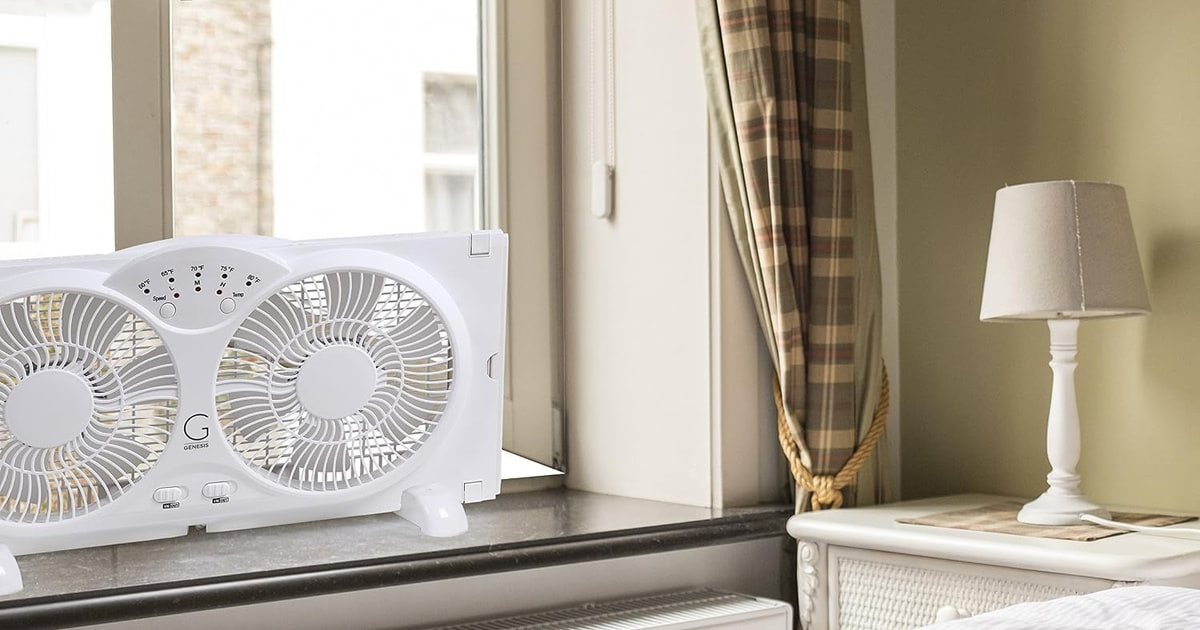
A window fan does something an air conditioner can't: it swaps the air in your house. On a summer night when it's cooler outside than in, a fan sitting in the sash pulls that cool air through your rooms and pushes the day's heat back out. You get a breeze, a drop in temperature, and an electric bill that barely moves. The Department of Energy calls this night flushing, and it works best when you run one fan pulling in and another pushing out on the opposite side of the house.
Here's the catch. A window fan can only give you the air that's already outside, so if it's 88 degrees and swampy at midnight, you'll just move hot, wet air around your bedroom. Humid climates are the weak spot. These fans also don't filter anything, so pollen and street noise come along for the ride. And nearly every model here rattles a little at high speed. You're trading some quiet for a lot of airflow, and no fan in this category fully escapes that.
We looked at whole-house units, twin-blade window fans, wall-mounted shutter fans and a battery-powered portable, then sorted them by how much air they move, how loud they get and how easily they fit an ordinary window. We think that the Bionaire Window Fan with Reversible Airflow Blades is the best window fan for most people, and that the Air King 20" Whole House Window Fan is the one to buy if you want to cool an entire house instead of one room.
Everything we recommend

Reversible twin blades, a real thermostat, and a remote

Cools a whole house, if you have the window for it
Copper motors and a wide fit, minus the remote

The basics done cheaply, with two speeds and no frills

A permanent shutter fan for a garage, shop or attic
Prices as of Oct 25, 6:48 AM PT · Details
At a glance
| Product | Fan size | Fits windows | Price | |
|---|---|---|---|---|
| Bionaire Window Fan with Reversible Airflow BladesTop pick | — | 24" to 36" | $61.01 |
| Air King 20" 1/6 HP Whole HouseUpgrade pick | 20-inch | 26.75" wide body | $224.01 |
| Genesis Twin Fan High Velocity Reversible AirFlowRunner-up | Twin 9-inch heads | +6.5" each side | $49.99 |
| Holmes Dual 8" Blade Twin Window FanBudget pick | Dual 8-inch blades | Up to 37" | $59.99 |
 | Lasko W09560 Bluetooth Enabled Twin 9-Inch WindowAlso consider | Twin 9-inch | 24" to 32" | Check price |
 | Comfort Zone Twin Window Fan with ReversibleAlso consider | Twin 9-inch | — | $38.67 |
| iLIVING 12" Wall Mounted Shutter Exhaust FanAlso great | 12-inch | Wall mounted | $87.50 |
 | O2COOL Treva 10 in Portable Fan withAlso in lineup | 10-inch | — | Check price |
Prices as of Oct 25, 6:48 AM PT · Details
How we picked
Airflow you'll feel. We compared manufacturer CFM ratings across the lineup and treated the gap between whole-house fans and twin fans as a real category divide, not a spec-sheet quibble. Anything claiming to cool more than one room had to back it up with a rating well above 1,000 CFM.
Noise at sleeping speed. Published lab measurements from Good Housekeeping put twin window fans between roughly 48 and 62 decibels depending on speed. We favored fans with three speeds over two, because a usable middle setting is what lets you sleep with the fan on.
Reversible airflow. Independently reversible motors let you intake on one side and exhaust on the other, which is the technique Energy.gov recommends for overnight cooling. We treated a manual-only reverse as a meaningful downgrade.
Window fit. We checked stated fit ranges against ordinary double-hung and slider dimensions. Fans that expand to 36 or 37 inches cover far more American windows than ones that stop at 32.
Thermostat and controls. A thermostat that cycles the fan off at a target temperature cuts runtime and energy use, and a remote or timer means you don't reach into an open window in the dark. We weighted both heavily for bedroom use.
Top pick
Reversible twin blades, a real thermostat, and a remote
Bionaire Window Fan with Reversible Airflow Blades
The Bionaire drops into a double-hung window, extends to fit openings from 24 to 36 inches, and runs each 9-inch blade in or out independently. A programmable thermostat and LED display let you set a temperature and walk away.
$61.01fromAmazonPrices as of Oct 25, 6:48 AM PT · Details
The reversible blades are the whole reason to buy this fan. Each side runs on its own, so you can pull cool air in through one and push stale air out through the other at the same time. That's air exchange, and it's what makes a window fan feel different from a box fan pointed at your face. Set both to intake on a cool evening. Flip both to exhaust when your kitchen is still holding dinner heat.
The thermostat is the part you'll appreciate at 3 a.m. You pick a target temperature on the LED screen, and the fan cycles itself off once the room gets there, then back on when it warms up again. That means you're not waking up cold at four in the morning to hunt for the switch. The display has a dimmer too, which matters more than it sounds like in a dark bedroom.
Three speeds give you enough range for most rooms. Low is a soft background hum that works as white noise. High moves real air but gets loud, which is true of every twin fan here. Good Housekeeping's lab measured this class of fan at roughly 48 decibels on low and past 62 on high, so plan on running low or medium once you're actually trying to sleep.
Installation takes about two minutes and no tools. The fan comes assembled. You set it in the opening, pull out the built-in accordion panel, add the second extender if your window is wide, and drop the sash on top. Renters, this is the appeal. Nothing gets screwed into the frame, and the whole thing weighs under seven pounds, so you can pull it out and store it flat when the weather turns.
Flaws but not dealbreakers
The plastic housing flexes, and if your window track isn't square the fan can buzz against the sash. A folded towel under one edge usually fixes it. Owner feedback on this model splits along those lines: most people are happy for years, and a smaller group hits a rattle or a dead motor early. That's the pattern for the whole category, not just this fan.
There's no filter and no bug screen. Anything the outdoor air is carrying comes through, which is worth knowing if you're sensitive to pollen or you live over a busy street.
The Bionaire comes with a three-year limited warranty.
Upgrade pick
Cools a whole house, if you have the window for it
Air King 20" 1/6 HP Whole House
This is a 20-inch, 1/6-horsepower steel fan that mounts in a window and moves enough air to change the atmosphere of an entire floor. It's heavy, it's loud on high, and nothing else here comes close on airflow.
$224.01fromAmazonPrices as of Oct 25, 6:48 AM PT · Details
Air King rates this fan at 3,560 CFM. A typical twin window fan puts out under 1,000 CFM with both blades running, so you're looking at roughly four times the air movement. Owners describe curtains getting pulled toward open windows across the house when it's running on high. If you've got a two-story home and you want the upstairs heat gone by bedtime, this is the tool.
The build is industrial, not consumer. Powder-coated steel blades, a steel grill, an ABS body and a permanently lubricated motor that asks nothing of you. It weighs 33.5 pounds, which tells you most of what you need to know. This isn't a fan you move between rooms. You install it in one window at the start of the season and leave it there.
The Storm Guard feature lets you close the window behind the fan, so you don't have to uninstall the thing every time weather rolls in. That's a genuinely useful detail on a unit this heavy. Owners consistently mention mounting it against the inside window trim, which gives it a solid seat and cuts down on the vibration you'd get from a loose fit.
It runs three speeds, and low is surprisingly civil for something this size. Owners who moved over from a 20-inch box fan report it's quieter while moving noticeably more air. High is a different story. You'll hear it in the next room, and you'll want a door or window open somewhere else so the fan isn't fighting a sealed house.
Flaws but not dealbreakers
This is not an apartment fan. You need a window that can take a 26-inch-wide, 33-pound unit, and you need somewhere to store it for eight months of the year. Installation is a two-person job the first time.
This Old House points out that whole-house fans work best in dry climates, because they pull outdoor air straight into your living space. In a muggy region you'll be importing humidity along with the cooler air, and the house can end up feeling clammy even as the thermometer drops.
High speed is loud enough that a light sleeper won't want it running in a bedroom window overnight. Use low, or put it in a hallway window and let it pull air through the rooms.
The Air King 9166 comes with a one-year limited warranty.
Runner-up
Copper motors and a wide fit, minus the remote
Genesis Twin Fan High Velocity Reversible AirFlow
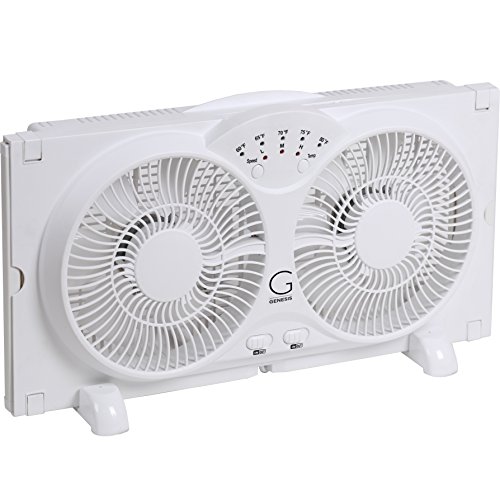
The Genesis twin fan runs two 9-inch heads on separate copper motors, reverses either one for intake or exhaust, and expands 6.5 inches on each side to fill wide openings. A built-in thermostat covers 60 to 80 degrees.
$49.99fromAmazonPrices as of Oct 25, 6:48 AM PT · Details
Copper motor windings are the specification Genesis leads with, and it's a fair thing to lead with. Copper handles heat and damp better than the alternatives, which matters in a device that spends its life sitting half outdoors in July. If you've burned through a cheap window fan in two seasons, this is the kind of detail worth paying a little more for.
The expandable panels reach further than most. Each side pulls out an extra 6.5 inches, so a fan with a 24-inch body can span a considerably wider opening without you improvising with cardboard. Wide, older double-hung windows are exactly where cheap twin fans fail, and this one gives you more room to work with than the Holmes or the Comfort Zone.
You get three speeds and a thermostat with LED indicator lights that show the temperature setting at a glance. The range tops out at 80 degrees, a bit narrower than the Bionaire's, but it covers the settings anyone actually uses. The reversible blades run in intake, exhaust or exchange mode, same as our top pick.
What you give up is the remote. The Bionaire lets you change speeds from bed, and the Genesis makes you get up. That's a small thing on paper and a real thing at midnight. If it doesn't bother you, the Genesis is the sturdier-feeling fan of the two.
Flaws but not dealbreakers
No remote and no timer. Every adjustment happens at the fan, and the controls sit on the unit itself, which means reaching into an open window in the dark.
At 8.4 pounds it's the heaviest of the twin fans here, and the taller body needs more vertical clearance than a slim model like the Holmes. Measure your sash height before you order.
Budget pick
The basics done cheaply, with two speeds and no frills
Holmes Dual 8" Blade Twin Window Fan
The Holmes runs dual 8-inch blades on independently reversible motors with a one-touch LED thermostat. It's the simplest fan here, and it extends to 37 inches, wider than any other twin model on this list.
$59.99fromAmazonPrices as of Oct 25, 6:48 AM PT · Details
Reviewed found that budget twin window fans, this one included, land within about 10 percent of the airflow you get from models costing twice as much. That's the case for buying cheap in this category. The blades are 8 inches instead of 9, so you lose a little, but not the kind of difference you'd notice standing in the room.
It fits wider windows than anything else here. With the adjustable extender screen and the bonus panel, the Holmes covers openings up to 37 inches. If you have a big old double-hung that swallows most twin fans, start here. The body itself is slim at under six inches deep, so it sits neatly in the track.
The reversing works the way it should. Each 8-inch blade has its own electronically reversible motor, so you get intake, exhaust or exchange without flipping the fan around. The one-touch thermostat is basic but functional. You set it and the fan cycles.
Two speeds instead of three is the main compromise, and it's felt more than you'd expect. Low is genuinely quiet. High is loud. There's no comfortable middle setting for a warm night that isn't a hot one, so you end up picking between too little air and too much noise.
Flaws but not dealbreakers
Owner feedback on this model is more mixed than on our other picks, with a recurring theme of motors giving out after a season or two. Family Handyman notes that mid-range window fans typically carry one- to two-year warranties while entry-level models often carry none, so read the fine print before you count on a replacement.
The controls aren't intuitive. The airflow direction switch is easy to leave in the wrong position, and plenty of people conclude the fan is broken when it's just set to exhaust. Check that switch first if the air seems to be going the wrong way.
Also great
A permanent shutter fan for a garage, shop or attic
iLIVING 12" Wall Mounted Shutter Exhaust Fan
The iLIVING is a 12-inch wall-mounted exhaust fan with automatic shutters, a DC motor rated at 960 CFM, and a digital controller that responds to both temperature and humidity. It's for spaces a portable fan can't handle.
$87.50fromAmazonPrices as of Oct 25, 6:48 AM PT · Details
This is the fan for the room your window fan can't fix. A garage in July, a workshop, a shed, an attic that bakes. It mounts into the wall and exhausts hot air out, and the aluminum shutters open when it runs and close when it stops. That closure is the point. No backdraft, no bugs, no rain coming through a fan-shaped hole in your wall.
The controller does more than a thermostat. You set a temperature anywhere from 50 to 99 degrees, and it also responds to humidity, which is useful in a basement or a greenhouse where the problem is damp as much as heat. Variable speed means you're not stuck choosing between off and full blast.
Better Homes & Gardens notes that shutter-style wall fans tend to run quieter than portable twin fans, because the fixed mount and the shutters cut down on vibration and backdraft noise. That tracks with how this one is built: galvanized steel frame, aluminum blades and shutters, an ETL-certified EC motor, OSHA-compliant wire guards.
At 960 CFM it's rated to exchange air in spaces up to 1,400 square feet, well past what a twin window fan manages. It arrives assembled with a 5.6-foot cord, so there's no wiring to do, though you still have to cut and frame an opening for it.
Flaws but not dealbreakers
This is a permanent installation. You're making a hole in a wall, which rules it out for renters and for anyone who wants their cooling to be reversible. It's also not a bedroom fan. It's built for utility spaces.
The controller supports a wire extension over a USB Type-A cable, but that cable isn't included. Small annoyance, easy to miss until the box is open.
Who this is for
Buy a window fan if you don't have central air, if your AC struggles on the top floor, or if your nights get cool enough that outside air can do the cooling for you. Renters get the most out of these: nothing is permanent, installation takes minutes, and Consumer Reports found top twin models draw between 55 and 100 watts on high, against 500 to 1,440 watts for a window air conditioner. That's a fraction of the electricity for a meaningful drop in temperature, especially in dry climates where night air actually cools off.
Skip it if you live somewhere humid and hot around the clock. Pulling in 85-degree air at 80 percent relative humidity won't help, and This Old House warns that whole-house fans in muggy regions can make a house feel worse by raising indoor moisture. Allergy sufferers should think twice too, since none of these fans filter anything. This guide covers fans made to sit in or mount through a window opening. We don't cover window air conditioners, ceiling-mounted whole-house fans that vent into an attic, or ordinary floor and tower fans.
How we picked
We started from manufacturer specifications, published lab measurements and recurring themes in owner feedback, then judged every fan on five things. Airflow: stated CFM, with whole-house claims held to a much higher bar than twin fans. Noise: three speeds beat two, because a middle setting is what makes a fan livable overnight. Reversibility: independently reversible motors that allow intake, exhaust or simultaneous exchange, the setup Energy.gov recommends for night cooling. Fit: expandable panels measured against common double-hung and slider openings. Controls: a thermostat that cycles the fan off on its own, plus a remote or timer where the fan is meant for a bedroom.
Other window fans worth considering
If you want to control your fan from your phone: The Lasko W09560 Bluetooth Enabled Twin 9-Inch Window — The Lasko W09560 pairs over Bluetooth with an app, so you can change speeds and settings without a remote to lose. It's a proper twin 9-inch fan with independently reversible motors, three speeds, a digital thermostat with adjustable brightness and an 8-hour timer. Lasko also includes its Blue Plug fused safety plug, which is a nice touch on something that lives in a damp window. Two things hold it back from a pick. It fits windows 24 to 32 inches wide, narrower than the Bionaire's 36 or the Holmes's 37. And owner feedback on this model is noticeably rougher than on the rest of the lineup, with app pairing and reliability the common complaints. Buy it for the phone control, and know you're taking a chance.
If you want the lightest fan that's easy to move around: The Comfort Zone Twin Window Fan with Reversible — The Comfort Zone CZ319 weighs 5.49 pounds, the lightest window fan here, and its auto-locking accordion expanders snap into openings from 22.25 to 33 inches without tools. It also stands on two feet, so it works as a tabletop fan when it's not in the window. The removable fabric cover is genuinely smart: it blocks bugs and debris while the fan runs, and seals off hot air when it isn't. What you give up is control. It has two speeds instead of three, no thermostat, and the reverse function is manual rather than electronic, which means physically flipping the fan to change direction. That's a real chore compared to pressing a button.
The competition
This is the set of fans our research surfaced across manufacturer specifications, published reviews and owner feedback. It isn't every window fan sold, and a model's absence here doesn't mean it's bad. It means it didn't come up in the sources we worked from.
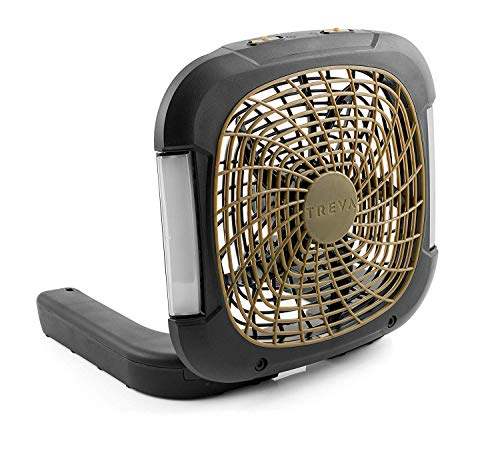
The O2COOL Treva 10 in Portable Fan with — The O2COOL Treva 10-inch is a portable two-speed fan that runs on six D batteries or AC power, with adjustable LED lights built in. It's genuinely useful, just not as a window fan. It doesn't reverse, it has no expandable panels to seal a window opening, and it has no thermostat, so it can't do the intake-and-exhaust work the rest of this lineup exists for. Where it earns its place is off the grid: camping, a patio, a power outage. If you want one fan that works when the electricity doesn't, this is the one to get. Just don't expect it to cool a room the way a sealed window fan does.
Installation notes
Set the fan in the middle of the open sash, extend the side panels into the window track, then lower the window onto the top of the fan so it locks in place. If the fan buzzes, the fit is loose, and a folded towel or a strip of foam weatherstripping under one edge usually stops it. For slider windows, most twin fans mount vertically with the built-in extender panel on top. Run one fan on exhaust upstairs and another on intake downstairs to get the night flushing effect the Department of Energy recommends, and keep an interior door or window open so the fan isn't pulling against a sealed house. Vacuum the blades and grill at the start of each season, and pull the fan inside before heavy rain unless it has a storm guard.
Questions we get
Are window fans worth it?
In a dry or mild climate, absolutely. Consumer Reports found top twin window fans draw 55 to 100 watts on high, while a window air conditioner pulls 500 to 1,440 watts. If your nights drop below your indoor temperature, a window fan gives you most of the comfort for a small fraction of the electricity. In a hot, humid place it's much less useful.
Should a window fan blow in or out at night?
Both, if you can manage it. Energy.gov recommends running fans on opposite sides of the house, one exhausting hot indoor air and one pulling cool outdoor air in. That's called night flushing, and it moves far more air than a single fan pointed one direction. With one twin fan, set one blade to intake and the other to exhaust and open a window on the far side of the room.
Can a window fan cool a whole house?
A twin window fan won't. Those move under 1,000 CFM with both blades running, which is a room's worth of air. A whole-house unit like the Air King 9166 is rated at 3,560 CFM, roughly four times as much, and that's enough to pull air through a multi-story home. Popular Mechanics found cross-ventilation with reversible fans can drop a room 5 to 10 degrees within an hour.
What's the quietest window fan for a bedroom?
Look for three speeds rather than two, since the middle setting is usually where a fan is both useful and tolerable. Good Housekeeping's lab measured twin window fans at roughly 48 decibels on low and over 62 on high. Better Homes & Gardens notes that shutter-style wall-mounted fans run quieter than portable twin fans, because the fixed mount and shutters cut vibration and backdraft noise.
How do I keep bugs and rain out?
Seal the gaps first. Extend the side panels fully into the window track and stuff any remaining openings with foam weatherstripping, since bugs come through the frame gaps rather than the blades. Some fans, like the Comfort Zone, include a removable fabric cover that blocks debris. For rain, either pull the fan in or choose a model with a storm guard that lets you close the window behind it.
What size window fan do I need?
Measure the width of your open sash before anything else. Most twin fans span roughly 24 to 33 inches, though the Holmes reaches 37 with its extender panels and the Bionaire covers 24 to 36. Check height too, since a taller body needs more vertical clearance in the track. Whole-house fans need a much larger opening, close to 27 inches wide.
Why you should trust us
For this guide:
- We read manufacturer specification sheets for every fan in this guide and compared their stated airflow, fit range, speed count and thermostat behavior side by side.
- We reviewed published lab findings and buying guides from Consumer Reports, Good Housekeeping, Popular Mechanics, Better Homes & Gardens, This Old House, Family Handyman, Bob Vila, Real Simple, The Spruce and Reviewed, along with the Department of Energy's guidance on night ventilation.
- We looked for recurring themes in owner feedback, particularly around motor longevity, window fit and noise at high speed, and weighted those patterns against what the specifications claim.
- We read owner reviews on every listing, weighted toward the critical ones, because that is where the recurring failures show up.
- We have a systematic way of automatically fetching the latest prices, so the numbers on this page stay current.
- This is a research-focused guide, so the team may not own every product listed — though we often do own the top winners, which gives us extra context for the recommendations.
- We don't accept free products, and the retailer commission never changes which product we recommend.
Sources
Best Window Fans of 2026 - Consumer Reports, Consumer Reports
We Tested the Best Window Fans for Cooling Small Spaces - Good Housekeeping, Good Housekeeping
The Best Window Fans, Tested by Our Home Editors - The Spruce, The Spruce
Best Window Fans for Every Budget - Bob Vila, Bob Vila
How to Cool Your Home Without AC - Energy.gov, U.S. Department of Energy
Window Fans vs. Whole-House Fans: What's the Difference - This Old House, This Old House
Best Window Fans Tested in Our Lab - Popular Mechanics, Popular Mechanics
The Best Window Fans for Every Room - Real Simple, Real Simple
Best Window Fans of 2026, Tested and Reviewed - Reviewed / USA Today, Reviewed (USA Today)
Window Fan Buying Guide - Better Homes & Gardens, Better Homes & Gardens
How We Test Window and Box Fans - Family Handyman, Family Handyman
Air King 9166F Whole House Window Fan Specifications, Air King (Manufacturer)
Amazon product listings and owner reviews for all 8 products
Manufacturer specification pages for each product
Some passages in this guide may be paraphrased with AI help.
Product prices and availability are accurate as of the date/time indicated and are subject to change. Any price and availability information displayed on Amazon.com at the time of purchase will apply to the purchase of this product.
More like this.
Continue exploring appliances reviews and recommendations.

The Best Quiet Ceiling Fans With Remote Control
A ceiling fan is one of the few appliances that runs while you sleep, so noise is the thing that decides whether you love it or resent it. A good one…

The Best Solar Attic Fans
Your attic is the hottest room in the house, and nobody lives in it. On a clear summer afternoon the air up there can push past 150°F, and that heat…

The Best Ceiling Fans With Lights
A ceiling fan doesn't cool a room. It cools you, by moving air across your skin, and that difference is bigger than it sounds. The Department of Energy…

The Best Portable Misting Fans of 2026
A misting fan works by throwing a fine spray into moving air, and the water pulls heat off your skin as it evaporates. That's why the same fan can feel…

The Best Window Air Conditioners
A window air conditioner is the appliance you notice most in the middle of the night. It's humming three feet from your pillow, and your electric bill…

The Best Cat Window Perches
A window perch does one thing, and it does it better than almost any other piece of cat furniture: it gets your cat off the floor and in front of the…