The Best Outdoor Motion Sensor Lights
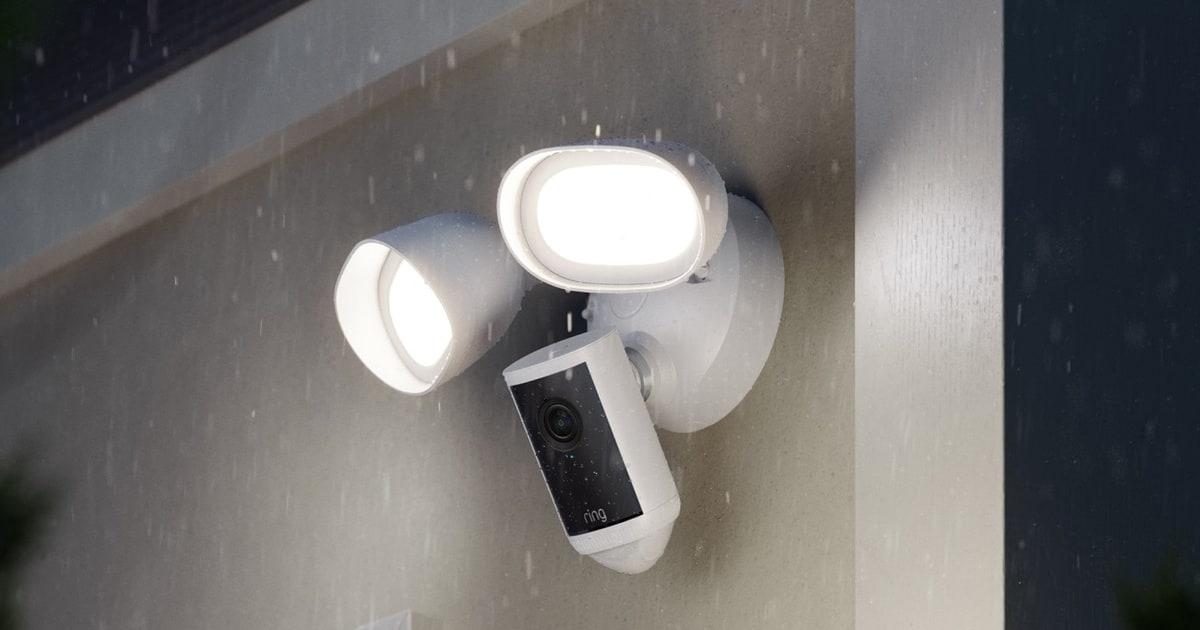
A good outdoor motion light does three unglamorous jobs. It keeps you from missing a step on a dark walkway, it makes your house a less appealing target than the one next door, and it burns power only when something actually moves. That last part matters more than people expect — a floodlight that runs wide open all night adds up over a year. The trouble is that the category has splintered. You're now choosing between plain floodlights, camera combos, solar stakes and battery units, and they solve very different problems.
Here's the honest part: nothing in this category nails every situation, and most of the disappointment comes from mismatch rather than defects. Solar units are rated in ideal summer sun, and a north-facing fence in December is not that. Battery cameras trade brightness for freedom from wiring. The very bright plug-in floods will annoy your neighbors if you aim them badly. And nearly every camera here expects a monthly subscription before it will keep a recording for you.
So start with the space, not the spec sheet. A doorstep or a garden path is happy with a few hundred lumens. A two-car driveway needs a couple thousand to reach the street edge. A big back lot wants considerably more. Then be realistic about power: hardwired if a fixture already exists, battery if it doesn't, solar only where the sun genuinely lands. We think that the Ring Floodlight Cam Pro is the best outdoor motion sensor light for most people, and that the Arlo Pro 3 Floodlight Camera is the one to buy if you can't run new wire.
Everything we recommend

The sharpest video and the smartest alerts, if you can wire it

Driveway-level brightness with no wire to run, but you'll recharge it

Enormous brightness for very little, if you have an outdoor outlet

A camera with a light attached, and batteries that last
At a glance
| Product | Brightness | Power Source | Price | |
|---|---|---|---|---|
| Ring Floodlight Cam ProTop pick | 2000 Lumens | Wired | $279.99 |
 | LEONLITE 3CCT Dusk to Dawn LED SecurityAlso consider | 200W Equiv. | — | $35.99On sale |
| Blink Outdoor 4 Floodlight CameraAlso great | 700 Lumens | Battery (2-Year) | $99.99 |
 | URPOWER Solar Lights OutdoorAlso consider | 40 LED | Solar Powered | $36.99 |
 | Govee Outdoor Deck LightsAlso in lineup | 180 Lumens/Light | Wired | $99.99 |
| Sararoom 2-Pack 100W LED Flood Lights withBudget pick | 10000 Lumens | Plug-in | $49.99 |
 | Heath HZ-4150-BK Zenith Motion-Activated Four-Sided Coach LightAlso in lineup | — | — | $50.21 |
| Arlo Pro 3 Wireless LED Floodlight SecurityRunner-up | 2000-3000 Lumens | Rechargeable | $149.99On sale |
 | Mr. Beams MB710 LED NightlightAlso in lineup | 15 Lumens | Battery-Powered | $29.99 |
 | Defiant Outdoor LED Bluetooth 270 Degree MotionAlso in lineup | — | — | $69.99 |
 | RAB Lighting STL110HB Stealth 110 Sensor withAlso consider | 150W PAR38 | 120V AC | $144.99 |
How we picked
Brightness for the space. We compared stated lumen output against the job each light is sold for, rather than treating more as better. A doorway light needs a few hundred lumens; a driveway needs a couple thousand to reach the street edge.
Realistic power source. We weighted hardwired fixtures for reliability, battery for spots with no wiring, and solar only for sun-exposed supplementary use. Owner feedback on solar and battery models consistently splits along exactly those lines.
False-trigger control. Nuisance alerts are the top complaint in owner feedback across this whole category. We favored products with adjustable sensitivity, drawable detection zones or object filtering over fixed-setting sensors.
Weather rating and build. We looked for IP65 sealing and die-cast aluminum housings on anything mounted in the open, and for third-party listings like ETL. Sealed housings are what keep a fixture from fogging after the first hard winter.
What it costs to keep. For cameras, we checked what happens without a subscription — whether you keep recordings, and whether local storage is an option. Published reviews and owner feedback both flag this as the surprise after purchase.
Top pick
The sharpest video and the smartest alerts, if you can wire it
Ring Floodlight Cam Pro
The Floodlight Cam Pro is a hardwired floodlight and a 4K camera in one housing, with depth-aware motion zones that keep the alerts meaningful. It's the most complete package here if you already have a wired fixture to replace and you don't mind paying monthly to keep footage.
$279.99fromAmazonThe video quality is the whole reason to spend this much. Ring's Retinal 4K sensor with 10x Enhanced Zoom is built for the details that matter after something happens — a plate at the end of the driveway, a face under a hood. Older cameras hand you a blurry shape and a shrug. This one gives you something you can actually show a police officer, assuming your internet keeps up.
3D Motion Detection cuts down the alerts you don't want. Rather than one flat heat-sensing zone, it maps distance across your property, so you can tell it to ignore the sidewalk and watch the driveway. If you live on a street with traffic, that's the difference between useful alerts and a phone that buzzes all night. Owners of older PIR-only floodlight cameras complain about exactly this.
Two thousand lumens covers a standard two-car driveway evenly. The two heads pivot separately, so you can push one toward the garage door and the other down the walk. Low-Light Sight also gives you a color view before the floods fire, using nothing more than a nearby streetlight. Color footage at night is far easier to describe to someone else than a green infrared smear.
It plays well with everything else in the Ring and Alexa world. Trigger a motion event and an Echo Show can pull up the feed on its own. Pair it with a Ring doorbell or alarm and you get one app, one timeline and one set of routines. There's also an 85-decibel siren you can fire from your phone, which is more useful than it sounds when a car slows out front.
Flaws but not dealbreakers
You have to hardwire it, and there's no battery backup. Swapping it onto an existing floodlight box is a normal Saturday job — kill the breaker, match three wires, remount. Running new wire to a spot that has never had power is electrician territory. And when the power goes out, your camera and your lights go with it.
The recording history lives behind a subscription. Without a Ring Protect plan you still get live view and real-time alerts, but every event disappears the moment it ends. That's a recurring cost with no end date, and it's the main reason some buyers go with Blink's local storage instead.
4K asks a lot of your network. Ring says as much in its own documentation: video quality varies with bandwidth and with device temperature. If the far corner of your driveway is also the far corner of your Wi-Fi, you won't see the resolution you paid for, and a mesh node may end up being part of the purchase.
Runner-upOn sale
Driveway-level brightness with no wire to run, but you'll recharge it
Arlo Pro 3 Wireless LED Floodlight Security
This is a full-brightness floodlight and a 2K HDR camera running on a rechargeable battery, so it goes on any wall you can reach with a ladder. You give up the set-and-forget quality of hardwiring, and you'll be pulling the battery a few times a year.
$149.99fromAmazonList priceYou get genuine floodlight output without touching a wire. Most battery cameras cap out around porch-light brightness. This one is rated for 2000 to 3000 lumens, which is driveway and alleyway territory. If your problem is a dark side yard with no junction box anywhere near it, that combination is rare, and it's the reason to pick this over the Ring.
Color night vision is more useful than infrared for describing a person. You see a red jacket, a silver car, a blue hood. Infrared gives you a gray silhouette and leaves you guessing. Paired with 2K HDR and 12x zoom, the footage is the kind you can hand to a neighbor or an insurer and have them recognize something specific.
The 160-degree view closes the corner blind spots. Cameras with a narrower lens tend to miss the pivot point where a driveway meets a garage door, which is exactly where someone tries a handle. Mount this above the garage and you catch the whole approach arc in one frame instead of buying a second camera for the corner.
The detection filters are among the more refined in the consumer category. You can sort person from vehicle from animal, and draw your own activity zones. That's the practical fix for the nuisance-alert problem that plagues simple heat sensors, and it means you can leave notifications on instead of silencing them after a week.
Flaws but not dealbreakers
The battery is the permanent tax. Recharge intervals depend on how often it triggers, how cold it gets and how long your clips run, and heavy traffic in front of the camera shortens them quickly. Owners in cold climates report noticeably shorter runs in winter. Plan on a ladder trip a few times a year, or buy a spare battery so the camera isn't down while one charges.
Cloud history costs monthly, and it's its own island. An Arlo Secure plan is what unlocks stored video and the smarter alerts. Arlo also lives in its own app: if the rest of your house is Ring or HomeKit, this won't join the party without workarounds, and you'll be checking two apps.
Budget pick
Enormous brightness for very little, if you have an outdoor outlet
Sararoom 2-Pack 100W LED Flood Lights with
Two 100-watt LED floods rated at 10,000 lumens each, with a PIR sensor and a remote that switches between motion, dusk-to-dawn and timed modes. They plug into a standard outdoor outlet, which makes them the simplest way to throw serious light across a big yard.
$49.99fromAmazonNothing else here puts out this much light for this little. Ten thousand lumens per fixture is well past what a house needs at the front door and squarely in the range for a long driveway, a work area behind the garage or a fence line you actually want to see across. You're getting two of them, so you can light a corner from both sides instead of fighting shadows.
Plugging in beats wiring in. There's no junction box to find, no breaker to kill and no electrician to schedule. You mount the bracket, aim the head and plug it into an outdoor outlet. For a rented house, a detached shed or a spot where the nearest wiring is fifty feet away, that's the difference between installing it today and never installing it.
The remote makes it more flexible than the price suggests. Four modes cover most real situations: motion-only for security, all-day for a work session, night mode for automatic dusk-to-dawn, and an adjustable delay so the light doesn't snap off while you're still unloading the car. You set it from the ground rather than balancing on a ladder with a screwdriver.
The build is better than the category average. Die-cast aluminum housing, IP65 sealing and a 50,000-hour LED rating are the specs that separate a fixture that survives a few winters from one that fogs up and dies. It's rated for exposed mounting, so it doesn't need a covered eave to stay dry.
Flaws but not dealbreakers
It's 6500K cool white, and that's all it is. That color reads as bluish and slightly clinical. Against warm porch lights or a wood deck it looks wrong, and it's a lot of light to have looking wrong. If the fixture will sit anywhere near where you sit outside, the LEONLITE's selectable color temperature is the friendlier choice.
The cord decides where the light goes. Plug-in freedom is also plug-in constraint. If your outdoor outlet is on the wrong side of the house, you're either running an extension cord across a walkway or rethinking the mounting spot entirely.
Aimed carelessly, this is a neighborhood problem. Ten thousand lumens spilling over a property line lights someone's bedroom window. Point it down and inward, and be conservative with sensitivity, or you'll get the conversation you don't want to have.
Also great
A camera with a light attached, and batteries that last
Blink Outdoor 4 Floodlight Camera
A small wire-free camera with a 700-lumen light on top, running on two AA lithium cells that Blink rates for up to two years. It's the right size for a front door or carport, and the included Sync Module lets you store clips locally instead of paying for cloud.
$99.99fromAmazonTwo years on two AA batteries changes how you live with it. Most battery cameras want attention every month or two, and that's the reason people quietly stop using them. Swapping a pair of lithium AAs on a schedule you'll barely notice is a much easier deal, and the batteries and the Sync Module Core both come in the box.
You can put it almost anywhere in about ten minutes. No wiring, no drilling into a junction box, no landlord conversation. If you rent, or your carport has never had power run to it, this is the version of a floodlight camera you can actually install. Renters are the clearest audience for it.
Local storage means you can skip the subscription. The Sync Module Core takes a USB drive and keeps your clips on your own property. Every other camera in this guide effectively pushes you toward a monthly plan for saved video. If you're privacy-minded, or simply tired of subscriptions, that's a real reason to choose Blink over Ring.
It fits the Alexa household without any fuss. Ask for the feed and it shows up on an Echo Show. Dual-zone enhanced motion detection speeds up alerts, and the optional plan adds person-versus-general-motion smarts if you decide you want them later.
Flaws but not dealbreakers
Seven hundred lumens is a doorway light, not a security floodlight. It'll cover a front step, a carport or a side gate well enough to see who's there. It will not light a driveway to the street. Buy it as a camera that brings its own illumination, and you'll be happy; buy it expecting floodlight coverage and you won't.
Night footage is infrared only, and the trigger isn't instant. You get gray-scale night video rather than the color the Arlo produces, which makes clothing and vehicles harder to describe. Battery cameras also wake up before they record, so a fast-moving visitor can be partway across the frame by the time the clip starts.
Who this is for
This guide is for anyone lighting the outside of a house: a front step, a garage approach, a back gate, a driveway that goes dark ten feet from the door. If you already own a camera covering the zone, buy a plain floodlight and skip the combo units — you're paying twice for the same coverage. If the zone has no camera at all, a floodlight camera is usually the more sensible way to get both, since you're mounting once and weatherproofing once.
It's not for you if what you want is decoration. Fence and deck accent lighting, string lights and color-changing systems are a different purchase with different goals, and we've kept them out of the picks. We also stick to fixtures rated for outdoor exposure — indoor nightlights are a fine thing to own, but they're not security lighting and they won't survive a rainstorm. And if your real problem is a new circuit rather than a new fixture, budget for an electrician before you budget for the light.
How we picked
Brightness for the space: we matched stated lumens to the job — a few hundred for a doorstep, a couple thousand for a driveway, more for a big lot — instead of rewarding raw output. Power source: hardwired wins where a fixture already exists, battery earns its place where wiring is genuinely impractical, and solar only makes sense on a wall that gets real sun. False triggers: adjustable sensitivity, drawable zones and object filtering beat fixed-setting sensors, because nuisance alerts are what make people turn these things off. Weather and build: IP65 sealing and die-cast aluminum for anything mounted in the open. Ongoing cost: for cameras, we checked what you keep when you don't subscribe.
Other outdoor motion sensor lights worth considering
If you want a light that just stays on all night: The LEONLITE 3CCT Dusk to Dawn LED Security ($35.99) — The LEONLITE 3CCT isn't motion-activated at all — a photocell turns it on at dusk and off at dawn. That sounds like a step backward until you live somewhere that a motion sensor never stops firing: a busy road, a yard full of deer, a wind-blown tree line. A lit perimeter all night gets you the same practical result without the flickering on and off. The selectable 3000K, 4000K and 5000K setting is genuinely handy, since plenty of people install the coolest setting and immediately wish they hadn't. It's ETL listed, IP65, die-cast aluminum, and backed by a three-year warranty. What you give up is any energy savings from motion-only operation, plus any smart control at all.
If you want lights where there's no power at all: The URPOWER Solar Lights Outdoor ($36.99) — The URPOWER four-pack is the easiest install in this guide: stake or screw them where you want light and walk away. Each one wakes for 30 seconds on motion within roughly 16 to 26 feet, with a 120-degree spread and IP65 sealing, and the 2200mAh cell is rated for hundreds of triggers on a full charge. For a fence line, a shed door, a side gate or a garden path, four of them cover a lot of ground for nothing per month. But solar ratings assume eight hours of direct summer sun. Winter angles, tree shade and a run of gray days can gut the output, and the 30-second on-time isn't adjustable. If the spot gets less than five or six hours of direct sun on your shortest days, buy battery or hardwired instead.
If false triggers have driven you crazy: The RAB Lighting STL110HB Stealth 110 Sensor with ($144.99) — The RAB Stealth 110 is the commercial answer, and it's what electricians and property managers reach for on loading docks and apartment perimeters. Sensitivity adjusts from 30 to 100 percent, which is the lever that actually solves a sensor firing at heat shimmer off an HVAC unit or a cat crossing the lawn at 2 a.m. The twin die-cast bullet floods aim independently, and the head handles up to a 1000-watt load, so it'll drive whatever PAR38 lamps you choose. That's the catch, too: the lamps aren't included, so it's not a complete fixture out of the box, and it's an old-fashioned bulb-based setup with no app, no schedule and no smart integration. The 110-degree detection arc is also narrower than the 180 to 270 degrees residential fixtures sweep.
The competition
This is what our research surfaced across the major outdoor lighting types, not a map of everything for sale. Two products here didn't earn a pick or a recommendation, but neither is a bad fixture — they're just narrower than the ones above, and each one has a buyer it fits.
The Heath HZ-4150-BK Zenith Motion-Activated Four-Sided Coach Light ($50.21) — The Heath Zenith HZ-4150-BK is a four-sided Charleston-style coach lantern in black brass with a motion sensor built in, and it fills a real gap: almost every motion fixture looks industrial, and this one doesn't. Its sensor covers 150 degrees out to about 30 feet with adjustable sensitivity, which is plenty for a porch or an entryway pillar. It lost to the picks on substance. It takes a replaceable bulb rather than an integrated LED, so you're paying for lamps and running less efficiently, and there's little published detail beyond the basics. Choose it when curb appeal is the point and the lighting is a bonus — a Colonial front porch where a dual-head floodlight would look like a mistake.
The Defiant Outdoor LED Bluetooth 270 Degree Motion ($69.99) — The Defiant DFI-5985-WH is a standard-looking dual-head security light with a 270-degree detection sweep and a Bluetooth app, and that combination is more useful than it sounds. Being able to set sensitivity and on-time from your phone while you stand under the fixture beats guessing at a tiny dial from a ladder, and 270 degrees is about as wide as residential coverage gets, which suits a corner or a garage approach. It didn't make the picks because Bluetooth means roughly 30 feet of range and nothing else — no Alexa, no Google Home, no remote access, no automation. It's also primarily a big-box store product, so online stock comes and goes. Worth it if you want tuning without a Wi-Fi ecosystem.
Installation notes
Most of these are a straight swap. If a wired fixture already hangs on the eave or beside the garage door, replacing it is a normal DIY afternoon: cut the breaker, confirm the wires are dead, unscrew the old plate, match black to black and white to white, land the bare copper on the ground screw, remount and restore power. Running a new circuit to a spot that has never had power is a different job, and it belongs to a licensed electrician for code reasons as much as safety. Aim matters as much as wiring. Mount the sensor eight to ten feet up and point it across the area you want covered rather than straight at it, since heat sensors catch movement crossing their view far better than movement coming toward them. Keep it off HVAC exhaust and swaying branches.
Questions we get
What should I buy for a driveway?
You want at least 2000 lumens, and closer to 3000 if the coverage has to reach the street edge. The Ring Floodlight Cam Pro is our pick when you also want the camera; the Sararoom two-pack is the way to go if you just want light and you have an outdoor outlet nearby. Skip solar and most battery units for driveways — they can't hold that kind of output consistently.
How many lumens do I actually need?
Match it to the zone. Roughly 700 to 1000 lumens covers a doorstep, porch or narrow path; 2000 to 3000 handles a garage door, carport or driveway; 5000 and up is for large yards, long drives and commercial lots. More isn't better once you pass what the space needs — it's just glare and unhappy neighbors.
Is wattage a useful way to compare brightness?
No, and it's the most common way to get fooled. A 25-watt LED like the LEONLITE puts out what a 200-watt incandescent used to, so wattage tells you about power draw, not light. Always compare stated lumens. If a listing gives you wattage and no lumen figure, treat that as a warning sign about the LED panel inside.
Are solar motion lights good enough at night?
In the right spot, yes. On a sunny south-facing wall, a set like the URPOWER four-pack will run through hundreds of triggers a night without complaint. The trouble is winter sun angles, tree shade over the panel and long stretches of cloud, which can cut output badly. As a rule, if the panel gets less than five or six hours of direct sun on your shortest days, go battery or hardwired.
How do I stop the light triggering on animals and wind?
Start with sensitivity — most fixtures let you dial it down, and the RAB Stealth 110 goes as low as 30 percent, which is why it's the fix for chronic cases. Then aim the sensor head away from the tree line, the animal path and any HVAC exhaust. Raising the mount to eight or ten feet helps too, since it biases the field toward person-height movement. If you'd rather not fight it, a dusk-to-dawn fixture sidesteps the problem entirely.
Do I need an electrician?
Usually not. Swapping an existing wired fixture for a new one is a three-wire job that takes most people under half an hour with a screwdriver and a breaker off. Running a new circuit or creating an outdoor junction box where none existed is electrician work, for permitting as much as safety. Battery and solar options need no electrical work at all.
Why you should trust us
For this guide:
- We read the manufacturer specifications and full listing documentation for every fixture here, then compared stated lumen output, detection angle, IP rating and housing material side by side.
- We reviewed published coverage of the camera-equipped models and looked for recurring themes in owner feedback, especially around false triggers, battery intervals in cold weather and how solar units behave in winter.
- We compared what each camera does when you don't pay for a subscription, since that's where the ongoing cost of this category hides.
- We read owner reviews on every listing, weighted toward the critical ones, because that is where the recurring failures show up.
- We have a systematic way of automatically fetching the latest prices, so the numbers on this page stay current.
- This is a research-focused guide, so the team may not own every product listed — though we often do own the top winners, which gives us extra context for the recommendations.
- We don't accept free products, and the retailer commission never changes which product we recommend.
Sources
Best Motion-Sensor Lights of 2026 — Wirecutter, Wirecutter
Best Outdoor Motion Sensor Lights — Bob Vila, Bob Vila
Best Outdoor Security Lights — Popular Mechanics, Popular Mechanics
Best Outdoor Motion Sensor Lights — This Old House, This Old House
Outdoor Motion Sensor Light Buying Guide — Home Depot, Home Depot
Amazon product listings and owner reviews for all 11 products
Manufacturer specification pages for each product
Some passages in this guide may be paraphrased with AI help. Prices are refreshed automatically.
More like this.
Continue exploring home reviews and recommendations.

The Best Outdoor Solar Garden Lights
Solar garden lights solve a problem that used to mean digging a trench. You want the front walk lit so nobody trips on the step, or the back fence lit so…

The Best Outdoor Smart Plugs for Christmas Lights
Stringing lights is the fun part. Remembering to unplug them at 11 p.m. in the freezing cold, night after night, is not. An outdoor smart plug fixes that:…

The Best WiFi Freeze Alarms and Temperature Sensors
A frozen pipe doesn't announce itself. It splits quietly, thaws a day later, and then, according to the American Red Cross, a single 1/8-inch crack can…

The Best Parking Sensors and Reversing Aids
Most of the trouble in a parking lot happens in the last few feet, at walking speed, with your neck twisted over your shoulder. A camera or a set of…

The Best Continuous Glucose Monitors and Sensor Covers
A continuous glucose monitor turns a number you used to get four times a day into a line you can watch. That changes how you eat, how you exercise, and…

The Best Continuous Glucose Monitors and Sensor Covers
A continuous glucose monitor is a small sensor you wear on the back of your arm. It reads your glucose every few minutes and sends the number to your…