The Best WiFi Freeze Alarms and Temperature Sensors
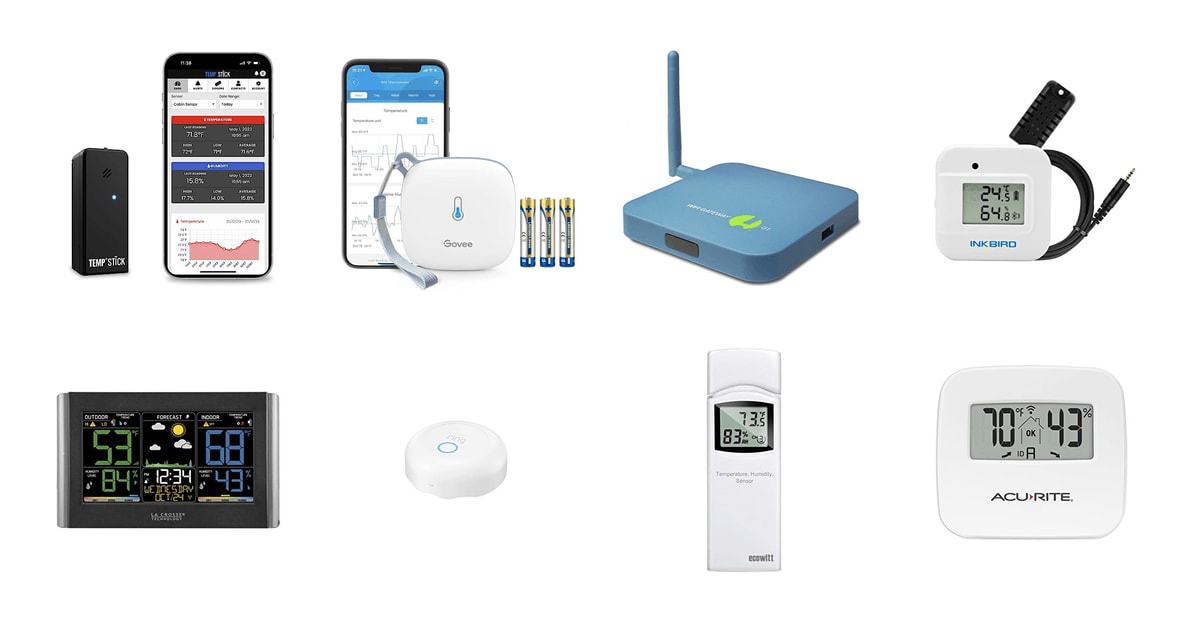
A frozen pipe doesn't announce itself. It splits quietly, thaws a day later, and then, according to the American Red Cross, a single 1/8-inch crack can push up to 250 gallons of water a day into your floors. The Insurance Information Institute puts water damage and freezing among the most common homeowners insurance claims there are. A small sensor that tells you the cabin has dropped to 45°F while you're three states away costs a rounding error next to that. That's the whole pitch.
Here's the catch nobody prints on the box. Every one of these depends on the property having power and working internet. Lose either and the sensor goes quiet — and a silent sensor looks exactly like a house that's fine. Most systems will warn you when a unit stops checking in, but you still have to notice. Batteries fade in the cold, too. Treat these as an early warning, not a guarantee, and keep a neighbor's number handy.
Which one you want comes down to how the alert reaches you and how much gear you're willing to buy. Some sensors talk straight to your router. Others need a hub, and a couple need a whole ecosystem behind them. We read manufacturer specifications, published reviews and owner feedback across this lineup, weighing alert options, accuracy and what keeping your history costs. We think that the Temp Stick is the best WiFi freeze alarm for most people, and that the Govee WiFi Thermometer Hygrometer H5179 is the one to buy if you want to cover several rooms cheaply.
Everything we recommend

The most dependable way to watch an empty house from far away

Nearly the same accuracy for a small fraction of the outlay

Lab-grade readings and free history, if you'll buy sensors too
Leak and freeze alerts, if you're already in that ecosystem
At a glance
| Product | Connectivity | Battery Life | Price | |
|---|---|---|---|---|
| Temp Stick Remote WiFi Temperature & HumidityTop pick | WiFi | 1-2 Years | $149 |
| Govee WiFi Thermometer Hygrometer H5179 with AppBudget pick | WiFi and Bluetooth | — | $39.99 |
| SensorPush G1 WiFi Gateway for Temperature &Upgrade pick | WiFi | — | $99.95 |
 | Inkbird Smart Thermometer Temperature and Humidity MonitorAlso in lineup | Bluetooth | — | $23.99 |
 | La Crosse Technology Weather Station with CustomizableAlso in lineup | Wireless | — | $68.91 |
| Ring Alarm Flood & Freeze SensorAlso great | — | 3 Years Max | $34.99 |
 | ECOWITT WN31 Wireless Multi-Channels Thermometer and HygrometerAlso consider | 915 MHz Wireless | — | $15.60 |
 | AcuRite 06044M Wireless Temperature and Humidity MonitorAlso in lineup | Wireless | — | $19.79 |
How we picked
Alerts that wake you. We favored sensors that can reach you by text or email, not only by a push notification you might sleep through. Owner feedback across the category makes clear that the alert path matters more than the sensing element.
Accuracy that's enough. We compared published accuracy specifications against findings in independent reviews. Anything within about a degree Fahrenheit clears the bar for freeze protection, though wine cellars and server closets want tighter.
Total gear required. We counted hubs, base stations and subscriptions alongside the sensor itself. A cheap sensor that needs a gateway and a monthly plan isn't actually cheap.
History you keep. We preferred free, exportable logs over data that expires or hides behind a fee. Records matter if you ever have to show an insurer what the house was doing while you were away.
Batteries and range. We weighed manufacturer battery claims, whether wired power is an option, and how far a sensor can sit from its hub before it drops off.
Top pick
The most dependable way to watch an empty house from far away
Temp Stick Remote WiFi Temperature & Humidity
This one connects straight to 2.4GHz WiFi with no hub, no wires and no subscription. It'll text you, email you and ping your phone when the place gets cold, and it keeps logging through an internet outage, then fills the gap once it reconnects.
$149fromAmazonThere's no hub to buy and no gateway to hide behind the couch. The Temp Stick joins your 2.4GHz network on its own and runs on two AA batteries, which Ideal Sciences rates for one to two years. For a place you visit twice a winter, that matters more than any feature on the list. You set it on a shelf, you leave, and it keeps reporting.
The alerts are the real reason to pay more for this one. It sends unlimited text messages, emails and app notifications with no subscription attached. That distinction matters at two in the morning, when a silent push notification on a phone lying face-down does nothing at all. A text buzzes. Set the low-temperature alert at 45°F, as the Insurance Institute for Business & Home Safety recommends, and you get hours of lead time instead of minutes.
It also keeps a real log. If the property's internet drops, the Temp Stick records locally and uploads up to a month of stored readings once it reconnects, so you don't end up with a hole in the record. It can email you daily, weekly or monthly summaries too. That's genuinely useful if you ever have to show an insurer what the house was doing while you were gone.
Owner feedback on longevity is unusually consistent. People describe units running for years in refrigerators, second homes and unheated garages with almost no attention. Ideal Sciences builds and supports the thing in Utah, and owners who hit trouble describe getting an actual person on the phone. It works with Alexa and IFTTT if you want it to trigger something, though the core job here is simply telling you it's cold.
Flaws but not dealbreakers
It's the most expensive standalone sensor here, and you're paying for the text alerts and the support line as much as the hardware. If push notifications are enough for you, the Govee does the sensing part about as well for a fraction of the outlay.
It's also only as good as the property's internet. Owners who lost WiFi or had a unit go dark describe a miserable stretch of not knowing whether the house or the sensor was the problem. And like nearly everything in this category, it needs a 2.4GHz network — if your mesh router hides both bands behind one name, set up a separate 2.4GHz SSID before you leave.
Budget pick
Nearly the same accuracy for a small fraction of the outlay
Govee WiFi Thermometer Hygrometer H5179 with App
A small white puck with a Swiss-made sensing element inside, rated to within about half a degree Fahrenheit. It connects over WiFi or Bluetooth, alerts you in the Govee app when a room drifts out of the range you set, and exports two years of readings free.
$39.99fromAmazonThe sensor inside is as accurate as the one in units costing several times more. Govee publishes ±0.54°F for temperature and ±3% for relative humidity, refreshed every two seconds. That's the same accuracy figure SensorPush lists for its far pricier sensors. For knowing whether your basement is drifting toward freezing, it's more precision than the job needs.
History is free and unusually generous. You get about three weeks of readings to scroll through in the app, and you can export up to two years of temperature and humidity as a file. That's handy if you're documenting a crawlspace moisture problem or building a paper trail for an insurer. Plenty of competitors either charge for that depth or quietly throw the old data away.
The trade-off is how it reaches you. Alerts arrive as app notifications — no text, no email — and you set the alert range over Bluetooth, which means standing next to the sensor to change a threshold. So configure it before you leave, and set it at 45°F rather than 32°F.
It's also the easy one to buy in quantity. Three of these covering the attic, the crawlspace and the garage still cost less than one premium sensor, and they all land in the same app. Owners routinely run several. If your goal is broad coverage rather than laboratory precision, that's the smarter way to spend.
Flaws but not dealbreakers
App-only alerts are the real limitation. A freeze warning at 3 a.m. depends entirely on your phone's notification settings and your willingness to leave them loud. Owners also report occasional stretches where a unit stops reporting until it's re-paired, and Govee's support has a mixed reputation when something goes wrong.
It won't join a 5GHz network, so a mesh system that merges both bands can make setup frustrating. And there's no wired power option — when the batteries go, the sensor goes with them.
Upgrade pick
Lab-grade readings and free history, if you'll buy sensors too
SensorPush G1 WiFi Gateway for Temperature &
This is the gateway, not the thermometer — a small box that puts your SensorPush sensors on the internet so you can check them from anywhere. Cloud history is unlimited and free, and the sensors it pairs with are the most precise in this guide.
$99.95fromAmazonStart with what you're actually buying: the gateway. The G1 sits on your network and relays readings from SensorPush sensors, which are sold separately, up to the cloud so you can check a wine cellar from an airport. Budget for the box plus at least one sensor. That two-part purchase is the main reason it isn't our top pick.
Nothing else here reads closer to the truth. SensorPush rates its sensors to ±0.3°C — that's ±0.54°F — and ±3% humidity, across a range of -40°F to 140°F. Wirecutter's cold-chamber comparison found the HT1 drifted less than half a degree Fahrenheit from a calibrated reference over 72 continuous hours, the narrowest margin in that group. For a cellar or a server closet, that's the difference between data and a rough guess.
The cloud side is refreshingly honest. Storage is unlimited with no monthly fee, and SensorPush publishes an API, so you can pull your own data out instead of living inside someone else's app. Alerts go to your phone and your email. Owners watching incubators, warehouses and cigar collections describe the same experience: it sets up quickly and then it just keeps reporting.
Flaws but not dealbreakers
Sensors reach the gateway over Bluetooth rather than WiFi, so placement is a genuine constraint. A sensor in a detached garage may never reach a gateway inside the house, and owners describe adding a WiFi extender or relocating the gateway to make a stubborn corner work. Getting the gateway itself onto the network can take a couple of tries.
Then there's the arithmetic. It's two products minimum, and more if you want several rooms covered. If all you need is a heads-up that the cabin is cold, you're buying precision you'll never use.
Also great
Leak and freeze alerts, if you're already in that ecosystem
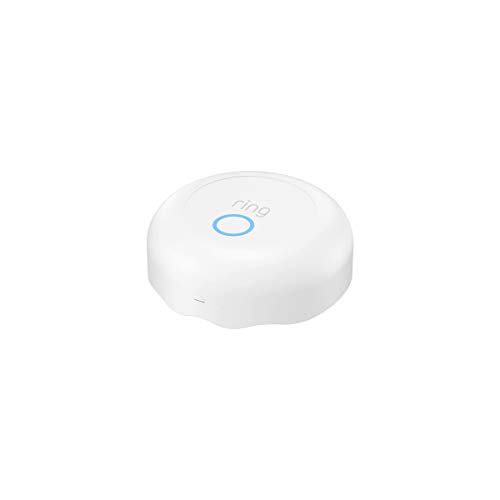
Ring Alarm Flood & Freeze Sensor
A flat white sensor that lies on the floor and watches for two things: standing water and a room dropping below 40°F. It talks to a Ring Alarm base station over Z-Wave instead of your WiFi, so it's only worth buying if you already own that system.
$34.99fromAmazonFrozen pipes cause damage twice — once when they split, and again when they thaw and the water runs. This is the only pick that watches for both. It sits by the water heater or under the laundry sink and alerts you for standing water and for low temperature, which covers the failure most temperature sensors can only predict.
Buy it only if the base station is already on your wall. It speaks Z-Wave, not WiFi, so it can't reach your router by itself. The Ring Alarm base station is sold separately, and remote alerts need a subscription. Owners describe setup taking a few minutes with no tools, which is accurate — as long as the expensive part of the system is already in place.
For Ring households, the payoff is integration. A leak or freeze trip becomes part of the same system that arms your doors, so it can sound the siren, notify everyone on the account and reach professional monitoring. The batteries are replaceable and rated for up to three years. Owners consistently report catching water heater failures and sump backups before the water reached anything expensive.
Flaws but not dealbreakers
The freeze alert trips below 40°F, while IBHS recommends alerting at 45°F to give yourself room to act. Five degrees sounds trivial. In a crawlspace at two in the morning, it's the difference between calling a neighbor and calling a plumber.
It also doesn't do what the other picks do. There's no temperature graph, no export, no history to hand an insurer — it's an alarm, not a logger. And once you add the base station and the ongoing subscription, it's the most expensive way to monitor a single room in this guide.
Who this is for
Buy one if you own a space you don't sleep in every night: a vacation house, a rental you manage, an RV in winter storage, a greenhouse, a wine cellar, a network closet, or a parent's house you check on from another state. SafeWise reports that vacation homeowners with instant push alerts cut their average freeze-event response time from more than four hours — the wait-for-a-neighbor-to-swing-by model — to under 30 minutes. That gap is the entire value of these devices.
You probably don't need one if you're home daily and your plumbing runs through conditioned space. And know the scope here: this guide covers consumer sensors that report to a phone over WiFi or a nearby hub. It doesn't cover cellular sensors for properties with no internet at all, industrial dataloggers, or automatic water shutoff valves. If your cabin has no broadband, none of these will help you — you need a cellular unit instead.
How we picked
Alerts: we favored sensors that can reach you when your phone is face-down and silent, which in practice means text or email rather than a push notification alone. Accuracy: we compared published accuracy specs against independent review findings, and treated roughly a degree Fahrenheit as good enough for freeze protection. Gear required: we counted the hub, the base station and any subscription, not just the sensor on the shelf. History: we preferred free, exportable logs over data that vanishes or sits behind a fee. Power and range: we looked at battery claims, whether wired backup exists, and how far a sensor can sit from its hub before it stops reporting.
Other wifi freeze alarms and temperature sensors worth considering
If you want to watch eight rooms at once: The ECOWITT WN31 Wireless Multi-Channels Thermometer and Hygrometer ($15.60) — The Ecowitt WN31 is one sensor in a system built to scale. A single Ecowitt gateway takes up to eight of them, each on its own channel, which makes covering a big house plus a barn and a greenhouse practical without buying eight separate WiFi devices. Owners report battery life past a year and painless pairing, and Ecowitt's dashboard shows history and can send email alerts. What you give up is simplicity. The gateway is a separate purchase, the radios are region-specific — 915 MHz in the US and Canada — and Ecowitt recommends the WN31 for indoor spots like storage rooms and garages rather than true outdoor exposure. It's the setup to choose for your third location, not your first.
The competition
This is what our research surfaced, not a census of everything on the market. Searches for freeze alarms pull in a lot of adjacent hardware — add-on sensors, weather stations, probe loggers — and some of it turns out to be a different tool than the one you're shopping for. Here's what each of these actually is, and who might still want it.
The Inkbird Smart Thermometer Temperature and Humidity Monitor ($23.99) — The Inkbird IBS-TH2 Plus gets listed everywhere as a cheap WiFi sensor, but this version is a Bluetooth device with an LCD and a waterproof external probe; getting readings off-site means adding an Inkbird gateway. On paper it's appealing — 30,000 stored data points, calibration in the app, and a probe you can drop into a tank or a freezer. Owner feedback is where it comes apart, with recurring reports of humidity readings frozen at one value, batteries lasting days rather than months, and units that shut off when the probe is connected. If you want a local probe logger and you'll be standing nearby, it's still worth a look. For an empty house in a cold snap, we'd pass.
The La Crosse Technology Weather Station with Customizable ($68.91) — The La Crosse C85845-INT is a genuinely nice color weather station — big digits, adjustable brightness, an atomic clock, and indoor and outdoor temperature and humidity with custom high and low alerts. That last feature is what gets it filed under freeze alarms, and it shouldn't be. The alerts happen on the display, in the room, which does nothing for you from another state. It also wants the included power cord, with batteries only as a dimmed backup. Buy it to see conditions at a glance while you're home, or for a relative who won't touch an app. Don't buy it to watch a cabin you've left.
The AcuRite 06044M Wireless Temperature and Humidity Monitor ($19.79) — The AcuRite 06044M is an add-on sensor rather than a monitor in its own right. It reads temperature and humidity every 16 seconds, shows both on a small LCD, and transmits over 433 MHz radio to an AcuRite display console or an AcuRite Access — both sold separately, and the Access is the piece that puts your data online. Owners rate its accuracy well and describe it as an inexpensive way to add one more room to a system they already run. That's exactly who should buy it. Starting from nothing, you'll spend more assembling the pieces than a direct-WiFi sensor costs, and owners note the hub limits how many sensors it will accept.
Placement and setup notes
Put the sensor where the cold gets in, not where you'd like the temperature to be pleasant. In most houses that means the crawlspace, the cabinet on an exterior wall with the kitchen supply line behind it, or the far corner of an unheated basement. Set the low alert at 45°F rather than 32°F; IBHS recommends that margin because pipes in a poorly sealed crawlspace can start freezing well before the air reads freezing, and outdoor temperatures near 20°F put exterior-wall plumbing at risk. Use lithium AA batteries in unheated spaces, since alkalines lose capacity in the cold. Nearly all of these need 2.4GHz WiFi, so give your router a separate 2.4GHz network name if it currently merges the bands. Then trigger a test alert before you drive away.
Questions we get
Do WiFi freeze alarms still work if the power goes out at the property?
Not for long. The sensor runs on batteries, but your router and modem don't, so alerts stop the moment the power does. Putting the router and modem on a small UPS buys you a window of coverage. It also helps to treat sudden silence as a signal — most of these systems flag a sensor that has stopped checking in, and that warning can be the first sign the power is out.
What temperature should I set the alert threshold to?
Set it at 45°F, not 32°F. IBHS recommends alerting about 13 degrees above freezing so you have time to call someone, open cabinet doors or turn the heat up before the pipes are actually in trouble. Pipes in a drafty crawlspace can begin freezing while the room air still reads well above 32°F. If the sensor has a fixed threshold, like the Ring at 40°F, plan on a shorter fuse.
Can a freeze alarm text me instead of sending an app notification?
The Temp Stick does — it sends unlimited text and email alerts with no subscription, which is the main reason it's our top pick. The Govee sends app notifications only, and the Ring sensor alerts through the Ring system rather than as a standalone text. If you specifically need an automated call to a landline, check with the manufacturer before buying, since that's usually a cellular dialer rather than a WiFi sensor.
What's the difference between a freeze alarm and a WiFi temperature sensor?
A freeze alarm is single-purpose: it watches for one condition and yells when it happens, like the Ring Flood & Freeze Sensor tripping below 40°F. A WiFi temperature sensor logs continuously, shows you trends, and lets you pick your own thresholds. Most people are better served by the sensor, because the history tells you whether the furnace is short-cycling long before anything freezes.
Can I monitor a cabin, a garage and a greenhouse all in one app?
Yes, with a caveat about distance. Several Govee sensors or several Temp Sticks will show up in one app no matter where they are, as long as each location has its own internet. Hub-based systems like Ecowitt and SensorPush put many sensors in one app too, but the sensors have to be within radio range of their gateway, so they cover one property rather than three.
Why you should trust us
For this guide:
- We read the manufacturer specifications for every sensor here, including published accuracy figures, measurement ranges, battery claims and what hardware each one requires beyond the box.
- We compared published reviews, including Wirecutter's cold-chamber accuracy comparison, alongside guidance from the American Red Cross, the Insurance Information Institute and IBHS on when pipes actually freeze and what a burst one costs.
- We read owner feedback across the lineup for recurring themes rather than one-off complaints: units dropping offline, batteries draining early, and how each company responds when something fails.
- We read owner reviews on every listing, weighted toward the critical ones, because that is where the recurring failures show up.
- We have a systematic way of automatically fetching the latest prices, so the numbers on this page stay current.
- This is a research-focused guide, so the team may not own every product listed — though we often do own the top winners, which gives us extra context for the recommendations.
- We don't accept free products, and the retailer commission never changes which product we recommend.
Sources
Frozen Pipes Prevention Guide — Insurance Institute for Business & Home Safety, IBHS
Homeowners and Renters Insurance Statistics — Insurance Information Institute, Insurance Information Institute
Frozen Pipes Safety Guide — American Red Cross, American Red Cross
Best Smart Home Temperature & Humidity Sensors — PCMag, PCMag
Best WiFi Thermometers — The Spruce, The Spruce
Best Temperature and Humidity Sensors — CNET, CNET
Best Smart Home Sensors — Tom's Guide, Tom's Guide
Best Freeze Alarm Sensors — SafeWise, SafeWise
Best Wireless Temperature Sensors — Wirecutter (NYT), Wirecutter
Smart Home Temperature Sensors Review — Good Housekeeping, Good Housekeeping
Amazon product listings and owner reviews for all 8 products
Manufacturer specification pages for each product
Some passages in this guide may be paraphrased with AI help. Prices are refreshed automatically.
More like this.
Continue exploring electronics reviews and recommendations.

The Best WiFi Routers
Your router is the one piece of tech in your home that everything else depends on. When it's working, you don't think about it. When it isn't, the TV…

The Best Mesh WiFi Systems
Dead zones are the whole reason mesh systems exist. One router stuck in a corner means the back bedroom drops video calls and the garage gets nothing at…

The Best Car Alarm and Security Systems
Your car spends most of its life parked and unattended. On a street, in a work lot, in a driveway you can't see from the kitchen sink. A security system's…

The Best Parking Sensors and Reversing Aids
Backing up is the one thing you do every drive where you mostly can't see. The space directly behind your bumper is a genuine blind spot, and it's where a…

The Best All-Weather Car Floor Mats
Winter doesn't stay outside. Salt, slush, sand and gravel ride in on your boots and grind into the carpet every time you get in. A good all-weather mat…

The Best AirPods Pro 3 Cases
The AirPods Pro 3 charging case is slick, rounded, and small enough to squirt out of your hand. That's great in a pocket and terrible on a tile floor. You…