The Best Parking Sensors and Reversing Aids
Backing up is the one thing you do every drive where you mostly can't see. The space directly behind your bumper is a genuine blind spot, and it's where a tricycle, a low bollard or a kid chasing a ball disappears from view. NHTSA's rulemaking on rear visibility estimated roughly 210 deaths and 15,000 injuries a year from backover crashes. A camera shows you what's back there. Ultrasonic sensors tell you how close it is. The two solve different halves of the same problem.
Here's the honest part: no aftermarket kit matches a factory system for polish. Wireless cameras can stutter or drop out, especially on a long truck or a trailer. Ultrasonic sensors beep at tall grass and shrug at low curbs. Bumper-mounted sensors usually mean drilling holes you can't undrill. And if your car was sold new in the US once FMVSS 111 took effect, you already have a rear camera — you may want sensors or a better display, not a camera.
So we read spec sheets, published reviews and owner feedback across license-plate cameras, mirror displays, trailer kits and all-in-one screens, and sorted them by who actually needs what. We think that the AUTO-VOX Solar Wireless Backup Camera is the best reversing aid for most people, and that the Garmin BC 50 is the one to buy if you already drive with a compatible Garmin navigator on the windshield.
Everything we recommend

The easiest retrofit, if you can live with a battery

Wider view and a wired camera, but you need a Garmin

A mirror that records the road and shows you the back

Two camera feeds at once, for towing and trailers
At a glance
| Product | Rear resolution | Display | Price | |
|---|---|---|---|---|
| Garmin BC™ 50Runner-up | 720p HD | — | $199.99 |
| AUTO-VOX Solar Wireless Backup Camera: 1-Minute No-DrillTop pick | 1080P | 6" 16:9 monitor | $127.99On sale |
 | SteelCraft - Parking Sensor Relocation KitAlso in lineup | — | — | $99.30On sale |
| WOLFBOX G900 PRO Mirror Dash Cam withAlso great | Rear 2.5K | 12" mirror | $284.99On sale |
 | Podofo 10.26" Wireless Carplay Car Stereo withAlso consider | 1080P camera | 10.26" touchscreen | $72.99 |
| AUTO-VOX Wireless Backup Camera Kit: 7.2" MonitorUpgrade pick | 1080P | 7.2" monitor | $219.97On sale |
 | Vantrue N4 Pro S 4K 3 ChannelAlso consider | 2.5K rear | — | $319.99On sale |
How we picked
Camera and night view. We compared sensor specs and published low-light claims against what owners report seeing in dark garages and unlit streets. Anything that drops to grainy gray at night does the one job you need it for badly.
Field of view. Spec sheets in this category cluster between about 120 and 170 degrees, and we favored the wider end. A narrow view shows you the bumper but misses the car crossing behind you.
Signal reliability. We read owner feedback for patterns of lag, dropout and pairing trouble, and weighted wired power and dual-antenna designs higher than single-antenna battery cameras, especially for long vehicles.
Install difficulty. We separated kits you can fit with a screwdriver in a driveway from ones that need trim pulled or a reverse-light tap. Professional installation changes the real cost of a cheap camera.
Weather sealing. Anything mounted outside needs an IP67 or IPX7 rating at minimum. Under IEC 60529, that means dust-tight and sealed against immersion up to a meter for 30 minutes.
Top pickOn sale
The easiest retrofit, if you can live with a battery
AUTO-VOX Solar Wireless Backup Camera: 1-Minute No-Drill
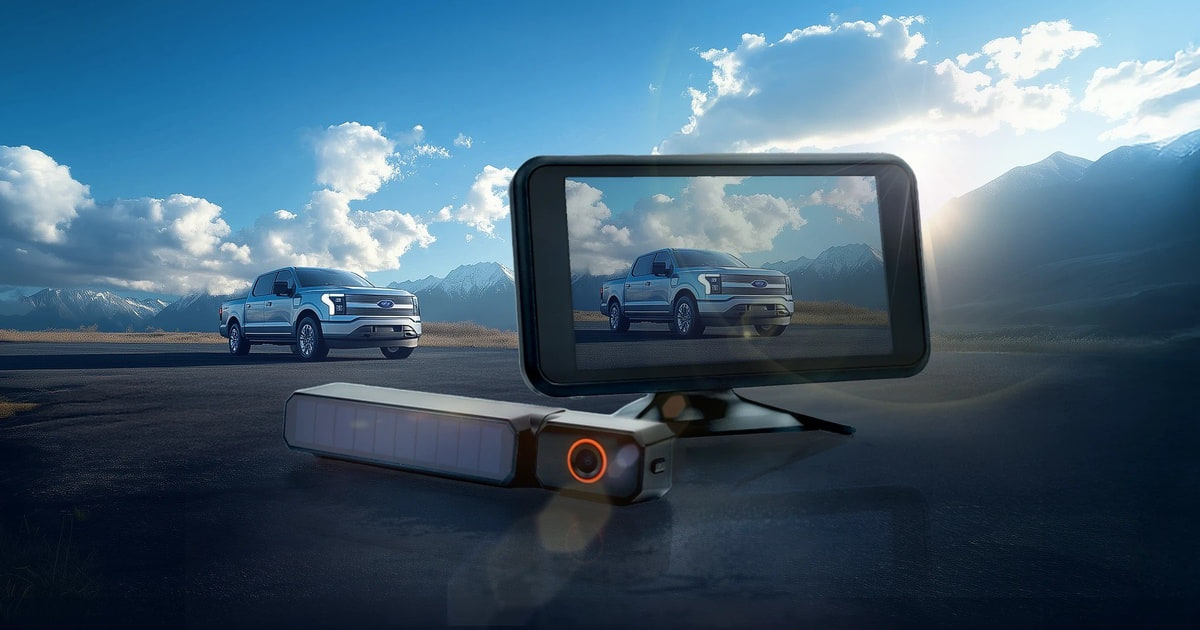
A solar-charged camera that clamps to your license plate and talks to a 6-inch dash monitor — no wires through the car, no drilling. It's the fastest way to add a usable rear view to an older vehicle.
$127.99fromAmazonList priceThis is the only kit here you can fit in a parking space. The camera bolts to your license plate using the existing screws, and the monitor sits on the dash. There's no running cable through a door jamb, no pulling trim, no tapping the reverse light circuit. AUTO-VOX says setup takes about a minute, and while that's marketing-speak, the actual steps really are screw-on, power-up, pair.
The solar panel is what makes the no-wire part work. Instead of charging the camera every week, daylight tops it off while the car sits in a driveway or at a campsite. There's a USB-C port for when the sun doesn't cooperate — a week of garage parking in deep winter, say. You'll still think about charge level occasionally, which you never do with a wired camera.
The camera records 1080p and keeps color at night rather than dropping to grainy gray, which matters more than resolution numbers suggest. Backing into a dark garage, you want to tell a trash can from a bicycle. AUTO-VOX rates the dual-antenna link at up to 230 feet, so this works on a pickup or a short trailer, not just a sedan.
There's a dash cam hiding in here. The built-in DVR loop-records the rear view while you drive, so if somebody taps your bumper in a crowded lot, you have footage instead of a vague memory. It's a secondary feature, not a reason to buy, but it's free value compared with a camera that only wakes up in reverse.
Flaws but not dealbreakers
A battery-powered camera is a thing you have to think about. Park under cover for weeks, drive short trips, or live somewhere with a dim winter, and you'll be reaching for the USB-C cable. A wired camera never asks anything of you.
The 6-inch monitor lives on your dash and gets power from a cable, so you're trading hidden wiring for a visible screen and a cord. Some people hate that look. Owner feedback on this kit is still thin, so there's less of a track record than on the high-volume mirror cams here.
Wireless is wireless. Published reviews of license-plate cameras in general flag occasional lag or dropout, and a dual-antenna design reduces that without eliminating it. If you're reversing a long rig in a tight spot, a wired feed is the safer bet.
Runner-up
Wider view and a wired camera, but you need a Garmin
Garmin BC™ 50
Garmin's license-plate camera pairs wirelessly with compatible Garmin navigators and covers a 160-degree field of view. It's the pick if a Garmin display already lives on your windshield and you want one screen doing both jobs.
$199.99fromAmazonThe appeal is simple: no second screen. If you already run a compatible Garmin navigator, the BC 50 feeds into it, so your dash doesn't collect another monitor and another cable. Garmin lists support for multiple cameras on compatible displays, which matters if you're covering both a truck bed and a trailer.
The 160-degree field of view is the widest here. That extra width is what catches the car crossing behind you in a parking lot, not just the bumper two feet back. Garmin also quotes a 50-foot transmission range, with an optional extension cable taking it to about 100 feet for a truck-and-trailer setup. For long rigs, that's the spec that counts.
The camera itself is wired for power — it needs a switched 12-volt source like the reverse lights — so the video link is the only wireless part. That's a meaningfully more reliable arrangement than a battery camera, and you never charge anything. The IPX7 housing is rated for incidental immersion up to a meter for half an hour, which covers rain, snow and road spray.
Resolution is 720p, lower than most of this group. In practice a wide, stable 720p feed is more useful for judging distance than a narrow 1080p one, but it's not as crisp. Garmin recommends professional installation, and that's fair advice for anyone who hasn't tapped a reverse light before.
Flaws but not dealbreakers
This only makes sense if you own a compatible Garmin navigator. Without one, you're buying a display too, and the whole cost advantage disappears. Check Garmin's compatibility list before you order.
Owner feedback on this camera is more divided than on the rest of the lineup, with a real cluster of complaints alongside the praise. Pairing hiccups and mounting fit come up often enough to notice.
720p is the lowest resolution in this guide, and you'll see it at night. Running power to the reverse lights also means real installation work — the no-tools shortcut the top pick offers isn't available here.
Also greatOn sale
A mirror that records the road and shows you the back
WOLFBOX G900 PRO Mirror Dash Cam with
The G900 PRO replaces your rearview mirror with a 12-inch screen, records 4K front and 2.5K rear, and switches to a reversing view when you shift into reverse. It's the pick if you want a dash cam and a backup camera in one install.
$284.99fromAmazonList priceTwo devices, one piece of glass. This is a dash cam first and a reversing aid second, and that combination is why people buy it. The rear camera that captures your evidence footage is the same camera that shows you the parking bollard. If you were going to buy a dash cam anyway, the reversing view is effectively included.
The STARVIS 2 IMX678 sensor is the real hardware story. It's a low-light sensor, and low light is when a rear view matters most — a dim garage, a street with one working lamp. Front video is 4K at 30fps, rear is 2.5K. Owner feedback consistently praises the image, and several owners upgrading from earlier Wolfbox mirrors single out the rear feed as the thing that improved.
A 12-inch mirror display is genuinely useful if a headrest, a cargo load or a third row blocks your normal mirror. You get a clean rear view regardless of what's piled in the back seat. The 5.8GHz Wi-Fi pulls clips to your phone quickly, and voice control means you're not poking at a screen while driving.
Installation is more involved than a license-plate camera but easier than it looks. The mirror straps over your existing one, and the rear camera runs to the back of the car. Wolfbox includes a 128GB card and supports up to 512GB. Parking monitoring needs a separate hardwire kit, which is worth knowing before you order.
Flaws but not dealbreakers
Brightness is the recurring complaint. Multiple owners say the display washes out in strong daylight and wish it were brighter, and the unit has separate sunny and overcast exposure settings you have to switch between manually. That's an annoyance you'll meet every clear afternoon.
Not everyone gets along with a mirror screen. Some owners report fiddling with it to get basic rearview function working, and a few call it a poor substitute for a plain mirror unless your normal view is already obstructed. It takes adjustment, and some people never make the switch.
Night video is good rather than flawless — owner feedback mentions graininess in the darkest conditions. And this is the heaviest, bulkiest thing in the lineup at over two and a half pounds.
The G900 PRO comes with a one-year guarantee.
Upgrade pickOn sale
Two camera feeds at once, for towing and trailers
AUTO-VOX Wireless Backup Camera Kit: 7.2" Monitor
This AUTO-VOX kit pairs two solar cameras with a 7.2-inch monitor that shows both feeds side by side. If you tow a horse trailer, an RV or a boat, watching the road behind and the cargo at the same time is the whole point.
$219.97fromAmazonList priceSplit-screen is the feature you can't get anywhere else here. Every other kit shows you one view. This one shows two at once on a 7.2-inch 1080p monitor, which means you can watch the lane behind your trailer and the animals inside it without toggling. For anyone hauling livestock, that's not a convenience — it's the reason to buy.
Both cameras are solar, so neither needs wiring, and that's what makes a trailer practical. A trailer isn't wired for a camera, and running cable from a tow vehicle to a boat trailer is miserable work. Stick a solar camera on the back, stick another inside, and you're done. Detach the trailer and nothing breaks.
The suction mount is more flexible than it sounds. Put the monitor on the dash while driving, move it to a picnic table at the campground, or bring it inside the RV. It's the same hardware doing campsite security at night and hitching assistance in the afternoon, which suits how people actually use an RV.
If your towing problem is hitching rather than monitoring, this still helps — a camera aimed at the hitch turns a two-person job into a one-person job. Owner feedback is essentially nonexistent on this kit, so treat the hardware claims as specifications rather than confirmed behavior.
Flaws but not dealbreakers
This is the most expensive kit here and the least proven. There's effectively no owner feedback to check the specs against, which is a real risk on a product whose value rests on two wireless links working reliably at trailer length.
Two solar cameras mean two batteries to think about. A trailer parked in a barn or under trees won't charge well, and a dead camera on the side you can't see is worse than no camera.
A suction-cup monitor on the dash will fall off eventually — heat, dust and vibration all work against it. And this is overkill if you don't tow. For a sedan or a short pickup, you're paying for a second camera you'll never aim at anything.
Who this is for
Buy a kit here if your vehicle has no rear camera, or if the one it has isn't enough. That mostly means cars sold before the US rear-visibility rule took effect, plus trucks, RVs and trailers that never had coverage where it counts. If you park in a tight garage, drive a vehicle with a long rear overhang, or have small children who play near the driveway, a rear view is one of the least expensive safety upgrades you can add to a car. New drivers benefit too, mostly because a camera teaches you how much room you actually have.
Skip this if your car already has a working factory camera and a screen you like — an aftermarket kit will almost certainly be a downgrade in integration, if not in resolution. This guide covers cameras, mirror displays and all-in-one screens that handle reversing. We did look at ultrasonic bumper sensors, which measure distance rather than showing you anything, but none of the kits we could confirm earned a pick. If you want sensors specifically, pair a cheap four-sensor kit with any camera here rather than choosing between them.
How we picked
We ranked these on the things that change whether you trust the screen. Night view: sensor specs and owner reports of what's actually visible in a dark garage, not just a resolution number. Field of view: we favored the wide end of the roughly 120-to-170-degree range, because width is what catches cross traffic. Signal reliability: patterns of lag and dropout in owner feedback, with wired power and dual antennas weighted higher. Install difficulty: whether you can fit it with a screwdriver or need trim pulled and a reverse light tapped. Weather sealing: IP67 or IPX7 at minimum, meaning dust-tight and sealed against a meter of immersion for half an hour.
Other parking sensors and reversing aids worth considering
If you want CarPlay and a camera in one screen: The Podofo 10.26" Wireless Carplay Car Stereo with ($72.99) — This Podofo unit is a 10.26-inch portable touchscreen that brings wireless CarPlay and Android Auto to a car that has neither, and it ships with a 1080p rear camera on a 15-meter cable. Owners with older trucks and SUVs consistently like how much it adds for one install — navigation, hands-free calling and a reverse view that pops up automatically when you shift. The trade-off is clutter. It powers from the 12-volt socket and routes audio through FM or AUX, so you end up with visible cords, and owner feedback singles that out as the main gripe. It's a stereo upgrade that happens to include a camera, not the other way around.
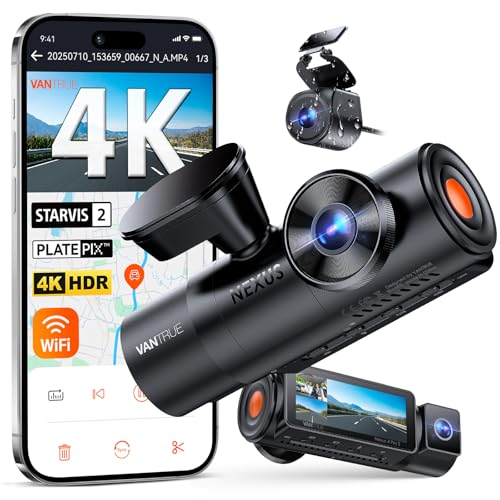
If you want serious dash cam coverage with a reversing-capable rear camera: The Vantrue N4 Pro S 4K 3 Channel ($319.99) — The Vantrue N4 Pro S records three channels — 4K front, 1080p cabin, 2.5K rear — with STARVIS 2 sensors on all of them, and the rear camera is IP67 rated with a supercapacitor instead of a battery. For a rideshare or long-haul driver who needs evidence from every angle, nothing else here competes. But it's a dash cam that gives you a rear view, not a reversing aid: there's no mirror display, no dedicated reverse trigger, and you're watching a small screen. Owner feedback splits sharply, with a visible group calling the rear and cabin image disappointing for the price. Parking mode needs a separate hardwire kit.
The competition
This is what our research surfaced on Amazon, not a survey of everything sold. Plenty of ultrasonic sensor kits and bumper cameras exist that we couldn't confirm as currently available, and the category churns fast — models get renamed and relisted constantly. If a kit you're considering isn't here, that's not a verdict on it.
The SteelCraft - Parking Sensor Relocation Kit ($99.30) — The Garmin BC 40 was on our shortlist as a cheaper entry into the Garmin ecosystem, but we couldn't confirm it as a current listing. If you own a compatible Garmin navigator and find it in stock, it's a simpler license-plate camera than the BC 50 — narrower view, same basic idea. We'd check the BC 50's specs against it before choosing, since the wider field of view is the BC 50's main advantage.
Installation notes
Two things cause most of the grief. First, if your camera needs switched 12-volt power, tap the reverse light circuit rather than a constant source — otherwise the camera runs whenever the car is on, and on a battery unit that drains it fast. A cheap circuit tester saves a lot of guessing. Second, aim the camera before you tighten anything. Most people mount too high and end up staring at the horizon instead of the ground behind the bumper, which is where the curb and the tricycle are. Shift into reverse, check the screen, then tighten. For solar cameras, wipe the panel when you wash the car — road film cuts charging more than you'd expect. And route any cable away from the trunk seal, not through it.
Questions we get
Do I need both a backup camera and parking sensors?
They answer different questions. A camera shows you what's behind the car; ultrasonic sensors tell you how close it is, with a beep that gets faster as you approach. IIHS research found rearview cameras cut backing crashes by roughly 17%, and that cameras paired with parking sensors did better still. If budget allows, pair them — a cheap four-sensor kit plus any camera here beats spending the same money on one fancier camera.
Are wireless backup cameras reliable, or do they lag?
They're usable, but they're not as solid as wired. Published reviews and owner feedback both flag occasional lag and dropout, usually on long vehicles or when the signal has to pass through a trailer. Dual-antenna designs and shorter distances help. If you're reversing a 30-foot rig into a campsite, pay for wired video if you can.
Can parking sensors detect low objects like curbs or bollards?
Often not, and this is the category's biggest honest limitation. Ultrasonic sensors typically cover roughly 0.3 to 2.5 meters and sit at bumper height, so a low curb, a parking block or a short bollard can fall under the beam entirely. A camera aimed low catches those. It's a strong argument for having both rather than trusting beeps alone.
Do parking sensors and cameras work in rain and snow?
Mostly, with caveats. Look for IP67 or IPX7 sealing, which under IEC 60529 means dust-tight and protected against immersion up to a meter for 30 minutes — that handles rain and road spray fine. The real problem is a dirty lens. Slush and road film blur a camera within a few winter miles, so plan on wiping it. Ultrasonic sensors can also false-alarm when caked with snow.
What's the best option for an older car with no screen at all?
Either a kit with its own monitor or a mirror display. The AUTO-VOX Solar kit bundles a 6-inch dash monitor and needs no wiring, which is the simplest path. A mirror unit like the Wolfbox G900 PRO replaces your rearview mirror instead, so there's no extra screen cluttering the dash. Choose by whether you'd rather have a second display or give up your plain mirror.
Is a license-plate camera or a bumper-mounted camera better?
License-plate cameras are far easier to fit — they use the existing plate screws, no drilling — and that's why most retrofit kits use them. Bumper-mounted cameras sit lower and look more factory, which gives a slightly better view of what's close to the ground. For a DIY install, go license-plate. If you're paying a shop anyway, a flush bumper mount is worth asking about.
Why you should trust us
For this guide:
- We compared manufacturer specifications across every kit here, including sensor models, field-of-view claims, transmission range and IP ratings.
- We read published reviews and NHTSA, IIHS and IEC source material on rear visibility requirements, backover risk and weather-sealing standards.
- We read through owner feedback for each listing to find recurring themes — display brightness, signal dropout, cable clutter and night-vision graininess — rather than relying on summary scores.
- We read owner reviews on every listing, weighted toward the critical ones, because that is where the recurring failures show up.
- We have a systematic way of automatically fetching the latest prices, so the numbers on this page stay current.
- This is a research-focused guide, so the team may not own every product listed — though we often do own the top winners, which gives us extra context for the recommendations.
- We don't accept free products, and the retailer commission never changes which product we recommend.
Sources
NHTSA: Rear Visibility (FMVSS 111) rule, NHTSA
IIHS: Rear cameras and parking sensors reduce backing crashes, IIHS
Consumer Reports: Backup cameras and parking-assist systems, Consumer Reports
Wirecutter: Best backup cameras, Wirecutter
Garmin BC 50 specifications, Garmin
Kids and Car Safety: Backover prevention, Kids and Car Safety
Car and Driver: Aftermarket backup camera guides, Car and Driver
AAA: Vehicle technology and driver-assistance research, AAA
Amazon product listings and owner reviews for all 7 products
Manufacturer specification pages for each product
Some passages in this guide may be paraphrased with AI help. Prices are refreshed automatically.
More like this.
Continue exploring electronics reviews and recommendations.

The Best WiFi Freeze Alarms and Temperature Sensors
A frozen pipe doesn't announce itself. It splits quietly, thaws a day later, and then, according to the American Red Cross, a single 1/8-inch crack can…

The Best Snake Bite First Aid Kits
Snakes bite about 7,000 to 8,000 people in the US every year, according to the CDC, and fewer than 10 of those people die - almost entirely because…

The Best Sleep Aids and Gadgets
Sleep problems rarely have one cause. Sometimes the room's too bright, sometimes a neighbor's TV bleeds through the wall, and sometimes your brain just…

The Best Archery Release Aids for Compound Bows
A release aid is the only thing standing between your hand and the bowstring, and it shapes every arrow you shoot. Get the fit and the trigger feel right,…

The Best Outdoor Motion Sensor Lights
A good outdoor motion light does three unglamorous jobs. It keeps you from missing a step on a dark walkway, it makes your house a less appealing target…

The Best Continuous Glucose Monitors and Sensor Covers
A continuous glucose monitor turns a number you used to get four times a day into a line you can watch. That changes how you eat, how you exercise, and…