The Best Books on Procrastination and Focus
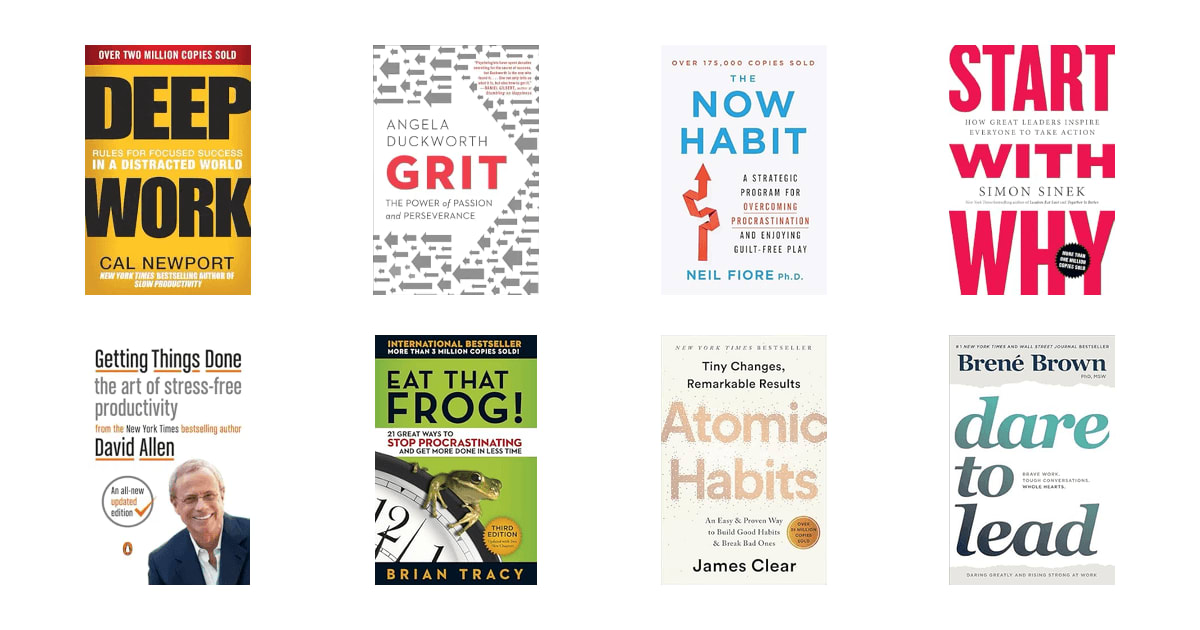
Procrastination doesn't feel like laziness when you're in it. It feels like dread, or fog, or a sudden urgent need to clean the kitchen. A good book on the subject does two things: it tells you why your brain keeps swerving away from the one task that matters, and it hands you something small enough to do in the next ten minutes. The best ones survive a normal, interrupted week. The rest turn into another item on your list.
Here's the honest part. No book fixes this on its own, and the whole genre has a built-in trap: reading about productivity feels productive. You can finish five of these and change nothing. Published reviews and owner feedback both circle the same complaint — the ideas are clear, the follow-through is on you. Most of these authors say so themselves, usually in a chapter people skim. Buy one, pick two techniques, and give them a couple of weeks before you buy another.
We looked at what each book actually asks of you, how quickly you can act on it, and whether readers report still using it months later. Some are systems. Some are therapy in disguise. One you can finish on a flight. We think that Atomic Habits is the best book on procrastination and focus for most people, and that Deep Work is the one to buy if your job depends on long, uninterrupted stretches of thinking.
Everything we recommend
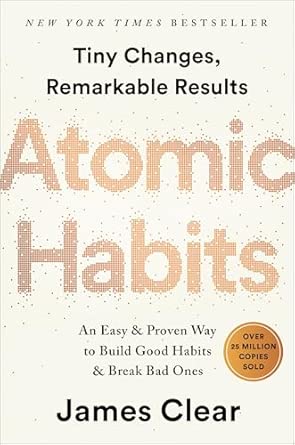
Small changes that stick, without leaning on willpower

Fewer, longer stretches of the work that actually counts

Finish it tonight, use it tomorrow morning

For when the problem is fear, not your to-do list
At a glance
| Product | Pages | Published | Price | |
|---|---|---|---|---|
| Deep Work: Rules for Focused Success inRunner-up | 304 pages | Jan 5, 2016 | $17.98On sale |
 | Getting Things Done: The Art of Stress-FreeAlso consider | — | Mar 17, 2015 | $8.06On sale |
| Eat That Frog!: 21 Great Ways toBudget pick | 144 pages | Apr 17, 2017 | $17.64On sale |
| The Now Habit: A Strategic Program forAlso great | 224 pages | Apr 5, 2007 | $16.78On sale |
| Atomic Habits: An Easy & Proven WayTop pick | 320 pages | Oct 16, 2018 | $18.57On sale |
 | Start with Why: How Great Leaders InspireAlso in lineup | 256 pages | Dec 27, 2011 | $10.93On sale |
 | Dare to Lead: Brave Work. Tough Conversations.Also in lineup | 320 pages | Oct 9, 2018 | $11.48On sale |
 | Grit: The Power of Passion and PerseveranceAlso consider | 352 pages | May 3, 2016 | $11.48On sale |
How we picked
Actually usable. We favored books whose advice you can apply in a week you didn't clear the calendar for. Published reviews and owner feedback both flag setup cost, so we weighed how much scaffolding each system demands before it pays off.
Root cause covered. Procrastination shows up as a scheduling problem, an anxiety problem, or an attention problem. We wanted the lineup to cover all three rather than stack up five books that give the same advice.
Sticks after month one. We looked for owner feedback from readers reporting months later, not just on the finish-the-book high. Books people describe rereading or still using scored higher than books people found merely inspiring.
Clear enough to finish. A book you abandon halfway helps nobody. We compared length, chapter structure and summary aids, and gave weight to titles that readers consistently describe as quick and easy to get through.
Top pickOn sale
Small changes that stick, without leaning on willpower
Atomic Habits: An Easy & Proven Way
James Clear treats procrastination as a design problem rather than a character flaw. He gives you a four-part method for making the thing you're avoiding easier to start, and it's the rare productivity book you can act on the same afternoon you open it.
$18.57fromAmazonList priceIt's the easiest book here to act on. Clear's system has four steps — make the behavior obvious, attractive, easy and satisfying — and each one turns into something you can change in about a minute. Move your running shoes by the door. Put your phone in another room. Readers who've worked through a lot of this genre keep coming back to this one because the advice survives contact with a messy week.
The two-minute rule does most of the heavy lifting for procrastinators. You shrink the task you're dreading until starting feels almost silly: open the document, write one line, lace one shoe. Starting is the part your brain fights hardest, so you cheat at the start and let momentum handle the rest. It's the single technique we'd hand to someone who's stuck right now, today.
Clear also reframes the goal. Instead of promising to stop procrastinating, you decide you're someone who does the hard thing early, then collect small pieces of evidence for it. That sounds soft, and readers who want a strict system sometimes roll their eyes at it. But it explains why people relapse after a burst of motivation, and it gives you something steadier than a streak to hold onto.
The writing is what separates it from the pack. Chapters are short, each ends with a summary, and the diagrams do real work instead of decorating the page. Owner feedback is full of people who read it twice in a row, which almost never happens in this category. If you've bounced off denser productivity books, this is the one that tends to get finished — and a finished book beats a brilliant one on the nightstand.
Flaws but not dealbreakers
It isn't strictly a procrastination book, and if you came looking for a chapter on why you avoid your dissertation, you won't find it. The applications are there, but you have to make the jump yourself. Readers dealing with deep anxiety around work often report that the habit framing feels a little breezy for what they're going through.
If you've read widely in this genre, chunks will feel familiar. Habit stacking and environment design aren't new ideas; Clear's contribution is packaging and clarity. That's genuinely valuable, but it does mean the book can read as a very good greatest-hits album rather than a new record.
Runner-upOn sale
Fewer, longer stretches of the work that actually counts
Deep Work: Rules for Focused Success in
Cal Newport argues that uninterrupted concentration is getting rarer and more valuable at the same time, then lays out four rules for protecting it. If your job is thinking — writing, coding, research, analysis — this is the most useful book in the lineup.
$17.98fromAmazonList priceNewport's core claim is uncomfortable and hard to argue with. Most of us spend our days on shallow work that feels busy and produces almost nothing, and the habit of constant checking makes real concentration physically harder over time. He's not scolding you about willpower. He's describing a skill you've let atrophy, and skills come back with practice.
The tactics are the reason to buy it. Time blocking, a shutdown ritual at the end of the day, productive meditation while you walk, a running count of your deep hours. Readers who apply even two of these tend to report the same thing: the work gets done earlier and the evenings come back. You don't have to adopt the whole philosophy to get most of the benefit.
It also helps with a specific kind of procrastination — the kind where you're technically working all day and the important project never moves. Newport's answer is to schedule the hard thing first and defend the block like a meeting with your boss. If your calendar is the thing eating your ambitions, this is the book that names the problem clearly.
The examples range from Carl Jung's stone tower to modern executives, and they make the case that this isn't a new productivity fad. It's how people have always done demanding work. Newport writes with a researcher's discipline and a slight edge, and the argument builds rather than repeats. Readers commonly finish it in a couple of sittings.
Flaws but not dealbreakers
Some of the prescriptions are extreme, and Newport knows it. Quitting social media outright, refusing most meetings, going effectively unreachable for hours — that's a lot easier to do as a tenured professor than as someone whose manager pings on Slack. You'll be adapting more than adopting.
The book also assumes your work rewards depth. If your day is genuinely fragmented by design — support, nursing, retail, parenting a toddler — the four-hour block is a fantasy and the tone can start to feel like a lecture from someone with a quieter life than yours.
Budget pickOn sale
Finish it tonight, use it tomorrow morning
Eat That Frog!: 21 Great Ways to
Brian Tracy's slim paperback gives you 21 techniques and one governing idea: do the ugliest important task first, before the day gets away from you. It's the quickest path from feeling stuck to actually moving, with no system to set up.
$17.64fromAmazonList priceThis is the book for someone who needs to move today. It runs under 150 pages, each chapter covers one technique, and every chapter ends with something to do. There's no inbox to build and no philosophy to absorb first. Readers routinely finish it in one sitting and act on it the next morning, which is more than you can say for most of this shelf.
The central metaphor is crude and it works. Your frog is the task you'd most like to avoid and most need to finish. Eat it first, before email, before the small satisfying chores. Owner feedback keeps landing on the same point: the idea is obvious, and doing it anyway changes the shape of the day.
The supporting techniques earn their space too. The ABCDE method sorts your list by consequence rather than by what's loudest. The 80/20 chapter pushes you to notice that a couple of tasks carry most of the value. Neither is original to Tracy, but he's a clear, brisk explainer, and clarity is most of the job in a book this short.
Flaws but not dealbreakers
If you've read time-management books before, a good half of this will feel like review. Tracy is repackaging classics with energy rather than breaking new ground, and the motivational-speaker cadence can wear thin by the end.
It also has nothing to say about why you procrastinate. There's no room for perfectionism, fear of judgment, or the anxiety that makes people freeze on important projects. If discipline alone were enough, you'd probably have solved this already — in which case pair it with The Now Habit. Anyone considering the audio version should know that owners consistently flag the narration as rushed.
Also greatOn sale
For when the problem is fear, not your to-do list
The Now Habit: A Strategic Program for
Neil Fiore treats chronic procrastination as a symptom — of perfectionism, fear of failure, and a punishing relationship with work. His Unschedule puts play on the calendar first and fits the work around it, which is stranger and more effective than it sounds.
$16.78fromAmazonList priceFiore writes like someone who has procrastinated badly himself, and that changes everything about how the advice lands. There's no scolding. He describes the loop — you dread the task, you avoid it, you feel guilty, the dread grows — and once you see it written out, it stops feeling like a personal defect and starts looking like a mechanism you can interrupt.
The Unschedule is the reason to buy this one. You block out sleep, meals, exercise and genuinely guilt-free fun first, then record work only after you've done a solid uninterrupted stretch of it. It inverts every planner you've ever used. It also removes the thing that keeps chronic procrastinators stuck: the sense that the whole day is theoretically work, so no moment is ever really free.
Readers who've tried and abandoned the system books tend to report this as the one that finally moved something. That fits the pattern in owner feedback, where people describe it less as a manual and more as a coach who understood the problem. Several say they've reread it. Fiore's exercises for spotting your own triggers are the part people come back to.
Flaws but not dealbreakers
It's cluttered. Fiore pads the practical chapters with client profiles and case stories, and owners regularly say they wished he'd cut half of them to get to the technique faster. Keep a highlighter handy; the useful pages are scattered.
The book is also older than the rest of the lineup and reads that way, with a self-help register that some people find dated. And if your procrastination is really an organization problem — too many commitments, nothing written down — the psychological focus won't touch it. Getting Things Done is the better fit there.
Who this is for
This guide is for anyone who keeps putting off the thing that matters — the report, the application, the difficult email — and wants one book that helps rather than a stack that judges you. If you're new to the genre, start with one of the picks and skip the rest for now. If you've already read three of these and nothing changed, the honest advice is to stop buying and pick two techniques from what you own.
We're covering books that address procrastination, focus and personal work habits. Leadership and management titles show up in the lineup because they land on the same shelf, but we treat them as adjacent rather than as answers to this problem. And none of these substitute for clinical help. If avoidance is tied to depression, burnout or untreated ADHD, a book is a supplement to treatment, not a replacement for it.
How we picked
We compared publisher information, published reviews and owner feedback across the lineup with four things in mind. Usable: how much setup a book demands before it does anything for you, and whether the advice survives an ordinary interrupted week. Root cause: whether it treats procrastination as a scheduling problem, a fear problem or an attention problem, so the lineup covers all three. Durability: whether readers describe still using the ideas months later rather than just enjoying the read. Finishability: length, chapter structure and how often people report actually reaching the end, because an abandoned book helps nobody.
Other books on procrastination and focus worth considering
If you want one complete system for everything on your plate: The Getting Things Done: The Art of Stress-Free ($8.06) — David Allen's Getting Things Done is still the reference work for personal organization, and readers who commit to it describe genuine relief. You capture every commitment somewhere outside your head, clarify the next physical action for each, sort by context, and review weekly. The two-minute rule alone — do it now if it takes less than two minutes — is worth the price of admission. What you give up is ease. Setup takes a week or two of real effort, the writing is dense with consulting-shaped detail, and owners who let the weekly review slip tend to watch the whole system collapse.
If you keep abandoning things that take months: The Grit: The Power of Passion and Perseverance ($11.48) — Angela Duckworth's Grit is about the long game — the degree, the manuscript, the career change that stalls in year two. Her argument is that sustained passion and perseverance predict achievement better than raw talent, and she backs it with research rather than pep talk. The material on deliberate practice and on structuring goals into a hierarchy is the practical core. It won't get you moving tomorrow morning, though, and some critics argue she leans too hard on individual effort while underplaying circumstance. Read it after you've fixed the daily stuff, not instead of fixing it.
The competition
Here's what else turned up in this lineup. It's not a survey of everything published on procrastination — it's the set of books we had in front of us, and two of them are really about other subjects that happen to touch productivity.
The Start with Why: How Great Leaders Inspire ($10.93) — Simon Sinek's Start with Why argues that clarity of purpose is what makes effort feel possible, using his Golden Circle framework and examples from Apple to Martin Luther King Jr. There's a real connection to procrastination: it's much harder to start work you can't see the point of. But the book is aimed at leaders and organizations, the central idea is delivered early and then restated at length, and it won't help you open the spreadsheet you've been avoiding. Worth reading if your avoidance is really about meaning rather than method.
The Dare to Lead: Brave Work. Tough Conversations. ($11.48) — Brené Brown's Dare to Lead is a strong book in the wrong category for this guide. It's about courage, vulnerability and having hard conversations at work, and readers consistently say the lessons carry over into family life too. If your team stalls because nobody will say the difficult thing out loud, this addresses that directly. It just isn't a productivity book. Nothing here helps with your own morning avoidance, and some readers find it reads as a set of loosely connected ideas rather than one argument.
How to read these without stalling out
The most common failure with these books isn't disagreeing with them — it's finishing one, feeling great, and changing nothing. So set the bar low on purpose. Read one book, pick two techniques, and run them for two weeks before you add anything or buy anything else. Write the techniques somewhere you'll see them, because the ideas fade faster than you'd expect. If you're a chronic procrastinator, resist the pull toward the most elaborate system; complicated setups become their own form of avoidance. And notice which book you keep not reading. That reluctance is usually pointing at the one you need.
Questions we get
Which book should I read first if I'm a chronic procrastinator?
Start with The Now Habit. Fiore explains the fear-and-guilt loop underneath chronic avoidance, and readers in that situation consistently say it's the one that finally clicked. Then add Eat That Frog! for something concrete to do the next morning. Together they cover the why and the what.
Can these help with ADHD-related productivity problems?
They can help, but none of them are written for ADHD. Getting Things Done takes the load off working memory by putting everything in an external system, and Atomic Habits leans on environment design instead of self-control, which tends to be more forgiving. Eat That Frog!'s short, concrete instructions are easy to hold onto. Treat all of it as a supplement to ADHD-specific strategies and clinical care, not a replacement.
How do I choose between Deep Work and Getting Things Done?
They solve different problems. Deep Work is for people who can't get long stretches of concentration and whose important projects never move. Getting Things Done is for people drowning in commitments who keep forgetting things. If you're anxious about what you're missing, start with GTD; if you know exactly what matters but can't focus on it, start with Deep Work.
Are these useful for students?
Very. Deep Work maps directly onto studying and research, and The Now Habit was partly built around academic avoidance, including dissertation paralysis. Atomic Habits helps you build study routines that don't depend on feeling motivated, and Grit speaks to the long slog of a multi-year program. Eat That Frog! is the one to grab the night before a paper is due.
How long before anything changes?
Eat That Frog! can change your next morning, because there's nothing to set up. Getting Things Done takes a week or two of setup but usually brings some relief immediately, just from getting everything out of your head. Atomic Habits compounds slowly and quietly. Consistency matters far more than speed here.
Should I try to implement everything at once?
No — that's how people quit. Pick one book and two techniques, and give them two solid weeks before layering anything on. The two-minute rule and eating your frog first are good openers because neither requires setup. Once those feel automatic, add environment design or time blocking.
Why you should trust us
For this guide:
- We read the publisher information and page counts for every title here, along with published reviews and summaries of each book's core framework.
- We reviewed owner feedback across the lineup for recurring themes — which techniques readers still use months later, which books get abandoned partway, and which ones people describe rereading.
- We did not read every title cover to cover, and nothing in this guide reports on results we observed ourselves.
- We read owner reviews on every listing, weighted toward the critical ones, because that is where the recurring failures show up.
- We have a systematic way of automatically fetching the latest prices, so the numbers on this page stay current.
- This is a research-focused guide, so the team may not own every product listed — though we often do own the top winners, which gives us extra context for the recommendations.
- We don't accept free products, and the retailer commission never changes which product we recommend.
Sources
Amazon product listings and owner reviews for all 8 products
Manufacturer specification pages for each product
Some passages in this guide may be paraphrased with AI help. Prices are refreshed automatically.
More like this.
Continue exploring lifestyle reviews and recommendations.

The Best Noise-Cancelling Headphones for Focus and Deep Work
Most of us don't get to pick where we work. The open-plan office hums, the espresso machine shrieks, and the guy two desks over takes every call on…

The Best Books for Anxiety and Mental Health
An anxiety book has one job: to give you something to do at 3 a.m. when your chest is tight and your brain won't stop looping. That's a different job than…

The Best Self-Help Books for Mental Health
A mental health book has to work on your worst week, not your best one. That's the real test. You'll pick it up at 11 at night, read four pages, and put…

The Best Personal Finance Books for Building Wealth
Money advice fails for boring reasons. You know you should save more, you know index funds beat stock picking, and then it's Tuesday, you're tired, and…

The Best Gifts for Book Lovers
Readers are easy to shop for and easy to get wrong. Buy them a novel and you're guessing at taste they've spent years refining. Buy them a mug that says…

The Best Mystery and Thriller Books
A mystery you love disappears in two nights. A mystery you don't love sits on the nightstand for a month, half-finished, quietly making you feel bad.…