The Best Chapter Books For Early Readers Ages 6 To 8
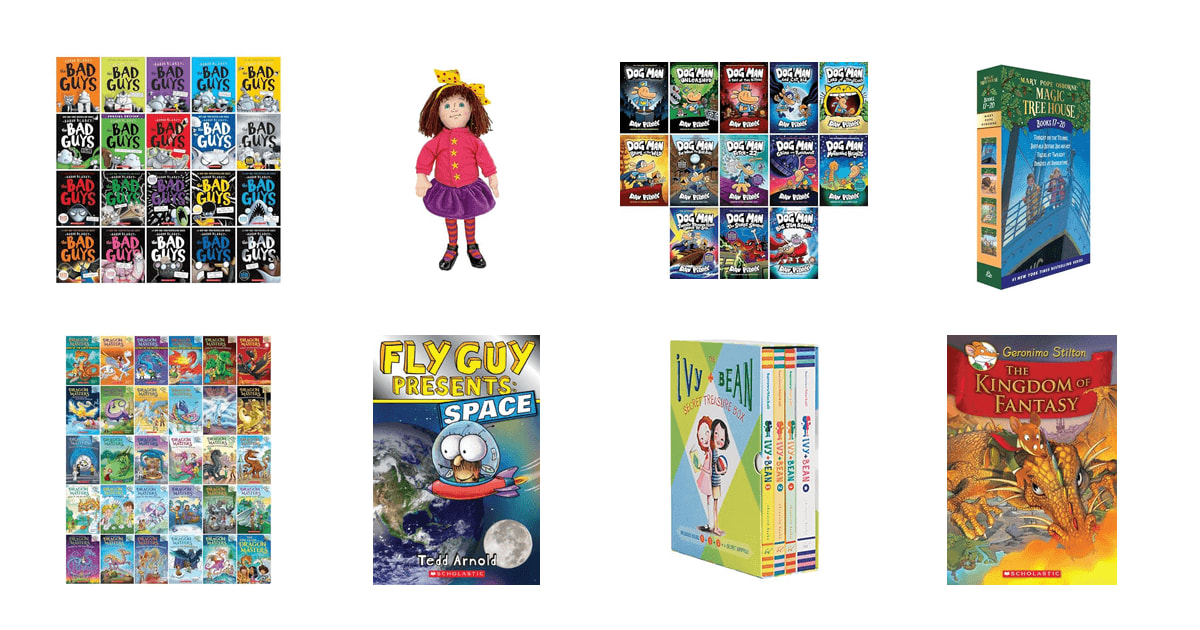
The jump from picture books to chapter books is where a lot of kids stall out. One night they're happily reading about a duck, and the next you hand them 90 pages of solid text and watch their face fall. What actually gets a 6- or 7-year-old reading on their own isn't difficulty — it's momentum. A series does that work for you. Every last page hands your child a reason to open the next book, and that's how a nightly habit forms without you nagging about it.
Here's the honest part: no book on this list works for every child, and the age range printed on the back cover is marketing, not a diagnosis. A 6-year-old reading a bit ahead and a 6-year-old reading a bit behind need completely different books. Illustration-heavy series build confidence fast but teach less. Text-heavy series teach more but can stall a kid who isn't ready. And a set that thrills one child will sit untouched on another's shelf, which is a real risk when you're buying twenty books at once.
We're covering series and starter sets you can buy as a single purchase, not individual titles you'd hunt down one at a time. We think that The Dog Man 13-Book Series is the best pick for most families with a 6-to-8-year-old, because it works on kids who insist they don't like reading. And we think that the Magic Tree House Books 17–20 Boxed Set is the one to buy if your child already reads comfortably and you want the books to teach something along the way.
Everything we recommend
The set that works on kids who say they hate reading

Real history and geography, if your child can handle more text

The low-stakes first step before you commit to a series

Six months of fantasy reading in a single purchase
Twenty books of jokes that land for kids and adults both
At a glance
| Product | Format | Book Count | Price | |
|---|---|---|---|---|
| Magic Tree House Books 17-20 Boxed Set:Runner-up | Illustrated | 4 Books | $22.07On sale |
| The Dog Man 13-Book Series: Dog ManTop pick | — | 13 Books | $127.99On sale |
| Dragon Masters Series 30-Book Ultimate Collection SetUpgrade pick | — | 30-Book Set | $143.93On sale |
| The Bad Guys Series Books 1Also great | — | 20 Books | $84.90On sale |
| Fly Guy Presents: SpaceBudget pick | Illustrated | 1 Book | $4.64 |
 | Ivy and Bean's Treasure Box:Also consider | Box Set | — | $12.13On sale |
 | The Kingdom of FantasyAlso consider | Illustrated | 1 Book | $11.20On sale |
How we picked
Reading level fit. We looked for series that sit in the 300L to 600L band most independent readers ages 6 to 8 land in. Anything that jumped well above that got pushed toward the older end of the range or out of the picks.
Illustration density. We compared how much visual support each book gives per page, using publisher specs and published reviews. Heavy illustration is what carries reluctant readers, so we weighted it heavily for the top pick.
Chapter length. Chapters of roughly eight to fifteen pages let a child finish a section in one sitting. We treated longer chapters as a real strike against a book at this age.
Series runway. We favored sets that keep a child reading for months rather than days, because the gap between finishing one book and starting the next is where habits break.
Educator endorsement. We leaned on which series elementary teachers and school librarians actually recommend and assign. In children's books that signal is more reliable than anything else available.
Top pickOn sale
The set that works on kids who say they hate reading
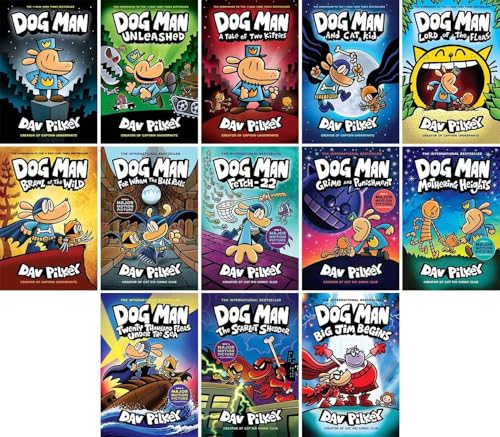
The Dog Man 13-Book Series: Dog Man
Dav Pilkey's Dog Man mixes comic panels, speech bubbles and short blocks of text, so a page never looks like a wall of words. Thirteen books give a child half a year of reading before you have to pick a new series.
$127.99fromAmazonList priceThe format is the whole reason this works. Reluctant readers usually aren't struggling with words — they're struggling with the sight of a dense page. Dog Man breaks every page into panels and speech bubbles, so your child is decoding constantly without ever facing a paragraph that looks like a chore. Literacy researchers have made the case for years that comics build the same decoding and comprehension skills as prose. Kids just don't notice they're working.
Owners describe a specific pattern with these books: a child who fought bedtime reading starts asking for it. That's the thing you're actually buying. Books run about 50 to 60 pages, which a 7-year-old can finish in two or three nights, and finishing a book fast is its own kind of fuel. Momentum matters more than page count at this age.
Under the slapstick there's more going on than parents expect. The stories run on empathy, second chances and a villain who slowly becomes something better. Pilkey has been open about writing from his own childhood experience with ADHD and getting in trouble at school, and it shows in how gently the books treat kids who don't fit the mold.
Buying all thirteen at once solves a problem you'll otherwise hit repeatedly. A child who finishes book four on a Tuesday night reaches for book five immediately, rather than waiting on a library hold or your next trip out. That gap — the one where nobody knows what to read next — is where reading habits quietly die.
Flaws but not dealbreakers
The humor includes potty jokes and cartoon violence, and it's not incidental. It's the point. If your household leans toward quieter, gentler stories, your child may love this and you may find it exhausting to have read aloud to you.
This is a big upfront commitment for a child you haven't confirmed will bite. If you're not sure, buy one book first and watch what happens over a week. It's a cheap test, and the answer is usually obvious fast.
The books teach almost nothing factual. There's no history, no science, no vocabulary stretch to speak of. Dog Man is a habit-builder, not a curriculum.
Runner-upOn sale
Real history and geography, if your child can handle more text
Magic Tree House Books 17-20 Boxed Set:
Four Magic Tree House adventures send Jack and Annie to the Titanic, the American frontier, India and Australia. It's the most teacher-recommended early chapter series in the country, and the history is accurate enough to build a lesson around.
$22.07fromAmazonList priceMagic Tree House is disciplined in a way that suits new readers. Chapters run six to ten pages, sentences stay short, and each book lands under 100 pages. A 7-year-old finishes one in two or three sittings. That's long enough to build stamina and short enough that nobody gives up in the middle.
The educational content is real, not decorative. These four books cover a shipwreck, the American West, Indian wildlife and the Australian outback, and teachers assign them as supplementary reading because the details hold up. Companion Fact Trackers, sold separately, turn any one of them into a couple weeks of nonfiction work. Homeschooling families lean on that pairing hard.
Parents report something unusual with this series: they don't mind rereading it. The adventure structure keeps adults engaged enough to read aloud night after night, which matters if your child isn't fully independent yet. Owner feedback also skews toward younger kids listening than reading solo, so it doubles as a read-aloud.
Books 17 through 20 sit in the middle of a 60-plus title series, which sounds like a problem and isn't. Each adventure stands on its own. If your child clicks with these, there's an enormous back catalog waiting, and you'll never hit the end of the runway.
Flaws but not dealbreakers
This is noticeably more text than Dog Man or The Bad Guys, with fewer pictures to lean on. A newly independent 6-year-old who still wants an illustration every couple of pages will find it heavy going. Save it for a child who can already sit with a book for fifteen or twenty minutes.
The writing is functional rather than beautiful, and some parents notice. The plots follow a formula — magic tree house, new place, small problem, home again — and by book fifteen a sharp kid will see the pattern coming.
Starting mid-series means your child meets Jack and Annie without the origin story. It's not confusing, but it's slightly odd if they're the type who wants everything in order.
Budget pick
The low-stakes first step before you commit to a series
Fly Guy Presents: Space
Fly Guy Presents: Space is a Level 2 Scholastic Reader, which puts it just under a true chapter book. Real NASA photographs and a cartoon fly on every spread make it the safest thing to hand a 6-year-old who's nervous about longer books.
$4.64fromAmazonFor a child at the very start of independent reading, a 90-page chapter book looks like a mountain. This one doesn't. Controlled vocabulary, big photographs and short bursts of text mean your child gets to the last page and feels like they finished something. That feeling is the whole product.
Nonfiction pulls in kids who don't care about made-up stories. Plenty of 6- and 7-year-olds want facts, not plots, and there's not much for them between picture books and real science writing. Owners of this book describe exactly that kid — the one who loves space or weather but finds most nonfiction either too hard or too babyish. This lands in between.
It also works as a diagnostic. If your child reads this cover to cover, understands it and asks for another, they're ready for Dragon Masters or Dog Man. If they stall, you've learned something useful without buying a twenty-book set. That's a lot of information about your kid's reading level for one thin book.
Flaws but not dealbreakers
It's one book, and a short one. Nobody should expect this to occupy a child for more than an afternoon or two. Think of it as a bridge, not a destination.
This particular listing is described as a used copy in good condition, so the physical state may vary. Check the condition notes before ordering, especially if it's meant as a gift.
Some owners of other Fly Guy Presents titles have found the vocabulary tougher than the Level 2 label suggests — technical terms sneak in. If your child is at the very bottom of the range, read the first few pages together.
Upgrade pickOn sale
Six months of fantasy reading in a single purchase
Dragon Masters Series 30-Book Ultimate Collection Set
Thirty Dragon Masters titles plus an Epic Guide give a fantasy-obsessed kid more than half a year of weekly reading. Short chapters and large type keep it accessible even though the pile of books looks intimidating.
$143.93fromAmazonList priceSome kids read one book a week. Others tear through three in a weekend and then look at you expectantly. If yours is the second kind, buying four books at a time is a losing game, and this set is the honest answer to that problem.
Tracey West keeps the reading level steady across all thirty books, which is more useful than it sounds. Chapters run ten to fifteen pages, titles stay under about 120, and the type is large. Your child can move from book one to book twenty-nine without ever hitting a difficulty wall that stops them cold.
Dragons are the most reliable hook at this age. The premise — Drake, his dragon Worm, kingdoms and quests — lands with kids who've outgrown picture books but aren't close to something like Harry Potter. It also works across the board rather than skewing to one kind of reader, which matters if you've got two children close in age sharing a shelf.
The Epic Guide included here works as a reference book, and children who like world-building will sit with it independently. It's the kind of thing a kid reads for fun during quiet time, which extends the set's life beyond the stories themselves.
Flaws but not dealbreakers
This is the biggest upfront commitment on the list by a wide margin. If your child hasn't already shown a taste for fantasy, start with a single Dragon Masters title elsewhere before you buy thirty of them.
There's very little to learn here. It's entertainment first, last and always — no history, no science, nothing you could build a unit study around. That's a fair trade for a reluctant reader and a real gap if you wanted more.
This particular collection listing has almost no track record with buyers yet, so there's not much owner feedback on packaging or print quality. The individual books are a known quantity; this specific bundle isn't.
Also greatOn sale
Twenty books of jokes that land for kids and adults both
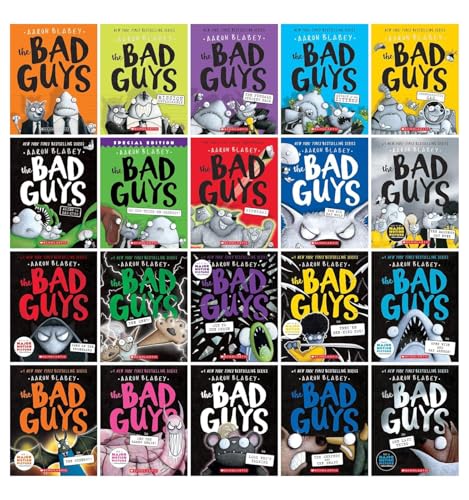
The Bad Guys Series Books 1
Aaron Blabey's wolf, shark, piranha and tarantula spend twenty books failing to become heroes. Cartoon art and speech bubbles support emerging readers, and the action-movie parody is genuinely funny to whoever's reading along.
$84.90fromAmazonList priceThe Bad Guys sits in the same territory as Dog Man — heavy art, short text, comic timing — but the jokes are built on movie parody rather than potty humor. If that distinction matters in your house, this is the version to buy. Owners consistently describe kids laughing out loud on their own, which is not something most books manage.
Twenty books is a lot of runway for a format kids read this fast. Parents report finishing one a night at bedtime, which means a child who loves these has weeks of reading without a single trip to the store. Several owners note the same thing: a child who wasn't a reader before got pulled in by this set specifically.
One honest note from owners: the plots get strange. What starts as a heist comedy spirals into aliens and dimension-hopping absurdity by the middle of the run. Kids find that thrilling. Adults who came in from the movie sometimes find it disorienting. Neither reaction is wrong.
The books stand up physically, which matters for a set that's going to be read and reread and stuffed in a backpack. Owners describe sturdy softcovers rather than the flimsy print you sometimes get in bundled collections.
Flaws but not dealbreakers
Slapstick is the entire premise. A child who prefers quiet, character-driven stories will bounce right off this, and there's no gentle on-ramp version.
There's essentially no educational content. Compared to Magic Tree House, you're trading learning for laughs, which is fine as long as you know that's the trade.
A few owners have reported the last books in the set arriving separately and later than the rest. Not a dealbreaker, but worth knowing if it's a birthday gift with a hard date.
Who this is for
This guide is for a parent, grandparent or gift-giver buying for a child roughly 6 to 8 who's either just starting to read alone or already reading and running out of material. If your child still needs help decoding most words in a picture book, wait — the bridge title here is the only thing on the list that'll work, and even that may be early. If your child is comfortably reading 100-page books already, most of these will feel young.
We stuck to series and starter sets you can buy in one shot, because that's what actually solves the what-do-I-read-next problem. That means we're not covering standalone novels, leveled reader programs, workbooks or curriculum kits. One thing worth doing before you buy: ask your child's teacher for their current reading level. A kid at the bottom of the range and a kid at the top need very different books, and the age printed on the cover won't tell you which yours is.
How we picked
We weighed five things across every set here. Reading level fit: does it sit in the 300L to 600L range where most 6-to-8-year-olds read independently, based on publisher and Lexile data. Illustration density: how much the art carries a page, since that's what determines whether a reluctant reader keeps going or quits. Chapter length: eight to fifteen pages per chapter lets a child finish something in one sitting, and longer chapters cost a set points. Series runway: how many months of reading a single purchase buys, because the gap between books is where habits die. Educator endorsement: which series teachers and school librarians actually put in classrooms, which we treat as the strongest available signal in this category.
Other chapter books for early readers ages 6 to 8 worth considering
If you want award-winning friendship stories: The Ivy and Bean's Treasure Box: ($12.13) — Ivy and Bean's Treasure Box collects the first three books of Annie Barrows's series, and the writing is a step above most of what's here. Two girls who assume they'll hate each other become friends, hunt a bathroom ghost and declare themselves paleontologists. Each book runs about 80 pages with regular spot illustrations, and the reading level sits a little higher than Dog Man or Dragon Masters — this suits a confident first grader or early second grader. Owners describe granddaughters tearing through all three in days. The catch is scope: three books out of twelve, so you'll be buying more before long, and the appeal skews strongly toward girls.
If you want one long book instead of a stack: The The Kingdom of Fantasy ($11.20) — The Kingdom of Fantasy is 400 pages, and finishing it feels like an achievement to a 7- or 8-year-old. Geronimo Stilton books do something no other series here does: character names print in colored fonts, sound effects blow up to huge type, and key words go bold to cue how a sentence should sound. Literacy specialists treat that as genuine scaffolding, especially for visual learners and kids learning English. Owners with 7- and 9-year-olds describe it as a fun read-aloud as much as a solo one. Some children find the busy pages distracting, and the length can intimidate a struggling reader.
The competition
This is what our research surfaced among widely recommended chapter book sets for this age, not a survey of everything published. Plenty of good series didn't make the list simply because they aren't sold as a single ready-to-give set.
Getting a set to actually get read
Buying the books is the easy part. What makes a set stick is a predictable slot in the day — the same fifteen or twenty minutes every night, ideally not the last thing before lights-out when everyone's fried. Keep the whole set visible on a low shelf rather than boxed in a closet, so finishing book three and starting book four takes no adult involvement at all. If your child stalls halfway through a series, don't push; swap in something with more pictures and come back later. Pairing print with an audiobook helps a lot for kids reading below grade level. Following along while listening builds fluency, and Magic Tree House and Geronimo Stilton both have wide audio availability. And resist correcting every mispronounced word. Comprehension first, precision later.
Questions we get
Where should a 6-year-old who's just starting to read alone begin?
Start with Fly Guy Presents: Space. It's a Level 2 Scholastic Reader rather than a true chapter book, which is the right difficulty for a child at the very beginning of independence. If they finish it, understand it and want more, move to Dog Man book one or Dragon Masters book one — both have short chapters and heavy illustration support. Hold off on Magic Tree House until they've got more stamina.
What's the difference between an early reader and a chapter book?
Early readers use controlled vocabulary, large type and one or two sentences per page, and they're built for kids who just stopped needing help decoding. Chapter books are divided into chapters, run anywhere from 60 to 400 pages, and use fuller sentences and richer vocabulary. Most kids make the jump somewhere between 6 and 7. Readiness varies a lot from child to child, so don't read anything into the timing.
Are Dog Man books okay for a first grader?
Yes, and they're widely used in first-grade classrooms. You should know what you're getting: cartoon slapstick where characters get knocked around, some potty humor, and a villain who slowly reforms over the series. Pilkey wrote those themes on purpose, drawing on his own childhood with ADHD and trouble at school. Underneath the goofiness the books are consistently about empathy and second chances.
How do I know my child is ready to move up from picture books?
Watch for three things: they can read a picture book alone without help on most words, they can retell the story in order afterward, and they'll stay focused for ten to fifteen minutes without being prompted. Asking for longer books on their own is another good sign. Start with a Level 2 reader as a bridge rather than jumping straight to a chapter book. If they finish it and immediately want another, they're ready.
Which of these work well with audiobooks?
Magic Tree House and Geronimo Stilton have the broadest audio availability and pair well with the print editions. Listening while following along in the book — sometimes called paired reading — has solid research support for building fluency and vocabulary in kids reading below grade level. Dog Man audiobooks are also popular with reluctant readers because they're produced with sound effects and music. Any of these three is a reasonable place to start.
How many pages can a 6- or 7-year-old finish in a week?
A 6-year-old reading ten to fifteen minutes a day can comfortably get through a 60- to 80-page book in a week. A 7-year-old reading fifteen to twenty minutes daily can manage 80 to 120 pages. Magic Tree House and Ivy and Bean both sit right in that window. Dog Man volumes run shorter, around 50 to 60 pages, so a 7-year-old often finishes one in two or three days.
Why you should trust us
For this guide:
- We compared publisher specifications, stated reading levels and page counts across all eight listings in this guide.
- We read published reviews and librarian recommendations for each series, along with owner feedback themes about print quality, packaging and which kinds of readers each set actually holds.
- We did not read these books to a child or observe any of them in use; every judgment here comes from documentation and other people's reports.
- We read owner reviews on every listing, weighted toward the critical ones, because that is where the recurring failures show up.
- We have a systematic way of automatically fetching the latest prices, so the numbers on this page stay current.
- This is a research-focused guide, so the team may not own every product listed — though we often do own the top winners, which gives us extra context for the recommendations.
- We don't accept free products, and the retailer commission never changes which product we recommend.
Sources
Best Early Chapter Books – Common Sense Media, Common Sense Media
Children's Notable Books & Award Lists – American Library Association (ALSC), American Library Association / ALSC
Best Books Reviews – School Library Journal, School Library Journal
Book Lists by Age: Ages 6–8 – Reading Rockets (PBS), Reading Rockets / PBS
Lexile Find-a-Book Search Tool – MetaMetrics, Lexile / MetaMetrics
Scholastic Book Fairs – Scholastic, Scholastic
Reading Resources for Parents and Educators – Reading Is Fundamental, Reading Is Fundamental
Literacy Resources for Early Readers – National Education Association, National Education Association
Amazon product listings and owner reviews for all 7 products
Manufacturer specification pages for each product
Some passages in this guide may be paraphrased with AI help. Prices are refreshed automatically.
More like this.
Continue exploring lifestyle reviews and recommendations.

The Best Science Books for Curious Readers
A good science book has to do two jobs at once. It has to be accurate, and it has to keep you turning pages on a Tuesday night when you're tired. Most…

The Best Children's Cookbooks for Ages 9 to 12
A kid at this age can do real cooking. Nine- to twelve-year-olds can handle a knife with supervision, read a recipe start to finish, and use a stovetop…

The Best E-Readers
A good e-reader earns its keep by disappearing. You pick it up, the text is there, and nothing buzzes at you. The screen reflects light instead of…

The Best Rechargeable Hand Warmers
Cold hands ruin an otherwise good day outside. A rechargeable hand warmer is a small lithium battery wrapped in a metal or plastic shell that heats up on…

The Best Inflatable Kayaks and River Craft
An inflatable kayak solves the problem that keeps most people off the water: storage and hauling. You don't need a garage bay or a roof rack. You need a…

The Best Portable Grills for Camping and Tailgating
A portable grill lives a hard life. It rides in a trunk, gets set up on a picnic table that wobbles, and has to make dinner before everyone gets cranky.…