The Best Lifestyle Subscription Boxes
A good subscription box does something a shopping trip can't. It puts a product in your hands that you'd never have thought to look for. That's the whole appeal — you open a box and find a face serum, a snack, or a spring-loaded robot kit you didn't know existed. McKinsey's research on subscription commerce found that 46% of subscribers name product discovery as their main reason for signing up. Not savings, not convenience. Discovery. The best boxes lean into that instead of just shipping you more of what you already buy.
Here's the catch nobody puts on the box: you will not love everything inside. That's structural, not a defect. Curation means somebody else picked for you, and even a good quiz can't predict your taste in scent or snacks. McKinsey also found that 28% of subscribers canceled something in the past year specifically because the products didn't match their preferences. Boxes that let you customize before shipping soften this a lot. Boxes that don't are a gamble every cycle, and you should treat them that way.
The three products we're looking at here are all one-time boxes you can order outright, which makes them a lower-risk way to try the format before committing to a recurring plan. We think that the FabFitFun Ultimate Gift Box is the best lifestyle subscription box for most people, and that the KiwiCo Jumping Robot STEM Kit is the one to buy if you're shopping for a kid between roughly 7 and 12.
Everything we recommend

Full-size beauty and home goods, no sample-size letdown

Real engineering for a kid, not a toy that plays itself

A cheap, sharable intro to snack-box discovery
At a glance
| Product | Box Size | Age Range | Price | |
|---|---|---|---|---|
| FabFitFun Ultimate Gift BoxTop pick | Throw | — | $249.99 |
| International Snack BoxBudget pick | Large | — | $29.99 |
| KiwiCo Jumping Robot STEM Kit - RoboticsAlso great | 3.38 inches | — | $29.95 |
How we picked
Value versus cost. We compared each box's listed contents against what the same items sell for individually, favoring full-size products over samples. Manufacturer retail-value claims were treated as claims, not facts.
Pre-ship customization. Research consistently points to preference mismatch as the top reason people cancel, so we gave weight to services that let you preview, swap, or choose selections before a box ships.
Curation coherence. We looked for boxes built around a clear idea rather than a random assortment. A theme is what makes an unfamiliar product feel like a discovery instead of clutter.
Owner-reported accuracy. We read the feedback themes on each listing for gaps between what was promised and what arrived. Boxes where buyers described a mismatch got marked down.
Cadence and commitment. We favored boxes you can buy once before subscribing, and subscriptions that let you skip, pause, or cancel online without a phone call.
Top pick
Full-size beauty and home goods, no sample-size letdown
FabFitFun Ultimate Gift Box
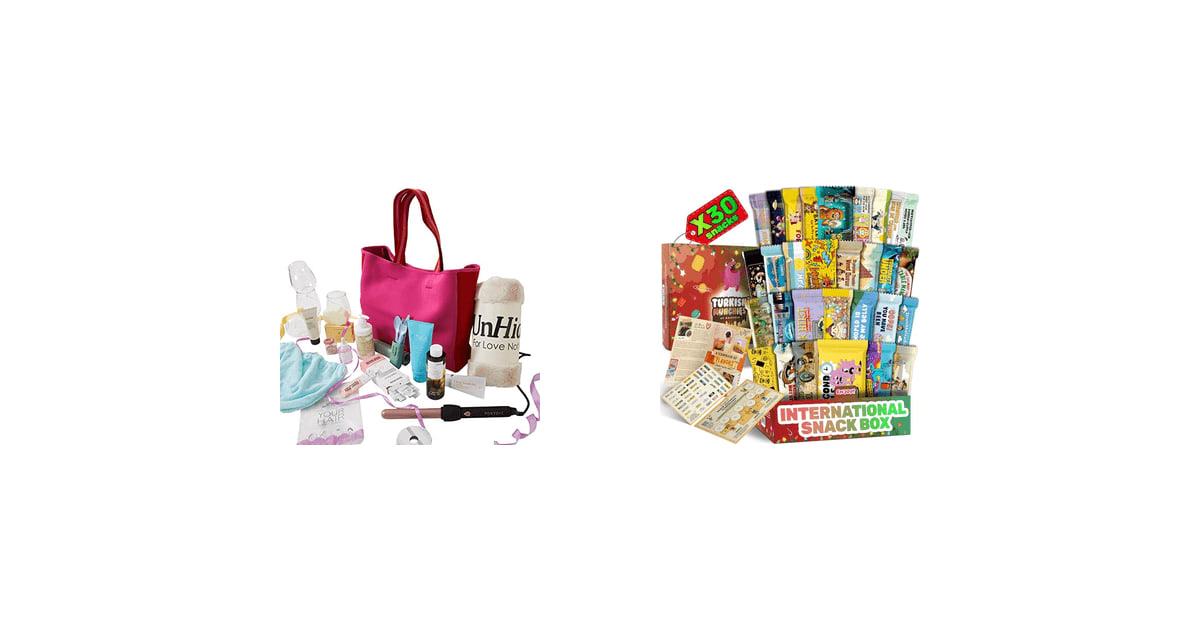
This is the box that shows you what full-size curation actually feels like. You get a faux-fur throw, a tourmaline ceramic curling iron, and named-brand skin care from Kate Somerville and Herbivore Botanicals — not foil packets and travel minis.
$249.99fromAmazonThe full-size thing is the whole argument. Sample boxes hand you enough serum for four days, which tells you nothing about whether a product works for your skin. This box goes the other direction. The Kate Somerville ExfoliKate treatment, the Herbivore Prism serum, the gel cleanser with prebiotics and turmeric — these are the same products you'd buy at a counter, in the sizes you'd actually buy them in. You get weeks with each one.
It also isn't only beauty, which matters more than it sounds. A faux-fur throw for the sofa, a wheat straw cutlery set for lunches, a foot-buffing pedicure tool — the mix means that even if one skin-care pick misses, something else in the box lands. That's the practical hedge against curation risk. A box that's all serums lives or dies on whether the serums suit you.
FabFitFun's seasonal model is the right cadence for this category. Quarterly boxes give you a bigger haul with more room for genuinely nice items, and they don't pile up. If you cook through a monthly snack box in a week, fine — but you're not going to burn through a curling iron and a throw blanket every thirty days. The company markets a retail value roughly three to four times what a season costs, and full-size contents are what make that claim plausible rather than padded.
The customization angle is what separates the FabFitFun subscription from a blind grab bag. Members pick selections before each seasonal box ships, which directly addresses the single biggest reason people quit these services. If you're buying this one-time box as a trial, treat it as a preview of the curation style — and know that the recurring version gives you a say.
Flaws but not dealbreakers
The contents skew heavily toward one type of person: someone who wants beauty and home comfort products. If that's not you, the mix won't rescue it. A curling iron is useless if you don't style your hair, and no amount of prebiotic cleanser fixes a category mismatch.
This is also the only box here without meaningful listing feedback from buyers, so you're relying on the contents list and FabFitFun's own retail-value math rather than a track record of owner reports. The named brands are real and recognizable, which helps. But you're taking the value claim somewhat on faith.
It's the most expensive box of the three by a wide margin, and it isn't close. If you want to spend a little to see whether curated boxes are for you, start somewhere else.
Also great
Real engineering for a kid, not a toy that plays itself
KiwiCo Jumping Robot STEM Kit - Robotics
A spring-and-cam jumping robot that a nine-year-old builds from parts, then customizes and experiments with. It teaches potential and kinetic energy through a mechanism the kid assembles, which is the part that sticks.
$29.95fromAmazonKids build this one themselves, and that's the entire point. The crate walks you through constructing the cams, hooking up the spring mechanism, and snapping on the exterior. Then you flip a switch and it hops. Owner feedback is remarkably consistent on one thing: the instructions are clear enough that children work through them without an adult hovering. Several report seven- and eight-year-olds finishing independently, below the stated age-nine floor.
The learning isn't bolted on. Your kid discovers how cams compress and release a spring because they assembled the cams. Then the crate nudges them to change the build and watch how the jump changes — which is a real experiment, not a worksheet. There are blank body parts included so they can decorate the robot with whatever art supplies are already in the house.
KiwiCo's Tinker Crate line is the ongoing subscription this kit comes from, aimed at ages nine through sixteen, with each crate educator-reviewed. The company has shipped over 50 million crates to more than 100 countries, and reports that more than 97% of surveyed parents said their child completed the project. That completion figure is the number that matters for a kid's box. An unfinished kit in a closet is money gone.
Buying the single robot kit first is the sensible move. You find out whether your kid engages with build-it-yourself engineering before you commit to a year of crates. Owner feedback is dominated by gift-givers — aunts, grandparents, nephews at Christmas — and the reports skew strongly toward kids who were proud of what they made.
Flaws but not dealbreakers
It's one project. A kid who's into it will finish in an afternoon and then want the next thing, which is exactly how the subscription is designed to work but does mean a single kit is a short experience.
The stated age is 9+, and while plenty of younger kids manage it, some will need an adult for the fiddlier assembly steps. Plan on being nearby the first time even if you don't end up doing anything.
It's a physics kit with a narrow theme. If your kid gravitates toward chemistry, art, or coding, this specific crate won't hook them the way a better-matched one would.
Budget pick
A cheap, sharable intro to snack-box discovery
International Snack Box
A large gift-wrapped box of international-style candies and treats — chocolate, wafers, breadsticks, cookies — meant to be opened and shared. It costs a fraction of the other picks and works as a low-stakes way to try the format.
$29.99fromAmazonIf you want to know whether subscription boxes are your thing without spending much, this is the easiest way in. It arrives ready to give, the contents are meant to be passed around a table, and the whole experience takes one evening. Owners describe making it a monthly family tradition. That social element is genuinely the strongest thing about it — snacks are better as a group activity than a solo unboxing.
Read the listing carefully, because the framing is looser than it looks. The box is described as inspired by European, Japanese, and Korean cultures, and multiple owners report that what actually arrives skews Turkish — the seller's own brand name is Turkish Munchies. At least one buyer went in expecting authentic imported regional snacks and was disappointed to find culturally inspired ones instead. Go in wanting variety, not a passport stamp.
The variety itself gets consistent praise. Owners report a wide spread across spicy, salty, and sweet, with chocolate, wafers, crispy breadsticks, small cookies, cakes, and bars in the mix. Several note the items are full size rather than sample portions, and that everything arrived fresh. For a box in this price tier, that's more than the format usually delivers.
For genuine international food discovery, the subscription to look at is Universal Yums, which sources from over 75 countries and pairs 12 to 20 regional snacks with a 12-page guide written by in-house food editors. That's the depth this box doesn't reach. But it's also a recurring commitment, and this one is a single box you can hand to somebody this week.
Flaws but not dealbreakers
Quality is uneven. Owner reports include a real thread of complaints about filler items — a few good things surrounded by a lot of forgettable ones — and at least one buyer felt it wasn't worth what they paid.
The cultural framing oversells what's inside. If you're buying for someone who specifically loves Japanese or Korean snacks, they will notice the gap between the listing and the box, and that's an awkward gift to receive.
It's a one-and-done. Snacks get eaten, and there's nothing left afterward — which is fine for a gift, but it's not the sort of box that leaves you with something in three months.
Who this is for
Buy one of these if you like being handed something you wouldn't have picked yourself, and if you have the patience for a dud now and then. Subscription boxes suit people building a routine — a seasonal beauty refresh, a monthly project with a kid, a shared snack night. They suit gift-givers especially well, since a box lands better than a gift card and takes about as much effort. If you already know exactly which shampoo and which snacks you want, a box is just a more expensive way to get them.
This guide covers one-time boxes you can order outright, which is a narrower slice than the full subscription market. That's a deliberate choice: buying a single box is how you find out whether a format works for you before signing up for four seasons of it. We don't cover recurring-only services here — IPSY's Glam Bag tiers, Bespoke Post's monthly themed boxes, Therabox, Nomadik, or Prose's custom-formulated hair care — though we mention them where they're the natural next step. If you want per-subscriber personalization at the formula level, Prose's consultation weighs more than 80 factors including your local water hardness, and nothing in a pre-packed box comes close to that.
How we picked
We weighed a handful of things against each other. Value versus cost: full-size products beat samples, and we checked contents lists against what the items sell for on their own rather than accepting a marketed retail value. Pre-ship customization: the research is blunt that preference mismatch drives cancellations, so being able to preview or swap before shipping counts for a lot. Curation coherence: a box needs an idea holding it together, or it's just a bag of stuff. Owner-reported accuracy: we read feedback themes for gaps between the listing and the actual box. Cadence and commitment: we favored boxes you can try once, and subscriptions you can skip or cancel online.
The competition
This is what our research surfaced on Amazon, not a survey of everything sold in the category. The subscription-box market runs mostly through the companies' own sites, so plenty of well-regarded services — including several we mention above — simply don't have a listing to compare here. All three products we found ended up as picks, each filling a different role.
Before you subscribe
Check the cancellation and pause policy before you enter a card number, and check it on the company's site rather than a third-party summary. The good services let you skip a month, pause a season, or cancel entirely from your account page without calling anyone. The bad ones route you to a phone queue. Set a calendar reminder a few days before each renewal charge if you're unsure — that's the window where you can skip a cycle you don't need. If a box offers customization, actually use it. Preference mismatch is the top reason people quit these services, and the five minutes you spend picking selections is the single best thing you can do to avoid a box full of things you'll never open.
Questions we get
Are subscription boxes actually worth the money?
It depends on how you value the discovery. If you'd have bought the products anyway, a box rarely beats just buying them. If you want to find brands you'd never encounter otherwise, that's what you're paying for, and McKinsey's research says it's why most subscribers sign up. Full-size boxes make the math work harder in your favor than sample boxes do.
Which subscription boxes let you customize what you receive before shipping?
FabFitFun members choose selections before each seasonal box goes out, and Bespoke Post lets subscribers preview and swap any monthly box. IPSY uses a quiz-driven profile to match products from its brand roster. This matters more than most people expect — mismatched products are the leading cause of cancellation.
What's the best subscription box for a kid?
The KiwiCo Jumping Robot kit is a strong single purchase for roughly ages 7 to 12, and it's the entry point to KiwiCo's Tinker Crate line for ages 9 to 16. The company reports that more than 97% of surveyed parents said their child finished the project. Buy the one kit first to see whether your child engages before subscribing.
What's the difference between a monthly and a quarterly box?
Quarterly boxes are bigger seasonal hauls with room for higher-value items; monthly boxes give you more frequent, smaller discoveries. Pick based on how fast you'd actually get through the contents. A monthly beauty box can outpace your bathroom shelf, while a quarterly one rarely does.
Can I pause instead of canceling?
Most of the major services allow it, and it's usually the better move if you're just overstocked. Look for a skip-this-cycle or pause option in your account settings. Confirm the policy before you subscribe, since the ones that make pausing hard tend to make canceling hard too.
What's the best snack box for someone who loves international flavors?
For genuine regional discovery, Universal Yums sources from more than 75 countries and includes a 12-page guide with each featured-country box. The International Snack Box we cover here is culturally inspired rather than sourced abroad, which several owners noted. Match your expectations to that distinction before you buy either one.
Why you should trust us
For this guide:
- We read the listing details and contents descriptions for every box in this guide and compared them against each brand's own published claims about retail value and curation.
- We reviewed published industry research from McKinsey, Grand View Research, and SUBTA on why people subscribe to and cancel lifestyle boxes.
- We read owner feedback themes on each listing, paying particular attention to reports of gaps between what a listing promised and what arrived.
- We read owner reviews on every listing, weighted toward the critical ones, because that is where the recurring failures show up.
- We have a systematic way of automatically fetching the latest prices, so the numbers on this page stay current.
- This is a research-focused guide, so the team may not own every product listed — though we often do own the top winners, which gives us extra context for the recommendations.
- We don't accept free products, and the retailer commission never changes which product we recommend.
Sources
Best Subscription Boxes 2026 – Wirecutter (NYT), Wirecutter
Best Subscription Boxes Tested by Editors – Good Housekeeping, Good Housekeeping
Best Beauty Subscription Boxes – Allure, Allure
Best Men's Subscription Boxes – Forbes, Forbes
Bespoke Post Review: Is the Box of Awesome Worth It? – Business Insider, Business Insider
FabFitFun Review 2026 – People, People
IPSY Glam Bag Review: Is It Worth It? – Cosmopolitan, Cosmopolitan
Best Wellness Subscription Boxes for Self-Care – Healthline, Healthline
Prose Custom Hair Care Review – Vogue, Vogue
KiwiCo Review: Are the STEM Boxes Worth Buying? – CNN Underscored, CNN Underscored
Thinking Inside the Subscription Box: New Research on E-Commerce Consumers – McKinsey & Company, McKinsey & Company
Subscription Box Market Size & Growth Forecast – Grand View Research, Grand View Research
Amazon product listings and owner reviews for all 3 products
Manufacturer specification pages for each product
Some passages in this guide may be paraphrased with AI help. Prices are refreshed automatically.
More like this.
Continue exploring lifestyle reviews and recommendations.

The Best Book Subscription Box Editions
A subscription box book isn't just a book. It's the copy that shows up on your porch in a cover you can't get at the bookstore. Some of these editions are…

The Best Outdoor Security Cameras Without a Subscription
An outdoor camera earns its keep on ordinary days, not dramatic ones. You check who rang the bell. You find out whether the package actually landed on the…

The Best Outdoor Deck Boxes
A deck box does one boring job well: it keeps your cushions dry and off the ground. That matters more than it sounds. Wet cushions take two days to dry,…

The Best Date Night Boxes for Couples
The hardest part of a date night isn't the date. It's deciding what to do. You get to Friday, you're both tired, and the conversation loops through the…

A Beginner's Guide to POP MART: Everything You Need to Know About Blind Box Toys (2026)
Discover the captivating world of POP MART blind box collectibles. From understanding the thrill of the chase to choosing your first series, this complete guide helps newcomers navigate the exciting hobby of art toy collecting.

The Best Bento Lunch Boxes for Adults
A lunch box has one job: get your food to work in the same shape it left your kitchen. That sounds simple until the dressing finds a seam and soaks the…