The Best Boxing Gloves and Punching Bags for Home Training
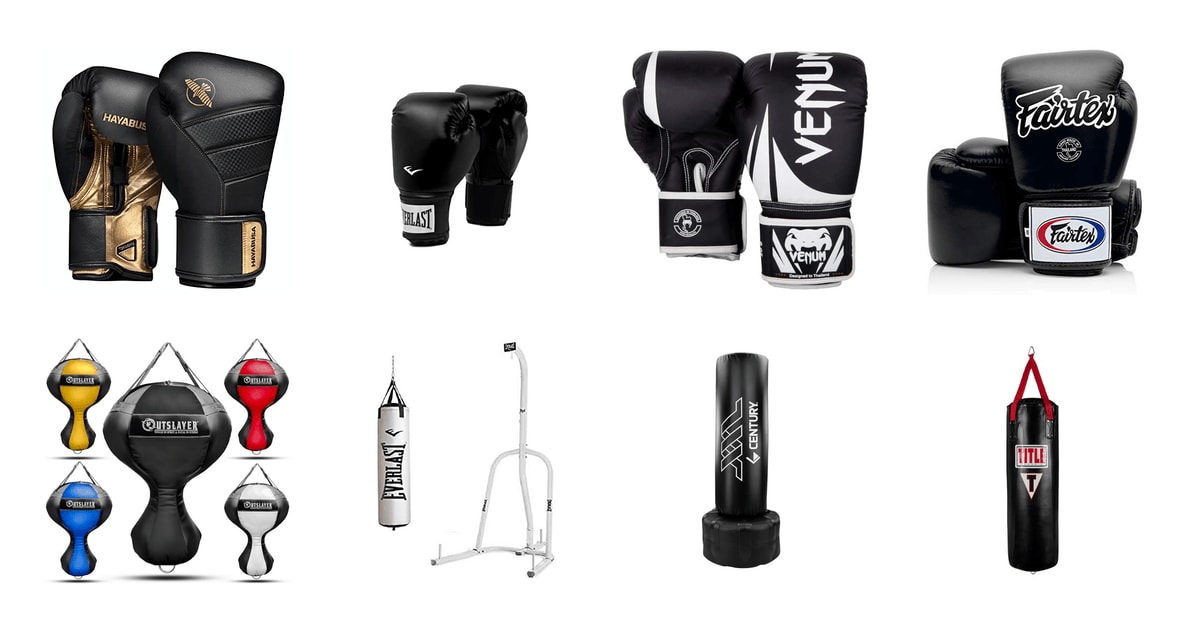
Hitting a bag at home is one of the few workouts that doubles as stress relief. You don't need a gym membership or a training partner. But the gear matters more than most people expect. Gloves that fit badly or weigh too little turn a good session into a sore wrist, and a bag that's too light bounces around instead of absorbing what you give it. Get the pairing right and you can train three or four times a week for years on the same setup.
Here's the honest caveat: nothing in this category solves the space problem. A hanging bag needs a ceiling joist or a stand, and a freestanding bag will scoot across your floor during hard combinations no matter what you fill the base with. Gloves have their own compromise. The hook-and-loop closures that let you strap up alone give you less wrist stabilization than lace-ups, and no glove protects your wrists properly without hand wraps underneath. Budget for wraps from the start.
We also want to be clear about scope. This guide covers gear for solo home training, not competition equipment or gym-grade installations. Sizing by body weight matters more than brand loyalty, and the sizing standard is well established. We think that the Hayabusa T3 is the best boxing glove for most people, and that the Century Wavemaster XXL is the bag to buy if you can't drill into your ceiling.
Everything we recommend

The most wrist support you can get without lace-ups
A tighter, more traditional fit for Muay Thai crossover

Enough glove to start, at a fraction of the outlay

No drilling, no landlord problems, some floor drift

Buy once and stop thinking about your bag
At a glance
| Product | Product Type | Weight / Size | Price | |
|---|---|---|---|---|
| Hayabusa T3 Boxing Gloves - Sparring -Top pick | Boxing Gloves | 16oz | $169 |
| Everlast Prostyle 2 Boxing GlovesBudget pick | Boxing Gloves | 12 oz | $39.37On sale |
 | Venum Challenger 2.0 Boxing Gloves - forAlso in lineup | Boxing Gloves | 6 oz | $22.50On sale |
| Fairtex BGV1 Boxing GlovesRunner-up | Boxing Gloves | 16 oz | $139 |
| Outslayer Ultimate Patented Combo Heavy Bag -Upgrade pick | Punching Bag | 100lb | $149.95 |
 | Everlast Single Station Heavy Bag Stand withAlso consider | Heavy Bag Stand | 154 lbs | $394.99 |
| Century Wavemaster XXL Freestanding Punching Bag withAlso great | Punching Bag | 52-69 in | $399.99 |
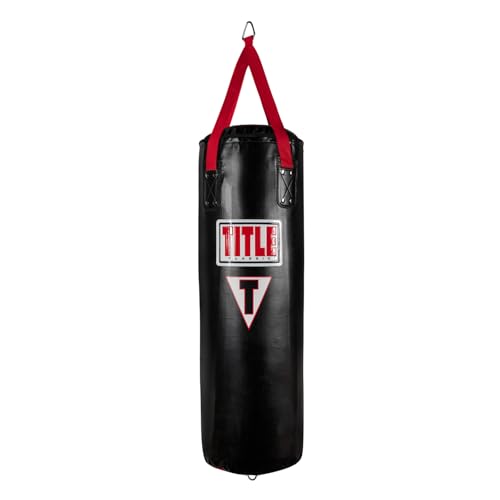 | Title Boxing Classic Challenger Heavy Bag 70Also consider | Heavy Bag | 70 lbs | $109.99 |
How we picked
Sizing by body weight. We started from the USA Boxing standard — 12oz under 130 pounds, 14oz from 130 to 160, 16oz above that — and looked for gloves offered across that range. A glove that only comes in one weight can't serve a household.
Wrist support design. We compared closure systems against Ringside's guidance that lace-ups add roughly 15 to 20 percent more wrist stabilization than hook-and-loop. Since solo trainers can't use laces, we favored gloves with splinted cuffs or secondary straps.
Padding and materials. We read spec sheets for foam layer counts and shell materials, then weighed them against Boxing Science's durability figures — three to five years for leather, 12 to 18 months for PU synthetic under regular use.
Mounting reality. We separated bags by what your home can actually support: hanging bags need a beam rated to at least 300 pounds, while freestanding models trade that requirement for the four-to-eight-inch drift per combination that Garage Gym Reviews documented.
Fill and settling. We looked for pre-filled bags with fill that resists packing down, since DIY-filled bags need periodic repacking as material migrates to the bottom. Warranty language covering settling was a strong signal.
Top pick
The most wrist support you can get without lace-ups
Hayabusa T3 Boxing Gloves - Sparring -
The T3 is the rare glove that works for bag rounds, pad work and sparring without feeling like a compromise in any of them. Its double-strap closure and five-layer foam stack give you protection that owners report holding up for years of regular training.
$169fromAmazonThe Dual-X closure is the reason to buy these. Most hook-and-loop gloves use a single strap that pulls your wrist in one direction. The T3 uses two crossing straps over a splinted wrist panel, and it's the only widely available consumer glove built this way, per Hayabusa's own documentation. You still won't get the 15 to 20 percent extra stabilization that Ringside attributes to lace-ups. But you can strap in by yourself, which matters when nobody's around to help.
Hayabusa builds the padding from five layers of Vylar engineered leather and foam — more layers than anything else in this price class. In practice that means impact spreads across your knuckles instead of concentrating on the two that land first. Owners who train on bags several times a week describe the padding as holding its shape well past the point where cheaper gloves flatten out, and a few report multiple years of thrice-weekly use.
The hand compartment curves the way your fist actually closes, so you're not fighting the glove to make a tight fist. That sounds minor until round six, when hand fatigue is what ends most home sessions. Small touch worth mentioning: the thumb panel is cloth, which owners use to wipe sweat mid-round instead of soaking the leather.
These work across striking disciplines, which saves you a second pair. Boxing, kickboxing and Muay Thai all put different demands on a glove, and the T3 handles bag work, Thai pads and controlled sparring. If you're training more than one art at home, that versatility is worth more than a marginally better single-purpose glove. Get them in 16oz if you're over 160 pounds, per the USA Boxing sizing standard.
Flaws but not dealbreakers
They cost noticeably more than the mid-range synthetics here, and if you're punching a bag twice a month you won't get your money's worth out of the extra padding layers. Buy these when you know you'll train regularly.
A hook-and-loop closure is still a hook-and-loop closure. If you're preparing for competition and have someone to lace you up, lace-ups give you more wrist lockdown. The T3 is the best solo-training answer, not the best answer in absolute terms.
Runner-up
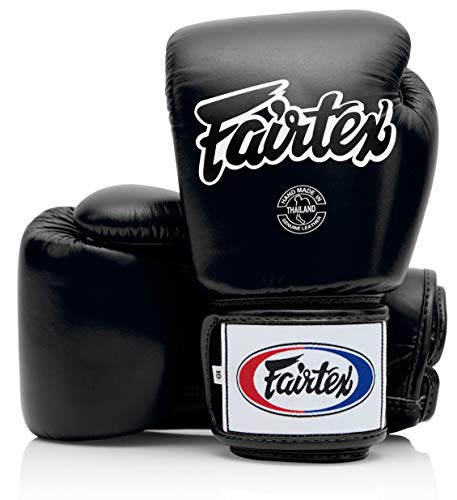
A tighter, more traditional fit for Muay Thai crossover
Fairtex BGV1 Boxing Gloves
The BGV1 is hand-stitched in Thailand from premium leather, and it's the glove serious amateurs reach for when they train boxing and Muay Thai in the same week. The contoured compartment fits snug, which is either the appeal or the dealbreaker.
$139fromAmazonFairtex builds these by hand and runs seam stress testing as part of quality control — a labor-intensive step that mass-market brands producing in automated factories skip. That shows up in how the seams hold under repeated bag work. Genuine leather also has a durability advantage that's hard to argue with: Boxing Science puts leather gloves at three to five years of regular training against 12 to 18 months for PU synthetics under the same use.
The tight-fit design is the defining trait, and you should decide about it before you buy. The hand compartment is deliberately contoured and snug. Owners with average or smaller hands describe it as locking in perfectly. Owners with large hands report they can't fit hand wraps underneath, and the gloves don't stretch enough over time to fix that. Since wraps aren't optional, that's a real sizing constraint rather than a break-in period.
For Thai pad work and clinch-adjacent training, the BGV1 has an edge over most boxing-first gloves. The shape sits well for blocking kicks and the padding disperses shock across the knuckle line rather than compressing at one spot. Owners who've trained in both the T3 and the BGV1 tend to describe the Fairtex as easier to maneuver and the Hayabusa as more locked-down at the wrist.
These break in quickly compared to stiffer leather gloves. Expect a few sessions before the leather softens and the fit settles. After that, owner feedback skews heavily toward daily-training durability, with the main complaint being color variation between the listing photo and what arrives.
Flaws but not dealbreakers
The sizing runs unforgiving. If you wear an XL glove, look elsewhere — multiple owners with large hands report the compartment won't accommodate wraps, and there's no breaking that in.
Leather needs airing out after every session or it holds odor. There's no mesh palm ventilation here, so hygiene is on you.
Budget pickOn sale
Enough glove to start, at a fraction of the outlay
Everlast Prostyle 2 Boxing Gloves
The Prostyle 2 gives you triple-layer foam, a raised cuff panel and mesh palm ventilation for far less than the leather options. It's the pair to buy when you're not yet sure how often you'll actually train.
$39.37fromAmazonList priceThis is the right first pair for most people building a home setup. The triple-layer foam and splint-style cuff cover the basics — knuckle protection and enough wrist support for bag rounds. Everlast's EverCool mesh palm keeps your hands from turning into a swamp, which matters more in a garage in July than any spec sheet suggests. Owners starting from zero consistently describe these as holding up through a first year of training.
The full-length hook-and-loop strap wraps high on the wrist and cinches down properly. It's a single strap rather than the T3's crossing pair, so you get less lateral stabilization. For bag work and mitt drills at moderate intensity, that gap is small. It grows if you're throwing full-power hooks several times a week.
Synthetic leather is the trade-off you're making, and it's worth naming clearly. Boxing Science's durability figures put PU synthetics at roughly 12 to 18 months of structural padding integrity with regular use, against three to five years for genuine leather. If you train four times a week, you'll replace these before a leather pair would need replacing.
Owner feedback flags stitching around the thumb hole as the first thing to loosen. Several people describe upgrading to a higher-tier glove and keeping these as a backup pair for home bag rounds — which is a reasonable outcome for a starter glove, not a failure.
Flaws but not dealbreakers
The 12oz version listed here is too light for anyone over 130 pounds hitting a heavy bag. USA Boxing's standard puts you at 14oz between 130 and 160 pounds and 16oz above that. Buy the weight that matches your body, not the lightest one on the shelf.
Synthetic padding compresses faster than leather. Plan on replacing these rather than expecting them to last.
Also great
No drilling, no landlord problems, some floor drift
Century Wavemaster XXL Freestanding Punching Bag with
The Wavemaster XXL is the freestanding bag to get if your ceiling is off-limits. Its base takes up to 270 pounds of sand or water, and the striking column adjusts from 52 to 69 inches so it fits kids and adults in the same household.
$399.99fromAmazonIf you rent, this is effectively your only good option. Hanging a heavy bag means anchoring into a structural beam rated for at least 300 pounds, since dynamic load from strikes can exceed three times the bag's static weight. Most apartments make that impossible. The Wavemaster skips the whole problem — you fill the base and start hitting.
The striking surface is genuinely large for a freestanding bag: 18 inches across and 52 inches of hitting area. That gives you room for body shots and head-level work without repositioning between combinations. The height adjusts across a wide range, so owners with kids report the same bag serving a five-year-old and an adult.
Here's the honest trade-off. Garage Gym Reviews found freestanding bags like this one moving four to eight inches per full-power combination, against under an inch for a ceiling-mounted 80-pound bag. You will chase this bag around during hard rounds. Owners confirm it slides on smooth floors and that sand ballast holds better than water, since sand is denser.
It tips onto the base edge and rolls, so you can move it out of the living room when company comes. That portability is a real advantage over a permanently mounted bag, and it's why the Wavemaster keeps showing up in small-apartment setups.
Flaws but not dealbreakers
The drift is not subtle. If you train power combinations, you'll reset your stance constantly, and that interrupts flow in a way a hanging bag doesn't.
Filling the base with sand takes a while even with a large funnel, and it's a two-person job if you want to do it without spilling half of it on the floor. Water is faster but gives you less resistance to sliding.
Upgrade pick
Buy once and stop thinking about your bag
Outslayer Ultimate Patented Combo Heavy Bag -
The Outslayer Combo ships pre-filled with shredded fabric that doesn't settle, and it's covered by a 10-year manufacturer's certificate against sinking — the longest coverage in the consumer heavy bag segment. The patented shape opens up uppercuts and angled strikes.
$149.95fromAmazonThe 10-year warranty against settling is the whole argument for this bag. Most heavy bags develop a hard packed bottom and a soft dead top within a couple of years, and you either repack them or live with it. Outslayer ships this one professionally filled with soft fabric shreds and stands behind it for a decade. Nothing else in the consumer segment offers that.
The shape is patented and deliberately non-cylindrical, built to accommodate uppercuts, liver shots and body hooks that a straight tube shrugs off. If you're working real combinations rather than straight punches, the geometry gives you angles to hit that a standard bag doesn't. It's handcrafted in Los Angeles from heavy-duty vinyl rated to 300 pounds.
The hanging straps are four-layer quad-backstitched nylon rather than chain, which kills the metal-on-metal rattle that makes bag work loud enough to annoy the people below you. There's also a chrome bottom D-ring so you can anchor the bag to the floor or a sandbag and cut down on swing.
At 100 pounds this is heavier than most home trainers need. Forbes Health suggests starting with a bag around half your body weight, which puts a 160-pound person at 70 to 80 pounds. Buy the 100 if you're heavier, hit hard, or know you'll grow into it — otherwise the extra mass is money spent on stability you won't use.
Flaws but not dealbreakers
It's the most expensive bag here by a wide margin, and the value proposition depends entirely on you still training in five years. For someone testing whether boxing sticks, that's a lot of confidence to buy up front.
A filled 100-pound bag needs a properly anchored mount into a beam rated for 300 pounds or more. Factor the mounting hardware and possibly a contractor into your plan, because this is not a bag you improvise a hanging point for.
The Outslayer Combo comes with a 10-year manufacturer's certificate against sinking or settling.
Who this is for
This guide is for anyone setting up boxing gear at home — a beginner buying a first pair of gloves and a bag, an apartment dweller who can't touch the ceiling, or someone who's been training a year on entry-level gear and is ready to upgrade. If you're training two or more striking arts, a versatile glove saves you buying twice. If you're a parent kitting out a teenager, size the gloves to their body weight rather than buying big and hoping they grow into it.
You should skip most of this if you train primarily at a gym that supplies bags, or if you're preparing for competition, where lace-up gloves and sanctioned equipment specs take over. We're also not covering hand wraps, speed bags, double-end bags or mounting hardware in depth here, even though wraps are genuinely required — no glove on this list protects your wrists properly without them. Buy a pair alongside whatever you pick.
How we picked
Sizing: We matched every glove against the USA Boxing weight standard and dropped anything that couldn't be bought in the weight you actually need. Wrist support: We compared closure systems knowing lace-ups win on stabilization but aren't practical alone, so splinted cuffs and secondary straps carried extra weight. Materials: We read spec sheets for foam layers and shell construction, then applied the leather-versus-synthetic longevity gap — years against months. Mounting: We split bags by whether your home can support a beam-anchored load or whether a ballasted base is the only realistic path. Fill: We favored pre-filled bags with fabric shreds that resist packing down, and treated a settling warranty as a genuine signal rather than marketing.
Other boxing gloves and punching bags for home training worth considering
If you want a complete setup in one purchase: The Everlast Single Station Heavy Bag Stand with ($394.99) — This Everlast bundle pairs a 70-pound bag with a freestanding steel stand, plus a ceiling bracket and chain, starter gloves and hand wraps. That covers nearly everything a beginner needs without a second order, and the 70-pound weight lines up with Forbes Health's rule of roughly half your body weight for an adult around 140 to 160 pounds. The stand holds bags up to 100 pounds and uses weight-plate pegs for ballast, so it's steadier than a plastic base if you already own plates. What you give up is polish. Owners report the bag and stand shipping in separate deliveries with no notification for the second one, and several describe the included gloves and wraps not arriving at all. Assembly takes an hour or more and the included tools are flimsy — use your own. It's a lot of value in one box, but expect some friction getting there.
If you want a hanging bag without the premium outlay: The Title Boxing Classic Challenger Heavy Bag 70 ($109.99) — Title's Classic Challenger is a 70-pound, 42-by-14-inch hanging bag with a synthetic leather shell and a half-inch EVA foam liner that helps it keep its cylindrical shape. It's machine-packed with shredded poly microfibers around a placed center weight, which is a real attempt at the settling problem even if it doesn't carry Outslayer's decade-long guarantee. The seatbelt nylon straps skip the chain rattle, and there's a bottom D-ring for anchoring. At 70 pounds it's the right starting weight for most adults, and the narrower 14-inch diameter suits tighter spaces than the Outslayer's wider profile. You're trading the American-made leather-grade build and the long warranty for a bag that costs considerably less and does the everyday job.
The competition
This is what our research surfaced, not a survey of everything on the market. Boxing gear is a crowded category, and plenty of solid gloves and bags didn't come up in the reviews and spec sheets we worked from. The product below is legitimate — it just serves a different buyer than our picks do.
The Venum Challenger 2.0 Boxing Gloves - for ($22.50) — The Venum Challenger 2.0 in this listing is the 6oz kids' version, and that's an important distinction. The Challenger 2.0 line has a strong reputation among adult trainers — Expert Boxing found it retaining over 85 percent of its original foam shape after more than 200 heavy bag sessions, which beats most mid-range synthetics and rivals some leather gloves. The kids' model carries the same triple-density foam and Skintex synthetic shell, scaled down for small hands with a single hook-and-loop strap kids can manage themselves. Parents consistently report it protecting young hands well through Muay Thai and karate classes. But 6oz is far below any adult sizing threshold, so this specific listing is only the right buy if you're outfitting a child. If you're an adult who wants Challenger 2.0 gloves, buy the adult weight that matches your body weight instead.
Setup and maintenance
Air your gloves out after every session — pull them apart, don't zip them into a gym bag, and the lining will last longer and smell better. Hand wraps do most of the sweat absorption, so wash those regularly and rotate two pairs. For a hanging bag, confirm your ceiling joist is rated to at least 300 pounds before you drill, since strike impact can push dynamic load past three times the bag's static weight. Use lag bolts into the beam itself, never into drywall or a furring strip. If you go freestanding, sand ballast holds position better than water because it's denser, and a rubber mat under the base cuts sliding noticeably. Check bag straps and D-ring stitching every few months for fraying, and give a hanging bag a gentle spin now and then so you're not always hitting the same panel.
Questions we get
What weight gloves should I use for heavy bag training at home?
Match the weight to your body weight. USA Boxing's coaching guidance calls for 12oz under 130 pounds, 14oz from 130 to 160 pounds, and 16oz for anyone over 160. Going lighter than that on a heavy bag meaningfully raises your wrist injury risk, and heavier gloves also build more shoulder endurance.
Do I still need hand wraps if I'm wearing boxing gloves?
Yes, and this isn't optional. Gloves protect your knuckles from impact, but they're not designed to stabilize the small bones and joints in your wrist and hand on their own — wraps provide that support layer. Even the premium gloves here assume you're wearing wraps underneath. Budget for a quality pair alongside whatever gloves you buy.
Are freestanding bags as good as hanging bags?
For most home training, they're close enough. The gap is stability: Garage Gym Reviews measured freestanding bags moving four to eight inches per full-power combination, against under an inch for a ceiling-mounted 80-pound bag. If you can mount to a beam, do it. If you rent or lack a suitable joist, a well-ballasted freestanding bag still gives you a real workout.
How heavy should my first punching bag be?
Forbes Health suggests starting around half your body weight, so a 160-pound person wants a 70 to 80 pound bag. That's heavy enough to absorb your punches without swinging wildly, and light enough that it moves naturally. You can move up to a 100-pound bag later if you outgrow it.
How long will boxing gloves last with regular training?
It depends almost entirely on the shell material. Boxing Science puts genuine leather gloves at three to five years of structural padding integrity with three to four sessions a week, and PU synthetic gloves at 12 to 18 months under the same conditions. If you train several times a week, leather pays for itself. If you train occasionally, synthetic is fine.
What ceiling rating do I need to hang a 100-pound bag?
Look for a structural beam rated to at least 300 pounds. That headroom accounts for dynamic load, since the force of a strike can push well past three times the bag's static weight. Anchor with lag bolts into the beam itself, never into drywall or ceiling trim. If you can't confirm the rating, get a contractor to look or go freestanding instead.
Why you should trust us
For this guide:
- We read manufacturer specifications and listing details for every glove and bag here, comparing foam layer counts, closure systems, shell materials and fill types side by side.
- We drew on published guidance from USA Boxing, Ringside, Boxing Science, Forbes Health, Garage Gym Reviews and Expert Boxing for sizing standards, durability figures and bag stability measurements.
- We reviewed recurring themes in owner feedback — fit and sizing complaints, padding longevity, assembly friction and shipping issues — to identify flaws that spec sheets don't show.
- We read owner reviews on every listing, weighted toward the critical ones, because that is where the recurring failures show up.
- We have a systematic way of automatically fetching the latest prices, so the numbers on this page stay current.
- This is a research-focused guide, so the team may not own every product listed — though we often do own the top winners, which gives us extra context for the recommendations.
- We don't accept free products, and the retailer commission never changes which product we recommend.
Sources
Best Boxing Gloves 2026 — Wirecutter, Wirecutter
Best Punching Bags for Home Gyms — Garage Gym Reviews, Garage Gym Reviews
Best Boxing Gloves Reviewed — Men's Health, Men's Health
Boxing Glove Buyer's Guide — Ringside, Ringside
Hayabusa T3 Boxing Gloves — FightQuality Review, FightQuality
Venum Challenger 2.0 Review — Expert Boxing, Expert Boxing
Outslayer Heavy Bag Long-Term Review — Combat Sports Review, Combat Sports Review
Century Wavemaster XXL Review — Breaking Muscle, Breaking Muscle
Best Punching Bags — Forbes Health, Forbes Health
Boxing Equipment Market Size & Growth — Grand View Research, Grand View Research
Amazon product listings and owner reviews for all 8 products
Manufacturer specification pages for each product
Some passages in this guide may be paraphrased with AI help. Prices are refreshed automatically.
More like this.
Continue exploring health reviews and recommendations.

The Best Workout Gloves and Lifting Grips
Your hands are the weak link in most lifts long before your back or legs are. Skin tears at the base of the fingers, calluses catch on knurling, and a bar…

The Best Gym Bags And Workout Backpacks
Your gym bag has one job: get your stuff from the door to the locker and back without turning into a science experiment. That means room for shoes that…

The Best Soccer Rebounders for Backyard Training
A rebounder turns a patch of grass into a training partner that never gets tired. You strike the ball, it comes back at a predictable angle, and you touch…

The Best Resistance Bands for Strength Training
A resistance band is the rare piece of gym gear you'll actually use. It weighs a couple of pounds, lives in a drawer, and turns a doorway or a pull-up bar…

The Best Balance Boards for Core Training
A balance board works because it never lets you settle. Stand on one and your feet make dozens of small corrections a minute, and the muscles doing that…
The Best Agility Ladders, Cones, and Speed Training Gear
Footwork gear is cheap, portable, and easy to overthink. A ladder, a stack of cones, and a few low hurdles cover almost everything a youth coach, a high…