The Best Sleep Masks
A sleep mask is one of the simplest ways to fix a bedroom you can't fix. Maybe your curtains leave a bright seam at the edges. Maybe a neighbor's floodlight snaps on at 4 a.m., or you work nights and need to sleep while the sun's up. A good mask makes all of that irrelevant in about two seconds. The catch is that most masks are sold on fabric and looks, when what actually decides whether you keep wearing one is how it sits on your nose and whether it's still on your face at dawn.
No mask does everything. The ones that block light most completely use raised cups or thick padding, and that bulk traps heat, packs badly, and can feel like too much if you sleep face-down. The featherweight silk ones pack into nothing and stay cool, but they rest right on your lashes and tend to glow a little at the nose bridge. Straps are the other constant complaint. Too tight and you wake up with a headache; too loose and the mask ends up on the pillow. You're picking which compromise you can live with.
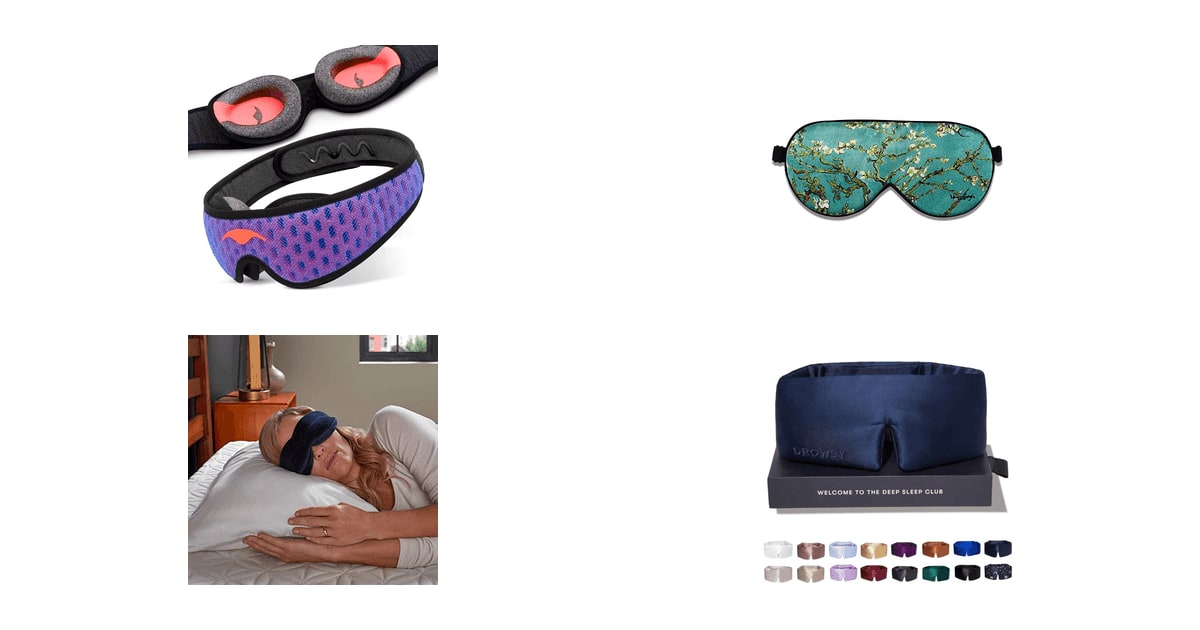
We read manufacturer specs, published reviews and a lot of owner feedback to sort out which trade-offs actually bother people night after night. What kept surfacing: side sleepers care about the mask staying put, hot sleepers care about foam, and anyone with lash extensions needs clearance over the eyes. We think that the Manta Pro Sleep Mask is the best sleep mask for most people, and that the Alaska Bear Natural Silk Sleep Mask is the one to buy if you want something light, cool and easy to pack.
Everything we recommend

Total darkness with nothing resting on your eyelids

Barely-there silk that costs a fraction of the rest
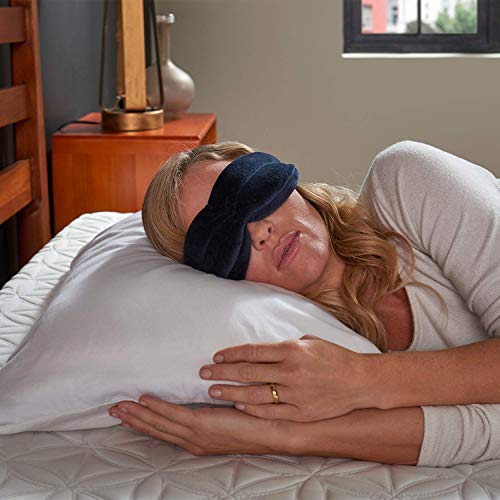
The one that stays put when you roll onto your side

Deep eye cavities and full blackout, for less than the top pick

Thick, wide silk that seals better than a thin mask
At a glance
| Product | Fabric | Light Blocking | Price | |
|---|---|---|---|---|
| Manta Pro Sleep Mask - 100% LightTop pick | — | 100% Blackout | $85 |
| Alaska Bear Natural Silk Sleep MaskBudget pick | 100% Mulberry Silk | Total Blackout | $25.99 |
| Tempur-Pedic Sleep MaskAlso great | TEMPUR Material | Total Darkness | $29 |
| DROWSY Silk Sleep Mask - Face-HuggingUpgrade pick | 100% Mulberry Silk | 100% Light Blocking | $79 |
| Ostrichpillow Eye MaskRunner-up | — | 100% Blackout | $45 |
How we picked
Actual darkness. We compared manufacturer blackout claims against what owners report in bright rooms and daytime sleep, and gave weight to designs that seal around the brow and cheekbone. The nose bridge is where flat masks fail, so we looked hard at how each one handles that gap.
Pressure on the eyes. We separated masks that rest on your eyelids from those that leave a cavity, because it's a preference people feel strongly about. Anyone with lash extensions needs the second kind, and published reviews and owner feedback agree on that point.
Staying on all night. Side sleepers lose masks to pillow friction, so we favored contoured foam and cup designs that grip the face. We read owner feedback specifically for how often people wake up with the mask gone.
Heat and washing. Foam holds warmth and silk doesn't, and we treated that as a real dividing line for hot sleepers. We also checked whether each mask can go in a washing machine, since anything worn against your face needs cleaning weekly.
Fit range. Faces vary more than mask makers admit, so we prioritized adjustable straps and, where offered, adjustable eye cups. Masks with only one fixed shape had to earn their place another way.
Top pick
Total darkness with nothing resting on your eyelids
Manta Pro Sleep Mask - 100% Light
The Manta Pro uses two C-shaped cups that hover over your eyes instead of pressing on them, and both the cups and the strap adjust to your face. It's the mask that works across the widest range of head shapes, sleep positions and lash lengths.
$85fromAmazonNothing touches your eyes, and that changes how a mask feels. Flat masks lie flat on your lids. For a lot of people that's fine; for others it's a low-grade annoyance that never quite lets them settle. The Manta's cups sit around the orbital bone and leave a pocket of air in front of each eye. You can open your eyes underneath it. Owners with lash extensions bring this up constantly, and so do people who just find pressure on the eyelids unpleasant.
The adjustability is the other half of the story. Both eye cups slide along the strap, so if your eyes are set close together or unusually wide, you can move the seal to match instead of hoping a one-size mask lands correctly. Manta says the strap is angled to run above your ears rather than across them, and owners confirm that detail — it's a small thing that stops the band from digging in overnight.
For blackout, this is as close to complete as the category gets. The cups seal against your brow and cheekbone rather than draping over your nose, which is where flat masks leak. Night-shift workers are a recurring voice in owner feedback here: people sleeping at noon with sun on the curtains report that the room goes genuinely black, which is a harder test than most bedrooms ever pose.
It also runs cooler than the foam masks. Manta uses ventilated, fast-drying fabric rather than dense closed foam, and it's machine washable — worth more than it sounds when you're putting a fabric object against your face for eight hours a night. If you sleep hot, sweat at night, or sleep during warm daytime hours, this is the 3D mask least likely to feel swampy by morning.
Flaws but not dealbreakers
It's the most expensive mask here, and owner feedback is more mixed than the design deserves. The recurring theme is durability: some people report the mask holding up beautifully after months of nightly use, while others say the fabric or eye cups start looking rough after washing, sometimes within the first year. That spread is the main reason to think twice.
Expect a few nights of fiddling. The eye cups are adjustable, which means they start out wrong and you have to dial them in. Most owners get there, but it's not a mask you put on once and forget.
The 3D profile is bulky. It won't flatten into a jacket pocket, and if you sleep on your stomach, pressing raised cups into a pillow is uncomfortable in a way a thin silk mask never is.
Budget pick
Barely-there silk that costs a fraction of the rest
Alaska Bear Natural Silk Sleep Mask
The Alaska Bear is a flat mulberry silk mask that weighs almost nothing and disappears into a bag. It won't seal like a contoured mask, but for most bedrooms and nearly every flight, it's enough light-blocking for a small fraction of the money.
$25.99fromAmazonThis is the one to buy first if you've never owned a sleep mask. It costs a small fraction of what the contoured masks do, so there's very little to lose if you decide masks aren't for you. And it's the most consistently well-liked product in this guide — owner sentiment is strong and steady, with people describing buying the same mask in four or five colors over the years.
Silk earns its reputation here for reasons that have nothing to do with luxury. It's smooth, so it doesn't tug at the skin around your eyes or crease your face the way a woven cotton mask can. It breathes, so it doesn't hold heat against your skin. And it's naturally gentle on sensitive skin. If you've had irritation or breakouts around your eyes from a synthetic mask, switching material often solves it.
For travel it's not close. The mask weighs about an ounce and squashes down to nothing, so it lives permanently in a carry-on without you noticing. On a long flight, where the cabin lights come up hours before you're ready, that's the whole point. Stomach sleepers should also start here — a flat mask is the only comfortable option when your face is pressed into a pillow.
Flaws but not dealbreakers
It's flat, so the fabric rests on your lids and lashes. Some people like that slight weight; if you have lash extensions, it's a reason to skip this mask entirely.
Light gets in at the nose bridge on some faces. Flat masks bridge the gap beside your nose rather than sealing around it, and depending on your facial structure you may see a thin glow there. Seating the mask a little lower usually helps, but it won't match a contoured mask in a bright room.
The elastic strap is thin and soft, which is comfortable but not indestructible — owners mention it loosening over time with repeated washing. It also moves more than a foam or cup mask if you're an active side sleeper.
Also great
The one that stays put when you roll onto your side
Tempur-Pedic Sleep Mask
The Tempur-Pedic mask uses the same heat-responsive foam as the company's mattresses, so it molds to your face and grips instead of sliding. If you keep waking up to find your mask on the pillow, this is the fix.
$29fromAmazonIf your mask never survives the night, this is the one to try. The single most common failure for side sleepers is simple mechanics: your face turns into the pillow, the pillow pushes the mask sideways, and by 3 a.m. it's gone. TEMPUR foam softens with body heat and takes the shape of your nose, brow and cheekbone, so it wedges into place rather than gliding across your skin. Owners describe keeping one in every travel bag and drawer, which is the kind of loyalty that only comes from something that just works.
The elastic strap closes with Velcro, so you can set the tension exactly and it stays where you put it. That's less elegant than a slider but harder to get wrong. Owner feedback skews strongly toward long-term ownership — people replacing a mask they've used for years, or buying a second one — and that's a reasonable proxy for the foam holding its shape.
The contour also lifts the fabric slightly off the eyelids. It's not the open cavity you get from the Manta Pro or the Ostrichpillow, and it does apply gentle pressure across the face. But compared with a flat mask it's a meaningful step, and some people specifically prefer that light, even pressure — it feels reassuring rather than intrusive.
Flaws but not dealbreakers
Foam holds heat. This is the mask most likely to feel warm by the middle of the night, and if you sleep hot or run warm in summer, the silk options will be more comfortable.
It's spot-clean only, no machine washing. That's a real maintenance nuisance for something worn against your face every night, and owners quietly ignore the instruction and hand-wash it anyway.
There's no fine adjustment beyond the strap. You get one shape, and it either suits your face or it doesn't. Owner feedback includes a handful of people who found the fit or the light-blocking not quite complete for them, so it's worth checking the return window.
Runner-up
Deep eye cavities and full blackout, for less than the top pick
Ostrichpillow Eye Mask
The Ostrichpillow Eye Mask builds a six-layer wall around deep foam eye cavities, so light doesn't get in and nothing presses on your eyes. It costs less than the Manta Pro and gives up mostly fit precision.
$45fromAmazonIf the Manta Pro is more than you want to spend, this gets you to the same two things that matter most: real darkness and clearance over the eyes. The recessed foam cavities leave enough room that you can open your eyes with the mask on, which makes it a legitimate option for lash extensions or for anyone who finds eyelid contact intolerable.
The seal is the strong part. Ostrichpillow layers six different materials, and the padded perimeter presses against your brow and cheekbones instead of resting on your nose. Owners consistently describe complete blackout, including side sleepers who expected light to creep in along the pillow side. It closes with Velcro and comes with a travel pouch, and it's machine washable.
What you give up against the Manta Pro is precision. The cups are fixed, so if your eyes sit close together or wide apart, you're stuck with where Ostrichpillow put them. There's no sliding anything into place. For most faces that's fine, because the padded perimeter is forgiving and the cavities are deep. But it's the reason this is the runner-up and not the top pick.
Flaws but not dealbreakers
The foam is firm, and that's this mask's dividing line. Some owners find it comfortable enough to forget; others say the padding around the eyes is too dense to relax against, or that the under-eye foam feels bulky and pressing. Owner sentiment is more polarized here than for anything else in this guide — a meaningful minority just can't get comfortable in it.
The strap is a common complaint too. Depending on your head shape it can sit on your ears and start to ache, and there's no way to reposition anything except tighten or loosen the band. Between the firm foam and the strap, this is a mask worth buying somewhere you can return it.
It's bulky and warm. The foam structure won't pack flat, and the cavities trap heat in a warm bedroom the way most contoured foam does.
Upgrade pick
Thick, wide silk that seals better than a thin mask
DROWSY Silk Sleep Mask - Face-Hugging
The DROWSY wraps a padded, blacked-out core in heavy 22-momme mulberry silk and makes the whole thing wide enough to cover the gap beside your nose. It's the most indulgent mask here, and the silk strap is kinder to your hair than elastic.
$79fromAmazonWide and padded is what makes this work, not the silk. Most flat masks leak at the nose bridge because there's simply not enough material there. The DROWSY is oversized and cushioned all the way around, with a blackout liner built in, so the padding settles against your cheekbones and closes the gap. You get near-complete darkness without the raised cups — a genuinely different approach from the Manta Pro and Ostrichpillow.
The strap is silk rather than elastic, and it's wide. If you've woken up with a dent across your head or found broken hairs on your pillow, that's the thing this fixes. It's also part of why owners report it staying on through position changes — a broad band spreads its grip instead of concentrating it in one thin line.
At 22 momme, the silk is heavier and denser than most sleep-mask silk, which means it's more opaque and holds up better over hundreds of washes. That matters if you have reactive skin: a smooth, low-friction surface against the delicate skin around your eyes is easier to tolerate than a woven synthetic. One owner group that comes up repeatedly is people whose eyelids don't fully close during sleep, who need something soft that keeps their eyes covered and moist.
Flaws but not dealbreakers
It's expensive — the price is the single most common reservation in owner feedback, including from people who otherwise love it. You're paying a large premium over the Alaska Bear for better nose-bridge coverage, a nicer strap and heavier silk.
The wide silhouette is a lot of mask. On a smaller or narrower face it can feel oversized, and there's no adjustment beyond the strap length.
Silk needs care. Hand-washing is the safe route, and a few owners mention seams starting to separate after extended use, so it's not a mask you can be careless with.
Who this is for
Buy a mask if light is what's waking you up or keeping you up: a streetlight through thin curtains, a partner who reads late, a sunrise that arrives before your alarm, or a day-shift world you have to sleep through. It's a small, reversible fix compared with blackout curtains or moving the bed, and if you travel it's the only version of darkness you can bring with you. Start cheap unless you already know you hate pressure on your eyelids — plenty of people are perfectly happy with a flat silk mask and never need anything more.
This guide covers masks for sleeping in a bed or on a plane. It doesn't cover weighted or cooling masks for migraine and sinus relief, heated masks for dry eye, or anything medical. If light isn't your problem — if you're lying awake in a fully dark room — a mask won't fix that, and it's worth talking to a doctor rather than working through this list. And if you're a dedicated stomach sleeper, skip the contoured options entirely; pressing raised eye cups into a pillow is its own kind of misery.
How we picked
We weighed five things. Darkness: how completely each mask seals, with particular attention to the nose bridge, where flat designs leak. Eye pressure: whether the mask rests on your lids or leaves a cavity, which decides whether it works with lash extensions and whether pressure-sensitive sleepers can tolerate it. Stability: how well it resists being shoved off by a pillow, since that's the number one reason side sleepers give up on masks. Heat and cleaning: foam runs warm and silk runs cool, and machine-washable beats spot-clean for something you wear against your face nightly. Fit range: adjustable straps and eye cups matter, because one-size masks fail a lot of faces.
The competition
This guide covers the five masks the research kept pointing back to — the ones that show up across published roundups and have enough owner feedback to say something meaningful about how they hold up. It isn't the whole market. Every product here earned an award, because each solves a genuinely different problem: darkness without eye contact, weight and packability, staying put on your side, or silk that seals. If none of them matches your face or your sleep style, the criteria above are more useful than the specific list.
Care and fit
Wash your mask about once a week. Sebum, sweat and leftover skincare build up on the inner surface, and pressed against the skin around your eyes for eight hours a night, that buildup causes irritation and breakouts. The Manta Pro and the Ostrichpillow go in a machine; the Tempur-Pedic is officially spot-clean only, though plenty of owners hand-wash it gently and line-dry; silk masks like the Alaska Bear and DROWSY do best hand-washed in cool water with a mild detergent, then air-dried away from heat. On fit, don't crank the strap tight to chase a light leak. Snug beats tight — an over-tightened band gives you a morning headache and won't fix a structural gap at the nose bridge. If light still gets in, seat the mask slightly lower on your nose first.
Questions we get
Do sleep masks actually help with insomnia?
They help if light is part of your problem, which it often is. Darkness supports melatonin production, and sleep clinicians generally treat fixing your sleep environment as a first step before anything else. But a mask can't do anything about racing thoughts, pain or an irregular schedule. If your room is already dark and you still can't sleep, the mask isn't the missing piece.
Which sleep mask is best for side sleepers?
The Tempur-Pedic is the most reliable at staying put, because the foam molds to your face and grips instead of sliding when your cheek meets the pillow. The Manta Pro is a close second and adds adjustability plus much better breathability. Flat silk masks move around the most, so if you're a restless side sleeper, they'll frustrate you.
Which mask blocks the most light?
The contoured masks — the Manta Pro and the Ostrichpillow — get closest to complete darkness, because they seal around the eye socket rather than draping across your nose. The DROWSY comes close using thick padding and extra width instead of cups. The Alaska Bear does well for its size but can let a thin glow in at the nose bridge depending on your face shape.
Is silk actually better than cotton?
For nightly wear against the skin around your eyes, yes. Silk is smoother, so it creates less friction on skin and lashes and is less likely to leave creases. It also breathes better and holds less heat than cotton. Cotton is tougher and easier to launder at high temperatures, so it's the more practical choice if durability matters more to you than skin feel.
What should I use if I have eyelash extensions?
Use a contoured mask with real clearance over the eyes — the Manta Pro or the Ostrichpillow. Any flat mask, however soft the fabric, presses against the lash line and will shorten the life of your extensions. The Manta Pro is the safer bet of the two because you can reposition the cups to match longer or denser sets.
Is it safe to wear a mask every night?
Yes, for nearly everyone. The variable is what's touching your skin: choose silk or a contoured design if you're prone to irritation or worried about friction around your eyes. Wash it weekly. If you wake with a headache or a mark across your forehead, loosen the strap — the mask should feel snug, not clamped.
Why you should trust us
For this guide:
- We read manufacturer specifications and listing details for every mask here, alongside published reviews and roundups from sleep and health publications.
- We went through owner feedback for each product looking for repeated complaints rather than one-off experiences, which is how the durability, strap and foam-firmness issues in this guide surfaced.
- We did not use, wear or measure any of these masks ourselves.
- We read owner reviews on every listing, weighted toward the critical ones, because that is where the recurring failures show up.
- We have a systematic way of automatically fetching the latest prices, so the numbers on this page stay current.
- This is a research-focused guide, so the team may not own every product listed — though we often do own the top winners, which gives us extra context for the recommendations.
- We don't accept free products, and the retailer commission never changes which product we recommend.
Sources
Best Sleep Masks of 2026 – Sleep Foundation, Sleep Foundation
Best Eye Masks for Sleep 2026 – Wirecutter / New York Times, Wirecutter / New York Times
How Light Affects Sleep and Melatonin – Harvard Medical School Division of Sleep Medicine, Harvard Medical School
Effects of Light on Human Circadian Rhythms, Sleep, and Mood – NIH / NCBI, NIH / National Center for Biotechnology Information
Best Sleep Masks Reviewed 2026 – Good Housekeeping, Good Housekeeping
Best Sleep Masks for Every Type of Sleeper – Healthline, Healthline
Eye Masks and Sleep Quality – American Academy of Sleep Medicine, American Academy of Sleep Medicine
Best Sleep Masks Tested by Editors – Forbes Health, Forbes Health
Amazon product listings and owner reviews for all 5 products
Manufacturer specification pages for each product
Some passages in this guide may be paraphrased with AI help. Prices are refreshed automatically.
More like this.
Continue exploring health reviews and recommendations.

The Best Sleep Masks for Total Darkness
A sleep mask is the simplest way to fix a bedroom you can't fix any other way. Streetlights bleed through blinds. A partner's phone lights up at 2 a.m.…

The Best Blackout Silk Sleep Masks
A good sleep mask does one job: it keeps light off your eyelids. That matters more than it sounds. In a Northwestern University study published in PNAS,…

The Best Hair Masks for Damaged Hair
Damaged hair announces itself. Your comb snags in the same spot every morning, the ends look pale and frayed, and a blow-dry that used to take ten minutes…

The Best Deep Conditioning Hair Masks
Most people don't think about a hair mask until the damage is already obvious. Your ends feel like straw, a comb snags halfway down, and the conditioner…

The Best Overnight Lip Masks
Lip skin is thin - just a few cell layers, with no oil glands of its own. So it dries out faster than the rest of your face and stays dry longer. A…

The Best LED Face Masks and Red Light Therapy Devices
Red light therapy asks very little of you and gives back slowly. You put on a mask, sit still for a few minutes, and repeat that several times a week for…