The Best CBD Alternatives for Stress and Sleep
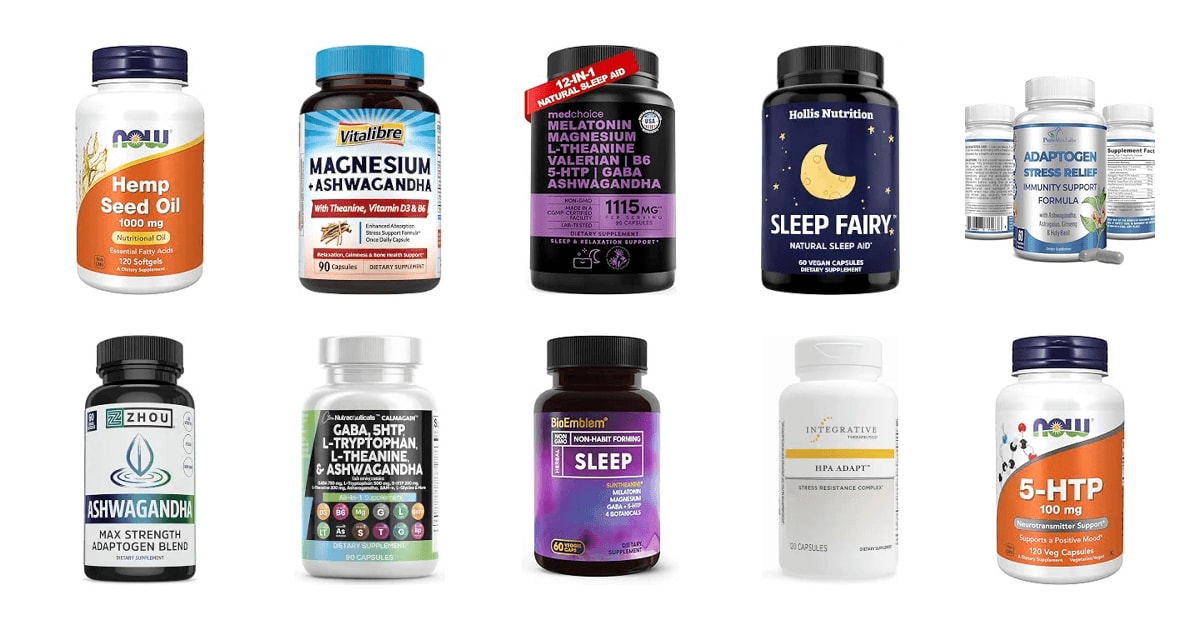
Most people come to this shelf with one specific problem. You can't fall asleep, or you sleep fine until three in the morning. Or you're wound tight all day and want something to take the edge off. CBD got popular because it promised a single answer to all of that. The supplements here work differently — magnesium, adaptogenic herbs, and amino acids that feed your sleep and mood chemistry. What matters is the dose printed on the panel, whether the company tests what it sells, and whether you'll actually take it every day.
Here's the honest part. None of these hits like a drug, and none is a swap for CBD in the way the marketing suggests. The effects are subtle and slow, and adaptogens often need two to four weeks before you notice anything. Melatonin blends work fast but can leave you foggy or hand you strange dreams. Response varies enormously between people, so the formula that fixes your neighbor's insomnia may do nothing for you. And if you take prescription medication, several of these need a conversation with your doctor first.
So buy for one problem, not for all of them at once. Pick a single bottle, give it a few weeks, and see what changes before you add another — stacking four supplements at the same time leaves you guessing about which one did anything. We think that the Vitalibre Magnesium Complex is the best CBD alternative for most people, and that the Zhou Nutrition Ashwagandha is the one to buy if you want daytime calm from one focused adaptogen instead of a broad nightly blend.
Everything we recommend

Everyday calm from a blend that's easy to keep taking

One daytime adaptogen you can judge on its own

Hemp fats, no cannabinoids, and no pretending otherwise

A practitioner-grade adaptogen for long-running stress

A broad sleep blend that won't leave you wrung out
At a glance
| Product | Key Ingredient | Capsule Count | Price | |
|---|---|---|---|---|
| NOW Foods SupplementsBudget pick | Hemp Seed Oil | 120 Softgels | $16.23 |
| Magnesium Complex with Ashwagandha & L-Theanine -Top pick | Magnesium Glycinate | 90 Capsules | $15.99 |
| 12-in-1 Melatonin Sleep Capsules - Natural SleepAlso great | Melatonin 5mg | 90 Capsules | $23.95 |
 | SLEEP FAIRY Natural Sleep AidAlso in lineup | Melatonin 10mg | 60 Capsules | $19.98 |
 | Adaptogen Stress Relief Immune Support Formula -Also consider | Ashwagandha | 60 Capsules | $15.99 |
| Zhou Nutrition Ashwagandha CapsulesRunner-up | Ashwagandha 600mg | 60 Capsules | $18.69 |
 | Clean Nutraceuticals GABA 750mg 5 HTP 200mgAlso in lineup | GABA 750mg | 90 Capsules | $29.95 |
 | BioEmblem Natural Sleep Aid for Adults withAlso consider | Melatonin | 60 Capsules | $24.99 |
| Integrative Therapeutics HPA Adapt - Adaptogenic SupplementUpgrade pick | Ashwagandha & Rhodiola | 120 Capsules | $39.50 |
 | NOW SupplementsAlso consider | 5-HTP 100mg | 120 Capsules | $16.79On sale |
How we picked
Doses you can read. We compared supplement facts panels and looked for named extracts at doses in line with published research. Blends that hid everything inside one proprietary total ranked lower.
What owners report. We read owner feedback for patterns rather than one-offs, weighting complaints that repeated across many buyers — morning grogginess, vivid dreams, stomach upset. A recurring flaw beats a dramatic single account.
Manufacturing and testing. We favored brands that name a GMP or NSF-registered facility and publish some form of outside lab verification. In an unregulated shelf, that's most of what separates one capsule from another.
Interaction risk. We flagged anything with 5-HTP, high-dose melatonin or ashwagandha, since all three interact with common prescriptions. Formulas that stack several of these at once had to earn their place.
Easy to keep taking. Capsule size, servings per bottle and whether the timing fits a normal day all mattered. A supplement you stop taking after ten days does nothing for you.
Top pick
Everyday calm from a blend that's easy to keep taking
Magnesium Complex with Ashwagandha & L-Theanine -
This pairs several forms of magnesium, led by glycinate, with ashwagandha, L-theanine, vitamin D3, B6 and zinc. It covers both sides of stress — the clenched shoulders and the racing mind — and owners describe easier evenings and clearer mornings rather than sedation.
$15.99fromAmazonIf you only add one thing, make it magnesium. It's the least exciting option here and the one with the least to go wrong. This blend leads with glycinate, the form most people tolerate without a rushed trip to the bathroom, then adds citrate, malate and taurate. Vitamin D3, B6 and zinc come along for the ride. Nothing exotic, nothing you have to build a whole routine around.
The ashwagandha and L-theanine are what separate it from a plain magnesium tablet. Ashwagandha is the most studied adaptogen on the shelf, and it's usually described as blunting the edge of a stressful day rather than knocking you flat. L-theanine, the amino acid in green tea, works lighter and faster. Together they aim at the wound-up feeling, not at putting you under.
Owners keep circling back to two things: fewer night cramps and easier evenings. Leg and foot cramps come up again and again, which tracks with what magnesium is best known for. People also describe waking up clear-headed instead of drugged. If your problem is more "can't unclench" than "can't fall asleep," that's the pattern to expect from this bottle.
It's an easy one to live with, too. The capsules are slim and go down without a fight, and a bottle covers about a month at the label's serving. Take them with dinner or an hour before bed. Vitalibre makes the standard claims — US manufacturing, a GMP facility, outside lab testing — and its panel is easier to read than the mega-blends further down.
Flaws but not dealbreakers
The serving isn't one capsule. You'll take a few a day to reach the doses on the panel, and on an empty stomach a mild churn is a common complaint. Food usually fixes it.
Not everyone gets the calm. Some owners report the opposite — more restlessness at night — and others notice nothing after weeks of use. Ashwagandha isn't neutral either. It can nudge thyroid hormone and blood pressure, so if you're medicated for either, clear it with your doctor before you start.
Runner-up
One daytime adaptogen you can judge on its own
Zhou Nutrition Ashwagandha Capsules
Each capsule carries 600 mg of ashwagandha root extract, surrounded by rhodiola, holy basil, eleuthero, cordyceps and reishi. It's a morning supplement aimed at taking the edge off a hard day, and owners describe calm energy rather than the flattened feeling a sleep formula leaves.
$18.69fromAmazonThis one is built for daytime. The label's serving is two capsules, which puts you at 1,200 mg of ashwagandha root extract — in the range most stress research uses. Rhodiola, holy basil, eleuthero, cordyceps and reishi fill out the blend, with black pepper extract to help absorption. It's a focused bottle with a clear job, and that's the appeal.
What owners describe isn't sedation — it's a lower ceiling on the day. People talk about the worry settling an hour or two after they take it, and about getting through a bad afternoon without spiraling. Several say they've cycled through other ashwagandha brands and come back to this one. Calm without jitters is the recurring theme, which is why we'd take it with breakfast.
Compare it to the everything-blends further down and the case gets simpler. With five herbs you can tell roughly what's doing the work. If it doesn't agree with you, there are a handful of suspects instead of a dozen. That's worth a lot when you're still figuring out what your body actually responds to.
It also slots into an existing routine without collisions. Sixty capsules is a month at two a day, and nothing in it is aimed at sleep, so it won't stack awkwardly with a nighttime supplement. If you want to try adaptogens without committing to a nine-herb formula, start here and add later.
Flaws but not dealbreakers
Ashwagandha can push blood pressure and blood sugar down, and it can interfere with thyroid medication. Hormones are the other watch-out — at least one owner with PCOS describes her cycle going sideways after a month on it. If any of that sounds like you, this isn't a casual purchase.
Results take time and aren't guaranteed. Plenty of people notice nothing for two or three weeks, and some never do. Taken on an empty stomach it can leave you queasy, though food generally sorts that out.
Budget pick
Hemp fats, no cannabinoids, and no pretending otherwise
NOW Foods Supplements
This is cold-pressed hemp seed oil in a softgel, a gram per capsule, at roughly the 3:1 omega-6 to omega-3 ratio hemp is known for. There's no CBD in it and it won't calm you down, but it's a clean way to add essential fats if fish oil doesn't agree with you.
$16.23fromAmazonBe clear about what this is: hemp seed oil, not CBD. It's pressed from the seed, so there are no cannabinoids in it at all. What you get is fat — mostly linoleic acid and GLA on the omega-6 side, plus alpha-linolenic acid — at about a 3:1 ratio that's often called the ideal balance. If you came here for the calm CBD promises, this isn't it.
Where it earns a spot is as a fish-oil replacement. That's the loudest theme in owner feedback: people who switched over and stayed, mostly because there's no aftertaste and none of the burps. The oil is cold-pressed and hexane free, and NOW runs accredited in-house labs for potency and stability, which is more transparency than most of this shelf bothers with.
It's also the least demanding bottle in the guide. A hundred and twenty softgels last a long while, nothing in it clashes with the stress or sleep supplements above, and there's no adjustment period to survive. If you're building a routine, treat this as the boring base layer and let the adaptogens do the interesting work.
Flaws but not dealbreakers
The benefits are nutritional and slow — skin, joints, general fat balance. You won't feel it the way you feel melatonin, and some owners admit they're not sure it's doing anything. If you want to hit a meaningful omega-3 intake, you'll likely take more than one softgel a day, which works through a bottle quickly.
And it bears repeating: no amount of this substitutes for cannabinoids. If that's what you're after, nothing on this page will scratch the itch.
Upgrade pick
A practitioner-grade adaptogen for long-running stress
Integrative Therapeutics HPA Adapt - Adaptogenic Supplement
HPA Adapt is a clinician-channel formula built around Sensoril ashwagandha, rhodiola, eleuthero, maca and holy basil, aimed at people whose stress has been grinding for months. The ingredient list is shorter than the mega-blends here, and the extracts are named rather than buried in a proprietary total.
$39.50fromAmazonThis is the bottle you buy when it hasn't been a bad week — it's been a bad year. Integrative Therapeutics sells largely through clinicians, and HPA Adapt is built around the HPA axis, the hormone loop that runs your stress response. The blend is Sensoril ashwagandha root and leaf extract, rhodiola root, eleuthero, maca and holy basil, and that's about it.
You're paying for sourcing and documentation, not for a longer ingredient list. The herb count is modest next to the twelve-active formulas in this guide, and the extracts are specified rather than lumped into one proprietary number. In a category where label accuracy is the whole game, that's a real argument. The brand's public materials lean on sourcing transparency, and its write-ups consistently point the same direction.
It's vegan, and free of gluten, dairy, soy and artificial colors, which matters if you react to fillers. A bottle holds a hundred and twenty capsules, so a long, honest trial is practical — and adaptogens need a long trial. If you've already shrugged at a supermarket ashwagandha, this is the sensible next step rather than adding three more bottles to the pile.
It also fits well if you're working with someone. When a practitioner is already tracking your sleep and stress symptoms, a formula with named extracts and stable ratios is easier to dose deliberately and easier to adjust. That's a narrow use case, but for the people in it, nothing else here compares.
Flaws but not dealbreakers
It's the most expensive bottle in this guide, and the gap isn't small. That's easier to justify after you've struck out with simpler adaptogens than as your first attempt at one.
Rhodiola can feel stimulating, so an afternoon dose may push your bedtime back — morning is the safer slot. And because it works the same pathways as the ashwagandha in several sleep blends, it's easy to double up without realizing. Pick one adaptogen bottle at a time.
Also great
A broad sleep blend that won't leave you wrung out
12-in-1 Melatonin Sleep Capsules - Natural Sleep
Twelve sleep ingredients in one capsule: 5 mg of melatonin, 500 mg of magnesium glycinate, plus ashwagandha, L-theanine, GABA, 5-HTP, valerian root and chamomile. Owners mostly report falling asleep faster and waking clear-headed, though vivid dreams are a common first-week complaint.
$23.95fromAmazonThis is the sleep blend we'd try first, largely because it doesn't overreach on melatonin. Five milligrams is a real dose but not a heroic one, and it sits on top of 500 mg of magnesium glycinate along with ashwagandha, L-theanine, GABA, 5-HTP, valerian root and chamomile. The idea is to nudge several relaxation pathways at once instead of hammering one.
The most common owner story is falling asleep within an hour and waking without the wrung-out feeling a heavy sleeping pill leaves behind. That matters more than it sounds. Most people who quit melatonin quit because of how the morning felt, not because the night failed. If you've bounced off drugstore sleep aids for exactly that reason, this is the swap to try.
The dreams are real, though. Vivid and occasionally unpleasant dreaming in the first week or two is a recurring theme in the feedback. For some people it settles down; for others it doesn't. Between the 5-HTP, the valerian and the melatonin there's a lot acting on sleep architecture at once, and your brain tends to notice.
One quirk worth knowing about the bottle itself. MEDCHOICE has revised the label to print a lower total milligram figure per serving, and both versions are in circulation. The formula, serving size and supplement facts didn't change — only how the total is expressed. If the panel on your bottle doesn't match what you remember, that's the reason.
Flaws but not dealbreakers
It doesn't work for everyone, and the misses are loud. Some owners get four hours and then wake up; others say it never touched their insomnia and only made them relaxed. With twelve actives, a bad reaction is also hard to pin on a culprit.
Sensitivity is a genuine risk here. The 5-HTP shouldn't be combined with antidepressants without medical supervision, and the ashwagandha carries the same thyroid and blood pressure caveats as everything else on this page.
Who this is for
This guide is for you if you were shopping for CBD and ran into the wall — the murky labeling, the wide swings in potency, the fact that half the listings vanish from big retailers. The products here are legal, widely sold, and work through better-documented routes: magnesium, adaptogenic herbs, amino acids and hemp seed fats. Buy for the specific thing you want fixed. If it's tension during the day, start with magnesium or ashwagandha. If it's falling asleep, start with a melatonin blend and the lowest dose that does the job.
This isn't the guide for you if you want actual cannabinoids — nothing here contains CBD, and hemp seed oil is a different product entirely. We also don't cover gummies, tinctures or topicals, and none of this is medical advice. If you're pregnant or nursing, taking antidepressants, thyroid medication, blood pressure drugs or blood thinners, or dealing with diagnosed anxiety, depression or chronic insomnia, talk to a clinician before you add any of these. Supplements can support a treatment plan. They shouldn't replace one.
How we picked
Doses you can read: we compared supplement facts panels and favored named extracts at amounts in line with published research over blends that bury everything in a proprietary total. Owner patterns: we looked for complaints that repeated across many buyers — grogginess, vivid dreams, stomach upset — rather than single dramatic accounts. Manufacturing: we preferred brands that name a GMP or NSF-registered facility and publish outside lab verification, since that's much of what separates one capsule from another. Interaction risk: anything with 5-HTP, high-dose melatonin or ashwagandha got flagged, because all three collide with common prescriptions. Daily practicality: capsule size, servings per bottle and whether the timing fits a real day, because the supplement you quit after ten days helps nobody.
Other cbd alternatives for stress and sleep worth considering
If you want a gentler nudge toward sleep: The BioEmblem Natural Sleep Aid for Adults with ($24.99) — BioEmblem uses a lighter melatonin dose than most sleep blends and leans on Suntheanine — the patented form of L-theanine — plus valerian root, chamomile, passionflower, lemon balm, GABA and 5-HTP. Owners who describe it favorably talk about drifting off in half an hour and waking up genuinely rested, and several say one capsule works where the full two-capsule serving is too much. It's made in an NSF-registered facility and it's vegan and non-GMO. What you give up is horsepower: people with entrenched, years-long insomnia are the ones most likely to report that it did nothing at all.
If you want one ingredient you can dose yourself: The NOW Supplements ($16.79) — NOW's 5-HTP is 100 mg per veg capsule from Griffonia simplicifolia seed, and that's the whole product. As a direct precursor to serotonin, it's the single active doing most of the mood work inside several blends on this page — buy it alone and you control the amount, the timing and what you pair it with. It's also the simplest way to find out whether 5-HTP is what helps you. The trade-off is that you're now the formulator, and 5-HTP is the ingredient with the sharpest warning: never combine it with prescription antidepressants without medical supervision.
If you want a wide herbal blend for daytime energy: The Adaptogen Stress Relief Immune Support Formula - ($15.99) — This nine-herb adaptogen formula stacks ashwagandha, astragalus, ginseng, holy basil, rhodiola, amla, maca and schisandra, and adds an immune angle the other stress bottles skip. Owners describe a calm that shows up within an hour and steadier energy through hectic evenings, with several sticking with it for months. It's made in a GMP-certified US facility and third-party lab tested. What it gives up to our runner-up is clarity — with that many herbs you can't tell which one is helping, and the pool of owner feedback is small, so the failure modes are less well mapped.
The competition
These are the products our research surfaced in this corner of the shelf, not everything sold. Both of the formulas below have real followings, and both lost to a pick for reasons that may not apply to you.
The SLEEP FAIRY Natural Sleep Aid ($19.98) — SLEEP FAIRY goes big: 10 mg of melatonin on top of 500 mg of magnesium glycinate, with L-theanine, valerian root, chamomile, GABA, 5-HTP, B6 and ashwagandha in vegan capsules made in the US. For long-term insomniacs it's the most-recommended bottle in this group, and the feedback includes people describing their first real night's sleep in years. But it's also the most polarizing here. Debilitating headaches, intense dreams and next-day fog turn up often enough to matter, and 10 mg is far more melatonin than most people need. If milder blends have already failed you, start with a single capsule — not the full serving.
The Clean Nutraceuticals GABA 750mg 5 HTP 200mg ($29.95) — Clean Nutraceuticals CalmAgain is the maximalist option: 750 mg of GABA, 200 mg of 5-HTP, 500 mg of L-tryptophan, 200 mg of L-theanine, plus ashwagandha, SAM-e, L-glycine, L-tyrosine, magnesium glycinate, D3 and B6. Owners credit it with everything from calmer nerves to fewer leg cramps to sharper focus. It lost to our picks on restraint. Running 5-HTP, tryptophan and SAM-e together raises real interaction concerns for anyone on psychiatric or blood pressure medication, and adverse reactions show up in the feedback. The smell when you open the bottle is a common gripe too. Worth considering only if you already know how you react to these ingredients individually.
Dosing and safety
Start low and go slow. Take half the label's serving for the first few nights, especially with any melatonin blend, and only work up if you need to — plenty of owners find one capsule does what two were meant to. Timing matters as much as dose. Sleep formulas want 30 to 60 minutes before bed; adaptogens belong in the morning, since rhodiola and ginseng can keep you up. Take capsules with food if your stomach is sensitive, which heads off most of the nausea complaints. Don't start two new supplements in the same week, or you'll never know which one worked. Some practitioners suggest a week off adaptogens every couple of months to keep your response sharp. And check every ingredient against your prescriptions before your first capsule.
Questions we get
Are these as effective as actual CBD oil?
They work through completely different mechanisms, so it isn't a like-for-like swap. Hemp seed oil gives you essential fats and no cannabinoids at all, while adaptogens, magnesium and 5-HTP act on stress hormones and neurotransmitters. For sleep and daytime tension specifically, many people find these do as much or more. The practical advantage is that dosing is printed on the panel and doesn't vary by batch the way CBD potency often has.
What's the difference between hemp seed oil and CBD oil?
Hemp seed oil is pressed from the seeds and contains no CBD or other cannabinoids — just fatty acids. CBD oil is extracted from the flower and leaves, where the cannabinoids live. They come from the same plant and do entirely different things, which is why hemp seed oil is sold freely everywhere while CBD isn't. If a listing says hemp seed oil, expect nutrition, not calm.
Can I take several of these together?
Some combinations are fine, but start with one and add slowly. Never run two sleep formulas at once, and be careful stacking anything containing 5-HTP, since several blends here include it and the doses add up. Ashwagandha appears in most of these products too, so it's easy to triple your intake by accident. Read every panel before you combine.
How long until I notice anything?
It depends on what you take. Melatonin-based sleep blends usually work within 30 to 60 minutes on the first night. Magnesium formulas tend to show up within three to seven days, often as fewer cramps and easier evenings. Adaptogens and mood supplements are the slow ones — give them two to four weeks of daily use before you judge them.
What side effects should I watch for?
The common ones are mild: stomach upset on an empty stomach, morning grogginess from higher melatonin doses, and unusually vivid dreams during the first week or two of a sleep blend. Adaptogens can feel stimulating if you take them late in the day. Lower the dose first, and stop if something persists rather than pushing through it.
Do I need to cycle these or can I take them daily?
Most are designed for daily use and work better with consistency, particularly magnesium and hemp seed oil. Some practitioners suggest a week off adaptogenic herbs every couple of months to keep your response strong, though the evidence for that is thin. Sleep aids can be nightly or as-needed. If you're taking one every night for months, it's worth asking a doctor what's driving the insomnia.
Why you should trust us
For this guide:
- We compared the supplement facts panels, extract forms and manufacturing claims for all ten products, checking named doses against the amounts used in published research on magnesium, ashwagandha, melatonin and 5-HTP.
- We read published write-ups and category roundups covering adaptogen and sleep formulas to see which ingredients have support behind them and which are there for the label.
- We also worked through owner feedback for each listing, looking for complaints that repeat — grogginess, vivid dreams, stomach upset, no effect at all — rather than isolated reactions.
- We read owner reviews on every listing, weighted toward the critical ones, because that is where the recurring failures show up.
- We have a systematic way of automatically fetching the latest prices, so the numbers on this page stay current.
- This is a research-focused guide, so the team may not own every product listed — though we often do own the top winners, which gives us extra context for the recommendations.
- We don't accept free products, and the retailer commission never changes which product we recommend.
Sources
Amazon product listings and owner reviews for all 10 products
Manufacturer specification pages for each product
Some passages in this guide may be paraphrased with AI help. Prices are refreshed automatically.
More like this.
Continue exploring health reviews and recommendations.

The Best Battle Ropes
A battle rope is one of the few pieces of home gym equipment that earns its floor space twice over. It's cardio and upper-body work at the same time, and…

The 8 Best Mouthguards for Boxing & MMA in 2026: Tested & Reviewed
Find the best mouthguards for boxing, MMA, and Muay Thai in 2026. Expert-reviewed picks from budget to custom-fit, covering protection, breathability, and fit.

The Best Adjustable Weight Benches
A bench doesn't look like much. It's a padded slab on a steel frame. But it's where most of your upper-body work happens - flat presses, incline dumbbell…
The Best Agility Ladders, Cones, and Speed Training Gear
Footwork gear is cheap, portable, and easy to overthink. A ladder, a stack of cones, and a few low hurdles cover almost everything a youth coach, a high…

The Best Folding Treadmills
A folding treadmill has one job beyond running: it has to disappear when you're done. Most end up in a spare bedroom, a basement corner or a garage, where…

The Best Golf Clubs for Beginners
Your first set of golf clubs has one job: get the ball in the air. That sounds simple. It isn't, and it's why beginner clubs look different from the ones…