The Best Inflatable Kayaks and River Craft
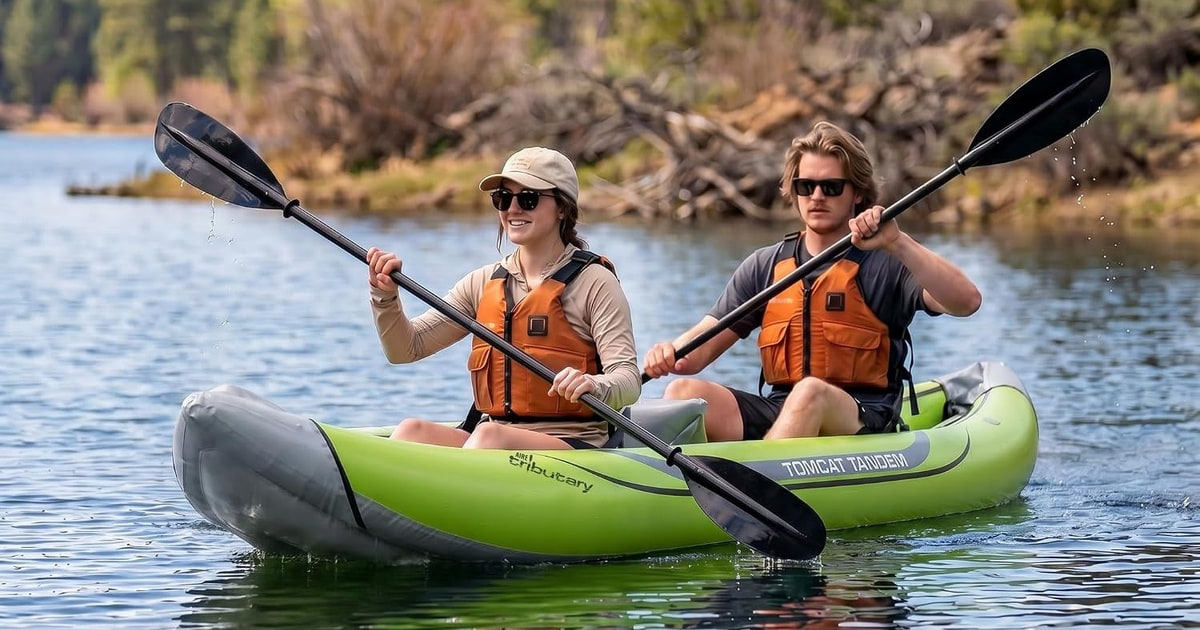
An inflatable kayak solves the problem that keeps most people off the water: storage and hauling. You don't need a garage bay or a roof rack. You need a closet shelf and a car trunk. The good ones pack down to something two people can carry, then blow up into a boat that's genuinely stable on moving water. That stability is the real selling point. A wide inflatable hull is much harder to flip than a narrow hardshell, which is why beginners and families gravitate toward them.
Here's the honest part. Nothing in this category paddles like a hardshell kayak on flat water. Inflatables are slower, they catch wind, and they wander off a straight line unless you're working at it. Setup costs you fifteen or twenty minutes at the put-in, and drying time costs you more at the takeout — folding away a damp boat is how mildew starts. Pumps break, valves get cross-threaded, and seams are the part that eventually fails. These are boats you maintain, not boats you forget about.
Which one you want depends on where you paddle and how much gear you're willing to buy separately. Some of these come as a complete kit, and others are just a hull. We think that the Sea Eagle 380x Inflatable Kayak with Pro Package is the best inflatable kayak for most people, and that the AIRE Tributary Tomcat Tandem is the one to buy if you're running real whitewater and want a boat built to shrug off rocks.
Everything we recommend

A complete kit that handles rivers and lakes equally well

The one to run rapids in, if you already have a pump

Tracks best on flat water, but it's heavy and finicky
At a glance
| Product | Length | Capacity (lbs/persons) | Price | |
|---|---|---|---|---|
| AIRE Tributary Tomcat Tandem Inflatable Kayak-BlueAlso great | — | — | $1,134On sale |
| Advanced Elements AdvancedFrame Convertible Inflatable KayakUpgrade pick | 15 ft | — | $639.99 |
| Sea Eagle 380x Inflatable Kayak with ProTop pick | 12 ft 5 in | 750 lbs/2-3 adults | $1,149 |
How we picked
Real hull durability. We looked for construction that survives contact with rocks — welded or multiply-overlapped seams, heavy denier fabric, or a bladder-inside-shell design. Owner feedback about punctures and slow leaks carried more weight than any advertised rating.
Floor stiffness. A soft floor is the difference between a boat that paddles and one that flexes. We favored high-pressure drop-stitch floors and treated repeated owner complaints about sagging floors as a serious mark against a boat.
What's in the box. A hull alone isn't a paddling trip. We noted which boats include a pump, paddles, seats and a bag, since buying those separately adds real cost and hassle before your first outing.
Tracking and versatility. We compared hull length, skeg availability and structural elements like internal ribs against owner reports of wandering off line. Boats that work on both rivers and lakes ranked above single-purpose designs.
Setup and drying. Specifications on inflation pressure and valve type told us how fussy a boat is to launch. Owner feedback filled in the part specs never mention: how long it takes to dry before you can pack it away.
Top pick
A complete kit that handles rivers and lakes equally well
Sea Eagle 380x Inflatable Kayak with Pro
The Sea Eagle 380x arrives with everything you need to paddle the same afternoon — two seats, two paddles, a pump and a backpack. Its high-pressure drop-stitch floor stiffens the hull enough that it tracks respectably on flat water, and 16 self-bailing drains open up for whitewater.
$1,149fromAmazonThe removable drop-stitch floor is what separates this from a pool toy. It inflates to around 10 PSI, far higher than the side tubes, and that rigidity changes how the boat behaves. A soft-floored inflatable folds in the middle and feels vague under you. This one stays flat, so your paddle stroke actually pushes the boat forward instead of flexing it. Owners who'd never sat in a kayak before describe it as steady from the first outing.
You can paddle it dry or wet, which is unusual. The 16 drain valves screw shut for lake touring, so you're not sitting in a puddle on a calm morning. Open them for a river and water that comes over the bow leaves through the floor instead of pooling around your legs. Most inflatables commit to one mode or the other. Being able to switch is genuinely useful if your paddling year includes both.
The Pro Package is the reason this one leads the guide. Buying a bare hull means a separate pump, separate paddles and separate seats, and those costs add up in a way that's easy to underestimate. Here it's one box: two tall-back seats with real lumbar support, two paddles, a high-output SUP pump and a backpack that swallows the whole thing. If you want to stop researching and just go paddle, this is the shortest path.
The 1000-denier PVC and quadruple-overlapped seams are the specification that matters on a rocky river. Sea Eagle rates the hull to Class IV. Owner feedback skews strongly positive on toughness — people describe bouncing off rocks and logs without drama, and reports of punctures are scarce compared with the rest of this category. At 40 pounds it's also the lightest boat here, which you'll appreciate on a long carry from the parking lot.
It's roomy in a way that opens up trips. The listed capacity is 750 pounds across 12 feet 5 inches, so two adults plus camping gear fits without the boat sitting low and sluggish. Some owners paddle it solo with the rear seat out and use the space for dry bags. The removable swept-back skeg drops in for open-water days and comes out before you hit shallow rocks.
Flaws but not dealbreakers
It's still an inflatable, so it's slower than a hardshell and it catches crosswind. On a long lake crossing with a breeze pushing your bow around, you'll work harder than you would in a rigid boat. The skeg helps a lot, but it doesn't erase the difference.
The included pump does a fine job but it's a manual SUP pump, and getting the floor to 10 PSI takes real effort. Plan on a few minutes of steady work before your arms are warm. Anyone paddling frequently should budget for an electric pump eventually.
Drying it properly is a chore, the same as with every boat in this guide. Fold a damp hull into the backpack and you'll find mildew later. You need somewhere to lay it out flat for a while after every trip, which is exactly the space an inflatable was supposed to save you.
Also greatOn sale
The one to run rapids in, if you already have a pump
AIRE Tributary Tomcat Tandem Inflatable Kayak-Blue
The AIRE Tributary Tomcat uses a two-layer construction — an inner bladder inside an outer PVC shell — that's the standard approach on serious whitewater boats. It's a bare hull with inflatable seats and nothing else, so you'll be buying a pump and a bag.
$1,134fromAmazonList priceThe bladder-inside-a-shell design is the real whitewater build. Instead of one welded air chamber that's also the abrasion surface, the Tomcat puts urethane bladders inside a tough PVC skin. Scrape the outside on granite and you've damaged a shell, not your air supply. Dual zippers let you pull a bladder out and patch it at the takeout rather than sending the whole boat away. That's the architecture guides use on commercial rivers, and it's why these boats stay in service for years.
It's self-bailing with mesh drains, so it's built for water that comes in constantly. Punch through a wave train and the boat empties itself while you keep paddling. Owners who run Class III and IV describe it as forgiving — wide, stable and hard to flip, which is exactly what you want when you're learning to read a rapid. Several first-time paddlers report finishing a whitewater day without going over.
At 44 pounds it's manageable for two people at a shuttle. The thermally welded seams avoid the glue joints that eventually let go on cheaper boats, and the Summit II one-way valves make inflation straightforward once you have a pump with the right fitting. The inflatable seats adjust fore and aft, which matters when your paddling partner is a different size than you.
Consider what it's not trying to be. This is a river boat, and it's happiest in current. On a flat lake it's a barge — short, wide and slow, with no skeg to keep you straight. If your paddling is mostly reservoirs and calm bays, the extra whitewater durability buys you nothing and costs you speed.
Flaws but not dealbreakers
You get a boat and two seats. That's it. No pump, no bag, no paddles. A few owners have expected a storage bag based on the manufacturer's own materials and been surprised when the boat arrived wrapped in plastic. Budget for a pump with the right valve adapter before your first trip, or you'll be standing at the ramp with a folded kayak.
There are scattered reports of boats losing air after only a handful of outings, including one owner who bought a pair and had both go flat. That's not the pattern most people describe, but it's worth checking every seam and valve carefully during your return window rather than discovering a slow leak mid-river.
It's the least versatile boat here. Without a skeg and with a short, wide hull, tracking on open water is poor. You'll zigzag. If you want one boat for both rivers and lakes, this isn't it.
Upgrade pick
Tracks best on flat water, but it's heavy and finicky
Advanced Elements AdvancedFrame Convertible Inflatable Kayak
The Advanced Elements AdvancedFrame Convertible builds aluminum ribs into the bow and stern, giving it a defined pointed shape that cuts water more like a hardshell. Three seat positions let you paddle it solo, tandem or with a passenger in the middle.
$639.99fromAmazonThose aluminum ribs are the whole argument for this boat. Every other inflatable here has a rounded, blunt bow that pushes water instead of slicing it. The AdvancedFrame's built-in frame gives the bow and stern actual points, and the difference shows on a long flat-water paddle. Owners consistently report that it holds a line well, with only a few inches of sway between strokes when the wind isn't fighting them. If your paddling is lakes and slow rivers, that's the trait you'll notice most.
It's the most convertible boat in this guide, and that's not marketing. Three seat locations mean you can run it solo from the center, tandem, or tandem with gear. At 15 feet it's long enough that a second adult doesn't crowd you, and there's room for a dog — owners mention carrying a full-size German Shepherd without incident. The seats are padded and adjustable, and they hold up better on a four-hour day than the basic inflatable seats on the other two boats.
Three layers of material give it genuine puncture resistance, and the boat ships preassembled from the factory. You unfold it, inflate it and clip in the seats. Nothing to build. That's a meaningful advantage over boats that need a floor inserted or a frame assembled at the put-in, especially when it's cold and you're trying to get on the water.
But it is the heaviest thing here by a wide margin, and the least forgiving to set up correctly. At 52 pounds it's an awkward solo carry. Inflation demands a pump with 1-PSI increments and careful attention to the printed instructions — get the pressures wrong and the boat feels soft and slow rather than crisp.
Flaws but not dealbreakers
The floor is the weak point, and owners say so repeatedly. It's a low-pressure inflatable floor rather than a drop-stitch panel, and it sags under load. With two adults aboard, several owners describe the boat feeling soft in the middle and performing noticeably worse than it does solo. Some end up buying a drop-stitch floor separately, which is a real annoyance on a boat that already sits at the top of this lineup.
The valve and pump interface draws complaints. The screw-on connector engages properly on one chamber and only barely on another for some owners, making a straightforward inflation into a fight. At least one owner reported no response after asking support for a replacement fitting, so don't count on quick help if a part arrives cracked.
It's slow to dry. The multi-layer construction traps moisture in places you can't easily reach, and owners note it takes a while to get fully dry after a day out. Combine that with 52 pounds and you have a boat that asks more of you at both ends of the trip.
Who this is for
Buy an inflatable if you don't have a place to store a hardshell kayak or a way to carry one on your car. That's the core case, and it's a strong one. These boats also suit anyone nervous about tipping — a wide inflatable hull is far more forgiving than a narrow rigid one, which makes them a good pick for families, dog owners and anyone taking a hesitant friend out for the first time. If you want to run whitewater without owning a trailer, this is basically the only practical route.
Skip inflatables if speed matters to you, or if you paddle mostly long open-water distances. A hardshell will be faster and less affected by wind, every time. This guide covers tandem-capable inflatable kayaks suited to rivers and lakes; it doesn't cover paddle boards, packrafts, oar-frame rafts or hardshell boats. It also assumes you'll paddle with a partner at least sometimes — all three of these are big enough that solo paddling means moving a lot of empty boat.
How we picked
We compared specification sheets, published reviews and owner feedback across a handful of criteria. Durability: heavy-denier fabric, welded or overlapped seams, and construction that puts a protective shell between rocks and your air chambers. Floor stiffness: high-pressure drop-stitch floors that keep the hull flat under two adults, since a sagging floor ruins how a boat paddles. What's included: whether you can launch on day one or need to buy a pump, paddles, seats and a bag separately. Tracking: hull length, skeg design and structural ribs, measured against owner reports of wandering off line. Setup and drying: valve type, required pressures, and how long owners say it takes to dry a boat before packing it away.
The competition
This is what our research surfaced, not a survey of everything sold. Inflatable kayaks are a crowded category with dozens of near-identical budget hulls, and we focused on boats with enough published coverage and owner feedback to say something useful about. All three boats here earned a recommendation of some kind — they fill genuinely different roles rather than competing head to head. If none of them fits, the thing to compare on is floor construction, because that's where cheap boats cut corners first.
Care and storage
Rinse the hull with fresh water after every trip, especially after salt or muddy river water, then let it dry completely before you fold it. This is the step people skip and regret — a damp boat packed in a bag grows mildew that you'll smell for the rest of the season, and it can stain the fabric permanently. Lay it out in a garage or on a lawn, flip it once, and check the seams while you're there. Store it loosely rolled rather than tightly creased in the same spots, and keep it out of direct sun, since UV is what breaks down PVC over years. Inflate to the pressure printed on the boat, not by feel; underinflation makes a hull flex and wear at the seams, and overinflation on a hot day is how you split one.
Questions we get
Can you really run whitewater in an inflatable kayak?
Yes, and inflatables are often the better choice for it. A wide inflatable hull is very hard to flip and it bounces off rocks that would crack a hardshell. Look for a self-bailing floor and a Class rating from the manufacturer — both the Sea Eagle 380x and the AIRE Tomcat are built for moving water. Just get instruction before you paddle anything above Class II.
Do I need a special pump?
Usually yes. Most inflatable kayaks use proprietary valves, and a standard bike or air-mattress pump won't seal or reach the required pressure. Only the Sea Eagle here includes one. If you're buying a bare hull, confirm the valve type and get a pump with a matching adapter and a pressure gauge in small increments.
How long does setup take?
Figure fifteen to twenty minutes from car to water once you know the routine, and longer the first few times. High-pressure drop-stitch floors take the most effort by hand. Breaking down is faster, but drying is the part that actually eats your afternoon.
What happens if I puncture it?
Almost always it's repairable with a patch kit, and most punctures are slow leaks rather than sudden failures. Multi-chamber designs mean one damaged chamber won't sink you. Boats with removable inner bladders, like the AIRE Tomcat, are the easiest to fix because you can pull the bladder out and work on it directly.
Are these fine for one person?
They work, but you're moving a lot of boat. All three are tandem-capable and long, so solo paddling means more windage and more weight than you need. The Advanced Elements handles it best because it has a dedicated center seat position, and the Sea Eagle is fine solo with the rear seat removed.
How long will an inflatable kayak last?
With reasonable care, many years — the boats that die early usually died of storage, not use. Mildew from packing wet, UV damage from sitting in the sun, and seam stress from chronic underinflation account for most failures. Heavy-denier PVC hulls with welded or overlapped seams hold up best.
Why you should trust us
For this guide:
- We read the manufacturer specification sheets for all three boats, comparing hull material, seam construction, floor pressure and stated capacity.
- We reviewed owner feedback across these listings for recurring themes — floor sag, valve fit, missing accessories and long-term air retention — and weighted repeated complaints over one-off reports.
- We compared each boat against published coverage of inflatable kayak construction to understand which design choices matter on whitewater versus flat water.
- We read owner reviews on every listing, weighted toward the critical ones, because that is where the recurring failures show up.
- We have a systematic way of automatically fetching the latest prices, so the numbers on this page stay current.
- This is a research-focused guide, so the team may not own every product listed — though we often do own the top winners, which gives us extra context for the recommendations.
- We don't accept free products, and the retailer commission never changes which product we recommend.
Sources
Best Inflatable Kayaks 2026 — OutdoorGearLab, OutdoorGearLab
Inflatable Raft Buyer's Guide — Paddling Magazine, Paddling Magazine
International Scale of River Difficulty — American Whitewater, American Whitewater
Best Packrafts 2026 — Outside Magazine, Outside Magazine
Raft Materials Explained: PVC vs. Hypalon vs. Urethane — NRS, NRS
How to Choose a Raft — REI Expert Advice, REI
Sea Eagle 380x Review — Wirecutter, Wirecutter
Best Inflatable Rafts & Kayaks — GearJunkie, GearJunkie
Packraft Market Trends & Buyer's Guide — Paddling Life, Paddling Life
Inflatable Watercraft Global Market Report 2025 — Grand View Research, Grand View Research
Amazon product listings and owner reviews for all 3 products
Manufacturer specification pages for each product
Some passages in this guide may be paraphrased with AI help. Prices are refreshed automatically.
More like this.
Continue exploring lifestyle reviews and recommendations.

The Best Inflatable Kayaks
An inflatable kayak solves the problem that keeps most people off the water: where to put the thing. A hardshell needs a roof rack, a garage wall and a…

The Best Inflatable Kayaks and Paddleboards for Beginners
Getting on the water used to mean owning a roof rack, a garage and a free Saturday. Inflatable kayaks and paddleboards changed that. A good one packs into…

The Best Inflatable Kayaks and Paddleboards
The hardest part of owning a kayak or a paddleboard usually isn't the paddling. It's the roof rack, the garage space, the neighbor's car you nearly clip…

The Best Kayaks for Beginners
The first hour in a kayak decides whether you'll go back. If the boat wobbles under you every time you shift your hips, you'll spend the whole paddle…

The Best Inflatable Paddle Boards for Beginners
Your first hour on a paddle board is mostly about not falling in. That's why width matters more than length when you're starting out, and why a 32-inch…

The Best Inflatable Hot Tubs
An inflatable hot tub is one of the few backyard upgrades you can be using the day after it arrives. You unroll it on a flat patch of patio, let the pump…