The Best Truck Bed Tents
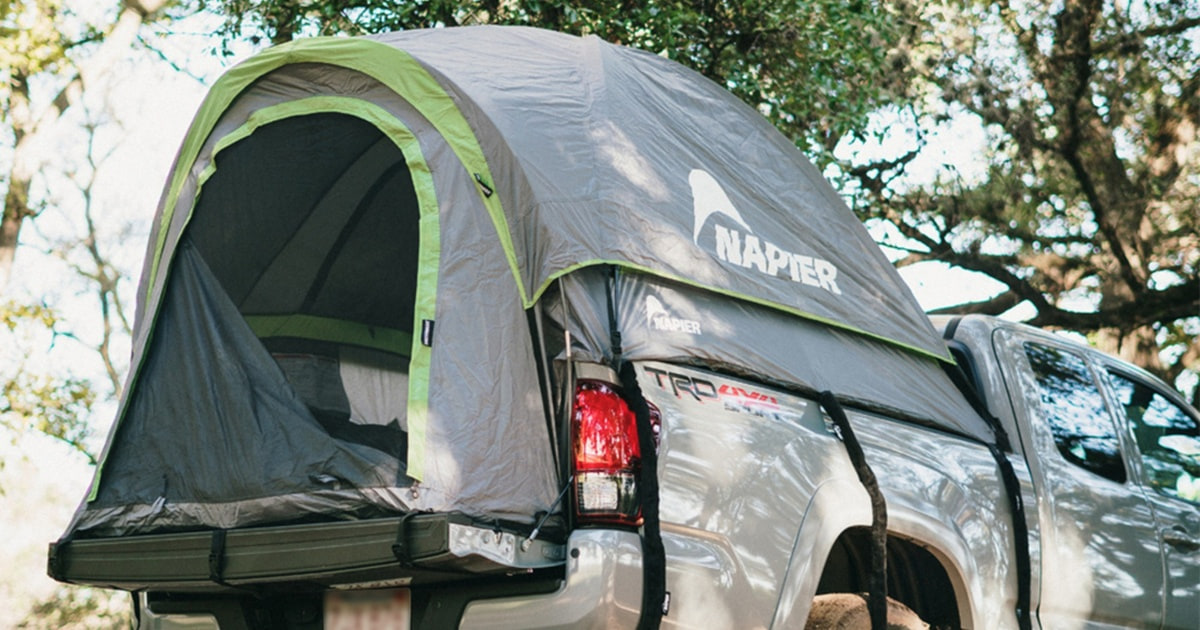
A truck bed tent turns the back of your pickup into a bedroom that's level, off the ground, and ready the moment you park. That matters more than it sounds. You skip the hunt for a flat, rock-free patch of dirt. You skip the puddle that creeps under a ground tent at 3 a.m. And your bed rails act as walls, so wind shoves on your truck instead of on a few thin poles. For dispersed camping on public land, it's the simplest way into truck camping without modifying anything.
Here's the honest part: none of these is a camper. You're still sleeping in a fabric box with a metal floor under you, so you'll need a pad or an air mattress, and you'll meet condensation on cool nights no matter which one you buy. Fit is fussy, too. Bed length is measured in inches, brands sell separate versions for short, standard and long beds, and a tonneau cover or a toolbox can turn a good fit into a bad one in a hurry.
The good news is that the decision comes down to three questions. How long is your bed, how much rain do you expect, and how many nights a year will you really use it? Answer those and the field narrows fast. We think that the Napier Backroadz Truck Tent is the best truck bed tent for most people, and that the Rightline Gear Full-Size Standard Truck Tent is the one to buy if you camp a few weekends a year and want your tailgate to stay closed over your cooler.
Everything we recommend

The easiest fit for most trucks, and quick to pitch alone
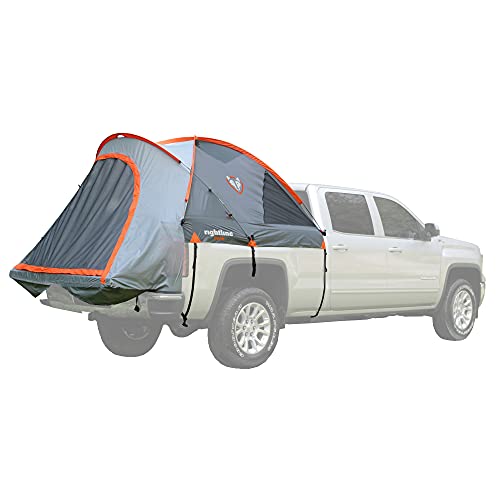
A simple, light tent that leaves your tailgate closed
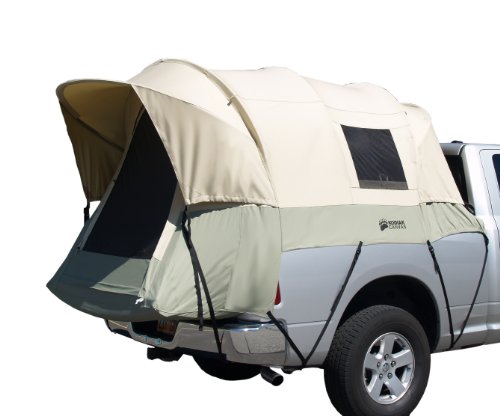
Canvas that lasts, if you can lift it and store it dry
At a glance
| Product | Bed Size Fit | Weight | Price | |
|---|---|---|---|---|
| Napier Backroadz Truck TentTop pick | 6.4'-6.7' Bed | 16 lbs | $171.61 |
| Rightline Gear Full-Size Standard Truck 2 PersonBudget pick | 6.5 Ft Bed | 8.7 lbs | $69.45On sale |
| KODIAK CANVAS Long Truck Bed Full-Size TentUpgrade pick | 8 Ft Bed | 46 lbs | $549.99 |
 | Napier Sportz Camo Truck TentAlso in lineup | 5.7'-5.8' Bed | 22.45 lbs | $189.99 |
 | Pittman Outdoors Truck Bed TentAlso consider | 5-5.2 Ft Bed | 17 lbs | $239.99 |
How we picked
Bed fit first. We started with published fit charts and bed-length ranges, because a tent that's an inch off won't tension properly. Brands that sell distinct versions for short, standard and long beds scored better than ones claiming a universal fit.
Rain protection. We looked for published hydrostatic head ratings, taped seams and storm flaps, using the 2000mm ISO 811 threshold as the mark for sustained moderate rain. Where a rating fell below it, we weighed owner reports of real storms more heavily.
One-person setup. OutdoorGearLab's category roundup found first solo pitches average around 18 minutes, falling under 10 with practice. We favored color-coded poles, ground-level attachment points and instructions people could follow without a second set of hands.
Materials and lifespan. Field & Stream's durability reporting puts canvas truck tents at 15 to 20 years with dry storage against 3 to 5 for polyester. We treated that gap as a real decision point rather than a tiebreaker.
Livable space. We compared published headroom, window and vent counts, and whether the tent pitches with the tailgate up or down. Access to gear in the bed overnight mattered, and so did enough airflow to keep condensation down.
Top pick
The easiest fit for most trucks, and quick to pitch alone
Napier Backroadz Truck Tent
This is the truck bed tent that fits the most trucks and asks the least of you. Color-coded poles, nine adjustable straps and a full rainfly make a solo pitch manageable, and Napier sells versions sized for everything from a short bed to a long one.
$171.61fromAmazonFit is the whole ballgame here, and Napier covers more of it than anyone else in the category. The version we point most people toward is sized for full-size regular beds in the 6.4- to 6.7-foot range, and the line spans five models to cover most trucks on the road. Owners report clean fits on F-150s, Tundras, Frontiers, even a Gladiator. Measure your bed first, then buy the matching version. Getting this one step right prevents nearly every problem people have with these tents.
Setup is what everybody worries about, and it's the part Napier has clearly sanded down. The poles are color-coded to their sleeves, and all nine straps buckle from outside the bed, so you're never balancing on a tire in the dark. Napier publishes a 10-minute pitch. OutdoorGearLab's roundup of truck tents found first solo attempts average around 18 minutes and drop under 10 once you've done it two or three times.
Ventilation is the quiet reason you'll sleep well in this one. Two big windows and a ceiling vent keep air moving, and storm flaps close them down when the weather turns. You'll still get condensation on a cold night, but less of it than in a tent with one small vent. Owners regularly mention sitting up easily and getting close to standing height under the tallest part of the ceiling.
It packs down to something you'll actually keep in the truck. The tent weighs about 16 pounds and rolls into a bag a bit over two feet long, so it lives behind the seat instead of eating your cargo space. Owners with roll-up and folding tonneau covers report pitching it with the cover rolled or folded back. That's not a promise for every cover on the market, but it's a good sign.
Flaws but not dealbreakers
Napier publishes a 1500mm hydrostatic head for the Backroadz rainfly. The commonly cited threshold for sustained moderate rain is 2000mm, so this sits under it. Owners still report dry nights through real storms, and the taped seams and storm flaps do a lot of work. But if your camping season is wet and long, that number deserves some weight.
The poles are the weak link. Owners describe a shock cord letting go on an early setup, and a few mention pole sleeves and stake loops they'd like reinforced. Napier's customer service gets consistent praise for shipping replacement poles quickly, which softens the problem without making it disappear. Do a driveway pitch before your first trip so you find out at home, not at the trailhead.
Budget pickOn sale
A simple, light tent that leaves your tailgate closed
Rightline Gear Full-Size Standard Truck 2 Person
Rightline's straps run under the bed rather than around a lowered tailgate, so your cooler stays reachable all night and your feet stay out of the weather. It's floorless, packs to under nine pounds, and it's the least fussy tent here to toss in the truck on a Friday.
$69.45fromAmazonList priceMost truck bed tents want your tailgate down, which turns the last two feet of your sleeping space into open air and buries whatever you stashed back there. Rightline goes the other way. The straps route underneath the bed and cinch the tent down with the tailgate closed, so the bed stays sealed and your gear stays reachable. If you camp with a cooler, that one design choice changes your night.
The floorless design is smarter than it sounds. There's no tent floor to trap sand, dog hair or spilled coffee, so cleanup is a broom and thirty seconds. It also means your bed liner is the floor, which is fine with a good pad and less fine if your liner has ridges. Owners with spray-in liners generally report no issues at all.
Everything about the pitch happens from the ground. Attachment points are all reachable from outside the bed, the poles are color-coded to their pockets, and the setup instructions are sewn right into the stuff sack, so you can't leave them at home. Owners on 6.5-foot Tundras and F-150s describe first setups in the twenty-minute range and much faster after that. Small touches help too: gear pockets, a lantern hook, glow-in-the-dark zipper pulls.
It weighs about 8.7 pounds and stuffs into a bag under two feet long, the lightest and smallest package among our picks. That's the difference between a tent that stays in your truck year-round and one that lives in the garage. Owners report riding out rain and even a snowy spring night dry, thanks to the tape-sealed seams and full rainfly.
Flaws but not dealbreakers
This is a light-duty tent and it doesn't hide it. Owners who use it hard describe fabric and seams that won't take every weekend for years, and the buckles and plastic hardware feel like the budget parts they are. Treat it as an occasional-use tent and you'll be happy. Treat it as a full-time overlanding shelter and you'll be shopping again.
Rightline calls the fabric water-resistant and doesn't publish a hydrostatic head number, so you're going on owner reports rather than a spec. And the floorless design that's so easy to sweep out also means cold air moves along the bed floor. On shoulder-season nights, a thicker pad matters more here than with the other picks.
Upgrade pick
Canvas that lasts, if you can lift it and store it dry
KODIAK CANVAS Long Truck Bed Full-Size Tent
Kodiak's Hydra-Shield cotton duck canvas breathes, swells shut when it gets wet, and holds its shape in wind that flattens thin-poled polyester. It's the most expensive tent here and it weighs about 46 pounds, but canvas shelters routinely stay in service for well over a decade.
$549.99fromAmazonCanvas handles rain in a way coated polyester simply can't. Kodiak's cotton duck fibers swell when they get wet, which seals the weave and the stitch holes without any aftermarket spray. Synthetics rely on a coating that eventually wears and a seam tape that eventually lifts. That's the core trade you're making, and it's why this tent has a following among people who camp in genuinely bad weather.
The frame is the other half of the story. Three-quarter-inch steel tube poles clamp onto rails that mount to your bed rails, so the structure is bolted to the truck rather than tensioned against it. Owners who came from thin-poled nylon tents describe those tents caving in a modest wind, then describe this one standing through a snowy night with wind well into the thirties. Kodiak rates it for year-round use, though not for heavy snow load on the roof.
Inside, it feels like a room instead of a tube. The ceiling reaches five feet, the tunnel shape keeps that height across the length, and dropping the tailgate adds usable floor. Five windows, including one that opens to your cab's rear glass, mean you can pass gear back and forth without going outside. The D-shaped door is large, the YKK zippers are the good kind, and there's a covered entry so rain doesn't pour in when you unzip.
Then there's how long you'll own it. Field & Stream's long-term durability work puts canvas truck tents in the 15- to 20-year range with basic dry storage, against roughly 3 to 5 years for comparable polyester under similar use. Spread the upfront cost across that many seasons and this stops looking like a splurge. It looks like the last truck tent you buy.
Flaws but not dealbreakers
It's heavy and bulky. At about 46 pounds packed into a nearly four-foot bag, this isn't a tent you leave in the truck on the chance you'll use it, and hoisting the canvas onto the bed rails solo is a workout. Setup rewards practice: owners consistently say the first attempt alone is slow and the instructions are the weakest part of the package.
Canvas has one rule and it's absolute. Put it away wet and you'll grow mildew. If you break camp in rain, you have to unpack and dry the tent at home, which is a chore the polyester tents don't ask of you.
Fit runs specific. This version is built for 8-foot beds, and Kodiak sells separate sizes for shorter ones, so buying the wrong SKU is an easy and expensive mistake. Some owners also note gaps where the tent meets the tailgate opening and an awning that's finicky to install.
Who this is for
Buy one if you already own the truck and want to stop sleeping on rocks. These make the most sense for weekend campers, hunters and anglers who want a basecamp at the trailhead, and for anyone doing dispersed camping on public land. That's a lot of ground: BLM-administered land allows free dispersed camping with a 14-day stay limit and no reservation, across roughly 245 million acres in the western states. A bed tent gets you out there without a build, a permit or a payment plan.
Skip it if your bed is already full. A permanent toolbox, a bed rack or a cap will fight most of these tents, and a hard tonneau cover usually has to come off. Skip it too if you want a hard-sided space with a heater and a door that locks, because that's a slide-in camper and a different budget entirely. This guide covers tents that pitch inside the truck bed only. It doesn't cover rooftop tents, which mount on a rack above the cab, or slide-in campers.
How we picked
We built the list around five things. Bed fit: published fit charts and distinct SKUs for short, standard and long beds, since an inch of mismatch ruins the tension. Rain protection: published hydrostatic head against the 2000mm ISO 811 threshold, plus taped seams and storm flaps over every opening. Solo setup: color-coded poles, attachment points you can reach with both feet on the ground, and instructions that survive a first attempt. Materials: canvas versus polyester, weighed against reported lifespan and the storage habits each one demands. Livable space: headroom, window and vent count, and whether you can still get at your cooler once the tent is up.
Other truck bed tents worth considering
If you drive a mid-size truck with a five-foot bed: The Pittman Outdoors Truck Bed Tent ($239.99) — Short mid-size beds are the hardest size to shop for, and Pittman built this one specifically for beds from 5 to 5.2 feet. You get more than 62 inches of headroom under an integrated pop-up pole system, PU-coated fabric with a rainfly, two big mesh windows and a rear panel that opens into the cab. There's a gear hammock and a mesh pocket for your keys and phone. What you give up is consistency. Owners split on the setup: some get it pitched in ten minutes on a Tacoma, others report no printed instructions in the box and poles that don't feel robust. One owner with a short-bed Silverado couldn't get a proper fit at all, so measure carefully.
The competition
This is what our research turned up, not a census of the category. Truck tents come and go, brands rename models, and plenty of small sellers offer near-identical shells under different labels. Here's the one that came close but didn't make the picks.
The Napier Sportz Camo Truck Tent ($189.99) — The Napier Sportz Camo Truck Tent is the Backroadz idea wearing Mossy Oak, and it's a reasonable buy if you're hunting. You get three windows, two zippered ceiling vents, the same nine-strap attachment and taped seams, and an optional awning that extends over the door for shade or a midday shower. It lost to the Backroadz on the practical stuff: it weighs about 22 pounds, Napier publishes a 15-minute setup rather than 10, and this listing covers a narrower band of bed sizes. Owners also flag minimal instructions and at least one snapped fiberglass pole. If blending in at the trailhead matters more to you than a few pounds and five minutes, buy it anyway.
Fit, setup and storage
Measure your bed before you buy anything. Run a tape from the bulkhead to the closed tailgate, in inches, and match that to the maker's chart rather than to what the internet says your truck has. Then pitch the tent once in your driveway. Published reviews of the category find a first solo setup takes roughly twice as long as the manufacturer's claim, and a dry run is how you discover a missing stake or an awkward pole before dark. A spray-in or drop-in liner is fine underneath and adds a little insulation. After a wet trip, open the tent up at home and let it dry all the way before it goes in the bag. That's optional advice for polyester and non-negotiable for canvas, which will mildew.
Questions we get
What size truck bed tent do I need for a 5.5-foot short bed?
You need a tent listed specifically for a 5 to 5.5-foot bed, not a full-size model. Napier, Rightline and Kodiak all sell separate versions by bed length, and the same tent name can cover four different sizes. Measure bulkhead to closed tailgate in inches and match the chart. Among our lineup, the Pittman covers 5 to 5.2-foot mid-size beds.
Can I use a truck bed tent with a tonneau cover or bed cap?
Sometimes. Roll-up and folding covers usually work if you can roll or fold them fully back and out of the strap path, and Backroadz owners report doing exactly that. A one-piece hard cover or a bed cap normally has to come off. If you're set on keeping a cover, look for a tent whose straps route under the bed rather than over the rails.
Is a canvas truck bed tent worth the extra cost over polyester?
It depends on how often you camp. Canvas swells shut when wet, breathes better and, per Field & Stream's durability reporting, lasts 15 to 20 years against 3 to 5 for polyester. If you're out most weekends, that math favors canvas. If you camp a handful of nights a year, polyester is lighter, easier to store, and you'll replace it before you notice the difference.
How long does it take to set up a truck bed tent by yourself?
Plan on about 20 minutes the first time and closer to 10 after that. OutdoorGearLab found first solo attempts averaging around 18 minutes across the models in their roundup, dropping under 10 minutes after two or three sessions. Color-coded poles help a lot. The single best thing you can do is a practice pitch at home in daylight.
Do truck bed tents work with a spray-in bed liner?
Yes, and a liner is generally an advantage. It gives the tent floor some grip and adds a thin layer between you and cold sheet metal. Floorless designs like the Rightline sit right on the liner, so a smooth spray-in surface is more comfortable than a ribbed drop-in. Either way you'll want a pad or air mattress on top.
What's the difference between a truck bed tent and a rooftop tent?
A bed tent pitches inside your truck bed and uses the bed as its floor. A rooftop tent bolts to a roof rack or bed rack and folds out above the vehicle, usually with a built-in mattress and a ladder. Rooftop tents cost far more, add permanent weight and require a rack. Bed tents pack away to a stuff sack and need no modifications.
Why you should trust us
For this guide:
- We compared manufacturer fit charts, published hydrostatic head ratings and materials specs across every tent in this lineup.
- We read published roundups from OutdoorGearLab and durability reporting from Field & Stream on how canvas and polyester hold up over years of use.
- We read through owner feedback for recurring themes around fit, pole durability, setup difficulty and how these tents behave in sustained rain.
- We read owner reviews on every listing, weighted toward the critical ones, because that is where the recurring failures show up.
- We have a systematic way of automatically fetching the latest prices, so the numbers on this page stay current.
- This is a research-focused guide, so the team may not own every product listed — though we often do own the top winners, which gives us extra context for the recommendations.
- We don't accept free products, and the retailer commission never changes which product we recommend.
Sources
Best Truck Tents of 2026 — Outdoor Life, Outdoor Life
Best Truck Tents — Gear Junkie, Gear Junkie
Best Truck Tents — Field & Stream, Field & Stream
Best Truck Tents — Popular Mechanics, Popular Mechanics
Best Truck Tent — OutdoorGearLab, OutdoorGearLab
Napier Backroadz Truck Tent — Wirecutter / NYT, Wirecutter
Napier Backroadz Official Specs, Napier Outdoors
Rightline Gear Truck Tent Compatibility Guide, Rightline Gear
Kodiak Canvas Truck Bed Tent Product Page, Kodiak Canvas
Smittybilt Overlander Tent Specs, Smittybilt
BLM Dispersed Camping Regulations and Fee Schedule, Bureau of Land Management
Amazon product listings and owner reviews for all 5 products
Manufacturer specification pages for each product
Some passages in this guide may be paraphrased with AI help. Prices are refreshed automatically.
More like this.
Continue exploring lifestyle reviews and recommendations.

The Best Truck Bed Tents
A truck bed is already a flat, elevated, rectangular platform, which is most of what a tent needs. Zip a shell over it and you're off the ground, away…

The Best Tonneau Covers for Truck Beds
A truck bed is a great place to put things and a terrible place to leave them. Rain gets in, dust gets in, and anything visible from the sidewalk is…

The Best Truck Toolboxes And Bed Storage
A truck bed is a terrible place to keep tools. Everything slides to the tailgate on the first hard stop, rain finds whatever you left uncovered, and…

The Best Truck Bed Tool Boxes
A truck bed is a rough place to keep tools. Everything slides around, gets rained on, and sits in plain view at every red light. A crossbed tool box fixes…

The Best Truck Bed Cargo Nets
A cargo net is the difference between a load that arrives and a load that scatters across two lanes of highway. Most of what you haul in a pickup bed - …

The Best Truck Bed Organizers
A truck bed is a great place to put things and a terrible place to keep them. Gear slides to the tailgate on every stop and back toward the cab on every…