The Best Chimney Sweep Brushes
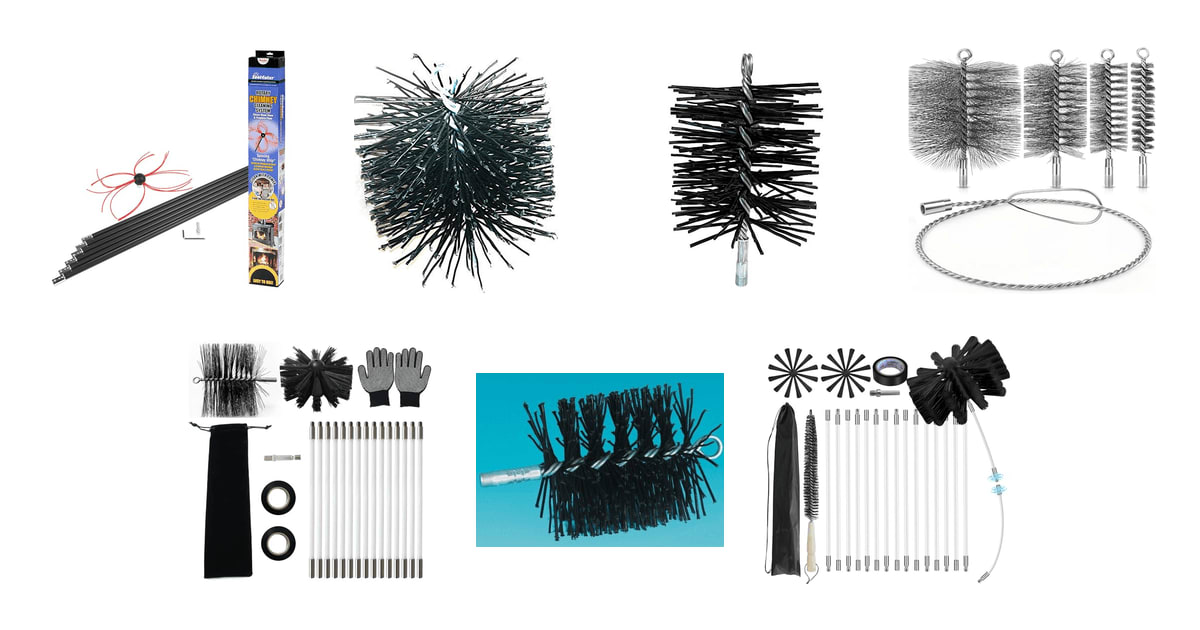
If you burn wood, your chimney collects creosote — the sticky, flammable residue that builds up on flue walls every time you light a fire. Cleaning it out once a year is one of those chores that's easy to skip and expensive to regret. The good news is that the light, flaky buildup most homeowners deal with comes off with a brush and some patience. You don't need a professional for that. You do need a brush that actually matches your flue, because a brush that's too small just polishes a stripe up the middle and leaves the rest coated.
Here's the honest catch: no brush in this category can tell you what you're dealing with before you buy it. Sizing is on you, and getting it wrong is the single most common way this purchase goes sideways. Owners who report disappointment almost always describe a fit problem — a brush an inch too small, rigid rods that won't clear a bend, a kit that can't reach the top of a two-story flue. And none of these tools touch stage 3 glazed creosote. That shiny black coating needs a certified sweep and chemical treatment, full stop.
So the real question isn't which brush is best in the abstract. It's which one fits your flue, your creosote, and how often you plan to do this. We think that the Gardus SootEater RCH205-B is the best chimney sweep system for most people, and that the Mosxoed 20Feet Chimney Sweep Kit is the one to buy if you want drill-powered cleaning without spending much.
Everything we recommend

Spinning cleaning power that reaches around bends
Rotary cleaning for a lot less, with softer rods

The standalone brush to pair with rods you already own

A trusted poly head for 6-inch metal and stainless flues

Two brush heads and the most reach, for straight flues only
At a glance
| Product | Brush Size | Reach | Price | |
|---|---|---|---|---|
| SootEater Rotary Chimney Cleaning System - GardusTop pick | — | 18 Ft (6x3Ft Rods) | $63.34 |
| Rutland Products 16906 6-Inch Poly Chimney CleaningRunner-up | 6 In | — | $18.99On sale |
| Midwest Hearth Poly Chimney Cleaning BrushAlso great | 8 In | — | $29.95 |
 | Acellegic 5 Pcs Pipe Cleaning Brush SetAlso consider | — | 39.37 In | $29.99 |
| Wire Chimney Cleaning Brush with 5/16" FittingUpgrade pick | 6 In | 236 In | $45.99 |
| 20Feet Chimney Sweep KitBudget pick | 8 In | 20 Ft, 15 Rods | $33.99 |
How we picked
Fit and sizing. We compared listed brush diameters and thread standards against the flue sizes homeowners actually have. Any brush that locks you into one dimension had to state that dimension clearly, because owner complaints in this category are overwhelmingly about fit.
Bristle material. We followed the guidance published by chimney safety organizations: polypropylene for clay tile and stainless liners, wire only for heavier deposits on surfaces that tolerate it. Kits that offered both got credit.
Rod reach and flex. We added up total rod length from each listing and checked whether the rods bend. Rigid-rod kits were held to a stricter standard because they fail outright on offset flues.
Complete or partial. We separated full kits from standalone brush heads, since a brush that needs a separate rod set isn't a starting point for a first-time buyer even if the brush itself is excellent.
Owner-reported failures. We read through customer feedback looking for repeat patterns — rods snapping, threads not seating, bristles melting — and weighted those over isolated complaints.
Top pick
Spinning cleaning power that reaches around bends
SootEater Rotary Chimney Cleaning System - Gardus
The SootEater chucks into a cordless drill you probably already own and spins a trimmable whip up your flue, scrubbing all sides at once. Six flexible rods reach 18 feet, and you can work from the firebox instead of the roof.
$63.34fromAmazonThe spinning whip is what separates this from every push-pull brush here. A manual brush scrubs in one direction — up, then down, then up again. The SootEater's whip rotates as you feed it, hitting the flue wall from every angle on a single pass. Owners who've cleaned the same chimney both ways consistently describe the rotary method as faster and more thorough. If you burn a couple of cords a season, that difference shows up in what lands in your firebox.
You don't need special tools. The rod assembly chucks into a standard cordless drill, and 18 volts is plenty. The reversible bottom link means you can run it top-down from the roof or bottom-up from the firebox, which matters more than it sounds — a lot of owners bought this specifically to stop climbing a ladder to a second-story roofline. Working from the floor with a drill is a genuinely different experience than balancing on a pitched roof with a rod bag.
The whip trims to fit, so one kit covers a range of flue diameters. That's unusual here. Most brushes in this lineup lock you into a single size, and if you measured wrong you're returning it. With the SootEater you cut the line to match your liner, add a little clearance, and go. Owners with 6-inch stainless liners and owners with 8-by-16 clay tile flues both report it working.
Flexibility is the other reason it wins. The rods bend, so offsets and 45-degree jogs in stove pipe aren't automatic dealbreakers the way they are with rigid rod kits. Owners describe running it through pipe with two bends. Six 3-foot rods get you 18 feet, and Gardus sells the CRD307 extension kit if your chimney runs taller than that — worth knowing before you buy if you're in a two-story house.
Flaws but not dealbreakers
It costs more than any other complete kit here, and it's a real jump over the budget option. If you clean once a year on a short single-story flue, you may not need what you're paying for.
A spinning whip throws soot with enthusiasm. If you don't seal the firebox properly with plastic sheeting and tape before you start, you'll be cleaning your living room instead of your chimney. This isn't a flaw in the tool so much as a demand it makes on you.
Severe offsets are still a problem. Flexible rods bend, but spinning them at speed through a sharp S-curve puts torque on the connections. If your flue has aggressive bends, a manual flexible-rod kit is the safer call.
Budget pick
Rotary cleaning for a lot less, with softer rods
20Feet Chimney Sweep Kit
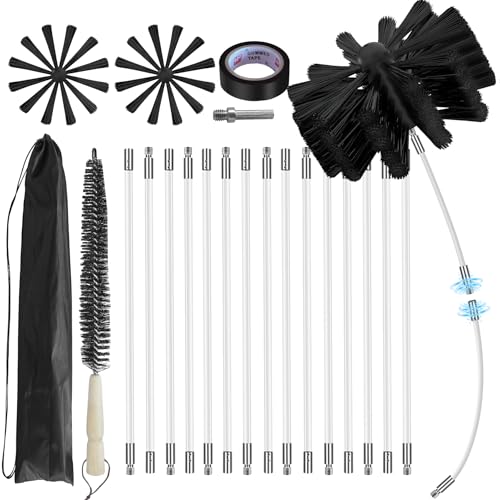
This kit gives you the same basic idea as the SootEater — flexible rods, a big brush head, drill compatibility — for a fraction of the outlay. Fifteen nylon rods reach 20 feet, which covers most single-story chimneys with room to spare.
$33.99fromAmazonIf you want drill-powered cleaning and you're doing this once a year, this kit covers it. You get an 8-inch nylon brush head with a pointed, rectangular bristle profile meant for high-speed spinning, 15 flexible rods, and the fittings to run it off a cordless drill. Owners who switched from paying a sweep annually describe it paying for itself immediately, which is the whole argument for DIY chimney cleaning in the first place.
Twenty feet of reach is more than the SootEater gives you out of the box. That's not a small thing. Our top pick starts at 18 feet and needs an extension kit to go further; this one comes with 20 feet standard. For a typical single-story house with an interior chimney, you'll have rods left over.
The rods flex enough to handle a bend, and several owners mention using them for dryer vents too. That's a legitimate bonus — clogged dryer vents cause house fires for the same reason dirty chimneys do, and one tool covering both is convenient. Just don't force it around a tight corner, which is where owners report the rods twisting up and snapping.
Flaws but not dealbreakers
The rods are plastic, and they're the weak link. Owners report them breaking under stress — one described a rod twisting apart inside a dryer vent and having to cut the duct open to retrieve it. Feed slowly, don't muscle through resistance, and this is manageable. Rush it and you'll be fishing pieces out of your flue.
A handful of owners report the assembly coming apart early in a session. That's a real pattern in the feedback, not a one-off. Check that every threaded joint is fully seated before you switch the drill on.
Nylon bristles handle dry, flaky stage 1 creosote fine. They won't do much against a tar-like stage 2 coating. If your flue walls look sticky rather than dusty, you need wire.
Mosxoed doesn't have the track record that Gardus or Rutland does. If long-term durability matters more to you than upfront cost, that's a factor.
Also great
The standalone brush to pair with rods you already own
Midwest Hearth Poly Chimney Cleaning Brush
If your masonry fireplace has a clay tile liner and you already own a rod set, this 8-inch poly brush is the head to put on it. Stiff bristles, a galvanized steel stem, and a universal thread that fits most rod systems.
$29.95fromAmazonPoly is the right bristle material for clay tile, and this is the poly brush to get. Wire bristles can chip mortar joints and wear at the bond between tiles, which turns an annual cleaning into a slow demolition project. Stiff polypropylene scrubs off dry soot and flaky creosote without that risk. Owners describe it fitting snugly enough to scrape properly, then springing back to shape when it clears the pipe.
The galvanized double-spiral stem is the part worth paying for. Cheap brushes use a wire core that fatigues and loosens after a few seasons of flexing. This one resists rust in off-season storage and keeps transmitting force to the head. One owner reports years of use with the brush still looking new — that's the sort of thing that separates a brush you buy once from one you replace.
The 1/4-inch NPSM male fitting is the standard thread across most rod systems, so it'll screw onto Midwest Hearth's own fiberglass rods or a set from another brand. That flexibility matters if you're replacing a worn head rather than starting fresh.
This is a hand-sweeping brush. The manufacturer specifically doesn't recommend running it on a drill, so if rotary cleaning is what you're after, look at the SootEater or the Mosxoed kit instead.
Flaws but not dealbreakers
It's a brush and nothing else — no rods, no drop cloth, no bag. Budget for a rod kit on top, because a brush alone doesn't clean a chimney.
Eight inches is eight inches. Owners who ordered without measuring their flue report it simply not fitting, and there's no adjusting it. Measure the inside of your tile opening first. Midwest Hearth makes 6- and 7-inch versions if that's what you need.
Poly won't cut through stage 2 buildup. And one owner learned the hard way that plastic bristles melt if you use them on a chimney that hasn't gone stone cold — wait a full day after your last fire.
Runner-upOn sale
A trusted poly head for 6-inch metal and stainless flues
Rutland Products 16906 6-Inch Poly Chimney Cleaning
Rutland has been making chimney supplies since the 1860s, and this 6-inch poly brush is built for the stainless and insulated metal pipes where wire bristles are off-limits. It's a brush only, so you'll need rods.
$18.99fromAmazonList priceIf you have a wood stove venting through 6-inch double-wall or stainless pipe, this is the safe choice. Liner manufacturers routinely warn against wire contact on these surfaces, and poly sidesteps that entirely. Owners cleaning stainless-lined stove pipe consistently report it knocking creosote loose without scratching anything.
The bristles are aggressively stiff — that's deliberate, and it's also the most common complaint. Owners describe real resistance pushing it through 6-inch pipe. That friction is what does the scrubbing, but if your flue is exactly 6 inches with no slack, expect to work for it. A few owners wish it were slightly softer.
It threads on with a 1/4-inch fitting, so it pairs with Rutland's own rod kit or most standard fiberglass rods. If you already own a rod set and just need a fresh head, that's this brush's job. Owners describe getting three passes through 16 feet of straight pipe and pulling down a serious pile of creosote.
Flaws but not dealbreakers
No rods, no accessories. As a first purchase it's incomplete, and the total cost of brush plus rods can approach a full kit.
Six inches only. Rutland makes other sizes, but this listing is one diameter — measure your inner pipe before ordering.
Acid-resistant poly is the right call for metal flues, but it's the wrong tool for heavy stage 2 tar. That needs wire.
Upgrade pick
Two brush heads and the most reach, for straight flues only
Wire Chimney Cleaning Brush with 5/16" Fitting
This kit bundles a steel wire brush and a nylon brush with 15 rigid rods that stack past 20 feet. The wire head handles heavier buildup that poly can't touch, and the nylon head does the finishing pass.
$45.99fromAmazonTwo heads is genuinely useful. Run the steel wire brush first to break loose a harder, tar-like coating, then swap to nylon to sweep the debris down. Poly-only brushes can't do the first half of that job. If you've let a season slide and your flue walls look sticky rather than dusty, this is the kit in the lineup that addresses it.
Fifteen 16-inch rods stack to over 20 feet, more than the SootEater's base configuration. The 5/16-inch threading and a hexagonal connecting rod keep the assembly from unscrewing itself as you twist — a real annoyance with cheaper rod sets that back off mid-pass. A cloth bag keeps the rods together between seasons.
The rigid rods are a hard limit, not a quibble. These sections don't bend. If your flue has an offset, an L-bend, or a slight angle where it passes the roofline, this kit won't navigate it and you'll know within thirty seconds of trying. Check your flue path with a mirror and flashlight before you order. Plenty of older masonry chimneys have deliberate offsets built in.
Flaws but not dealbreakers
Owner feedback on this one is more mixed than on our other picks. Reports include a rod with a badly machined thread that wouldn't seat, a brush measuring just under 6 inches when a hair over would grip better, and a fitting that wouldn't stay chucked in a drill. Assemble and inspect everything before you're standing on a roof with it.
SMYJHBR is an unfamiliar brand next to Rutland or Gardus, and the feedback pool is small.
Six-inch fixed diameter, straight runs only. That's a narrow set of conditions, and if you don't meet all of them this is the wrong kit.
Who this is for
This guide is for homeowners with a wood-burning fireplace, stove, or insert who want to handle annual cleaning themselves. That's a reasonable goal if your creosote is stage 1 — dry, dusty, or flaky. It's still reasonable at stage 2, the harder tar-like coating, provided you use wire bristles and a liner that tolerates them. It stops being reasonable at stage 3. Glazed creosote is shiny, dense, and needs chemical treatment from a certified sweep. If your flue walls look glossy or the coating is thicker than an eighth of an inch, close this page and make a call.
Before you buy anything, measure the inside of your flue tile opening — not the outside of the chimney. Round metal liner, measure the inner diameter. Clay tile, measure both dimensions. Then check whether the flue runs straight, because that decides rigid rods versus flexible ones. We're covering brushes and rod kits here, not chemical creosote removers, inspection cameras, or the ash vacuums you'll want for cleanup. And doing your own sweeping doesn't replace a professional inspection, which the NFPA 211 standard still recommends periodically even for diligent DIYers.
How we picked
We weighted five things. Fit and sizing: the brush has to contact the full flue wall, so we checked stated diameters and thread standards against common flue dimensions, and treated vague sizing as a red flag. Bristle material: poly for clay tile and stainless, wire only where the surface tolerates it and the buildup demands it. Rod reach and flex: we totaled rod lengths per listing and separated the kits that bend from the ones that don't, since rigid rods simply fail on offset flues. Complete or partial: a standalone brush head and a full kit solve different problems, and we didn't let a great brush stand in for a starter kit. Owner-reported failures: we looked for repeat patterns in customer feedback — snapped rods, threads that won't seat, bristles that melt on a warm flue — and let those shape the flaws rather than guessing at hypothetical weaknesses.
Other chimney sweep brushes worth considering
If you need to clean short stove pipe sections: The Acellegic 5 Pcs Pipe Cleaning Brush Set ($29.99) — This five-piece set gives you four stainless brushes in different diameters plus a flexible rod, which is exactly right for the connector pipe between a wood stove and the main flue. Those short runs sit closer to the appliance and run cooler, so they collect creosote faster than the flue above them. Double-spiral construction locks the bristles in, which matters when loose wire fragments could end up in a live firebox. But the rod reach tops out well short of a full chimney — think 6 to 8 feet, not 20 — and the heads are smaller than a dedicated chimney brush. Treat it as a supplement to a full kit, not a replacement for one.
The competition
This is what our research surfaced in this category, not a survey of everything for sale. Chimney brushes are a fragmented market with a lot of near-identical listings, and the products below either fill narrower roles than our picks or lose to them on a specific point. Any of them can be the right answer if your flue happens to match what they do.
Before and after you sweep
Wait until the chimney is stone cold — at least a full day after your last fire. Poly bristles melt on a warm flue, and owners have ruined brushes learning that. Seal the firebox opening with 6-mil plastic sheeting taped all the way around, cutting only a small slit to feed rods through and taping around them. Skip this and soot goes everywhere. Wear a P100 or N95 respirator, not a paper dust mask; creosote particulate isn't something you want in your lungs. Work slowly, and never force a rod past resistance — that's how they snap off inside the flue. Afterward, let the soot settle for fifteen minutes before pulling the plastic, fold it inward to trap debris, and vacuum the firebox with a HEPA shop vac. Rinse and dry your brush before storing it.
Questions we get
What size chimney brush do I need?
Measure the inside of your flue tile opening, not the outside of the chimney. Clay tile masonry flues commonly run 8x8, 8x12, or 13x13 inches, and you want a square or rectangular brush matched to those dimensions. Round metal and stainless liners are usually 6, 7, or 8 inches inner diameter. A brush an inch undersized leaves an uncleaned strip on every pass, which is the most common way this purchase goes wrong.
How often should I clean my chimney?
At minimum once a year, before heating season. If you burn more than three nights a week through winter, clean twice — once in spring after the season and once in fall before the next. Wood matters too: softwoods and unseasoned wood produce creosote much faster than seasoned hardwood. If you can see a deposit layer thicker than an eighth of an inch with a mirror and flashlight, it's overdue.
Can I do this myself or do I need a professional?
DIY works for stage 1 creosote, the dry flaky kind that forms when you burn seasoned wood in a regularly used fireplace. Stage 2 is a harder tar-like coating that needs wire bristles and more effort but is still doable. Stage 3 glazed creosote is not — it's dense, shiny, and extremely flammable, and it requires chemical treatment from a certified sweep. A professional inspection is still worth doing periodically regardless of who runs the brush.
What's the difference between poly and wire brushes?
Polypropylene bristles are stiff plastic that scrubs without scratching, and they're the recommended choice for clay tile, stainless liners, and metal stove pipes where manufacturers prohibit wire contact. Wire bristles are far more abrasive and can dislodge stage 2 deposits that poly can't. The rule of thumb: poly for routine annual maintenance on stage 1 buildup, wire only when you've confirmed heavier deposits and a surface that tolerates it.
Top-down or bottom-up?
Both work. Top-down from the roof is what professional sweeps prefer, since gravity carries debris into the firebox and you can inspect the cap and crown while you're up there. Bottom-up skips the roof entirely, which is a meaningful safety win on a steep or tall chimney, but it demands a thorough firebox seal. The SootEater and the Mosxoed kit both run either direction.
Is a rotary drill kit actually better than a manual brush?
For most people, yes. A rotary system spins the head so it scrubs the flue wall from all sides at once instead of just pushing along its length, which means fewer passes and less time. Owners who've done it both ways consistently describe rotary as the faster method. The trade-off is upfront cost — rotary kits run more than a plain brush and rod set.
Why you should trust us
For this guide:
- We compared manufacturer specifications across every brush and kit here, focusing on brush diameter, thread standard, rod material and total reach.
- We read published guidance from chimney safety organizations on bristle material selection for clay tile, stainless and metal flues.
- We read through owner feedback for each product looking for repeated failure patterns rather than one-off complaints.
- We read owner reviews on every listing, weighted toward the critical ones, because that is where the recurring failures show up.
- We have a systematic way of automatically fetching the latest prices, so the numbers on this page stay current.
- This is a research-focused guide, so the team may not own every product listed — though we often do own the top winners, which gives us extra context for the recommendations.
- We don't accept free products, and the retailer commission never changes which product we recommend.
Sources
NFPA 211: Standard for Chimneys, Fireplaces, Vents, and Solid Fuel-Burning Appliances, National Fire Protection Association (NFPA)
Chimney Safety & Creosote Information — Chimney Safety Institute of America, CSIA
Home Heating Fires Report — U.S. Fire Administration, U.S. Fire Administration / FEMA
How to Clean a Chimney — This Old House, This Old House
How to Clean a Chimney Yourself — Family Handyman, Family Handyman
Amazon product listings and owner reviews for all 6 products
Manufacturer specification pages for each product
Some passages in this guide may be paraphrased with AI help. Prices are refreshed automatically.
More like this.
Continue exploring home reviews and recommendations.

The Best Chimney Draft Stoppers and Flue Dampers
A fireplace you never light is still a hole in your roof. On a cold night you can stand a few feet away and feel the air slide down and pool around your…

The Best Stainless Steel Chimney Caps
A chimney cap is a small piece of metal doing an unglamorous job. It keeps rain out of your flue, keeps squirrels and birds from nesting in it, and keeps…

The Best Car Interior Detailing Brushes
Dust settles in places a towel can't reach. It packs into vent fins, collects along the seam where your seat cushion meets the bolster, and builds up in…

The Best Hair Straightening Brushes
A straightening brush is the tool you reach for when you want smooth hair in ten minutes instead of thirty. You brush, the heated teeth press each section…

The Best Makeup Brush Sets
A good brush does the boring work for you. It picks up the right amount of foundation, spreads it evenly, and doesn't leave a streak along your jaw. A bad…

The Best Facial Cleansing Brushes
A facial cleansing brush does one small job, and it does it better than your hands. It moves cleanser around your face with a steady, even motion,…