The Best Wood Routers
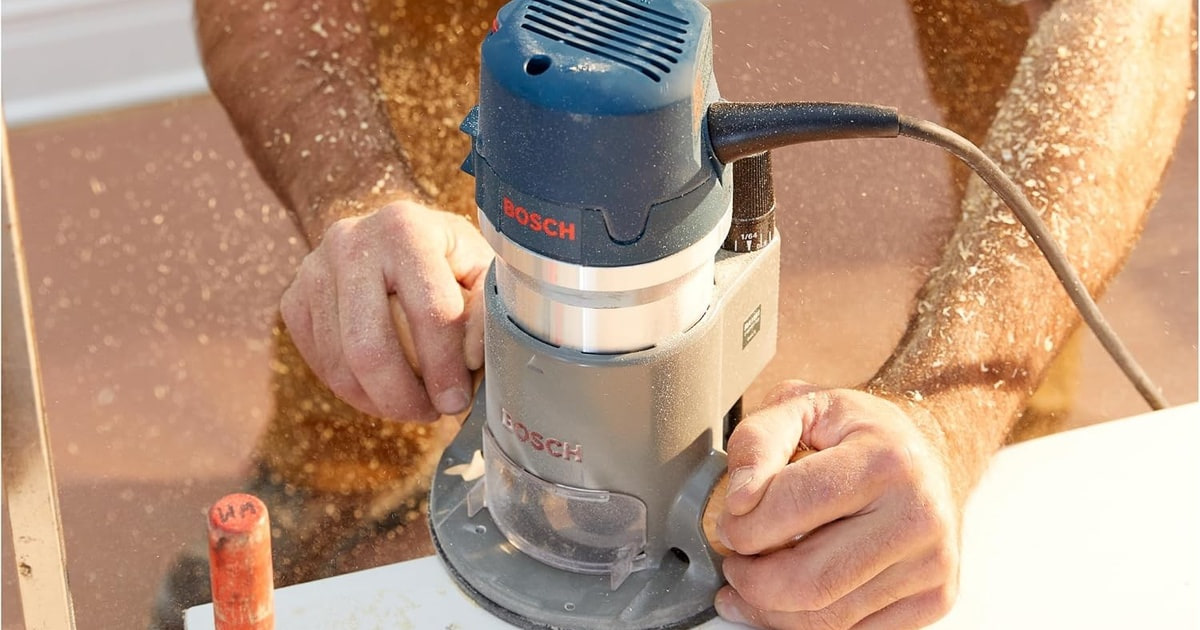
A router is the tool that makes furniture look finished. It cuts the round-over on a tabletop edge, the dado that carries a shelf, the groove for a drawer bottom, the mortise for a hinge. Most of that work is small and repetitive, so what matters day to day isn't peak horsepower. It's whether the depth adjustment moves in predictable increments, whether the motor holds its speed in hard maple, and whether you can actually see the bit meet your layout line.
No router is clean, and none of them is quiet. Dust collection is the weak spot of the whole category: hoods block your view of the cut, and most shop-vac adapters catch a fraction of what comes off the bit. Festool puts the industry average for generic adapters at 30 to 50 percent at the cutting zone. There's no do-everything router either. A full-size machine is clumsy for freehand edge work, and a trim router can't swing a big panel-raising bit safely. Plenty of woodworkers end up owning both.
So we sorted this lineup by the job you're actually doing. Full-size combo kits go in the table and handle joinery. Compact routers live in your hand and chase edges. One premium plunge router exists mostly to keep your shop breathable. We think that the BOSCH 1617EVSPK is the best wood router for most people, and that the Makita RT0701CX7 is the one to buy if your work is mainly edge profiles, trim and other one-handed jobs.
Everything we recommend

Enough power for hardwood, with both bases in the box

A light, simple trim router for edges and laminate
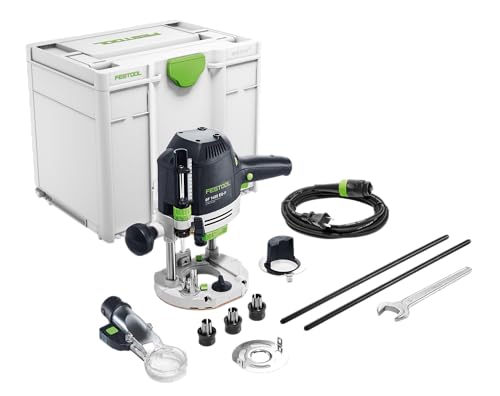
The cleanest cuts and the least dust, if you can pay
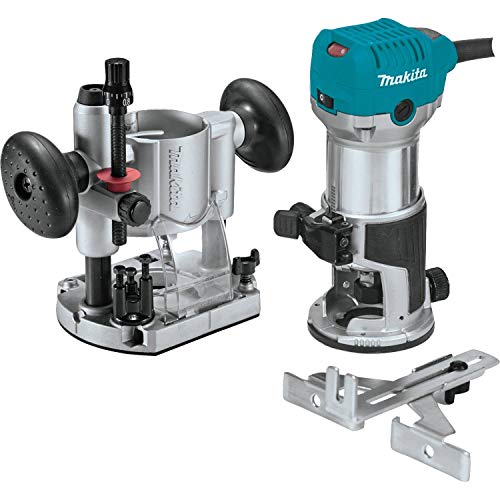
A compact kit with a base for almost any small job
At a glance
| Product | Motor Power | Weight | Price | |
|---|---|---|---|---|
| BOSCH 1617EVSPK 2.25 HP Variable-Speed Router ComboTop pick | 2.25 HP, 12-Amp | 18.2 Pounds | $230.15On sale |
 | DEWALT RouterAlso consider | 1-1/4 HP, 7.7-Amp | 5.5 Pounds | $145.60 |
| Makita RT0701CX7 1-1/4 HP* Compact Router KitAlso great | 1-1/4 HP | 3.9 Pounds | $209 |
| Festool 578951 OF 1400 EQ-F-Plus Plunge RouterUpgrade pick | 1400W | 18.96 Pounds | $799 |
| N381738 Laminate Trimmer Base Assembly for PorterBudget pick | 5.6-Amp | 5 Pounds | $124.99 |
 | RIDGID 11 AMP 2 HP 1/2 in.Also in lineup | 11 AMP, 2 HP | — | $199.99 |
How we picked
Motor and speed control. We looked for enough amperage to finish a cut in hardwood without bogging, plus electronic feedback that holds the set RPM under load. Fine Woodworking's editors note that routers without it can fall as much as 30 percent below target speed in dense grain.
Speed range and safety. Woodcraft's bit speed chart caps 2-inch bits at 12,000 RPM and bits over 3.5 inches at 8,000, so we treated a low-end speed setting as a safety requirement for any router meant to swing large cutters.
Bases and collets. We favored kits that include both a fixed and a plunge base, since that combination covers edge work and joinery with one motor. For full-size routers we wanted 1/2-inch shank capability, which grips more of the bit and reduces runout.
Table and adjustment. We checked spec sheets for router-table mounting patterns and for how finely depth can be set. Adjustment resolution is what decides whether a dado fits your plywood on the first pass or the third.
Dust and ergonomics. We compared manufacturer extraction figures and recurring comments in owner feedback about weight, grip and visibility. A router that's tiring to hold or hides your layout line gets used less, no matter how strong the motor is.
Top pickOn sale
Enough power for hardwood, with both bases in the box
BOSCH 1617EVSPK 2.25 HP Variable-Speed Router Combo
The 1617EVSPK is a 12-amp, 2.25-horsepower router that ships with a fixed base and a plunge base, so one motor covers edge profiles, dadoes, mortises and table work. It's the router most home shops should start with, and the one most of them keep.
$230.15fromAmazonList priceTwo bases and one motor cover almost everything a home shop does. Drop the motor into the fixed base for edge profiles, flush trimming and router-table duty. Move it to the plunge base when you need to start a cut in the middle of a board, which is what dadoes, stopped grooves, mortises and inlay work all require. Buying the two bases separately costs more than this kit does together.
The 12-amp motor doesn't wander off speed when the wood gets hard. Bosch's Constant Response circuitry watches the motor and feeds it more power as the load climbs. That matters more than it sounds like it should. Fine Woodworking's tool editors note that routers without electronic speed control can drop as much as 30 percent below their target RPM when a bit hits a knot or a patch of dense grain.
Variable speed here is a safety feature, not a convenience. The dial runs from 8,000 to 25,000 RPM. Woodcraft's bit speed chart caps bits between 2 and 2.5 inches across at 12,000 RPM, and anything over 3.5 inches at 8,000. A big panel-raising bit spun at trim-router speed is genuinely dangerous. This router slows down far enough to run one properly.
It's built to go under a router table without a fuss. The base carries a threaded three-hole mounting pattern, so it bolts to a table plate directly instead of needing you to drill and countersink your own holes. If you plan to build or buy a table later, and most people eventually do, you won't have to buy a second motor to feed it.
The details that reduce fatigue are the ones you notice after an hour. The one-piece armature shaft keeps vibration down, so the tool doesn't buzz your palms through a long session of edge work. The hardwood handles are rounded and easy to grip even when your hands are sweaty. Soft start ramps the motor up over roughly a second, so the tool doesn't twist in your grip at switch-on.
Flaws but not dealbreakers
It's heavy, and you'll feel that on freehand work. The kit runs north of 18 pounds boxed, and the motor with a base attached is a two-handed tool. For running a round-over along the edge of a bookcase you've already stood up, or for sign lettering, a compact router is far less tiring. This is a router you bring to the bench, not one you wave around.
Dust collection is an afterthought. You can attach a shop vac, but chips still come off the bit in every direction, and the fixed base offers little shrouding around the cutter. If you rout in a finished basement or a garage you also park in, plan on a decent vac hose and safety glasses, and accept that you'll be sweeping.
Changing bit height in a table means reaching underneath. There's no crank that lets you adjust from above the table, so every height tweak sends you down on your knees to release the clamp and nudge the motor. It works, and generations of woodworkers have done it that way. It's just slow when you're sneaking up on a fit.
Budget pick
A light, simple trim router for edges and laminate
N381738 Laminate Trimmer Base Assembly for Porter
This 5.6-amp laminate trimmer has a variable-speed dial and a machined cast-aluminum fixed base. If your list is round-overs, chamfers, flush trimming and laminate edges, it handles all of that for a fraction of what a full-size combo kit costs and weighs.
$124.99fromAmazonFor edge work, this is all the router you need. Round-overs, chamfers, small ogees, flush-trimming a laminate top or a plywood patch: none of those jobs asks much of a motor. A 5.6-amp trimmer takes them in stride. If you're new to routing and not sure you'll love it, this is a low-commitment way to find out.
Small bits want speed, and this one has plenty. The dial spans 16,000 to 35,000 RPM. Little cutters need high RPM to leave a clean surface instead of a chattered one, and the top of that range is higher than most full-size routers reach. On a 1/4-inch round-over in maple, that translates to less sanding afterward.
Depth changes are quick and don't require a manual. The oversized locking clips pop the motor free for coarse adjustment, and the depth ring handles the fine work. The spindle lock button lets you change bits with a single wrench instead of juggling two. It's a simple tool, and the simplicity is the point.
The cast-aluminum base is a real base, not a stamped one. It's machined flat, which is what keeps a bearing-guided bit tracking evenly along a curved edge. Cheap trim routers often flex or rock at the base, and you see that as a wavy profile. Owners of this one consistently describe it as a solid, unfussy tool.
Flaws but not dealbreakers
It takes 1/4-inch shank bits only, and that's a real ceiling. No panel-raising bits, no large cove or rail-and-stile cutters, and less margin in hardwood. A 1/2-inch collet grips more of the shank, which cuts lateral runout and vibration, per Woodcraft's technical guidance. On figured wood, that difference shows up in the finish.
Its slowest speed is still fast. The dial bottoms out at 16,000 RPM, well above the 12,000 that safety guidance sets for bits 2 inches and up. That's fine, because bits that size don't belong in this router anyway. Just don't try to adapt one in.
There's no plunge base. You can't drop the bit into the middle of a panel to start a stopped dado or a mortise. Every cut has to begin at an edge. For a lot of DIY work that's no loss, but it rules out a whole family of joinery.
Upgrade pick
The cleanest cuts and the least dust, if you can pay
Festool 578951 OF 1400 EQ-F-Plus Plunge Router
The OF 1400 EQ is a plunge router built around dust extraction and fine adjustment, with depth changes down to 1/256 inch and a hood that catches nearly everything. It's by far the most expensive router here, and it's aimed at people who rout indoors all day.
$799fromAmazonDust extraction is the reason to buy this router. Festool rates the chip catcher and dust hood at up to 99 percent extraction, against an industry average of 30 to 50 percent for routers running a generic shop-vac adapter. If your shop is an enclosed room, a spare bedroom or a basement, that's the difference between routing all afternoon and cleaning all evening.
Depth adjustment moves in increments you can actually dial in. The fine adjuster resolves down to 1/256 inch, or a tenth of a millimeter. That precision is the whole game on hinge mortises, inlay recesses and dadoes that have to fit a piece of plywood exactly. The plunge capacity runs to 2-3/4 inches, which is deep enough for through-mortises in most furniture stock.
Dual-sided clamping on the guide columns keeps the cut square. Cheaper plunge routers grab one column, which lets the motor rack slightly under side pressure and leaves a tapered wall. This one clamps both sides. Along a straightedge or a template, that stability is what separates a joint you can glue up from one you have to pare by hand.
The small conveniences add up over a work day. The dust hood is lit, so you can see the bit meet your line instead of guessing behind a plastic shroud. The ratcheting spindle lock makes bit changes fast, which matters when a single door involves three different profiles. None of this is exotic. It's just resolved better than the competition.
Flaws but not dealbreakers
It costs far more than anything else in this guide, and the system costs more still. Getting the promised dust performance means pairing it with a matching extractor, and the guide rails and templates are their own investment. If you rout a few weekends a year, that math doesn't work no matter how good the tool is.
It's a plunge router only, and a heavy one. At roughly 19 pounds it's a bench tool, not a one-handed edge trimmer, and there's no fixed base in the box. For router-table mounting, most people reach for something designed for it instead.
Accessory prices are a running theme in owner feedback. The router itself draws praise; the cost of the guide bushings, rails and adapters that unlock its full range is the complaint that keeps coming up. Budget for the ecosystem, not just the tool.
Also great
A compact kit with a base for almost any small job
Makita RT0701CX7 1-1/4 HP* Compact Router Kit
The RT0701CX7 pairs Makita's 1-1/4-horsepower compact motor with a shelf's worth of bases: fixed, plunge, tilt and offset, plus a guide and a dust nozzle. It weighs under four pounds, so you can run edges one-handed without your forearm quitting on you.
$209fromAmazonNo other compact kit comes with this many ways to hold the bit. Makita ships six bases and attachments here, including a tilt base and an offset base. The tilt base cuts angled chamfers without a jig. The offset base reaches into a corner where a round base can't sit flat. For trim carpentry and cabinet work, that range is worth more than another half horsepower.
At under four pounds it stays comfortable through a long session. The body is slim and round, so you can wrap one hand around it and steer with the other on the workpiece. Routing the edge of an installed countertop or a face frame that's already glued up is a real job, and a heavy router makes it miserable.
The depth adjustment is the best kind: boring and repeatable. A rack-and-pinion mechanism moves the motor smoothly instead of letting it slip while you chase a setting. The cam lock releases the base in a second for a bit change or a base swap. You spend less time setting up and more time cutting.
Electronic speed control keeps the RPM steady when the bit loads up. The dial covers 10,000 to 30,000 RPM, and the circuitry holds your chosen speed as the cut gets harder. Soft start ramps the motor over about a second, which reduces the twist you feel at startup and is easier on the brushes and bit bearings over the long run.
Flaws but not dealbreakers
It's a 1/4-inch machine, so the big bits are out. With 1-1/4 horsepower and a small collet, this is not the router for raised panels, large coves or rail-and-stile sets. Try to force that work and you'll get chatter, burning and a stalled motor.
The bottom of its speed range is still too fast for large cutters. It won't go below 10,000 RPM, and bits over 3.5 inches across are supposed to be run at 8,000. That's another reason to keep this router on small-shank work and let a full-size machine handle the rest.
Its plunge base is a compact plunge base. Depth capacity and rigidity don't match a full-size plunge router, so deep mortises and heavy template work still want a bigger tool. For shallow dadoes, hinge mortises and sign lettering, it's plenty.
Who this is for
Buy a router if you want your projects to look intentional. It's the tool behind clean edges, tight dadoes, flush-trimmed plywood, hinge mortises and any decorative profile you can't cut on a table saw. If you're buying your first one and you're not sure where your woodworking is headed, a full-size combo kit is the safe answer, because you can put it in a table later and it will still be the right size for joinery. If you already know your work is trim, laminate and edge profiles, skip straight to a compact router and enjoy the lighter tool.
Skip a router for now if all you need is one round-over on one project; a block plane and sandpaper will get you there. This guide covers handheld corded routers, including compact trimmers and full-size plunge and fixed-base models. It doesn't cover router tables, lifts, bits, CNC machines or cordless models, and it doesn't recommend a router purely on horsepower. We're focused on what these tools' specifications, published reviews and owner feedback say about power delivery, adjustment, dust and comfort.
How we picked
We weighed five things. Motor and speed control: enough amperage to cut hardwood without stalling, and electronic feedback that holds the set RPM through the cut, since routers without it can drop as much as 30 percent below target in dense grain. Speed range: a low enough setting to run large bits at the RPM safety guidance calls for, which is 12,000 for 2-inch cutters and 8,000 for anything over 3.5 inches. Bases and collets: both a fixed and a plunge base where possible, and 1/2-inch shank capability on full-size machines for less runout and cleaner finish cuts. Adjustment: a mounting pattern that fits a router table and depth settings fine enough to sneak up on a joint. Dust and comfort: published extraction figures and the themes that repeat in owner feedback about weight, grip and how well you can see the bit.
Other wood routers worth considering
If you want the clearest view of your cut line: The DEWALT Router ($145.60) — The DeWalt DWP611 is a compact fixed-base router with dual LEDs and a clear sub-base, and that combination genuinely helps when you're following a pencil line freehand or trimming close to a finished surface. The 7.7-amp motor soft-starts and uses full-time electronic feedback to hold speed, and the adjustment ring moves bit depth in 1/64-inch steps, which is finer than most compact routers manage. What you give up is versatility: this listing is the fixed base alone, so there's no plunge capability in the box, and like every compact router it's a 1/4-inch machine. If you want the same class of tool with more bases included, the Makita kit is the better buy.
The competition
Here's what else turned up in our research. This isn't every router sold, and a model's absence doesn't mean it's bad — it means it didn't surface as a candidate for the jobs this guide covers.
The RIDGID 11 AMP 2 HP 1/2 in. ($199.99) — The RIDGID R22002 is an 11-amp, 2-horsepower fixed-base router that takes 1/2-inch shank bits, and its warranty is the most generous in this guide: RIDGID's Lifetime Service Agreement covers free parts, service and replacement for the life of the tool if you register it within the first 90 days of ownership. That's a strong argument for a first serious router. It lost to the Bosch on versatility, since there's no plunge base included, and a fixed base alone can't start a cut in the middle of a panel. One caution about this particular listing: it's sold under a third-party storefront and the bullet copy describes replacement lawn equipment parts, not a router, so confirm exactly what's shipping and who's honoring the warranty before you buy.
Setup and safety
Match the speed to the bit before you pull the trigger. Small bits want high RPM; anything 2 inches across or larger needs 12,000 or less, and bits over 3.5 inches should stay at 8,000. Unplug the router for every bit change. When you seat a bit, push the shank all the way in, then back it out about an eighth of an inch before you tighten, so the collet grips the shank rather than bottoming out against the cutter. Keep collets clean — pitch buildup causes slipping and runout. Take deep cuts in two or three passes instead of one, and clean resin off your bits with a solvent made for the job so they stay sharp and cut cool.
Questions we get
What's the difference between a fixed-base and a plunge router?
A fixed base holds the bit at one set depth, and you slide the router in from the edge of the board. A plunge base rides on spring-loaded columns, so you can lower a spinning bit straight down into the middle of a panel and lift it back out. Fixed bases are simpler and better for edge profiles and router-table use. Plunge bases are what you need for stopped dadoes, mortises and inlay recesses.
Do I need a combo kit, or will one base do?
A combo kit gives you both bases and one motor, and it costs only a little more than the same router with a single base. If you're buying your first router, that's the versatile choice. If you already know your work is edge profiles, laminate and trim, a single fixed-base compact router is lighter and easier to handle one-handed.
How much power do I need for raised panel doors?
Panel-raising bits are big, and they need a full-size router — roughly 2 horsepower or more — mounted in a table, plus a 1/2-inch collet. Just as important, the router must slow down to 8,000 RPM or so, because those bits have a huge cutting circumference. A compact 1-1/4-horsepower trim router can't do this work safely, no matter how you feed it.
Does the 1/4-inch versus 1/2-inch collet difference really matter?
Yes, especially on larger bits and harder woods. A 1/2-inch collet grips more surface area of the shank, which reduces lateral runout — the tiny wobble that shows up as chatter marks on your workpiece. Woodcraft's technical guidance points to that grip as the reason 1/2-inch setups leave smoother finish cuts in figured hardwoods. For small round-overs in pine, a 1/4-inch collet is fine.
What RPM should I run a large bit at?
Follow the bit diameter. Woodcraft's speed chart calls for a maximum of 12,000 RPM on bits 2 to 2.5 inches across, and 8,000 RPM on anything over 3.5 inches. Running a big bit at trim-router speed creates dangerous vibration and can throw a cutter. That's why variable speed belongs on your must-have list rather than your nice-to-have list.
Can a compact trim router do everything a full-size one can?
No, and it isn't meant to. Compact routers take 1/4-inch bits and make around 1-1/4 horsepower, which covers edge profiles, flush trimming, shallow dadoes, sign lettering and hinge mortises. They can't run large-diameter bits, and their speed dials usually won't drop low enough to do so safely. For panel raising, deep mortising and table work, you want a full-size router.
Why you should trust us
For this guide:
- We read the manufacturer specification sheets for every router here, along with published reviews from woodworking outlets and the themes that repeat across owner feedback.
- We compared each router's speed range against Woodcraft's published bit speed chart to see which ones can safely turn large-diameter cutters.
- We cross-checked manufacturer dust-extraction figures against the industry averages Festool publishes, rather than treating any single claim at face value.
- We read owner reviews on every listing, weighted toward the critical ones, because that is where the recurring failures show up.
- We have a systematic way of automatically fetching the latest prices, so the numbers on this page stay current.
- This is a research-focused guide, so the team may not own every product listed — though we often do own the top winners, which gives us extra context for the recommendations.
- We don't accept free products, and the retailer commission never changes which product we recommend.
Sources
Router Tool Reviews and Buying Advice — Fine Woodworking, Fine Woodworking
Best Wood Routers Tested and Reviewed — This Old House, This Old House
Best Wood Router 2026 — The Spruce, The Spruce
Best Routers for Woodworking — Family Handyman, Family Handyman
Milwaukee M18 FUEL Router 2723-21 Review — ToolGuyd, ToolGuyd
Bosch 1617EVSPK Full Review — Pro Tool Reviews, Pro Tool Reviews
Festool OF 1400 EQ Router Overview — Festool USA, Festool USA
Router Bit Speed Reference Chart — Woodcraft, Woodcraft
Triton TRA001 3.25 HP Router — Rockler Woodworking, Rockler
RIDGID R22002 Combo Router Kit — RIDGID Tools, RIDGID Tools
Amazon product listings and owner reviews for all 6 products
Manufacturer specification pages for each product
Some passages in this guide may be paraphrased with AI help. Prices are refreshed automatically.
More like this.
Continue exploring home reviews and recommendations.

The Best WiFi Routers
Your router is the one piece of tech in your home that everything else depends on. When it's working, you don't think about it. When it isn't, the TV…

The Best Wood Cutting Boards
A cutting board is the one tool you touch every single time you cook. A good wood board changes how that feels. Knives land with a soft thud instead of a…

The Best Wood Chippers and Shredders
A wood chipper earns its keep on one specific afternoon: the one where you'd otherwise be dragging a brush pile to the curb or paying someone to haul it.…

The Best Space Heaters for Large Rooms
A space heater earns its keep when it lets you leave the rest of the house cold. You warm the room you're actually sitting in, drop the central…

The Best Rice Cookers for Home Use
Rice is the one thing you cook that nobody thanks you for until it goes wrong. Undercooked grains crunch, overcooked ones turn to paste, and the pot boils…

The Best Miter Saws for Woodworking and Home Shops
A miter saw is the tool that decides whether your trim looks sharp or looks like it was cut with a butter knife. It crosscuts boards to length and slices…