The Best Cellular Shades
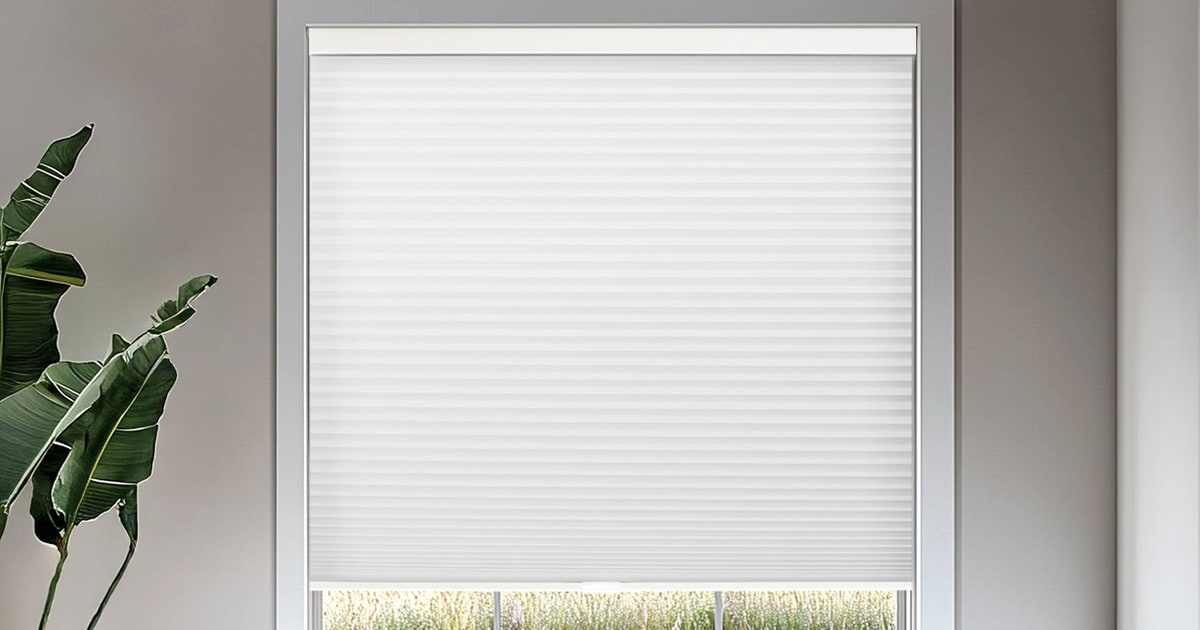
Cellular shades earn their keep in the two hours a day you actually notice them. Early morning, when the sun clears the neighbor's roof and hits your east-facing bedroom. Late afternoon in July, when the west side of the house turns into a greenhouse. The honeycomb pockets inside the fabric trap air against the glass, and that dead air does the work — the Department of Energy estimates cellular shades can cut heat loss through windows by up to 40% compared with bare glass, more than any other soft window treatment.
Here's the catch nobody puts on the box: cellular shades are fussy about size. Order a shade an inch too narrow and you get light gaps down both sides forever. Order it too wide and it won't fit the frame. Almost every complaint about these shades traces back to measurement, not manufacturing, and the fabric itself is delicate — it's a pleated polyester honeycomb, so it creases if you yank it and it dents if you crush it. Blackout versions leak a little light at the edges no matter whose name is on them. That's physics, not a defect.
You'll also find that the category splits hard between made-to-measure shades and stock sizes, and the two aren't really competing. Custom costs more and takes longer, but it fits. Stock ships tomorrow and might not. We think that the LEVOLOR Cordless Thermal Blackout Cellular Shade is the best cellular shade for most people, and that the CHICOLOGY Cordless Cellular Shade is the one to buy if you're covering a lot of windows on a tight budget.
Everything we recommend

Made to your measurements, and dark enough to sleep in

Costs the least per window and still blocks most of the light

The darkest fabric here, if the room needs true darkness

Privacy at eye level, daylight above, and no holes in the trim
At a glance
| Product | Light Control | Operation | Price | |
|---|---|---|---|---|
 | Hunter Douglas Duette Brackets for Standard PullAlso in lineup | — | Pull Cord | $7.59 |
| LEVOLOR Cordless Thermal Blackout Cellular ShadesTop pick | Blackout | Cordless | $82.11 |
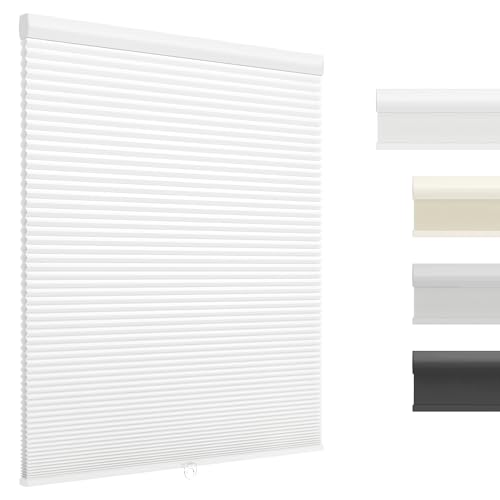 | UNISHADES Light Filtering Cordless Cellular ShadesAlso consider | Light Filtering | Cordless | $32.54 |
| MiLin No Drill No Tool Cellular ShadesUpgrade pick | Light Filtering | Cordless | $52.99 |
| SelectBlinds Casual Cordless Honeycomb Blackout Cellular ShadesAlso great | Blackout | Cordless | $75.05 |
| CHICOLOGY Cordless Cellular ShadesBudget pick | Room Darkening | Cordless | $29.99 |
How we picked
Cell structure. We compared manufacturer specs on cell count and insulating value, since honeycomb structure is the main driver of R-value. Single-cell shades generally land around R-1 to R-2 and double-cell around R-2 to R-3, so we noted which each product actually is rather than taking marketing language at face value.
Cordless safety. We required a cordless lift on everything we'd recommend, following WCMA and CPSC guidance that links corded coverings to roughly nine child strangulation deaths a year in the U.S. Corded models didn't make the shortlist.
Fit and sizing. We read owner feedback for the single most common failure in this category: a shade that doesn't fit. We favored products with clear size charts, explicit mount-depth requirements, and made-to-measure options.
Light control. We separated light-filtering from room-darkening from blackout, and checked each manufacturer's stated light-blockage figure against what owners describe seeing. Every blackout shade leaks at the edges, so we looked for honesty about it.
Installation burden. We compared what hardware ships in the box and what tools you need. Owner feedback about a ten-minute install versus an afternoon of frustration was a real tiebreaker.
Top pick
Made to your measurements, and dark enough to sleep in
LEVOLOR Cordless Thermal Blackout Cellular Shades
Levolor cuts these to your exact window, so you don't fight the light gaps that stock shades leave along the sides. The blackout honeycomb fabric and cordless rail handle make it the shade we'd put in a bedroom first, then everywhere else.
$82.11fromAmazonCustom sizing is the whole ballgame with cellular shades, and this is the pick that gets it right. You send your measurements, Levolor builds to them. That means the shade sits flush in the frame instead of floating with a half-inch of daylight on each side. Owners who measured carefully consistently describe a clean, built-in look. Owners who didn't describe a shade that came up short. The instructions are clear about which mount you're ordering for — read them twice.
The blackout fabric does what blackout fabric can do. Owners with west-facing bedrooms and migraine sensitivity report rooms dark enough to sleep through a bright afternoon. You'll still see a thin halo where the fabric meets the frame, especially on an inside mount. That's true of every blackout cellular shade sold, including ones that cost several times more, because the shade has to clear the frame to move.
Installation is a drill, a pencil, and about ten minutes. Owner feedback on this point is unusually consistent, including from people who describe themselves as ordinary homeowners rather than handy ones. The hardware comes in the box. You mark two bracket positions, drive the screws, and snap the headrail in. If you can hang a curtain rod, you can hang this.
The cordless rail handle is the part you'll appreciate daily. There's no cord to tangle, no wand, and no chain — you push or pull the bottom rail and it stops wherever you leave it. Because the handle is on the rail rather than the fabric, you're not putting fingerprints on the honeycomb every time you adjust it. For a house with toddlers or dogs, cordless isn't a nice-to-have. The WCMA links corded window coverings to roughly nine child strangulation deaths a year in the U.S.
Flaws but not dealbreakers
The measuring is on you, and Levolor builds what you send. Several owners report shades that arrived an inch short — almost always a measurement problem rather than a manufacturing one, but the outcome is the same either way. Measure the width at the top, middle, and bottom of the opening, then measure the height on both sides. Old houses are rarely square. Write the numbers down before you order.
This is a single set of shades made to order, so you wait for it. If you need window coverings this weekend because you just moved in and the neighbors can see your living room, buy something stock now and order these for the rooms that matter.
Budget pick
Costs the least per window and still blocks most of the light
CHICOLOGY Cordless Cellular Shades
Chicology sells stock sizes that ship fast and screw into the frame like a real shade. The single-cell honeycomb blocks up to 90% of light and adds a claimed R-3 barrier, which is a lot of shade for the money when you're covering a whole apartment.
$29.99fromAmazonIf you're covering eight windows and can't spend custom money on all of them, this is where to start. Chicology sells fixed sizes off the shelf, which is why it costs a fraction of a made-to-measure shade. The tradeoff is obvious: you pick the closest size rather than the exact one. For most standard windows in most apartments and newer houses, close is genuinely fine. For a 1920s bungalow with hand-cut openings, it won't be.
The construction is better than the price suggests. It's a 9/16-inch single-cell honeycomb with a room-darkening fabric that Chicology rates at up to 90% light reduction and an R-3 insulating value. Owners in hot climates report a real drop in how warm a room gets in the afternoon. It won't match a double-cell shade — single cell generally lands around R-1 to R-2 against R-2 to R-3 for double — but the difference between this and bare glass is the one you'll feel.
This screws into the frame rather than sticking to it. That matters more than it sounds. No-drill shades hold with tension or adhesive, and both let go eventually, usually in August when the fabric has been baking. Metal brackets and screws don't. If you're a renter worried about the wall, two small screw holes in a window frame are a patch-and-paint problem, not a security-deposit problem.
Owner feedback runs long here, and the themes are consistent: easy install, accurate to the stated size, smooth to raise and lower. The recurring gripe is that shades sometimes go crooked and need a quick nudge to level out. That's a common trait of budget cordless mechanisms, where the two lift cords inside the fabric don't always take up at exactly the same rate.
Flaws but not dealbreakers
Stock sizing means gaps. If your window is 32 inches wide and the nearest size is 30, you're mounting outside the frame or living with light on both sides. Measure first and check the size chart before you get attached to the idea.
The single-cell design insulates less than the double- and triple-cell shades that dominate the premium end of the category. For a drafty north-facing wall in a cold climate, you'll want more cell. For a bedroom that just gets too bright and too warm in the afternoon, this is enough.
A minority of owners report the mechanism sticking or the shade drifting out of level over time. It's usually fixable by hand, but it's the kind of thing that gets old on a shade you adjust twice a day.
Also great
The darkest fabric here, if the room needs true darkness
SelectBlinds Casual Cordless Honeycomb Blackout Cellular Shades
SelectBlinds rates this blackout honeycomb at 98–99% light blockage, which is the most aggressive claim in this group. It's the shade to put in a nursery or a media room, as long as your window frame is deep enough for an inside mount.
$75.05fromAmazonFor a room that has to be dark in the middle of the day, this is the fabric to buy. SelectBlinds rates it at 98–99% light blockage, and the honeycomb carries a black liner inside the cells to get there. Owners with toddlers on hot west-facing second floors report exactly what you'd hope: a darker, cooler room that a kid will actually nap in. If you work nights, this is the same argument.
Installation gets consistent praise. It comes with the hardware and the instructions, and owners describe getting it up in a few minutes with a pencil and a drill. The cordless lift works one-handed, which you'll notice when you're carrying a laundry basket. Like our top pick, there's no cord to worry about with kids or pets in the house.
The inside-mount depth requirement is the thing to check before you order. SelectBlinds specifies 7/8 inch minimum for any lift style, and 2 inches for a flush look where the headrail sits fully inside the frame. Go measure the depth of your window pocket right now — a lot of vinyl replacement windows come up short, and that decision drives whether you mount inside or outside.
Owners who describe this as darkening rather than fully blacked out are usually seeing edge leak, not fabric leak. The fabric blocks what it claims. Light comes around the sides on an inside mount because the shade needs clearance to travel. Mounting outside the frame with a few inches of overlap on each side fixes most of it.
Flaws but not dealbreakers
The fabric is thinner than the premium honeycomb shades it's priced against, and it shows if you're rough with it. Some owners report permanent creasing and a crumpled look after repeated raising and lowering. Pull from the center of the bottom rail, not from one corner, and it holds up better.
Sizing complaints show up here too, including from people whose windows aren't quite standard. This is sold in specific dimensions rather than fully made-to-measure, so check the listed size against your opening before you commit.
There's no top-down/bottom-up option on this configuration. For a bedroom you want dark, that's fine. For a street-facing living room where you want privacy at eye level and daylight above, look at the MiLin instead.
Upgrade pick
Privacy at eye level, daylight above, and no holes in the trim
MiLin No Drill No Tool Cellular Shades
The MiLin does top-down/bottom-up, so you can drop the top rail for daylight while keeping the bottom closed against the sidewalk. It installs without drilling, tools, or brackets, which makes it the obvious choice for a rental.
$52.99fromAmazonTop-down/bottom-up is the feature people don't know they want until they have it. You lower the top rail and let daylight in over the top of the shade while the bottom stays up against the street. For a first-floor living room or a home office facing a sidewalk, it solves the privacy-versus-daylight problem that every other shade here forces you to pick a side on. Select Blinds reports that TDBU accounts for more than 35% of their cellular shade orders, which tells you how many people hit this problem.
It goes up without drilling, tools, or brackets. For a renter, that's the whole pitch — no holes in the trim, nothing to patch when you move, and you can take the shades with you. MiLin says installation takes about a minute, and the push-pull locking system holds the rails wherever you set them.
The fabric is light filtering rather than blackout, which is the right call for the rooms this shade suits. You get diffused daylight instead of glare, some noise dampening from the honeycomb, and privacy from anyone looking in. It's not a bedroom shade for a light sleeper. It's a living room and kitchen shade.
MiLin lists this as waterproof, which matters more than it sounds if you're shading a bathroom or a spot over the kitchen sink. Standard cellular fabric wicks moisture and stains, and a shade above a shower or a steamy sink is a shade that goes gray at the bottom. A water-resistant fabric buys you the ability to wipe it.
Flaws but not dealbreakers
This is a new listing with essentially no owner history behind it, so there's no track record on how the no-drill mount and the locking mechanism hold up over a year. Tension and adhesive mounts in general are the least durable part of a shade. If you own the house, drill.
Top-down/bottom-up adds a second set of moving parts, and both rails have to stay level to look right. It's more fiddly to operate than a plain bottom-up shade, and it costs more.
Light filtering only means the sun still gets in. If your goal is a dark bedroom, this isn't the shade.
Who this is for
Buy cellular shades if your windows are drafty, your afternoons are too bright, or you have kids and want the cords gone. They're the best-insulating soft window treatment available, and the Department of Energy's up-to-40% figure for heat-loss reduction is why people in cold climates and hot ones both end up here. If you're a parent replacing corded blinds, this category is the straightforward answer. If you're a renter, the no-drill and stock-size options mean you don't need a landlord conversation.
This guide covers manual cordless cellular shades you can order and install yourself. We're not covering motorized or smart-home-integrated shades, professionally measured dealer lines, or the premium triple-cell systems that reach the highest insulating values — those generally require a dealer visit and cost several times what these do. If you have a wall of oversized or oddly shaped windows, or you want the shades tied into Alexa or HomeKit, you'll be better served going through a dealer than through anything here.
How we picked
Cell structure: we checked the actual honeycomb design and stated R-value rather than trusting energy-efficiency language on the box, since single-cell and double-cell shades insulate very differently. Cordless safety: every shade we'd recommend has a cordless lift, in line with WCMA and CPSC guidance on corded coverings. Fit and sizing: we favored made-to-measure options and clear size charts, because a shade that doesn't fit is the most common thing owners complain about. Light control: we separated light-filtering from room-darkening from blackout and compared each manufacturer's stated figures against what owners describe. Installation burden: we looked at what hardware ships in the box, what tools you need, and how consistently owners describe getting the thing up on the wall.
Other cellular shades worth considering
If you want a light-filtering shade for a shallow window frame: The UNISHADES Light Filtering Cordless Cellular Shades ($32.54) — The UNISHADES shade fits mounting surfaces as narrow as 3/4 inch, which is more than some replacement windows give you. Owners with Pella windows and skinny wood frames report it working where other shades wouldn't. The aluminum top and bottom rails feel sturdier than the plastic ones on cheaper shades, and the light-filtering honeycomb diffuses glare nicely. What you give up is size flexibility — this is a fixed size, so check the sizing chart carefully against both your inside-mount and outside-mount numbers. A few owners also report it retracting slowly or sticking, so the mechanism isn't as smooth as our picks.
The competition
This is what the research turned up on Amazon, not a survey of the whole category. Some of the best-regarded cellular shades — the premium triple-cell lines that reach the highest insulating values, and the dealer-measured brands sold through Home Depot and Lowe's — aren't sold as standard Amazon listings, so they're not here. If you want the top of the market, expect a showroom visit and a professional measure.
The Hunter Douglas Duette Brackets for Standard Pull ($7.59) — These are replacement mounting brackets for Hunter Douglas Duette and Applause shades with a 3/4-inch pleat and a pull cord. They're not shades, so we've left them out of the comparison — but if you landed here looking for them, the one piece of owner feedback available flags that the retaining tab is smaller and less rigid than the original, and doesn't reliably hold the headrail. If your Duette brackets broke, it may be worth sourcing them from Hunter Douglas directly.
Care and installation notes
Measure before anything else. Check the width at the top, middle, and bottom of the opening, and the height on both sides, then use the smallest width and the largest height for an inside mount. Also measure how deep the frame is — most inside mounts need at least 7/8 inch, and a flush look usually wants around 2 inches. For cleaning, don't wet the honeycomb. Vacuum the pleats with a brush attachment on low suction, running the nozzle along the fabric rather than pressing into it, and spot-clean marks with a barely damp cloth. Crushed cells don't spring back. When you raise a shade, pull from the center of the bottom rail with both hands if it's wide, since yanking one corner is what creases the fabric and throws the rail out of level.
Questions we get
What's the difference between single-cell, double-cell, and triple-cell shades?
It's how many honeycomb chambers sit between your room and the glass. Single cell has one air pocket and typically insulates around R-1 to R-2, double cell has two and reaches roughly R-2 to R-3, and triple-cell designs go higher still. Double cell is the sweet spot for most homes — meaningfully better insulation for a modest step up in price.
Are cellular shades actually good for insulation?
Yes, and they're the best of the soft window treatments for it. The Department of Energy estimates cellular shades can reduce heat loss through windows by up to 40% versus uncovered glass. The trapped air in the honeycomb is doing the work, so a tight fit matters — a shade with gaps around the edges lets air move past it and gives up much of the benefit.
Are cordless shades really safer for homes with toddlers?
Yes, and it's the main reason the industry moved away from cords. The WCMA links corded window coverings to roughly nine child strangulation deaths a year in the U.S., which is why cordless and motorized designs are now the standard. Every shade we recommend here is cordless. If you have older corded blinds in a kid's room, replacing them is a cheap, high-value fix.
What is top-down/bottom-up, and which rooms need it?
The shade has two movable rails, so you can drop the top down for daylight while the bottom stays up for privacy. It's most useful on street-facing windows — living rooms, home offices, ground-floor bedrooms — where you want light without giving passersby a view in. Select Blinds reports it accounts for more than a third of their cellular shade orders, so plenty of people find it worth the premium.
Can I install these myself?
For everything in this guide, yes. Most of these ship with brackets, screws, and instructions, and owners routinely describe a ten-minute job with a pencil and a drill. The no-drill option installs with no tools at all. Where you'd want help is a wall of oversized windows or a custom order where a measuring mistake gets expensive.
How do I clean cellular shades without wrecking the honeycomb?
Vacuum, don't wash. Use a brush attachment on low suction and run it along the pleats rather than pressing into the cells. Spot-clean with a barely damp cloth and let it dry fully before raising the shade. Crushed or soaked cells don't recover their shape, so gentle and dry is the rule.
Why you should trust us
For this guide:
- We compared manufacturer specifications on cell structure, stated R-values, light-blockage percentages, and mount-depth requirements across every shade in this guide.
- We read published guidance from the U.S. Department of Energy and the Window Covering Manufacturers Association on window insulation and cord safety.
- We reviewed recurring themes in owner feedback — particularly around sizing accuracy, installation difficulty, fabric durability, and how well blackout fabrics actually darken a room.
- We read owner reviews on every listing, weighted toward the critical ones, because that is where the recurring failures show up.
- We have a systematic way of automatically fetching the latest prices, so the numbers on this page stay current.
- This is a research-focused guide, so the team may not own every product listed — though we often do own the top winners, which gives us extra context for the recommendations.
- We don't accept free products, and the retailer commission never changes which product we recommend.
Sources
Energy-Efficient Window Treatments — U.S. Department of Energy, U.S. Department of Energy
Cellular Shades Buying Guide — Consumer Reports, Consumer Reports
The Best Cellular Shades — Wirecutter / The New York Times, Wirecutter
Best Cellular Shades, Tested by Experts — Bob Vila, Bob Vila
The Best Cellular Shades for Every Budget — The Spruce, The Spruce
Window Covering Safety Standards & Cordless Initiative — WCMA, Window Covering Manufacturers Association (WCMA)
ENERGY STAR Certified Residential Window Treatments, ENERGY STAR / U.S. EPA
Interior Window Attachment Energy Performance — Lawrence Berkeley National Laboratory, Lawrence Berkeley National Laboratory (LBNL)
GREENGUARD Gold Certification — UL, UL GREENGUARD
Hunter Douglas Duette Product & Insulation Data, Hunter Douglas
Cellular vs. Roller Shades: Which Is Better? — Forbes Home, Forbes Home
How to Measure Windows for Cellular Shades — This Old House, This Old House
Amazon product listings and owner reviews for all 6 products
Manufacturer specification pages for each product
Some passages in this guide may be paraphrased with AI help. Prices are refreshed automatically.
More like this.
Continue exploring home reviews and recommendations.

The Best Smart Blinds and Shades
You touch your window shades more than almost anything else in the house, and you never think about it. Up in the morning, down at dusk, halfway when the…

The Best Blackout Roller Shades for Bedrooms
A bedroom that stays dark past sunrise changes how you sleep. The Sleep Foundation notes that light exposure during sleep suppresses melatonin and shifts…

The Best Folding Windshield Sun Shades
Park in an open lot on a July afternoon and your car turns into an oven. AAA's research found that a cabin sitting in 80-degree weather climbs to 116…

The Best Airtight Pantry Storage Containers
A bag of flour rolled shut with a chip clip isn't sealed. Air gets in, and so does everything else. Cereal goes soft, brown sugar turns into a brick, and…

The Best Leaf Blowers
Leaf blowers get judged on two numbers, and only one of them matters most days. CFM is air volume - how much leaf litter you can push across a lawn in one…

The Best Homeowner Tool Sets
Most home repairs come down to a handful of moves. You tighten a wobbly toilet bolt, swap a cabinet hinge, put together a bookshelf, or pull the shipping…