The Best Leaf Blowers
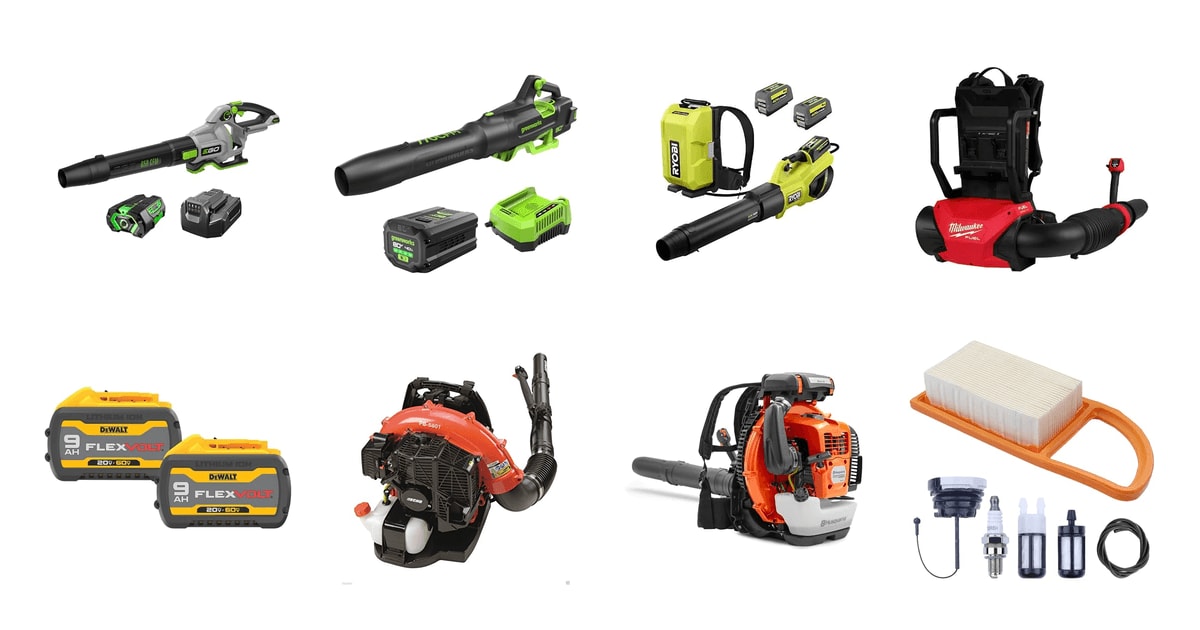
Leaf blowers get judged on two numbers, and only one of them matters most days. CFM is air volume — how much leaf litter you can push across a lawn in one sweep. MPH is air speed — how well you can peel a wet, flattened maple leaf off a driveway. If you're clearing dry leaves off grass and pavement in the fall, chase CFM. If your leaves sit under rain for a week before you get to them, you want speed too. Almost everything else is comfort and convenience.
Here's the honest part: no blower in this category is pleasant to hold. The powerful handhelds are heavy enough that your wrist gives out before the battery does, and owners of nearly every model here say so. Backpacks fix the wrist problem and add bulk, weight and a harness you have to adjust. Gas units are loud enough to require hearing protection and they're increasingly restricted where people actually live. Every choice trades one annoyance for another.
We looked at handhelds, cordless backpacks and gas backpacks together, because most people shopping for one are quietly considering all three. We think that the EGO POWER+ LB6504 is the best leaf blower for most people, and that the Husqvarna 580BTS is the one to buy if you're clearing half an acre or more, all day, and gas is still legal where you work.
Everything we recommend

Gas-grade air without the gas, if you can hold it up

More air and a quieter motor, in a package you'll feel
The most air here, and the most noise and upkeep too

Backpack comfort at conversation volume, batteries not included
Commercial gas power without the flagship outlay
At a glance
| Product | Airflow (CFM) | Air Speed (MPH) | Price | |
|---|---|---|---|---|
| EGO POWER+ Leaf BlowerTop pick | 650 CFM | 180 MPH | $279On sale |
| Greenworks 80VRunner-up | 770 CFM | 190 MPH | $229.99On sale |
 | RYOBI 40V HP Brushless Whisper Series 190Also consider | 730 CFM | 190 MPH | $505 |
| Milwaukee Electric - M18 FUELTRADE Dual BatteryAlso great | 650 CFM | 155 MPH | $329.99 |
 | DEWALT FLEXVOLT 20V/60V MAX* BatteriesAlso in lineup | — | — | $307 |
| Echo PB-580T 58.2 CC Back Pack BlowerBudget pick | 510 CFM | — | $429 |
| Husqvarna 580BTS Gas Backpack Leaf BlowerUpgrade pick | 1000 CFM | 220 MPH | $649.71 |
 | Hyceker BR600 Air Filter Tune-Up Kit forAlso in lineup | — | — | $15.99 |
How we picked
Air volume and speed. We compared published CFM and MPH figures across all three formats, weighting CFM for dry leaves and MPH for wet, matted debris. We treated 500 CFM as the floor for a typical suburban lot and 200-plus MPH as the threshold for reliably lifting wet leaves off pavement.
Runtime you'll actually get. Manufacturer runtime claims are measured at low speed, so we read owner feedback for real-world numbers at working speeds. Models where owners consistently reported fast drain at high output got marked down.
Weight and fatigue. We looked at listed weight with battery or fuel, plus owner reports of wrist strain and strap purchases. Anything past roughly 20 minutes of continuous use pushed us toward backpack formats.
Noise and local rules. We noted published dB ratings against the 85 dB threshold where hearing protection becomes necessary, and we flagged every gas unit for the expanding municipal restrictions on residential 2-stroke blowers.
Battery ecosystem. For cordless models we weighed how many other tools run on the same packs, since a platform you already own removes the largest hidden cost. Bare-tool listings were judged on total system cost, not sticker.
Top pickOn sale
Gas-grade air without the gas, if you can hold it up
EGO POWER+ Leaf Blower
The EGO LB6504 moves up to 650 CFM in turbo, which is what a small gas handheld does, and it comes with a 56V battery and charger in the box. For a typical suburban lot, it clears the driveway, walkways and beds on one charge.
$279fromAmazonList priceMost people don't need more blower than this. The LB6504 hits 650 CFM and 180 MPH in turbo, which puts it level with the 27cc gas handhelds people have been buying for years. On a quarter-acre lot with a couple of oaks, that's enough to windrow leaves toward the curb in a few passes instead of a dozen. Owners coming off gas units consistently say they don't miss the engine.
The variable-speed trigger is the part you'll use more than turbo. It dials from about 225 to 500 CFM, so you can ease off near a flower bed or a pile of mulch instead of redecorating it. There's a lock-on dial too, which matters more than it sounds — holding a trigger at half-pull for twenty minutes is its own kind of tired. Set it and let your hand relax.
Runtime is up to 90 minutes on the included 5.0Ah pack, and that number is real at moderate speed. Turbo eats through it much faster. Practically, you get a full property done at mixed speeds, or a driveway and patio done fast. Owners who clear an acre routinely buy a second battery, which is the honest answer for bigger lots.
Then there's the maintenance you never do. No fuel mixing, no stale gas in spring, no carburetor to clean, no spark plug gap. It starts on a trigger pull in January. If your last blower spent more time at the small-engine shop than in your hands, that alone is worth the switch.
Flaws but not dealbreakers
It's heavy. At roughly 13 pounds with the battery, the weight lands on your wrist and forearm, and owners bring this up more than any other complaint — several buy an aftershoulder strap in the first week. If you have wrist or elbow trouble, hold one before committing, or skip to a backpack.
A small but real share of owners report units that quit within the first weeks. Most get a straightforward replacement, but it's worth registering the purchase and not letting the return window lapse before your first big cleanup.
And it won't do what a commercial gas backpack does. Deeply matted wet leaves in turf need more sustained force than this can supply. It'll move them eventually; a 580BTS moves them in one pass.
Runner-upOn sale
More air and a quieter motor, in a package you'll feel
Greenworks 80V
The Greenworks 80V pushes 770 CFM, the highest of any handheld here, and its brushless motor is rated at 74 dB. If your HOA or your neighbors care about early-morning noise, this is the handheld to look at first.
$229.99fromAmazonList priceThe spec that separates this from the EGO isn't the extra CFM — it's the 74 dB rating. That's roughly conversation-level, and far below the 95-plus dB of a gas unit. If you want the driveway done before work without a neighbor complaint, that's the number that matters. Owners still describe it as noisy, so don't expect silence; expect not-a-lawnmower.
The brushless motor is doing real work here. Greenworks rates it for about 30% more torque and 50% longer life than a brushed motor, and it runs about 80 minutes on the included 4.0Ah pack. Cruise control locks the speed so you're not squeezing a trigger the whole time. On a long session, that's the difference between finishing and quitting early.
The catch is the platform. Greenworks 80V has fewer tools hanging off it than EGO 56V or Milwaukee M18, so you're buying into a smaller ecosystem. If you already own batteries in another system, that math usually beats a 120 CFM advantage. Nobody's yard gets meaningfully cleaner because of the difference between 650 and 770.
On paper it's the lightest handheld here, but that's the bare tool. With the 80V pack attached it feels substantial, and owners say so plainly. It's a two-hands-eventually blower like the rest of them.
Flaws but not dealbreakers
Owners repeatedly flag battery drain at high speed. Run it flat out on a patio and driveway and you'll be recharging afterward — the 80-minute figure assumes a moderate load, not turbo.
The small tool lineup is a genuine long-term cost. A battery platform pays you back through the other tools it powers, and this one has less to power than its rivals.
Upgrade pick
The most air here, and the most noise and upkeep too
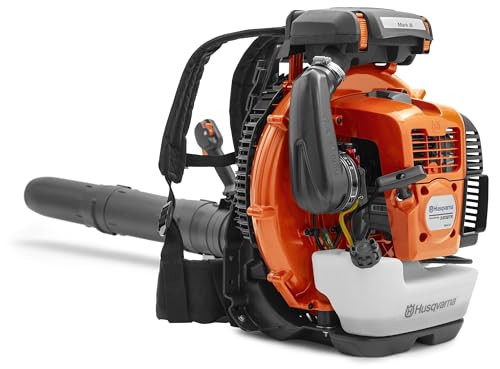
Husqvarna 580BTS Gas Backpack Leaf Blower
The Husqvarna 580BTS runs a 75.6cc X-TORQ engine to 1,000 CFM, 220 MPH and 47 newtons of blow force — the most of anything in this guide. It's built for professional crews and half-acre-plus properties with heavy tree cover.
$649.71fromAmazonNothing cordless here comes close on sustained force. At 1,000 CFM and 47 N, the 580BTS moves piles that the EGO and the Milwaukee have to work at in several passes. On a property with mature oaks and maples dropping for six weeks straight, that gap compounds into hours. Owners describe cutting cleanup time by two-thirds coming from a handheld.
The harness is a bigger deal than the engine spec. It's ventilated with a padded hip belt, so the 34 pounds rides on your hips and shoulders rather than your spine. That's what makes four- and eight-hour days survivable. Weight distribution is the whole reason backpacks exist, and this one is done properly.
It also refuels in a minute. For crews, unlimited runtime isn't a luxury — it's the reason gas is still in the truck. A jerry can in the bed beats waiting on a charger, every time, on every job.
There's a legal question you have to answer before buying. Dozens of California cities restrict residential gas blower use, and similar rules are moving in other states. Check your municipality's ordinance first. That's not a hypothetical — it can make this unit unusable at the address you bought it for.
Flaws but not dealbreakers
It's loud enough to require hearing protection, full stop. Gas backpacks in this class run around 100 dB, and that's not a level you tolerate unprotected for a workday.
It needs annual service: spark plug, air filter, fuel filter, carburetor check. If you don't want to learn that or pay a dealer for it, buy cordless.
Owners occasionally report assembly headaches — wrong or ill-fitting handle mounts, a blower tube that takes real force to lock. Inspect the parts against the manual before you assemble, because the warranty path can mean a trip to a service center.
Husqvarna covers this blower under its standard consumer warranty; confirm the current term and any commercial-use limits with the dealer before you buy.
Also great
Backpack comfort at conversation volume, batteries not included
Milwaukee Electric - M18 FUELTRADE Dual Battery
The Milwaukee M18 FUEL backpack delivers 650 CFM and 155 MPH at 62 dB(A), the quietest unit in this guide. It's sold as a bare tool and needs two M18 batteries to run, so it only makes financial sense if you already own them.
$329.99fromAmazonIf you already have M18 packs, this is the least expensive way into a real backpack blower. The tool runs on any M18 REDLITHIUM batteries and takes up to four at once. Drill batteries, saw batteries, whatever's on the shelf — they all work here. Owners running four high-capacity packs report roughly half an hour of continuous high-speed work before swapping.
62 dB(A) is the quietest figure in this guide, and it changes when you can work. That's normal indoor conversation volume. You can clear a driveway at seven in the morning in a tight neighborhood without anyone's window rattling, which no gas backpack lets you do at any hour.
The POWERSTATE motor reaches full throttle in under a second, and that responsiveness matters around landscaping. You can pulse it near a bed, back off before you blast the mulch, and get back on the throttle for the lawn. Slow-spooling blowers make that kind of work fiddly.
155 MPH is the honest limitation. It's fine for dry leaves and light damp coverage on pavement. Compacted wet debris ground into turf wants more speed than this makes, and you'll notice on a bad week in November.
Flaws but not dealbreakers
Buying in cold is expensive. You need two batteries minimum before it does anything, and high-capacity packs aren't cheap — factor that in and it stops being the budget option.
Big batteries make it heavy. Owners note that the large packs needed for real runtime add noticeable weight to an already 27-pound tool, which partly undoes the comfort advantage.
A few buyers have received units missing small hardware. Inventory the box against the parts list before your first session.
Budget pick
Commercial gas power without the flagship outlay
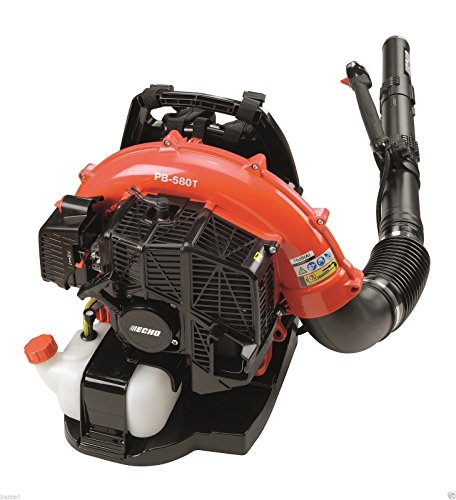
Echo PB-580T 58.2 CC Back Pack Blower
The ECHO PB-580T runs a 58.2cc engine to 510 CFM and 215 MPH, with a tube-mounted throttle you control without letting go. It's the gas backpack for people who need real air speed for wet debris but don't need 1,000 CFM.
$429fromAmazonAir speed is where this earns its place. At 215 MPH it's within a few MPH of the Husqvarna, which means it does the hard job — lifting wet, matted leaves off pavement — nearly as well. It gives up air volume, not speed. For a half-acre lot that's a trade most people would take.
The tube-mounted throttle is a small thing you'll appreciate every day. Your control hand stays on the tube, so you're steering and modulating with the same grip instead of reaching back. Owners running it commercially describe it as intuitive after a few minutes.
It has a long service reputation with landscaping crews, and owner feedback backs that up — people report years of daily use with only routine maintenance. That's the kind of durability you can't infer from a spec sheet, and it's the main reason this beats a cheaper big-box gas unit.
Assembly and starting take a little patience. Owners generally say it fires on the second or third pull once it's set up, but the printed instructions come in for regular criticism. Budget twenty minutes and a video for the first day.
Flaws but not dealbreakers
It's a 2-stroke engine, with everything that implies: mixed fuel, annual filter and plug service, and stale-gas problems if you park it wet over winter.
It's loud. Hearing protection isn't optional, and it's subject to the same municipal gas restrictions as the Husqvarna.
At 22-plus pounds it's a genuine backpack load, and the harness isn't as elaborate as the Husqvarna's ventilated setup. Fine for a few hours, less pleasant for eight.
Who this is for
This guide is for homeowners clearing leaves, grass clippings and driveway debris on properties from a small suburban lot up to about an acre, plus crews who need something that runs all day. If your yard is a patio and a short walkway, everything here is more blower than you need — a small corded unit will do it. If you want a blower that also vacuums and mulches leaves into a bag, that's a different tool and this guide doesn't cover it.
Two groups should hold off. If you're in a municipality that restricts residential gas blowers — and dozens of California cities do, with more states moving — cross the gas backpacks off your list entirely before you shop. And if you already own batteries in a major cordless platform, start by checking whether that platform makes a blower you'd be happy with. The battery you already have is worth more than a hundred CFM you'll never notice.
How we picked
We ranked these on the things that decide whether you're happy in November. Air volume: 500 CFM is the practical floor for a typical suburban lot, and 700-plus starts to matter past half an acre. Air speed: 180 MPH handles dry leaves; you want 200-plus before wet, matted debris comes off pavement willingly. Runtime: we read owner feedback rather than trusting low-speed claims, because turbo drains a pack fast. Weight: past twenty minutes, a handheld punishes your wrist and a backpack doesn't. Noise: under about 75 dB you can work early without complaints; gas units need hearing protection. Ecosystem: a battery platform you already own quietly beats a spec advantage.
Other leaf blowers worth considering
If you want cordless backpack runtime with batteries included: The RYOBI 40V HP Brushless Whisper Series 190 ($505) — The RYOBI 40V HP Whisper Series comes with two 6.0Ah packs and a charger, so unlike the Milwaukee it works the day it arrives. It's rated at 730 CFM and 190 MPH with a claimed three hours on low, and the Whisper motor is quiet by design. What you give up is a track record — owner feedback on this listing is thin, and the reports that exist mention shorter-than-expected battery life at working speeds. The three-hour figure is a low-speed number; treat it as the ceiling, not the plan.
The competition
This is what our research surfaced in these three formats, not a survey of everything on the market. A few well-known commercial units aren't represented here, and one listing in the lineup isn't a blower at all.
The DEWALT FLEXVOLT 20V/60V MAX* Batteries ($307) — The DEWALT FLEXVOLT 9.0Ah two-pack isn't a blower — it's the power source for DEWALT's 60V MAX outdoor tools, including the backpack blower sold separately. Each pack holds 180 watt-hours, six times a 1.5Ah battery, and switches automatically between 60V and 20V so it runs the drills and saws too. If you're already deep in DEWALT, buying batteries and adding the blower later is a reasonable path. If you're starting from nothing, a self-contained unit like the EGO gets you working for far less total outlay.
Care and maintenance
Cordless blowers need almost nothing: blow the intake screen clean after each session and store the battery indoors, ideally around half charge if it's sitting all winter. Cold garages shorten pack life. Gas backpacks are the opposite — plan on an annual service at roughly 50 running hours covering the spark plug, air filter and fuel filter, plus a carburetor look. The bigger favor you can do a 2-stroke is fuel discipline. Run it dry or use ethanol-free premix before it sits for the winter, because stale gas gumming a carburetor is the single most common reason these end up at a repair shop in spring. Check the harness straps and blower-tube lock every few sessions too.
Questions we get
What's the difference between CFM and MPH?
CFM is how much air the blower moves; MPH is how fast that air leaves the nozzle. High CFM clears large areas of dry, loose leaves quickly. High MPH dislodges wet, matted or compacted material stuck to pavement and turf. For typical dry fall cleanup, CFM is the number to watch.
Are cordless blowers as powerful as gas now?
For residential work, essentially yes. The Greenworks at 770 CFM and the EGO at 650 CFM are rated in the same range as small gas handhelds, and they start instantly. But the professional gas backpacks still win on sustained output — the Husqvarna's 1,000 CFM and 47 N of blow force aren't matched by anything cordless here.
What CFM do I need for a half-acre yard with lots of trees?
Aim for 700 CFM and 190 MPH or better. The Husqvarna and the ECHO both handle that scale comfortably, and the RYOBI backpack is adequate for dry leaf coverage. If your leaves are usually wet when you get to them, the higher air speed of a gas backpack makes a noticeable difference.
Are gas leaf blowers banned in California?
Partially, and the restrictions keep expanding. Dozens of California cities restrict or prohibit residential use of gas blowers, including Los Angeles, San Francisco and Sacramento, and state small-engine emissions rules are tightening. Check your own city's ordinance before buying the ECHO or the Husqvarna. Every cordless model in this guide is unaffected.
Do I need hearing protection?
With the gas backpacks, yes, without exception — they run around 100 dB, and OSHA advises protection above sustained 85 dB exposure. The Milwaukee at 62 dB(A) and the Greenworks at 74 dB are safe for extended unprotected use. That gap is the strongest practical argument for going cordless in a residential neighborhood.
Is a backpack blower worth it for a homeowner?
It's worth it if your cleanup sessions run past about half an hour. A backpack puts the weight on your shoulders and hips instead of your wrist, and that's the difference between finishing the yard and stopping early. For quick fifteen-minute driveway work, a handheld is easier to grab and cheaper to own.
Why you should trust us
For this guide:
- We compared manufacturer specifications for air volume, air speed, weight, noise ratings and claimed runtime across every model in this guide.
- We read published reviews and owner feedback for each product, looking for the failure modes and comfort complaints that show up repeatedly rather than once.
- We did not use, install or measure any of these blowers ourselves.
- We read owner reviews on every listing, weighted toward the critical ones, because that is where the recurring failures show up.
- We have a systematic way of automatically fetching the latest prices, so the numbers on this page stay current.
- This is a research-focused guide, so the team may not own every product listed — though we often do own the top winners, which gives us extra context for the recommendations.
- We don't accept free products, and the retailer commission never changes which product we recommend.
Sources
Best Leaf Blowers — Wirecutter / The New York Times, Wirecutter
Leaf Blower Ratings and Reviews — Consumer Reports, Consumer Reports
Best Leaf Blowers of 2026 — Popular Mechanics, Popular Mechanics
Best Leaf Blowers Tested — Bob Vila, Bob Vila
Best Leaf Blowers — This Old House Reviews, This Old House
Amazon product listings and owner reviews for all 8 products
Manufacturer specification pages for each product
Some passages in this guide may be paraphrased with AI help. Prices are refreshed automatically.
More like this.
Continue exploring home reviews and recommendations.

The Best Leaf Blower Vacuum Mulchers
Raking leaves is slow, and hauling them is worse. A 3-in-1 blower vacuum does three jobs with one motor: it pushes leaves into a pile, sucks them up, and…

The Best Cordless Electric Snow Blowers
Snow clearing is a chore with a narrow window. You want the driveway open before work, in the dark, in the cold, without a trip to the gas station the…

The Best Nursery Night Lights
Most nursery night lights get used at the worst possible hour. It's 3 a.m., the baby is crying, and you need just enough light to find a diaper, a bottle,…

The Best Electric Standing Desks
A standing desk earns its keep in small moments. You take a call on your feet, you stretch out your lower back between meetings, you drop the surface an…

The Best Pull-Down Kitchen Faucets
A kitchen faucet is the thing you touch most and think about least. You grab it with wet hands, greasy hands, a stockpot hooked in one arm. A pull-down…

The Best Radon Detectors and Test Kits
Radon is a gas you can't see, smell or taste, and it seeps up through foundation cracks, sump openings and construction joints in homes of every age. The…