The Best Radon Detectors and Test Kits
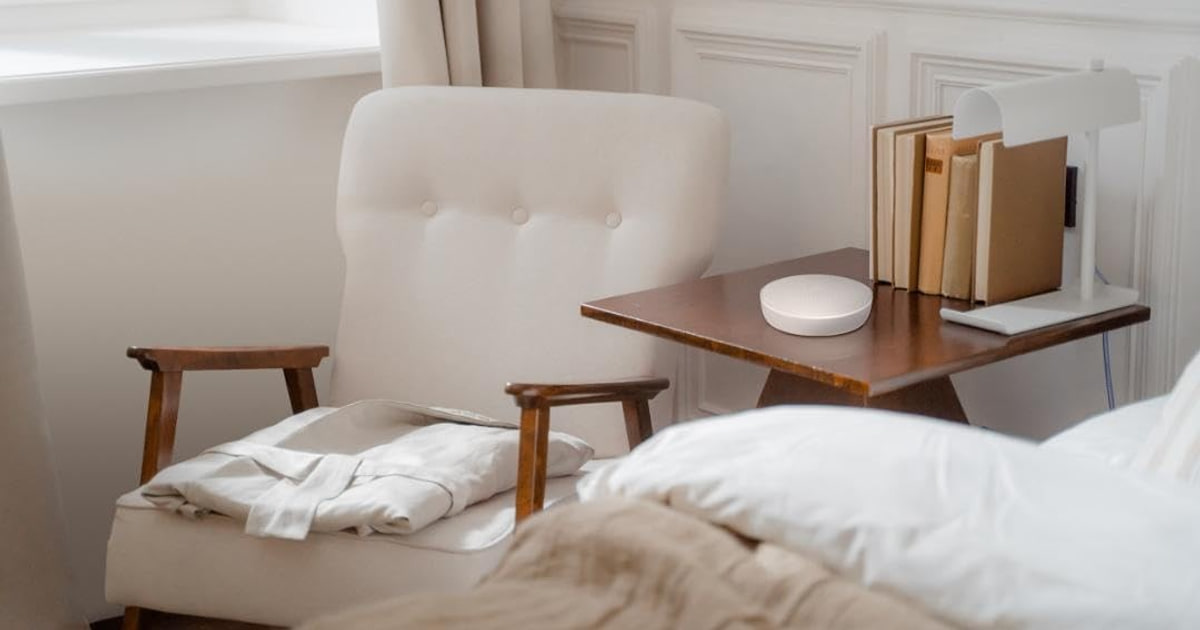
Radon is a gas you can't see, smell or taste, and it seeps up through foundation cracks, sump openings and construction joints in homes of every age. The EPA puts the action level at 4 pCi/L, and roughly 1 in 15 U.S. homes sits above it. The only way to know where your house lands is to measure. That means either a lab-analyzed test kit that gives you one certified number, or an electronic monitor that keeps reading year-round. Both have a place, and which one you need depends on why you're testing.
Here's the honest caveat: no single device answers every question. Radon swings day to day and season to season, and winter readings often run well above summer ones in the same basement. A 48-hour charcoal canister captures one weather window, nothing more. A continuous monitor shows you the swings but usually isn't accepted for a real estate disclosure. And the long-term alpha track kit that gives the most statistically solid annual average takes three months minimum. You'll likely end up using more than one over the years.
Placement matters as much as the device. Put it in the lowest livable level, at least 20 inches off the floor, away from windows, sumps and vents, and in a room people actually use. We think that the Ecosense RD200 RadonEye is the best radon detector for most people, and that the Airthings 2930 Wave Plus is the one to buy if you want carbon dioxide, humidity and VOC readings in the same device.
Everything we recommend

The most sensitive reading, with nothing else bolted on

Six sensors in one box, if you want the whole air picture
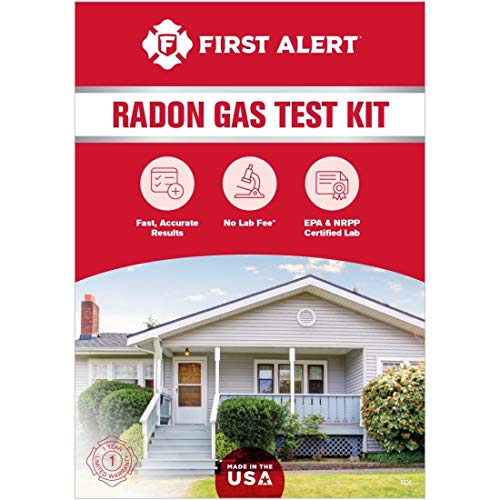
One certified number, lab fee already included

The most representative annual number, if you can wait months
At a glance
| Product | Test Duration | Results Time | Price | |
|---|---|---|---|---|
| Airthings 2930 Wave Plus - Radon &Runner-up | Long-Term | — | $249.99 |
| Ecosense RD200 RadonEyeTop pick | Short and Long Term | 10 Minutes | $169 |
 | Airthings 325 Corentium Home 2 Smart DigitalAlso consider | Long Term | — | $149.99On sale |
 | Airthings 2960 View Plus - Battery PoweredAlso consider | Always-On | Live Data | $329.99 |
 | PRO-LAB Radon Test Kit for Home -Also in lineup | Short-Term | 48 Hours | $9.99 |
| First Alert Radon Gas Test KitBudget pick | — | 72 Hours | $16.98On sale |
| Accustar Alpha Track Test Kit AT 100Also great | Long-Term | Next Business Day | $38.97 |
How we picked
Measurement method. We sorted the lineup by how each device actually detects radon — charcoal canister, alpha track film or electronic ion chamber — because that determines what question the product can answer. A kit that gives one certified number and a monitor that runs for years aren't competing for the same job.
Sensor sensitivity. For electronic monitors we compared stated counting efficiency and first-reading time from manufacturer specifications, and weighed how independent comparisons against reference instruments have ranked consumer devices. Faster, higher-count sensors resolve short spikes that slower detectors smooth away.
Certification and listing. For test kits we checked EPA listing and whether the processing lab is NRPP-certified, since real estate disclosure and state programs generally require lab-analyzed results. A monitor reading isn't a substitute in jurisdictions that demand documentation.
Connectivity and alerts. We separated Bluetooth-only devices, which sync only when your phone is nearby, from Wi-Fi devices that can push notifications while you're away. Owner feedback shows this is where expectations most often break down after purchase.
Total ongoing cost. We looked at whether lab fees are included, how many detectors come in a kit, and whether repeat testing requires a new purchase. A cheap kit with a per-detector processing fee can end up costing more than it first appears.
Top pick
The most sensitive reading, with nothing else bolted on
Ecosense RD200 RadonEye
The RadonEye is a radon-only continuous monitor with a professional-grade ion chamber sensor and a first reading in about 10 minutes. It shows you hourly trends so you can tell a passing spike from a real problem, and it costs less than the multi-sensor monitors.
$169fromAmazonIt reads radon faster and more sensitively than anything else here. The ion chamber sensor counts 30 events per hour per pCi/L, which is the kind of counting efficiency you'd expect from gear a certified measurement pro carries. The listing claims a first reading in 10 minutes. Most consumer monitors make you wait a full day before they'll show you anything useful, so you're not guessing during the first afternoon.
Hourly trend charts tell you what a single number can't. The app plots average readings hour by hour, so you can see radon climb overnight when the furnace runs and settle again by mid-morning. That's the whole argument for a continuous monitor over a canister. If you've just had a mitigation system installed, this is how you confirm the fan is actually holding levels down around the clock instead of hoping.
It does one job, which keeps the sensor the whole story. There's no CO2 module, no particulate sensor, no pressure reading competing for attention or power. You get current, short-term and long-term radon averages. For a homeowner in a Zone 1 state who already knows the soil is a problem, that focus is the point — you want the radon number to be right, not surrounded by five other numbers.
Placement is easy and the form factor stays out of the way. It's a compact cylinder, roughly the size of a coffee mug, and it sits fine on a basement shelf, a bookcase or a home-office desk. It runs on a power cable rather than batteries, so you'll want an outlet within reach. In a finished basement that's rarely a problem.
Flaws but not dealbreakers
No Wi-Fi means no alerts when you're away. Pairing is Bluetooth-only, so readings sync when your phone is nearby and not before. If radon spikes during a two-week trip with the house sealed up, you'll find out when you get home and open the app. There's no push notification and no remote dashboard. Owners who travel a lot bring this up regularly.
The app is functional, not polished. Compared with the Airthings ecosystem, the RadonEye app feels more like an instrument readout than a consumer product. The data is all there and the charts are informative. But the setup flow and the visual design are plainer, and some owners report occasional pairing hiccups that need a reconnect.
It tells you nothing about the rest of your air. No CO2, no humidity, no VOCs. In a finished basement with limited ventilation, stale air and condensation are real issues, and this device won't flag either one. If you want that picture, you're buying a second sensor or a different monitor.
The RadonEye comes with a 12-month limited warranty.
Runner-up
Six sensors in one box, if you want the whole air picture
Airthings 2930 Wave Plus - Radon &
The Wave Plus tracks radon continuously alongside CO2, VOCs, humidity, temperature and air pressure. A wave of your hand lights it green, yellow or red, so anyone in the house can check the air without opening an app or knowing what pCi/L means.
$249.99fromAmazonSix sensors in one battery-powered puck cover most of what goes wrong indoors. Radon is the headline, but CO2 tells you whether a finished basement or a closed home office is actually getting fresh air, and VOC readings pick up fumes from paint, solvents and cleaning supplies stored downstairs. Humidity helps you interpret both. If you'd otherwise buy two or three separate gadgets, this consolidates them.
The wave gesture is the feature that makes it a household device. Hold your hand in front of it and the ring glows green, yellow or red. No phone, no login, no interpreting a number. In a house where one person cares about air quality data and everybody else just wants to know if things are fine, that's genuinely useful. Kids get it immediately.
Battery power means you can put it where the radon actually is. Two AA batteries, no cord. Basements and crawl spaces are exactly the places with the fewest outlets and the most radon, so being untethered matters more here than it does for a kitchen gadget. You can also carry it upstairs for a week to compare floors.
The app builds a long trend record that reveals seasonal patterns. Radon isn't a fixed number, and a graph running across months shows you how much your house swings between heating season and summer. Airthings suggests waiting 24 hours for a stable baseline and about a week for a meaningful short-term average. After a few months you'll know your home's actual range.
Flaws but not dealbreakers
Bluetooth only, and the fix costs extra. Without an Airthings SmartLink hub, the Wave Plus only syncs when your phone is in range. You can't check it from a hotel room. Buying the hub adds cost and another device to your shelf, which undercuts the argument that this is the one-box solution.
There's no alarm of any kind. No siren, no push notification, nothing that reaches you when radon climbs. If the house sits closed for a week and levels build, the device will faithfully record it and say nothing. For a gas that's a health risk rather than an immediate emergency that's defensible, but it's worth knowing going in.
It costs more than our top pick while measuring radon less sensitively. You're paying for breadth, not radon precision. If radon is the only thing you care about, the extra spend buys you sensors you may never look at.
Airthings covers the Wave Plus under its standard product warranty.
Budget pickOn sale
One certified number, lab fee already included
First Alert Radon Gas Test Kit
The First Alert RD1 is a single-use charcoal canister listed under the EPA's radon measurement proficiency program, with lab fees built into the purchase price. It's the simplest way to find out whether your home has a problem at all, with no app and no learning curve.
$16.98fromAmazonList priceIt answers the only question that matters on a first test. Have you ever tested? If not, this gets you a real, lab-analyzed number for the least money in this guide. You open the canister, leave it in place for the specified window under closed-house conditions, seal it and mail it back. Results come by email within about 72 hours of the lab receiving it.
The total cost is predictable, which is rarer than it should be. Lab fees are included in the purchase price, so there's no second charge waiting after you mail the sample. New Jersey is the exception — state fees there are billed separately. Every other kit in this category asks you to budget for processing on top.
It's EPA-listed, so the result carries weight. The kit falls under the EPA radon gas measurement proficiency program, which means the methodology and lab are recognized rather than improvised. For an initial screening, or as one input in a home purchase where the state accepts DIY kits, that's the credential you want.
There's nothing to learn. No pairing, no account, no app that needs updating. Read the instructions, close the windows 12 hours ahead, set it out, mail it in. For an older relative's house or a rental you're checking on, the simplicity is the feature.
Flaws but not dealbreakers
It's a snapshot, and a short one. A 48-to-96-hour exposure captures whatever the weather was doing that week. Winter readings in the same house can run substantially higher than summer readings, because heating systems pull soil gas up through foundation gaps. One canister in July can genuinely miss a problem.
One use, then it's gone. There's no monitoring here. If you want to check again next year, or verify a mitigation system, you buy another kit. Over several years of retesting, a continuous monitor stops looking expensive.
Owners occasionally report packaging and shipping frustrations. The canister has to arrive sealed and get back to the lab promptly, and mail delays or a damaged seal can invalidate a test you already waited days to run.
Also great
The most representative annual number, if you can wait months
Accustar Alpha Track Test Kit AT 100
The Accustar AT 100 is an alpha track detector you leave in place for 90 to 365 days. It records cumulative radon decay across seasons, producing the annual average that short-term canisters can't match. Lab analysis and the return mailer are included.
$38.97fromAmazonIt measures across seasons instead of guessing from one week. Alpha track film records radon decay events continuously for as long as you leave it out — 90 days minimum, up to a full year. That integrates summer and winter, rain and drought, windows open and windows shut. The result is the number that actually describes your exposure.
State health departments and the EPA prefer this method for a reason. When you're deciding whether to spend real money on a sub-slab depressurization system, a 48-hour reading is thin evidence. The EPA specifically recommends confirming any short-term result at or above 4 pCi/L with a long-term test before you commit. This is that test.
Everything is included and there's nothing to maintain. Lab analysis and a post-paid return mailer come in the box. You set it down, forget about it for three months, and mail it in. Results post online, available around the clock, the business day after the lab receives your sample.
It's the right pairing for a canister test that came back borderline. If a short-term kit put you in the 2-to-4 gray zone, this tells you whether that was a fluke or your actual baseline. Running one of these while you think it over costs far less than a mitigation system you didn't need.
Flaws but not dealbreakers
Three months is the fastest it goes. That rules it out for almost any home sale timeline. If you're closing in five weeks, this can't help you, and no amount of planning shortens the exposure window.
You get no readings along the way. The detector gives up nothing until the lab reads it. If radon is dangerously high in month one, you won't know until month four. Anyone who wants running numbers needs an electronic monitor alongside it.
It isn't available in New Jersey, and it's single-use. Retesting after mitigation means buying another kit and waiting again.
Who this is for
Buy now if you've never tested your home, if you're buying or selling a house, or if you live in an EPA Zone 1 state — Iowa, Minnesota, Montana, North Dakota, Pennsylvania, South Dakota or Wyoming — where predicted indoor averages exceed the action level. Also test after any renovation that cuts into the foundation slab or below-grade walls, since disturbing soil can open new entry paths. And if you already have a mitigation system, plan on retesting every couple of years, because fans wear out and seals crack.
You probably don't need to rush if you tested recently, got a low result, and nothing about the building has changed. This guide covers consumer radon detection: DIY lab kits and home electronic monitors. It doesn't cover professional measurement services, mitigation hardware, or the certified continuous monitors that licensed testers bring to a real estate transaction. If your state requires a licensed tester for a disclosure, no product here replaces that.
How we picked
We built the shortlist around a few things. Measurement method: whether a product gives one lab-certified number or an ongoing reading decides which problem it can solve, so canisters, alpha track film and electronic monitors were judged separately. Sensor sensitivity: for monitors we compared published counting efficiency and first-reading claims, favoring sensors that resolve short spikes. Certification: kits needed EPA listing and NRPP-certified lab analysis to be useful for a disclosure. Connectivity: we flagged which devices need your phone nearby and which can alert you from anywhere. Ongoing cost: included lab fees, detector count and whether retesting means rebuying all factored in.
Other radon detectors and test kits worth considering
If you want alerts while you're away: The Airthings 2960 View Plus - Battery Powered ($329.99) — The Airthings 2960 View Plus is the only device here with built-in Wi-Fi, so it syncs continuously and can push a notification to your phone when radon or CO2 crosses a threshold you set. It adds PM2.5 particulate sensing to the Wave Plus lineup, which has gotten more relevant as wildfire smoke reaches further each summer, and the e-ink display stays readable in bright light. It works with Alexa and Google Home for voice queries. What you give up is money — it's the most expensive product in this guide — and you have to create an Airthings account for it to function at all. The PM2.5 readings are indicative rather than regulatory-grade, so treat them as a trend signal, not a measurement you'd act on alone. Register for the free extended warranty and coverage goes to five years.
If you want a standalone display and no app dependency: The Airthings 325 Corentium Home 2 Smart Digital ($149.99) — The Airthings 325 Corentium Home 2 shows current, short-term and long-term radon averages right on the device, always visible, no phone required. It's the successor to the original Corentium Home, which sold in enormous numbers on exactly that premise, and it now adds Bluetooth plus humidity and temperature sensors if you want to sync graphs to the app. It runs on batteries and it's small enough to carry room to room, which makes it a good fit for renters and for anyone comparing floors. The catch is that it costs about the same as our top pick without matching its radon sensitivity, and there's no CO2 or VOC sensing. If you'll never open an app, that trade is fine. If you will, the RadonEye gives you better data for the same outlay.
The competition
This is what our research surfaced across DIY radon kits and consumer monitors, not a survey of everything sold. The remaining product below is a reasonable device that lost to a pick on a specific point.
The PRO-LAB Radon Test Kit for Home - ($9.99) — The PRO-LAB Radon Test Kit is an EPA-approved short-term charcoal canister test with NRPP-certified lab analysis, and it ships with two detectors — genuinely useful if you want to test the basement and the first floor at the same time, or satisfy a real estate requirement that calls for duplicate samples. It lost to the First Alert RD1 on cost clarity: the lab fee is charged per detector and billed separately, with an extra surcharge for New Jersey residents, so the price on the box isn't what you'll pay. Owners regularly report being surprised by that. Choose it anyway if you specifically need two simultaneous readings or a paired result for a transaction, and go in knowing the processing charge is coming.
Where to put it and how to test
Put your detector in the lowest livable level of the house — a finished basement if you have one, the first floor if you don't. Get it at least 20 inches off the floor, ideally at breathing height, and keep it away from exterior walls, windows, sumps and vents, all of which skew a reading. Test the room people actually use, not an empty utility corner. For any charcoal canister test, close the windows and exterior doors 12 hours before you start and keep the house closed for the full exposure window, or the result means nothing. If you can only run one short-term test, do it during heating season, when levels typically run highest. Retest after any renovation that breaks through the slab or below-grade walls.
Questions we get
What is the EPA action level, and what do I do if my result is at or above it?
The EPA recommends acting on any home that tests at or above 4 pCi/L. Contact a state-certified radon mitigation contractor for an assessment. Sub-slab depressurization, the most common approach, can cut indoor radon by up to 99%. After the system goes in, retest — within about 24 hours using a continuous monitor, or within 30 days with a short-term kit — to confirm it's working.
Is a continuous monitor more accurate than a charcoal kit?
It's more informative, which isn't the same thing. A monitor like the RadonEye shows daily and seasonal swings that a single 48-hour canister can't. But for a certified annual average, an alpha track kit run 90 days or longer is still the gold standard, and for disclosures most jurisdictions want lab analysis from an EPA-listed kit rather than a monitor reading.
How long does a radon test need to run?
Short-term charcoal canisters need 48 to 96 hours with the house kept closed throughout. Alpha track detectors need 90 days minimum and can run a full year. Electronic monitors start showing short-term averages within about 24 hours and a meaningful seven-day average after a week. Longer always means more statistically reliable.
Which detector is best for a finished basement?
The RadonEye, for its fast sampling and high counting efficiency, and because the small cylinder fits on a shelf without looking like equipment. If your basement is poorly ventilated — common in finished ones — the Wave Plus adds CO2 and humidity readings that put the radon number in context. For a baseline before any mitigation decision, leave an Accustar AT 100 down there for at least 90 days.
Can I use a DIY kit for a home sale?
It depends on your state. Some accept EPA-listed DIY kits with NRPP-certified lab analysis for disclosure purposes. Others require a state-certified measurement professional using approved equipment. Check your state radon program before you rely on a kit for a transaction — the NRPP maintains a searchable directory of certified professionals and labs.
What does pCi/L mean, and how do I read my result?
It stands for picocuries per liter, a measure of radon radioactivity in air. The average U.S. home sits around 1.3 pCi/L. Below 2 is considered low risk, 2 to 4 is a gray zone where the EPA suggests considering mitigation, and 4 or above warrants a call to a certified contractor. The EPA's model holds that no level is entirely risk-free.
Why you should trust us
For this guide:
- We read manufacturer specifications and listing documentation for every radon kit and monitor in this guide, comparing detection method, stated sensor counting efficiency, connectivity and what's included in the box.
- We reviewed published comparisons of consumer radon monitors against NIST-traceable reference instruments, along with EPA and NRPP guidance on short-term versus long-term measurement.
- We read owner feedback across all seven listings for recurring themes — lab fee surprises, Bluetooth pairing trouble, and app frustrations showed up most often.
- We read owner reviews on every listing, weighted toward the critical ones, because that is where the recurring failures show up.
- We have a systematic way of automatically fetching the latest prices, so the numbers on this page stay current.
- This is a research-focused guide, so the team may not own every product listed — though we often do own the top winners, which gives us extra context for the recommendations.
- We don't accept free products, and the retailer commission never changes which product we recommend.
Sources
A Citizen's Guide to Radon: The Guide to Protecting Yourself and Your Family from Radon, U.S. Environmental Protection Agency
Health Risk of Radon — Estimated 21,000 U.S. Lung Cancer Deaths Per Year, U.S. Environmental Protection Agency
EPA Map of Radon Zones — Predicted Average Indoor Radon Levels by County, U.S. Environmental Protection Agency
Radon and Indoor Air Quality — American Lung Association Recommendations for All Homes, American Lung Association
Radon Testing and Mitigation — CDC Overview and Guidance, U.S. Centers for Disease Control and Prevention
National Radon Proficiency Program (NRPP) — Certified Professionals and Laboratory Directory, AARST National Radon Proficiency Program
ANSI/AARST Standards for Radon Measurement and Mitigation Practices, American Association of Radon Scientists and Technologists
WHO Handbook on Indoor Radon: A Public Health Perspective, World Health Organization
Amazon product listings and owner reviews for all 7 products
Manufacturer specification pages for each product
Some passages in this guide may be paraphrased with AI help. Prices are refreshed automatically.
More like this.
Continue exploring home reviews and recommendations.

The Best Smart Water Leak Detectors
A burst washing machine hose can put hundreds of gallons on your floor before you get home from work. That's the whole problem with water damage - it's…

The Best Carbon Monoxide Detectors
Carbon monoxide doesn't announce itself. It has no color, no smell, and no taste, and the CPSC warns that by the time you notice the headache and the…

The Best Interconnected Smoke Detectors
A smoke alarm does you no good if it's the one in the basement and you're asleep two floors up. That's the case for interconnection in a sentence: when…

The Best Radar Detectors
A radar detector earns its keep in the few seconds before you spot the patrol car. On a long interstate run, a good one gives you a mile or more of…

The Best Metal Detector Pinpointers for Gold Prospecting
A pinpointer is the small probe you pull out after your main detector says there's something down there. Without one, you widen the hole, sift the pile,…

The Best Smart Smoke Detectors
A smoke alarm sits quietly for years, then gets about ninety seconds that matter. Smart models don't sense fire any better than good ordinary ones. What…