The Best French Drain Kits

Standing water in a yard doesn't stay a cosmetic problem for long. Give it a season or two and you'll see dead grass in the low spots, mud tracked across the kitchen floor, and mosquitoes breeding in a puddle that never quite dries. Water pooling near the foundation is the expensive version of this. A drainage kit is how you point that water somewhere else, and the good news is that most yards need fairly simple parts: pipe, filter fabric, a channel to catch runoff, and an outlet.
There's a catch that no product in this category can fix for you. Every gravity-fed drain needs slope — about an inch of drop for every 10 feet of pipe — and if your yard is dead flat, no kit will save you. Digging that trench is also real work, usually 18 to 24 inches deep and wider than you'd guess. And none of these kits include gravel. You'll haul that yourself, roughly a cubic yard per 10 to 15 feet of trench.
So the first question isn't which brand. It's whether your water sits on top of a driveway or soaks into a lawn, because those need completely different products. We think that the NDS 5" Pro Series Deep Profile Channel Drain Kit is the best French drain kit for most people, and that the FENNIDICE Corrugated Perforated French Drain Pipe is the one to buy if your problem is a soggy lawn rather than runoff across a hard surface.
Everything we recommend

Catches driveway runoff, and the parts are easy to find
Enough buried pipe for a whole yard, filter fabric included

The cheap part that decides how long everything else lasts
A tidy, heavy outlet for the end of a pipe run
At a glance
| Product | Pipe Diameter (in) | Kit Length (ft) | Price | |
|---|---|---|---|---|
| 4 Inch Yard Drain kit,French Drain kitRunner-up | 4 in | — | $33.99 |
| FENNIDICE Corrugated Perforated French Drain PipeAlso great | 4 in | 100 ft | $308.43 |
 | French Drain Kit for YardAlso consider | — | 100 cm | $144.99 |
| NDS FWFF67 Filter Fabric Wrap for Flo-Well®Budget pick | — | 7 ft | $12.05 |
| NDS 5” Pro Series Deep Profile ChannelTop pick | 3 in / 4 in | — | $65.97 |
| French Drain Kit for Yard - 6.7Also in lineup | — | 100 cm | $191.99 |
How we picked
Right tool, right problem. We separated surface channel drains from subsurface perforated pipe first, since they solve completely different problems and the wrong choice fails no matter how well it's built. Every pick names the situation it's for.
Filtration built in. We gave weight to products that include geotextile filtration or exist to provide it, because published drainage guidance ties filter fabric directly to whether a system lasts 30 years or 10.
Complete kits. We read spec sheets and listing details to count what's actually in the box — grates, end caps, outlets, couplers — since missing pieces turn a cheap kit into an expensive one.
Parts you can find. We favored brands whose fittings and replacements are stocked at ordinary home centers, based on published retail availability, over unbranded listings with no support behind them.
What owners report. We read owner feedback for recurring failure modes rather than one-off complaints, and gave weight to listings with years of accumulated reports over new ones with none.
Top pick
Catches driveway runoff, and the parts are easy to find
NDS 5” Pro Series Deep Profile Channel
This is a complete surface drain — channel, grates, and end caps in one box — from the brand most drainage contractors name first. It catches sheet flow across a driveway or patio and hands it off to standard 3- and 4-inch pipe.
$65.97fromAmazonIf water runs across a hard surface and pools where it shouldn't, this is the fix. You set the channel flush with the concrete, slope it toward an outlet, and drop the grate on top. The 5-inch deep profile holds a useful slug of water during a downpour, so the channel doesn't overflow before it can move everything downstream. NDS rates it at 72 gallons per minute per foot, which is more than a typical residential driveway edge will ever throw at it.
The outlet options are the quiet reason to pick this one. Bottom, side, and end outlets all connect to standard sewer-and-drain fittings, so you can route the pipe whichever way your yard allows. Sections clip together for longer runs, and you can cut a piece as short as 4 inches to finish an odd gap. Owners who've chained three units end to end report it goes together cleanly, though they glue the joints rather than trusting a friction fit.
One warning worth repeating from owner feedback: the 3- and 4-inch sizes NDS quotes are their own sewer-and-drain pipe dimensions, not schedule 40 PVC. If you're tying into schedule 40, you'll want an adapter, and that's a trip to the store you'd rather make before you dig. Big-box stores stock NDS parts widely, so the adapter exists — you just have to know to ask for it.
It's rated for medium-duty tire traffic, not trucks. NDS Class B covers a car rolling over it in a driveway, and the grate is ADA compliant so it won't catch a heel or a stroller wheel. If you're draining a spot where a loaded pickup or a delivery truck parks, step up to a load-rated channel instead. For the apron of a two-car garage or the edge of a pool deck, this is sized right.
Flaws but not dealbreakers
Each kit is a single 39.4-inch channel. A 10-foot driveway edge takes three of them, and the cost adds up faster than the sticker suggests. Count your run before you order.
The end caps draw the most consistent complaint. The adapter cap slides into a groove at one end and the fit is loose enough that it can work its way out, so owners tend to bond it with epoxy or construction adhesive rather than relying on the slip fit. It's a five-minute extra step, not a dealbreaker.
This is a surface drain, full stop. If your problem is a lawn that squelches for two days after rain, this kit won't touch it — you need perforated pipe in the ground instead.
Also great
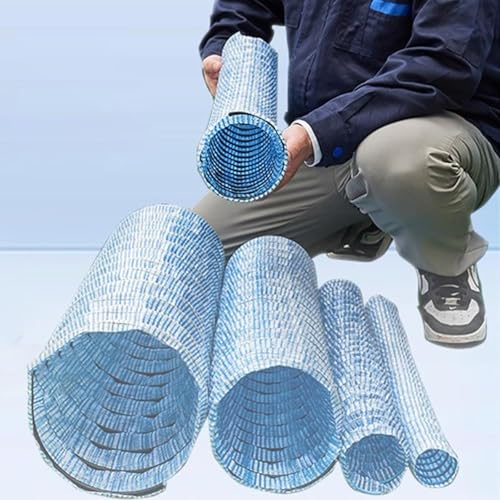
Enough buried pipe for a whole yard, filter fabric included
FENNIDICE Corrugated Perforated French Drain Pipe
A hundred feet of flexible perforated pipe with a non-woven filter layer already wrapped around it. For a soggy lawn, this is the part that actually does the work, and buying the filter separately for that length would cost real money.
$308.43fromAmazonA soggy yard is a subsurface problem, and subsurface problems need buried perforated pipe. This roll gives you 100 feet in one order, which covers most full-yard runs without splicing in a second product. The accordion construction bends around tree roots, garden beds, and corners without elbow fittings, so you spend less time cutting and gluing and more time backfilling.
The integrated filter layer is the reason to choose this over plain corrugated pipe. Fine silt is what kills French drains. It migrates through gravel, works into the perforations, and slowly chokes the flow until the system does nothing. Published drainage guidance puts unfiltered drains at 5 to 10 years before failure in fine soils, and properly filtered ones at 30 to 40. Wrapping 100 feet of pipe in a separate sock is tedious and not cheap, so having it built in is a genuine saving of both.
There's a steel wire spiral inside the pipe wall. That matters more than it sounds — cheap corrugated drain pipe has a habit of going oval under a couple feet of wet soil, and an oval pipe carries less water. The wire keeps the cross-section round under burial load. Two lengths connect directly to each other if you need more than 100 feet, or you can join them with a length of PVC.
If your yard is heavy clay, this is the pipe to reach for. Clay doesn't let water percolate away, so the drain has to convey it to a discharge point, and clay particles are exactly the fine material that clogs unprotected perforations. The 360-degree filter wrap is doing its most useful work in that soil.
Flaws but not dealbreakers
It's the most expensive item here, and shipping usually runs a week and a half. Order it before the forecast turns, not after your yard has already flooded.
No vehicle traffic over the installation. That rules out running it under a driveway or a spot where you park the trailer, and it's a real constraint on where the trench can go.
For a short, straight run of 25 feet or less, this is overkill. Rigid perforated PVC is easier to hold at a precise slope and costs considerably less for that length.
This listing has no owner feedback yet, so nobody's reported back on how it holds up after a few winters. The construction reads well on paper, but that's what we're going on.
Budget pick
The cheap part that decides how long everything else lasts
NDS FWFF67 Filter Fabric Wrap for Flo-Well®
A 2-by-7-foot sheet of nonwoven polypropylene geotextile made to wrap an NDS Flo-Well dry well. It's the least glamorous thing in this guide and the one most likely to determine whether your drain still works in 20 years.
$12.05fromAmazonFilter fabric is the highest-leverage decision in a drain project, and it costs almost nothing. Silt is what ends these systems. It seeps through gravel, packs into pipe perforations and weep holes, and flow drops off until the drain is just a buried box of dirt. Published guidance is blunt about the timeline: unfiltered drains clog in 5 to 10 years in fine soil, filtered ones run 30 to 40. Skipping this is the most common way a weekend of digging goes to waste.
It's cut to wrap the sidewalls of a Flo-Well dry well tank, which is the natural downstream end of a French drain if you don't have a low spot to daylight into. You punch the weep holes, wrap the tank, tape the seam, and bury it. Owners describe the fit as exact — no measuring, no trimming — and say scissors and duct tape are the only tools involved.
But you don't have to own a Flo-Well to use it. The same fabric works as a trench liner, behind a retaining wall, under a pond, or as a wrap around exposed fittings in a pipe run. It works in clay, sand, and loam alike. Of everything in this guide, this is the piece we'd tell you not to leave out of the cart.
This is also the product with the longest owner track record here by a wide margin, and the feedback is consistently mundane in the best way: it fits, it cuts easily, it stays put under river rock. That's what you want from a component you're about to bury and never look at again.
Flaws but not dealbreakers
It's an accessory, not a system. Nothing about this drains water on its own — you still need pipe, gravel, and an outlet.
At 2 by 7 feet it doesn't go far. A full trench liner for a long run means buying several, and at that point a wide roll of landscape geotextile may make more sense. A few owners also note the actual width measures closer to 20 inches than a full 2 feet, so measure before you count on exact coverage.
Runner-up
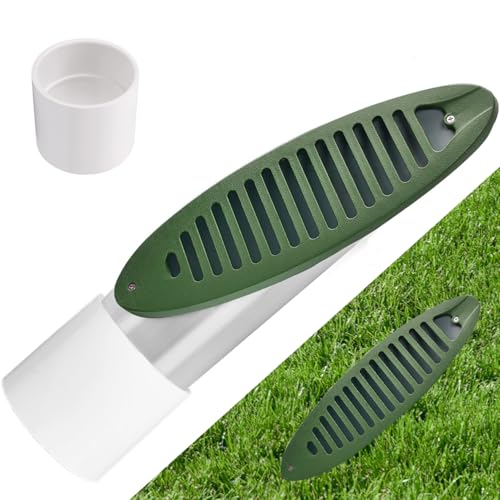
A tidy, heavy outlet for the end of a pipe run
4 Inch Yard Drain kit,French Drain kit
An angled emitter and 4-inch connector in one piece, so you don't go hunting for an adapter. It terminates a pipe run or a sump pump discharge at a grate that sits flush with the lawn and keeps critters out.
$33.99fromAmazonEvery French drain needs somewhere to end. Skip that step and you've buried a storage tank that eventually backs up into the yard you were trying to dry out. This piece handles the ending: a pre-angled grate that matches the natural slope of soil at an outlet, with a 4-inch SCH40 DWV connection molded in so there's no adapter to source separately.
The build quality is the surprise here. At 3.2 pounds with a quarter-inch wall, owners repeatedly say it's heavier than they expected and closer to true schedule 40 than the thin drain pipe they'd assumed they were getting. It's the least expensive product in this guide by a good margin, which usually means flimsy. This one isn't.
The grate comes off with two stainless screws, so clearing leaves out of it is a two-minute job rather than an excavation. The green tint disappears into grass reasonably well. Owners using it on sump pump discharge lines report a clean, finished look and no trouble with animals getting in at the pipe end.
One useful piece of owner feedback: it's designed as an inlet-style grate, and several people have used it as a discharge outlet instead. It works either way, but if you're on a genuinely flat yard, know that it isn't a pop-up emitter — it's an open grated outlet, and standing water can enter as well as leave.
Flaws but not dealbreakers
It's an outlet, and only an outlet. No pipe, no gravel, no fabric. Anyone expecting a complete kit from the name will be disappointed when a single fitting shows up.
Check your pipe before ordering. It's built around a 4-inch inner diameter, and the most common owner regret is discovering the existing line or the yard's slope doesn't suit it after the box arrives.
Who this is for
This guide is for homeowners fixing drainage themselves. If water pools on your driveway, patio, or pool deck, you want a channel drain — a surface product with a grate. If your lawn stays spongy for two days after rain, you want buried perforated pipe. Plenty of properties need both: pipe to collect water across the yard, a channel to intercept runoff at the hardscape, and a dry well or downhill outlet to receive it all. Professional installation is priced per linear foot and adds up fast on a long run, which is why the DIY math works out for most people.
We're not covering foundation waterproofing here. An exterior perimeter drain at footing depth is a different job, usually 36 to 48 inches down along the wall, and a wet basement caused by hydrostatic pressure or cracked foundation may need a specialist rather than a kit. We also aren't covering sump pumps, and if your yard has no achievable slope at all, that's the direction to look. Everything here assumes you can get at least a 1% grade or reach a dry well.
How we picked
Problem match: we sorted surface channel drains from subsurface perforated pipe first, because using the wrong type is the most common and most expensive mistake in this category. Filtration: we favored products with geotextile built in or products that exist to supply it, since published guidance ties filter fabric to whether a drain lasts decades or years. Completeness: we counted grates, end caps, outlets and couplers from spec sheets, because a kit missing three parts isn't a kit. Parts availability: we preferred brands whose fittings are stocked at ordinary home centers over unbranded listings with no replacement path. Owner-reported failures: we read customer feedback for patterns — loose end caps, adapter mismatches, slope surprises — rather than isolated gripes.
Other french drain kits worth considering
If you want a metal grate instead of plastic: The French Drain Kit for Yard ($144.99) — This wide channel pairs a stainless steel grille with an SMC resin base, and it comes in a meter-long section you can cut to fit. Stainless makes sense in places where a plastic grate takes abuse or sits permanently damp — a pool surround, a coastal patio, a spot that gets scraped by a snow shovel every winter. SMC resin also handles freeze-thaw better than basic polymer, which matters in cold climates. What you give up is brand backing: there's no warranty network, no stocked replacement parts, and no owner feedback on this listing to tell you how it ages. You'll also need glue for channel-to-channel joints and a groove at least an inch and a half wider than the channel.
The competition
This is what our research surfaced in this category, not a survey of everything sold. Drainage parts are a fragmented market, and plenty of good pipe and channel gets sold at local supply houses without ever appearing in an online lineup. The product below is worth knowing about, but it lost to a pick for reasons we'll explain.
The French Drain Kit for Yard - 6.7 ($191.99) — This is a 6.7-inch wide channel with a stainless grate and resin base — about an inch and a quarter wider than our top pick, and priced well above it. Width buys flow capacity, so there are real cases for it: a pool surround catching splash and rain at once, a large garage apron funneling to a single outlet, a retaining wall toe drain taking hillside seepage. Outside those, you're paying a premium over a name-brand channel for capacity you won't use. The listing is unbranded with no warranty path and no owner feedback yet, which is a lot to accept at this price. Buy it if you've done the math and a 5-inch channel genuinely won't keep up.
Installation notes
Slope is the whole game. Before you dig, run a string line with a level and confirm at least an inch of drop per 10 feet across the entire run — and confirm your outlet sits lower than the wet spot. A standard trench is about 12 inches wide and 18 to 24 inches deep, with gravel under the pipe and gravel over it, all of it wrapped in geotextile so soil can't work in from the trench walls. Keep yard drains at least 3 feet off the foundation, and don't discharge onto a neighbor's property. Once it's buried, the maintenance is nearly nothing: check the outlet once a year, make sure it flows freely, and pull leaves out of any grate. Pipe almost never fails. The filter zone clogging is what ends these systems.
Questions we get
What's the difference between a French drain and a channel drain?
A French drain is buried perforated pipe that collects water from the soil around it along the whole run. A channel drain is a surface trench with a grate that catches water running across a driveway or patio. Soggy lawn means French drain. Water sheeting across concrete means channel drain. Many properties need both.
How deep does a French drain need to be?
A typical residential trench runs about 12 inches wide and 18 to 24 inches deep, holding a minimum 1% grade the entire way. The perforated pipe sits on a gravel bed with more gravel above it, and the whole thing gets wrapped in geotextile fabric. Shallower trenches can work in sandy, fast-draining soil, but they clog sooner from surface silt.
Can I install one myself?
Most yard drains are within reach if you're comfortable with basic landscaping work. You need a trenching spade or a rented trencher, a laser level or string line to verify slope, and something to cut pipe with. The savings against professional per-foot pricing are substantial on a long run. The one thing to get right is grade — check it across the whole run before you backfill, because fixing it afterward means digging it all up again.
Do these kits include gravel?
No. Buried perforated pipe needs gravel backfill around it, and you'll want roughly a cubic yard of pea gravel or washed drainage stone per 10 to 15 feet of standard trench. Channel drains are the exception — they set flush in the hardscape and need no gravel at all. Budget for the stone separately and have it delivered if the run is long.
Should I use 4-inch or 6-inch pipe?
Four-inch handles the large majority of residential drainage. Go to 6-inch when the catchment includes more than about half an acre of hard surface, the soil is heavy clay with very slow percolation, the run exceeds 100 feet, or you're combining downspout and sump pump discharge in one line. Everything in this guide is built around the 4-inch residential standard.
What happens if I skip the filter fabric?
Fine silt and clay migrate through the gravel and into the pipe perforations, flow slowly drops off, and eventually the drain stops moving water at all. Published drainage guidance puts that failure at 5 to 10 years in fine soils, against 30 to 40 years for a properly filtered system. Fabric is a minor part of a drain project and the one with the biggest effect on how long it lasts. Don't skip it.
Why you should trust us
For this guide:
- We compared manufacturer spec sheets across all six listings for flow rates, load ratings, connection standards and included components.
- We read published drainage guidance from home-improvement sources on trench depth, minimum grade, filter fabric and expected system lifespan.
- We read owner feedback for each product to identify recurring problems — loose end caps, pipe-size mismatches and slope surprises — rather than isolated complaints.
- We read owner reviews on every listing, weighted toward the critical ones, because that is where the recurring failures show up.
- We have a systematic way of automatically fetching the latest prices, so the numbers on this page stay current.
- This is a research-focused guide, so the team may not own every product listed — though we often do own the top winners, which gives us extra context for the recommendations.
- We don't accept free products, and the retailer commission never changes which product we recommend.
Sources
How to Install a French Drain — This Old House specifies 12" wide by 18–24" deep trenches with minimum 1% grade throughout the pipe run, This Old House
French Drain Installation Guide — Family Handyman states geotextile-filtered drains last 30–40 years; unfiltered drains clog within 5–10 years, Family Handyman
Amazon product listings and owner reviews for all 6 products
Manufacturer specification pages for each product
Some passages in this guide may be paraphrased with AI help. Prices are refreshed automatically.
More like this.
Continue exploring home reviews and recommendations.

The Best Drain Snakes And Augers
A slow drain isn't an emergency until it is. You notice the tub filling around your ankles, or the kitchen sink holding an inch of gray water after you…

The Best Shower Drain Hair Catchers
Hair is what clogs a shower drain. Not soap, not hard water, not old pipes - hair. It slips through the drain cover, tangles around whatever's already…

The 6 Best Oil Drain Pans on Amazon in 2026: Tested & Reviewed for DIY Mechanics
Find the best oil drain pan for your garage - from ultra-low-profile picks for motorcycles to 12-quart options for SUVs. Expert-tested, ranked by capacity and design.

The Best Cordless Power Tool Combo Kits
A combo kit is how most people start a cordless collection, and the choice sticks around longer than you'd think. You're not really buying a drill and an…

The Best Permanent LED Eave Lighting Kits
Permanent eave lights live under your roofline all year and do two jobs. Most nights they're a warm white accent that makes the house look finished and…

The Best Aluminum Cable Deck Railing Kits
Cable railing sells itself on one thing: you stop noticing the railing and start noticing the yard. Thin horizontal cables block a fraction of the view…