The Best Drain Snakes And Augers
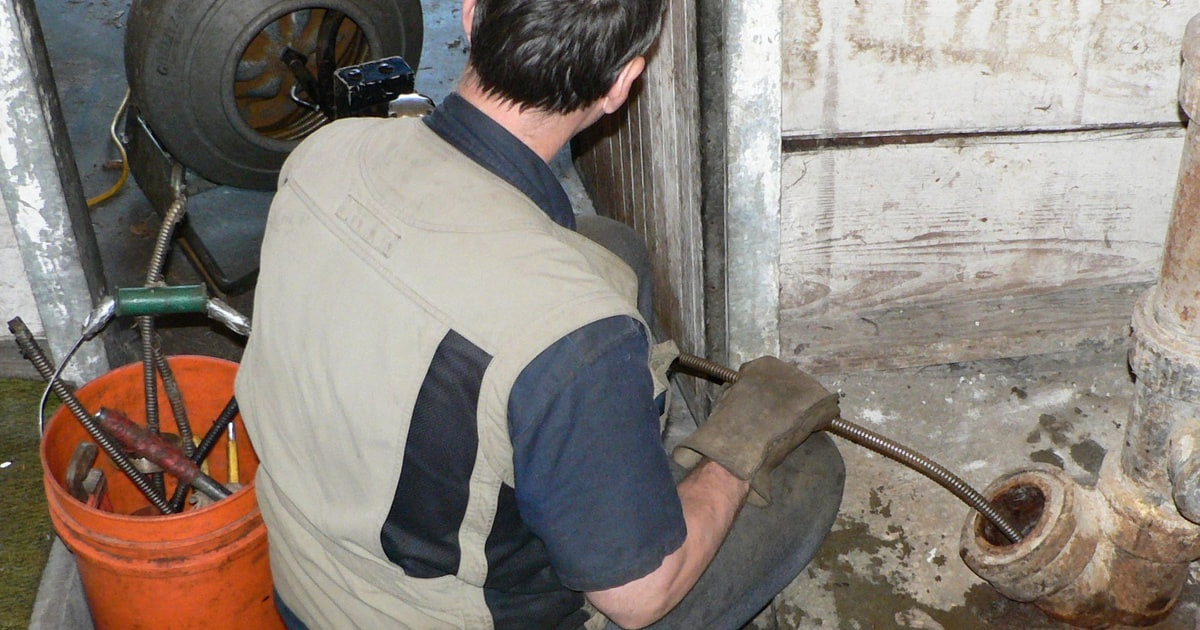
A slow drain isn't an emergency until it is. You notice the tub filling around your ankles, or the kitchen sink holding an inch of gray water after you rinse a pan. Then one morning nothing goes down at all. A drain snake is the tool that fixes this without a service call, and most household clogs sit within about 25 feet of the opening — hair and soap in the bathroom, congealed grease in the kitchen. The right tool reaches that far and grabs what's there.
Here's the part nobody puts on the box: none of these tools are pleasant to use. You'll pull out something that smells terrible, and you'll probably get water on the floor. Cheap cables kink and take a set, so they stop pushing around the second bend. Even good machines can jam a cable in an old trap. And no consumer tool here touches a main sewer line clogged with tree roots — that's a job for a plumber with a 100-foot machine and a camera.
Most people should start small and only buy bigger if the clog wins. We think that the RIDGID Power Spin with AUTOFEED is the best drain snake for most people, and that the POPULO 25Ft Cordless Electric Drain Snake Auger is the one to buy if you want a powered drum that can push further into a kitchen or laundry line.
Everything we recommend
Enough reach and power for the clogs you'll actually get

A powered drum that saves your arm on the stubborn ones

The right first move on a hair clog, and it costs almost nothing

Cordless pro power, if you're clearing drains for a living
At a glance
| Product | Cable Length | Cable Diameter | Price | |
|---|---|---|---|---|
 | RIDGID Drain Cleaning Machine Bundle with K-400Also consider | 75 Ft / 25 Ft | — | $1,464.27 |
| MILWAUKEE M18 FUEL Drain Snake W/Upgrade pick | — | — | $554.99 |
| Ridgid GIDDS-813340 41408 Power Spin with AUTOFEEDTop pick | 25 Ft | 1/4 In | $70.99 |
 | General Wire Spring 25HE2 General Flexicore CableAlso in lineup | 25 Ft | 3/8 In | $102.78 |
| POPULO 25Ft Cordless Electric Toilet Drain SnakeAlso great | 25 Ft | — | $104.99On sale |
| FlexiSnake Drain Weasel Sink Snake Hair ClogBudget pick | 18 In (Wand) | — | $19.99 |
 | Cobra Products 10150 DRAIN AUGER TOTEAlso in lineup | 15 Ft | 1/4 In | $14.99On sale |
How we picked
Cable length and reach. We compared rated cable lengths against where household clogs actually sit. Published plumbing guides put most branch-line clogs within 25 feet, so we treated that as the baseline and flagged anything shorter as a trap-only tool.
Cable diameter and build. We read spec sheets for cable gauge and construction, because thin single-strand spring wire kinks and takes a set. General Wire's engineering data credits its multi-strand Flexicore core with roughly 60% fewer kinking failures under continuous rotation.
Mess and safety. We favored enclosed drums over open frames. Wirecutter's editors have noted that sealed housings keep the rotating cable contained and cut down on splatter, which matters when you're working over a wet floor.
Power that fits the job. We looked at whether each tool's power source matches the clogs it claims to clear. Bob Vila's team found electric drum augers clear grease-compacted kitchen clogs up to four times faster than manual snakes, so we weighted motorized options higher for kitchen lines.
Owner-reported durability. We read owner feedback for repeated failure patterns rather than one-off complaints. Handles that pop off, batteries that fade after a few charges and auto-feeds that jam all showed up often enough to shape our picks and our flaws.
Top pick
Enough reach and power for the clogs you'll actually get
Ridgid GIDDS-813340 41408 Power Spin with AUTOFEED
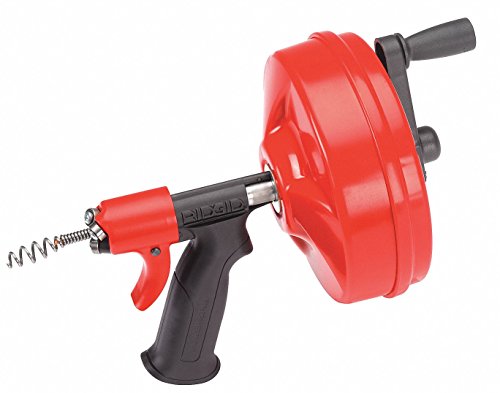
The RIDGID Power Spin pairs a 1/4-inch, 25-foot Maxcore cable with an enclosed drum and a self-feed trigger. You can crank it by hand or chuck it into a cordless drill, which is how most people end up using it after the first clog.
$70.99fromAmazonFor a tub, a shower or a bathroom sink, this is the tool to reach for first. A 1/4-inch cable at 25 feet covers the p-trap and the branch line beyond it, which is where the clog almost always is. RIDGID rates it for 1-1/2-inch lines, so it also works as a toilet auger. That covers nearly everything a house throws at you short of the main line.
The enclosed drum is the quiet reason this one beats a coil of bare wire in a tote. Your hands never touch the cable, so the grime stays inside the housing instead of on your forearms and your bathroom floor. Wirecutter's editors have made the same point about sealed drums generally: they cut down on splatter and mess compared with open-frame designs. That matters more than it sounds like it does.
Drop the handle and put a variable-speed drill on it, and the thing turns into a different tool. Owner feedback lands on this consistently — the hand crank works, but it's slow and your shoulder feels it. With a drill spinning the drum toward 500 RPM, a tub clog that took twenty minutes of cranking is often done in a couple of minutes. If you own a drill, use it.
It also weighs about four and a half pounds. You can carry it up a flight of stairs in one hand, store it on a shelf, and pull it out twice a year without dreading the setup. That's a real advantage over the professional machines further down this guide, which live on a cart for a reason.
Flaws but not dealbreakers
The hand crank handle is the weak spot. Enough owners report it popping off mid-turn that we'd treat drill use as the default rather than the upgrade. If you don't own a drill, that's worth knowing before you buy.
A 1/4-inch cable is thin. It's the right size for a 1-1/2-inch bathroom line, but push it into a badly grease-packed kitchen drain and it can bind or stall instead of boring through. For that, you want a heavier cable and a motor.
Also greatOn sale
A powered drum that saves your arm on the stubborn ones
POPULO 25Ft Cordless Electric Toilet Drain Snake
This cordless POPULO runs a reinforced 25-foot cable off a battery, with a lever that feeds, holds or retracts while the drum spins. It's rated for 3/4-inch to 2-inch household lines and comes with an extension tube for toilets.
$104.99fromAmazonList priceThe appeal here is simple: the motor does the turning. On a kitchen line packed with cooled grease, a hand-cranked snake mostly polishes the blockage while your arm gets tired. Bob Vila's testing team found electric drum augers clear grease-compacted kitchen clogs up to four times faster than manual hand snakes. That gap is the whole reason to spend more.
Cordless is the right call in a bathroom. No extension cord snaking across a wet tile floor, no hunting for an outlet behind the vanity, no GFCI worries while you're standing in a puddle. You charge the battery, carry the tool to the clog, and work. For a job that's wet by definition, cutting the cord out of the equation removes a genuine hazard.
The auto-feed lever is what makes it usable for someone who's never done this. You hold the lever to advance, release it to hold position and feel for resistance, and flip it to pull the cable back in. Owners who read the instructions first tend to report clean results on kitchen and laundry lines; owners who don't tend to report a tangle. Read the instructions.
It's also honest about its limits, which we appreciate. The listing says plainly that it's for soft clogs — hair, soap, grease, paper, sludge — and not for main sewer lines, tree roots or hard objects. A lot of budget augers imply they'll do everything. This one tells you where to stop.
Flaws but not dealbreakers
The battery is the recurring complaint. Several owners describe capacity dropping noticeably after a handful of charge cycles, and a dead battery mid-clog means the job stops. A spare pack is sold separately, and for a landlord doing this regularly we'd buy one.
This isn't a machine built for years of weekly use. Owners who like it are clear-eyed that it's a homeowner tool that paid for itself on one or two clogs, not a professional drum machine.
The charger transformer runs warm enough that some owners notice it. Nothing dangerous has surfaced in the feedback we read, but plug it in somewhere open rather than in a closed cabinet.
Budget pick
The right first move on a hair clog, and it costs almost nothing
FlexiSnake Drain Weasel Sink Snake Hair Clog
The FlexiSnake Drain Weasel is an 18-inch flexible wand covered in micro-hooks, on a handle that spins 360 degrees. It doesn't bore through anything. It grabs a hair mat and pulls it out, which is what a slow bathroom sink usually needs.
$19.99fromAmazonMost bathroom clogs aren't really blockages — they're a wad of hair and soap scum sitting in or just past the strainer. The American Society of Plumbing Engineers puts hair and soap scum behind roughly 82% of bathroom drain clogs. You don't need a motor for that. You need something thin enough to slip past the stopper and barbed enough to hold on when you pull.
Buy this one first, before anything bigger. It's a small fraction of the outlay of the powered tools here, it takes about a minute to use, and if it works you've saved yourself the trouble of hauling out a drum machine. If it doesn't work, you've learned the clog is deeper than the trap, which tells you which tool to reach for next. That's useful either way.
The wand's flexibility is the underrated part. Tub drains often turn hard right behind the strainer, and a stiff cable with a cutter head fights that bend. A thin flexible wand follows it. Owners with tub drains at awkward angles keep landing on this tool after rigid snakes failed them.
Five disposable wands come in the kit with one reusable handle. That's the correct design. Pulling a hair mat off a barbed wand is genuinely unpleasant, and throwing the wand away is worth the small cost. It's also chemical-free, which matters if your pipes are old.
Flaws but not dealbreakers
The reach is 18 inches. That's the trap and not much else. If the clog is 6 feet down the branch line, this tool can't touch it and no amount of technique changes that.
It won't do anything for grease. Micro-hooks grab fibrous material; congealed kitchen fat just slides off them. Keep this one for the bathroom.
Upgrade pick
Cordless pro power, if you're clearing drains for a living
MILWAUKEE M18 FUEL Drain Snake W/
Milwaukee's M18 FUEL drain snake puts a brushless motor and an enclosed drum on the 18V battery platform, with auto-feed and a rubber-padded base. Milwaukee rates it at 250 in-lbs of torque, which is corded-machine territory.
$554.99fromAmazonThis is the pick for someone who does this work every week, not every other winter. Milwaukee's specifications put it at 250 in-lbs of torque — comparable to corded half-horsepower machines — off a battery you probably already own if you're in the trades. That combination is the whole pitch, and nothing else in this guide gets close to it.
Cordless matters more on a job site than at home. You're in a stranger's bathroom, the outlet is behind a vanity or doesn't exist, and the floor is wet. Plumbers who use this one describe the same routine: grab the tool, walk to the fixture, clear the sink or tub without pulling the trap, and leave. No cord to run, no cord to coil back up.
The details show that someone who does this work designed it. The drum is enclosed, so the spinning cable stays contained. The base is rubber-padded, so you can set it on a customer's countertop without leaving marks — a small thing that saves an awkward conversation. Auto-feed drives the cable in without you sawing at it by hand.
At 8.2 pounds it's still a carry-in-one-hand tool, which is the point of the category. A cart-mounted machine clears more, but you don't take a cart up to a second-floor bathroom for a slow sink.
Flaws but not dealbreakers
It's the most expensive tool in this guide, and that's before the battery and charger if you're not already on the M18 platform. For two clogs a year, that math doesn't work.
Not every owner is happy. A minority report the auto-feed mechanism failing and the battery running short on longer jobs, and describe the tool as underpowered for real plumbing work. The 25-foot cable is the honest constraint behind that — this is a sink-and-tub machine, not a main-line machine.
The listing we're looking at is a refurbished unit, tested and repackaged rather than new, and it may arrive in a generic box. That's fine for a lot of buyers, but go in knowing it.
Who this is for
Buy one of these if you own your home and you've had the same drain back up more than once. A snake pays for itself fast — Angi and HomeAdvisor's cost data shows a homeowner auger costs less than a single visit from a plumber to clear one drain. Landlords and property managers benefit even more, since you're doing this across several units a year. And if you've been reaching for the bottle of chemical cleaner, swap it for one of these; This Old House's plumbing editors point out that lye and sulfuric acid formulas degrade PVC joints and corrode cast iron over repeated use.
This guide covers hand-held and portable drain tools for household lines, roughly 1-1/4 to 4 inches. It doesn't cover truck-mounted machines, hydro-jetters or sewer cameras. If your main line is backing up into the basement, or you have mature trees over your sewer lateral, stop reading and call a plumber — main-line work typically needs 75 to 100 feet of cable and a machine built to drive it. Renters should also check with a landlord first, since a snake that jams in an old trap can turn a small problem into a bigger one.
How we picked
We built the shortlist from manufacturer specifications, published tool reviews and recurring themes in owner feedback, weighing five things. Reach: the cable has to get past the trap and down the branch line, which for most household clogs means about 25 feet. Cable quality: diameter and construction decide whether a cable rounds the second bend or kinks and takes a permanent set. Containment: enclosed drums keep the spinning cable and everything it drags out inside the housing, so less of it ends up on your floor. Matched power: hand tools are fine for hair, but grease needs a motor, and published testing shows electric drum augers clearing those clogs several times faster. Durability: we looked for failure patterns that showed up again and again in owner reports — weak batteries, handles that detach, auto-feeds that jam.
Other drain snakes and augers worth considering
If you're outfitting a truck or managing a lot of units: The RIDGID Drain Cleaning Machine Bundle with K-400 ($1,464.27) — This RIDGID bundle pairs the K-400 drum machine with the K-45AF sink machine, and it's a different class of purchase from everything else here. The K-400 runs 75 feet of solid-core cable at 165 RPM through 1-1/2-inch to 4-inch lines and rides on a transport cart; the K-45AF handles small lines with 25 feet of inner-core cable and two-way AUTOFEED that advances up to 20 feet a minute. The K-45AF has been the top-recommended professional drum auger in This Old House's plumbing tool reviews for years running. What you give up is portability and simplicity — this is heavy, it takes practice to run safely, and it's far more machine than a homeowner with an annual tub clog needs. Gloves and manuals for both machines are included, which tells you something about the learning curve.
The competition
These are the other tools our research surfaced, not a complete map of the market. Each one lost to a pick for a specific reason, but a couple make sense for a narrow buyer.
The General Wire Spring 25HE2 General Flexicore Cable ($102.78) — The General Wire Spring 25HE2 is a 3/8-inch by 25-foot Flexicore cable with a female connector — a replacement cable for a machine, not a complete tool. The cable itself is excellent: General Wire's engineering data credits the multi-strand inner core with roughly 60% fewer kinking failures than single-strand spring wire under continuous rotation, and plumbers buy it for exactly that reason. But you need a compatible drum machine to spin it. If you already own one and you're tired of replacing kinked cable, this is the upgrade to buy. If you're shopping for your first drain tool, it won't do anything on its own.
The Cobra Products 10150 DRAIN AUGER TOTE ($14.99) — The Cobra 10150 is a 1/4-inch by 15-foot high-carbon spring wire auger in a reusable tote, and it's the most basic tool here. Fifteen feet is short — enough for a trap and a little beyond, but not enough for a branch-line clog — and there's no drum enclosure, so your hands are on the cable and the grime is on your hands. Owner feedback repeatedly flags the offset handle as not offset enough to generate real torque, which means fighting the cable around bends. Some buyers also found the auger head larger than the listed cable diameter suggests, which matters if your trap only accepts 1/4 inch. For a small step up in outlay, the Drain Weasel handles hair better and the RIDGID Power Spin handles everything else better. Choose this only if you specifically want a bare cable and tote to keep in a truck.
How to snake a drain without making a mess
Put a towel and a bucket down before you start, and wear gloves — whatever comes out will be worse than you expect. Feed the cable in slowly and let the drum do the turning; forcing it around a bend is how cables kink and how old traps crack. When you hit resistance, don't just push. Rotate, let the head work into the clog, then advance a few inches at a time. Once water drains, run hot water for a minute to flush what you broke loose. Then pull the cable out through a rag to strip the gunk off as it comes, rinse it, and dry it before it goes back in the drum. A wet cable coiled in a closed housing rusts, and a rusted cable is a cable that snaps.
Questions we get
What's the difference between a drain snake and a drain auger?
In everyday use the terms overlap, and manufacturers use them interchangeably. Loosely, a snake is any flexible cable you push down a drain, while an auger usually means a cable with a cutting or boring head on the end, often stored in a drum. The practical distinction that matters is what's on the tip: a barbed or hooked head pulls hair out, while a bulb or spiral head bores through grease and sludge.
How long a cable do I need for a kitchen sink clog?
Twenty-five feet handles nearly all of them. That's enough to clear the p-trap and run well down the branch line, which is where kitchen grease usually collects. If 25 feet doesn't reach it, the clog is likely in the main line, and that needs 75 to 100 feet and a machine built for it.
Can a drain snake damage old galvanized or PVC pipes?
It can, though it's much gentler than the alternative. The risk is forcing a cable hard around a tight bend or through a corroded galvanized section that's already thin. Go slowly, let the tool rotate rather than shoving, and back off if the cable binds. Chemical cleaners are the bigger danger to old pipe — This Old House's plumbing editors note that lye and sulfuric acid formulas degrade PVC joints and corrode cast-iron fittings with repeated use.
Can a drain snake clear tree roots in a sewer line?
Not the ones in this guide. Root intrusion needs a cutter head on a heavy cable driven by a full-size machine, usually 75 to 100 feet of it, and often a camera to find where the roots got in. The POPULO's listing says outright that it isn't for tree roots, and that's an honest warning that applies to every portable tool here. Call a plumber for this one.
Is a cordless professional model worth it for occasional home use?
Probably not. The Milwaukee M18 makes sense if you're already on that battery platform and you clear drains regularly for work, where the time saved adds up across jobs. For two clogs a year, the RIDGID Power Spin does the same job on a bathroom line for a fraction of the outlay. Buy the pro tool when the frequency justifies it, not before.
Are chemical drain cleaners or a snake better for grease clogs?
A snake, in almost every case. Chemical cleaners often just carve a channel through the grease, so the clog returns in a few weeks, and repeated use corrodes pipe joints. A powered drum auger physically scours the buildup off the pipe wall — Bob Vila's team found electric augers clearing grease-compacted kitchen clogs up to four times faster than manual snakes. Mechanical is safer for your pipes and more durable as a fix.
Why you should trust us
For this guide:
- We read manufacturer specification sheets for every tool in this guide, comparing cable length, cable diameter, rated pipe sizes and power source against the clogs each one claims to clear.
- We reviewed published tool coverage from This Old House, Bob Vila, Family Handyman, Popular Mechanics and Wirecutter, along with General Wire Spring's engineering data on cable construction.
- We read through owner feedback for each listing looking for repeated failure patterns — fading batteries, handles that detach, cables that kink — rather than isolated complaints.
- We read owner reviews on every listing, weighted toward the critical ones, because that is where the recurring failures show up.
- We have a systematic way of automatically fetching the latest prices, so the numbers on this page stay current.
- This is a research-focused guide, so the team may not own every product listed — though we often do own the top winners, which gives us extra context for the recommendations.
- We don't accept free products, and the retailer commission never changes which product we recommend.
Sources
Best Drain Snakes of 2026 — This Old House Reviews, This Old House
Best Drain Snake and Auger Reviews — Bob Vila, Bob Vila
Best Drain Snakes Tested in 2026 — Family Handyman, Family Handyman
Best Drain Snakes — Popular Mechanics, Popular Mechanics
How to Clear a Clogged Drain — This Old House Plumbing Guide, This Old House
RIDGID K-45AF Product Specifications — RIDGID Official, RIDGID
Milwaukee M18 FUEL Drain Snake Product Page — Milwaukee Tool, Milwaukee Tool
Plumbing Drain Clog Statistics — American Society of Plumbing Engineers, American Society of Plumbing Engineers (ASPE)
How to Snake a Drain: Step-by-Step Guide — The Spruce, The Spruce
Drain Snake vs. Chemical Drain Cleaners: Which Is Safer? — Angi, Angi
Average Cost to Snake a Drain — HomeAdvisor / Angi Cost Guide, Angi / HomeAdvisor
Best Drain Snakes — Wirecutter / New York Times, Wirecutter
Amazon product listings and owner reviews for all 7 products
Manufacturer specification pages for each product
Some passages in this guide may be paraphrased with AI help. Prices are refreshed automatically.
More like this.
Continue exploring home reviews and recommendations.

The Best Cordless Ice Fishing Augers
Drilling a hole through 20 inches of ice used to mean yanking a starter cord in the dark with cold hands, then breathing two-stroke exhaust for the rest…

The Best Shower Drain Hair Catchers
Hair is what clogs a shower drain. Not soap, not hard water, not old pipes - hair. It slips through the drain cover, tangles around whatever's already…

The Best French Drain Kits
Standing water in a yard doesn't stay a cosmetic problem for long. Give it a season or two and you'll see dead grass in the low spots, mud tracked across…

The 6 Best Oil Drain Pans on Amazon in 2026: Tested & Reviewed for DIY Mechanics
Find the best oil drain pan for your garage - from ultra-low-profile picks for motorcycles to 12-quart options for SUVs. Expert-tested, ranked by capacity and design.

The Best Boot Trays for a Winter Entryway
A boot tray does one job, and it does it at the exact spot where winter gets into your house. Wet boots come off at the door, the snow melts, and the salt…

The Best Soundproofing Materials for a Home Office or Studio
Noise is the thing that ruins a home office. You can buy a great mic and a fast laptop, but if the neighbor's dog barks through every client call, none of…