The Best Soundproofing Materials for a Home Office or Studio
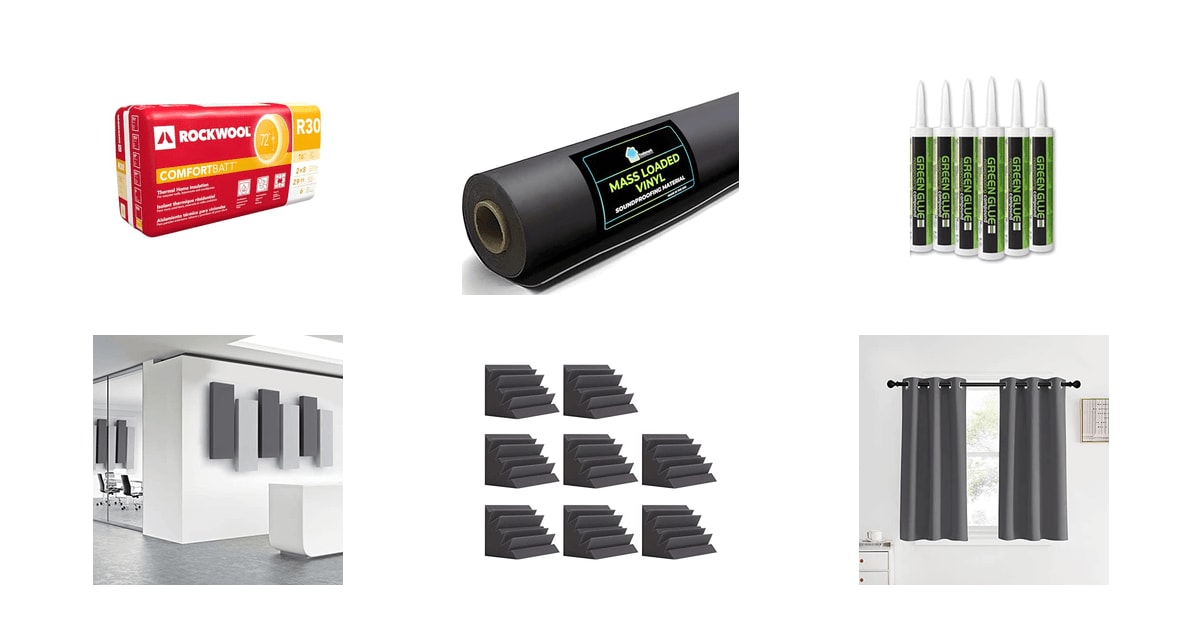
Noise is the thing that ruins a home office. You can buy a great mic and a fast laptop, but if the neighbor's dog barks through every client call, none of it helps. Surveys of remote workers put noise ahead of internet reliability and ergonomics as the top productivity complaint. The good news is that most of the fix is unglamorous and cheap. Seal the gaps, add mass where sound gets through, and put something soft on the walls so your voice stops bouncing around.
Here's the honest caveat: nothing on this page will make your room quiet. Soundproofing and acoustic treatment are two different jobs, and no single product does both well. Foam panels don't block sound. Mass Loaded Vinyl doesn't fix echo. And a wall you've spent a weekend upgrading gets defeated by the gap under your door — a 1% opening passes roughly half the acoustic energy through. Real isolation means opening walls or building a room inside a room, which is out of reach for most of us.
So think in layers. Seal first, then add mass, then treat the room you're recording in. Most people should start with a door seal and a few panels before touching drywall. We think that the Trademark Soundproofing Mass Loaded Vinyl is the best soundproofing material for most people, and that the Acoustimac DMD Stagger panels are the ones to buy if your problem is echo on video calls rather than noise coming through the wall.
Everything we recommend

The one material that actually blocks sound through a wall
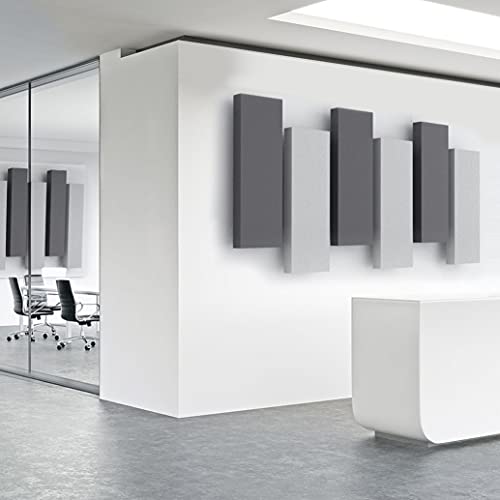
Kills echo and looks good enough for a client-facing room

The best blocking per dollar, if you're willing to hang drywall

Rough-looking, reversible, and shockingly effective on echo
At a glance
| Product | Price | |
|---|---|---|
 | Rockwool RXCB301525Also in lineup | $84.98 |
| Trademark Soundproofing Mass Loaded Vinyl 1lb -Top pick | $269.90 |
| Green Glue Noiseproofing Compound - 6 TubesUpgrade pick | $164.49 |
| Acoustimac DMD Stagger Acoustic Panel Design Pack:Runner-up | $307.95 |
 | 8 Pack - Bass Traps Acoustic FoamAlso consider | $27.99 |
 | NICETOWN Blackout Curtains & Drapes for BedroomAlso consider | $19.95 |
| Sure-Max 12 Moving & Packing Blankets -Budget pick | $183.99 |
How we picked
Blocking versus absorbing. We sorted every product by which problem it actually solves — stopping sound from crossing a wall, or cleaning up sound inside the room. Products marketed as doing both got judged on the one they're rated for.
Published STC and NRC data. We prioritized materials with lab-tested numbers from the manufacturer or an independent acoustics lab, not vague claims. For blocking we looked for meaningful STC gains in a documented assembly; for absorption we wanted NRC figures across the full 125–4000 Hz range.
Low-frequency honesty. Bass is where most cheap treatment fails. We checked whether a product does anything below 250 Hz, since thin foam and light fabric fall off a cliff down there and room-mode problems live in that range.
Renter-friendliness. We noted which options install and remove without patching, drilling or a landlord conversation. Reversibility ruled some strong performers out for apartment dwellers even where they made sense for homeowners.
Owner-reported install reality. We read owner feedback for the practical failures that spec sheets hide — packaging damage, off-gassing, tubes splitting, panels that don't line up. A material that works in a lab but fights you on a ladder loses points.
Top pick
The one material that actually blocks sound through a wall
Trademark Soundproofing Mass Loaded Vinyl 1lb -
A dense, limp vinyl sheet that adds a pound of mass per square foot to any surface. It's the closest thing to a universal blocker — walls, ceilings, floors, ductwork, even around noisy pipes — and it's the material most DIY soundproofing guides build around.
$269.90fromAmazonMass is the only thing that reliably stops airborne sound, and this is the most straightforward way to add it. The manufacturer rates this 1 lb/sq ft sheet at STC 27 on its own. Sandwiched into a decoupled drywall assembly, lab data puts the composite wall at STC 50 to 60 — past the STC 45 that's generally recommended for home recording. Nothing else you can hang on a wall gets you numbers like that.
It's genuinely versatile in a way foam and panels aren't. Owners report using it under rugs on a condo floor to cut the sound of downstairs neighbors, wrapping it around a generator enclosure, and stapling it to studs before drywall goes up. The 4' × 25' roll covers 100 square feet, which is enough for one shared wall in a typical 10×12 office with some left over for a door or a vent.
The odor question matters more than you'd expect. Cheap MLV from other sellers is a known problem — several owners describe buying vinyl elsewhere that off-gassed so badly they pulled it back out after installation. This one is made from virgin material with no regrind, and owner feedback on smell is consistently positive. In a small closed room where you sit eight hours a day, that's not a minor detail.
One thing to be clear about: this blocks sound, it doesn't absorb it. If your complaint is that your voice sounds boxy on Zoom, MLV won't help at all. Buy it when the problem is noise crossing a boundary — your podcast leaking into the baby's room, or traffic coming through a shared wall.
Flaws but not dealbreakers
It's heavy and awkward. A 100-square-foot roll weighs 100 pounds, and owners consistently say it takes two people to hold a sheet up while a third tacks it into place. Plan on a helper and a full afternoon.
It only works as part of an assembly. Owners who tape it to a fence or drape it over a wall and expect silence come away disappointed, and that's a fair reaction to unfair expectations. To get the big STC numbers it needs to be sandwiched between layers or sealed at every seam and edge — a single unsealed gap along the top undoes much of the benefit.
It's the most expensive way to cover a lot of square footage on this list. For a whole room including the ceiling, the material cost adds up fast, which is why most people treat only the one wall the noise actually comes through.
Runner-up
Kills echo and looks good enough for a client-facing room
Acoustimac DMD Stagger Acoustic Panel Design Pack:
Six fabric-wrapped panels with a high-NRC mineral core and a real wood frame. They cut the harsh reflections that make a home office sound like a bathroom, and unlike foam wedges, they don't announce that you've turned the spare bedroom into a studio.
$307.95fromAmazonIf your recordings sound thin and echoey, this is the fix — not more blocking. Acoustimac rates the core at NRC 0.95 or higher on average, meaning almost all the mid and high frequency energy hitting the panel gets absorbed instead of bouncing back into your mic. Owners describe rooms going from lively and fatiguing to controlled after mounting six of them. That's the single biggest audible upgrade most home offices can make.
The build quality is what separates these from bargain panels. Each one uses a cabinet-grade wood inner frame with backing, weighs around eight pounds, and carries an ASTM E84 Class A fire rating — which matters if you're covering a lot of wall in a room you sleep near. The 3' × 1' × 2" size is easy to arrange in a stagger pattern across a wall, and the pack ships with gray and charcoal panels so you get some visual variety without ordering custom colors.
Appearance is a real buying criterion here, not a vanity one. If you're on camera for client calls or you share the room with a partner who didn't sign up for a recording studio, fabric-wrapped panels blend into a room the way foam wedges never will. Owners repeatedly mention home theaters and shared living spaces where these look intentional rather than improvised.
Six panels is a sensible starting quantity for a 10×12 room. Put them at the first reflection points on the side walls, behind your monitors or your desk, and on the wall you face. You'll hear the difference on the first recording. What you won't hear is any change in how much noise reaches your neighbors.
Flaws but not dealbreakers
Installation takes measuring and drilling. Hardware is included, but you're locating studs, marking a level line, and getting six panels to hang evenly. Owners who expected peel-and-stick found the job more involved than they wanted, and it's a couple of hours of work.
At 2" thick, these do much less below about 250 Hz than they do up top. For music production you'll still want corner traps to handle bass buildup — these panels won't do that job on their own.
They're the priciest per square foot of coverage in this lineup. Treating an entire room in these adds up quickly, which is why most people mix them with cheaper absorption on the walls the camera never sees.
Upgrade pick
The best blocking per dollar, if you're willing to hang drywall
Green Glue Noiseproofing Compound - 6 Tubes
A viscoelastic damping compound you spread between two layers of drywall before screwing the second layer up. It converts wall vibration into heat, and independent lab testing shows it turning an ordinary partition into something close to studio-grade.
$164.49fromAmazonNo other product here improves a wall this much for this little material cost. Green Glue between two layers of 5/8" drywall is lab-rated at STC 56, against STC 33 for a single drywall layer. That's a 23-point swing from a few tubes of compound — the difference between hearing conversation through a wall and hearing an indistinct murmur. The listing's own claim of up to 9 added STC points is the conservative version.
You don't have to open the wall. That's what makes this the practical upgrade for a homeowner: you're adding a second layer of drywall over the existing one with compound between, not tearing out studs and re-insulating. Owners with old plaster-and-lath walls between apartments describe finally getting isolation after years of failed attempts with lighter fixes.
The six-tube pack covers roughly two sheets of drywall per pair of tubes, so plan quantities before you start. Trying to stretch coverage to save a tube is the classic mistake — the compound needs a full random squiggle pattern across the sheet to do its job, and thin spots become weak spots in the finished wall.
This is not a renter's product, and it's not reversible. Once the second layer is up, it's up. But if you own the house and the shared wall with the living room is the thing standing between you and usable recordings, this is where the money goes.
Flaws but not dealbreakers
It's messy and it stays tacky. The compound sticks to tools, gloves, clothes and the floor, and it never fully cures hard — that's what makes it work. Owners recommend disposable gloves and covering everything below the wall before you start.
Tube quality is the recurring complaint. Multiple owners describe containers splitting at the seam or blowing out the bottom under caulk-gun pressure mid-job. Order an extra tube or two beyond your calculation so a failure doesn't stop the work.
The whole job means buying and hanging drywall, then taping, mudding and painting. The compound itself is the easy part. Budget a weekend, or budget for a contractor.
Budget pick
Rough-looking, reversible, and shockingly effective on echo
Sure-Max 12 Moving & Packing Blankets -
Twelve heavy quilted moving blankets, 80" × 72" and about seven and a half pounds each. Hang them on a rod or C-hooks and a closet turns into a workable vocal booth for a fraction of what panels cost.
$183.99fromAmazonFor pure absorption per dollar, nothing else here comes close. Twelve blankets cover an enormous amount of wall, and the thick cotton batting soaks up mid and high frequency reflections much like a fabric panel does. Voiceover artists and podcasters repeatedly describe building closet booths with these and getting reflections and reverb under control on the first try.
Renters should look here first. There's no adhesive, no drilling into drywall if you use a tension rod, and nothing to patch when you move out. You can hang them for a recording session and take them down before dinner. That flexibility is worth a lot in a room that has to be an office on weekdays and a guest room on holidays.
Weight is the spec that matters, and these are on the heavy end of what's easy to buy. Owners who've used thin discount blankets describe these as noticeably denser for the same bulk. Density is what does the absorbing — a light packing blanket mostly just hangs there.
Be realistic about the ceiling on performance. Blankets absorb; they don't block. Hanging them on a shared wall will make your side of the room sound better without making your neighbor's side quieter. And owners note you need several layers to get serious coverage, which is exactly why a twelve-pack is the right quantity to buy.
Flaws but not dealbreakers
They look like moving blankets, because they are. Nobody's putting these behind them on a client video call. This is a solution for a closet booth or a wall the camera never sees.
They can't go in a normal wash cycle without damage, and owners point out that this catches people off guard. Spot-clean and air them out instead.
The shipment is bulky and heavy enough to be a problem at the doorstep. Several owners mention oversized packages arriving conspicuously — worth planning for if you live in an apartment building with a shared lobby.
Who this is for
This guide is for anyone whose home office or recording space has a noise problem they're ready to spend a weekend on. That covers remote workers who can't hold a call while the kids are home, podcasters and voiceover artists fighting room echo, home studio musicians dealing with bass buildup, and renters who need every fix to come back off the wall. If you own the place and can hang drywall, you have better options than a renter does, and we've flagged which is which throughout.
It's not for anyone chasing true isolation. Broadcast-grade quiet means a room built inside a room on a floating floor, and that's a construction project with a per-square-foot price tag, not a shopping list. We also don't cover full wall reconstruction, HVAC redesign, replacement windows or acoustic doors — all of which matter, and all of which are contractor territory. What's here is the set of materials you can buy and install yourself to make a meaningful, audible difference.
How we picked
We sorted the lineup by what each product physically does, then judged it against published data and owner experience. Blocking versus absorbing: every product was evaluated on the one job it's actually rated for, since almost nothing does both. Published lab data: we favored materials with STC or NRC figures from a manufacturer or independent lab in a documented assembly, not marketing adjectives. Low-frequency behavior: we checked performance below 250 Hz, because that's where thin foam and light fabric quietly stop working. Reversibility: we tracked which options come off a wall without patching, since renters can't use half of what a homeowner can. Install reality: we read owner feedback for the problems spec sheets never mention — shipping damage, off-gassing, split tubes and panels that don't quite line up.
Other soundproofing materials for a home office or studio worth considering
If you're recording music and the bass sounds wrong: The 8 Pack - Bass Traps Acoustic Foam ($27.99) — Corner bass traps are the one piece of treatment that panels can't replace, and this eight-pack of 8" × 8" × 12" foam wedges is the cheap way in. Stack them floor to ceiling in the room corners, where low-frequency standing waves pile up, and you can expect meaningful reduction in the 80–250 Hz range where small rectangular rooms misbehave most. Owners describe them taming fatiguing corner reflections behind tower speakers. They're foam, so they do nothing for sound transmission and they're not going to win any design awards — a couple of owners note the pieces don't line up perfectly and that they arrive compressed, needing a day or two to expand. No adhesive is included, so budget for spray adhesive or command strips. For a mixing room, buy them anyway.
If street noise through a window is the main problem: The NICETOWN Blackout Curtains & Drapes for Bedroom ($19.95) — These triple-weave blackout panels are the low-effort window fix. Consumer soundproof curtains in this class typically knock 4 to 8 dB off transmitted window noise in real conditions — noticeable on traffic and voices, not transformative. What makes them worth it is the second job: they black out 85 to 99 percent of light, which matters if you shoot video and want consistent lighting regardless of the time of day. They're thermal-insulated too, so a west-facing office stays a bit cooler. Owners consistently praise the fabric and how well they hang. The catch is size — at 34" wide by 40" long each, these are short panels sized for a small or bathroom-height window, so measure before ordering. Acrylic window inserts do roughly two to three times better on noise, at several times the cost.
The competition
This is what our research surfaced, not a survey of everything sold for soundproofing. Several categories that matter — solid-core doors, automatic door bottoms, acoustic caulk, resilient channel, window inserts — aren't represented here at all, and door sealing in particular is the first thing most people should buy. Treat the list below as the products we could evaluate, with the honest note that the highest-impact fix for many rooms is a sweep and a perimeter seal on the door you already have.
The Rockwool RXCB301525 ($84.98) — Rockwool ComfortBatt R30 is excellent stone wool, and mineral wool is what studio contractors reach for over fiberglass — it's non-combustible, it doesn't rot or grow mold, and its density does real acoustic work inside a stud cavity. But this is the thermal ComfortBatt in a 7.25-inch R30 thickness sized for wood-framed attics and exterior walls, not the 3.5-inch Safe'n'Sound batt made for interior partitions. It only helps if you've already got the wall open, which puts it outside what most readers here will do. Owners also report packs arriving crushed with regularity — usable, but expect it. If you're framing a new interior wall or gutting one anyway, mineral wool in the cavity is the right call and this is a solid product for a bigger project.
Installation notes
Seal before you buy anything else. A gap under a door passes roughly half the sound energy of the whole wall around it, so a door sweep, perimeter jamb seals and a bead of acoustic caulk along drywall seams and around electrical outlets will do more than a wall of foam. Work in that order: seal, add mass, then absorb. When you hang Mass Loaded Vinyl, overlap and tape every seam — an open seam is the same problem as an open door. If you're using resilient channel to decouple drywall, make sure no screw reaches the stud behind it; a single fastener short-circuits the channel and wipes out the entire benefit, which is the most common and most expensive DIY mistake in this whole category. Foam and blankets need airflow behind them to work well, so don't seal them flat against a wall.
Questions we get
What's the difference between soundproofing and acoustic treatment, and which do I need?
Soundproofing blocks sound from crossing between rooms, and it takes mass, damping and airtight seals. Acoustic treatment reduces echo inside a room, and it takes soft, porous material on the walls. If your complaint is hearing the neighbors, you need blocking. If your complaint is that you sound like you're in a bathroom on Zoom, you need treatment — and treatment is much cheaper.
Does acoustic foam block sound from entering or leaving my room?
No, and this is the single most common misunderstanding in the category. Foam absorbs reflections inside the room; it adds essentially no mass, so sound passes straight through it and into the wall. Standard 2" wedge foam is rated around NRC 0.65 to 0.80 above 500 Hz but drops below NRC 0.15 at 125 Hz. Buy it to fix echo, never to stop noise.
How do I soundproof a rented apartment without losing my deposit?
Start with the door — a sweep and removable perimeter seals give you most of the win with no permanent change. Then hang heavy curtains over windows, lean or tension-mount absorption on the shared wall, and push a bookshelf full of books against it. Moving blankets on a rod are the most effective reversible absorber you can buy. Skip anything that requires drywall or adhesive.
What STC rating do I need for a home studio or podcast booth?
STC 45 is the usual minimum recommendation for home recording, and STC 50 and up is broadcast territory. For context, a standard hollow-core interior door sits at STC 20 to 25, while a solid-core door with a full jamb seal and an automatic bottom reaches STC 35 to 45. A single layer of drywall on a stud wall is around STC 33; adding damping compound and a second layer can take it to 56.
Is Mass Loaded Vinyl worth it compared to just hanging moving blankets?
They do different jobs, so it depends on the problem. MLV adds mass and blocks transmission — it's the right choice when sound is crossing a wall. Blankets absorb reflections and do almost nothing for transmission, but they're far cheaper per square foot, fully reversible and great in a closet booth. If you rent and want your recordings to sound better, buy blankets. If you own and want the neighbors to stop hearing you, buy MLV.
How many acoustic panels do I need for a 10×12 office?
Six 3' × 1' panels is a reasonable starting point, and you'll hear the difference immediately. Put them at the first reflection points on the side walls, on the wall behind your mic or monitors, and on the wall you face. If you're mixing music, add corner bass traps — panels this thin do very little below 250 Hz, and that's where small-room problems live.
What about HVAC vents and shared ducts?
A shared duct is an open air path between rooms, and it will defeat everything else you've done. Lining the duct interior or building a lined baffle box behind the register are the usual approaches, and Mass Loaded Vinyl wrapped around exposed ductwork helps with the run itself. Just don't block airflow to solve a noise problem — that's a safety and equipment issue, and it's worth asking an HVAC tech before you modify anything.
Why you should trust us
For this guide:
- We compared manufacturer spec sheets and published lab data on STC and NRC for every product here, along with acoustics references on how airborne sound moves through walls, doors and gaps.
- We read published studio-design and home-improvement coverage on decoupling, damping compounds, bass trapping and window treatments to understand which materials earn their place in a real room.
- We read owner feedback across all seven listings for recurring themes about off-gassing, shipping damage, install difficulty and what people found the products actually did once they were up.
- We read owner reviews on every listing, weighted toward the critical ones, because that is where the recurring failures show up.
- We have a systematic way of automatically fetching the latest prices, so the numbers on this page stay current.
- This is a research-focused guide, so the team may not own every product listed — though we often do own the top winners, which gives us extra context for the recommendations.
- We don't accept free products, and the retailer commission never changes which product we recommend.
Sources
Noise Control Engineering Basics — Acoustical Society of America, Acoustical Society of America
How to Soundproof a Room — This Old House, This Old House
Green Glue Independent Lab Test Data — Green Glue Company / Kinetics Noise Control, Green Glue / Kinetics Noise Control
Rockwool Safe'n'Sound Technical Data Sheet, Rockwool Group
Studio SOS: Acoustic Treatment Techniques — SoundOnSound Magazine, SoundOnSound Magazine
Mass Loaded Vinyl STC Testing and Applications — Trademark Soundproofing, Trademark Soundproofing
Acoustic Treatment Guide for Home Studios — Home Studio Corner, Home Studio Corner
Best Soundproofing Materials — Wirecutter / New York Times, Wirecutter
How to Soundproof a Home Office — Bob Vila, Bob Vila
2025 Cost to Soundproof a Room — HomeAdvisor, HomeAdvisor
r/homerecording Wiki: Acoustic Treatment Primer, Reddit r/homerecording
Remote Work Statistics 2025 — FlexJobs, FlexJobs
Amazon product listings and owner reviews for all 7 products
Manufacturer specification pages for each product
Some passages in this guide may be paraphrased with AI help. Prices are refreshed automatically.
More like this.
Continue exploring home reviews and recommendations.

The Best Ergonomic Office Chairs for Back Pain
Your chair decides how your lower back feels at 4 p.m. If you sit six to ten hours a day, that's not a small thing. The spine has a natural inward curve…

The Best Impact Drivers
An impact driver is what turns a long afternoon of deck screws into a short one. It drives fasteners in quick rotational bursts, so the bit stays seated…

The Best Wood Chippers and Shredders
A wood chipper earns its keep on one specific afternoon: the one where you'd otherwise be dragging a brush pile to the curb or paying someone to haul it.…

The Best Wet Tile Saws
Cutting tile is the part of a tile job that decides how the finished wall looks. Every outlet, every doorway, every corner needs a cut piece, and a…

The Best Sidewalk Salt Spreaders
A sidewalk doesn't need much salt. It needs the right amount, spread evenly, before the ice bonds to the concrete. That's the whole job, and it's why a…

The Best Ceiling Fans With Lights
A ceiling fan doesn't cool a room. It cools you, by moving air across your skin, and that difference is bigger than it sounds. The Department of Energy…