The Best Sidewalk Salt Spreaders
A sidewalk doesn't need much salt. It needs the right amount, spread evenly, before the ice bonds to the concrete. That's the whole job, and it's why a spreader beats a scoop. Throwing salt by hand gives you a heavy stripe down the middle and bare patches at the edges, which is exactly where people step off. A spreader meters the flow and throws it wide. You use less product, you slip less, and your knees and your shrubs both come out ahead.
No spreader here fixes the hard parts of winter. Damp or clumped salt bridges over the hopper opening and stops flowing, and every model on this list can clog. Nothing broadcasts evenly on a narrow walk without flinging some product into the lawn. And salt eats gears, springs and frames, so a spreader you leave loaded in the garage will seize up before the next storm. Rinsing beats engineering here. The best you can buy is a machine that's easy to rinse and easy to control.
So think about the space you're actually clearing. A front walk and three steps call for something you can carry in one hand and steer around a doormat. A two-car driveway calls for wheels and a hopper you're not refilling every ten minutes. A hundred-yard farm lane calls for a hitch. We think that the Scotts Wizz Hand-Held Spreader is the best sidewalk salt spreader for most people, and that the Snow Joe Salt Spreader Handheld is the one to buy if you want the simplest possible tool for a short walk and a few steps.
Everything we recommend

Even coverage on steps and walks, with nothing to crank

The simplest way to salt a short walk and a few steps

Commercial-grade build for walks you clear every storm

A big poly hopper for driveways, with less to rust
Prices as of Oct 25, 6:48 AM PT · Details
At a glance
| Product | Capacity | Spread width | Price | |
|---|---|---|---|---|
| Scotts Wizz Hand-Held SpreaderTop pick | Covers 2,500 sq. ft. | About 5 ft | $131.80On sale |
| Snow Joe Salt Spreader Handheld - IceBudget pick | 5 lb | — | $24.97 |
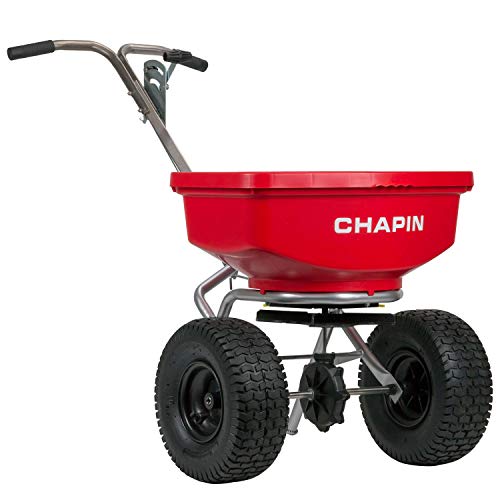 | CHAPIN International 8401C 80-Pound Capacity Professional SureSpreadAlso in lineup | 80 lb | — | $419.99 |
 | Agri-Fab 45-0463 130-Pound Tow Behind Broadcast SpreaderAlso consider | 130 lb | — | $249.98 |
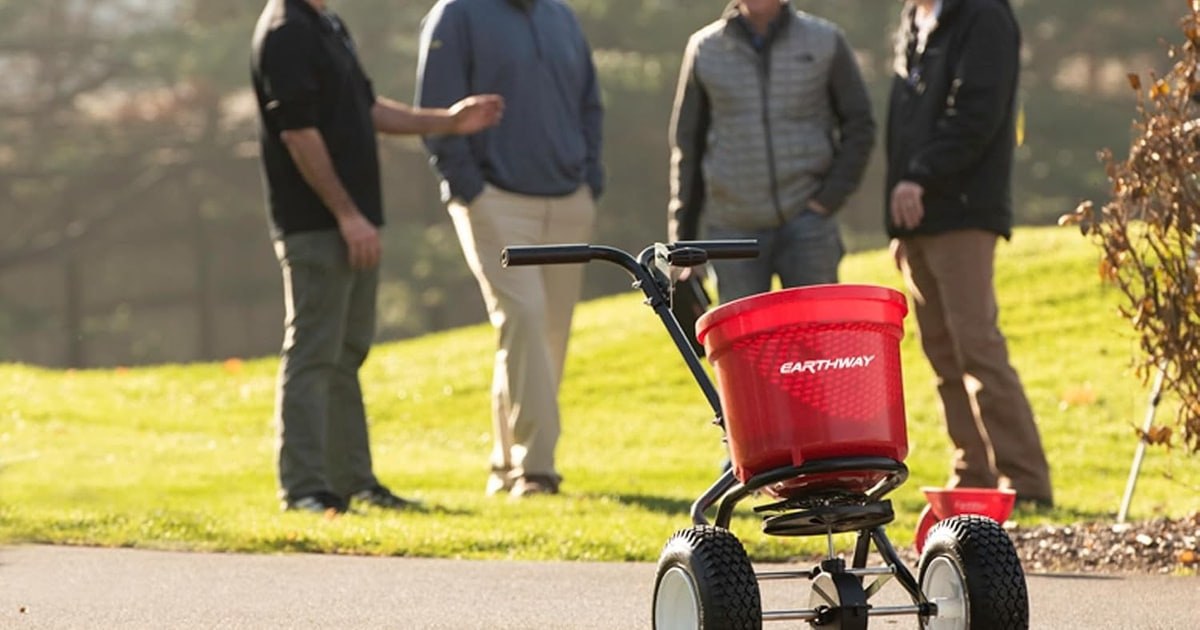
| EarthWay 2150 Commercial 50 LB Broadcast FertilizerUpgrade pick | 50 lb | — | $279.99 |
| EarthWay 2050P 80lb Broadcast SpreaderAlso great | 80 lb | — | $190.99 |
 | Buyers Products SaltDogg TGSUV1B Tailgate Salt SpreaderAlso consider | 331 lb | Up to 14 ft | $886 |
Prices as of Oct 25, 6:48 AM PT · Details
How we picked
Capacity vs. area. We matched hopper size to the space you're clearing, using each spec sheet. A few pounds is right for a walk and steps, 50 to 80 pounds suits a driveway, and a hitch-mount hopper only earns its keep past a few hundred feet of pavement.
Salt-proof materials. Poly hoppers and enclosed gearboxes moved a spreader up our list. This Old House recommends plastic over untreated steel because rock salt rusts bare metal fast, and published guides trace most early failures to corrosion rather than wear.
Flow control. Every pick has an adjustable rate. Family Handyman found that adjustable dials cut wasted product on push spreaders, and the EPA notes that a walkway needs far less salt than most people put down.
Effort to use. We favored designs you can run one-handed or push over frozen ruts, which meant pneumatic tires, sensible handle heights, and no crank to turn for anyone with a bad shoulder.
Cleaning and storage. Bob Vila's guide calls leftover salt residue the leading cause of premature spreader failure. So we looked for hoppers that rinse out easily and units that store without taking over the garage.
Top pickOn sale
Even coverage on steps and walks, with nothing to crank
Scotts Wizz Hand-Held Spreader
The Wizz is a battery-powered handheld spreader with a spinning disc that throws ice melt about 5 feet, so you can walk a sidewalk once instead of three times. Its Edge Guard shield blocks one side of the pattern, which keeps salt off the lawn strip and out of the flower bed.
$131.80fromAmazonTypical pricePrices as of Oct 25, 6:48 AM PT · Details
The spinner is what makes this worth buying. Shaking a jug puts salt wherever your wrist happens to point. The Wizz's motor turns the disc at a steady rate, so the pattern looks the same at the end of the walk as it did at the start. Scotts rates the broadcast at about 5 feet wide. On a standard sidewalk, that's one pass at a normal walking speed, with the shield trimming the side you don't want covered.
Scotts sells the Wizz as a year-round tool, and that isn't marketing filler. The same unit takes grass seed in spring, fertilizer in summer and ice melt in winter, and the rate setting covers all three. The Spruce makes the same point about broadcast spreaders generally, and it's a real argument for buying one at all. You're not paying for a machine that sits in a corner eleven months out of twelve.
It's a one-handed tool, which matters more than it sounds. You can keep your free hand on the rail while you salt a set of steps. Good Housekeeping's winter prep guide notes that battery-powered handhelds cut arm fatigue compared with manual shaker jugs. That's aimed squarely at older homeowners and anyone with a bad shoulder, and those are the people who end up outside first thing after a storm.
The coverage number on the box, 2,500 square feet, refers to Scotts lawn products rather than rock salt. Ice melt is denser, so you'll go through a fill faster than that. Even so, it's plenty for a front walk and a porch before you stop, and topping it up takes about ten seconds because the hopper opens wide enough to pour into with gloves on.
Flaws but not dealbreakers
Two things to know before you order. This listing is a four-pack, so unless you're outfitting several buildings or splitting it with neighbors, you'll have spares sitting in the basement. It also runs on batteries, and a dead set on a cold morning puts you right back at the shaker jug. Keep a fresh pack where you keep the salt.
The 5-foot pattern is generous for a narrow path. If your walk has a grass strip on both sides, the shield only guards one of them, and salt will land on turf no matter how carefully you walk. Dial the rate down and accept a little overspray, or use something smaller for tight paths.
Budget pick
The simplest way to salt a short walk and a few steps
Snow Joe Salt Spreader Handheld - Ice
This is a hand-carried hopper with a dial on the bottom that switches between a coarse and a fine opening, plus a lid that doubles as a scoop. It holds 5 pounds of ice melt, which is enough for a front walk, a landing and the path out to the mailbox.
$24.97fromAmazonPrices as of Oct 25, 6:48 AM PT · Details
Picture the storm you actually get most often. Two inches overnight, a walk that's forty feet long, and you want to be back inside in five minutes. You don't need a machine for that. You need something you can fill straight from the bucket, carry out, and shake along the concrete without thinking about settings. This does that, and it stores on a shelf.
The dial is the reason to pick this over a coffee can. Coarse for rock salt, fine for pellets and seed, closed for carrying it back inside without leaving a trail behind you. Family Handyman found that adjustable rate dials cut wasted product on push spreaders, and the same logic holds in your hand. Over-application on a sidewalk isn't just wasteful. It's what burns the grass edge and pits the concrete.
The twist-lock lid is the small design win. It seals, so you can leave the spreader loaded between storms without salt pulling moisture across the shelf. And it comes off as a scoop, so refilling from a 50-pound bag with gloves on doesn't turn into a two-handed wrestling match. Snow Joe also sizes it small enough that it fits in the same bin as your ice scraper and gloves.
Flaws but not dealbreakers
Five pounds is five pounds. A driveway means four or five walks back to the bag, and at that point you want wheels instead. There's no motor either, so how even your coverage looks depends on your walking pace and how steadily you swing your arm. Expect it to be less consistent than a powered spinner, especially near the end of a run when the hopper is light and the material shifts.
Upgrade pick
Commercial-grade build for walks you clear every storm
EarthWay 2150 Commercial 50 LB Broadcast Fertilizer
The 2150 is a walk-behind broadcast spreader built for crews, with an enclosed gearbox, a stainless steel agitator and 13-inch pneumatic stud tires that roll over frozen ruts. It holds 50 pounds, and EarthWay rates the spread pattern at up to 10 feet wide.
$279.99fromAmazonPrices as of Oct 25, 6:48 AM PT · Details
Buy this one if salting is something you do fifteen times a winter, not twice. The gearbox is fully enclosed, so slush and salt spray stay off the gears. The agitator is stainless, and the agitator is the part that gives out first on cheap spreaders when a frozen lump jams the opening. EarthWay also includes a grate that slides in and out, catching clumps before they reach the hole.
The tires deserve a sentence of their own. Thirteen-inch pneumatic stud tires roll over refrozen ruts and gravel edges that stop small plastic wheels cold. Fifty pounds of salt is real weight, and the wheels decide whether you're pushing the thing or fighting it. The whole spreader weighs 25 pounds empty, so one person can still lift it into a truck bed at the end of a route.
Side-spread control is what makes it usable next to a lawn. EarthWay's three-hole drop system feathers the edge of the pattern, and the side lever shuts the throw down on one side. That's how you salt a walk that borders a flower bed without killing the border by spring. You adjust the drop rate right on the spreader, so you can close it down for a narrow path and open it up for the driveway apron.
It costs more than the bigger-hopper models here, which sounds backward until you push one over a frozen ridge. Capacity is the wrong thing to optimize for on a walkway route, where you're stopping at doors anyway. Refills take a minute. A stripped gear in the middle of a storm costs you the whole morning, and that's the trade this spreader is built around.
Flaws but not dealbreakers
Fifty pounds is the smallest hopper among the wheeled spreaders here, so a big lot means more trips back to the bag. Assembly takes some patience, and the rate settings are a starting point rather than a calibration. Plan to walk a strip of your own driveway and adjust from there.
There's no rain cover in the box. A loaded hopper left outside will cake into a solid block, so this one has to come inside between storms.
EarthWay backs the 2150 with a one-year limited warranty and lifetime technical support.
Also great
A big poly hopper for driveways, with less to rust
EarthWay 2050P 80lb Broadcast Spreader
The 2050P is an 80-pound broadcast spreader with a rustproof poly hopper, an enclosed gearbox and 10-inch pneumatic tires, and it arrives assembled. If your winter job is a two-car driveway plus the walk out to the street, this covers it in a couple of passes without a refill.
$190.99fromAmazonPrices as of Oct 25, 6:48 AM PT · Details
Poly is the headline. This Old House recommends plastic hoppers over untreated steel for one blunt reason: rock salt turns bare metal into rust within a season or two, and the hopper is the part holding the salt. EarthWay's poly hopper won't corrode, and the gearbox is sealed against the wet mess that comes off a slushy driveway and lands on everything underneath.
Eighty pounds means you fill it once. A quarter-acre driveway takes a single hopper for most people, so you're not walking back to the bag halfway through with cold hands. That's the practical case for a push spreader over anything you carry. Side spread control lets you shut off the throw toward the garden bed on the return pass, which saves the plants along the edge.
It ships pre-assembled, which is worth more than it sounds when the first storm is already in the forecast. Pull it out of the box, fill it, and go. The 10-inch pneumatic tires handle a paved driveway and a gravel apron fine, though they're smaller than the studded tires on the 2150, and they'll bog down in deep slush rather than climb through it.
Flaws but not dealbreakers
Eighty pounds of salt is a load to push on ice. Start with a half fill on a sloped driveway and you'll thank yourself. EarthWay lists a clog-free grate on the 2150 but not on this one, so sift the clumps out yourself before you pour damp salt in. And like every broadcast spreader, it throws in a circle. On a three-foot sidewalk, a good share of that circle lands on the lawn.
Who this is for
Buy now if you're the person who salts the walk. That's a homeowner with a front path and steps, a landlord with three buildings' worth of entryways, or anyone currently flinging rock salt out of a yogurt container. This guide covers spreaders for de-icing on foot and by vehicle: handhelds for walks and steps, push broadcast spreaders for driveways, and a hitch-mount spreader for long lanes and commercial routes.
Skip it if your whole job is a stoop and six feet of concrete, because a scoop and a bag do fine there. We don't cover snow blowers, shovels, heated mats or the ice melt itself, and we don't cover drop spreaders, which lay a narrow band under the machine instead of throwing it wide. If you're running a route with a truck, look at the tailgate option below rather than any of the walk-behinds.
How we picked
Capacity: we sized the hopper to the space, from a few pounds for a walk and steps up to a truck-mounted hopper for long lanes. Materials: poly hoppers and enclosed gearboxes won out, since rock salt rusts untreated steel within a season or two. Flow control: every pick has an adjustable rate, because dialing down is how you avoid burning the grass edge and wasting half the bag. Effort: we looked for one-handed handhelds and pneumatic tires that roll over refrozen ruts instead of stopping dead. Cleanup: hoppers that rinse out and store indoors last, and the ones that don't get rinsed fail early.
Other sidewalk salt spreaders worth considering
If you want to salt a long driveway from a tractor seat: The Agri-Fab 45-0463 130-Pound Tow Behind Broadcast Spreader — The Agri-Fab 45-0463 is a tow-behind broadcast spreader with a 130-pound hopper, an enclosed gear box with tapered gears, and a rod-linked on/off control you work without getting off the seat. This bundle adds a grate kit that keeps clumps from jamming the flow. That 130-pound capacity is roughly 60% more than the common 80-pound push hoppers, so a long lane goes down in one fill. You give up plenty in return. You need a tractor or ATV with a hitch, somewhere to park it all summer, and the patience for assembly. Nobody should tow a spreader down a 40-foot driveway.
If you cover hundreds of feet of pavement every storm: The Buyers Products SaltDogg TGSUV1B Tailgate Salt Spreader — The SaltDogg TGSUV1B hangs off a 1-1/4 or 2-inch receiver on an SUV or pickup and holds 4.4 cubic feet, about 331 pounds of free-flowing rock salt. A 12V electric drive turns a 9-inch poly spinner that throws up to 14 feet, and a manual gate starts and stops the flow. The hopper is poly, so the salt isn't rusting it out from the inside. Buyers Products aims this class of spreader at long driveways and multi-lot routes, and that's the honest cutoff: past roughly 200 feet of pavement, walking it stops making sense. Below that, it's a lot of hardware to wire up, load and store.
The competition
This is what our research surfaced, not a census of everything on the market. Hardware store shelves vary by region, and plenty of perfectly good spreaders never show up in a national listing. Here's the one that came close and didn't make the picks.
The CHAPIN International 8401C 80-Pound Capacity Professional SureSpread — The Chapin 8401C is a genuinely nice machine: an 80-pound poly hopper on a stainless steel frame, 14-inch pneumatic tires, a rain cover, a hopper grate and a limited-lifetime warranty. It loses on one line in its own listing. Chapin doesn't recommend it for rock salt, sand or lime, which is the manufacturer telling you what the gate linkage and gearbox will tolerate. Buy it if you want a serious fertilizer and seed spreader and you'll keep salt out of it. For winter work, take one of the EarthWays instead.
Care and storage
Salt is the enemy here, not the cold. Bob Vila's guide calls leftover residue the leading cause of premature spreader failure, so make rinsing part of the chore. Pour whatever's left in the hopper back into the bag, hose out the hopper and the spinner disc, and work the gate open and shut a few times under the water. Then dry it. A hopper left wet with salt film will pit the hardware even sitting in a heated garage. Before the off-season, wipe down the gearbox area, add a little grease at the fitting if your spreader has one, and store it indoors and empty. Handhelds go on a shelf with the lid off so the last of the moisture can escape.
Questions we get
Do I really need a spreader, or can I just throw salt by hand?
You can, and most people do it badly. Hand-throwing lays a heavy stripe down the center and leaves the edges bare, which is where people actually step off the walk. A spreader meters the flow and throws it wide, so you use less salt and cover more concrete. For a stoop and six feet of path, a scoop is honestly fine.
What's the best salt spreader for a small sidewalk?
A handheld. The Scotts Wizz is our pick because the powered spinner keeps the pattern even without any effort from you, and the Edge Guard shield keeps salt off one side. If you'd rather not deal with batteries, the Snow Joe handheld does the same job with a dial and your arm. Both hold enough for a front walk and steps.
How much rock salt should I put down?
Less than you think. The EPA says most residential pavement needs only about 4 ounces per 20 square feet, which is roughly one coffee mug. Piling on more doesn't melt ice faster; it just runs off into the soil and burns the grass. Dial your spreader down and do a second pass only if the first one didn't take.
Can I use my lawn fertilizer spreader for rock salt?
Sometimes, but check the listing first. Chapin, for one, specifically says not to run rock salt, sand or lime through its 8401C. Salt is heavier and far more corrosive than fertilizer, so it grinds on gate linkages and rusts anything metal. If your spreader has a poly hopper and an enclosed gearbox, and you rinse it out every time, it'll hold up.
Are poly hoppers really better than metal ones for salt?
Yes, and it isn't close. This Old House recommends plastic hoppers over untreated steel because rock salt accelerates rust on bare metal across just a couple of winters. Poly can't corrode, so the hopper outlives the moving parts. Pay attention to the frame and gearbox too, since those are where rust usually starts on a poly-hopper spreader.
Why you should trust us
For this guide:
- We read the manufacturer spec sheets and full Amazon listings for every spreader here, comparing hopper capacity, spread width, hopper material and flow control.
- We drew on published buying guides from This Old House, Bob Vila, Family Handyman, Popular Mechanics, Good Housekeeping and The Spruce, plus EPA guidance on how much salt a walkway actually needs.
- We weighed owner feedback on durability, clogging and corrosion against what each manufacturer claims, and we flag where the two don't line up.
- We read owner reviews on every listing, weighted toward the critical ones, because that is where the recurring failures show up.
- We have a systematic way of automatically fetching the latest prices, so the numbers on this page stay current.
- This is a research-focused guide, so the team may not own every product listed — though we often do own the top winners, which gives us extra context for the recommendations.
- We don't accept free products, and the retailer commission never changes which product we recommend.
Sources
How to Choose a Salt Spreader for Your Driveway, The Spruce
The Best Salt Spreaders for Winter Ice Removal, Bob Vila
Best Ice Melt Spreaders, Tested, Family Handyman
How to Pick the Right Spreader for Rock Salt and Ice Melt, Popular Mechanics
Snow and Ice Removal Buying Guide, This Old House
Scotts Wizz Spreader Product Specifications, Scotts (Manufacturer)
Chapin SureSpread Poly Turf Spreader Specifications, Chapin International (Manufacturer)
Agri-Fab Smart Spreader Product Details, Agri-Fab (Manufacturer)
Earthway Commercial Broadcast Spreader Specifications, Earthway (Manufacturer)
SaltDogg Tailgate Spreader Lineup, Buyers Products / SaltDogg (Manufacturer)
Winter Prep: Best Tools for De-Icing Your Property, Good Housekeeping
How Much Rock Salt Do You Really Need Per Application?, EPA (Reducing Salt Use in Winter)
Amazon product listings and owner reviews for all 7 products
Manufacturer specification pages for each product
Some passages in this guide may be paraphrased with AI help.
Product prices and availability are accurate as of the date/time indicated and are subject to change. Any price and availability information displayed on Amazon.com at the time of purchase will apply to the purchase of this product.
More like this.
Continue exploring home reviews and recommendations.

The Best Salt-Free Water Softeners
Hard water shows up in small annoyances before it shows up in your wallet. There's the white crust on the showerhead, the film on your drinking glasses,…

The Best Fence Post Setting Concrete
Setting a fence post is one of those jobs where the hard part isn't the post - it's the hole and what goes in it. You dig, you plumb, you brace, and then…

The Best Baby Cribs
A crib is the one piece of nursery furniture your baby actually sleeps in, so it earns its keep in small, boring ways. You'll reach into it a dozen times…

The Best Garage Wall Storage Systems
A garage fills up fast. Bikes lean against the car, bags of potting soil slump in a corner, and the snow shovel ends up wherever you dropped it in April.…

The Best Smart Blinds and Shades
You touch your window shades more than almost anything else in the house, and you never think about it. Up in the morning, down at dusk, halfway when the…

The Best Security Floodlights
A good security floodlight does two jobs at once. It makes your driveway usable when you're carrying groceries in at night, and it makes your house a less…