The Best Salt-Free Water Softeners
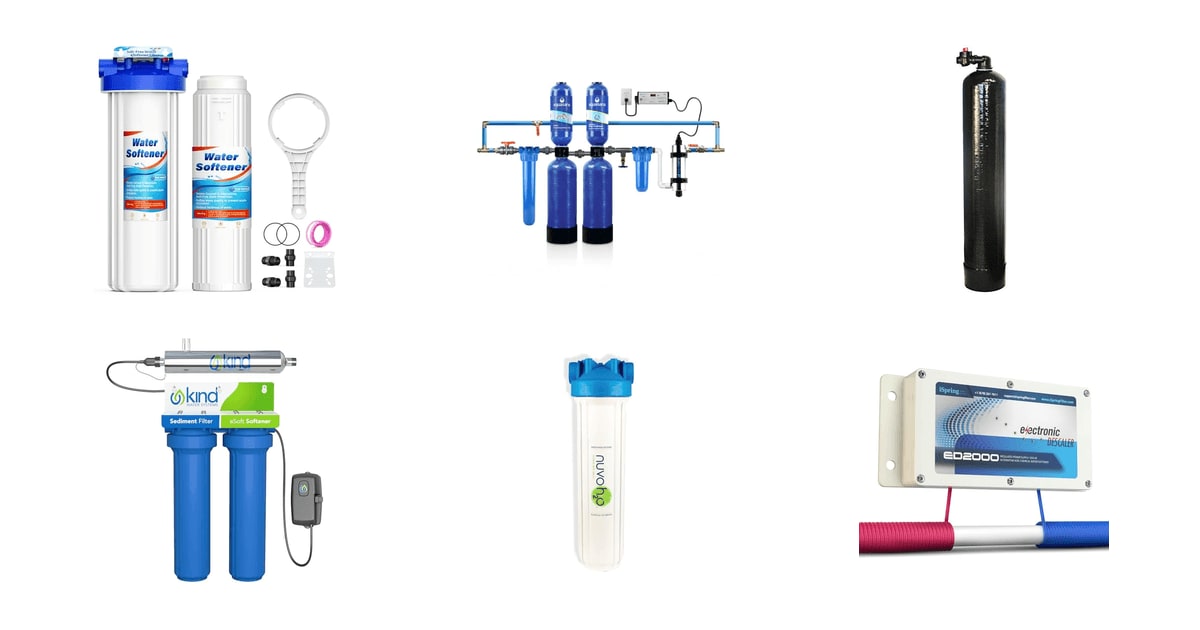
Hard water shows up in small annoyances before it shows up in your wallet. There's the white crust on the showerhead, the film on your drinking glasses, the shampoo that never quite lathers. Then, years later, there's a water heater that quits early because the element is wrapped in scale. Salt-free systems promise to stop that buildup without the salt bags, the brine tank, or the wastewater that a traditional softener needs. For a lot of homes, that trade is worth making.
But here's the honest part. None of these actually soften water in the technical sense — the calcium and magnesium stay right where they are, and a hardness test after installation reads the same as before. What they do is change how those minerals behave, so they're less likely to stick to pipes and heating elements. That means no dramatic slippery-shower moment, and spotting on glassware often sticks around. Owner reports across every technology here run hot and cold, and results depend heavily on how hard your water is to begin with.
Your water's hardness is the thing that decides whether any of this works for you. Most of these systems are built for moderate to hard water, and the reports that go badly tend to come from homes at the extreme end. Test your water first — a cheap strip or your utility's annual report will tell you. We think that the iSpring ED2000 is the best salt-free water softener for most people, and that the Aquasana WH-1000-CS-UVS-B is the one to buy if you want filtration and scale control in one system.
Everything we recommend

Low-risk scale control that asks almost nothing of you

Real filtration plus scale control, if you have the space

A tool-free electronic option for smaller pipe runs

Citrus-based conditioning for moderate hardness, with real upkeep
At a glance
| Product | Softening Method | System Capacity | Price | |
|---|---|---|---|---|
 | Salt Free Water Softener Systems Whole HouseAlso consider | 0.5 Micron Filtration | — | $175.99On sale |
| Aquasana Whole House Water Filter SystemUpgrade pick | Carbon/KDF/UV | Under 15 GPG | $2,696 |
 | Scale Prevention Salt Free Water Conditioner SoftenerAlso in lineup | TAC Water System | 4-8 Bathrooms | $1,199.99 |
 | Whole House Salt Free Water Softener AlternativeAlso consider | UV Light | Up To 5 Bathrooms | $2,001.75 |
| NuvoH2O Manor Salt-Free Whole Home Water SoftenerRunner-up | CitraCharge Technology | 1,500+ Sq Ft | $749.99 |
| iSpring ED2000 Whole House Water DescalerTop pick | Water Descaler | 10-19 GPG | $159.99 |
| YARNA Electronic Water DescalerAlso great | Electric Pulses | — | $160.99 |
How we picked
What it actually does. We separated systems that prevent scale from systems that soften water, since none of these do the latter despite what the listings say. Any product whose own documentation claimed real softening got read more skeptically, not less.
Stated hardness limits. We favored systems that publish a hardness range, iron ceiling, or pH window, because those numbers let you check compatibility before buying. Vague claims about handling any water were treated as a warning sign.
Long-term owner reports. We weighted feedback from owners who came back after six months or a year over first-week impressions, since salt-free treatment works slowly by design. Reports of results fading with distance from the unit shaped our placement advice.
Installation burden. We looked at what each system demands — pipe cutting, wall space, an outlet, a plumber — and how many owners ended up needing help they didn't expect. Systems that let you back out easily scored higher.
Cost of ownership. We compared cartridge intervals, filter life, and whether anything needs replacing at all. A system with no consumables carries a very different long-run burden than one that wants a new cartridge twice a year.
Top pick
Low-risk scale control that asks almost nothing of you
iSpring ED2000 Whole House Water Descaler
The iSpring ED2000 is an electronic descaler that wraps two coils of wire around your incoming pipe and plugs into an outlet. There's no plumbing to cut, no cartridge to replace, and nothing to buy again — which makes it the least painful way to find out whether salt-free treatment helps your house.
$159.99fromAmazonThe installation is the whole argument. You wrap the included wire around your main line, mount the small control box nearby, and plug it in. No pipe cutting, no shutoff valve, no plumber. It works on copper, PEX, PVC, and galvanized alike, because nothing touches the water. If you rent, or you're not ready to commit to a system that lives in your plumbing, this is the version of the idea you can actually try.
iSpring targets it at very hard water, roughly 10 to 19 grains per gallon, which covers most of the country's problem areas. That's a real spec, not marketing vagueness, and it gives you something to check your own water against before you buy. Homes with high iron are a different story — the manufacturer wants iron under about 3 ppm, and well owners should test for that first.
Owner feedback here is more useful than usual because so many people wrote in months after installing. The recurring theme: nothing happens quickly. Existing scale breaks down over weeks, not days, and several long-term owners describe checking back at the one-year mark and finding fixtures noticeably cleaner. That patience requirement is a feature of the technology, not a defect in this unit.
It costs you almost nothing to keep running. There are no filters, no salt, no service interval. It draws a trickle of power from a wall wart and otherwise sits there. Compare that to a cartridge system, where you're buying replacements two or three times a year forever, and the long-run math tilts hard toward the ED2000 — even before you count the water a traditional softener sends down the drain.
Flaws but not dealbreakers
Electronic descalers are the most argued-about category in water treatment, and the reviews reflect that. Plenty of owners see cleaner faucets and less lime; others install it, wait a week, and see nothing at all. Some of that is impatience, but not all of it. If your water is at the extreme end of hard, or you have significant iron, this is unlikely to be enough.
The effect also fades with distance. One long-term owner noted that fixtures far from the unit started showing calcium residue again after a year, while nearby ones stayed clean. iSpring's own guidance suggests the treatment holds for a limited run of pipe past the coil, so a sprawling house with a long plumbing run may see uneven results. Placing it as close to the main entry as possible helps.
It won't touch taste, smell, chlorine, or sediment. This is a scale device and nothing else. If your complaint is that your water tastes like a swimming pool, you need a filter, not a descaler.
iSpring backs the ED2000 with a one-year money-back guarantee and lifetime technical support.
Upgrade pick
Real filtration plus scale control, if you have the space
Aquasana Whole House Water Filter System
The Aquasana WH-1000-CS-UVS-B is a multi-tank system that pairs carbon and KDF filtration with UV and a salt-free scale-control media. It's the only pick here that meaningfully improves how your water tastes and smells while also protecting your pipes.
$2,696fromAmazonMost salt-free systems do one job. This one does several. Water passes through a sediment pre-filter, then carbon and KDF media that cut about 97% of chlorine, then a UV stage aimed at bacteria and viruses, then the scale-control media. Owners in hard-water states consistently describe the taste change as the most obvious improvement — more so than anything they notice about scale.
The scale piece is the modest part of this system. Aquasana is unusually clear that it conditions rather than softens, and that it doesn't demineralize water. It's optimized for water under 15 grains per gallon, with alkalinity under 250 mg/L, pH below 8.3, and iron under 0.3 ppm. Those are tight limits. Read them as a compatibility checklist, not fine print — a well with iron will fall outside them.
The rated life is what justifies the expense. Aquasana quotes up to a million gallons or ten years before the main tanks need replacing, with the pre- and post-filters swapped on a shorter cycle. Spread over a decade, the cost per gallon is genuinely low, and the UV lamp is the main recurring item. For a household of four or more, that math works better than for a couple in a small place.
Owners who paid a plumber tend to be happier than owners who didn't. The system is tall and wide, it needs a run of wall in a garage or basement, and several people found they had to buy extra fittings to match their pipe size. Nobody reports losing water pressure, which is the usual worry with a multi-stage setup.
Flaws but not dealbreakers
Aquasana's customer service comes up repeatedly in owner feedback, and not kindly. Complaints cluster around order changes, returns, and getting help when a component shows up faulty — one buyer described a tank leaking at the connection during the initial rinse. The company does resolve things, but people describe the process as slow enough to be worth knowing about in advance.
This is a big install. Between the tank, the filter housings, and the UV chamber, you need real wall space and a nearby outlet, and most people will want a plumber for a day. If your water main is in a cramped utility closet, measure carefully before you order.
And the scale control is the least impressive part of the package. If limescale is your only complaint, you're paying for a lot of filtration you don't need.
Aquasana covers this system with a 10-year limited warranty.
Also great
A tool-free electronic option for smaller pipe runs
YARNA Electronic Water Descaler
The YARNA CWD24 is an electronic descaler that uses flat impulse bands strapped to your main line, with a microchip driving the pulses. It installs without tools in about ten minutes and suits pipes up to one inch — a common size in older homes and condos.
$160.99fromAmazonInstallation genuinely takes no tools. You need about ten inches of accessible straight pipe and an outlet. The bands wrap flat against the pipe rather than coiling around it, which makes them easier to place in tight spots than the ED2000's wire. If your water main runs behind a laundry machine or through a narrow closet, that difference matters more than it sounds like it should.
The one-inch pipe limit is the thing to check first. That covers most single-family homes and nearly every condo, but a larger house plumbed with 1¼-inch main line is out. YARNA sells other sizes, so make sure the listing you're looking at matches what's on your wall before you order.
YARNA is upfront that results take time — the company tells buyers it can be up to three months before existing scale visibly breaks down, depending on how bad the plumbing already is. That's an unusually honest thing for a manufacturer to say, and it matches what long-term owners of this whole category describe. Buy it expecting a slow change, not a switch.
This is the most widely bought unit in the lineup by a wide margin, and the pattern of feedback looks a lot like the ED2000's: a solid majority reporting cleaner fixtures and easier cleaning, with a persistent minority who saw nothing. Two products with such similar owner profiles are probably doing similar things.
Flaws but not dealbreakers
Like every electronic descaler, this one leaves your water chemically unchanged. Hardness readings won't budge, soap won't lather better, and glassware spotting may continue. What you're buying is less buildup on the inside of pipes and heating elements, which is real but invisible.
The unit does nothing for taste, odor, chlorine, sediment, or iron. And because it depends on a continuous power supply, an outage means the treatment stops until power returns.
Placement is fussier than the marketing suggests. The bands need direct contact with a clean stretch of pipe, and results fall off further down the line, so a spot near where water enters the house is the only one worth using.
Runner-up
Citrus-based conditioning for moderate hardness, with real upkeep
NuvoH2O Manor Salt-Free Whole Home Water Softener
The NuvoH2O Manor uses a citric acid cartridge to bind hardness minerals so they can't form scale. It's compact, needs no electricity or drain line, and it's the option most likely to change something you can actually feel at the tap.
$749.99fromAmazonThe chemistry here is different from everything else on this list. NuvoH2O's CitraCharge cartridge lowers the water's pH slightly and chelates calcium and magnesium, keeping them dissolved instead of depositing. Because it's an actual additive rather than a physical effect, more owners describe a change they can perceive — better taste, less soap scum — than with the electronic units.
The cartridge is the whole product, and it's also the whole cost. Each one lasts around six months, and you'll be buying them for as long as you own the system. That's the trade for a self-contained unit that needs no power, no salt, and no wastewater. One owner also reported the first cartridge underperforming and the replacement working noticeably better, so if early results disappoint, swap it before you give up.
It's sized for homes over 1,500 square feet and takes up roughly the footprint of a large bucket. Installation is straightforward in principle — quick-connect fittings, no drain, no outlet — but most owners hired a plumber for the tie-in to the main line, and that took about an hour. Budget for it.
NuvoH2O is one of the few makers here that claims to remove existing scale, not just prevent new buildup. Owners in hard-water areas do describe fixtures gradually clearing. Whether that's the citric acid or the absence of new deposits is hard to separate, but the reported outcome is the same either way.
Flaws but not dealbreakers
It has a hardness ceiling, and owners find it. Several report the Manor simply couldn't keep up with water around 300 ppm, with spotting and scale continuing after months of use. If your water is at the very hard end, this isn't the system for you — a salt-based softener is.
There's also a recurring sulfur-smell complaint. A handful of owners describe a rotten-egg odor developing several months in, and replacing the cartridge didn't always fix it. It's not the common outcome, but it comes up often enough that it's worth knowing before you plumb something into your main line.
Overall owner sentiment is more mixed here than with the top pick. A meaningful share of buyers rate it poorly, largely over unmet expectations about what "softening" would feel like. Go in understanding this conditions water rather than softening it, and you're less likely to be disappointed.
Who this is for
Buy one of these if you have moderately hard water, you're tired of descaling the showerhead, and you want to protect your water heater without hauling salt bags or sending water down a drain line. They suit renters and anyone in a place where a brine discharge isn't allowed. They're a good fit if you like the idea of keeping calcium and magnesium in your drinking water rather than trading them for sodium.
Don't buy one if you want that slippery, high-lather feel of genuinely softened water, or if your hardness is at the extreme end — past roughly 20 grains per gallon, a salt-based softener is the honest answer. Skip these if your main complaint is iron staining, sulfur smell, or sediment, since only the Aquasana addresses water quality beyond scale. This guide covers whole-house salt-free scale prevention and conditioning. It doesn't cover ion-exchange softeners, under-sink drinking filters, or reverse-osmosis systems.
How we picked
What it does: we sorted true scale prevention from listings that borrow the word "softener" without earning it, and treated the biggest claims most carefully. Hardness limits: we preferred systems that publish a grains-per-gallon range, an iron ceiling, and a pH window, so you can check your own water against a number instead of a promise. Owner reports: we leaned on feedback written six months or a year after installation, because salt-free treatment works gradually and first-week impressions tell you almost nothing. Installation: we counted what each one demands of you — pipe cutting, wall space, an outlet, a plumber — and how often owners were surprised. Ongoing cost: we compared cartridge schedules and filter life, since a system with no consumables and one that wants a new cartridge twice a year are very different purchases over a decade.
Other salt-free water softeners worth considering
If you want scale control and sediment filtration in one compact unit: The Whole House Salt Free Water Softener Alternative ($2,001.75) — The Kind Water Systems salt-free alternative pairs scale prevention with a reusable sediment cartridge that catches dirt, sand, silt, clay, and rust — the kind of grit that plagues well water and older municipal lines. Being reusable, that cartridge is rinsed rather than replaced, which cuts the recurring cost that drags on the NuvoH2O. It's rated for homes up to five bathrooms, wastes no water, and a UV stage is available. The catch is that this is a newer listing with almost no owner history behind it, so there's no long-term record to check the claims against. The 120-day satisfaction guarantee takes some of the sting out of being early.
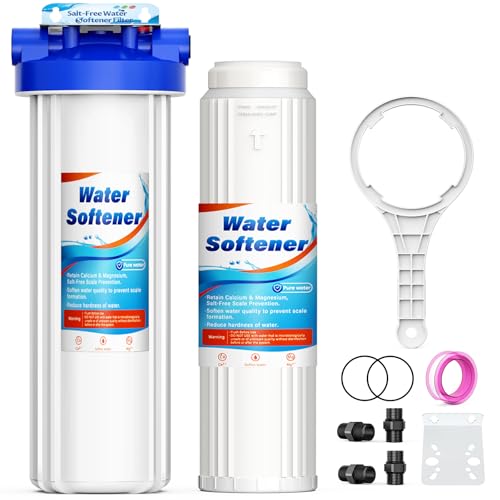
If you want basic filtration and scale reduction on a small budget: The Salt Free Water Softener Systems Whole House ($175.99) — This DYLSDFQ canister system is a single housing with a 0.5-micron cartridge, and it ships with both ¾-inch and ½-inch connectors so it fits standard plumbing without a trip to the hardware store. At two feet tall and five inches wide, it slots into spaces the Aquasana can't. But the cartridge needs replacing every four to six months, one owner reports the filters aren't available from the seller directly, and there's essentially no owner track record here. Treat the claims about multi-bath whole-house coverage with the skepticism a no-name brand earns.
The competition
This is what our research surfaced in this category — not a complete map of the market. Salt-free water treatment attracts a lot of brands making similar claims with very different amounts of evidence behind them, and a few worth-considering systems sell mostly outside Amazon. Here's the one that didn't make the cut and why.
The Scale Prevention Salt Free Water Conditioner Softener ($1,199.99) — The Oceanic Water Systems conditioner is a template-assisted crystallization tank rated for 20 gallons per minute and built for homes with four to eight bathrooms — the biggest capacity here by a wide margin. TAC is the most technically credible salt-free approach, it needs no backwashing or power, and it's made in the USA. On paper it should be a pick. The problem is the near-total absence of owner history, and the one report that exists describes months of use with no reduction in hardness or scale at all. Given what this costs and how permanently it installs, we can't recommend it over the alternatives until more owners weigh in. If you have a genuinely large house and the flow rates here match your needs, it may still be worth a look — just go in knowing you're the test case.
Installation notes
Test your water before you buy anything. A hardness strip costs almost nothing, and your utility publishes an annual report with hardness, pH, and iron numbers — those three figures determine whether any of these systems can help you. Install as close to where water enters the house as you can, since the effect from electronic descalers weakens the further water travels. Well owners should test iron separately, because most of these units want it under a fraction of a part per million and iron will foul the ones that don't. Give it three months before you judge results. Existing scale dissolves slowly, and the owners who report the biggest changes are almost always the ones who waited. Mark your calendar for cartridge swaps if your system uses them — a spent cartridge is worse than none.
Questions we get
Do salt-free water softeners actually soften water?
No, and the name is misleading. They leave calcium and magnesium in the water, so a hardness test reads the same before and after. What they change is whether those minerals stick to your pipes, fixtures, and heating elements. If you want the slippery, high-lather feel of soft water, you need a salt-based ion-exchange softener.
How hard can my water be before these stop working?
Most of these are built for moderate to hard water — roughly up to 15 or 20 grains per gallon depending on the system. Past that, owner reports turn sharply negative, and the NuvoH2O in particular struggles around 300 ppm. Check your utility's annual water quality report or use a test strip before you buy. If you're above the range, spend the money on a salt-based system instead.
How long before I see a difference?
Longer than you'd like. These systems prevent new scale immediately but break down existing deposits slowly, and manufacturers themselves quote up to three months. Owners who report the clearest results are usually writing six months to a year in. If you check after a week and see nothing, that's normal.
Will one of these help with bad-tasting or smelly water?
Only the Aquasana, which includes carbon and KDF media plus a UV stage. The electronic descalers and the citrus cartridge systems target scale and nothing else — chlorine taste, sulfur smell, and sediment pass straight through. If taste is your main complaint, you want a filter, and possibly a separate scale device alongside it.
Do I need a plumber?
It depends on the type. The electronic descalers strap to the outside of your pipe and need no plumbing at all — you can do those yourself in under an hour. The cartridge and tank systems cut into your main line, and most owners hire someone, typically for an hour of work. Several buyers also had to pick up extra fittings to match their pipe size.
Are these good for wells?
Sometimes, but iron is the deciding factor. Most of these systems specify a low iron ceiling, and well water often exceeds it — iron will foul the media and won't be touched by an electronic unit. Test your well for iron, hardness, and pH first. If iron is high, you need iron-specific treatment before any of this matters.
Why you should trust us
For this guide:
- We compared manufacturer specifications across all seven systems, paying particular attention to stated hardness ranges, iron and pH limits, and rated flow rates.
- We read published material on how template-assisted crystallization, citric-acid chelation, and electronic descaling differ, since the three technologies are marketed almost identically but behave very differently.
- We reviewed owner feedback for each listing and weighted long-term reports over first-impression ones, looking for recurring failure modes like fading effect with distance, sulfur odor, and disappointment rooted in the word "softener" itself.
- We read owner reviews on every listing, weighted toward the critical ones, because that is where the recurring failures show up.
- We have a systematic way of automatically fetching the latest prices, so the numbers on this page stay current.
- This is a research-focused guide, so the team may not own every product listed — though we often do own the top winners, which gives us extra context for the recommendations.
- We don't accept free products, and the retailer commission never changes which product we recommend.
Sources
Best Water Softeners 2026 — Bob Vila, Bob Vila
Best Water Softeners — This Old House Reviews, This Old House
Best Water Softeners — Forbes Home, Forbes Home
Salt-Free Water Softeners: Do They Work? — Family Handyman, Family Handyman
Water Softener Ratings & Reviews — Consumer Reports, Consumer Reports
Hardness of Water — United States Geological Survey (USGS), USGS
Water Hardness — Water Quality Association (WQA), Water Quality Association (WQA)
Salt-Free Water Softening Technology Overview — Pelican Water, Pelican Water Systems
Best Water Softeners — Wirecutter / New York Times, Wirecutter
FutureSoft Salt-Free Water Softener Specifications — Springwell Water, Springwell Water
How Nuvo H2O Works — Nuvo H2O, Nuvo H2O
DVGW W512 Testing Protocol — German Technical and Scientific Association for Gas and Water, DVGW
Amazon product listings and owner reviews for all 7 products
Manufacturer specification pages for each product
Some passages in this guide may be paraphrased with AI help. Prices are refreshed automatically.
More like this.
Continue exploring home reviews and recommendations.

The Best Whole House Water Softeners
Hard water doesn't announce itself. It shows up as a film on the shower glass you can't scrub off, spots on glasses that came out of a dishwasher you just…

The Best Sidewalk Salt Spreaders
A sidewalk doesn't need much salt. It needs the right amount, spread evenly, before the ice bonds to the concrete. That's the whole job, and it's why a…

The Best Dust-Free Drywall Sanders
Sanding drywall is the part of a remodel nobody warns you about. The mudding goes fine, the taping goes fine, and then you spend an afternoon filling your…

The Best Streak-Free Self Tanners
A self-tanner's whole job is to look like something that happened to you outdoors. That means the color has to land evenly on skin that isn't even - your…

The Best Water Heater Insulation Blankets
Your water heater sits there all day keeping 40 or 50 gallons hot, whether you're home or not. If the tank is old, a lot of that heat leaks straight into…

The Best Under-Sink Water Filtration Systems
The water coming out of your kitchen tap is probably safe to drink. It also might taste like the shallow end of a pool, and it may be carrying lead from…