The Best Impact Drivers
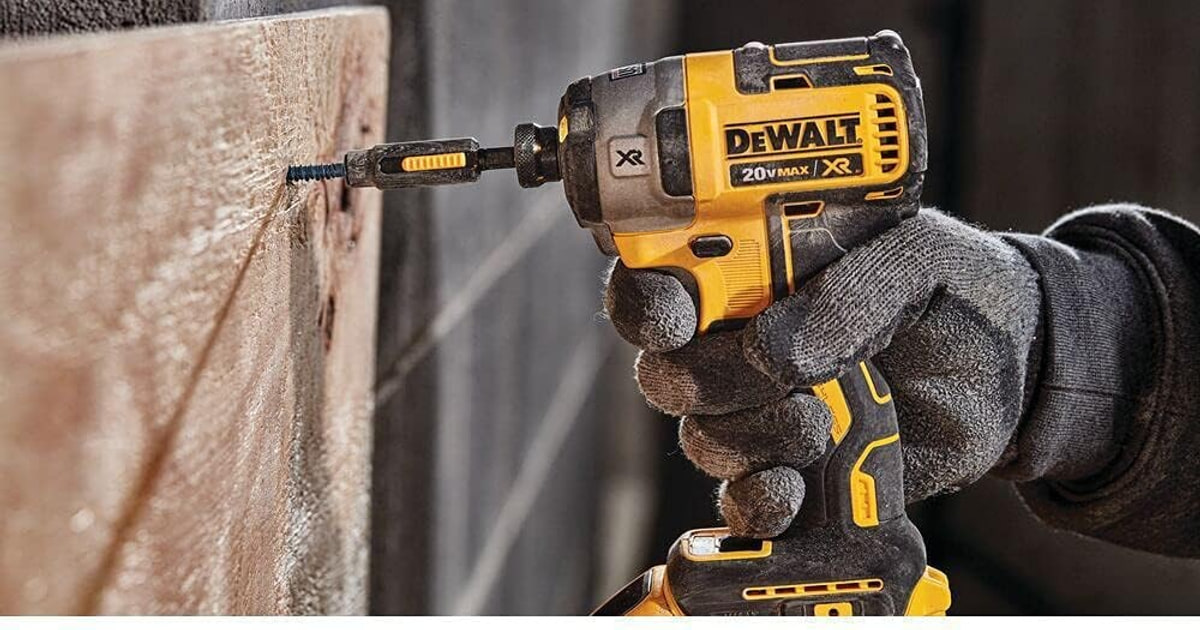
An impact driver is what turns a long afternoon of deck screws into a short one. It drives fasteners in quick rotational bursts, so the bit stays seated and your wrist doesn't absorb the twist. You'll grab one for fence pickets, cabinet screws, ledger boards, lag bolts and every flat-pack dresser you'll ever curse at. The good ones are short enough to work inside a stud bay. The great ones sink a screw without shredding the head off soft pine.
None of them replace a drill, though. That 1/4-inch hex chuck won't take a round-shank bit, and the hammering action makes clean, precise holes hard to control. They're loud, too — loud enough that you'll want ear protection for a full day of driving. And each one locks you into a battery platform, so the driver you buy quietly chooses your next five tools. Switching brands later is how garages end up with four chargers and no free outlets.
So start with the batteries you already own, then think about torque. Most homeowners never touch the ceiling of what these tools can do; any decent brushless model will drive 3-inch deck screws all day. Pros are the ones who feel the difference, usually in the last hour of a shift. We think that the Milwaukee M18 FUEL impact driver is the best impact driver for most people, and that the DeWalt DCF887B is the one to buy if you already own 20V MAX batteries.
Everything we recommend

Class-leading torque in a body short enough for stud bays
Three speeds and the biggest battery lineup, for a bit more bulk

Plenty of driver for weekend projects, on a battery you may own

The gentlest, most controllable driver for finish and trim work
Prices as of Oct 23, 7:21 AM PT · Details
At a glance
| Product | Listed weight | Speed modes | Price | |
|---|---|---|---|---|
| Milwaukee M18 FUEL 1/4" Hex Impact DriverTop pick | 2.51 lb | — | $120.99 |
| DEWALT 20V MAX XR Impact DriverRunner-up | 2.7 lb | 3 speeds | $108 |
| Makita 18V Lxt Lithium-Ion Brushless Cordless Quick-ShiftAlso great | 2.27 lb | 4 speeds | $139.99On sale |
| RYOBI ONE+ HP 18V Brushless Cordless 1/4Budget pick | 2.36 lb | 4 modes | Check price |
 | Bosch GDX18V-1800B12 18V Two-In-One 1/4 In. andAlso consider | 6.19 lb, kit | — | $199.99 |
 | RIDGID 18V Brushless Cordless 4 Mode ImpactAlso in lineup | — | 4 modes | Check price |
 | Bundle of Metabo HPT 18V MultiVolt™ CordlessAlso in lineup | — | — | $174.95 |
 | CRAFTSMAN V20 BRUSHLESS RP Compact Impact DriverAlso consider | 3.81 lb, kit | — | $79 |
Prices as of Oct 23, 7:21 AM PT · Details
How we picked
Real torque, honestly stated. We compared manufacturer torque figures against what tool-focused reviewers report, and treated anything at or above roughly 1,500 in-lbs as plenty for deck screws and lag bolts. Higher numbers only earned credit when the tool stayed compact.
Size and weight. Published measurements and listing specs told us how each tool fits a stud bay or a cabinet interior. Anything near or under about 5.2 inches nose to tail got extra weight, since that's the length reviewers say separates usable from awkward.
Drive modes. We favored drivers with three or more speeds plus a low-torque or assist mode, because Family Handyman's testing links multi-mode control to fewer stripped screws in soft wood and anchors. Single-speed tools didn't make the picks.
Battery ecosystem. We looked at how many tools each platform supports and how easy the packs are to find, since Consumer Reports flags platform compatibility as the most cost-effective long-term factor in a cordless purchase.
Support and warranty. We read each brand's stated warranty and service terms, including Ridgid's lifetime service agreement, and weighed how easy the brand is to get serviced through common retail and dealer channels.
Top pick
Class-leading torque in a body short enough for stud bays
Milwaukee M18 FUEL 1/4" Hex Impact Driver
Milwaukee's M18 FUEL 1/4-inch hex driver pairs some of the highest torque in the compact class with one of the shortest noses on the market. It's sold here as a bare tool, which is the right buy if M18 batteries are already sitting on your shelf.
$120.99fromAmazonPrices as of Oct 23, 7:21 AM PT · Details
No other driver here moves big fasteners this easily from this small a body. Tool reviewers rate the M18 FUEL Gen 4 drivers at up to 1,800 in-lbs, the top of the compact 1/4-inch hex class, and published measurements put the hex model at roughly 5.1 inches nose to tail. That pairing is the whole argument. You get lag-screw power in a tool you can still angle inside a base cabinet.
Length matters more than most first-time buyers expect. Anyone who's tried to drive a cabinet screw between two studs, or fasten a hinge deep in a closet, knows the feeling of a tool that's half an inch too long. Reviewers keep singling this one out for that reason. If your work happens in tight framing bays or under sinks, it's the spec to weigh first.
Milwaukee also sells the M18 line on One-Key, its app-based system for tracking tools and saving custom drive settings. Most homeowners will open it once and forget it. But if you manage a crew, or tools have a habit of walking off your sites, it's a real reason to pick Milwaukee over the rest of this list.
Owner feedback is remarkably consistent about the two things that break tools: power and durability. Buyers describe it as small but strong, fast on long screws, and quiet compared with older impact drivers they've owned. Complaints about failures are rare. Milwaukee's dealer and service network is also among the easiest to find if something does go wrong, which matters more on a tool you'll use for a decade.
Flaws but not dealbreakers
This listing is the bare tool — no battery, no charger, no case. If you're starting from nothing, the pack and charger will cost you more than the driver itself, and that math is what pushes a lot of first-time buyers toward a kit from another brand.
It's also more driver than plenty of people need. The extra torque doesn't help when you're hanging a picture rail, and the impact mechanism is loud in an enclosed room. The Amazon listing itself is thin on detail, too, so you'll want Milwaukee's spec sheet if you care about the exact mode and speed settings on the version you receive.
Runner-up
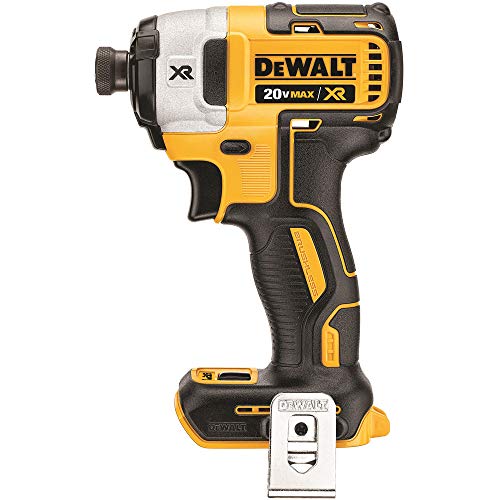
Three speeds and the biggest battery lineup, for a bit more bulk
DEWALT 20V MAX XR Impact Driver
The DeWalt DCF887B is the brushless driver you buy because half your neighborhood already owns 20V MAX batteries. Three speeds, a genuinely useful precision mode and a three-LED ring make it a strong all-rounder for both weekend projects and daily job-site work.
$108fromAmazonPrices as of Oct 23, 7:21 AM PT · Details
The reason to buy this one is usually sitting in your garage already. DeWalt's 20V MAX platform is enormous, which means the battery you buy today runs the sander, the blower and the work light you buy later. Consumer Reports makes the same point: across a brand's full lineup, platform compatibility is one of the most cost-effective long-term factors in a cordless purchase.
Speed 1 is the setting that saves screws. DeWalt calls it precision drive, and it's built for small fasteners in brittle or delicate material — cabinet hardware, drywall anchors, thin trim. Family Handyman's testing found that multi-speed, multi-mode drivers cut down on stripped screws in soft woods and anchors compared with single-speed budget tools. Speeds 2 and 3 are there when you're sinking 3-inch deck screws.
Small conveniences add up over a day. Three LEDs ringing the chuck kill the shadow that single-light tools cast right where the bit meets the screw, and they stay on for 20 seconds after you let go of the trigger. The one-handed hex chuck takes 1-inch bit tips, so you can swap bits while you're up a ladder holding a board with the other hand.
It's also the safest pick for someone who wants a tool that everybody knows. Parts, bits, batteries and third-party accessories are stocked everywhere, and any hardware store within driving distance will have something that fits it. That's worth real money over the life of the tool, even if it's not exciting.
Flaws but not dealbreakers
At a listed 2.7 pounds, it's the heaviest of our bare-tool picks, and you'll notice it driving screws overhead into a ceiling joist. It's also longer than the Milwaukee, so the tightest cabinet interiors are more of a fight.
The B in DCF887B means bare tool. No battery, no charger. And precision mode helps but doesn't make the tool foolproof — pull the trigger hard enough in speed 3 and you'll still bury a screw head in pine.
Budget pick
Plenty of driver for weekend projects, on a battery you may own
RYOBI ONE+ HP 18V Brushless Cordless 1/4
Ryobi's ONE+ HP brushless driver gives homeowners four drive modes and a brushless motor without the pro-brand outlay. It runs on the same 18V ONE+ batteries as Ryobi's mowers, fans and shop lights, which is why it makes so much sense in a home garage.
Check priceatAmazonPrices as of Oct 23, 7:21 AM PT · Details
If you already own anything green, this is the easy answer. Ryobi's 18V ONE+ system spans well over 300 tools, and every one of them shares the same battery. That's the practical case for the ONE+ HP line: Ryobi built it to narrow the performance gap with pro brands while keeping the packs you've been buying since your first string trimmer.
Brushless motors used to be the dividing line between homeowner tools and pro tools. They aren't anymore. Brushless is standard even at this tier now, and it buys you longer runtime, less heat and a motor with no brushes to wear out. For furniture assembly, fence repair and a weekend of deck boards, the gap between this and our top pick shows up in the last hour, not the first.
The four modes are the feature most first-time buyers underuse. Drop into the low setting for drywall anchors and small screws, then step up for structural work. It's the difference between a clean drive and a stripped Phillips head in cedar. Anyone graduating from a cheap drill and a pile of cam-out will notice immediately.
It's a bare tool, which is the smart way to buy it if you're already in the system. If you're not, Ryobi bundles this driver into starter kits with batteries and a charger more often than any other brand here, and those kits are widely stocked.
Flaws but not dealbreakers
The Amazon listing for this one is a mess. The bullet points are boilerplate about lawn-equipment replacement parts and have nothing to do with the tool, so check the model number (PBLID02B) and Ryobi's own spec sheet before you order.
Push it hard and the difference from a pro tool appears. Long lag screws in dense lumber slow it noticeably, and the housing feels less substantial in hand than the Milwaukee or Makita. It's a fine tool for a homeowner and a mediocre one for a framer.
Also greatOn sale
The gentlest, most controllable driver for finish and trim work
Makita 18V Lxt Lithium-Ion Brushless Cordless Quick-Shift
Makita's 4-speed LXT driver is the one finish carpenters and cabinet installers keep reaching for. Quick-Shift Mode eases off automatically as a fastener seats, and at a listed 2.27 pounds it's the lightest tool in this guide by a clear margin.
$139.99fromAmazonTypical pricePrices as of Oct 23, 7:21 AM PT · Details
Every impact driver can drive a screw. Not many can stop driving at the right moment. Quick-Shift Mode uses the brushless motor's electronics to balance speed and torque as the fastener nears flush, which is exactly where trim splits and screw heads round off. If your work is cabinets, casing and hinges rather than framing, that one feature is the argument for this tool.
The four speeds here are genuinely different tools, not marketing. You get 0–1,100 all the way up to 0–3,600 RPM, selectable from a rear-handle switch or a one-touch button under the chuck. Assist mode is the other quiet star: it starts fasteners at low speed until tightening begins, which kills cam-out and cross-threading before they happen. That's a real help with self-tapping screws.
The LED is a full ring rather than a single spot. It throws light around the bit from every side, so you're not chasing your own shadow inside a dark cabinet carcass. Combine that with the lightest body in this lineup and it's the one to hold overhead or at arm's length for an hour without your shoulder filing a complaint.
Makita's LXT platform has been running on the same battery interface for years, and it's deep — hundreds of tools, easy to find, easy to service. If you're building a system from scratch and you value refinement over raw punch, this is a reasonable place to start.
Flaws but not dealbreakers
It's listed at 1,590 in-lbs of max torque, below the Milwaukee and Bosch. Most people will never find the ceiling, but if your days are full of 6-inch structural screws and lag bolts, buy more torque.
This is another bare-tool listing, and owner feedback on this specific model is thinner than on the long-established DeWalt, so there's less collective history to lean on. The four modes also take a week or two of use before choosing the right one becomes automatic.
Who this is for
Buy an impact driver if you're building a deck, hanging a fence, assembling furniture or installing cabinets — anything with fasteners longer than about 2 inches. This Old House recommends reaching for an impact driver over a standard drill at exactly that threshold, because the torque-to-weight ratio is so much better. If you own a drill and you've been fighting cam-out and sore wrists, this is the tool that fixes it. If your projects stop at picture hooks and battery swaps in smoke detectors, a basic drill/driver is still the more useful single purchase.
This guide covers compact 1/4-inch hex cordless impact drivers, the kind that take hex-shank bits and live in a tool bag. We're not covering 1/2-inch impact wrenches for lug nuts, corded drivers, or drill/drivers — though one pick here handles both bits and sockets. We also aren't ranking batteries or chargers. And if you're already committed to a platform, read the picks in that order: the right driver is usually the good one that takes the packs you own.
How we picked
We started with the specs that shape everyday use and checked them against what reviewers and owners report. Torque: enough to sink long deck screws without stalling, with anything around 1,500 in-lbs and up treated as sufficient for home and light pro work. Size and weight: short nose-to-tail length for stud bays and cabinet interiors, and a body light enough to hold overhead. Drive modes: three or more speeds plus a low-torque or assist setting, since finer control means fewer stripped heads. Battery platform: how deep the brand's tool lineup runs and how easily you can find packs. Support: stated warranty and service terms, and how simple the brand is to deal with when something fails.
Other impact drivers worth considering
If you want one tool for both screws and lag bolts: The Bosch GDX18V-1800B12 18V Two-In-One 1/4 In. and — The Bosch GDX18V-1800B12 has a 1/4-inch hex shank and a 1/2-inch square drive on the same nose, so you can drive bits and then run sockets without an adapter. It's rated at a max 1,800 in-lbs and up to 4,200 impacts per minute, and the square drive sends that torque straight into the socket instead of through a wobbly adapter. For remodelers pulling lag bolts and ledger fasteners, it replaces a second tool in the bag. It comes as a kit with a 2 Ah battery, so you can start from zero. What you give up is compactness — it's bulkier than our picks — and Bosch's 18V lineup, while good, isn't as broad as DeWalt's or Milwaukee's.
If you want a kit in the box on Craftsman's V20 platform: The CRAFTSMAN V20 BRUSHLESS RP Compact Impact Driver — The Craftsman CMCF811D1 arrives as a kit with a battery, so there's nothing else to buy before your first screw. Craftsman lists the tool head at just 5.02 inches and claims it's up to 27% shorter, 19% faster driving than Ryobi and good for up to 294 3-inch deck screws per charge. Those are the company's own numbers, but the short head is a real advantage in cabinets, and VERSATRACK compatibility is handy if your garage wall is already Craftsman. It's the pick if your yard tools are V20 or you shop at big-box stores. It gives up the deeper accessory ecosystems and the refined drive control of the Makita.
The competition
These are the impact drivers our research surfaced, not everything sold. Plenty of good tools sit outside this list, especially in kit configurations that come and go. The models below are worth understanding, because each one is right for somebody — just not for most people.
The RIDGID 18V Brushless Cordless 4 Mode Impact — The Ridgid 18V brushless 4-mode driver has the most interesting pitch in the category: Ridgid's lifetime service agreement covers parts and service for the life of the tool when you register it within 30 days, which can outweigh a higher upfront cost over a decade of ownership. The tool itself is a capable four-mode brushless driver, and this listing bundles a 2.0 Ah battery, charger, belt hook and bit holder. Two things kept it out of the picks. It's a renewed unit, so confirm whether service coverage applies before you count on it, and owner feedback on this particular listing is both thin and mixed. Buy it if you're a Ridgid loyalist who reads the registration fine print.
The Bundle of Metabo HPT 18V MultiVolt™ Cordless — This Metabo HPT listing bundles the 18V MultiVolt brushless drill and impact driver combo kit with a 31-piece drill and drive bit set — two batteries, a charger, a bag and everything you need to start swinging. MultiVolt is the genuinely clever part: the platform runs the same tools on 18V and 36V slide packs, so your batteries stay useful as you expand. It didn't make the picks because you're buying a drill and a bit set alongside the driver, which is the wrong shape if you only want an impact driver, and because third-party feedback on this bundle is close to nonexistent. If you're building a cordless kit from scratch and like the MultiVolt idea, it's a lot of tool in one box.
Bits, batteries and technique
Use impact-rated bits. Regular hardened bits snap under the hammering action, usually right when you're on the last screw of the day. Keep the bit fully seated in the chuck and push straight into the fastener — most cam-out happens because the tool is at an angle, not because it's underpowered. Start small screws in the lowest mode, then step up; it's far easier to add power than to back out a buried head. Pre-drill hardwood and anything near an edge that might split. If you're running sockets, use black impact sockets, not chrome ones, which can crack. Store batteries indoors rather than in a freezing or baking garage, and blow dust out of the motor vents now and then. Wear ear protection for long sessions. These tools are loud.
Questions we get
What's the difference between an impact driver and a drill?
A drill spins continuously and holds round or hex bits in an adjustable chuck. An impact driver adds rapid rotational bursts on top of that spin, which is why it drives long screws with far less effort and less strain on your wrist. The trade-off is that its 1/4-inch hex chuck only accepts hex-shank bits.
Do I need both a drill and an impact driver?
If you do more than occasional repairs, yes. The drill makes clean, controlled holes and handles hole saws and large bits; the impact driver sinks fasteners. Plenty of brands sell them as a two-tool combo kit for that reason. If you can only buy one, start with the drill and add the driver when your projects involve long screws.
Can an impact driver drill holes?
It can, with hex-shank drill bits, but the hammering makes it hard to keep a hole clean and precisely placed. It's fine for a pilot hole in framing lumber. For anything visible, a cabinet hinge cup or a hole that has to line up with something, use a drill.
How much torque do I need for deck screws?
Less than the spec sheets suggest. Any modern brushless driver in the 1,500 in-lbs range and up will sink 3-inch deck screws without complaint, and the Makita here is listed at 1,590 in-lbs. This Old House recommends an impact driver over a drill for any fastener longer than 2 inches. Extra torque mostly matters for lag bolts and structural screws.
Can I use another brand's battery on my impact driver?
No — each brand's packs only fit that brand's tools. Third-party adapters exist, but they can void your warranty and they're inconsistent about how well they handle the tool's electronics. This is why the platform decision matters more than the tool decision for most buyers.
Are brushless impact drivers worth the extra cost?
Yes, and the question is nearly moot now. Brushless motors are standard even at the budget tier, which is why every driver in this guide has one. You get longer runtime per charge, less heat and no brushes to wear out. If you find a brushed model, the only reason to buy it is that it's already in a kit you want.
Why you should trust us
For this guide:
- We read published reviews and buying advice from Pro Tool Reviews, Tool Box Buzz, Family Handyman, Popular Mechanics, This Old House and Consumer Reports, along with each manufacturer's own specifications.
- We compared listed torque, length, weight, drive modes and battery platform depth across every model in this guide.
- We also read through owner feedback for recurring themes about power, noise, size in tight spaces and long-term durability.
- We read owner reviews on every listing, weighted toward the critical ones, because that is where the recurring failures show up.
- We have a systematic way of automatically fetching the latest prices, so the numbers on this page stay current.
- This is a research-focused guide, so the team may not own every product listed — though we often do own the top winners, which gives us extra context for the recommendations.
- We don't accept free products, and the retailer commission never changes which product we recommend.
Sources
Best Impact Drivers Tested and Reviewed, Pro Tool Reviews
Milwaukee M18 FUEL Gen 4 Impact Driver Review, Tool Box Buzz
Best Cordless Impact Drivers, Family Handyman
DeWalt vs Milwaukee vs Makita Impact Driver Shootout, Tool Box Buzz
Best Power Tools for Homeowners: Impact Driver Buying Guide, This Old House
How to Choose Between a Drill and an Impact Driver, Popular Mechanics
Ridgid OCTANE Impact Driver Review, Pro Tool Reviews
Ryobi ONE+ HP Brushless Impact Driver Review, Tool Box Buzz
Bosch Freak Two-in-One Impact Driver Review, Pro Tool Reviews
Best Cordless Tool Batteries and Platforms Compared, Consumer Reports
Makita XDT16 Quick-Shift Mode Impact Driver Review, Tool Box Buzz
Metabo HPT MultiVolt Impact Driver Overview, Pro Tool Reviews
Amazon product listings and owner reviews for all 8 products
Manufacturer specification pages for each product
Some passages in this guide may be paraphrased with AI help.
Product prices and availability are accurate as of the date/time indicated and are subject to change. Any price and availability information displayed on Amazon.com at the time of purchase will apply to the purchase of this product.
More like this.
Continue exploring home reviews and recommendations.

The Best Polarized Sunglasses for Driving and Fishing
Glare is the thing you stop noticing until it's gone. On the highway it's the sheet of white light that comes off wet asphalt after a rain, or off the…

The Best Golf Drivers
Your driver is the club you hit when the tee shot matters most, and it's the one that decides whether the next shot comes from short grass or from…

The Best Bath Towels
A bath towel is one of the few things you touch every single day, usually while you're cold and wet and in no mood for disappointment. The good ones dry…

The Best Shower Curtain Liners
A liner has one job: keep water in the tub and stay clean while it does. Most people don't think about it until the bottom edge turns pink and speckled.…

The Best MERV 13 Furnace Filters
Your furnace filter is the only air cleaner in the house that touches every room. Each time the blower runs, your whole indoor air volume passes through…

The Best Firewood Rack Covers
A firewood cover has one job: keep rain and snow off the wood you already paid for. Seasoned wood that stays dry burns hot and clean. Wood that soaks…