The Best Electric Standing Desks
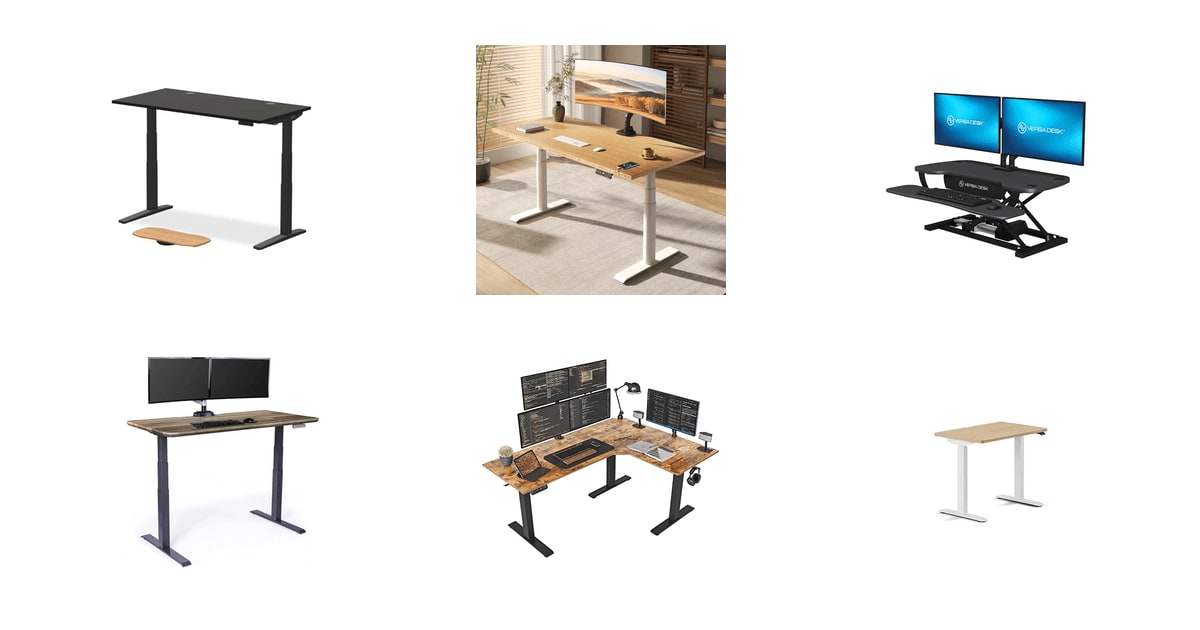
A standing desk earns its keep in small moments. You take a call on your feet, you stretch out your lower back between meetings, you drop the surface an inch because your shoulders were creeping up. The desks that work are the ones you actually move, and that comes down to boring things: how quietly the motors run, whether the memory presets land where you set them, and whether your monitors shudder when you type. A trial published in The BMJ found that people given sit-stand desks cut about 83 minutes of daily sitting over a year. That only happens if the desk isn't annoying.
Here's the honest part. Every electric standing desk wobbles at full height — it's a tall steel structure holding a heavy slab, and physics doesn't care what you paid. The good ones reduce it to a faint sway you stop noticing; the weak ones bounce when you type hard. Assembly is also a real chore on most models, usually an hour or two with a second pair of hands. And no desk fixes your back on its own. Cornell ergonomics researchers tie the benefit to correct setup — elbows near 90 degrees, monitor at eye level — not to owning the furniture.
We looked at frame design, height range, motor count, weight capacity, warranty terms and what owners say after a year or two of daily use. Stability at full extension mattered most, since that's where these desks fail people. We think that the UPLIFT DESK V3 2-Leg is the best electric standing desk for most people, and that the FLEXISPOT E6 Pro is the one to buy if you want a warmer bamboo surface and a slightly lower seated height.
Everything we recommend

The steadiest frame here, if you can handle the assembly

A warmer surface and a lower seated height for smaller users
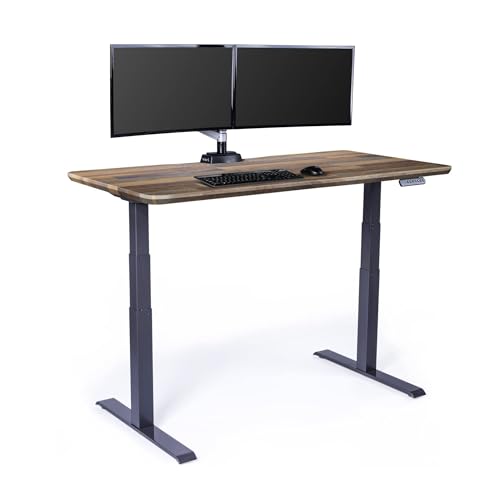
Fastest setup here, and the one to buy for an office

Three motors and an L-shaped top for corner setups

The best-looking option, and the right size for a small room
Prices as of Oct 22, 7:36 AM PT · Details
At a glance
| Product | Weight Capacity | Height Range | Price | |
|---|---|---|---|---|
| UPLIFT DESK V3 2-Leg Black Laminate WoodTop pick | 355 lbs | — | $808 |
| FLEXISPOT E6 Pro Large 60" x 30"Runner-up | 330 lbs | 23.6-48.8 in | $639.99 |
 | VERSADESK PowerPro 36 Inch Electric Standing DeskAlso consider | 80 lbs | — | $349 |
| Vari Classic Electric Standing DeskAlso great | — | 25-50.5 in | $829 |
| FEZIBO Triple Motor 63" L Shaped StandingBudget pick | 330 lbs | 27-48 in | $244.63 |
| Branch Duo Standing DeskUpgrade pick | — | 28-47.3 in | $549 |
Prices as of Oct 22, 7:36 AM PT · Details
How we picked
Stability at full height. We weighted frame geometry heavily, since lateral sway at standing height is what makes people stop using a standing desk. Published stability testing on C-frame and oval-leg designs shows meaningfully less side-to-side movement than standard T-leg frames, so we favored those.
Height range. OSHA guidance says a sit-stand workstation should span roughly 22 to 49 inches to fit the full range of adult bodies. We looked for desks that go low enough for shorter users to reach 90-degree elbows and high enough for people over 6'2" to stand upright.
Motors and capacity. Consumer Reports' reliability assessment found dual-motor desks scored 23% higher than single-motor equivalents over simulated 18-month cycles, so we treated dual motors as the floor. We also checked rated weight capacity against realistic monitor-arm-and-peripheral loads.
Warranty terms. For brands without a long track record, warranty length is the most reliable proxy for build quality we have. We read the fine print for what's actually covered — frame, motor, electronics and top are often covered for different lengths of time.
Assembly and owner reports. We read owner feedback for recurring themes rather than one-off complaints, focusing on assembly time, shipping damage, motor sync problems and how the desks hold up after a year or more.
Top pick
The steadiest frame here, if you can handle the assembly
UPLIFT DESK V3 2-Leg Black Laminate Wood
A three-stage, dual-motor desk on a C-frame that holds 355 pounds and barely moves at standing height. It's the desk to buy if you run two monitors, an arm and a mess of peripherals and never want to think about the frame again.
$808fromAmazonPrices as of Oct 22, 7:36 AM PT · Details
This is the frame to beat for stability. Wirecutter's stability work on the V2 Commercial — the same C-frame architecture — measured roughly a quarter inch of lateral sway at 48.7 inches under a 50-pound load, the lowest in its cohort. You feel that as absence. You type at standing height and the monitors sit still. Owners who came from wobblier desks call out exactly this, and a few mention the crossbar sits farther back, so your knees don't hit it.
The 355-pound capacity is overkill for most people, and that's the point. It's about 100 pounds more than a typical dual-motor desk and nearly double a single-motor frame. Load it with an ultrawide, a monitor arm, a mechanical keyboard, a couple of speakers and a stack of books, and the motors don't strain. Consumer Reports' reliability assessment found dual-motor desks scored 23% better than single-motor equivalents over simulated 18-month cycles. Headroom is how motors stay quiet in year three.
Three-stage legs give you range at both ends. That matters more than the spec sheet suggests. If you're on the shorter side, a low seated position is what gets your elbows to 90 degrees instead of shrugged; if you're well over six feet, you need real height to stand without hunching. This desk covers both, and the four one-touch presets mean two people can share it without re-fiddling every morning. Motors run under 48 dB, quiet enough for a call.
The anti-collision sensor is genuinely useful, not a marketing checkbox. A six-axis gyroscope watches for resistance and stops the desk, with adjustable sensitivity. Owners with kids at home say it's a bit trigger-happy on the default setting — which is the failure mode you want. Turn it down a notch if you're stopping constantly. If a toddler or a cat lives in the room, this is the feature you'll be glad you paid for.
Flaws but not dealbreakers
Assembly is the real cost. Plan on an hour and a half if you're careful, and get a second person — the top is heavy and awkward to flip. Owners consistently describe it as manageable but not quick, and moving it once built is a two-person job.
The laminate top splits opinion. Several owners feel the frame is where the money went and the desktop is merely fine. It's water- and stain-resistant and holds up, but it doesn't feel special. Shipping damage to the top corner also comes up more than we'd like, so unbox it right away and check the edges.
Runner-up
A warmer surface and a lower seated height for smaller users
FLEXISPOT E6 Pro Large 60" x 30"
A dual-motor, three-stage desk with oval legs and a one-piece bamboo top that drops to 23.6 inches. If you're shorter than average or you just want a desk that doesn't look like office furniture, this is the one.
$639.99fromAmazonPrices as of Oct 22, 7:36 AM PT · Details
The bamboo is the reason to pick this over our top pick. It's a single FSC-certified slab, not veneer over particleboard, and the grain reads warm in a room where the desk is also furniture. Owners describe it as looking more expensive than it is. Moso bamboo also matures in four to five years versus decades for hardwood, so the sustainability claim holds up better than most.
That 23.6-inch minimum height is a bigger deal than it sounds. Most desks bottom out around 25 inches, which leaves anyone under about 5'4" perched with their shoulders up. This one goes low enough for proper seated ergonomics, and it still reaches 48.8 inches for standing. Cornell researchers found correct desk height cut self-reported neck and shoulder discomfort by 40% over four weeks. You can't get there if the desk won't come down to you.
Oval legs are Flexispot's answer to wobble, and the geometry does help. Tom's Guide found the C-frame oval-leg design in Flexispot's E7 Pro cut side-to-side movement by roughly 40% versus the brand's standard T-leg frame. Motors stay under 45 dB, which is quieter than our top pick on paper, and owners repeatedly single out how smooth and silent the travel is. Capacity is 330 pounds — plenty for a dual-monitor setup.
The warranty is unusually good for the price. Ten years on the frame and motor, two years on the control panel and electronics. Warranty length is the most reliable proxy we have for build quality when you're comparing brands you don't know, and a decade of frame coverage is what premium desks offer.
Flaws but not dealbreakers
It's not wobble-free, and some owners expected it to be. A few report noticeable movement while typing even below full extension. It's better than a T-leg frame, not immune to the category's basic problem.
The bamboo dents. One owner had a dropped can chip the surface immediately. Bamboo is strong in tension but the finish is thin, so a dropped mug or a sliding monitor stand can leave a mark.
The underside hardware sits low enough that taller people report knocking their legs on it. Check your seated thigh clearance before you commit, especially if you like to cross your legs.
The E6 Pro carries a 10-year warranty on the frame and motor and a 2-year warranty on the control panel and electronics.
Also great
Fastest setup here, and the one to buy for an office
Vari Classic Electric Standing Desk
A dual-motor desk that ships with the frame pre-installed and slide-and-lock legs, so you're adjusting height in about ten minutes with no tools. It's the sensible choice when you're outfitting a room full of desks or you just hate assembly.
$829fromAmazonPrices as of Oct 22, 7:36 AM PT · Details
Setup is the whole pitch, and it delivers. Vari says the desk arrives 90% pre-assembled and that typical setup runs under 15 minutes with zero tools. The frame comes attached; the legs slide and lock. If you're a facilities manager buying eight of these, that difference is a day of labor. If you're one person in an apartment, it's the difference between doing it today and leaving the box in the hallway for a week.
The height range is the widest in this guide: 25 to 50.5 inches. OSHA's ergonomic guidance calls for sit-stand workstations to span roughly 22 to 49 inches to fit the full range of adult bodies, and this clears the top end comfortably. If you're 6'3", most desks leave you slightly stooped at max height. This one doesn't. Four presets and an LED panel handle the rest.
It feels like corporate furniture because it is. A thick one-piece top with a 3D laminate finish, rounded edges, heavy steel T-style legs. Owners describe it as unusually solid and unusually heavy — the kind of desk that doesn't creak when you lean on it. Vari backs it with a lifetime warranty, which is the longest coverage in this lineup by a wide margin.
The tradeoff for that ease is the leg design. T-style legs are inherently more prone to lateral sway than a C-frame, so at full standing height with a heavy setup you'll notice more movement than on our top pick. For a single monitor and a laptop it's a non-issue. For a triple-monitor gaming rig, look at the C-frame options first.
Flaws but not dealbreakers
It's genuinely heavy, and owners bring this up constantly. Turning it or repositioning it takes two people. Decide where it lives before you build it.
The top and legs often ship as separate packages arriving on different days, which has caused confusion and at least one lost-delivery headache. Track both boxes.
It's among the more expensive desks here, and you're paying partly for convenience rather than a better frame. If assembly doesn't scare you, that money buys more stability elsewhere.
Vari backs this desk with a lifetime warranty.
Budget pick
Three motors and an L-shaped top for corner setups
FEZIBO Triple Motor 63" L Shaped Standing
A 63-inch L-shaped desk with three motors, a 330-pound capacity and casters, at a price well below the rest of this lineup. It's the most desk-per-dollar here if you have a corner to fill and a lot to put on it.
$244.63fromAmazonPrices as of Oct 22, 7:36 AM PT · Details
Three motors on an L-shaped frame is a rare combination at this price. The third leg does real work: an L-top has a long unsupported span, and a two-motor frame would flex badly across it. Owners running ultrawides, multiple monitors and a pile of peripherals describe it as sturdier than they expected going in. Capacity is 330 pounds on industrial-grade steel, and the range runs 27 to 48 inches.
The footprint is the actual selling point. Sixty-three inches down each side gives you a monitor wall on one leg and open work space on the other — the setup most people want for gaming or for a job that involves paper. It also comes with casters, so you can roll it to vacuum behind it. That sounds trivial until you own a 66-pound desk in a small room.
Owners report it holding up over years, not months. Several describe four years of daily use with the motors still running fine. Anti-collision detection is included, and noise stays under 50 dB — a little louder than our top picks, but nothing that interrupts a call. For a first standing desk where you're not sure you'll stick with it, this is a low-risk way to find out.
The compromise shows in materials. The desktop is pressed wood with a laminate feel, and it arrives as a splice board — two pieces that meet at the corner, with a visible seam. It's fine. It's not the one-piece bamboo slab you get further up this page, and you'll know that every time you slide a mouse across the join.
Flaws but not dealbreakers
Three motors can drift out of sync. Owners with a couple of years on the desk report one leg gradually running longer or shorter than the others, because flex in the structure lets the legs disagree. It's correctable with a reset, but it's a recurring chore.
Assembly is long and heavy. It ships in two packages, the combined weight is substantial, and building an L-shape alone takes real time. Separate the top pieces from the frame hardware before you start or you'll be wrestling a full box.
The pressed-wood top has a slick finish some owners dislike, and it won't take abuse the way a laminate-over-solid-core surface does.
Upgrade pick
The best-looking option, and the right size for a small room
Branch Duo Standing Desk
A compact 36-inch desk with a frameless base, an OLED paddle control and a genuinely clean design. It's for a studio apartment or a corner of a bedroom where the desk has to look like it belongs there.
$549fromAmazonPrices as of Oct 22, 7:36 AM PT · Details
The frameless base is the design decision that matters. Without a crossbar, you get real legroom and a lot less visual clutter — the desk reads as a table rather than machinery. In a studio or a guest room that doubles as an office, that's the difference between a workspace and an eyesore. Rounded corners and a rear cable notch finish the job. Owners buy this one on looks and stay for the build.
At 36 inches wide, it solves a problem the big desks can't. Most standing desks start at 48 inches and assume you have a dedicated room. This one fits a nook. The 28-to-47.3-inch range still covers proper seated and standing ergonomics for most adults, so you're not trading function for footprint — you're only trading surface area. One monitor and a laptop fit comfortably; two large monitors do not.
The details are thought through. Two memory presets, sit-stand reminders built into the paddle, collision detection, and reusable threaded inserts so you can take it apart and rebuild it without stripping anything. That last one matters if you move often. Owners consistently report assembly running 15 to 20 minutes, which is fast for a desk you build yourself.
It's heavier and more solidly built than the size suggests, at 114 pounds. Owners describe it as sturdy in daily use, which tracks — a shorter top has less span to flex. If your worry is a compact desk feeling flimsy, this isn't that.
Flaws but not dealbreakers
Only two memory presets, versus four on most desks here. Fine for one person with a sitting and a standing height. Annoying if two people share it or you want a third position for a laptop.
The listing has caused confusion about what's included — some owners expected add-on drawers based on the description and received a desk without them. Read the configuration carefully before ordering, and treat accessories as separate purchases.
Returns can be expensive. At least one owner reports a substantial return fee on a desk this size, which is worth knowing before you gamble on the color.
Who this is for
Buy one of these if you spend most of your workday at a desk and want the option to stand without moving to a different room. That covers remote workers, gamers building a battlestation, and anyone whose lower back complains by mid-afternoon — a review of clinical studies cited by Healthline found that alternating sitting and standing every 30 to 60 minutes cut self-reported lower back pain scores by about 32% after four weeks. Corporate buyers outfitting shared desks should weight assembly time and memory presets heavily, since multiple people will use each unit.
Skip a full desk if you already have furniture you like and just want the option to stand — a converter that sits on top of your existing desk costs far less and takes up no floor space. This guide covers full electric sit-stand desks with motorized frames. We've noted the one converter in our lineup separately. We didn't consider manual crank desks, pneumatic desks, or fixed-height standing desks, and we've focused on rectangular and L-shaped tops rather than custom shapes.
How we picked
Stability: Frame geometry drove our ranking, because a desk that shudders at standing height is a desk you stop raising; published testing shows C-frame and oval-leg designs sway meaningfully less than standard T-legs. Height range: We looked for desks spanning roughly 22 to 49 inches, low enough for shorter users to reach 90-degree elbows and tall enough for people over 6'2" to stand upright. Motors and capacity: Dual motors were the floor, since reliability assessments favor them over single-motor frames, and we checked rated capacity against real monitor-arm loads. Warranty: Coverage length is the best proxy for build quality when a brand is unfamiliar, so we read what each warranty actually covers and for how long. Assembly and owner reports: We looked for recurring themes across owner feedback — build time, shipping damage, motor sync drift and how the desks age.
Other electric standing desks worth considering
If you want to keep the desk you already own: The VERSADESK PowerPro 36 Inch Electric Standing Desk — The VERSADESK PowerPro is a converter, not a desk — a motorized two-tier riser that sits on your existing surface and lifts your monitors and keyboard with a button. That makes it the simplest way into sit-stand work without replacing furniture, and the only option if you're renting, sharing a room, or attached to a desk you already like. It holds up to 80 pounds on carbon steel, has three grommet holes for cable routing and a monitor arm, and includes a USB charging port. Owners with two monitors plus a laptop report it handling the load without drama, and petite users appreciate not having to muscle a manual riser up and down. The compromises are real: it moves slowly, it eats a chunk of your desk surface permanently, and some owners report a slight forward lean at height. It also can't lower below your existing desk, so it does nothing to fix a seated position that's already too high.
The competition
This is what our research surfaced, not a survey of every standing desk on the market. The category is enormous and heavy on near-identical frames sold under different names. Everything we looked at closely ended up as a pick or an also-consider — the desks below didn't get cut for being bad.
Setup and ergonomics
Set your seated height first, not your standing height. Sit with your feet flat, drop the desk until your elbows rest near 90 degrees, and save that as preset one. Then stand, raise it to the same elbow angle, and save preset two. Your monitor should sit roughly at eye level in both positions, which usually means a riser or an arm — the desk alone won't do it. Cornell researchers found correct height setup cut self-reported neck and shoulder discomfort by 40% over four weeks, and none of that shows up if your presets are off by two inches. Route your cables with enough slack for full travel before you load the desk up; a taut power cord will trip anti-collision every time you stand. Then check the frame bolts after a month, since they loosen as things settle.
Questions we get
Are standing desks actually good for your back?
The evidence points to alternating positions, not standing all day. A review of clinical studies cited by Healthline found that switching between sitting and standing every 30 to 60 minutes cut self-reported lower back pain by about 32% after four weeks. Standing still for eight hours brings its own problems — sore feet, tired legs, and often worse posture than sitting. The desk gives you the option; the benefit comes from using it.
How long should I stand at a standing desk each day?
Start with 15 to 20 minutes an hour and build from there. The clinical work that shows a benefit is built around alternating every 30 to 60 minutes, not around hitting a daily standing total. A BMJ trial found employees with sit-stand desks cut roughly 83 minutes of daily sitting over a year, which is a realistic target. If your feet hurt, you're standing too long — sit down.
What's the difference between a single-motor and a dual-motor desk?
A single motor drives both legs through a linking bar; dual motors drive each leg independently. Dual-motor desks lift more, run smoother, and hold up better — Consumer Reports' reliability assessment found they scored 23% higher over simulated 18-month cycles. They also typically handle 80% more weight. If you're running two monitors or a monitor arm, the upgrade is worth it. Every desk we picked here has at least two motors.
What height range do I need if I'm 6'3"?
You want a desk that reaches at least 49 to 50 inches at full extension. OSHA guidance puts the top of the useful range near 49 inches for tall standing users, and plenty of desks stop around 48 — close enough to be frustrating, since you'll stand slightly hunched. The Vari Classic goes to 50.5 inches, the highest here. Three-stage legs generally give you more range than two-stage frames at the same footprint.
Do these desks need professional assembly?
No, but most of them need two people and a free evening. The UPLIFT and the FEZIBO both take well over an hour, and the tops are heavy and awkward to flip. The Vari is the exception — it ships with the frame pre-installed and slide-and-lock legs, so setup runs under 15 minutes with no tools. The Branch Duo is also quick, at around 15 to 20 minutes.
What's the most stable desk here for a heavy dual-monitor setup?
The UPLIFT DESK V3, on its C-frame. Wirecutter's stability testing of the same frame architecture measured roughly a quarter inch of lateral sway at 48.7 inches under a 50-pound load — the least movement in its test group. It's also rated to 355 pounds, well above the dual-motor average. If you need an L-shape instead, the FEZIBO's third motor does a similar job across a longer span.
Why you should trust us
For this guide:
- We read published stability testing from Wirecutter, Tom's Guide and RTINGS.com alongside each manufacturer's own height, capacity and noise specifications.
- We compared warranty documents line by line, since frame, motor, electronics and desktop are frequently covered for different lengths of time.
- We read through owner feedback for each desk looking for repeated themes — assembly time, shipping damage, wobble at height and motor behavior after a year or more — rather than isolated complaints.
- We read owner reviews on every listing, weighted toward the critical ones, because that is where the recurring failures show up.
- We have a systematic way of automatically fetching the latest prices, so the numbers on this page stay current.
- This is a research-focused guide, so the team may not own every product listed — though we often do own the top winners, which gives us extra context for the recommendations.
- We don't accept free products, and the retailer commission never changes which product we recommend.
Sources
Best Standing Desks — Wirecutter (New York Times), Wirecutter
Best Standing Desks Tested and Reviewed — RTINGS.com, RTINGS.com
Standing Desks Buying Guide — Consumer Reports, Consumer Reports
Flexispot E7 Pro Review — Tom's Guide, Tom's Guide
Effect of a Workplace Sit-Stand Desk Intervention on Health — British Medical Journal, British Medical Journal
Ergonomics — Occupational Safety and Health Administration, OSHA
Standing Desks: Benefits and Risks — Mayo Clinic, Mayo Clinic
Best Standing Desks for Back Pain — Healthline, Healthline
Cornell Ergonomics Web — Human Factors and Ergonomics, Cornell University Human Factors & Ergonomics Research Group
Standing Desk Market Size & Forecast 2024–2030 — Grand View Research, Grand View Research
Fully Jarvis Standing Desk Review — Good Housekeeping, Good Housekeeping
Best Standing Desks — PCMag, PCMag
Amazon product listings and owner reviews for all 6 products
Manufacturer specification pages for each product
Some passages in this guide may be paraphrased with AI help.
Product prices and availability are accurate as of the date/time indicated and are subject to change. Any price and availability information displayed on Amazon.com at the time of purchase will apply to the purchase of this product.
More like this.
Continue exploring home reviews and recommendations.

The Best Standing Desk Converters
A standing desk converter sits on the desk you already own and lifts your monitor and keyboard to standing height. That's the whole idea, and it's a good…

The Best LED Desk Lamps for Studying and Eye Comfort
If you read or work at a desk for hours, your lamp does more for your eyes than almost anything else on the desk. The problem isn't usually brightness.…

The Best Christmas Tree Stands
A tree stand does one job, and you notice it only when it fails. It has to hold a top-heavy tree upright on a floor that's never quite level, through six…

The Best Stand Mixer Attachments
Your stand mixer is a motor with a bowl bolted to it. That motor spends most of its life whipping cream and kneading bread, but the little hub on the…

The Best Cookbook Stands
A cookbook stand does one job: it holds your book open, at an angle you can read, somewhere the sauce can't reach it. That sounds trivial until you're…

The Best TV Stands and Media Consoles
A TV stand is furniture you stop noticing about a week after you buy it, which is exactly the problem. You notice it again when the cable box runs hot…