The Best Leaf Blower Vacuum Mulchers
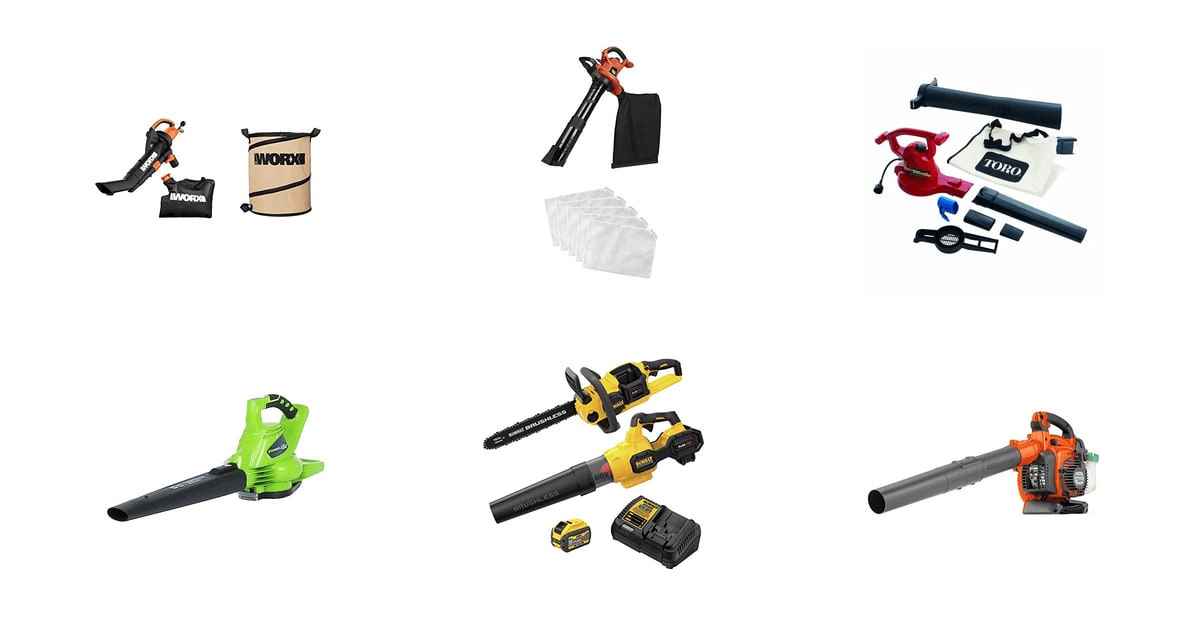
Raking leaves is slow, and hauling them is worse. A 3-in-1 blower vacuum does three jobs with one motor: it pushes leaves into a pile, sucks them up, and chops them into mulch small enough that an afternoon's work fits in a bag or two. That last part is the reason to buy one. Bob Vila's reviewers found a 3-in-1 saves about 45 minutes per cleanup on a 5,000-square-foot yard compared with a rake and a tarp. You still walk the yard. You just carry less.
No leaf vacuum here is good at wet leaves. Once leaves mat down after rain, the intake tube grabs a clump, the impeller stalls, and you're crouched in the grass with a stick clearing the throat. Consumer Reports found gas models pick up wet leaves about 34% better than electric ones, which tells you how far behind electric is, not how good gas is. Vacuum mode is narrow work, too — you're clearing a strip a few inches wide, so it's for beds, borders and gravel, not a whole lawn.
So think of the vacuum as the cleanup crew and the blower as the workhorse. Blow the bulk into a pile, then vacuum the pile and the edges the blower can't finish. Choose based on where you'll actually use it: a cord near the house, a battery for a yard with no outlet, gas for a half acre of oaks. We think that the Worx WG509 TRIVAC is the best leaf blower vacuum mulcher for most people, and that the Toro 51609 Ultra is the one to buy if you want finer speed control and a simpler machine.
Everything we recommend

The best mulching here, if you can stay near an outlet

Finer speed control and a metal impeller, in a simpler package

Lighter and simpler, if you'd rather tie a bag than empty one

The one that handles wet, matted leaves on a big lot

Cordless freedom and light weight, if you buy the battery
At a glance
| Product | Air Speed (Mph) | Air Volume (Cfm) | Price | |
|---|---|---|---|---|
| WORX WG509 12 Amp TRIVAC 3-in-1 ElectricTop pick | 80-210 MPH | 350 CFM | $109.98 |
| BLACK+DECKER 3-in-1 Electric Leaf Blower with LeafBudget pick | 250 MPH | — | $132 |
| Toro 51609 Ultra 12 amp Variable-SpeedRunner-up | Up to 235 MPH | — | $229.99 |
| Greenworks 40VAlso great | 185 MPH | 340 CFM | $128.59 |
 | DEWALT FLEXVOLT 60V MAX* Blower & ChainsawAlso in lineup | 125 MPH | 600 CFM | $679.99 |
| Husqvarna 125BVx Gas Leaf BlowerUpgrade pick | 170 MPH | 470 CFM | $245.49On sale |
How we picked
Airflow and air speed. We compared published CFM and MPH figures across every spec sheet, since air volume drives how much the vacuum swallows and air speed decides whether stuck leaves move at all. Machines that publish neither number got treated with suspicion.
Impeller and mulching. We favored metal impellers after This Old House reported them holding performance through 50 bags of leaves while plastic degraded after roughly 20. Published mulch ratios mattered too, since that's what determines how many trips to the curb you make.
Weight and handling. Popular Mechanics pegs corded units at about 5 to 9 pounds and gas at 10 to 15, and fatigue takes over past 30 minutes of vacuuming. We noted every published weight and looked for shoulder straps and adjustable handles.
Bag and emptying. Good Housekeeping found that larger collection capacity cut emptying stops by roughly 40%, so we looked at bag size, how the bag opens, and whether the package includes anywhere to dump the mulch.
Noise and power source. OSHA treats sustained noise above 85 dB as a hearing risk, and gas units typically run 95 to 105 dB against 65 to 75 for corded electric. We weighed that against the reach and wet-leaf muscle each power source buys you.
Top pick
The best mulching here, if you can stay near an outlet
WORX WG509 12 Amp TRIVAC 3-in-1 Electric
The TRIVAC blows, vacuums and mulches on a 12-amp corded motor, and its two-stage metal impeller chops leaves at an 18:1 ratio, so a yard's worth of leaves fits in one bag. Modes change with a flip of a switch, and the bundled 26-gallon collapsible bin gives you somewhere to dump.
$109.98fromAmazonWorx built this around the mulcher, not the blower. The two-stage metal impeller cuts leaves twice on the way into the bag, and Worx rates the result at an 18:1 ratio — eighteen bags of loose leaves down to one. What that means in your yard is fewer trips to the curb and a bag you can still lift. If you compost, the output is fine shredded material that breaks down instead of matting into a wet mattress.
Metal impellers hold up. This Old House reported that metal-impeller machines mulched 50 bags of leaves with no drop in performance, while plastic ones started slipping after roughly 20. Your driveway has acorns and pebbles in it whether you see them or not, and those are what chew up a plastic wheel. Most machines at this level use plastic. This one doesn't, and that's the main reason it's our pick.
Switching modes takes one hand and about a second. Flip the lever and the blower is a vacuum. That matters more than it sounds, because machines that make you unbolt a tube get used in one mode all season — nobody stops mid-job to swap parts. The two speeds earn their keep as well: 80 mph for a flower bed or a pea-gravel path, 210 mph once you're out on open lawn.
The bundled 26-gallon bin is quietly the best part of this package. The collection bag on any of these machines fills fast, and then you're standing in the yard holding leaves with nowhere to put them. The wide-mouth collapsible bin gives you a dump station you can drag along and fold flat in the garage after. Good Housekeeping's testers found that bigger collection capacity cut emptying stops by about 40%.
Flaws but not dealbreakers
It's corded, so your range is your extension cord, and 100 feet is a hard limit on anything past a quarter acre. You'll spend part of every session working the cord around shrubs and porch furniture, and you'll pull the plug loose at least once.
At 10 pounds it's heavy for a corded machine — Popular Mechanics puts the corded range at roughly 5 to 9 pounds — and all of that lands on your shoulder in vacuum mode. Like everything here, it also chokes on soaked, matted leaves. Rake those into a pile and give them a day to dry if you can.
Runner-up
Finer speed control and a metal impeller, in a simpler package
Toro 51609 Ultra 12 amp Variable-Speed
The Toro Ultra runs a 12-amp motor with infinite variable speed up to 235 mph, and a metal impeller does the shredding. It's a stripped-down design — power head, blower tubes, vacuum tubes, bag — with a cord lock that keeps you plugged in.
$229.99fromAmazonA speed dial matters more on a mixed yard than a big top-end number does. The Toro's control isn't two settings but a continuous range, so you can idle it down to nudge leaves off a mulch bed without launching the mulch, then open it up on the driveway. If you've ever blown a flower bed apart at full power and spent ten minutes putting it back, you know exactly why that's worth having.
The cord lock is the small thing that will make you like this machine. The power cord loops through a molded catch on the handle, so a tug on the extension pulls the housing instead of the plug. Every corded blower promises some version of this. Toro's is the one owners keep mentioning as still working after a few seasons. Losing power halfway through a pile is the most aggravating failure in corded yard tools.
Toro uses a metal impeller too, so it lands on the good side of the durability comparison This Old House ran. The rest is refreshingly plain: blower tubes for blowing, vacuum tubes and a bag for vacuuming, and a manual you won't need. Nothing here is clever, which is part of the appeal — fewer plastic latches means fewer plastic latches to snap off in year four.
Flaws but not dealbreakers
Converting modes isn't the one-flip affair the Worx offers. You swap tubes, which takes a minute or two, so in practice you'll pick a mode and stay in it for the session. The bag zips at the top, so emptying means upending the whole thing, and at 10 pounds on a shoulder strap an hour of vacuuming will find your shoulder.
Toro publishes air speed but not an airflow figure for this model, and CFM is what determines how much leaf material the vacuum actually swallows. Treat it as a solid mid-range corded unit rather than the highest-output one on the shelf.
Budget pick
Lighter and simpler, if you'd rather tie a bag than empty one
BLACK+DECKER 3-in-1 Electric Leaf Blower with Leaf
The BV6600 does the same three jobs on a 12-amp motor with variable speed up to 250 mph, and at under 8 pounds it's the lightest corded machine here. It comes with disposable collection bags, so emptying means tying the bag shut and setting it at the curb.
$132fromAmazonWeight is the spec people underrate. Popular Mechanics puts corded machines at roughly 5 to 9 pounds against 10 to 15 for gas, and at the light end of that range you can work a bed line for half an hour without switching arms. If you're doing yard work with a cranky shoulder or a bad back, start here. The difference shows up in the tenth minute, not the first.
The disposable bag system is a genuinely different way to work. Instead of unzipping a fabric bag over a bin and shaking mulch dust into your own face, you pull the full bag off, tie it and toss it. It's a consumable you'll keep buying, and it's not the greener choice, so it's a real trade. But if the reason you never vacuum leaves is that emptying the bag is miserable, this fixes the part you hate.
Mode switching is a single step, and Black+Decker rates the mulching at 12:1. That's less shredding than the Worx manages. Twelve bags into one is still the difference between four trips to the compost pile and one, though, and for a quarter-acre yard with a couple of maples it's plenty. The variable speed goes to 250 mph, which is more air speed than the Worx offers.
Flaws but not dealbreakers
The impeller is plastic, and that's where the money was saved. This Old House found plastic impellers losing performance after about 20 bags of leaves, and a single hidden acorn can chip a blade. Keep it away from gravel and driveway edges and it should last several seasons. Feed it stones and it won't.
The bags are a recurring purchase, and the pack it ships with runs out faster than you'd expect during heavy leaf fall. You can feel the lighter build elsewhere, too — the housing flexes more than the Toro's does.
Upgrade pickOn sale
The one that handles wet, matted leaves on a big lot
Husqvarna 125BVx Gas Leaf Blower
The 125BVx pairs a 28cc two-cycle engine with a vacuum kit and mulching knives, and at 470 CFM and 170 mph it moves far more air than any electric unit here. This is the pick for half an acre or more, or for anyone whose leaves are already soaked and stuck down.
$245.49fromAmazonList priceGas is still the answer for wet leaves, and it isn't close. Consumer Reports found gas blower vacuums beating electric ones on wet-leaf pickup by about 34%. Airflow is why: 470 CFM is more air than anything else on this list moves, and volume is what lifts a soggy clump instead of sliding over it. If your leaves sit through a week of rain before you get to them, this is the machine to buy.
Nothing limits where you take it. No cord to drag, no battery clock counting down — you fill the tank and work until the job's done, which on a wooded lot is the difference between one Saturday and three. Husqvarna also rates this engine as cleaner and thriftier than its older designs, cutting emissions by up to 60% and improving fuel efficiency by up to 20%.
For a gas machine it's unusually civilized. It weighs 9.6 pounds, which is light for the class, the handle adjusts, and cruise control lets you set a throttle and stop squeezing the trigger for an hour. The stop switch resets itself, so you won't spend ten minutes yanking a starter cord on a machine you left switched off.
Flaws but not dealbreakers
It's loud, and that's not a footnote. OSHA flags sustained noise above 85 dB as a hearing risk, and gas blowers typically run 95 to 105 dB against 65 to 75 for corded electric. Wear ear protection, check whether your town has an ordinance, and don't plan an early-morning start next to a neighbor's bedroom window.
You're also signing up for gas-engine ownership: mixing two-cycle fuel, coaxing it back to life after a few months in the shed, spark plugs, air filters. And the vac kit means swapping the blower tube for the vacuum tube and bag, which is a several-minute job rather than a flip of a switch.
Also great
Cordless freedom and light weight, if you buy the battery
Greenworks 40V
This Greenworks blower vac runs on the 40V battery platform with a brushless motor, 340 CFM in turbo mode and a six-speed dial. At 5.6 pounds it's the lightest machine here by a wide margin, but it ships as a bare tool — battery and charger are separate.
$128.59fromAmazonCutting the cord changes which parts of your yard actually get cleaned. The strip along the back fence, the side yard behind the AC unit, the corner where leaves drift against the shed — those are the spots you skip when you're 90 feet from an outlet. Popular Mechanics has found 40V-class machines landing within about 10% of corded ones on dry-leaf suction, so you're not giving up much to go cordless.
It's also barely there in your hands. At 5.6 pounds it weighs roughly half what our corded picks do, and that gap shows up late in a session rather than at the start. The six-speed dial gives you genuine control around beds and gravel, and turbo is there for the packed pile by the garage door. Tool-free conversion between modes takes seconds.
Greenworks backs it with a three-year warranty, and a brushless motor is the right call for a tool that spends its life breathing dust. This is also where the market has gone — Wirecutter has reported battery models passing 60% of consumer leaf blower sales, up from roughly a third not long before. Batteries and chargers for this platform are easy to find.
Flaws but not dealbreakers
Runtime is the catch. Greenworks rates it at 21 minutes, and vacuum mode with a loaded impeller will pull that number down. A half-acre cleanup realistically means a second battery and a charging break, and that's on top of a bare tool that arrives with neither.
Greenworks describes it as a 2-in-1 — blower and vacuum/mulcher — and publishes no mulch ratio, so don't expect Worx-level shredding. At 185 mph it also has the slowest air speed here, which you'll notice on wet leaves plastered to concrete.
Greenworks covers this blower vac with a three-year warranty, no registration required.
Who this is for
Buy one of these if you have a yard under about half an acre with real leaf fall and you're sick of raking and bagging. Mulching is the payoff — three or four trips to the curb instead of ten. Corded models fit anyone working within a cord's reach of the house, battery makes sense for a yard with no convenient outlet, and gas is for a wooded lot where leaves come down faster than you can get to them.
Skip the category if your yard is mostly grass clippings and dust, or if you're managing several acres. At that scale you want a backpack blower and a tow-behind vacuum, not a handheld 3-in-1. This guide covers handheld machines that blow, vacuum and mulch. It doesn't cover blower-only tools, backpack blowers, standalone leaf shredders, or cordless blowers that need a separate vacuum kit you have to buy on its own.
How we picked
We built the shortlist from manufacturer spec sheets and published reviews, weighted toward the specs that change how the tool feels in your hands. Airflow and speed: CFM decides how much the vacuum takes in, MPH decides whether packed leaves budge, and we wanted both published. Impeller: metal over plastic, because This Old House found plastic fading after roughly 20 bags while metal held through 50. Mulching: a stated ratio, since that number is really a count of how many trips you'll make to the compost pile. Weight: under 10 pounds where possible, because fatigue arrives around the half-hour mark. Bag: bigger capacity and an emptying method that doesn't dump mulch dust on you. Noise: an honest look at the gap between a corded machine and a gas one, which OSHA's 85 dB threshold puts in perspective.
The competition
This is what our research surfaced, not a survey of everything for sale. Leaf blower vacuums turn over often, and a few well-regarded models weren't part of the lineup we could confirm.
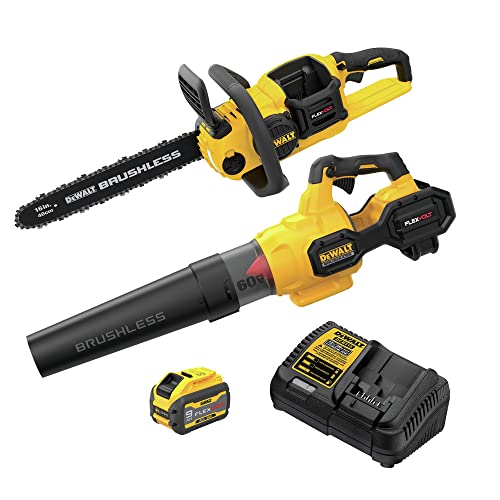
The DEWALT FLEXVOLT 60V MAX* Blower & Chainsaw ($679.99) — The DEWALT FlexVolt 60V combo pairs a strong brushless blower — 600 CFM at 125 mph, more air volume than any corded unit here — with a chainsaw, on the same battery platform as DEWALT's other yard tools. But it doesn't vacuum or mulch, and no vacuum kit comes with it, so it can't do the job this guide is about. Half of what you're buying is a saw. If you already own DEWALT 60V batteries and want blowing power plus storm cleanup, it's a sensible kit. As a leaf mulcher, it isn't one.
Care and clearing clogs
Clogs are the main maintenance event with any of these. Shut the machine off and unplug it or pull the battery first — never poke at an intake with the trigger live. Most jams sit right at the mouth of the vacuum tube, where a broom handle pushes them through; a wet clump wrapped around the impeller usually means pulling the tube off. Keep the bag clean, because one caked with damp mulch strangles airflow and makes the machine feel weak when it's fine. Shake it out, hose it after a heavy session, and let it dry all the way before you store it. With the gas unit, drain or stabilize the fuel before it sits, and check the air filter often — leaf work loads it fast.
Questions we get
Are battery-powered leaf blower vacuums as strong as corded electric ones?
For dry leaves, close enough. Popular Mechanics has found 40V-class cordless machines performing within about 10% of corded models on suction. The real gap is runtime, not power — you're working in 20-minute stretches unless you own a spare battery.
What mulching ratio should I look for?
Anything from 10:1 up is worth having, and the difference between 12:1 and 18:1 is mostly trips to the compost pile. A 16:1 rating means sixteen bags of loose leaves compress into one. Treat manufacturer ratios as best-case figures measured on dry leaves.
Can these handle wet or matted leaves?
Not well. Every machine here struggles once leaves pack down after rain, and clogs are the usual result. Consumer Reports found gas units pick up wet leaves about 34% better than electric ones, so a gas model like the Husqvarna is your best shot. Otherwise, wait a day for things to dry.
CFM or MPH — which one matters more?
They do different jobs. CFM is air volume, and it determines how much leaf material the vacuum can move at once. MPH is air speed, and it's what dislodges leaves stuck to wet pavement. For vacuuming and mulching, lean toward CFM; for clearing hard surfaces, lean toward MPH.
Are metal impellers worth paying more for?
Yes, if you'll use the vacuum regularly. This Old House found metal impellers holding their performance through 50 bags of leaves while plastic ones degraded after roughly 20. Acorns, twigs and gravel are what do the damage, and you can't always see them before they go in the tube.
Can one of these replace a rake completely?
Almost. The vacuum tube clears a strip only a few inches wide, so it's for beds, borders, gravel and edges rather than an entire lawn. The workflow most owners settle into is blowing leaves into piles, then vacuuming the piles and the corners. A rake still helps for pulling leaves out from under low shrubs.
Why you should trust us
For this guide:
- We read the manufacturer spec sheets for every machine in this guide and compared airflow, air speed, weight, impeller material and bag capacity line by line.
- We leaned on published testing and reporting from Consumer Reports, This Old House, Popular Mechanics, Good Housekeeping and Bob Vila for the questions spec sheets don't answer, like wet-leaf pickup and impeller wear.
- We weighed recurring themes in owner feedback — clogged intake tubes, cords pulling loose, and the chore of emptying a full bag — when writing the flaws for each pick.
- We read owner reviews on every listing, weighted toward the critical ones, because that is where the recurring failures show up.
- We have a systematic way of automatically fetching the latest prices, so the numbers on this page stay current.
- This is a research-focused guide, so the team may not own every product listed — though we often do own the top winners, which gives us extra context for the recommendations.
- We don't accept free products, and the retailer commission never changes which product we recommend.
Sources
Best Leaf Blowers 2026 — Wirecutter, Wirecutter
Best Leaf Blowers of the Year — Consumer Reports, Consumer Reports
Best Leaf Blower Vacuums — Popular Mechanics, Popular Mechanics
Best Leaf Blowers — This Old House, This Old House
Best Leaf Blower Vacuum Mulcher — Bob Vila, Bob Vila
Best Leaf Blowers — Good Housekeeping, Good Housekeeping
Best Leaf Blowers — Better Homes & Gardens, Better Homes & Gardens
Occupational Noise Exposure Standard — OSHA, OSHA
Husqvarna 125BVX Product Specifications, Husqvarna
EGO Power+ LB6003 Blower — Product Specifications, EGO Power+
Worx WG509 TRIVAC Product Page, Worx
DEWALT DCBL772X1 60V MAX FlexVolt Blower — Specs, DEWALT
Amazon product listings and owner reviews for all 6 products
Manufacturer specification pages for each product
Some passages in this guide may be paraphrased with AI help. Prices are refreshed automatically.
More like this.
Continue exploring home reviews and recommendations.

The Best Leaf Blowers
Leaf blowers get judged on two numbers, and only one of them matters most days. CFM is air volume - how much leaf litter you can push across a lawn in one…

The Best Cordless Electric Snow Blowers
Snow clearing is a chore with a narrow window. You want the driveway open before work, in the dark, in the cold, without a trip to the gas station the…

The Best Cordless Window Vacuums
Cleaning glass by hand is a losing battle. You spray, you wipe, and the water runs down the frame and dries into gray streaks you only see at sunset. A…

The Best Lightweight Cordless Stick Vacuums
A cordless stick vacuum earns its place by being the vacuum you actually reach for. It hangs on a wall or leans in a closet, and you grab it when the dog…

The Best Dyson Vacuums
A vacuum earns its keep in small moments. The dog sheds a fresh layer onto the rug every morning. Someone tracks in gravel. A bag of rice splits over the…

The Best Wet/Dry Shop Vacuums
A shop vacuum is the tool you drag out when a regular vacuum would die trying. Broken tile, wet sawdust, a burst supply line under the sink, the gravel…