The Best Enduro Mountain Bike Helmets
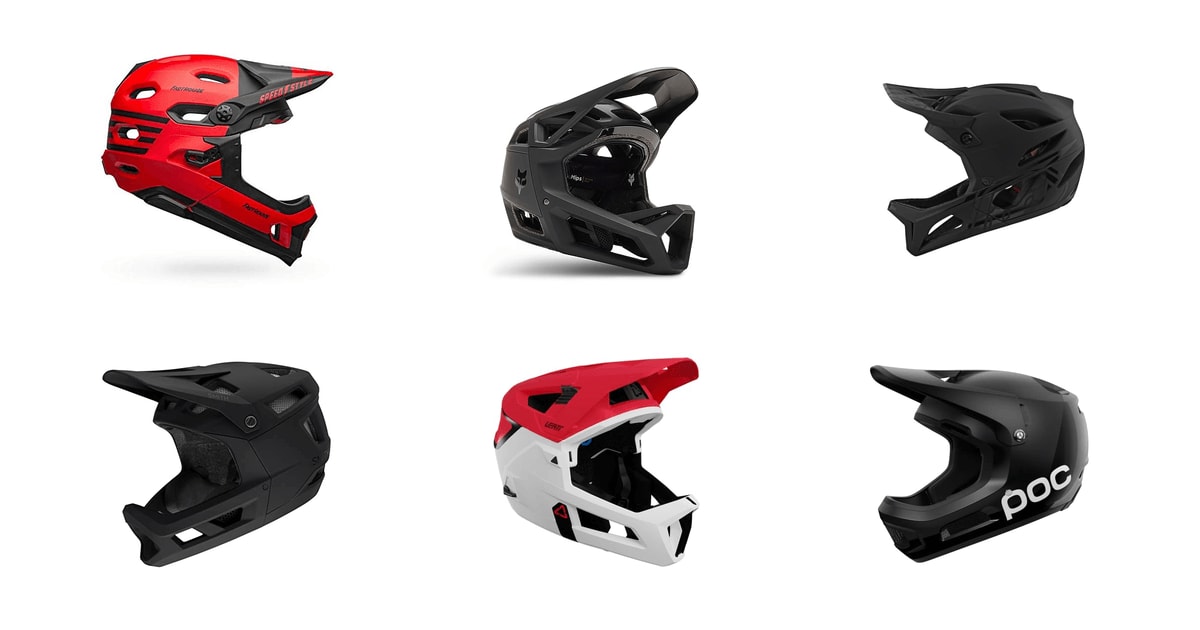
A full-face enduro helmet has one job on a rough descent: keep your face out of the rocks. Head injuries account for roughly 22 to 29 percent of mountain bike injuries that reach an emergency department, and facial and chin injuries skew heavily toward riders in open-face helmets. But you also have to pedal the thing uphill. That's the tension in this whole category. It's why a good enduro helmet lives or dies on weight, airflow, and whether you'll actually keep it on your head for the climb.
No helmet here solves the heat problem. Even the best-vented full-face traps warmth around your jaw and ears, and on a slow fire-road climb in midsummer you'll feel every bit of it. Chin bars muffle sound and make trailside conversation awkward. And a certification sticker only tells you the helmet passed a lab impact. It can't tell you how the shell sits on your particular skull. Fit is the one variable nobody can spec for you, so buy somewhere you can send it back.
Most riders don't need a dedicated downhill lid. You want something certified to ASTM F1952, the enduro and downhill standard, with a rotational system inside and enough venting to survive a long day out. Past that, the real question is whether you want the chin bar bolted on for good or removable for the climbs. We think that the Fox Racing Proframe RS MIPS is the best enduro mountain bike helmet for most people, and that the Troy Lee Designs Stage MIPS is the one to buy if you ride in real heat and want the most airflow you can get.
Everything we recommend

Light enough to climb in, with a real full-face chin bar

The most air you'll get out of a one-piece full face

The lightest one here, with certifications to match

One helmet for the climb and the descent, chin bar optional
At a glance
| Product | Weight | Protection | Price | |
|---|---|---|---|---|
| Bell Bike Super Dh MIPS Spherical HelmetAlso great | 1 lb | Flex Spherical+MIPS | $227.47 |
| Fox Racing Proframe RS Mountain Bike HelmetTop pick | 3.3 lb | Mips Integra Split | $399.95 |
| Troy Lee Designs Stage Adult Mountain BikeRunner-up | ~690g | — | $229On sale |
 | SMITH Mainline MTB Cycling HelmetAlso consider | — | MIPS | $350 |
 | Leatt Helmet MTB Enduro 4.0Also consider | — | 3-in-1 Safety System | $268.80On sale |
 | POC Coron Air MIPS Full Face MountainbikeAlso in lineup | — | MIPS Evolve | $370 |
| iXS Helmet Trigger FF MIPS Black MLBudget pick | ~595g | Mips Technology | $239.90 |
How we picked
Certification and standards. We treated ASTM F1952, the downhill and enduro standard, as the floor for anything with a chin bar. Helmets certified to it have to handle impacts roughly 35 percent more severe than the CPSC bicycle standard demands, per ASTM's own specification.
Rotational impact protection. Every helmet here has MIPS or an equivalent system, because Virginia Tech's helmet lab measured an average 42 percent reduction in rotational acceleration for MIPS-equipped helmets in oblique impacts. Published crash-simulation research puts the concussion-risk benefit around 25 to 30 percent.
Weight on the climb. We compared manufacturer weights across the field and gave preference to anything near or under 750 grams, since that's where riders in published reviews and owner feedback stop pulling the helmet off for climbs.
Ventilation and airflow. We read published airflow comparisons and counted intake and exhaust ports on the spec sheets, then weighted heavily toward helmets that reviewers singled out for staying tolerable on slow climbs rather than only at speed.
Fit and goggles. We looked for dial retention with real adjustment range, swappable cheek pads, and a visor with enough travel to park goggles. Owner feedback across brands keeps coming back to fit as the thing that makes or breaks a full-face.
Top pick
Light enough to climb in, with a real full-face chin bar
Fox Racing Proframe RS Mountain Bike Helmet
The Proframe RS is a one-piece full-face that weighs about 740 grams in medium-large, which isn't far off a chunky trail helmet. You get a BOA fit dial, a Fidlock magnetic buckle, and enough open vent area that most riders stop noticing the chin bar.
$399.95fromAmazonAt roughly 740 grams, this is one of the lightest certified full-face helmets you can buy. That number matters more than it sounds. A heavy lid tugs on your neck over a two-hour climb, and neck fatigue is exactly why people end up with the full-face strapped to their pack instead of their head. This one is light enough that you'll just wear it, which is the whole point.
Fox cut down the surface area that touches your head and opened the vents so air moves across your scalp instead of around it. Published reviews put the Proframe RS near the top of the field for airflow among one-piece full-faces. It's still not an open-face trail helmet — nothing with a chin bar is — but on a rolling stage with any speed at all, you'll stay reasonably cool.
The MIPS Integra Split liner is the biggest reason we'd take this over an older full-face design. It pairs a softer EPP layer with the usual EPS to handle both low-speed and high-speed hits, and the MIPS layer is there for oblique impacts, the kind where your head twists as it slides. Virginia Tech's helmet lab found MIPS-equipped helmets cut rotational acceleration to the brain by an average of 42 percent versus non-MIPS versions.
The small stuff is done well. The BOA dial tightens one-handed, and the Fidlock buckle closes with thick gloves on and one hand busy holding your goggles. The visor moves through three positions, so you can park your goggles up top on a climb. There's a breakaway GoPro mount under the visor, and the Ionic+ liner and cheek pads keep the smell down between washes.
Flaws but not dealbreakers
It's one of the more expensive helmets in this guide, and the chin bar doesn't come off. If your riding is half mellow trail and half shuttle laps, you're either carrying a second helmet or sweating through the flat sections.
The cheek pads are tight out of the box. That's how a full-face is supposed to fit, but it's a real adjustment if you're coming from an open-face, and it takes a few rides before you stop noticing the pressure on your jaw. Hearing is muffled too, which is worth knowing before you ride somewhere with hikers and blind corners.
Runner-upOn sale
The most air you'll get out of a one-piece full face
Troy Lee Designs Stage Adult Mountain Bike
The Stage weighs about 690 grams and has 25 intake and exhaust ports, so it's the one to grab if you run hot. It ships with two liners, three sets of cheek pads and two neck rolls, which means you can tune the fit yourself instead of hoping.
$229fromAmazonList priceClimb a fire road in the middle of the day wearing a full-face and you learn quickly which helmets actually breathe. The Stage has 25 intake and exhaust ports, and independent airflow comparisons have found well-vented enduro designs like this moving roughly 30 percent more air than traditional full-face shells. If your local trails are hot and your stages are long, this is the helmet to start with.
At about 690 grams, it's lighter than our top pick and lighter than most of what's out there. Troy Lee got there with a polyacrylite-injected chin bar and an internal EXO-Skeleton reinforcement rather than by thinning out the shell. The visor screws are designed to break away in a crash instead of catching. It reads like a race helmet because it is one — the Stage shows up a lot at enduro races.
Inside, the impact package is MIPS plus two foam densities: EPP for the slow, dumb crashes and EPS for the fast ones. Those are different problems, and a single foam density compromises on both. Pair that with the extended rear coverage of a full-face shell and you're protecting the areas that actually get hit when you go over the bars on a rocky chute.
The included fit kit is more useful than it sounds. Two crown liners, three cheek pad thicknesses and two neck rolls let you tighten the fit around your jaw without cranking a dial into your temples. A full-face should hold your cheeks firmly enough that the helmet doesn't rotate. Getting there usually means swapping pads, and here you don't have to order them separately.
Flaws but not dealbreakers
There's no removable chin bar, so this is a commitment. Buy it knowing you'll wear it on climbs or carry it on your back.
It's near the top of the price range here, and swapping cheek pads is fiddly work the first time. Expect to spend an evening with the fit kit before your first ride rather than pulling it out of the box and heading to the trailhead.
The Stage comes with a three-year limited manufacturer warranty.
Budget pick
The lightest one here, with certifications to match
iXS Helmet Trigger FF MIPS Black ML
The Trigger FF weighs about 595 grams and uses a single integrated shell where the chin bar and EPS liner are one piece. It carries MIPS and meets EN 1078, CPSC and ASTM F1952-15, which is the certification list that actually matters for enduro.
$239.90fromAmazonAt roughly 595 grams, this is the lightest helmet in the guide, and it costs a fraction of what the race helmets do. iXS gets there with an all-in-one construction: the chin bar and EPS liner are molded as a single piece rather than bonded together. Less hardware, less overlap, less weight. For a first full-face, that combination of light and cheap is hard to argue with.
The certification list is the real story. It meets EN 1078, CPSC, ASTM F1952-15 and F1446-15b. That F1952 mark is the enduro and downhill standard, and helmets carrying it have to survive impacts about 35 percent more severe than the CPSC bicycle standard requires. Plenty of cheaper full-faces skip it. Don't buy one that does.
MIPS is included, which we'd consider non-negotiable at any price now. Research on real-world crash simulations has put the concussion-risk reduction from rotational systems in the neighborhood of 25 to 30 percent, and that's a bigger safety gain than anything else you can add for the money.
The Ergo-Fit Ultra system adjusts both circumference and height, so you can raise or lower the cradle at the back of your skull instead of just cinching it tighter. That's genuinely useful if you're between sizes or have a head shape that fights most helmets. The closure is magnetic, and the two-position visor is cut to park goggles.
Flaws but not dealbreakers
It doesn't move as much air as the Stage or the Proframe RS. On a hot, slow climb you'll notice the difference, and this is a helmet you'll want to take off at the top of the fire road.
The padding and liner materials are basic compared with what the pricier helmets use. They do the job, but they hold sweat longer and the overall finish is plainer. And because the shell and chin bar are one molded piece, there's no version of this that converts to an open-face helmet.
Also great
One helmet for the climb and the descent, chin bar optional
Bell Bike Super Dh MIPS Spherical Helmet
The Super DH's chin bar detaches, so you climb in what feels like a deep trail helmet and clip the bar on before you drop in. Bell says it meets ASTM F1952 with the bar installed and CE EN 1078 without it, which few convertibles pull off.
$227.47fromAmazonYou ride up with the chin bar strapped to your pack, then clip it on at the top of the stage. That's the pitch, and for riders who alternate between long trail days and bike park laps it's a good one. One helmet, two jobs, no second purchase. The attachment is quick enough that you'll actually bother doing it rather than talking yourself out of the bar.
Bell says the Super DH meets both ASTM F1952 and CE EN 1078 with the chin bar installed, making it one of the few convertibles to hold dual certification. That's the part most detachable-chin-bar helmets get wrong. A bar that clips on for looks isn't protection. This one is designed as a wraparound structure, and it's certified to the downhill and enduro standard when it's attached.
The Flex Spherical system pairs with MIPS to handle high-speed hits, low-speed hits and the rotational forces in between, and Bell layers EPS foam in varying densities rather than one uniform block. Ventilation is strong for a convertible: 19 vents, two brow ports and four more in the chin bar, with overbrow intakes that pull air through the channels rather than letting it stall.
Comfort details are thought through. The X-Static and XT2 padding dries fast, and the Sweat Guide pad routes moisture away from your brow and off your glasses instead of onto the lenses. The Float Fit DH cradle uses a rubberized dial you can turn with gloves, closes with a Fidlock buckle, and the GoggleGuide visor adjusts to park goggles up top.
Flaws but not dealbreakers
It's heavier than a dedicated full-face like the Stage or the Proframe RS, which is the tax you pay for a shell that has to work both ways. It's also expensive.
The detached chin bar is one more thing to carry, and one more thing to leave on a tailgate. In open-face mode the helmet is noticeably bulkier than a purpose-built trail lid, so if most of your riding is mellow singletrack, you may end up wanting a lighter everyday helmet anyway.
Who this is for
This guide is for riders who descend hard enough that a chin bar makes sense — enduro racers, aggressive all-mountain riders, and anyone splitting weekends between trail rides and bike park laps. If you've been riding an open-face trail helmet on chunky, fast descents, this is the upgrade to make. It's also for beginners entering enduro who want proven protection without buying a full downhill setup they'll never pedal.
It's not for you if you ride mellow singletrack, gravel or commute. A well-fitting open-face trail helmet is lighter, cooler and plenty for that riding. We've stuck to full-face and convertible designs certified for enduro and downhill use, so pure cross-country helmets, road helmets and dedicated downhill-only lids that nobody pedals in are out of scope. And no matter which helmet you pick, buy from somewhere with easy returns — head shapes vary, and a helmet that rocks on your head isn't doing its job.
How we picked
We started from the spec sheets and published reviews, then applied five filters. Certification: ASTM F1952 with the chin bar attached, since it demands impacts roughly 35 percent more severe than the standard CPSC bicycle test. Rotational protection: MIPS or an equivalent system, based on Virginia Tech lab data showing an average 42 percent cut in rotational acceleration. Weight: we favored helmets near or under 750 grams, the point where riders stop taking them off to climb. Ventilation: port count plus what reviewers actually reported about slow-speed airflow, not just descending. Fit: dial retention with real range, swappable cheek pads, and a visor that clears goggles.
Other enduro mountain bike helmets worth considering
If you want a different approach to impact foam: The SMITH Mainline MTB Cycling Helmet ($350) — The Mainline replaces most of its EPS with Koroyd, a honeycomb of collapsible tubes that Smith says absorbs up to 20 percent more energy at peak impact while letting air pass straight through. Add MIPS on top and you get a protection package that's genuinely different from everything else here, not just a spec-sheet variation. It's downhill certified, meets CPSC and CE EN 1078, and comes with three cheek pad kits, two crown liners and two neck rolls. The tradeoffs: it's heavier than the Stage or the Proframe RS, the 21 vents are fixed with nothing to adjust, and it sits at the expensive end of this group.
If you want a convertible that costs less than the Bell: The Leatt Helmet MTB Enduro 4.0 ($268.80) — The Enduro 4.0 gets you a removable chin bar with an easy-fit attachment, a DH-certified polycarbonate shell, and Leatt's 360 Turbine system, which the company credits with cutting rotational brain motion by up to 40 percent against helmets with no rotational protection. The foam is dual-density in-molded EPS and EPO, and the closure is Fidlock. What you give up is refinement and airflow — 18 vents is fewer than most of the field, and the finish and padding aren't at Bell or Troy Lee level. For a rider who wants convertible flexibility without the top-tier outlay, that's a fair trade.
The competition
Here's what else turned up in our research. This isn't every enduro helmet on the market — it's the set of models that kept appearing in published reviews and owner discussion alongside our picks.
The POC Coron Air MIPS Full Face Mountainbike ($370) — The POC Coron Air MIPS is a serious piece of protective equipment and the most downhill-focused helmet in this group. The fiberglass shell is tougher than polycarbonate, the EPP liner is built to take more than one hit, and POC's extended liner covers about 35 percent more of your temples and rear skull than a standard trail helmet does. The breakaway peak snaps off in a crash to reduce neck loading, the cheek pads pull out so medics can remove the helmet without moving your head, and there are dedicated ear chambers to keep your hearing and balance closer to normal. It lost to our picks on weight and airflow — this is a heavy helmet, and it's built around gravity speeds where air is moving fast. If your enduro days are mostly shuttles and park laps with short pedals, it's an excellent choice. If you're climbing to your stages, you'll want something lighter.
Fit, goggles, and care
Measure your head above your eyebrows with a soft tape before you order, and check that number against the brand's chart rather than guessing your usual size — the ranges differ between makers. A full-face should grip your cheeks firmly enough that the helmet won't rotate when you push on the chin bar, and it shouldn't move if you shake your head. Swap in thicker cheek pads if there's play. Set your goggle strap under the rear cradle, not over it, so the helmet's retention system stays against your skull. Wash the liner and pads by hand and let them air dry; heat and harsh cleaners break down the foam. Replace any helmet that takes a real impact, even if the shell looks fine. Manufacturers generally recommend replacing after a few seasons of regular use regardless of crashes.
Questions we get
What's the difference between an enduro helmet and a regular trail helmet?
An enduro helmet adds a chin bar and extends coverage down over your temples and the back of your skull. It's also usually certified to ASTM F1952, the downhill and enduro standard, which requires it to survive substantially harder impacts than a normal bike helmet. A trail helmet is lighter and cooler, but it leaves your face and jaw exposed.
Do I actually need a full face for enduro riding?
If you're riding fast, steep or rocky descents, yes. Facial and chin injuries show up disproportionately among mountain bikers who weren't wearing full-face protection, and head injuries make up roughly a quarter of mountain bike injuries treated in emergency departments. Enduro race surveys back this up too: the large majority of professional racers wear a full-face or convertible for race-day descents.
What does MIPS do, and is it worth paying for?
MIPS is a low-friction layer inside the helmet that lets the shell rotate slightly against your head during an angled impact. That matters because most real crashes are oblique, not straight-on. Virginia Tech's helmet lab measured an average 42 percent reduction in rotational acceleration for MIPS-equipped helmets versus the same models without it, and it adds very little to the weight.
Are convertible helmets with removable chin bars safe?
The good ones are. The thing to check is certification with the bar installed — Bell, for instance, says the Super DH meets both ASTM F1952 and CE EN 1078 with the chin bar on. If a convertible doesn't state ASTM F1952 certification with the bar attached, treat the bar as decoration. Convertibles do run a bit heavier than dedicated full-faces because the shell has to work two ways.
How do I know what size to buy?
Wrap a soft tape measure around your head about an inch above your eyebrows and use that measurement against the specific brand's chart, since ranges vary between makers. Then check the fit with the helmet on: your cheeks should be firmly held, and pushing on the chin bar shouldn't rotate the helmet. If it moves, go down a size or add thicker cheek pads.
Can I use an enduro helmet for bike park and downhill laps?
Any helmet here that's certified to ASTM F1952 is rated for downhill use, so yes. The POC Coron Air and the Bell Super DH with the chin bar on lean hardest in that direction. The lighter, more vented options like the Proframe RS and the Stage will work fine at the park too — they're just built to also be pedalable, which costs a little shell mass.
Why you should trust us
For this guide:
- We read manufacturer spec sheets, certification listings and published reviews for every helmet in this guide, and compared claimed weights, vent counts and impact-liner construction across the field.
- We leaned on independent lab data from Virginia Tech's helmet rating program and on published crash-injury research rather than on marketing claims about protection.
- We looked at recurring themes in owner feedback — fit, heat, and chin bar comfort — to identify the flaws that show up after the first few rides.
- We read owner reviews on every listing, weighted toward the critical ones, because that is where the recurring failures show up.
- We have a systematic way of automatically fetching the latest prices, so the numbers on this page stay current.
- This is a research-focused guide, so the team may not own every product listed — though we often do own the top winners, which gives us extra context for the recommendations.
- We don't accept free products, and the retailer commission never changes which product we recommend.
Sources
Best Mountain Bike Helmets 2026 – Pinkbike, Pinkbike
Best MTB Helmets Tested & Reviewed – Singletracks, Singletracks
Virginia Tech Bicycle Helmet Ratings – STAR Program, Virginia Tech Helmet Lab
Best Enduro Helmets 2025/2026 – Vital MTB, Vital MTB
Fox Proframe RS MIPS Review – MBUK, Mountain Bike UK (MBUK)
Best Full Face MTB Helmets – BikeRadar, BikeRadar
Enduro Helmet Buyer's Guide 2025 – Trailforks / Pinkbike Academy, Pinkbike
ASTM F1952 Standard for Downhill/Enduro Helmets – ASTM International, ASTM International
Smith Mainline MIPS Review – MBA (Mountain Bike Action), Mountain Bike Action
Helmet Safety Technologies Compared: MIPS vs Koroyd vs SPIN – Cycling Weekly, Cycling Weekly
Troy Lee Designs Stage MIPS Long-Term Review – Enduro MTB Magazine, Enduro MTB Magazine
POC Coron Air MIPS Review – Singletracks, Singletracks
Amazon product listings and owner reviews for all 7 products
Manufacturer specification pages for each product
Some passages in this guide may be paraphrased with AI help. Prices are refreshed automatically.
More like this.
Continue exploring lifestyle reviews and recommendations.

The Best Trail Mountain Bike Accessories
The bike you already own is probably fine. What's holding you back on a wet descent or a ride that runs long is usually smaller and cheaper than a new…

The Best Ski and Snowboard Helmets
A helmet earns its keep on ordinary days, not dramatic ones. You catch an edge on a flat traverse. Someone comes over a blind rollover behind you. Head…

The Best Welding Helmets
A welding helmet is the one piece of gear you wear for every minute of arc time. If the lens is blurry or the tint is muddy, you squint. You chase the…

The Best Motorcycle Helmets
A helmet is the one piece of gear you wear on every ride, and it's the only one that matters in the half-second you can't control. NHTSA's crash analysis…

The Best Bike Locks
A bike lock is the rare purchase where you hope you never learn how well it works. What matters day to day is simpler: whether you'll actually carry it. A…

The Best E-Bike Accessories
A new e-bike changes how far you ride and how often. You'll take it to the grocery store, ride home after dark, and leave it locked outside places you'd…