The Best Health and Longevity Books
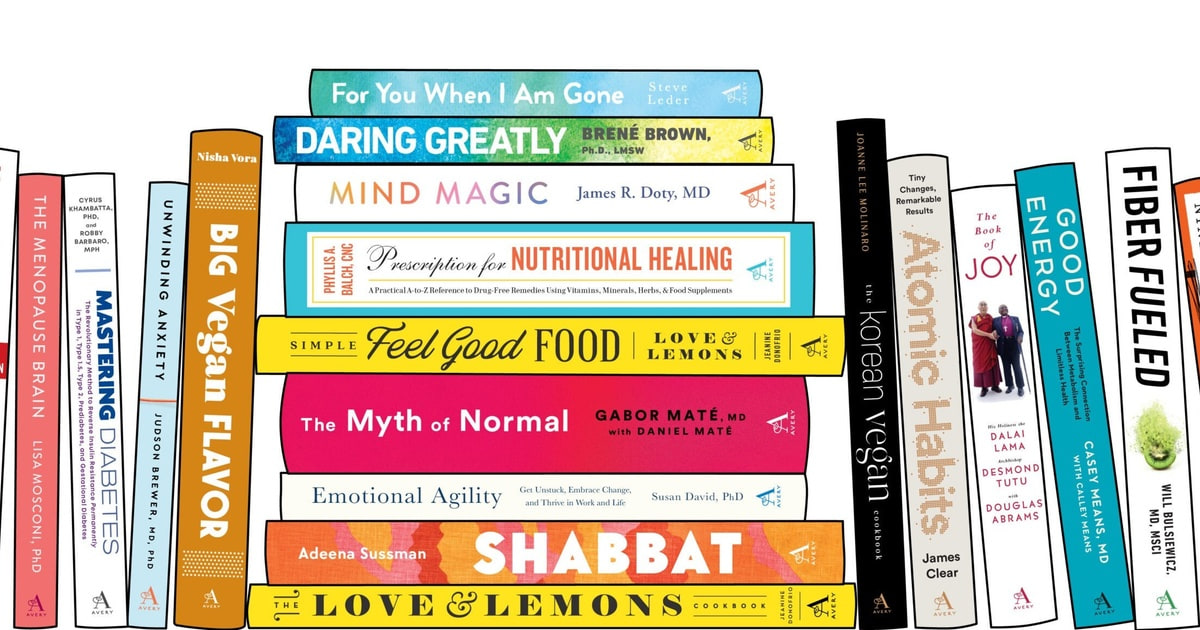
Most health books tell you to eat better and move more. The useful ones tell you what to eat, how to move, and how to know it's working. That's the difference between a book you skim and a book that changes your Tuesday. The best ones give you numbers to aim at, a framework for why those numbers matter, and enough of a citation trail that you can check the work yourself. You'll read one in a week and keep going back to it for years.
Here's the catch: no single book covers all of it well. Longevity spans exercise physiology, metabolism, sleep, nutrition and the cell biology of aging, and every author is strongest in the corner they trained in. So each of these books leans. Some lean hard. You'll also find that a lot of the advice assumes you can get blood panels, wear a glucose monitor or absorb the cost of supplements, which quietly narrows who the protocols are really written for.
We read these the way you probably will, looking for the one that answers the question you actually have. If you want a plan for the next thirty years, you want breadth. If you're tired every mid-afternoon and want to know why, you want depth on metabolism. If you want to understand what's happening inside your cells, that's a third book. We think that Outlive is the best health and longevity book for most people, and that Good Energy is the one to buy if metabolic symptoms are what sent you looking.
Everything we recommend

Dense and long, but the most complete plan you'll find

Narrower than our top pick, but easier to act on tomorrow

The theory of why we age, if you filter the supplement talk
At a glance
| Product | Page Count | Focus / Topic | Price | |
|---|---|---|---|---|
| Outlive: The Science and Art of LongevityTop pick | — | Longevity | $17.09On sale |
| Good Energy: The Surprising Connection Between MetabolismRunner-up | — | Metabolism | $15.75On sale |
 | Summary: Why We Sleep: Unlocking the PowerAlso in lineup | — | Sleep | $87.88 |
| David A. Sinclair -Lifespan : Why WeAlso great | — | Lifespan | $28.72 |
 | Summary: How Not to Die by MichaelAlso in lineup | — | Disease | Check price |
How we picked
Who wrote it. We favored clinicians and researchers who generated the underlying data over writers summarizing someone else's work. A medical or research credential isn't a guarantee, but it changes how much weight a clinical claim can carry.
Traceable citations. We looked for books that point you at specific published studies, ideally with numbered references or a companion site you can check. Titles built on anecdote and testimonial didn't make the cut.
Usable this week. We asked whether you could act on something concrete within a few days of finishing a chapter. Numeric targets and checklists counted; general encouragement didn't.
How it has aged. We checked how other researchers in the field responded to each book's biggest claims. Where a claim is still disputed, we say so in the flaws rather than quietly dropping it.
Readable start to finish. Owner feedback in this category is mostly about whether people actually finish the book. We weighed density against payoff and flagged the titles that tend to stall out.
Top pickOn sale
Dense and long, but the most complete plan you'll find
Outlive: The Science and Art of Longevity
Outlive is a working physician's framework for the four diseases that kill most people, plus the exercise, sleep and nutrition protocols to push them off. It's long and it's dense, but it's the only book here that covers the whole board in one volume.
$17.09fromAmazonList priceIt covers the whole board, and nothing else here does. Attia organizes the book around what he calls the Four Horsemen: heart disease, cancer, neurodegenerative disease and metabolic dysfunction. Those four account for most deaths that aren't accidents. From there he works through exercise, nutrition, sleep and emotional health as the levers you actually have. You get one coherent map instead of five partial ones.
The advice comes with numbers attached. Attia doesn't tell you to exercise more. He gives Zone 2 targets of three to four hours a week at a pace where you can still hold a conversation, VO2 max goals that shift by decade, and grip strength benchmarks tied to ten-year mortality risk. You can write those on a sticky note and check yourself against them.
He's a practicing clinician, not a commentator. Attia trained at Stanford and Johns Hopkins and has spent more than twenty years running a longevity practice. His framing, which he calls Medicine 3.0, is that you treat a disease decades before it shows up instead of waiting for a diagnosis that's already late. That's a physician's habit of mind, and it shapes every chapter.
The last section is about emotional health, and you won't see it coming. Most science-forward health books stop at the body. Attia has said these chapters were the hardest part of the book to write, and it shows. They're personal in a way the rest isn't. Whether or not you came for that, it's the part readers tend to remember months later.
Flaws but not dealbreakers
It's long, and the opening is slow. Nearly 500 pages, and Attia builds the framework before he hands you any protocols. Readers regularly report bogging down in that first stretch and setting the book aside. If that's you, skip ahead to the exercise chapters and circle back. The argument still lands.
Parts of the plan need a doctor. Several protocols assume you'll get blood panels, talk through the results with a physician and adjust from there. You can act on the exercise and sleep guidance on your own. But you won't run the full program without someone ordering labs for you, and that's a real barrier for a lot of people.
It isn't written for plant-based readers. Attia's nutrition chapters are dietary-agnostic in principle and omnivore-leaning in practice. If you eat vegan and want the evidence organized around that, this book will frustrate you. Everything outside the food chapters still applies.
Runner-upOn sale
Narrower than our top pick, but easier to act on tomorrow
Good Energy: The Surprising Connection Between Metabolism
Good Energy makes the case that broken metabolism sits underneath most chronic disease, from brain fog and fatigue to heart disease. Every chapter ends with a checklist, so it's the rare health book you can start using before you've finished it.
$15.75fromAmazonList priceIt connects symptoms you've been filing separately. Afternoon fatigue, brain fog, stubborn weight, mood that swings with meals. Means argues these aren't separate problems but one problem showing up in different rooms. Her claim is that impaired mitochondrial function and unstable blood sugar sit underneath most chronic disease. Once you see it that way, a pile of small annoyances starts to make sense.
It's the clearest mainstream guide to continuous glucose monitoring. Most books treat a CGM as a diabetes device. Means treats it as biofeedback for anyone, with glucose variability targets and the eating patterns that keep you inside them. If you've ever wondered what your own breakfast does to you, this is the book that shows you how to find out.
Means is criticizing a system she trained inside. She's a Stanford-trained surgeon who left clinical practice to work on metabolic health. That background gives her arguments about how medicine handles chronic disease more weight than they'd carry from an outsider. She knows what the incentives look like from the inside, and she says so plainly.
Every chapter ends with something you can do. Food scoring, light exposure, movement, meal timing. The checklists are specific enough to start the same day you read them. That's the main reason we'd hand this book to someone who bounces off dense health writing. You get a win in the first week, which is what keeps people going.
Flaws but not dealbreakers
Exercise gets thin treatment. If you want programming, meaning how much, at what intensity and in what order, you'll need our top pick. Means covers movement at the level of general encouragement rather than protocol. The two books split the work cleanly, which is also why people often end up owning both.
The monitoring advice costs money. Sensors are a recurring expense, not a one-time buy, and the book's most distinctive guidance assumes you'll be wearing one. You can get plenty from the dietary and light-exposure chapters without a device. But you'll be reading around the centerpiece.
The critique is systemic and the fixes are individual. Means is thorough about how the food and pharmaceutical industries shape what lands on your plate. Then the solutions come back to what you personally buy and cook. That gap is honest, but it can leave you feeling like the problem is bigger than the toolkit.
Also great
The theory of why we age, if you filter the supplement talk
David A. Sinclair -Lifespan : Why We
Lifespan is Harvard geneticist David Sinclair's argument that aging is a loss of cellular information, and that it may be slowed or partly reversed. Read it to understand sirtuins, NAD+ and mTOR before anyone tries to sell you a bottle of them.
$28.72fromAmazonIt gives you a theory, not a checklist. Sinclair's Information Theory of Aging holds that we age because cells lose the epigenetic instructions that tell genes when to switch on. It's still argued over in the field. But it's the framework that explains why caloric restriction, fasting and NAD+ precursors might work at all, rather than just asserting that they do.
It's the honest map of the supplement aisle. Sinclair walks through NMN, NR, resveratrol, rapamycin and metformin: what each one targets, what the human evidence supports and where that evidence runs out. Read this before you spend anything on longevity pills. You'll come away much better at spotting which marketing claims have a real paper behind them.
He generated a lot of the underlying research. Sinclair is a Harvard Medical School professor and co-directs the Paul F. Glenn Center for Biology of Aging Research. When he describes the lab work behind an idea, it's often his own. Primary sources beat secondhand summaries, and this is about as primary as the category gets.
It changes how you think about aging itself. Readers consistently say this is the book that stopped them treating aging as weather and started them treating it as a process with mechanisms. Pair it with our top pick and you get both halves: why the body declines, and what to do about it on a Tuesday morning.
Flaws but not dealbreakers
Several claims are contested, especially around NMN. The supplement evidence Sinclair leans on comes largely from animal work and small human studies. Large trials haven't confirmed the benefits. Other researchers push back on how confidently the case gets made, and you should read those chapters with that in mind.
It's the least actionable book here. You'll finish it understanding aging and still not know exactly what to change tomorrow. That's fine if you already have a plan running. If you're starting from zero, start with one of the other two and come back to this one.
Sinclair has business interests in this industry. He discloses his own supplement regimen, and he holds stakes in longevity companies. Critics read the disclosure as soft promotion. It doesn't invalidate the underlying science, but it tells you which chapters to read most skeptically.
Who this is for
This guide is for adults who want a general-audience book on staying healthy longer, and who'd rather read a clinician or a researcher than a blogger. It's most useful if you're in your forties or fifties, when prevention still has decades to compound. The material works earlier too, and earlier is better. If you're already managing a diagnosis, treat these as context for conversations with your doctor, not as a replacement for one.
We're covering trade books written for non-specialists: frameworks, protocols and the science behind them. We're not covering cookbooks, memoirs, clinical textbooks, or the third-party summary booklets that crowd the search results for every popular health title. If you want recipes rather than reasoning, this isn't the shelf you're looking for.
How we picked
Author: we favored clinicians and researchers who ran the studies over writers summarizing them secondhand. Citations: we wanted specific, checkable references, ideally numbered or hosted on a companion site. Actionability: a book scored well when you could do something concrete within a week of reading a chapter, with numbers rather than encouragement. Durability: we looked at how the field responded to each book's biggest claims and kept the live disputes visible instead of burying them. Readability: we weighed density against payoff, because a book you abandon at page 80 helps nobody.
The competition
This is what our research surfaced in this category, not everything on the shelf. Health publishing puts out thousands of titles, and a fair share of what turns up in a search isn't the book you think it is. Two of the listings we looked at here were third-party summary booklets of well-known health books rather than the books themselves, so we set those aside rather than recommend them. What's left are three titles that cover different pillars and pair well, which is why none of them landed in a runner-up-to-nothing pile.
Getting the most out of these books
Read two, not one. The pillars here, meaning exercise, metabolism and aging biology, don't fit in a single volume, and these books overlap less than you'd expect. Start with our top pick for the framework, then add whichever one matches your biggest gap. Keep a running note file as you go, because the protocols are numeric and you'll want the numbers in one place instead of scattered across chapters. Don't buy supplements on a first read. Sit with the evidence, then talk to your doctor, especially before anything that could interact with a medication you're already taking. And if dense print stalls you out, the audio editions carry the more narrative chapters well.
Questions we get
If I only read one, which should it be?
Outlive. It's the broadest of the three and it sets up a framework that makes the others easier to absorb. Start with the exercise chapters if the opening feels slow, then go back to the beginning.
I don't have a science background. Where do I start?
Good Energy. Each chapter builds on the one before it, the analogies are clear, and it doesn't assume you remember any biology. You can follow the whole argument without a single detour to look something up.
Do I need a glucose monitor to get value from Good Energy?
No. The monitoring chapters are the book's most distinctive contribution, but the dietary guidance, meal-timing advice and light-exposure protocols stand on their own. A sensor sharpens the feedback loop. It isn't the price of entry.
None of your picks is a dedicated sleep book. Is sleep covered?
Yes, in our top pick. Attia's sleep chapter packs in more usable guidance than a lot of full-length sleep books, and it sticks to tighter citation practices than the genre usually manages. If sleep is your single biggest problem, that chapter is worth the book on its own.
How are Lifespan and Outlive different?
They start from opposite ends. Sinclair works at the molecular level, on sirtuins, NAD+ metabolism and epigenetic information loss, and argues that aging itself is a process you can slow. Attia works at the clinical level, on preventing the diseases that actually kill people through exercise, food, sleep and emotional health. Read Lifespan for why we age and Outlive for what to do about it.
I'm in my thirties and healthy. Is this too early?
It's the opposite of too early. The whole premise of preventive longevity work is that interventions compound, so the same habit is worth more the sooner you start it. Outlive is calibrated to midlife physiology, but nothing in it stops working if you're younger.
Why you should trust us
For this guide:
- We read the publisher descriptions, tables of contents and listing details for every title here, alongside published reviews and the themes that come up repeatedly in reader feedback.
- We checked each book's central claims against how other researchers in the field have publicly responded to them, and we kept the unresolved disputes in the write-ups.
- We compared what the books actually cover so the recommendations complement each other instead of repeating the same chapter three times.
- We read owner reviews on every listing, weighted toward the critical ones, because that is where the recurring failures show up.
- We have a systematic way of automatically fetching the latest prices, so the numbers on this page stay current.
- This is a research-focused guide, so the team may not own every product listed — though we often do own the top winners, which gives us extra context for the recommendations.
- We don't accept free products, and the retailer commission never changes which product we recommend.
Sources
CDC: Life Expectancy in the United States — Data Brief No. 492, CDC / National Center for Health Statistics
Cardiorespiratory Fitness as a Predictor of Mortality — JAMA Cardiology 2022, JAMA Cardiology
CALERIE Trial — Caloric Restriction Slows Pace of Aging in Healthy Adults, National Institute on Aging
PREDIMED Trial: Mediterranean Diet and Cardiovascular Disease Prevention, New England Journal of Medicine
CDC: Short Sleep Duration Among U.S. Adults, CDC
Alzheimer's Association: 2024 Alzheimer's Disease Facts and Figures, Alzheimer's Association
Harvard T.H. Chan: Lifestyle Factors and Life Expectancy, Harvard T.H. Chan School of Public Health
Blue Zones — Power 9 Research: Lessons from the World's Longest-Lived Populations, Blue Zones
Amazon product listings and owner reviews for all 5 products
Manufacturer specification pages for each product
Some passages in this guide may be paraphrased with AI help. Prices are refreshed automatically.
More like this.
Continue exploring lifestyle reviews and recommendations.

The Best Books for Anxiety and Mental Health
An anxiety book has one job: to give you something to do at 3 a.m. when your chest is tight and your brain won't stop looping. That's a different job than…

The Best Self-Help Books for Mental Health
A mental health book has to work on your worst week, not your best one. That's the real test. You'll pick it up at 11 at night, read four pages, and put…

The Best Water Flossers for Gum Health
Your gums bleed a little when you brush, and your dentist keeps asking whether you floss. You've got plenty of company. The CDC reports that 47.2% of U.S.…

The Best Probiotics and Fermented Foods for Gut Health
Your gut doesn't care much about marketing. It responds to what you feed it, most days, over months. So the useful question isn't which probiotic is…

The Best Young Adult Fantasy Book Sets
A boxed fantasy series is a commitment, and not just a shelf-space one. You're signing up for weeks of reading, a cast you'll live with, and a world…

The Best Books on Procrastination and Focus
Procrastination doesn't feel like laziness when you're in it. It feels like dread, or fog, or a sudden urgent need to clean the kitchen. A good book on…