The Best Camping Tents
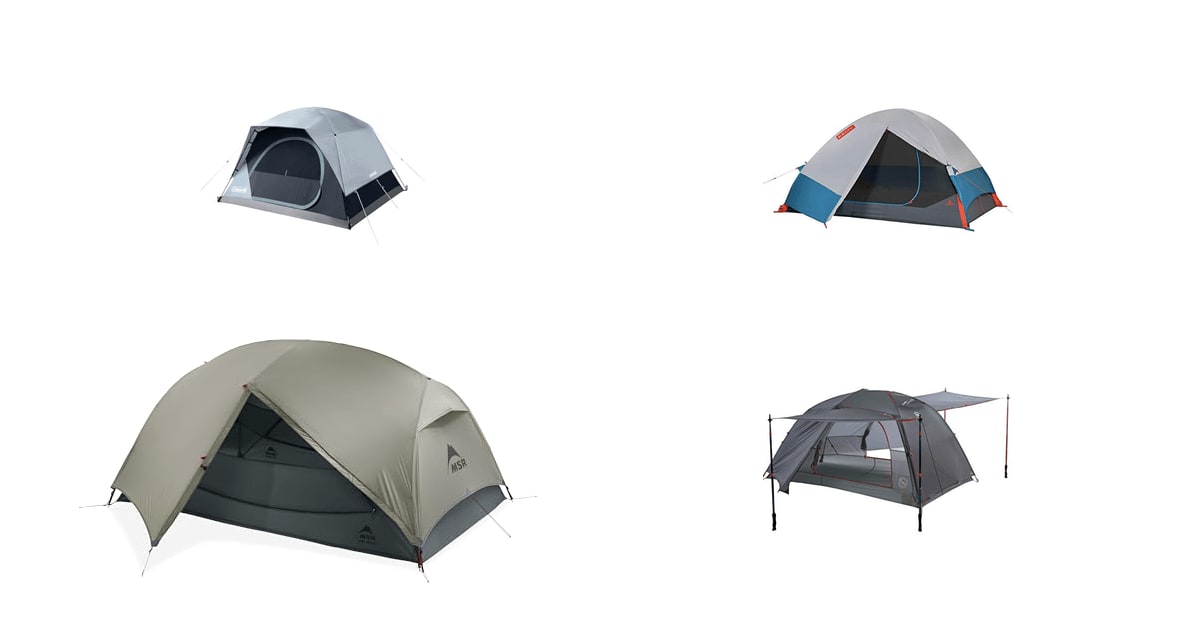
A tent is the one piece of gear you can't fake your way through. If it leaks, you don't sleep. If it takes 40 minutes to pitch in the dark, you'll dread every trip. And if the poles snap in a gust, you're packing up at 2 a.m. What you actually want is boring reliability: a floor that keeps ground water out, a rainfly that sheds a downpour, and a pole system you can figure out without reading the instructions twice. Everything else — pockets, lofts, LED lights — is nice, but it's not what makes or breaks a night outside.
Here's the frustrating part: no tent does everything. Light tents use thin fabrics that puncture on sharp rocks, and owners of even the best ultralight models report exactly that. Roomy family tents with near-vertical walls catch wind like a sail and weigh too much to carry anywhere. Cheap tents lean on fiberglass poles that shatter instead of flexing. Capacity ratings are optimistic across the board — a 4-person tent realistically sleeps two or three adults with their gear. You're picking which compromise you can live with, not avoiding compromise.
We also want to be upfront: this guide works from manufacturer specifications, published reviews from outlets like Outdoor Gear Lab and REI's expert advice, and patterns in owner feedback. We think that the MSR Hubba Hubba LT 2-Person is the best camping tent for most people, and that the Coleman Skydome 4-Person is the one to buy if you're car camping with family and want a tent you can pitch before the kids get bored.
Everything we recommend

Light enough to carry, roomy enough to actually live in

Pitches fast, keeps water out, costs a fraction of the rest
The lightest real tent here, if you'll baby the fabric

For snow and alpine wind, when a 3-season tent would fail
At a glance
| Product | Capacity | Weight | Price | |
|---|---|---|---|---|
| Coleman Skydome 4-Person Camping Tent with LEDBudget pick | 4-Person | 11.29 lbs | $164.99On sale |
 | Kelty Late Start 4P - Lightweight BackpackingAlso consider | 4 Person | 7.45 lbs | $209 |
| MSR Hubba Hubba LT 2-Person Lightweight BackpackingTop pick | 2-Person | 3.38 lbs | $411.89On sale |
| Big Agnes Copper Spur HV UL2 UltralightUpgrade pick | 2 Person | 3.6 lbs | $434.96 |
| MSR Access 3-Person Lightweight 4-Season TentAlso great | 3-Person | 4.38 lbs | $689.89On sale |
How we picked
Weather protection. We looked for a rainfly rated at least 1,500mm hydrostatic head and a floor at 3,000mm or higher, the thresholds REI's expert guidance names for sustained rain. Fully taped seams on both fly and floor mattered too, since Consumer Reports finds partially taped seams fall behind in precipitation lasting more than three hours.
Poles and frame. Aluminum alloy poles are 20 to 30 percent lighter than fiberglass at equal strength, per REI's guidance, and they bend before they break. We favored DAC and Easton hardware and treated fiberglass as acceptable only in occasional-use car-camping tents.
Real usable space. We compared square footage and peak height rather than trusting capacity labels, because a 4-person tent generally sleeps two or three adults with gear. Near-vertical walls count for more than raw floor area, since they turn dead corners into space you can sit in.
Condensation control. We prioritized double-wall designs — a separate rainfly over a mesh inner — which Outdoor Gear Lab's comparative field work found dramatically outperform single-wall shelters, especially in humid or freezing conditions. Vent placement and quantity broke ties.
Long-term durability. Outdoor Gear Lab's durability work identifies zipper failure as the leading cause of tent retirement, so we weighted zipper quality heavily and read owner feedback for patterns of early failure. Fabric denier and floor abrasion resistance factored in as well.
Top pickOn sale
Light enough to carry, roomy enough to actually live in
MSR Hubba Hubba LT 2-Person Lightweight Backpacking
The Hubba Hubba LT weighs about 3.4 pounds packed but gives two people a true rectangular floor, two doors and two vestibules. It's the tent we'd point most campers toward whether they're walking in a mile or ten.
$411.89fromAmazonList priceMost 2-person tents shortchange one sleeper, and this one doesn't. MSR builds the Hubba Hubba around a symmetrical twin-arch frame, so both sides get equal floor space and each person gets a vestibule of roughly nine square feet. That sounds like a small thing until you've spent a rainy night with your boots stacked on your partner's side. Nobody has to negotiate.
The floor is a true rectangle with nearly vertical walls, which matters more than the spec sheet suggests. Modern sleeping pads are thick — four inches or more — and tapered tent floors force you to angle them or overlap them. Here they just lie flat, side by side. You also get usable headroom near the walls instead of a dome that closes in the second you sit up.
Condensation is where cheap tents fail quietly, and this one's built to handle it. The body is mostly mesh under a separate rainfly, which is the double-wall design Outdoor Gear Lab's comparative testing found dramatically outperforms single-wall shelters for moisture management. Two kickstand vents on the fly ends keep air moving even when everything's zipped up. You wake up dry instead of wiping down the walls.
Setup is close to foolproof. The poles come as a single unified hub, and because the design is symmetrical there's no wrong end. You spread it, clip it, stake it. DAC NFL aluminum poles are the same class of hardware REI's guidance credits for being 20 to 30 percent lighter than fiberglass at equivalent strength, and they pack down small enough to disappear in a backpack lid.
Flaws but not dealbreakers
This is one of the more expensive tents here, and you're paying for weight savings you may not need. If your tent goes from car trunk to campsite and back, that premium buys you very little. A heavier tent with thicker fabric would serve you better and cost less.
Mesh-heavy bodies are wonderful in summer and chilly in shoulder season. There's not much fabric holding warmth in, so on a cold, breezy night you'll feel the draft. That's the trade for the ventilation, but it's worth knowing before you take it out in October.
It's a genuine 2-person tent, not an optimistic one. Two adults and gear fill it. If you want to bring a dog or stretch out solo with room to spare, size up.
Budget pickOn sale
Pitches fast, keeps water out, costs a fraction of the rest
Coleman Skydome 4-Person Camping Tent with LED
The Coleman Skydome uses pre-attached poles that feed through a continuous sleeve, so one person can have it standing in minutes. It's heavy and basic, but the tub floor and taped rainfly seams do the job in real weather.
$164.99fromAmazonList priceThe pitch is the whole point. Coleman rates it at five minutes, and while owners note the first attempt runs longer — one reports half an hour fighting the rainfly — the second and third times go quickly. The poles stay attached, the corners and brow sleeve are color-coded red so you can't orient the fly backwards, and there's no bag of loose parts to sort. If you're setting up at dusk with tired kids, that's worth a lot.
For a budget tent, the weather protection is more serious than you'd expect. Coleman's WeatherTec setup uses a tub-style floor with welded corners and inverted seams, plus taped seams on both the fly and body. Owners describe sitting through storms that soaked neighboring campers and staying dry inside. It's rated to handle winds around 35 mph, and owner accounts of desert gusts and 25 mph wind back that up.
Nearly vertical walls give it roughly 20 percent more headroom than Coleman's older domes, which translates to actually being able to move around. A camper at 5'7" can't quite stand fully upright but can change clothes without crawling. The wide door makes hauling an air bed or cot in and out much less of a wrestling match. There's a small LED light in the ceiling too, though it runs on three AA batteries you'll need to supply.
Call it a 4-person tent if you want, but plan for two adults plus gear, or two adults and a small child. That's the honest math on nearly every 4-person tent, and it applies here. Used that way, it's roomy.
Flaws but not dealbreakers
At roughly 11 pounds it's a car-camping tent, full stop. Don't carry it anywhere.
The rainfly is the weak link in the setup process. Several owners report it's fiddly to position correctly and that it only performs properly with the guy lines staked out — which people skip, and then wonder why they got wet. Stake it every time.
The LED light is dim, and there's only one window, in the door. Ventilation and daylight both suffer compared to tents with mesh panels on multiple sides. A few owners also received units with a broken pole clip, so check the hardware before your first trip.
Upgrade pick
The lightest real tent here, if you'll baby the fabric
Big Agnes Copper Spur HV UL2 Ultralight
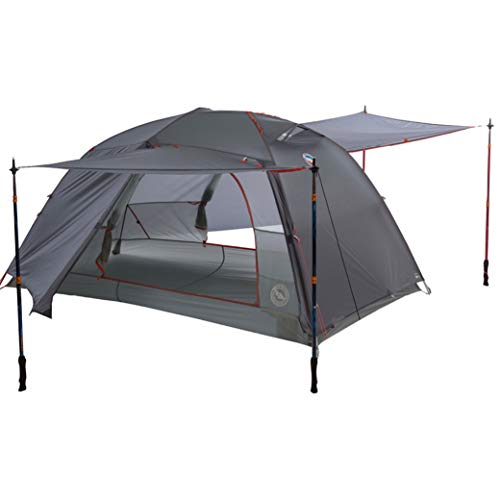
The Copper Spur HV UL2 has a trail weight around 2 pounds 15 ounces and still gives you two doors, two vestibules and enough interior volume to sit up. The fabric is thin enough that you'll need to be careful where you pitch it.
$434.96fromAmazonThis is what you buy when every ounce is a decision. Big Agnes packs two doors, two vestibules and a freestanding double-wall design into a trail weight of about 2 pounds 15 ounces. Backpacker Magazine notes that sub-3-pound 2-person tents are the fastest-growing part of the market, driven by thru-hikers and better sub-20D ripstop nylon. This is the version of that trend that doesn't feel like a science experiment.
The four-way high-volume hub is why it doesn't feel like a coffin. Big Agnes says the architecture adds about 25 percent more strength and 20 percent more usable interior volume than the previous generation. In practice that means the walls flare out near your shoulders instead of tapering in, and a tall camper at 6'2" has room to stretch. Owners who came from mummy-style shelters describe the difference as night and day.
This particular version is set up for bikes and motorcycles, which turns out to be useful even if you never ride. The compression stuff sack has daisy-chain webbing for strapping to a frame, and a 12-inch short pole set packs onto handlebars or into a pannier. Packed size lands around 13.5 by 7 inches. Motorcycle campers in particular seem to love it for exactly that reason.
Big Agnes guarantees all its products against manufacturing and material defects, and if a replacement isn't available it issues credit for the original purchase price with a receipt. That's a reasonable safety net on a tent this expensive.
Flaws but not dealbreakers
The fabric is thin. That's the deal you're making, but it's worth stating bluntly: at least one owner describes the material as onion-thin and easy to puncture, and another tore the floor on a rock. Use a footprint, clear your site properly, and don't expect it to shrug off gravel the way a heavy polyester tent would.
Zippers are the recurring complaint. One owner reports catching zippers from the start and an outright failure on the third day of use. Outdoor Gear Lab's durability work identifies zipper failure as the leading reason tents get retired, so operate them slowly and keep grit out of the track.
It's the most expensive tent in this guide by a wide margin, and the value only makes sense if you're carrying it regularly. For car camping it's an expensive way to sleep on the ground.
Also greatOn sale
For snow and alpine wind, when a 3-season tent would fail
MSR Access 3-Person Lightweight 4-Season Tent
The MSR Access 3 is a genuine 4-season tent at just 4 pounds 6 ounces, with composite poles built to resist snapping in winter conditions. It's the one to buy if your trips involve snow loading and exposed ridgelines.
$689.89fromAmazonList priceMost people don't need a 4-season tent, and we'd steer you away from one if your camping happens between May and September. But if you're heading into snow, the difference isn't marginal. The Access 3 uses Easton Syclone poles made from advanced composites specifically to resist breaking under the loads that shatter conventional poles. Its central-support frame is shaped to shed snow rather than collect it.
The clever part is that it doesn't punish you for the extra capability. At 4 pounds 6 ounces it's lighter than plenty of 3-season family tents, which makes it viable for fast alpine trips where you'd otherwise be choosing between weight and survival. The frame also sets up quickly and opens up interior space rather than pinching it, which matters when you're stuck inside waiting out weather.
Winter tents manage a different problem than summer ones: you need to hold warmth in without turning the interior into a rain forest. MSR limits the mesh on the tent body to keep heat from escaping, then puts vents in the rainfly to let vapor out. It's a balance, and the vents need to be open to work — a lesson every winter camper learns once.
The fabrics get MSR's Xtreme Shield coating, which the company says applies about 2.5 times more DWR agent than the industry standard. The practical upshot is that the waterproofing holds up longer before you need to retreat it. On a tent that spends its life in sleet, that's not a marketing detail.
Flaws but not dealbreakers
It's a specialist. The reduced mesh that keeps you warm in February makes it stuffy in July, and you'll pay a premium for capability you won't use on a summer weekend. If most of your nights out are warm, buy a 3-season tent and rent or borrow for the rare winter trip.
Called a 3-person tent, it fits three in the way most tents fit their rating — snugly, with gear crowding you. Two people plus winter kit is the comfortable configuration, and winter kit takes up a lot of room.
Who this is for
This guide is for anyone buying a tent to sleep in a few nights a year or a few dozen — car campers, weekend backpackers, families at a state park, and people heading into snow. If you camp twice a summer at a drive-up site, you'll be happiest with something cheap, fast to pitch and heavy. If you're carrying your shelter on your back, weight and packed size become the constraints that shape every other decision, and you should expect to pay more for less fabric.
We're not covering tarps, hammocks, bivy sacks, rooftop tents or canvas wall tents — those solve different problems and shop differently. We also don't cover tents rated for six or more people, which is a separate category with its own trade-offs around wall height and wind resistance. And if your current tent is only leaking, hold off on replacing it: a seam sealer and a fresh DWR treatment fix most leaks for a fraction of the cost of a new tent.
How we picked
We built the shortlist around a handful of things that separate a tent you keep from one you replace. Weather protection: a rainfly at 1,500mm hydrostatic head or better, a floor at 3,000mm or better, and fully taped seams on both — the thresholds REI's guidance and Consumer Reports testing point to. Poles: aluminum alloy over fiberglass, since it's 20 to 30 percent lighter at the same strength and flexes instead of shattering. Usable space: square footage and peak height rather than the optimistic capacity label on the box, with credit for near-vertical walls that make corners livable. Condensation: double-wall construction with a separate fly, which Outdoor Gear Lab found dramatically outperforms single-wall designs in humid and freezing conditions. Durability: quality zippers above all, because zipper failure is the single most common reason tents get retired.
Other camping tents worth considering
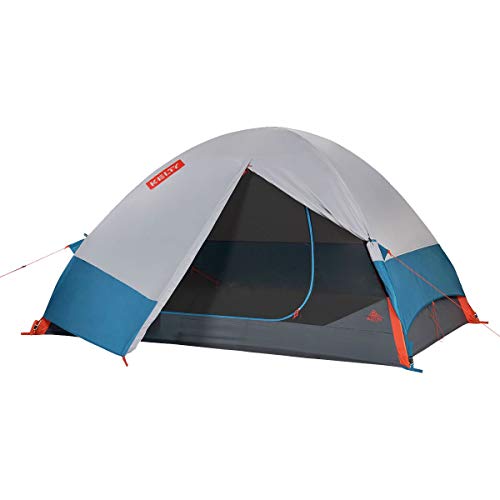
If you want a family tent with aluminum poles: The Kelty Late Start 4P - Lightweight Backpacking ($209) — The Kelty Late Start 4 sits in an unusual spot — it's cheap like a car-camping tent but uses pre-bent aluminum poles and weighs about 7.5 pounds, light enough for a short hike in. You get 56 square feet and a 56-inch peak, with quickcorner pole sleeves that make solo setup quick. The rainfly is 68D polyester rated at 1,200mm, which is below the 1,500mm threshold we prefer, and there's only one door and one vestibule. Owners split time between car camping and backpacking with it happily. Skip it if you need two doors or you're camping in extended rain.
The competition
Here's what our research turned up beyond the picks. This isn't the entire tent market — it's the set of products we were able to look at closely, and there are good tents from REI, NEMO and others we didn't have listings for.
Care and maintenance
Two habits will roughly double how long your tent lasts. First, never pack it away damp — even a slightly wet fly grows mildew that eats the coating and stinks permanently. Set it up in a yard or hang it over a railing until it's fully dry. Second, be gentle with the zippers. Grit is what kills them, and Outdoor Gear Lab identifies zipper failure as the top reason tents get retired. Brush sand off the track, pull slowly, and hold the fabric taut with your free hand so it doesn't catch. Beyond that: use a footprint or a cut-to-size ground sheet, clear sticks and stones from your site before pitching, and stake out the guy lines even on calm nights. When water starts soaking in rather than beading, wash the fly with a tent-specific cleaner and reapply a spray-on DWR treatment. Store it loose in a bag, not compressed.
Questions we get
What's the difference between a 3-season and a 4-season tent?
A 3-season tent uses lots of mesh for airflow and is built for spring through fall, including light snow. A 4-season tent has less mesh, stronger poles and steeper geometry so snow slides off instead of piling up. Most campers should buy a 3-season tent — 4-season models are hotter and stuffier in warm weather, and they cost more. Only go 4-season if you're regularly out in real winter conditions.
How many people does a 4-person tent actually sleep?
Two or three adults with gear, comfortably. Capacity ratings assume everyone lies shoulder to shoulder on a bare floor with nothing else inside, which nobody does. A good rule is to subtract one or two from the rated number. If you want four adults to sleep well, look at a 6-person tent.
What waterproof rating do I need for heavy rain?
REI's expert guidance recommends a minimum of 1,500mm hydrostatic head for the rainfly and 3,000mm for the floor. The floor number is higher because ground moisture pushes up under your body weight, which is a harder test than rain falling on a fly. Ratings below those thresholds risk water getting in within hours of sustained rain. Fully taped seams matter just as much as the number.
Are fiberglass tent poles as good as aluminum?
No. Aluminum poles are 20 to 30 percent lighter at equivalent strength, and more importantly they flex and bend under load rather than splintering. Fiberglass poles tend to fail suddenly and are hard to repair in the field. If you camp more than a couple of times a year, aluminum is worth the price difference.
Do I need a tent footprint?
It's optional but usually worth it, especially with thin ultralight fabrics. A footprint protects the floor from abrasion and punctures, which are the failure points owners of lightweight tents report most often. A manufacturer's footprint fits exactly with no excess material to collect water, but a trimmed sheet of plastic works too. Just make sure it doesn't extend past the tent edges, or rain will run underneath.
How do I fix a tent that's started leaking?
Usually you don't need a new tent. Wash the rainfly with a cleaner made for technical fabrics, let it dry, then apply a spray-on DWR treatment to restore water beading. If water is coming through the stitching rather than the fabric, run a seam sealer along the inside seams. Check the floor too — a pinhole leak there feels exactly like a fly leak from inside.
Why you should trust us
For this guide:
- We read manufacturer specifications and listing details for every tent here, comparing hydrostatic head ratings, pole materials, floor dimensions and peak heights side by side.
- We drew on published guidance and testing from REI, Outdoor Gear Lab, Consumer Reports and Backpacker Magazine for the thresholds that separate durable tents from disposable ones.
- We read through owner feedback for recurring themes — setup time, zipper trouble, fabric punctures and wet-weather performance — and let those patterns shape the flaws we call out.
- We read owner reviews on every listing, weighted toward the critical ones, because that is where the recurring failures show up.
- We have a systematic way of automatically fetching the latest prices, so the numbers on this page stay current.
- This is a research-focused guide, so the team may not own every product listed — though we often do own the top winners, which gives us extra context for the recommendations.
- We don't accept free products, and the retailer commission never changes which product we recommend.
Sources
Best Camping Tents 2026 — Wirecutter, Wirecutter (NYT)
Best Car Camping Tents 2026 — Outdoor Gear Lab, Outdoor Gear Lab
Best Backpacking Tents 2026 — Outdoor Gear Lab, Outdoor Gear Lab
Best Tents — Backpacker Magazine, Backpacker Magazine
Best Camping Tents — Outside Online, Outside Online
How to Choose a Tent — REI Expert Advice, REI Co-op
Family Base Camp Tent Buying Guide — REI Expert Advice, REI Co-op
MSR Xtreme Shield Waterproofing Technology, MSR (Mountain Safety Research)
NEMO OSMO Fabric Technology Explained, NEMO Equipment
Camping Tent Ratings and Reviews — Consumer Reports, Consumer Reports
REI Co-op Kingdom 8 Tent — Product Page, REI Co-op
MSR Hubba Hubba 2 — Product Specifications, MSR
Amazon product listings and owner reviews for all 5 products
Manufacturer specification pages for each product
Some passages in this guide may be paraphrased with AI help. Prices are refreshed automatically.
More like this.
Continue exploring lifestyle reviews and recommendations.

The Best Cooling Tents and Hot-Weather Camping Gear
Heat is the one camping problem you can't sleep through. A tent sitting in afternoon sun turns into an oven fast - Wirecutter's summer tent research found…

The Best All-Weather Family Camping Tents
The tent that matters is the one you're stuck inside at 2 a.m. when the rain starts. That's when you find out whether the fly reaches the ground, whether…

The Best Family Camping Tents
A family tent is the one piece of camping gear everybody in your family has to live inside. It's where a toddler naps at two in the afternoon, where five…

The Best Backpacking Tents for Families
A four-person backpacking tent is a strange piece of gear. It has to be light enough that two adults can split it and still carry food, water and a kid's…

The Best Truck Bed Tents
A truck bed tent turns the back of your pickup into a bedroom that's level, off the ground, and ready the moment you park. That matters more than it…

The Best Backpacking Tents
A backpacking tent is the only piece of gear that has to work in the dark, in the rain, when you're tired and out of daylight. It also rides on your back…