The Best Wind-Resistant Patio Umbrellas
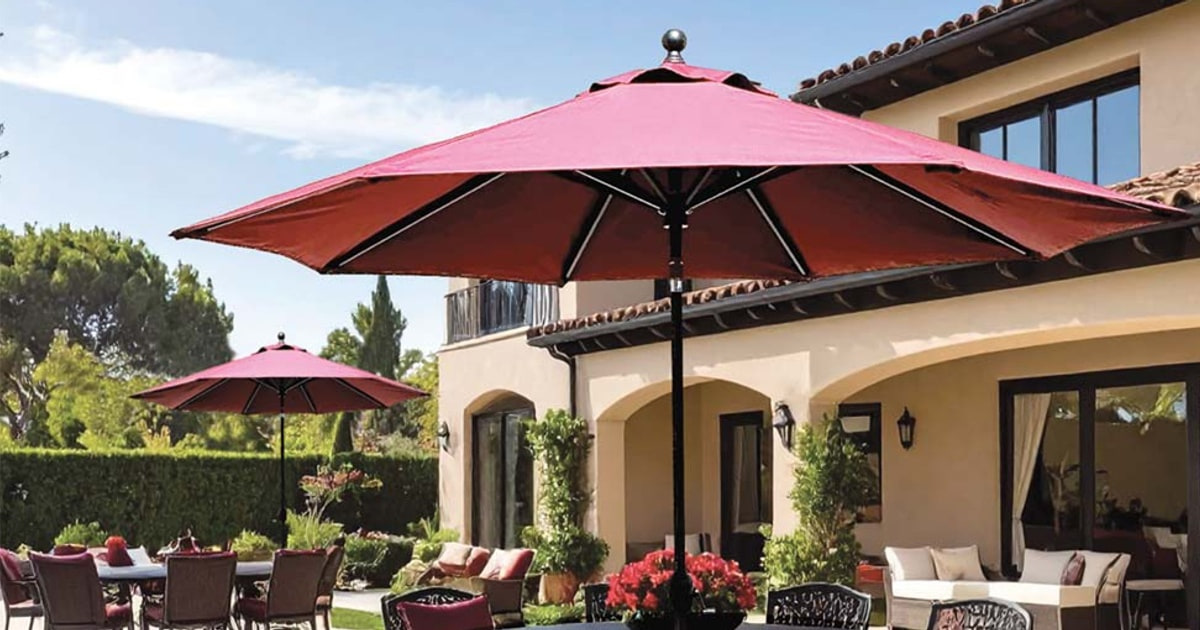
Wind is what kills patio umbrellas. Sun fades a canopy slowly, over seasons, and rain mostly just beads up and rolls off. But one gust under an open canopy can flip it inside out, snap a rib at the hub, or send the whole thing across the yard and into a car door. If you live near a coast, on a rooftop, or on an open lot where the afternoon breeze always shows up, wind resistance isn't a nice extra. It's the entire purchase.
Here's the honest part: no patio umbrella is wind-proof. Residential models are generally engineered for sustained winds of about 25 to 30 mph. Commercial-grade frames stretch that to roughly 35 to 50. The National Weather Service classifies sustained winds of 25 to 38 mph as breezy to windy, and at that point an open canopy is a projectile. Close and secure any umbrella above about 35 mph. Consumer Reports owner data also points at the base, not the umbrella, as the leading cause of wind loss in the first two years of ownership.
So the real question isn't which umbrella survives a storm, because none of them do. It's which one holds steady through the ordinary 20-mph afternoons that otherwise send you inside. That comes down to a vented canopy, eight ribs instead of six, a thick pole, and enough ballast to matter. We think that the Galtech Deluxe Auto Tilt Market Umbrella is the best wind-resistant patio umbrella for most people, and that the California Umbrella 9-foot Pacifica is the one to buy if you'd rather have a built-in wind vent than an auto-tilt crank.
Everything we recommend

Sunbrella fabric and a thick pole, at a size most patios fit
A built-in wind vent on nearly the same frame

Vented and eight-ribbed, for a sheltered yard

Two more feet of shade, on a frame that can hold it

Shade with nothing in the middle of your table
At a glance
| Product | Rib Count | Frame Material | Price | |
|---|---|---|---|---|
 | Frankford Umbrellas Heavy Duty Vinyl Umbrella-Royal/WhiteAlso in lineup | 4 Ribs | Alloy Steel | $175 |
| Treasure Garden Deluxe Auto-Tilt Octagon Market UmbrellaUpgrade pick | 8 Ribs | Aluminum | $399.88 |
| California Umbrella 9' Round Aluminum Market UmbrellaRunner-up | 8 Ribs | Aluminum | $217.42 |
| PURPLE LEAF 10' X 10' Cantilever PatioAlso great | 8 Ribs | Aluminum | $349 |
| Galtech Deluxe Auto Tilt Market UmbrellaTop pick | 8 Ribs | Aluminum | $479 |
| Abba Patio 9FT Lyon Outdoor Patio UmbrellaBudget pick | 8 Ribs | Aluminum | $49.99 |
 | Coolaroo Cantilever UmbrellaAlso consider | — | — | $177.14 |
 | Island Umbrella Cabo 9 ft Octagon PatioAlso in lineup | 6 Ribs | Aluminum | $167.99 |
How we picked
Vent design. We treated a vented canopy as close to a requirement, since commercial engineering documentation credits venting with roughly a 20 to 30% reduction in uplift force. Double vents do more than single vents, and no vent at all is the weakest configuration.
Rib count and material. We looked for eight or more ribs, the threshold Good Housekeeping's lab testing identified as significantly less likely to invert under simulated gusts. We also noted rib material, because fiberglass flexes and recovers while aluminum is stiffer but can fracture at the hub.
Pole and base. We favored 1.5-inch aluminum poles over the 1.25-inch poles common in import models, a roughly 20% larger cross-section where lateral load concentrates. We also checked each maker's recommended base weight against the canopy span.
Canopy fabric. Solution-dyed acrylic holds up past 2,000 hours of UV exposure before fading is measurable, versus roughly 400 to 600 for standard polyester. That gap, along with stated UPF ratings, separates canopies that last from canopies that just start out pretty.
Warranty and parts. We compared stated warranty terms on frames and fabric, and gave credit to brands with an established replacement-parts channel. A snapped rib shouldn't mean a new umbrella.
Top pick
Sunbrella fabric and a thick pole, at a size most patios fit
Galtech Deluxe Auto Tilt Market Umbrella
The Galtech Model 737 is a 9-foot market umbrella with the specs that actually predict wind survival: eight ribs, a 1.5-inch aluminum pole, and Sunbrella fabric. It's the version of a patio umbrella you buy once instead of every third season.
$479fromAmazonPole diameter is the spec most buyers skip. Galtech uses a 1.5-inch aluminum pole, where budget import umbrellas typically run 1.25 inches. That's about a 20% larger cross-section, and it pays off exactly where lateral wind load concentrates, at the base of the pole. The 34-inch bottom section threads into the crank housing instead of slip-fitting, which is what stops the wobble you feel in cheaper umbrellas when a gust hits.
Eight ribs, not six. Good Housekeeping's lab testing found that umbrellas with eight or more ribs inverted far less often than six-rib models under simulated gusts, and ranked rib count as the second-strongest predictor of wind resistance, behind vent design. More ribs spread the load across the whole canopy instead of piling it into a few joints. If you're comparing two umbrellas and can't tell them apart, count the ribs.
Sunbrella fabric is why this one outlives cheaper umbrellas. Solution-dyed acrylic takes more than 2,000 hours of UV exposure before fading is measurable. Standard polyester starts showing it somewhere around 400 to 600 hours. In practice that's roughly three to five extra seasons of a canopy that still looks like the color you picked, on fabric that hasn't gone thin and brittle along the seams. It blocks 98% of UV, too.
The auto-tilt crank earns its keep. You crank the canopy up, then keep cranking to tilt it, infinitely adjustable out to 30 degrees. That matters late in the afternoon, when the sun comes in sideways and a vertical canopy shades nothing but the tabletop. It also means you can bring the canopy back level and close it in seconds when the wind picks up, instead of wrestling a stiff push-button catch.
Flaws but not dealbreakers
This configuration doesn't list a wind vent. A vent is the single most effective structural change you can make to a canopy. Commercial engineering documentation puts a double vent at roughly 20 to 30% less uplift than an unvented top, because pressurized air escapes through the vents instead of building underneath. Galtech offers vented canopies elsewhere in its line, but with the version listed here you're leaning on rib count and pole thickness alone.
You still have to buy a base, and it needs to be a serious one. Galtech recommends 50 to 80 pounds, and owner-reported failures across this whole category cluster around undersized bases rather than broken frames. A 9-foot canopy in a 20-mph wind will drag a light base right across a deck. Plan for the weight, plan for the extra cost, and plan to position it exactly once.
Galtech backs the Model 737 with a three-year frame warranty, the third year covered by Franklin Equity Group, plus a five-year Sunbrella fabric warranty against fading.
Runner-up
A built-in wind vent on nearly the same frame
California Umbrella 9' Round Aluminum Market Umbrella
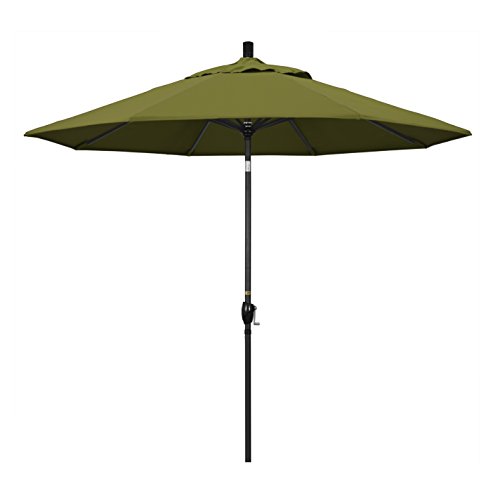
California Umbrella's 9-foot Pacifica matches our top pick where it counts, with a 1.5-inch aluminum pole, eight ribs and stainless hardware, and it adds the built-in wind vent Galtech's listing leaves out. The trade is Pacifica polyester instead of Sunbrella acrylic.
$217.42fromAmazonIt has the vent our top pick doesn't advertise. The canopy is built with a wind vent, which lets air that's pressurizing under the fabric escape out the top rather than lifting the whole canopy off its ribs. Commercial engineering documentation credits venting with roughly a 20 to 30% reduction in uplift force. If your patio gets steady afternoon wind rather than occasional gusts, that's the feature you want most.
The frame is in the same class of hardware. You get an all-aluminum, rust-free frame with stainless steel hardware, eight ribs for canopy support, and the same 1.5-inch pole diameter that separates serious market umbrellas from the thin-poled ones. Aluminum and stainless matter more than they sound like they do, because a corroded rib-to-hub joint is where an otherwise healthy umbrella fails first.
Pacifica is solution-dyed, just not acrylic. California Umbrella's proprietary fabric is canvas-grade polyester with UV protection built into the fiber rather than printed on the surface, and it carries a four-year color-fade warranty. That puts it well ahead of the generic polyester on cheap umbrellas. It won't match Sunbrella's fade life, but you're not paying Sunbrella's premium either.
Sewn-in ties are a small thing that saves canopies. The umbrella comes with fabric ties to cinch the canopy shut when it's closed. A closed umbrella that isn't tied still billows in wind, catches air like a half-open sail, and puts strain on the ribs while you're not watching. It takes three seconds and it's the habit that keeps this umbrella intact.
Flaws but not dealbreakers
Push-button tilt is coarser than a crank. You get a fixed set of angles rather than the infinite adjustment on our top pick, and the tilt joint is one more moving part sitting midway up the pole. It's fine in practice. But if you chase the sun across a long afternoon, you'll notice the difference.
The fabric clock runs shorter than Sunbrella's. Polyester canopy fabric generally shows measurable fading somewhere around 400 to 600 hours of UV exposure, where solution-dyed acrylic goes past 2,000. Pacifica's construction and four-year warranty push it toward the better end of polyester, but in a high-sun climate you should expect to replace this canopy sooner than an acrylic one.
Pacifica fabric carries a four-year color-fade warranty.
Budget pick
Vented and eight-ribbed, for a sheltered yard
Abba Patio 9FT Lyon Outdoor Patio Umbrella
The Abba Patio Lyon is a 9-foot crank umbrella with a vented canopy, eight aluminum ribs and UPF 50+ polyester. It costs a fraction of the commercial frames here, and it's the right call for a fenced backyard rather than an exposed rooftop.
$49.99fromAmazonA vented canopy at this end of the market is unusual. Most inexpensive umbrellas skip the vent entirely, which is the one omission that hurts them most in wind. The Lyon's canopy vents, so pressurized air has somewhere to go besides straight up under the fabric. Venting is the difference between a canopy that shrugs off a gust and one that turns itself inside out.
Eight ribs, each secured with an end screw. The rib count clears the threshold that published lab testing associates with a much lower chance of inversion, and Abba fastens the tip of each aluminum rib with a screw rather than relying on fabric alone to hold it. Rib tips pulling free is a common failure mode on cheap umbrellas, so it's a sensible place to spend a few cents.
The sun protection spec is genuinely good. The canopy is UPF 50+ and blocks over 99.9% of UV rays, which is the same protection tier as the acrylic canopies on the pricier umbrellas here. If shade quality is what you're after and wind is only an occasional worry, you're not giving anything up on that front.
Setup takes no tools and no patience. The pole threads together by hand, so you twist it into the base and you're done. Closing uses a clip rather than Velcro or snaps, which is one less thing to lose or wear out. The crank raises the canopy and a push-button handles the tilt.
Flaws but not dealbreakers
Polyester fades on a much shorter clock. Standard outdoor polyester generally shows measurable fading around 400 to 600 hours of UV exposure, versus over 2,000 for solution-dyed acrylic. That gap is roughly three to five seasons of usable life. In a sunny climate, expect this canopy to look tired well before the frame gives out.
The listing is quiet about the specs that predict wind survival. There's no stated pole diameter and no stated warranty term, and at 13.2 pounds the whole umbrella is light. Light is convenient when you're moving it; it's not what you want when the wind comes up. Pair it with a heavier base than feels necessary.
This isn't a rooftop or coastal umbrella. It handles light to moderate wind on a sheltered patio well. On an exposed deck, a bluff, or a balcony a few floors up, the commercial-grade frames above are worth the money, and you'll be replacing this one otherwise.
Upgrade pick
Two more feet of shade, on a frame that can hold it
Treasure Garden Deluxe Auto-Tilt Octagon Market Umbrella
Treasure Garden's Deluxe Auto-Tilt is an 11-foot octagon on a rust-free powder-coated aluminum frame with 100% solution-dyed Obravia2 fabric. You get two more feet of canopy than a standard market umbrella, plus the frame and base spec needed to keep it down.
$399.88fromAmazonEleven feet changes what the umbrella can actually do. At 126 by 126 inches, the canopy shades a full dining table with chairs pushed back, or a table plus the two people standing behind it. A 9-foot umbrella shades the table and roughly nobody's shoulders by mid-afternoon. If you host, or if your table seats six or more, this is the size difference you feel every time.
The frame is built for the extra sail area. You get a rust-free powder-coated aluminum frame, eight ribs, and a 32-inch Snap-n-Lock bottom pole at 1.5 inches in diameter. Snap-n-Lock means the pole sections positively latch rather than friction-fit, so there's no slow loosening over a season of tilting and closing. It's the same pole thickness as our top pick, holding up a considerably larger canopy.
Obravia2 is 100% solution-dyed, which is the part that matters. Color goes into the fiber rather than onto its surface, the same principle behind Sunbrella's fade resistance, and the fabric wipes clean. That's why Treasure Garden is comfortable putting a three-year no-fade warranty on it. On an 11-foot canopy, replacing the fabric is expensive, so fade resistance is doing more work here than on a small umbrella.
Auto-tilt on a canopy this size is more than a convenience. The eight-rib crank lift tilts out to 30 degrees, so you can angle the shade rather than move the umbrella. Sliding an 11-foot umbrella and a 100-pound base around a deck is not something you want to do twice in an afternoon. Turn the crank instead.
Flaws but not dealbreakers
A bigger canopy is a bigger sail, full stop. Treasure Garden recommends a 75 to 110 pound base, and it isn't included. That's a substantial piece of concrete or resin to buy, get home and position. Undersized bases are the leading cause of wind loss in owner data, and the temptation to under-ballast is strongest on exactly this kind of umbrella.
The fade warranty is shorter than what Sunbrella canopies carry. Three years against fading, versus five on the Sunbrella canopy of our top pick. Obravia2 is a solid solution-dyed fabric, but if you're buying at this level partly for longevity, the warranty gap is worth knowing before you choose a color.
It's a lot of umbrella to live with. The frame alone is 20 pounds, and an 11-foot canopy simply doesn't belong on a small balcony or a narrow side patio. Measure your clearance to walls, railings and eaves before you commit, because the canopy needs room to tilt as well as to open.
Treasure Garden includes a three-year warranty against fading.
Also great
Shade with nothing in the middle of your table
PURPLE LEAF 10' X 10' Cantilever Patio
The PURPLE LEAF 10-by-10-foot cantilever hangs its canopy from a side post, so no pole runs through your table. It rotates a full 360 degrees, tilts through five positions, and runs eight aluminum ribs on a heavy-duty aluminum pole.
$349fromAmazonA cantilever solves a problem a market umbrella can't. If your table has no umbrella hole, or you want shade over a lounger, a sectional or a hot tub, a center pole is in the way. This one puts the post off to the side and swings the canopy over whatever needs covering. You can also move the shade without moving the furniture underneath it.
The rotation locks, which matters more than the rotation itself. Published comparisons of cantilever designs found that models with 360-degree rotation and a positive locking collar held their position through gusts noticeably better than free-swivel arms that just spin. PURPLE LEAF's handle sets both the rotation and five tilt positions, so the canopy stays where you put it instead of weathervaning around the post all afternoon.
Eight aluminum ribs on a triangular support structure. The rib count clears the threshold published lab testing links to lower inversion rates, and the frame braces the arm against the pole in a triangle rather than a simple right angle, which is what reduces the side-to-side sway cantilevers are known for. Aluminum throughout also means no rust streaks down the post.
The canopy is listed in Sunbrella Indigo and rated colorfast for five years. It's water-repellent, dries fast, and is recommended by the Skin Cancer Foundation for blocking 98% of harmful rays. Solution-dyed fabric on a cantilever is worth seeking out, since a big offset canopy sits in direct sun all day with nothing shading it.
Flaws but not dealbreakers
Cantilevers need far more ballast than market umbrellas. A 10- to 13-foot offset umbrella wants 100 to 150 pounds of counterweight, especially on an exposed or elevated surface. The base isn't included, and PURPLE LEAF points you to a separate weighted base. Skimp here and the umbrella will tip, not just flap.
The offset arm is a lever, and wind works on it. All the load from a 10-foot canopy transfers through one side post instead of straight down a center pole. On a rooftop terrace or a beachfront deck, a market umbrella dropped through a table hole is genuinely steadier. Cantilevers are best on patios with some shelter around them.
The base eats floor space you may want. A cross-base sized for 100-plus pounds sits wide and low, right where people walk. Plan the footprint before you buy, particularly on a narrow deck.
Who this is for
This guide is for anyone whose patio umbrella keeps folding, spinning or walking across the deck, and for anyone shopping in a place where that's clearly coming: a coastal lot, a rooftop terrace, a lakefront, an open yard on a ridge. It's also for pool decks and outdoor dining setups where the umbrella stays open all day and nobody's watching it every minute. If your patio is tucked between a house and a fence and you've never seen your umbrella move, you can shop on looks and price instead, and the budget pick here will do fine.
We're covering freestanding patio umbrellas: center-pole market umbrellas that drop through a table hole or stand in a base, and offset cantilever umbrellas. We're not covering beach umbrellas with sand anchors, permanent shade sails, pergola canopies, or umbrellas sold as part of a furniture set. Bases are the other half of wind resistance, and none of these umbrellas include one, so budget for a base separately in every case. And no umbrella here, or anywhere, is meant to stay open in a storm.
How we picked
We built the shortlist around the specs that published research actually links to surviving wind. Vent design: a vented canopy lets pressurized air escape rather than lift, worth roughly 20 to 30% less uplift force according to commercial engineering documentation. Ribs: eight or more, the count Good Housekeeping's lab testing tied to far fewer inversions, with attention to whether the ribs flex or fracture. Pole: 1.5 inches of aluminum rather than the 1.25 inches common in budget imports, about 20% more cross-section right where wind loads the base. Fabric: solution-dyed acrylic and its 2,000-plus hours of UV resistance, against the 400 to 600 hours typical of standard polyester, plus stated UPF ratings. Base guidance: we checked each maker's recommended ballast against canopy span, since owner data points at undersized bases as the leading cause of wind damage. Warranty and parts: stated terms on frame and fabric, and whether you can buy a replacement rib instead of a replacement umbrella.
Other wind-resistant patio umbrellas worth considering
If you want a canopy that lets the wind pass through: The Coolaroo Cantilever Umbrella ($177.14) — The Coolaroo cantilever takes the opposite approach to everything else here. Instead of resisting wind, its knitted HDPE fabric has a 30 to 35% air porosity rate, so roughly a third of the wind force goes through the canopy rather than lifting it. That nearly eliminates the sail effect that inverts woven canopies, and it's why this style shows up so often in hot, windy, dry climates. The 10-foot round canopy tilts to two positions and stands free, so it works without a table hole. What you give up is shade density and rain cover. Coolaroo lists 90% UV block, below the UPF 50+ canopies elsewhere in this guide, and an open knit means dappled light and water coming straight through. It's also still a cantilever, so it needs real ballast underneath.
The competition
This is what our research surfaced, not a census of the market. Patio umbrella lineups turn over constantly, and plenty of sturdy commercial frames sell only through regional patio dealers that never show up in an online search. The two below are worth understanding mainly because their listings read competitively until you get to the frame specs.
The Island Umbrella Cabo 9 ft Octagon Patio ($167.99) — The Island Umbrella Cabo is a 9-foot octagon with a single wind vent, a 1.5-inch rust-resistant aluminum pole with a powder-coated finish, and a Breez-Tex canopy that resists fading and repels water. That's a sensible parts list for a balcony or a small table, and roughly 57 square feet of shade is plenty for four people. It loses to our picks on one number: six ribs instead of eight, which is the configuration lab testing flagged as more likely to invert under gusts. The spring-up lift is a genuine plus if you hate mechanisms, since there's no crank gear or pulley cord to fail; you push the canopy up and lock it. Coverage runs three years on fabric and one year on the pole and frame. If your yard is sheltered and you want something simple and compact, it's a fair choice.
The Frankford Umbrellas Heavy Duty Vinyl Umbrella-Royal/White ($175) — Frankford builds some of the toughest commercial umbrellas sold, but this listing isn't one of the aluminum market frames that reputation rests on. It's a heavy-duty vinyl canopy on an alloy steel frame, in a four-panel shape with a crank lift and a plastic grip handle. Four panels means four ribs, well below the eight-rib threshold that separates umbrellas that hold their shape from umbrellas that turn inside out. Steel is strong, but unlike the powder-coated aluminum on our picks it rusts once the finish chips, which is a real problem anywhere near salt air. Vinyl does wipe clean, so if you're shading a work area and want a canopy you can hose down, it has a use. For wind, look at the aluminum frames instead.
Anchoring and care
Buy more base than you think you need. A 9-foot market umbrella wants at least 50 pounds under it in sustained 20-mph wind, and a 10- to 13-foot cantilever wants 100 to 150, more on a rooftop or an open deck. If your table has an umbrella hole, use it, because the tabletop acts as a second restraint point and takes load off the base. Close the umbrella whenever you leave the patio and tie the canopy shut, since a closed-but-loose canopy still billows and strains the ribs. Above roughly 35 mph, take it down entirely. Rinse salt spray off an aluminum pole with fresh water, let the canopy dry completely before storing it, and touch up chips in the powder coating before rust gets started.
Questions we get
What wind speed can a patio umbrella handle before I need to close it?
Most residential umbrellas are engineered for sustained winds of about 25 to 30 mph, and commercial-grade frames are rated for roughly 35 to 50. The National Weather Service classifies 25 to 38 mph as breezy to windy, which is the range where an unsecured umbrella can go airborne. A practical rule: close it above 25 mph, and take it out of the base above 35. Ratings assume a properly weighted base, not a light one.
Do vented canopies actually make a difference?
Yes, and it's the biggest single structural difference in the category. Commercial engineering documentation puts a double-vented canopy at roughly 20 to 30% less uplift force than an unvented one, because pressurized air escapes through the vents instead of building underneath. A double vent, with both a lower and upper opening, beats a single vent. If you're choosing between two similar umbrellas, take the vented one.
How heavy does the base need to be?
For a 9-foot market umbrella, plan on at least 50 pounds to stay put in sustained 20-plus-mph wind, and more if the umbrella isn't going through a table. A 10- to 13-foot cantilever needs 100 to 150 pounds of counterweight, especially on an exposed or elevated surface. Consumer Reports owner data identifies improper base weight as the leading cause of umbrella wind damage in the first two years, ahead of both fabric failure and frame breakage.
Are cantilever umbrellas more or less stable than market umbrellas in wind?
Generally less stable, because the entire canopy load transfers through an offset arm rather than straight down a center pole. They also can't be pinned by a table. If you do want one, look for 360-degree rotation with a positive locking collar rather than a free-swiveling arm, since locking designs hold position through gusts noticeably better. On a rooftop or beachfront patio, a market umbrella through a table hole is the safer choice.
Is Sunbrella fabric worth the premium?
If you get a lot of sun, yes. Solution-dyed acrylic like Sunbrella withstands more than 2,000 hours of UV exposure before fading is measurable, where standard polyester starts showing it around 400 to 600 hours. That works out to roughly three to five extra seasons of usable canopy. If your umbrella lives under a covered porch or only comes out a few weekends a year, a good solution-dyed polyester is plenty.
What should I look for on a rooftop deck or exposed balcony?
Elevated spaces see faster, gustier wind than the ground-level yard next door, so treat it as a commercial-grade situation. Prioritize a double-vented canopy, eight or more ribs, and a 1.5-inch aluminum pole, then over-ballast the base beyond the manufacturer's minimum. A breathable HDPE canopy is another good option up high, since roughly a third of the wind force passes through the fabric instead of lifting it. And never leave one open when you're not home.
Why you should trust us
For this guide:
- We read manufacturer specification sheets and commercial engineering documentation covering vent design, pole diameter, rib construction and recommended base weights.
- We compared published lab testing and buying guides, including Good Housekeeping's findings on rib count and National Weather Service wind thresholds, against each listing's stated frame and fabric specs.
- We reviewed recurring themes in owner feedback and reliability data, where undersized bases come up far more often than broken frames as the cause of a lost umbrella.
- We read owner reviews on every listing, weighted toward the critical ones, because that is where the recurring failures show up.
- We have a systematic way of automatically fetching the latest prices, so the numbers on this page stay current.
- This is a research-focused guide, so the team may not own every product listed — though we often do own the top winners, which gives us extra context for the recommendations.
- We don't accept free products, and the retailer commission never changes which product we recommend.
Sources
Best Patio Umbrellas – Wirecutter, Wirecutter
Best Patio Umbrellas Tested by Editors – Good Housekeeping, Good Housekeeping
Best Patio Umbrellas of 2026 – Bob Vila, Bob Vila
Patio Umbrella Reviews – Consumer Reports, Consumer Reports
Best Patio Umbrellas for Wind – Better Homes & Gardens, Better Homes & Gardens
How to Choose a Patio Umbrella – This Old House, This Old House
Best Patio Umbrellas – The Spruce, The Spruce
Sunbrella Awning & Marine Fabric Technical Specifications, Glen Raven / Sunbrella
Coolaroo Commercial HDPE Shade Products, Coolaroo
Wind Advisory Safety Guidelines, National Weather Service
Frankford Umbrellas Commercial Product Resources, Frankford Umbrellas
Galtech Aluminum Umbrella Product Specifications, Galtech International
Amazon product listings and owner reviews for all 8 products
Manufacturer specification pages for each product
Some passages in this guide may be paraphrased with AI help. Prices are refreshed automatically.
More like this.
Continue exploring lifestyle reviews and recommendations.

The Best Wind-Resistant Compact Umbrellas
Most days, a compact umbrella just has to keep rain off your head for a four-block walk. The trouble is that rain rarely shows up alone. Wind is what…

The Best Mosquito Net Gazebos for Patios
A patio you can't sit on after sundown isn't much of a patio. Mosquitoes show up right when the evening gets good - dinner outside, a drink, the kids…

The Best Patio Heaters
Fall evenings outside tend to end the same way. The sun drops, the temperature follows, and everyone drifts back indoors around eight o'clock. A patio…

The Best Patio String Lights
String lights turn a patio into a room for very little effort. Hang a strand over the table and dinner stretches an hour longer. But the ones that look…

The Best Patio Furniture and Grills
A patio only gets used if sitting on it is easy. That means seating you don't have to drag inside before a thunderstorm, cushions that don't go blotchy…

The Best Interlocking Patio Tiles and Rubber Pavers
A patio you actually use comes down to what's underfoot. Cracked concrete, a splintery porch, a balcony slab that turns into a puddle after every storm - …