The Best Paddleboard Fishing Accessories
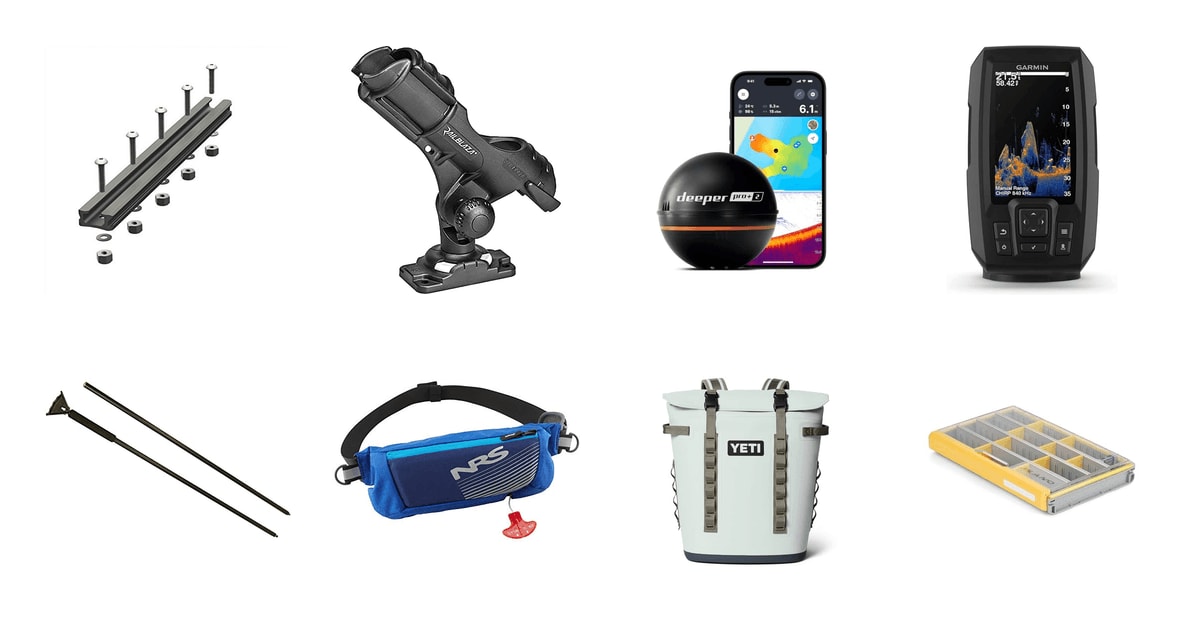
Paddleboard fishing works because the setup is simple. You stand, you spot fish before they spot you, and you slide into water a boat can't reach. But a bare deck fights you. Rods roll off, tackle gets soaked, and the wind pushes you off the spot right as the bite starts. The right accessories fix those small annoyances without turning your board into a barge. Most of it comes down to one thing: where your gear attaches, and whether it stays put when a fish pulls back.
Here's the honest part. Nothing in this category solves the weight problem. Every mount, cooler and sonar you add costs you freeboard, stability and paddling speed, and REI's fitting guide suggests keeping total gear under 15% of your board's rated capacity. That budget disappears fast once you add a cooler and a tackle box. Mounting is the other headache. Track bases want a hard deck and inside-hull access, which most inflatable owners simply don't have. Nobody has really solved that yet.
So start with the foundation and build out. A rail or base plate decides which rod holders, sonar arms and camera mounts you can add later, which is why a Paddling Magazine reader survey found mounting compatibility outranked price, waterproofing and brand as anglers' top concern. Get that part right and the rest is easy. We think that the YakAttack GT90 GearTrac is the best paddleboard fishing accessory for most people, and that the Railblaza Rod Holder II and StarPort HD kit is the one to buy if you fish from an inflatable.
Everything we recommend

The mounting foundation everything else clicks into

A rod holder and base you can mount without a drill

Waterproof tackle storage that slides under deck bungees
Sonar you cast on a line, with nothing to install
At a glance
| Product | Price | |
|---|---|---|
| YakAttack GT90 GearTracTop pick | $20.95 |
| RAILBLAZA 04-4055-11 Rod Holder II & StarPortRunner-up | $40 |
| Deeper PRO+ 2 Sonar Fish Finder -Upgrade pick | $159.99 |
 | Garmin Striker Vivid 4cv Fishfinder with TransducerAlso consider | $199.99 |
 | YakAttack ParkNPole Link 8''Also consider | $132.95 |
 | NRS Zephyr Inflatable LifejacketAlso consider | $169.95 |
 | YETI Hopper M20 Backpack Soft Sided CoolerAlso in lineup | $325 |
| Plano EDGE 3700 Premium Tackle Utility BoxBudget pick | $20.54On sale |
How we picked
Mounting compatibility. We favored gear built around the GearTrac and StarPort patterns, because those two ecosystems cover the widest range of snap-in accessories. Owner feedback and a Paddling Magazine reader survey both put compatibility ahead of everything else.
Weight on deck. We checked published weights against REI's guidance to keep total gear under 15% of a board's rated capacity. Anything heavy had to earn its place against that budget.
Salt and sun. We looked for stainless hardware, marine-grade aluminum and UV-stabilized polymers in the spec sheets. Owner reports of corrosion, chalking and seized threads counted against products.
Works on inflatables. Roughly half of fishing SUPs are inflatable, so we noted which products need inside-hull access and which mount without drilling. Anything requiring a permanent hull penetration got flagged.
Tool-free removal. Gear you can pull off in seconds actually gets used. We preferred snap-in and lift-out designs over anything requiring a wrench at the launch.
Top pick
The mounting foundation everything else clicks into
YakAttack GT90 GearTrac
The GT90 is an 8-inch aluminum track that bolts to your deck and accepts more than 200 snap-in accessories. Buy it first, because it decides which rod holders, sonar arms and camera mounts you can add later without starting over.
$20.95fromAmazonBuy the rail before you buy anything else. A track is the socket the rest of your setup plugs into, and YakAttack's GearTrac pattern is the one most accessory makers build around. More than 200 snap-in pieces fit it, from YakAttack and third parties alike. That means the rod holder you buy this season still works with the sonar mount you add next season.
It's built for water that eats hardware. The track is aluminum, it ships with stainless screws, washers and nuts, and it's made in the USA for marine use. YakAttack rates a section for about 40 pounds of distributed load, which is far more than a rod holder and a fish finder arm will ever ask of it. Inshore anglers consistently report that the tracks outlast the boards they're bolted to.
Eight inches is the right length for a paddleboard. You get room to slide a rod holder fore and aft as you trim the board, without eating the deck space you actually stand on. Two tracks, one on each side of the carry handle, cover nearly every setup you'll want. And because accessories slide out, you can strip the deck bare for a family paddle in about a minute.
Installation is a one-time job, and it isn't hard if your board has hatch access. Hole spacing is 1-3/4 inches, the hardware comes in the box, and you'll need a 3/32-inch hex wrench, which doesn't. Seal the holes properly and the track becomes part of the board. It's why serious SUP anglers rarely bother with clamp-on alternatives.
Flaws but not dealbreakers
The catch is that it needs inside-hull access. You're drilling through your deck and reaching in with a nut and washer, which rules out most inflatables and any hard board without a hatch near the rail. If that describes your board, skip down to our runner-up.
It's also just a track. On its own it does nothing, so you'll spend more on the holder, the mount and a wrench before it earns its keep. That missing hex wrench means a trip to the hardware store on install day, which is a small but real annoyance.
YakAttack backs the GT90 with its Built for Life Guarantee.
Runner-up
A rod holder and base you can mount without a drill
RAILBLAZA 04-4055-11 Rod Holder II & StarPort
This kit pairs Railblaza's Rod Holder II with a StarPort HD base, so the holder and its mounting foundation arrive together. The base drops into a GearTrac rail or fastens to a flat deck, and the holder lifts out in a second when you'd rather paddle clean.
$40fromAmazonMost rod holders arrive without any way to attach them, which is how people end up buying twice. This one includes the StarPort HD base, and that base is its own small ecosystem — Railblaza builds camera mounts, light poles and cup holders that drop into the same socket. If you're starting from zero on an inflatable, it's a simpler on-ramp than a full track install.
The rotating collar is the feature you'll notice on the water. Set it so the rod tip sits where you want it, and the collar keeps a striking fish from spinning your reel handle into the deck. Railblaza calls that strike theft, and anyone who's watched a rod go over the side knows the feeling. The holder swings a full 360 degrees and tilts through 90, so one mount covers casting, trolling and parking a rod.
It handles real fish. Railblaza rates the StarPort HD base to about 66 pounds of lateral pull on a firm flat surface, which is more force than you'll ever put on a rod fighting something you can land while standing up. The holder itself works with baitcasters, spinning reels, offshore reels and fly reels, so you're not buying a second one when your tackle changes.
Weight barely registers. The kit is a quarter of a pound, and it lifts out of the base without tools, so you can pull it before you roll up an inflatable or car-top the board. That matters more than it sounds. The accessories people keep using are the ones that come off in a single motion.
Flaws but not dealbreakers
Mounting the StarPort to an inflatable still takes some thought. That 66-pound rating assumes a firm, flat surface, and a drop-stitch deck flexes under load. You'll want a proper adhesive pad or an existing D-ring plate, not a hopeful stick-on job on textured EVA.
The plastic construction is fine but not heirloom-grade. Owners of older Railblaza gear mention collars loosening over seasons of sun and salt, and UV eventually chalks the black finish. Rinsing after saltwater trips and storing it indoors goes a long way.
Budget pickOn sale
Waterproof tackle storage that slides under deck bungees
Plano EDGE 3700 Premium Tackle Utility Box
The EDGE 3700 is a gasketed, rust-fighting utility box in the standard tackle footprint, so it fits the bags, racks and bungees you already own. It's the least glamorous thing here and probably the one you'll reach for every single trip.
$20.54fromAmazonList priceSalt spray and a wet deck destroy hooks. The EDGE seals with a Dri-Loc O-ring, and Plano rates it IP67, meaning it tolerates a meter of water for half an hour. Read that as a promise about the wave that comes over the nose, not permission to swim with it. The base is infused with Plano's Rustrictor treatment, so trapped humidity works on your jig heads much more slowly.
The 3700 footprint is the whole point. It's roughly 14 by 9 inches, the size every tackle bag and crate insert is built around, and it's low enough to slide under the deck bungees on most fishing SUPs without blocking your feet. Stack two and you've got a soft-plastics box and a hardware box in the same slot.
The organization details are the reason this box sticks around. Dividers come pre-cut and vented, the EZ Label system lets you mark rows so you're not squinting at the lid, and a reusable Water Wick packet pulls moisture out between trips. The clear DuraView lid means you can find the right blade bait without opening anything at all.
One-handed operation matters when you're balancing on a board. The oversized latch opens with a thumb, steel-pin hinges keep the lid from flopping loose in chop, and ribbed surfaces give you grip with wet hands. None of this is exciting. It's still the difference between changing a lure standing up and dropping to your knees to do it.
Flaws but not dealbreakers
It's watertight, not usefully buoyant once loaded. Fill it with lead and a loose box goes straight to the bottom, so clip it or run it under a bungee every time you get on the water.
The clear lid scratches, and after a season of sun and sand you'll be opening it to check contents anyway. Owners also note the gasket has to be clean and dry to seal — a single grain of sand in the channel lets water in.
Upgrade pick
Sonar you cast on a line, with nothing to install
Deeper PRO+ 2 Sonar Fish Finder -
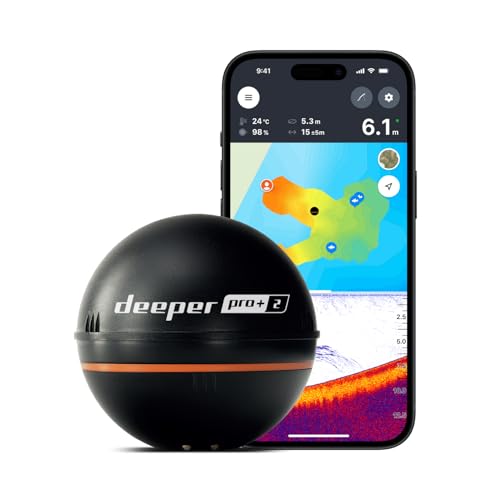
The PRO+ 2 is a sonar ball you tie to a rod and cast, streaming depth, structure and fish to your phone over its own Wi-Fi. There's no transducer to mount and no wires to run, which is exactly what you want on an inflatable.
$159.99fromAmazonOn a paddleboard, needing no installation is the whole argument. Every mounted fish finder asks you to attach a transducer somewhere below the waterline, and that's the problem on an inflatable deck. The PRO+ 2 sidesteps it. You tie it on, cast it, reel it in. It's a 2.5-inch ball that weighs about a fifth of a pound and lives in a jacket pocket.
The sonar itself is serious. Wide, mid and narrow beams let you sweep a flat or drill into one brush pile, and target separation gets down to about four-tenths of an inch on the narrow beam. That's enough to tell a fish from the branch it's sitting under. It reads to roughly 260 feet, far deeper than anywhere you'll paddle.
Built-in GPS turns idle casts into a map. Fish from shore, a dock or the board, and the Fish Deeper app stitches your casts into a bathymetric chart you keep, which is how you learn a small lake in a couple of visits. The Wi-Fi is its own network with about 330 feet of range, so you don't need cell service in the backcountry ponds a SUP is good at reaching.
It's the one accessory here that changes how you fish, not just how you carry gear. Nine hours of battery covers a full day, and because nothing is tethered to the board you can scan water you haven't paddled into yet. In skinny water that's a genuine edge, since the wake and noise of getting close is usually what spooks the fish.
Flaws but not dealbreakers
You're fishing with your phone out. That means a wet, sun-washed screen in your hand or on a mount, a battery draining faster than you'd like, and a real chance of a swim for an expensive device. A waterproof case and a phone leash aren't optional here.
Reeling in a sonar ball also means the rod holding it isn't fishing. Casting the Deeper on your main rod costs you time, and dragging it while you paddle adds drag and hangs up in weeds. It's the most expensive item on this list by a wide margin, which is hard to justify if you mostly fish one pond you already know.
Who this is for
This guide is for anyone fishing from a paddleboard: lake and pond anglers, inshore fishermen coming over from kayaks, fly anglers using a board to reach wade-access water, and minimalists who want a lighter setup than a kayak. If you already have a rail on your deck, you can skip our top pick and start with a rod holder or sonar. If you're brand new, buy a mounting foundation and a waterproof tackle box first, then add electronics once you know how you actually fish.
We're covering accessories, not boards, paddles or rods. We're also not covering hardware for sit-inside kayaks, motor mounts or trolling gear, and we didn't look at leashes or foam PFDs beyond the one inflatable in our lineup. If you fish rough surf or cold open water, this list doesn't cover the safety gear that setting requires, and you should talk to a local outfitter before loading a board with anything.
How we picked
We started from spec sheets, published reviews and recurring themes in owner feedback, then held everything to five things that matter on a board. Mounting compatibility: gear had to fit the GearTrac or StarPort patterns, since those unlock the most accessories later. Weight on deck: we tracked published weights against the rule of keeping gear under 15% of your board's capacity. Salt and sun: stainless hardware, marine aluminum and UV-stabilized plastic beat generic parts, and owner reports of corrosion counted against a product. Works on inflatables: we noted every product that needs inside-hull access, because most inflatable owners can't provide it. Tool-free removal: if it doesn't come off in one motion, you'll eventually stop bringing it.
Other paddleboard fishing accessories worth considering
If you want a screen mounted on the board: The Garmin Striker Vivid 4cv Fishfinder with Transducer ($199.99) — The Striker Vivid 4cv gives you a dedicated 4-inch color display, Garmin CHIRP traditional sonar and ClearVü scanning through its GT20 transducer, plus GPS waypoints and Quickdraw Contours mapping that builds as you paddle. The head unit is only about 11 ounces, so weight isn't the issue. The wiring is. You're carrying a battery, waterproofing it, and finding somewhere for a transducer to sit in the water. On a hard board with a GearTrac rail, that's a clean, capable setup and the vivid color palettes make structure easy to read. On an inflatable, it's a weekend project.
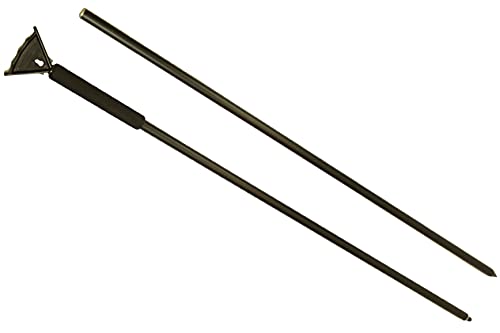
If you want to hold a spot in skinny water: The YakAttack ParkNPole Link 8'' ($132.95) — A stake-out pole beats an anchor on a paddleboard, full stop. The ParkNPole Link is UV-stabilized fiberglass, weighs under 2 pounds, and splits into two pieces so it stores inside a hull or rides in a car easily. Push it into a soft bottom — it bites about two feet into mud or sand — and you'll hold against current up to roughly 1.5 mph, then pull it and move without hauling a muddy grapnel over your deck. Wired2Fish credits stake poles with much faster repositioning and far less bottom disturbance than a dropped anchor. It's no help over hard rock, and 8 feet is a lot of pole to manage on a small deck.
If you want a life vest that stays out of your cast: The NRS Zephyr Inflatable Lifejacket ($169.95) — The best safety gear is whatever you'll actually wear all day. The NRS Zephyr is a low-bulk inflatable that sits like a slim collar instead of a foam vest, so nothing bunches under your arms when you cast and nothing traps heat against your back in July. It's a universal fit and packs down small. The trade-offs are real, though: an inflatable only floats once it inflates, it needs a re-arm kit after every use, and it's the wrong choice for weak swimmers, cold water or rough conditions, where foam wins. Check your local rules too, since some waters don't count an inflatable toward the required vest.
The competition
This is what our research surfaced across a handful of accessory categories, not a survey of everything you could bolt to a board. Plenty of good gear never came up, and a few things that did just don't earn their space on a deck with room for very little.
The YETI Hopper M20 Backpack Soft Sided Cooler ($325) — The YETI Hopper M20 is an excellent backpack cooler and an awkward fit for most paddleboards. Its DryHide shell shrugs off punctures and UV, the MagShield closure seals with a push and stays open while you load it, and OutdoorGearLab's review of YETI's soft coolers found ice holding past 24 hours in 90-degree heat. But it stands about 18 inches tall and 15 wide, weighs around 4 pounds empty, and all of that sits high on a board that's already carrying you. If you fish a wide board on a big lake and want a cold catch at takeout, strap it low and centered over the carry handle. For a half-day on a narrow board, a soft bag and two frozen water bottles do the same job for a fraction of the bulk.
Care and setup
Rinse everything with fresh water when you get home, especially after salt. That means the track, the bolts, the StarPort socket and the base of any rod holder, where salt crystals grow and seize threads. Let hardware dry before storage, and keep gear out of direct sun — UV chalks plastic and ages a PFD faster than paddling ever will. Check your track bolts a couple of times a season and snug anything that's backed off. When you load the board, center the heavy items near the carry handle so the bow doesn't wander, and keep total gear under about 15% of your board's rated capacity. And wear a leash. The American Canoe Association suggests a coiled ankle leash under 10 feet, which tangles in fishing line far less than a straight one.
Questions we get
What rod holders work with inflatable paddleboards?
Look for anything that mounts to a base plate or an existing D-ring rather than a through-bolted track. The Railblaza StarPort HD is the common answer, since it can be bonded to a flat deck patch or fastened to a plate you already have. Avoid drilling an inflatable, and be honest about how much your deck flexes — a soft, textured surface won't hold a mount under load.
How do I anchor my paddleboard while fishing?
In shallow water, a stake-out pole like the ParkNPole is faster and quieter than a traditional anchor. You push it into soft bottom, clip your board to it, and pull it when you want to move. In deeper or harder-bottomed water you'll need a small grapnel on a line with a quick-release, and you should always be able to cut yourself loose fast if current picks up.
Is a castable sonar better than a mounted fish finder for a SUP?
For most paddleboard anglers, yes. A castable unit like the Deeper PRO+ 2 needs no transducer, no wiring and no battery pack, and it works identically on inflatable and hard boards. A mounted unit like the Garmin Striker Vivid 4cv gives you a dedicated screen and continuous bottom detail while you paddle, which is better for covering water — but only if you're willing to install it.
Can I use YakAttack GearTrac on an inflatable SUP?
Not the GT90 shown here. It's a surface mount that requires inside-hull access so you can back the bolts with washers and nuts, and inflatables can't give you that. Some inflatable boards ship with factory-bonded track or D-ring patches, and a few brands sell adhesive rail pads for drop-stitch decks. Otherwise, plan around base-plate mounts instead.
How much gear can I put on my board?
REI's guidance is to keep total accessories and gear under 15% of your board's maximum weight capacity, and that's a good ceiling to respect. Beyond it you lose freeboard, the board sits sluggish, and standing up gets harder in chop. Center the heavy things near the carry handle, keep tall items low, and remember that a loaded cooler counts for a lot more than the mounts do.
What do I need to start paddleboard fishing?
Four things cover almost everyone: a PFD you'll actually wear, a coiled ankle leash, one waterproof tackle box, and a mounting foundation with a single rod holder. That's enough to fish comfortably and safely on a calm lake. Add sonar and an anchor system once you know whether you're chasing structure, holding spots in current, or just drifting a shoreline.
Why you should trust us
For this guide:
- We read manufacturer specifications and installation documentation for every mount, sonar unit and storage box in this guide, and compared how each attaches to hard and inflatable decks.
- We drew on published reviews from outlets including OutdoorGearLab and Wired2Fish, along with survey data from Paddling Magazine and safety guidance from the American Canoe Association.
- We tracked recurring themes in owner feedback — corrosion at fasteners, UV chalking on plastics, and gaskets that stop sealing once sand gets in them.
- We read owner reviews on every listing, weighted toward the critical ones, because that is where the recurring failures show up.
- We have a systematic way of automatically fetching the latest prices, so the numbers on this page stay current.
- This is a research-focused guide, so the team may not own every product listed — though we often do own the top winners, which gives us extra context for the recommendations.
- We don't accept free products, and the retailer commission never changes which product we recommend.
Sources
SUP Fishing Gear Buyers Guide – Paddling Magazine, Paddling Magazine
Best SUP Fishing Accessories Buyers Guide – SUPboarder, SUPboarder
Deeper PRO+ 2 Official Specifications – Deeper Sonar, Deeper Sonar
GearTrac Accessory System Overview – YakAttack, YakAttack
Garmin Striker 4 Product Specifications – Garmin, Garmin
Standup Paddleboard Fishing Setup Guide – REI Expert Advice, REI
Paddleboard Fishing Tips and Gear Roundup – Wired2Fish, Wired2Fish
Best Soft Coolers Tested and Reviewed – OutdoorGearLab, OutdoorGearLab
SUP Safety and Leash Guidelines – American Canoe Association, American Canoe Association
Plano EDGE Waterproof Tackle Box Product Specs – Plano, Plano
Railblaza StarPort HD Technical Specifications – Railblaza, Railblaza
Paddle Sports Industry Market Research 2024 – Paddle Sports Industry Association, Paddle Sports Industry Association
Amazon product listings and owner reviews for all 8 products
Manufacturer specification pages for each product
Some passages in this guide may be paraphrased with AI help. Prices are refreshed automatically.
More like this.
Continue exploring lifestyle reviews and recommendations.

The Best Inflatable Paddleboards
An inflatable paddleboard earns most of its keep off the water. It rolls into a bag you can shove in a closet or a trunk, and it doesn't need a roof rack,…

The Best Surf Fishing Rods
Surf fishing asks a lot of a rod. You're standing in moving water, throwing a weighted rig as far as you can, then holding that rod for hours. Length does…

The Best Polarized Sunglasses for Driving and Fishing
Glare is the thing you stop noticing until it's gone. On the highway it's the sheet of white light that comes off wet asphalt after a rain, or off the…

The Best Cordless Ice Fishing Augers
Drilling a hole through 20 inches of ice used to mean yanking a starter cord in the dark with cold hands, then breathing two-stroke exhaust for the rest…

The Best Fly Fishing Rod Combos for Trout
Most trout fishing happens closer than you'd think. Trout Unlimited points out that the majority of American trout water is a stream under 30 feet wide,…

The Best Fishing Rod and Reel Combos for Beginners
Your first fishing combo has one job: get you to the water without a fight. That means a reel that doesn't tangle when your cast goes sideways, a rod that…