The Best Rain Barrels
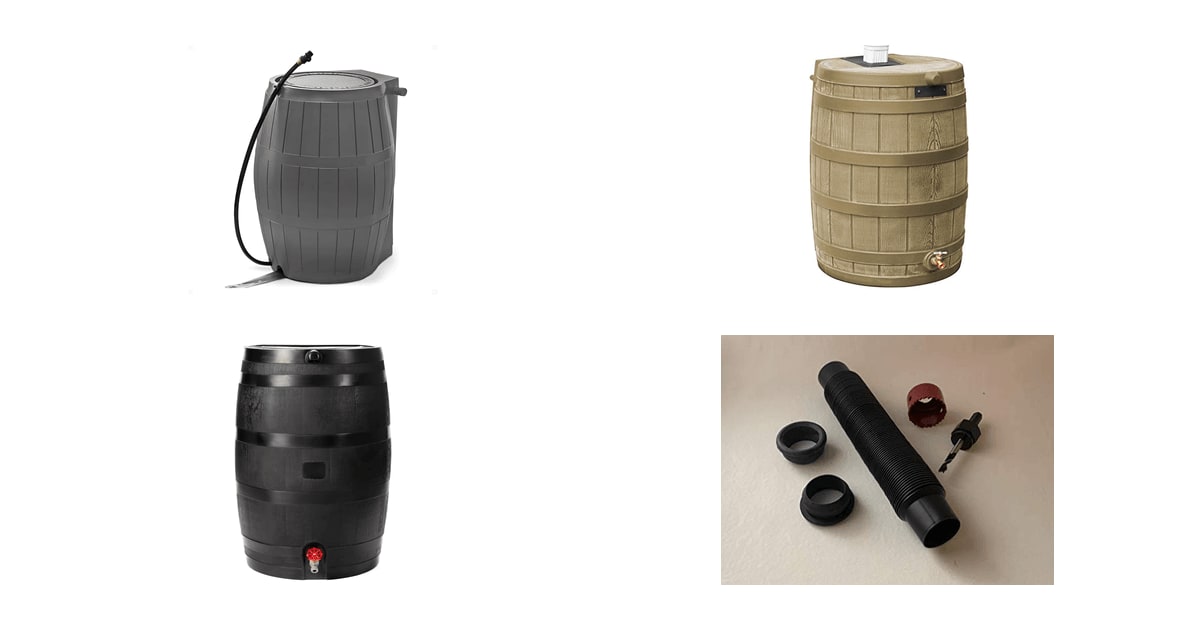
A rain barrel is one of the few garden upgrades that pays you back every summer. Point a downspout into one and you'll capture water you already paid for in property taxes and roof square footage. The EPA's WaterSense program estimates a single barrel saves the average homeowner roughly 1,300 gallons across June, July and August. That's free water for tomatoes and hydrangeas during exactly the weeks your municipality starts talking about restrictions. It also keeps a third of a typical storm's rooftop runoff out of the storm drain.
Here's the honest part: no barrel holds as much as you'd like. A 1,000-square-foot roof sheds about 600 gallons per inch of rain, so one moderate storm could fill twelve standard 50-gallon barrels. Yours will overflow, probably within the first half hour. Plastic barrels also crack if you leave water in them through a hard freeze, and every one of them needs a screen you actually check. Treat a barrel as a bucket that refills for free, not as a reservoir.
We think that the FCMP Outdoor Raincatcher 4000 is the best rain barrel for most people, and that the RTS Home Accents 50-Gallon ECO is the one to buy if you want a recycled-plastic barrel with a slimmer footprint for a narrow side yard.
Everything we recommend

Flat back, side spigots, and it links to the next barrel

Recycled plastic and the slimmest profile of the bunch

The one that looks like furniture, and it comes as a pair
At a glance
| Product | Capacity (Gal) | Weight (Lbs) | Price | |
|---|---|---|---|---|
| FCMP Outdoor Raincatcher 4000Top pick | 50 Gal | 25 Lbs | $228.99 |
| Good Ideas Rain Wizard Water Collection BarrelAlso great | 50 Gal | 19 Lbs | $319.98 |
| RTS Home Accents 50-Gallon ECO Rain BarrelRunner-up | 50 Gal | 18 Lbs | $79 |
 | EarthMinded Rain Barrel Linking Kit by EarthMindedAlso consider | — | — | $24.89 |
 | Gardeners Supply Company Wooden Rain Barrel StandAlso consider | — | 1 Lbs | $199.99 |
How we picked
Capacity and footprint. We compared manufacturer dimensions against the 50-gallon standard, favoring flat-back shapes that sit within a few inches of a wall. Anything that needed more than two feet of clearance was hard to recommend for a typical side yard.
Material and UV rating. We looked for opaque, UV-inhibited polyethylene, since published horticultural guidance is consistent that light-blocking walls prevent algae without chemicals. Recycled or food-grade HDPE content was a tiebreaker.
Spigot and fittings. We noted spigot material and thread size from spec sheets, weighing brass ahead of plastic on the strength of long-term reviewer comparisons. We also flagged barrels whose spigots don't accept a garden hose without an adapter.
Overflow and linking. Every barrel we recommend includes an overflow port, because a 50-gallon barrel fills in roughly half an hour during a moderate storm. Built-in linking ports counted for more than a bare bulk hole.
Screening and winterizing. We checked that each barrel ships with mesh at the inlet, since CDC guidance notes mosquitoes need only 7 to 10 days of standing water to breed. We also read owner feedback for how easily each barrel drains and stores before a freeze.
Top pick
Flat back, side spigots, and it links to the next barrel
FCMP Outdoor Raincatcher 4000
The Raincatcher 4000 sits flush against your siding, holds 50 gallons, and comes with the hoses and linking kit you need to chain a second barrel to it. Owners report easy setup and no leaks — the two things that go wrong most often with plastic barrels.
$228.99fromAmazonThis is the barrel that doesn't fight you during installation. It ships with a mesh screen, a garden hose, an overflow hose and a linking kit in the box. Owners consistently describe getting it running in an afternoon, with the main hose clamping on and the barrel sitting snug against the wall. Most competing barrels leave you sourcing a diverter or an overflow fitting separately, which is where a Saturday project turns into two trips to the hardware store.
The flat back matters more than it sounds. A round 50-gallon barrel has to stand off your wall by the width of its widest point. Per Bob Vila's reporting, a flat-back model tucks 4 to 6 inches closer — a real difference in a side yard under two feet wide. At 32 inches tall and 24 inches square, the Raincatcher fits where a wine-cask shape simply won't.
The side spigots are the quiet feature that makes this a system instead of a bucket. Run a short hose from one barrel's side port to the next and gravity balances them automatically. Owners who started with one commonly report going back for two or three more, one per downspout. Linking a pair of 50s costs far less than a purpose-built 100-gallon tank.
The gray, UV-inhibited polyethylene keeps light out, which keeps algae out. Algae needs light to photosynthesize, so an opaque wall stops green buildup without any chemical treatment — a genuine advantage over translucent barrels that turn into pond water by August. The BPA-free plastic is also rated for outdoor exposure, and FCMP has been building outdoor products in Canada for three decades.
Flaws but not dealbreakers
The overflow arrangement is the recurring complaint. The flat rear overflow hose attaches with a plastic pull tie rather than a clamp, and several owners describe the fitting as flimsy or fussy to unfold out of the box. The runoff also routes under the barrel by design, which isn't where you want water pooling. Plan on rerouting the overflow hose away from your foundation, and consider swapping the tie for a proper hose clamp.
The included hose clip has a habit of falling off. It's a two-dollar fix, but it's annoying the first time you find the hose lying in the mulch after a storm.
Like every polyethylene barrel here, it's a single molded piece with fittings threaded into it, and a small share of owners report leaks at those threads. Teflon tape on every threaded connection before you fill it is cheap insurance.
Runner-up
Recycled plastic and the slimmest profile of the bunch
RTS Home Accents 50-Gallon ECO Rain Barrel
RTS makes this 50-gallon barrel from 100% recycled plastic and shapes it tall and narrow — 34 inches high but only 19 inches deep. If your only spot is a tight gap between the house and a fence, this is the one that fits.
$79fromAmazonAt 19 inches front to back, this is the narrowest barrel here. That's the whole pitch. Downspouts have an unfortunate habit of landing in the one corner where a walkway, an AC condenser and a fence all meet, and a fat round barrel won't go there. The RTS is tall instead of wide, with a textured black finish that reads as decorative rather than industrial.
The recycled-content story here is real, not marketing garnish. The barrel is molded from 100% recycled plastic, which is the kind of thing that matters if you're buying a rain barrel partly on principle. The polyethylene is UV-resistant, and the black color blocks light completely — no algae without chemicals. Owners a year in report the barrel still holding up outdoors with no sun damage.
It's also the barrel people buy in pairs. The built-in overflow valve lets you send excess into a second unit, and owners describe running two of these off a single downspout or even an AC condensate line. Setup is genuinely simple: attach the spigot, level the base, connect the gutter.
Flaws but not dealbreakers
The plastic spigot is the weak link, and owners say so plainly. This Old House's multi-year reviewing found brass spigots outlasting plastic ones by three to five years on identically used barrels. Budget for a brass replacement at some point.
The spigot is also 5/8 inch, so a standard 3/4-inch garden hose won't thread on directly. You'll need an adapter — inexpensive, but nobody tells you before the box arrives.
The most serious complaint is bulging. At least one owner reports the flat back deforming outward by roughly two inches after a couple of months of full loads, to the point that it pressed against the siding. Fifty gallons weighs over 400 pounds, and this is an 18-pound barrel. Give it a genuinely flat, fully supported base — not a pallet, not soft soil.
Also great
The one that looks like furniture, and it comes as a pair
Good Ideas Rain Wizard Water Collection Barrel
The Rain Wizard's faux-oak texture and khaki finish are made to sit in a front yard without an HOA letter following. It has a brass spigot, and this listing includes two barrels, so you can start a linked system on day one.
$319.98fromAmazonIf the barrel has to be visible, buy this one. The Rain Wizard is molded to look like a staved wooden cask in a muted khaki, and owners buying it for front-facing placement say it reads as a garden ornament rather than a utility drum. That's the difference between a rain barrel you install and a rain barrel your HOA asks you to move.
The brass spigot is the spec worth paying attention to. Brass threads hold up to freeze-thaw cycles and years of UV in a way plastic doesn't, and This Old House's long-term comparisons put brass ahead by three to five years. You install it yourself with a wrap of Teflon tape, which takes about a minute.
This listing is a two-pack, so you're set up for a linked pair immediately. Barrels of this shape sit beautifully on staggered cinder-block pedestals, letting overflow cascade from the high barrel to the low one. Elevating them 12 to 24 inches also gives you enough gravity head, per Gardening Know How, to run standard drip emitters with no pump at all.
Flaws but not dealbreakers
The debris screen is the known flaw. The mesh is fine enough that in a hard downpour, water sheets off the top instead of going in, and owners in heavy-rain regions describe replacing the plastic screen with stainless mesh to fix it. Worth doing before your first big storm.
Owners also find the barrel wall thinner than they expected for the money, and a few report the threaded spigot boss being tight or imperfect enough to need care during installation. And the faux-wood molding, convincing as it is in photos, doesn't fool everyone up close.
The connection kit for linking barrels is sold separately, which is a little cheeky on a two-pack.
Who this is for
Buy a rain barrel if you water a garden, a lawn or a row of containers through the summer and you'd rather not pay for it. Outdoor irrigation runs up to 30% of household water use nationally and 60% or more in dry Western states, so this is the part of your bill with the most slack in it. It's an especially easy call if your utility offers a rebate — more than 300 US utilities have run rain barrel rebate programs, and some hold free giveaway events. Rainwater harvesting is legal in all 50 states, though Colorado limits residents to two barrels and 110 gallons combined.
Skip it if you have no downspout you can reach, no reasonably level ground to set 400-plus pounds on, or a hard freeze you can't drain before. This guide covers standalone 50- to 65-gallon barrels of the kind you connect to a residential gutter. It doesn't cover cisterns, above-ground tanks, potable-water systems or whole-house harvesting. And rain barrel water is for plants, not people — it's runoff from a roof.
How we picked
We weighed each barrel against the same short list. Capacity and footprint: 50 gallons is the practical standard, and a flat back that tucks within a few inches of the siding beats a round profile in most yards. Material: opaque, UV-inhibited polyethylene, because walls that block light stop algae without chemicals. Spigot: brass over plastic on the strength of long-term reviewer comparisons, and a thread size that takes a hose without an adapter. Overflow and linking: a built-in overflow port is non-negotiable, and side ports that daisy-chain barrels are worth real money. Screening: mesh at every inlet, fine enough to stop mosquitoes but not so fine that rain sheets off the lid. Winterizing: it has to drain and disconnect easily before the first hard freeze.
Other rain barrels worth considering
If you want more pressure at the spigot: The Gardeners Supply Company Wooden Rain Barrel Stand ($199.99) — Gardener's Supply Company's cedar stand lifts a barrel 18 inches off the ground, which is squarely in the 12-to-24-inch range that gives you enough gravity head to run drip emitters with no pump. It's rated to 750 pounds — enough for a full 50-gallon barrel with margin — and uses rot-resistant SFI-certified cedar with rustproof aluminum corners. The practical win is simpler than pressure math: you can finally get a watering can under the spigot. Assembly takes about half an hour and needs a drill and a Phillips screwdriver, and a few owners wish the barrel platform bolted down rather than just resting. It's a stand, not a barrel, so it's an add-on to whichever pick you choose.
If you want to link barrels that didn't come with a kit: The EarthMinded Rain Barrel Linking Kit by EarthMinded ($24.89) — EarthMinded's linking kit is the retrofit answer for barrels without built-in side ports — the Rain Wizard, for one, sells its connection kit separately. You get two rubber seals, a hose that expands from 8 to 31 inches, and the drill bit sized for the job, so you're not guessing at hole diameters. Drilling into a barrel you just paid for takes nerve the first time, but the seals are what make it watertight and the kit is designed around that. Very few owners have weighed in on this one, so treat it as a sensible part rather than a proven favorite. It's a component, not a barrel.
The competition
This is what our research surfaced in this category, not a census of every rain barrel sold. Several well-regarded models — collapsible flat-pack designs, decorative 65-gallon urns, modular systems that daisy-chain four barrels, and repurposed food-grade olive drums — didn't have listings we could confirm, so we've left them out rather than describe products we couldn't verify. If you're shopping locally, check your water utility first; rebate programs often steer you toward a specific barrel.
Installation and winterizing
Set the barrel on something genuinely flat and fully supporting — a paver base or a stand, not bare soil or a slatted pallet. Fifty gallons weighs more than 400 pounds, and uneven support is what makes flat backs bulge. Wrap Teflon tape on every threaded fitting before the first fill. Check the inlet screen monthly; a gap the width of a pencil is enough for mosquitoes, which finish their larval cycle in 7 to 10 days. Route the overflow hose away from your foundation, not under the barrel. Before the first hard freeze, drain the barrel completely and disconnect it — University of Minnesota Extension warns that expanding ice can permanently crack or deform polyethylene. Store it indoors if you can, or upside down if you can't.
Questions we get
Is collecting rainwater legal where I live?
Rainwater collection is legal in all 50 states. Colorado is the most restrictive, capping residential harvesting at two barrels and 110 gallons combined. A few other states have guidelines rather than limits, so it's worth a quick look at your state's extension service page before you buy several barrels.
How much water will one storm actually give me?
More than you can hold. A 1,000-square-foot roof produces roughly 600 gallons per inch of rainfall, which is enough to fill twelve 50-gallon barrels. In practice a single barrel fills in about 30 minutes during a moderate storm, then overflows. That's why the overflow port matters as much as the capacity.
Do rain barrels breed mosquitoes?
They can, but a screen prevents it entirely. Mosquitoes complete their larval cycle in standing water in as few as 7 to 10 days, and an 18x16 mesh at every inlet stops egg-laying without slowing inflow. Check the screen monthly for tears and make sure the lid seals. Every barrel we recommend ships with mesh.
Do I need a pump for drip irrigation?
Usually not. Elevating the barrel 12 to 24 inches on a stand or cinder blocks gives you enough gravity head pressure to run standard drip emitters, according to Gardening Know How. You won't get sprinkler pressure, and long runs will be slow. For soaker hoses and drip lines in a normal backyard bed, gravity is fine.
How do I stop algae without chemicals?
Buy an opaque barrel. Algae needs light to photosynthesize, so fully opaque or dark walls block the spectrum it depends on and green buildup never starts. That's the single biggest advantage of the gray and black barrels here over translucent ones. Keep the lid closed and you're done.
Can I use rain barrel water on vegetables?
For watering soil around vegetables, yes — that's the standard use. Water the roots rather than spraying edible leaves directly, and don't use it for rinsing produce. The water has run across a roof, so it isn't drinkable and shouldn't be treated as clean. A first-flush diverter, which sheds the dirtiest early runoff, makes the stored water noticeably cleaner.
Why you should trust us
For this guide:
- We compared manufacturer spec sheets and listing details for every barrel here, focusing on dimensions, spigot material, overflow provisions and UV rating.
- We read published guidance from the EPA WaterSense program, NC State Cooperative Extension, University of Minnesota Extension and the CDC on capture volumes, winterizing and mosquito control.
- We reviewed recurring themes in owner feedback — leaks at threaded fittings, spigot durability, screen performance in heavy rain and flat-back deformation under load — to identify each barrel's real drawbacks.
- We read owner reviews on every listing, weighted toward the critical ones, because that is where the recurring failures show up.
- We have a systematic way of automatically fetching the latest prices, so the numbers on this page stay current.
- This is a research-focused guide, so the team may not own every product listed — though we often do own the top winners, which gives us extra context for the recommendations.
- We don't accept free products, and the retailer commission never changes which product we recommend.
Sources
WaterSense: Rain Barrels, US EPA WaterSense
WaterSense: Outdoor Water Use in the United States, US EPA WaterSense
Rainwater Harvesting for Homeowners, NC State Cooperative Extension
Stormwater Management and Rainwater Harvesting, USDA Natural Resources Conservation Service
Mosquito Prevention: Rainwater Collection Containers, US Centers for Disease Control and Prevention
Water Conservation Resources, American Water Works Association
Rain Barrel Laws by State, Old Farmer's Almanac
Distributed Water Infrastructure Resources, WaterNow Alliance
Best Rain Barrels — Bob Vila, Bob Vila
Best Rain Barrels — This Old House, This Old House
Rain Barrels: Installation and Maintenance, University of Minnesota Extension
Gravity-Fed Rain Barrel Drip Irrigation, Gardening Know How
Amazon product listings and owner reviews for all 5 products
Manufacturer specification pages for each product
Some passages in this guide may be paraphrased with AI help. Prices are refreshed automatically.
More like this.
Continue exploring lifestyle reviews and recommendations.

The Best Waterproof Breathable Rain Jackets
A rain jacket earns its keep on the days you'd rather stay home. You're twenty minutes from the car when the sky opens, or you're walking to the office…

The Best Car Window Rain Guards and Vent Visors
Cracking a window is the simplest air conditioning there is. The problem shows up the moment it rains, or the moment you park in a lot and don't want an…

The Best Inflatable Paddleboards
An inflatable paddleboard earns most of its keep off the water. It rolls into a bag you can shove in a closet or a trunk, and it doesn't need a roof rack,…

The Best Adjustable Carbon SUP Paddles
Your paddle is the one piece of SUP gear you hold the entire time you're out. You'll lift it a few thousand times on a two-hour cruise, so weight you…

The Best Home EV Charging Stations
Home charging is the whole reason an EV feels easy. A 240-volt Level 2 charger adds roughly 25 to 45 miles of range an hour, so you plug in after dinner…

The Best Camping Cots
A camping cot solves a problem that a sleeping pad never quite does. It gets you off the ground, so roots and rocks stop mattering, and you can sit up to…