The Best Hiking Daypacks
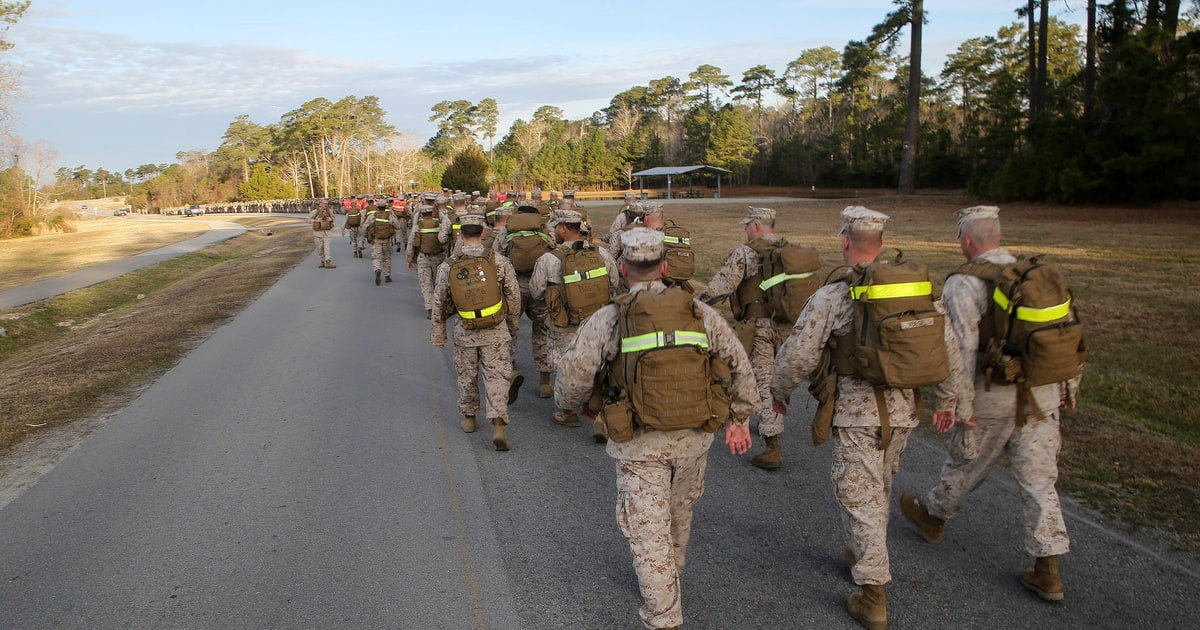
A daypack is the one piece of gear you never stop noticing. It rides on your shoulders for six hours, and every decision the designer made shows up somewhere between mile three and the car. The right one disappears. You stop adjusting straps, you stop shrugging the weight around, and you just walk. Most day hikes need less room than you'd guess — somewhere in the 20-to-28-liter range covers water, layers, lunch and the Ten Essentials with room to spare. Go bigger and you'll fill the space anyway.
No daypack solves the ventilation problem. A suspended mesh back panel lets air move across your shirt, but it pushes the load away from your spine, so heavier weight feels tippy on uneven ground. Foam panels that sit close carry better and leave you with a soaked back. Pick your compromise; nobody has escaped it. Fit is the other hard part. Torso length and hip-belt placement decide whether a pack is comfortable, and no feature list can tell you that from a product page.
We leaned on manufacturer specifications, published reviews from outdoor gear sites, and what owners say after a season of use. We think that the Osprey Stratos 24L is the best hiking daypack for most people, and that the Deuter Speed Lite 21L is the one to buy if you want the lightest pack that still carries a real load.
Everything we recommend
Cooler back, heavier pack — the right trade for most hikes

Barely there on your back, but you give up the frame
Small, comfortable and happy to double as a work bag

More room and a better belt, for the days you carry everything
Prices as of Oct 22, 7:36 AM PT · Details
At a glance
| Product | Capacity | Listed weight | Price | |
|---|---|---|---|---|
 | Osprey 10004704 Talon Earth 22 Ocean BlueAlso consider | 22L | 5 lb | $196 |
| Osprey Daylite Plus Driftshade TruffleBudget pick | Daylite Plus (—) | — | $85 |
| Deuter Speed Lite 21L Hiking Lightweight BackpackRunner-up | 21L | — | $79.95On sale |
| Osprey Stratos 24L Men's Hiking BackpackTop pick | 24L | 3.1 lb | $200 |
| Gregory Zulu 30L Hiking/Backpacking PackUpgrade pick | 30L | 3.15 lb | $199.95 |
Prices as of Oct 22, 7:36 AM PT · Details
How we picked
Fit and adjustability. We prioritized packs whose manufacturer specs list an adjustable torso length or a size range, since published reviews and owner feedback both point to fit as the main driver of comfort. A fixed-length harness had to be paired with a genuinely small capacity to make the cut.
Capacity that fits. We focused on the 17-to-30-liter band that outdoor retailers recommend for day hiking. Anything larger encourages overpacking, and anything smaller struggles to hold the Ten Essentials plus layers.
Ventilation vs. stability. We read reviews and spec sheets to understand how each suspension handles the airflow-versus-load-control trade-off. Trampoline mesh panels earned a place for hot-weather hiking; close-fitting foam earned one for lighter, faster carries.
Empty weight. We compared manufacturer-listed weights against capacity, because an extra pound of pack is an extra pound you carry all day. Heavier packs had to justify the weight with a frame, a raincover or a better belt.
Pockets and hydration. We looked for hip-belt pockets, stretch pockets for quick-access layers, and a stated hydration reservoir sleeve or compatibility. These are the features owners mention using on every hike.
Top pick
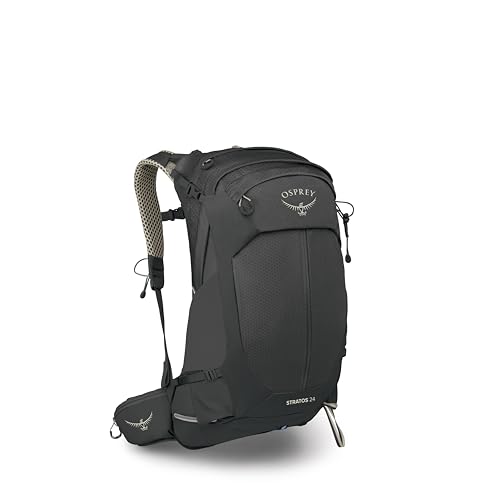
Cooler back, heavier pack — the right trade for most hikes
Osprey Stratos 24L Men's Hiking Backpack
The Stratos 24L pairs a tensioned mesh back panel with an adjustable torso and a peripheral frame, so it stays cool without wobbling. You get hip-belt pockets, a stash pocket, trekking-pole attachment and a raincover in one 24-liter package.
$200fromAmazonPrices as of Oct 22, 7:36 AM PT · Details
The adjustable torso is what makes this pack work for so many people. Most daypacks come in one length and hope for the best. Osprey lets you slide the harness to match your back, which is the single thing that decides whether a hip belt lands on your hips or your ribs. If it sits wrong, the weight goes to your shoulders and your neck aches by lunch. Get it right and you barely feel 15 pounds.
Osprey calls the suspension AirSpeed, and it's a mesh trampoline stretched over a wire perimeter frame. In practice that means a gap between your shirt and the pack bag. On a humid climb in July, that gap is the difference between damp and drenched. The frame does the other half of the job — it keeps the load from swaying away from you, which is the usual penalty for a ventilated back.
The pocket layout covers the stuff you reach for while walking. Two hip-belt pockets take a phone and a snack bar. A vertical zip stash pocket on the front swallows a shell. There's a Stow-on-the-Go loop for trekking poles and an ice tool loop if your hikes get steeper. None of it is clever for its own sake.
A raincover comes in the box, tucked into its own bottom compartment. That matters more than it sounds. Daypacks aren't waterproof, and the usual answer is a trash bag or a separate purchase you'll forget. Here it's already attached. Osprey makes a women's version called the Sirrus 24 with the same suspension and a different harness shape, so smaller-framed hikers aren't stuck with a men's fit.
Flaws but not dealbreakers
At a listed 3.1 pounds, this is a heavy daypack. Fast hikers and anyone counting ounces will find that hard to justify for 24 liters. You're paying that weight for the frame, the raincover and the adjustable harness — a fair trade on a long day with a loaded pack, less so on a quick two-hour loop.
The trampoline panel sits the load farther from your back than a foam panel does. On smooth trail you won't notice. Scrambling or side-hilling, you will — the pack feels a touch more eager to move than you'd like. Owner feedback on this listing skews positive but the sample is small, so there's less long-term signal than on Osprey's older models.
Runner-upOn sale
Barely there on your back, but you give up the frame
Deuter Speed Lite 21L Hiking Lightweight Backpack
At roughly a pound empty, the Speed Lite 21L is the lightest pack here by a wide margin. Its V-shaped harness and detachable waist belt suit fast, light hiking where you carry water, a shell and not much else.
$79.95fromAmazonTypical pricePrices as of Oct 22, 7:36 AM PT · Details
The number that matters here is the weight. Deuter lists this pack at about one pound, which is roughly a third of what the Stratos weighs. Strap it on empty and you basically forget it's there. Over a long day that absence adds up — less to haul uphill, less to notice on your shoulders, less reason to leave it in the car on a short hike.
The V-shape harness is built for movement, not maximum support. Deuter tapers the shoulder straps so your arms swing freely, which is exactly what you want when you're moving quickly or scrambling with your hands. There's a minimal frame sheet rather than a wire perimeter, so loads stay close and quiet. Push past 15 pounds, though, and you'll feel the limits.
The pocket layout is smarter than the weight suggests. A zippered top pocket with a key clip holds your valuables. Two stretch side pockets take bottles, and a stretch mesh front pocket swallows gloves or a damp layer. There's even a glasses stow system on the shoulder strap, which sounds fussy until you're squinting on a sunny ridge with sunglasses you can't put anywhere.
The waist belt detaches. That's a small thing with a real payoff — leave it on for a loaded hike, strip it off for a trail run or a travel day when the belt just gets in the way. The body fabric is 100% recycled and made to the bluesign standard, so this is also the pick if you want the lighter environmental footprint without paying premium prices.
Flaws but not dealbreakers
Twenty-one liters is tight once you add rain gear, a puffy and lunch for two people. If you hike with a kid or a camera, this isn't your pack. The detachable waist belt is also thin — it's a stabilizer, not a load-transfer belt, so weight rides mostly on your shoulders.
There's no raincover included and no hip-belt pockets, which means digging into the top pocket every time you want a snack. Owner feedback across this model is broadly good, though a small share of buyers report durability complaints — not surprising given how little fabric is here.
Budget pick
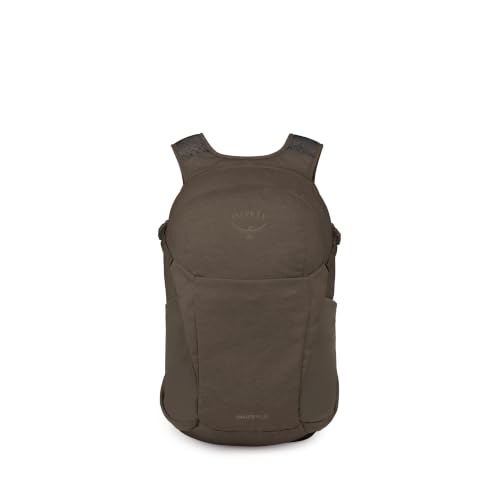
Small, comfortable and happy to double as a work bag
Osprey Daylite Plus Driftshade Truffle
The Daylite Plus is a padded, simple pack for short hikes and everyday carry. Dual-zip panel access to the main compartment and a shove-it front pocket make it easy to live with, in town or on a two-hour trail.
$85fromAmazonPrices as of Oct 22, 7:36 AM PT · Details
This is the pack to buy if your hikes are short and your weekdays are long. The Daylite Plus isn't trying to carry 20 pounds up a mountain. It's trying to hold water, a sandwich, a layer and your phone comfortably — and then come to work with you on Monday. Owners keep landing on the same point: it's compact but roomier inside than it looks.
Dual-zip panel access is the detail that makes it pleasant. Instead of digging down through a top-loading tube, you unzip the front like a book and see everything. A secondary compartment handles organization and a key clip, a front zippered pocket takes small essentials, and the shove-it pocket on the outside takes a shell you'll want again in ten minutes.
Stretch mesh side pockets hold a 32-ounce Hydro Flask, which is a specific claim and a useful one — plenty of packs this size choke on a wide-mouth bottle. Combined with the padded shoulder straps, that covers most of a short hike. It also fits under an airplane seat, which several owners point out as the reason they bought it.
Scale is the honest framing. This is the smallest-capacity pick here and the simplest. It has no frame, no adjustable torso and a minimal belt. Owners on smaller frames mention the proportions suit them better than a full-size pack, which is worth knowing if bigger packs have always swallowed you.
Flaws but not dealbreakers
Organization is thin for the money. One owner's complaint is the recurring theme: there aren't many dedicated pockets inside, so small items float around the main compartment. Pack cubes or a small pouch fix it, but you shouldn't have to.
There's no real hip belt and no frame, so anything past about ten pounds sits entirely on your shoulders. Skip this one for all-day hikes or anything involving a camera body and lenses.
Upgrade pick
More room and a better belt, for the days you carry everything
Gregory Zulu 30L Hiking/Backpacking Pack
The Zulu 30L adds nine liters and a hipbelt built to move with you, so it handles full-day loads that overwhelm smaller packs. It's the pick for photographers, parents and anyone who hikes carrying other people's water.
$199.95fromAmazonPrices as of Oct 22, 7:36 AM PT · Details
Thirty liters sounds like more than you need until you're the person carrying the extra fleece, the first aid kit, both water bottles and a toddler's snacks. Then it's exactly right. The Zulu takes a full-day load without bulging, and the extra volume means you can stuff a wet shell in without repacking everything else at the trailhead.
The FreeFloat hipbelt is the real reason to pay up. Gregory links the belt to the frame with a flexing panel, so it pivots as your hips rotate instead of fighting them. Add the 3D contoured padding and heavier loads stop concentrating in one hot spot. If a hip belt has ever rubbed your hipbone raw by mile eight, this is the mechanism aimed at that problem.
You get 3.5 inches of torso adjustment, which is a wide range — enough that one pack can fit two people in a household, or fit you properly in a base layer and again over a puffy. Full-length tensioned mesh handles ventilation, and a perimeter frame carries the load without feeling rigid. Gregory's Jade 28 is the women's-specific equivalent if you want the same suspension in a shorter, differently shaped harness.
Think of this as a pack that grows with you. It'll do a three-hour loop fine, and then it'll do an overnight with a quilt and a tiny stove if you pack carefully. For most people that dual-use range is worth more than the ounces it costs over a 22-liter pack.
Flaws but not dealbreakers
It's the heaviest pack here at a listed 3.15 pounds, and 30 liters invites overpacking — the exact habit that makes a day hike miserable. If you're disciplined about what you carry, a smaller pack will serve you better.
Owner feedback on this model is more mixed than on the Osprey packs, with a visible minority reporting problems. The size also comes in Medium/Large here, so if you have a short torso, check Gregory's small size or the Jade before ordering.
Who this is for
This guide is for anyone heading out for a few hours to a full day on foot with water, snacks, layers and the Ten Essentials. If you're a beginner buying your first real pack, a budget shopper replacing a school backpack, a hot-climate hiker, or the person in your group who ends up carrying everyone else's stuff, there's a pick here for you. We've covered a range of capacities from 17 to 30 liters and both ventilated-mesh and close-fitting suspensions.
It's not for overnight backpacking — if you're carrying a sleeping bag and a tent you want 40 liters or more and a proper load-hauling frame. We also don't cover running vests, climbing packs, dedicated camera bags or hydration-bladder-only packs. One more thing: load any pack you buy with 10 to 15 pounds and walk around the house before the return window closes. A pack that feels fine empty can be wrong once it's full, and no spec sheet will warn you.
How we picked
We built the shortlist around a handful of things that actually change your day on the trail. Fit: adjustable torso length or a real size range, since fit beats features every time. Capacity: 17 to 30 liters, the band retailers recommend for day hiking and the one that discourages overpacking. Ventilation: either a tensioned mesh panel for hot weather or a close-fitting panel for better load control — we included both because the trade-off is unavoidable. Weight: manufacturer-listed empty weight judged against capacity, with heavier packs needing a frame or raincover to earn it. Pockets and hydration: hip-belt pockets, stretch stash pockets and a stated reservoir sleeve, the features owners say they use on every single hike.
Other hiking daypacks worth considering
If you want the classic Talon suspension in a 22-liter pack: The Osprey 10004704 Talon Earth 22 Ocean Blue — The Talon Earth 22 is Osprey's long-running fast-hiking pack, with an adjustable-fit harness and a 22-liter body that sits closer to your back than the Stratos does. That closer fit carries 10 to 20 pounds more stably on uneven terrain, which is why it's a favorite for scrambly trails. You give up the Stratos raincover and some airflow, and this particular listing is an Earth-series colorway sold in one size only — so check Osprey's torso range against your own before you commit. The Tempest 20 is the women's-specific version.
The competition
Here's what our research turned up, not a map of everything on the market. Daypacks are a crowded category and plenty of good packs — Osprey's Daylite in its base version, REI's Flash 22, the Hyperlite Daybreak, Patagonia's Nine Trails — weren't available to us in a form we could write about. Treat the list above as five solid options we could verify, not a verdict on anything missing.
Fit and sizing
Measure your torso before you order, not after. Have someone run a tape from the bony bump at the base of your neck down to the top of your hip bones — that number, not your height, is what pack sizes refer to. Then load the pack with 10 to 15 pounds and put it on properly: snug the hip belt first so it wraps your hip bones, not your waist, then pull the shoulder straps down until they wrap your shoulders without lifting the belt. Load lifters should angle up at roughly 45 degrees. Sternum strap goes across your chest, not your throat. Walk around for twenty minutes. If the belt slides up or the straps gap at your shoulders, the torso length is wrong — adjust it or return the pack. Hand-wash with mild soap and air-dry fully before storing.
Questions we get
What size backpack do I need for a day hike?
For most day hikes, 20 to 28 liters is the sweet spot. That holds water, lunch, extra layers and the Ten Essentials without tempting you to fill empty space. Short, warm-weather hikes work fine with 15 to 20 liters, and you only need 30 liters if you're carrying gear for other people or a camera kit.
How should a daypack fit on my torso and hips?
Measure your torso from the bony bump at the base of your neck to the top of your hip bones, and match that to the pack's stated range. The hip belt should wrap your hip bones, not your soft waist. Shoulder straps should hug your shoulders without gapping or lifting the belt. If a pack offers torso adjustment, use it — it's the fastest fix for a pack that hurts.
Do I need a hip belt on a day hiking pack?
For loads under about ten pounds, a thin stabilizer belt or none at all is fine. Past that, a padded hip belt moves real weight off your shoulders onto your hips, where your legs can carry it. Hip-belt pockets are the bonus — they put your phone and snacks where you can reach them without stopping.
Is a hydration reservoir better than water bottles for day hikes?
A reservoir lets you sip constantly without stopping, which usually means you drink more and feel better. Bottles are easier to refill, easier to clean and easier to monitor. Most of the packs here handle both, so pick by habit — and know that a two-liter reservoir weighs about 4.4 pounds full.
What's the best daypack for hot weather with a ventilated back panel?
Look for a tensioned mesh panel suspended over a frame, which holds the pack bag off your back so air moves through. Among our picks, the Osprey Stratos 24L and Gregory Zulu 30L both use full-length tensioned mesh. The trade-off is weight and a load that sits slightly farther from your spine, so it feels a bit less stable on rough ground.
Are Dyneema backpacks worth the price for day hikes?
Dyneema Composite Fabric is genuinely waterproof and very light for its strength, which is why ultralight hikers pay for it. But it typically costs two to three times what a comparable nylon pack does, and most day hikes don't punish you for carrying an extra half-pound. If you're optimizing hard for weight, it's worth a look. Otherwise a nylon pack with a raincover gets you most of the way there.
Why you should trust us
For this guide:
- We compared manufacturer specifications for capacity, listed empty weight, torso adjustment range and suspension design across every pack in this guide.
- We read published reviews from outdoor gear sites and retailer buying guides to understand how ventilated and close-fitting suspensions differ under load.
- We reviewed recurring themes in owner feedback — organization complaints, sizing surprises and durability reports — and used them to shape the flaws and caveats above.
- We read owner reviews on every listing, weighted toward the critical ones, because that is where the recurring failures show up.
- We have a systematic way of automatically fetching the latest prices, so the numbers on this page stay current.
- This is a research-focused guide, so the team may not own every product listed — though we often do own the top winners, which gives us extra context for the recommendations.
- We don't accept free products, and the retailer commission never changes which product we recommend.
Sources
Best Daypacks - Outdoor Gear Lab (verify URL and cite a tested metric), OutdoorGearLab
Best Daypacks - Switchback Travel (verify URL and cite a tested metric), Switchback Travel
Best Daypacks - Wirecutter (verify URL and cite a tested metric), Wirecutter
How to Choose Daypacks - REI Expert Advice (verify URL and cite a sizing recommendation), REI Co-op
Osprey Talon 22 product page (manufacturer specs), Osprey
Hyperlite Mountain Gear Daybreak (manufacturer specs), Hyperlite Mountain Gear
Day Hiking Essentials - National Park Service (verify URL and cite the ten-essentials guidance), National Park Service
Ten Essentials - The Mountaineers (verify URL), The Mountaineers
Amazon product listings and owner reviews for all 5 products
Manufacturer specification pages for each product
Some passages in this guide may be paraphrased with AI help.
Product prices and availability are accurate as of the date/time indicated and are subject to change. Any price and availability information displayed on Amazon.com at the time of purchase will apply to the purchase of this product.
More like this.
Continue exploring lifestyle reviews and recommendations.

The Best Hiking Poles
Hiking poles change how a trail feels. On a steep descent, they take a real bite out of what your knees absorb - research published in Clinical…

The Best Hiking Boots
A hiking boot has one job: get you back to the car without blisters. Everything else - the Vibram logo, the Gore-Tex tag, the lug depth - only matters if…

The Best Camping and Hiking Gear Essentials
Gear failures rarely announce themselves at home. They show up at 2 a.m. when a zipper jams, or three miles from the trailhead when your headlamp dies and…

The Best Hiking Boots and Trail Running Shoes
Footwear is the one piece of hiking gear you feel with every single step. A boot that rubs at mile two can ruin a whole weekend, and a sole that slides…

The Best Hiking Backpacks
A backpack is the one piece of gear you never put down. Everything else - tent, stove, sleeping bag - gets used and stowed away. The pack rides on you for…

The Best Waterproof Hiking Boots
Wet feet ruin a hike faster than a steep climb does. A creek crossing, an hour of rain, a morning of soaked grass - any of them will leave you squelching…