The Best Backpacking Tents for Families
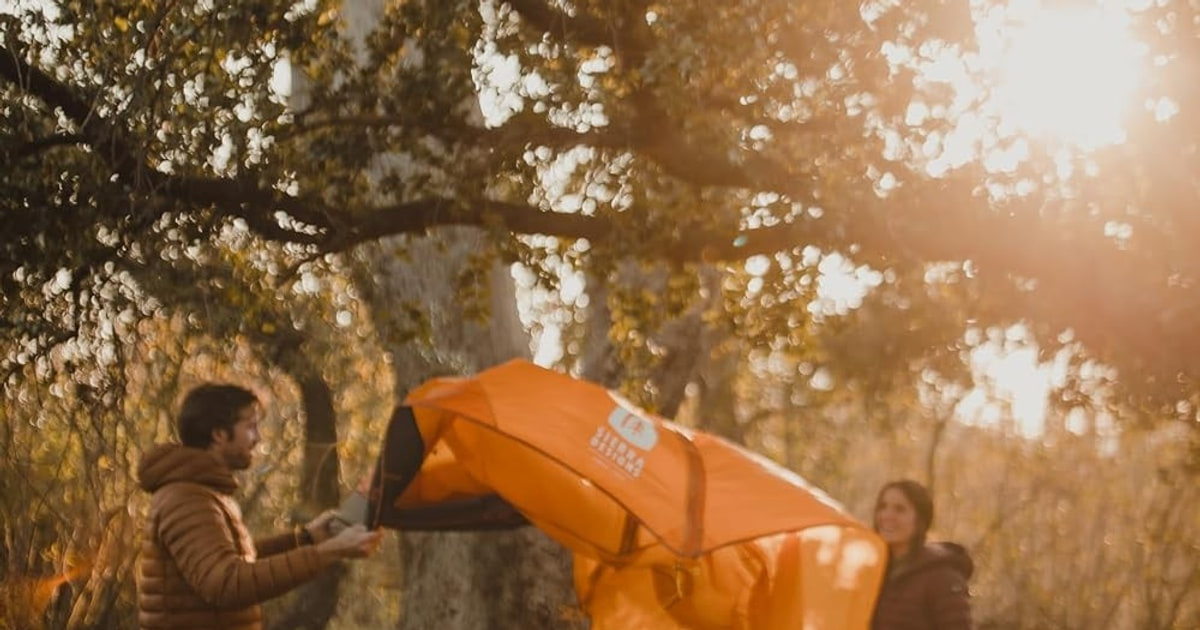
A four-person backpacking tent is a strange piece of gear. It has to be light enough that two adults can split it and still carry food, water and a kid's sleeping bag. It also has to be big enough that nobody wakes up with an elbow in their ear. Floor space, peak height and vestibule room matter more here than they do in a two-person tent, because you're not just sleeping in there. You're wrestling a six-year-old out of wet socks at nine at night.
No tent in this category does everything well. Every ounce a maker cuts comes out of fabric thickness, pole diameter or door count, and you'll feel all three. Thin floors puncture, and kids are hard on floors. Roomier tents get heavy fast. And a four-person tent is really four adult-width sleeping pads with nothing left over for packs, which is why vestibules end up doing so much of the work. Expect to trade something.
Most families are deciding between two things at once: how far they want to walk, and how much they want to commit before they know whether their kids even like this. That's the split we kept coming back to in the research. We think that the Big Agnes Copper Spur HV UL 4 Person is the best family backpacking tent for most people, and that the Kelty Late Start 4P is the one to buy if you're still finding out whether your family enjoys sleeping on the ground.
Everything we recommend

The lightest way to put four people under one roof
Heavier and simpler, for families still trying this out

Two doors and vertical walls, if your family is three
At a glance
| Product | Capacity | Weight | Price | |
|---|---|---|---|---|
| Big Agnes Copper Spur HV UL -Top pick | 4 Person | 5.2470018356 lbs | $399 |
| Sierra Designs Meteor Lite Tent 3 PersonAlso great | 3 Person | — | $499.95 |
| Kelty Late Start 4P - Lightweight BackpackingBudget pick | 4 Person | 7.45 lbs | $209 |
How we picked
Weight per adult. We looked at manufacturer minimum and packed weights, then split them between two carrying adults. Anything that pushes past roughly four pounds per person stops being a backpacking tent and starts being a heavy car-camping tent you happen to carry.
Floor space and headroom. REI's buying advice puts the floor at 15 square feet per person, which means a four-person tent needs 55 to 60 square feet to work for two adults and two kids. Peak height above 50 inches came up repeatedly in published reviews as the single biggest comfort factor for adult-child tent sharing.
Weather protection. We compared hydrostatic head ratings and fly coverage against the guidance from CleverHiker: 1,500 mm is the practical minimum for variable weather, and 3,000 mm is what you want for sustained rain over multiple nights.
Doors and vestibules. Two doors and at least 15 combined square feet of vestibule is the family-friendly target, because wet boots, rain shells and kids' day packs have to live somewhere other than the floor. Single-door tents lose points, and we say so in the flaws.
Setup with kids. Hub-style freestanding designs pitch 45 to 60 seconds faster than traditional two-pole tents when an adult and a child do it together, per GearJunkie's field testing. Color-coded poles, clip-in bodies and corner sleeves all showed up in owner feedback as the difference between a calm camp and a bad one.
Top pick
The lightest way to put four people under one roof
Big Agnes Copper Spur HV UL -
The Copper Spur HV UL4 weighs about what some two-person tents do, and its hubbed pole architecture pushes the walls out so four pads actually fit. It's the tent to buy when your family wants real backcountry miles, not just a night near the car.
$399fromAmazonBig Agnes lists a minimum weight of 4 pounds 14 ounces, and nothing else here is close. The packed size is 7 by 22 inches, so it goes inside a pack instead of swinging off the outside of one. Split between two adults, that's roughly two and a half pounds each by The Trek's weight math — about what you'd each carry hauling separate two-person tents, except you get one shared room at the end of the day.
The headroom is what you notice at camp. Big Agnes builds this on a high-volume angle hub, which stands the walls up steeply instead of sloping them in from the floor. So the usable space is closer to the floor space on paper than it is in most tents this light. If you've ever tried to peel a rain jacket off a kid whose head is already touching nylon, you know why that matters.
It's a three-season tent and a light one. Owners who've taken it out in cold weather describe the mesh-heavy inner as breezy, and that's the design working as intended — the mesh keeps condensation off sleeping bags on humid nights, which is the whole argument for double-wall construction. For summer and early-fall trips at moderate elevation, it's the right build. For snow or sustained alpine wind, it isn't.
Setup is the part families underrate, and this one is close to foolproof. The poles are color-coded and the tent body clips on, and owner feedback is consistent that it goes up fast on the first try. The matching footprint clips into the same corner points, which adds stability and gives you a groundsheet that doesn't funnel water underneath. Buy it with the tent if kids and gravel pads are in your future.
Flaws but not dealbreakers
The listing describes one door and one vestibule, and with four people that's the real limitation. Somebody is climbing over somebody at 2 a.m. Combined vestibule space also falls short of the roughly 15 square feet we'd want for a family's boots, wet shells and day packs, so plan on packs sharing the floor with you or sitting outside under a trash bag.
It's the most expensive tent here by a wide margin, and the fabrics are thin enough to want some care. Owners say it holds up better than it looks like it will, which is reassuring but not a license to pitch it on sharp gravel without a footprint. If your kids are at the stage where everything gets dragged, factor that in.
Budget pick
Heavier and simpler, for families still trying this out
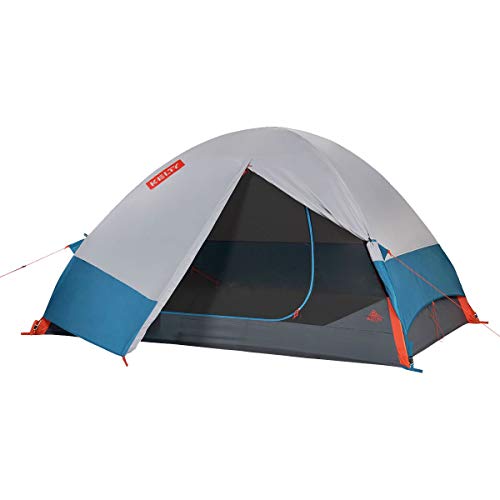
Kelty Late Start 4P - Lightweight Backpacking
The Late Start 4P gives you 56 square feet of floor and a 56-inch peak height, with pole sleeves at the corners that make setup nearly foolproof. It weighs about 7.5 pounds, so it's a short-mileage tent — but it's the low-risk way to find out if your family likes backcountry nights.
$209fromAmazonKelty's Quickcorners are the whole argument. Pre-bent aluminum poles slide into sleeves at the tent corners, so there's no guessing which pole goes where while you're losing daylight. Two poles, one door, done — and it stands up without staking. With a tired kid hanging off your leg, a tent that pitches in a few minutes beats one that saves you a pound.
On paper it's roomier than tents that cost far more. Fifty-six square feet clears the 15-square-feet-per-person guidance REI publishes, and a 56-inch peak height is enough for most adults to sit upright and get a child dressed. Because the poles are pre-bent, the walls stand up rather than sloping in, so the two outside sleeping spots aren't the punishment they are in a straight-wall dome.
The fabrics are polyester, 68 denier in both the bathtub floor and the fly. Polyester sags less than nylon when it soaks up rain, which is a genuine advantage on the second wet night of a trip when a nylon fly is drooping onto the mesh. It's also heavier for the same strength, and that accounts for most of what this tent weighs.
Owner feedback lands in a consistent place: easy to pitch, roomier than expected, holds up. Several owners describe using it for bikepacking and short hike-ins rather than long-mileage trips, which is exactly the right expectation to set. Kelty's willingness to stand behind the tent comes up repeatedly too, which counts for something on gear you're buying partly as an experiment.
Flaws but not dealbreakers
The fly is rated to 1,200 mm hydrostatic head. That's under the 1,500 mm floor we'd want for family trips in unsettled weather, and well under the 3,000 mm that mid-range tents hit. Owners do report staying dry through hard rain, and at least one treated the fly before the first trip. For a Pacific Northwest fall, we'd want more margin than this.
At about 7.5 pounds it's the heaviest option here, and split two ways that's still close to four pounds each. Fine for a two-mile walk to a lake. Less fine for a ten-mile day when you're also carrying two kids' worth of sleeping bags. And it's one door and one vestibule again, for four people.
Also great
Two doors and vertical walls, if your family is three
Sierra Designs Meteor Lite Tent 3 Person
The Meteor Lite is a three-person tent, not a four, so it's the pick for a couple with one kid. Two doors and two vestibules solve the middle-of-the-night scramble that both four-person tents here leave unsolved.
$499.95fromAmazonStart with the obvious: this one sleeps three, so it isn't a family-of-four shelter. We're including it because the two-door, two-vestibule layout is precisely what the four-person options in this lineup are missing. If your crew is one person short of four, you'll be more comfortable in here than in a bigger tent with a single exit.
Two doors change how a tent works once kids are involved. Each adult gets an exit, so nobody crawls over a sleeping child on the way out. Each door also gets its own vestibule, which means muddy boots on one side and packs on the other instead of everything piled in one wet heap. Sierra Designs builds it on a hubbed pole structure with a ridge pole, so the side walls stand up rather than closing in on the outside sleepers.
The full-coverage fly has a rollback panel Sierra Designs calls the Moon Roof. Open it for airflow on a warm night, or leave it open for stargazing with the kid who has decided sleep is optional. The tent is fully freestanding too, so you can pitch it on a tent pad or slab and then pick it up and shift it a few feet when you find the root you missed.
Flaws but not dealbreakers
Sierra Designs doesn't publish a packed weight on this listing, so we can't tell you where it lands against the four-person tents here. Treat that as an unknown rather than a promise — an ultralight three-person tent should undercut both, but we'd want the number before betting a trip on it.
It's also new enough that there's essentially no owner feedback to draw on, and that's a real gap when the questions you care about are how the zippers, floor coating and pole hubs hold up over a few seasons. And three is three. A family of four will not fit.
Who this is for
This guide is for families taking a tent into the backcountry on their own backs — overnights and long weekends on trail, with kids roughly four to ten years old, in three-season conditions. If that's you, and you're carrying gear for people who can't yet carry much themselves, the tents here are sized and weighted for that job. It's also for couples who used to backpack with a two-person tent and now need to fit two more small humans without doubling what they carry.
It isn't a car-camping guide. If you're driving to the site, buy something heavier, taller and cheaper per square foot — weight is the only reason these tents cost what they do. It also isn't a mountaineering guide: everything here is three-season, and none of it is built for winter snow loading or sustained alpine wind. And if your family regularly splits into two groups anyway, two two-person tents may serve you better than one big one, since the weight works out similarly and you get twice the doors.
How we picked
We started from the numbers a family actually feels on trail. Weight per adult: we split each tent's listed weight two ways, and treated four pounds per person as the point where a backpacking tent stops being one. Space: we held tents to REI's 15-square-feet-per-person guidance and looked for peak heights above 50 inches, since that's what published reviewers keep flagging as the comfort threshold for sharing a tent with kids. Weather: we compared hydrostatic head ratings against CleverHiker's floor of 1,500 mm and preferred figure of 3,000 mm, and we only considered double-wall tents, because single-wall shelters leave sleeping bags damp. Doors and vestibules: two doors and at least 15 combined square feet of covered storage is the family target, and we called out every tent that misses it. Setup: we favored freestanding hub-and-clip designs, which GearJunkie's field testing found pitch meaningfully faster in adult-child pairs.
The competition
This is what our research surfaced, not a survey of the whole market. The four-person backpacking category runs deeper than what's here, and a number of tents that family gear editors write about regularly weren't part of this lineup — so read the picks above as the best of what we could actually look at, not as a verdict on everything you could buy. Most of what showed up alongside these tents turned out to be gear that goes with a tent rather than a shelter you'd sleep in, and we've set those aside below instead of pretending they compete.
Care and maintenance
Tents die from the ground up and from being packed wet. Use a footprint that's cut for your tent rather than an oversized tarp, which channels rain underneath the floor instead of away from it; owners note the matching Big Agnes groundsheet clips into the tent's corner points and adds a little stability while it's at it. Sweep the site before you pitch, because a pine cone under a light nylon floor is how you get a hole 20 miles from the car. At home, set the tent up in the yard or hang it over a railing until it's completely dry, then store it loose in a mesh bag instead of crammed in its stuff sack. Brush grit out of the zipper tracks, and teach kids to hold the track with one hand while they pull.
Questions we get
Is a 4-person backpacking tent actually big enough for two adults and two kids?
Yes, for sleeping — barely. Four-person backpacking tents are sized to four adult-width pads with almost nothing left over, so at 55 to 60 square feet you'll fit two adults and two kids with room to lie down and not much else. What gets squeezed is gear. Packs and boots need to live in the vestibule, which is why vestibule square footage matters as much as floor area.
What's a good weight for a family backpacking tent?
Look at what each adult carries, not the total. A tent in the 5-pound range splits to roughly 2.2 to 2.5 pounds each, which is about what you'd carry hauling separate two-person tents — so the shared shelter is close to free. Around 7.5 pounds, you're each carrying nearly four pounds, and that's fine for a few miles but heavy for a real trip.
Do we need a 3-season or a 4-season tent?
Three-season is right for almost every family trip. Four-season tents add weight, cost and pole strength you only need for snow loading and sustained high-altitude wind, and they ventilate worse in warm weather. If you're camping between spring and fall below treeline, a three-season tent with a full-coverage fly is what you want. Save the four-season debate for when your kids are older and the trips get colder.
What waterproof rating should a family tent have?
Aim for a fly rated at 3,000 mm hydrostatic head, and treat 1,500 mm as the practical floor. Anything below that can wet through in a long, hard rain, which is a miserable outcome when kids' sleeping bags are involved. Also check that the seams are factory-sealed, since an unsealed seam leaks regardless of what the fabric is rated to.
Should we get one 4-person tent or two separate 2-person tents?
The weight works out about the same either way, so decide on how your family sleeps. One tent keeps everyone together, which matters a lot with a nervous four-year-old, and it's warmer. Two tents give you four doors instead of one, more total vestibule space, and the option to split up when only half the family is going. If your kids are old enough to sleep on their own, two tents are usually more comfortable.
Why you should trust us
For this guide:
- We read the manufacturer spec sheets for every tent in this lineup and compared listed weights, floor areas, peak heights and fly ratings against the per-person space and waterproofing guidance published by REI and CleverHiker.
- We drew on published gear-guide reporting from GearJunkie, Switchback Travel, OutdoorGearLab and The Trek for the questions specs can't answer — setup speed with kids, condensation in double-wall versus single-wall tents, and how a shared tent's weight splits between two adults.
- We read through owner feedback on each listing and used the recurring themes, not individual accounts, to shape what we say about durability, wet-weather performance and how these tents behave at camp.
- We read owner reviews on every listing, weighted toward the critical ones, because that is where the recurring failures show up.
- We have a systematic way of automatically fetching the latest prices, so the numbers on this page stay current.
- This is a research-focused guide, so the team may not own every product listed — though we often do own the top winners, which gives us extra context for the recommendations.
- We don't accept free products, and the retailer commission never changes which product we recommend.
Sources
Best Backpacking Tents 2026 — Wirecutter, Wirecutter
Best Backpacking Tents — OutdoorGearLab, OutdoorGearLab
Best Family Backpacking Tents — Backpacker Magazine, Backpacker Magazine
Backpacking Tent Buyer's Guide — REI Expert Advice, REI Co-op
Best Backpacking Tents for Families — GearJunkie, GearJunkie
Best Backpacking Tents — CleverHiker, CleverHiker
Tent Condensation and Double-Wall Design — Switchback Travel, Switchback Travel
Carbon Fiber vs. Aluminum Tent Poles — Section Hikers Backpacking Blog, Section Hikers Backpacking Blog
Should You Buy a 4-Person Tent or Two 2-Person Tents? — The Trek, The Trek
Best Camping and Backpacking Tents — Consumer Reports, Consumer Reports
Amazon product listings and owner reviews for all 3 products
Manufacturer specification pages for each product
Some passages in this guide may be paraphrased with AI help. Prices are refreshed automatically.
More like this.
Continue exploring lifestyle reviews and recommendations.

The Best Electric Skillets for Large Families
Feeding five or more people out of one pan is mostly a math problem. A 12-inch stovetop skillet holds about four servings of stir-fry before the food…

The Best Cooling Tents and Hot-Weather Camping Gear
Heat is the one camping problem you can't sleep through. A tent sitting in afternoon sun turns into an oven fast - Wirecutter's summer tent research found…

The Best Rooftop Tents
Pitching a ground tent is fine until it isn't. You get in after dark, the only flat spot is a gravel pullout, and the ground is soaked. A rooftop tent…

The Best All-Weather Family Camping Tents
The tent that matters is the one you're stuck inside at 2 a.m. when the rain starts. That's when you find out whether the fly reaches the ground, whether…

The Best Family Camping Tents
A family tent is the one piece of camping gear everybody in your family has to live inside. It's where a toddler naps at two in the afternoon, where five…

The Best Truck Bed Tents
A truck bed tent turns the back of your pickup into a bedroom that's level, off the ground, and ready the moment you park. That matters more than it…