The Best Ultralight Backpacking Stoves
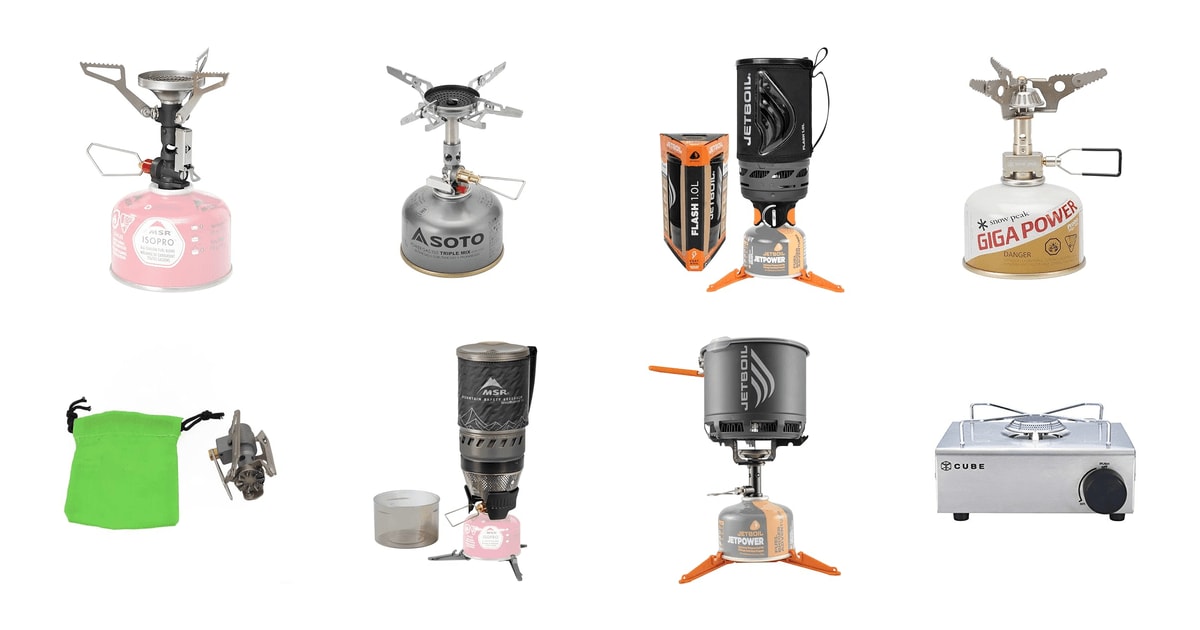
A backpacking stove is the one piece of gear you use every single day on trail, usually twice. It's the first thing you reach for at 6 a.m. when your hands don't work yet, and the last thing you touch before you crawl into your bag. That's why the small stuff matters so much. A stove that lights on the first click, sits flat under a full pot, and doesn't sputter when the canister is half gone will quietly make your whole trip better. One that doesn't will make you dread breakfast.
Here's the honest part: every canister-top stove loses power when it gets cold or windy, and none of them fix that completely. Canister pressure drops as temperatures fall and as fuel runs low, so the same stove that ripped through a boil in July feels sluggish on a frosty October morning. Pressure regulators and sealed integrated systems narrow the gap, but they don't close it. If you camp in real wind or real cold, plan around it. Nothing here is immune.
So the question isn't which stove is fastest on a kitchen counter. It's which one holds up in the conditions you actually camp in, at a weight you'll actually carry. We think that the MSR PocketRocket Deluxe is the best ultralight backpacking stove for most people, and that the SOTO WindMaster is the one to buy if you camp on exposed ridgelines, coastal bluffs, or anywhere the wind never really stops.
Everything we recommend

Steady flame in the cold, and it still nests in your pot
The one to grab when your campsites are always breezy

25 grams, real heat, and no forgiveness for wind

Built for the mornings that shut every other stove down

Turn, click, boiling — if you only ever boil water
At a glance
| Product | Price | |
|---|---|---|
| MSR PocketRocket Deluxe Ultralight Camping and BackpackingTop pick | $83.95 |
| SOTO WindMaster Canister Stove with 4Flex forRunner-up | $69.95 |
| Jetboil Flash 1.0L Portable Fast Boil StoveAlso great | $108.74On sale |
 | Snow Peak LiteMax Titanium Ultralight Backpackers StoveAlso consider | $44.95 |
| BRS-3000T Titanium Camping StoveBudget pick | $15.79 |
| MSR WindBurner Personal Windproof Camping and BackpackingUpgrade pick | $199.95 |
 | Jetboil Stash Ultralight Camping and Backpacking StoveAlso consider | $132.36 |
 | Kovea Cube Mini Butan Gas Range StoveAlso in lineup | $94.90 |
How we picked
Cold and low-fuel behavior. We prioritized stoves with a pressure regulator, since spec sheets and owner feedback both point to unregulated stoves fading as canisters chill or drain. A stove that only works on a warm, full canister isn't a stove you can plan a trip around.
Wind resistance. We compared burner geometry, pot-to-flame distance and sealed-system designs against published reviews and owner reports from ridgeline and coastal camping. Anything that reliably blows out in a moderate breeze couldn't be a primary recommendation.
Real carried weight. We looked at total system weight from manufacturer specs — stove, pot and canister — rather than bare burner weight, because a 2.9-ounce stove still needs a pot. Nesting ability counted too.
Cooking range. We read owner feedback about low-flame control specifically, favoring stoves people report actually cooking on rather than just boiling with. Broad burner heads and fine valve control separated the field here.
Fuel availability. We stuck to the standard Lindal-valve isobutane-propane canisters stocked at outfitters along major trails. Fuel you can't resupply is a planning problem, not a feature.
Top pick
Steady flame in the cold, and it still nests in your pot
MSR PocketRocket Deluxe Ultralight Camping and Backpacking
The PocketRocket Deluxe is a 2.9-ounce canister stove with a pressure regulator and a push-button igniter. It holds a usable flame when the canister is cold or half empty, and its broad burner will simmer without scorching, which most stoves this size won't do.
$83.95fromAmazonThe pressure regulator is the whole argument. Most stoves this light don't have one, and you notice on day four. As a canister drains, or as the temperature drops overnight, an unregulated stove gets weaker and weaker. The regulator flattens that curve. MSR rates it to boil a liter in three and a half minutes even in colder weather with low fuel, and owners who cook at elevation in mist and wind consistently describe it holding a strong flame rather than fading.
The burner head is wide and shallow, which does two useful things at once. It spreads heat across the bottom of your pot instead of drilling a hot spot into the center, and it partially shelters the flame. Owners who cook real food — not just boiled water — report browning hash browns in a titanium pan without burning them. That's a real test of low-end flame control, and very few stoves this small pass it.
Push-start ignition sounds like a small thing until your lighter gets wet. The spark igniter sits protected inside the burner rather than sticking out on a stalk, so it's less likely to get bent in a pack. Owners report it firing reliably trip after trip. Carry a mini lighter anyway, because every piezo igniter eventually dies, but you probably won't need it.
At 2.9 ounces it folds down and drops inside most backpacking pots along with a 100-gram canister. That matters more than the raw number. A stove that lives inside your cook pot doesn't take up its own volume in a tight pack, and it isn't rattling around loose where an arm can get tweaked.
Flaws but not dealbreakers
It's still an open flame, and open flames lose to wind. The broad burner helps, and one owner specifically wished for better wind protection at the flame itself. In a steady 15-mph breeze on an exposed site, a sealed integrated system will boil faster and burn less fuel. You can block a lot of that with a rock, a pack, or a strategically parked body, but you have to think about it.
You're paying a real premium over the Snow Peak LiteMax for less than an ounce of weight difference, and the LiteMax is actually lighter. What you're buying is the regulator and the igniter, not the grams. If you only camp in mild weather and don't mind carrying a lighter, that premium is harder to justify.
MSR covers the PocketRocket Deluxe with a three-year limited warranty.
Runner-up
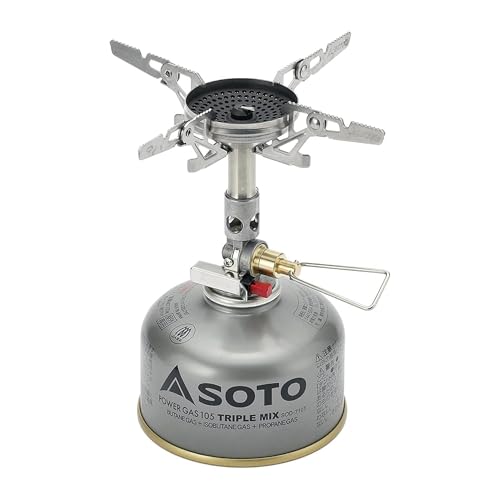
The one to grab when your campsites are always breezy
SOTO WindMaster Canister Stove with 4Flex for
The SOTO WindMaster pairs a micro-regulator with a recessed burner that sits close to the pot, so it keeps burning when other open-flame stoves blow out. At 2.3 ounces with the four-armed pot support, it's lighter than our top pick and better in gusts.
$69.95fromAmazonWind is what kills most canister stoves, and the WindMaster's answer is geometry. The burner head is concave and the pot sits unusually close to the flame, so the pot itself acts like a windscreen. Owners who camp in genuinely windy places report it staying lit when neighboring stoves give up — one describes 750 miles of the PCT without switching to anything else. That's the kind of feedback that's hard to argue with.
The micro-regulator does the cold-morning work. Like our top pick, it isolates flame output from what's happening inside a chilling canister, so the stove behaves the same at the end of a trip as at the start. SOTO rates it at 3,260 watts and quotes two cups of water boiled in under two and a half minutes. Several owners say it beats a PocketRocket to a boil in the same conditions.
The stealth igniter is buried in the burner post instead of standing out on an exposed arm. Exposed piezos are the classic failure point on canister stoves — they get bent in a pack, then they stop sparking. Tucking it in is a small design decision that pays off over years. Owners also mention how quiet the burner runs for its output, which sounds trivial until you've listened to a jet-engine stove at dawn.
The included 4Flex support gives you four arms instead of three, which handles wider pots and heavier loads more securely. If you cook out of a 1.5-liter pot for two people, that stability is worth having. It also fits inside a 750 ml titanium mug, so you don't pay for the extra arms in pack volume.
Flaws but not dealbreakers
SOTO specifically prohibits 100% propane in this stove — the regulator is calibrated for butane and isobutane blends. That's not a problem on any established trail in North America, where isobutane-propane mixes are the standard, but it's a real restriction if you were planning to run pure propane.
There's no getting around physics. Once you're in sustained wind above roughly 25 mph, a sealed integrated system will still beat it. And in calm, warm conditions, the Snow Peak LiteMax gets you comparable boil times for meaningfully less money. The WindMaster earns its keep when conditions get ugly, not when they're pleasant.
Budget pick
25 grams, real heat, and no forgiveness for wind
BRS-3000T Titanium Camping Stove
The BRS-3000T is a titanium canister stove that weighs 25 grams and folds smaller than a lighter. It puts out genuine heat for sheltered cooking and costs less than a couple of fuel canisters, but it has no regulator, no igniter, and no wind defense at all.
$15.79fromAmazonTwenty-five grams is not a typo, and this is not a novelty. The BRS-3000T is rated at 2,700 watts, which puts it in the same conversation as stoves that cost several times more. Fold it up and it's 37 by 52 millimeters — you can lose it in a pocket. For gram-counters assembling a sub-8-ounce cook kit, nothing else gets you a functional burner for this little weight.
Think of it as a fair-weather stove, and it's excellent. In a sheltered spot — behind a boulder, inside a vestibule with the door cracked, in a stand of trees — it boils water at a perfectly reasonable clip and sips fuel doing it. The problems only show up when the conditions do. Match the tool to the trip and this thing has no real competition at its weight.
It's also the best backup stove going. If you're hiking with a partner who carries the primary system, or you want redundancy on a long remote stretch, 25 grams is close to free. Plenty of long-distance hikers carry one for exactly this reason, and it's an easy call when the weight penalty is under an ounce.
The titanium construction holds up better than the price suggests. This is a simple burner with almost nothing to fail — no piezo, no regulator, no moving parts beyond the valve and the folding arms. Simplicity is its own kind of reliability.
Flaws but not dealbreakers
Wind is the deal-breaker. Without a separate windscreen, even a light breeze can cut effective output dramatically, and a real wind can leave you staring at water that never boils. Budget for a foil windscreen — it's a fraction of an ounce — and understand that you'll be hunting for sheltered sites in a way you wouldn't with a regulated stove.
There's no regulator and no igniter. On a cold morning with a half-empty canister, output falls off noticeably, and you'll be lighting it by hand every time. Always carry a lighter or a ferro rod, plus a backup. The pot supports are also small, so a full 1.5-liter pot sits high and tippy — keep loads modest and the canister on flat ground.
This listing has very little owner history behind it, so there's less accumulated feedback than for the established brands here. The BRS-3000T design itself is well known among long-distance hikers, but treat the specific seller as less proven than MSR or Snow Peak.
Upgrade pick
Built for the mornings that shut every other stove down
MSR WindBurner Personal Windproof Camping and Backpacking
The MSR WindBurner Personal seals the pot onto a radiant burner so wind never touches the flame, and a pressure regulator keeps output steady as canisters chill. It's the heaviest and priciest option here, and the one you want in shoulder season and above treeline.
$199.95fromAmazonThis is the stove for conditions that beat everything else on this page. Instead of an open flame, the WindBurner uses a radiant burner sealed against the bottom of its pot, so wind can't reach the combustion at all. Add the pressure regulator and you get a system that keeps working on a windy ridge at 20 degrees, when an open-flame stove is either blowing out or taking triple the time.
The fuel math is what justifies the weight on longer trips. Sealed systems use meaningfully less fuel than open-flame stoves in real wind, so on a week in the alpine you may carry one canister instead of two. That offsets a good chunk of the system weight. On a mild weekend, it doesn't — this is a stove you choose for a specific kind of trip.
Everything nests. The burner, a four-ounce canister, and the bowl all pack inside the one-liter pot, and the bowl snaps onto the outside. The pot locks onto the stove and canister as one rigid unit, which cuts down the classic tip-over risk of a tall pot balanced on a narrow canister. The cozy is PFAS-free, and there's a 1.8-liter Duo pot if you want to scale it for two.
Owners who use it hard tend to describe it in blunt terms — daily use over years, no drama, works when nothing else does. MSR builds it in the US and supports it with a lifetime warranty and available replacement parts, which matters on a system you're depending on in bad weather.
Flaws but not dealbreakers
The plastic bowl that snaps onto the bottom is the weak link, and owners say so repeatedly. It's the one piece of an otherwise very well-built system that draws real complaints. Some owners have also received units with fit problems between the pot and the shroud, and while MSR has replaced them, that's a hassle you don't want on a trip.
The radiant burner is built to boil, not to cook. Fine simmer control isn't its strength, so if you make actual meals rather than rehydrating them, an open-flame regulated stove will serve you better. It's also not compatible with the WindBurner Stock Pot or Sauce Pot, which limits how far you can build the system out.
It's the heaviest and most expensive setup here by a wide margin. For fair-weather three-season trips, that's a lot of stove you're not using.
MSR backs the WindBurner with its limited lifetime warranty.
Also greatOn sale
Turn, click, boiling — if you only ever boil water
Jetboil Flash 1.0L Portable Fast Boil Stove
The Jetboil Flash boils a cup of water in about two minutes with a turn-and-click igniter and a FluxRing heat exchanger. It's the fastest, most foolproof option here for freeze-dried meals and morning coffee, and the least useful if you actually cook.
$108.74fromAmazonList priceSpeed is the entire pitch, and it delivers. The FluxRing — a corrugated ring bonded to the base of the cup — grabs far more heat off the flame than a flat pot bottom, and Jetboil rates 16 ounces of water at two minutes. Owners describe water boiling before they're ready for it. If your dinner routine is boil, pour, wait ten minutes, this shaves real time off every meal.
The ignition is what makes it foolproof. You turn a knob and it clicks into a flame, like a home range, with no separate lighter and no fiddling. Combine that with a three-point locking system between pot and burner and color-coded touch zones that stay cool, and you get a stove you can operate half-asleep with cold hands. That's worth something at 6 a.m.
Everything packs into the cup — burner, stabilizer, and a 100-gram canister — so it stores as one tidy cylinder. The bottom cup doubles as a measuring cup and a bowl, and the insulated cozy keeps your water hot longer than a bare pot would. On a boil-only kit, the whole system replaces stove, pot, and mug.
The heat-exchanger design also means less fuel burned per boil, especially in breeze. On a multi-day trip that can translate to one fewer canister in the pack, which claws back some of the weight difference against a bare canister stove.
Flaws but not dealbreakers
At roughly 13 ounces for the system, this isn't ultralight by any strict definition — it's more than four times the weight of our top pick, though you're getting a pot in the bargain. If you're counting grams, the Stash covers the same ground for far less weight.
The integrated cup is a boiler, not a cooking pot. Simmering real food in it is awkward, and cleanup is worse than a wide-mouth pot. Owners also note the one-liter cup tops out around 1.25 liters in practice, so it's a solo system — trying to feed two people means back-to-back boils.
Who this is for
This guide is for backpackers who carry their stove on their back and count what it weighs — three-season hikers, weekend overnighters, and thru-hikers on established routes. If you cook out of a car or at a base camp, weight isn't your constraint and you can buy a much bigger, cheaper stove. If you're heading out in sustained subzero conditions, you're past what any of these can do well; that's the territory of inverted liquid-feed remote canister stoves and white-gas systems, which we don't cover here.
One planning note that catches people out: fuel canisters can't fly. They're prohibited in carry-on and checked baggage under dangerous goods rules, regardless of size. If you're flying to a trailhead, plan to buy fuel locally, or ship canisters ahead by ground to a trail-town post office. Buying the stove is the easy part.
How we picked
We built the picks around five things. Cold and low-fuel behavior: we favored pressure-regulated stoves because output from an unregulated burner drops off as canisters chill and drain, and that's exactly when you want dinner. Wind resistance: burner geometry and sealed pot connections matter more than raw wattage once there's a breeze, so we weighed published reviews and owner reports from exposed campsites heavily. Real carried weight: we compared total system weight from spec sheets — stove, pot and fuel — rather than bare burner weight, and gave credit to designs that nest. Cooking range: we looked for stoves owners report actually simmering on, not just boiling with. Fuel availability: standard Lindal-valve isobutane-propane canisters only, since that's what outfitters on major trails stock.
Other ultralight backpacking stoves worth considering
If you want Jetboil efficiency at half the weight: The Jetboil Stash Ultralight Camping and Backpacking Stove ($132.36) — The Jetboil Stash is the answer for gram-counters who still want a heat exchanger. The whole system — titanium burner, 0.8-liter FluxRing pot, stabilizer and pouch — runs 7.1 ounces and nests inside itself, with room for a 100-gram canister and a mini lighter. Jetboil rates a 2.5-minute boil, barely off the Flash's pace, and owners praise how tightly it packs once you learn the trick. What you give up is the Flash's push-button ignition, its larger cup, and some of the cozy convenience. The 0.8-liter pot is tight for two people, and in calm, sheltered conditions the efficiency edge over a plain canister stove narrows enough that the extra weight is harder to defend.
If you want the lightest stove from a name you trust: The Snow Peak LiteMax Titanium Ultralight Backpackers Stove ($44.95) — The Snow Peak LiteMax weighs two ounces in titanium and costs meaningfully less than the regulated stoves here. Its folding arms double as a partial windscreen, the flame adjusts smoothly enough for genuine simmering, and Snow Peak's build quality is a real step up from generic titanium burners — several owners bought one after a no-name stove came apart on them. The catch is the missing regulator: on a cold morning or a half-empty canister, output visibly sags. There's no igniter either, so a lighter is mandatory. The support arms handle pots up to 5.5 inches and two pounds, but a full pot on a bare canister gets tippy, and a canister stabilizer is a sensible add.
The competition
This is what our research surfaced in the ultralight canister category, not a survey of everything sold. A few well-regarded stoves — remote-canister and liquid-fuel designs in particular — sit outside this guide's scope entirely, and the alcohol and solid-fuel world is a different conversation. What follows is the one product from this lineup that didn't fit the brief.
The Kovea Cube Mini Butan Gas Range Stove ($94.90) — The Kovea Cube Mini is a genuinely nice piece of gear that answers a different question. It's a flat, stainless tabletop range with a piezo igniter, burning cylinder-type butane at about 130 grams per hour — the tall canisters you find at Korean grocers, not the threaded Lindal-valve canisters every other stove here uses. That flat base handles a full skillet in a way no canister-top stove can, which makes it a good car-camping or base-camp cooker. But it's not something you'd carry on your back, and the fuel doesn't cross over with anything else in your kit, so resupply on trail isn't realistic.
Fuel and cold-weather tips
A 100-gram isobutane-propane canister gets you roughly 10 to 12 liters of boiled water in good conditions — call it four or five solo days at one boil per meal. Wind and cold can push consumption up by a third, so plan generously in shoulder season. The single best trick for cold mornings is to sleep with the canister: tuck it in your bag overnight, or stash it in an inside jacket pocket while you pack up. Warm gas has more pressure, and more pressure means a real flame. A shallow dish of lukewarm water works too, but never use hot water and never apply direct heat. Keep the burner base clean and off sand, check that the canister threads seat squarely before you crank the valve, and always pack a backup lighter even on a stove with an igniter.
Questions we get
What's the lightest backpacking stove you can actually use?
The BRS-3000T, at 25 grams, folds down to about the size of a large stamp and puts out a rated 2,700 watts. That's a real stove, not a toy. The trade-off is that it has no pressure regulator and essentially no wind resistance, so you'll want a foil windscreen and a sheltered spot.
Are canister stoves better than alcohol stoves for ultralight trips?
For boil-only cooking, canister stoves are much faster and more fuel-efficient — think two to three and a half minutes for a liter versus five to eight for most alcohol burners. Alcohol setups can weigh under an ounce and run on fuel from any hardware store, which is appealing on very long trips abroad. On established US trails like the PCT and AT, canisters are the dominant choice because resupply is easy.
What's the difference between the PocketRocket Deluxe and the SOTO WindMaster?
Both are regulated canister-top stoves, but they emphasize different things. The PocketRocket Deluxe has a broader burner head that's better for simmering real food and it's a touch more common at outfitters. The WindMaster is lighter, sits the pot closer to the flame for better wind performance, and includes a four-armed pot support for wider cookware. In a breeze, take the WindMaster; if you cook rather than boil, take the PocketRocket.
Which stove should I take for winter or alpine trips?
The MSR WindBurner Personal. Its sealed radiant burner keeps wind away from combustion entirely, and the pressure regulator holds output as canister pressure drops in the cold. Below about zero degrees Fahrenheit sustained, even regulated top-mounted canister stoves are near their limit — that's where an inverted liquid-feed remote canister stove becomes the right tool.
Can I bring fuel canisters on a plane?
No. Isobutane and propane canisters are banned from both carry-on and checked baggage under international dangerous goods rules, at any size. Ship them ahead by ground service to a trail-town post office, or plan to buy at an outfitter near the trailhead. Most outdoor shops near major trails stock Lindal-valve canisters in 100, 230 and 450-gram sizes.
Are Lindal-valve canisters interchangeable between brands?
Yes, for every canister-top stove in this guide. MSR, Jetboil, Snow Peak, Primus and GSI canisters all use the same EN417 threaded valve, so you can run whatever the local shop has. The one exception here is the Kovea Cube Mini, which takes cylinder-type butane canisters that don't thread onto anything else.
Why you should trust us
For this guide:
- We read manufacturer specifications and listing details for every stove here, comparing rated output, weight and boil-time claims side by side.
- We reviewed published gear-testing coverage and long-distance hiker reports to see how those claims hold up in wind, cold and at altitude.
- We read through owner feedback for each product, looking for repeated failure modes — igniter longevity, pot stability, and component durability — rather than one-off complaints.
- We read owner reviews on every listing, weighted toward the critical ones, because that is where the recurring failures show up.
- We have a systematic way of automatically fetching the latest prices, so the numbers on this page stay current.
- This is a research-focused guide, so the team may not own every product listed — though we often do own the top winners, which gives us extra context for the recommendations.
- We don't accept free products, and the retailer commission never changes which product we recommend.
Sources
Best Backpacking Stoves 2026 — OutdoorGearLab, OutdoorGearLab
Best Backpacking Stoves — Backpacker Magazine, Backpacker Magazine
Best Backpacking Stoves — CleverHiker, CleverHiker
Best Backpacking Stoves — Switchback Travel, Switchback Travel
Backpacking Stove Systems Compared — Andrew Skurka, Andrew Skurka, National Geographic Adventurer of the Year
Amazon product listings and owner reviews for all 8 products
Manufacturer specification pages for each product
Some passages in this guide may be paraphrased with AI help. Prices are refreshed automatically.
More like this.
Continue exploring lifestyle reviews and recommendations.

The Best Portable Camping Stoves
A camping stove is the difference between a hot dinner and a cold bag of trail mix. It's also one of the few pieces of gear you'll use every single day of…

The Best Pellet Stoves
Heating with pellets is a daily habit, not a set-and-forget system. You fill a hopper with bagged wood pellets, set a burn level or a temperature, and the…

The Best Osprey Backpacks
A backpack is one of the few things you buy that has to fit you, not just hold your stuff. Get the torso length wrong and a loaded pack digs into your…

The Best Hiking Backpacks
A backpacking pack is the one piece of gear you never put down. It's on your body for eight hours a day, and every flaw in it gets amplified mile after…

The Best Sleeping Bags for Camping and Backpacking
A sleeping bag is the one piece of camping gear you notice at 3 a.m. When it's right, you don't think about it at all. When it's wrong, you spend the…

The Best Travel Backpacks for Carry-On
A good carry-on backpack ends the part of travel you dread. No baggage claim, no gate-check roulette, no wondering whether your bag made the connection.…