The Best Running Shoes for Plantar Fasciitis
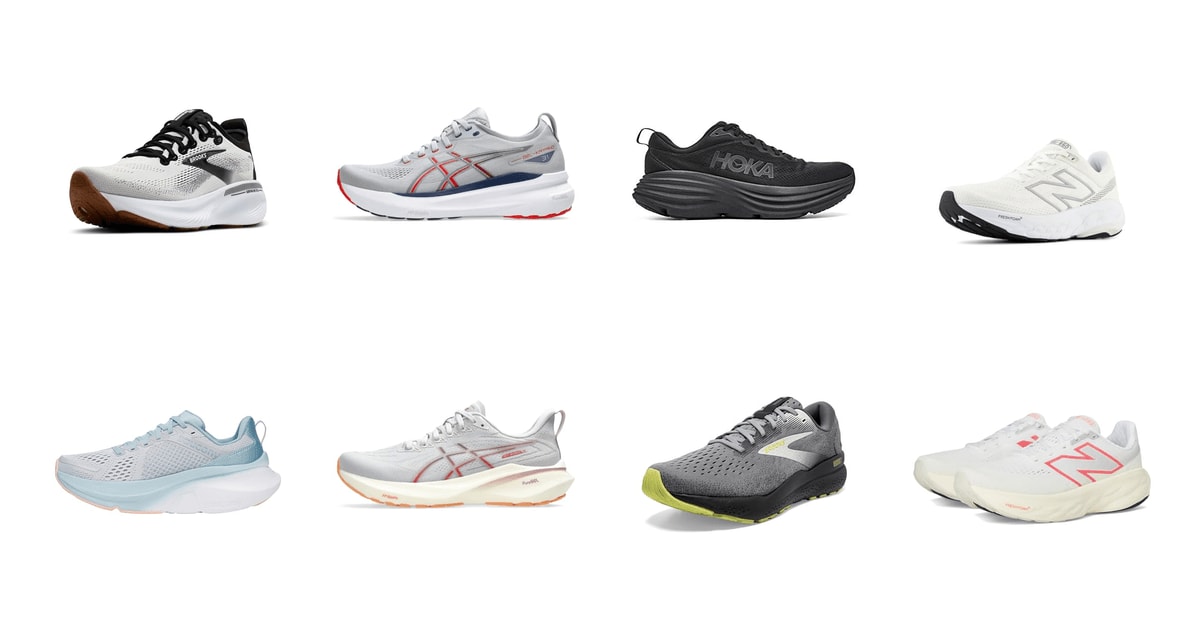
Plantar fasciitis announces itself the same way for almost everyone: those first few steps out of bed feel like stepping on a stone. The band of tissue running along the bottom of your foot tightens overnight, and every morning you tear it loose again. Running shoes can't cure that, but they change how much load lands on the heel and arch with each stride. The American Academy of Orthopaedic Surgeons estimates plantar fasciitis affects about two million Americans a year, and runners are at meaningfully higher risk than people who sit still.
Here's the honest part. No shoe fixes plantar fasciitis on its own, and anyone promising that is selling something. Stretching, load management, and sometimes a podiatrist do the actual work. A good shoe just stops you from making things worse. Shoes are also intensely personal — the same model that rescues your training partner's heels can feel wrong on your feet within a mile. And every midsole here softens over time, so the pair that felt great in spring won't feel the same by fall.
We looked for the things the clinical guidance actually points to: a heel drop in the range podiatrists recommend, a firm heel counter, structure under the arch, and a footbed you can pull out for orthotics. We think that the Brooks Adrenaline GTS 25 is the best running shoe for plantar fasciitis for most people, and that the ASICS Gel-Kayano 31 is the one to buy if you overpronate hard and want the most supportive shoe you can get.
Everything we recommend

Stability where you need it, without feeling like a brace

More correction and more cushion, at a higher cost

Most of the Kayano's support in a lighter, plainer shoe

A huge cushion and a rocker sole, for the worst heel days

The firmest rearfoot control here, for serious overpronators
At a glance
| Product | Weight | Support Type | Price | |
|---|---|---|---|---|
| Brooks Men’s Adrenaline GTS 25 Supportive RunningTop pick | 0.6625 lbs | GuideRails | $124.95On sale |
| ASICS Men's Gel-Kayano 31 Running ShoesRunner-up | 0.0125 lbs | 4D Guidance | $89.95 |
| Hoka Men's Bondi 8 Black/Black 11 MediumUpgrade pick | 0.694375 lbs | — | $159.99 |
| New Balance Women's Fresh Foam X 860Also great | 1 lb | — | $91.66On sale |
 | Saucony Guide 17 Women's Running ShoeAlso consider | 0.50625 lbs | Stability | $99.95 |
| ASICS Women's GT-2000 13 Running ShoeBudget pick | 0.0125 lbs | 3D Guidance | $84.94On sale |
 | Brooks Men’s Ghost 16 Neutral Running ShoeAlso consider | 3 lbs | Neutral | $130.87On sale |
How we picked
Heel drop. We prioritized shoes in the 8–12mm heel-drop range that the APMA recommends for plantar fasciitis, since raising the heel takes tension off the plantar fascia and the Achilles at once. We made exceptions only where a shoe compensated with extreme stack height or rocker geometry.
Pronation control. We compared manufacturer descriptions of medial posts and guidance systems, because published research links medial-post shoes to reduced ankle eversion in overpronators. Shoes with no correction mechanism had to earn their place on cushioning alone.
Heel protection. We read spec sheets for stack height and heel-specific cushioning technologies like PureGEL and ABZORB crash pads. Anything that only claimed general softness without structure at the heel didn't make the cut.
Orthotic fit. We checked whether the factory sockliner comes out, since a prescribed orthotic can't seat properly in a shoe with a glued-in footbed. Every pick here takes a custom insole.
Owner feedback. We looked for repeated mentions of heel pain, all-day standing and podiatrist recommendations in owner reports, and weighted consistent themes over one-off praise. Sizing complaints that showed up again and again became flaws.
Top pickOn sale
Stability where you need it, without feeling like a brace
Brooks Men’s Adrenaline GTS 25 Supportive Running
The Adrenaline GTS 25 pairs a 12mm heel drop with GuideRails, which nudge your foot back on track only when it wanders. It's the shoe podiatrists name most often for mild-to-moderate plantar fasciitis, and it works just as well for walking as running.
$124.95fromAmazonList priceThe 12mm heel drop is the single most useful number on this page. The APMA points to 8–12mm as the range that helps plantar fasciitis, because lifting the heel takes tension off the plantar fascia and the Achilles at the same time. The Adrenaline sits at the top of that range. If your morning steps are the worst part of your day, that's the spec you want working for you.
GuideRails work differently from an old-school medial post. Instead of a wedge of firm foam propping up your arch all the time, the support sits along both sides of the heel and only engages when your ankle rolls past where it should. You get correction on the strides that need it and a normal ride on the ones that don't. For a lot of people that's the difference between a stability shoe they wear and one that sits in the closet.
Owners with plantar fasciitis come back to this model over and over, and a striking number say a podiatrist put them in it. The pattern in that feedback is consistent: heel pain that eases within the first week or two of daily wear, and people who stand on concrete for eight or ten hours reporting they can finish a shift. Brooks also makes it in 4E, which matters if wide feet have been part of your problem.
The nitrogen-infused DNA LOFT v3 midsole runs soft, and long-time Adrenaline wearers notice the shift — this generation feels closer to the plusher Glycerin than the firmer Adrenalines of a few years back. If you liked the old, more planted feel, that's a real change. For most people managing heel pain, softer is the right direction.
Flaws but not dealbreakers
The softer midsole cuts both ways. Heavier runners and anyone who wants a firm, connected platform underfoot may find the GTS 25 mushier than they'd like, and a few long-term Adrenaline buyers say the newer version doesn't hold them as securely as older ones did. If that describes you, the ASICS Gel-Kayano 31 gives you a more structured ride.
GuideRails are moderate support by design. If you're a severe overpronator — the kind whose ankles visibly collapse inward — this may not be enough correction, and a shoe with a true medial post will serve you better.
Brooks sells several similar-looking stability models, and the names blur together on a retail page. Read the model name carefully before you order, because the Adrenaline and its siblings fit and feel differently despite looking nearly identical.
Runner-up
More correction and more cushion, at a higher cost
ASICS Men's Gel-Kayano 31 Running Shoes
The Gel-Kayano 31 uses a 10mm drop, a 4D Guidance System that firms up as your arch collapses, and PureGEL under the heel. If your overpronation is pronounced and your heel pain is chronic, this is the more serious tool.
$89.95fromAmazonThe 4D Guidance System is the reason to pay up. It's a section of the midsole that gets progressively firmer as your foot rolls inward, so mild strides feel neutral and hard collapses meet resistance. That's exactly the mechanism that matters here — research on stability shoes with medial posts shows they reduce how fast the ankle everts in overpronators, which is the repetitive stress that inflames the fascia in the first place.
Under the heel, this is the most protected shoe among our stability picks. PureGEL sits directly beneath the heel strike zone and FF BLAST PLUS ECO foam handles the rest. Owners who stand all day describe it as cushioned from heel to toe rather than just soft at the back, and several who came to it from an Adrenaline say they now reach for the Kayano first.
The 10mm drop lands squarely inside the range the APMA recommends, and the OrthoLite X-55 sockliner pulls out cleanly if your podiatrist has you in custom orthotics. That combination — clinical geometry plus room for a prescribed footbed — is why this shoe keeps coming up in conversations about chronic heel pain.
It's a heavier, taller shoe than the Adrenaline, and you feel that. What you get back is a platform that stays put under a bigger runner or a longer run. If you're logging real weekly mileage while managing plantar fasciitis, the extra material earns its place.
Flaws but not dealbreakers
The engineered mesh upper is extremely breathable, which is wonderful in July and miserable in a downpour. Water goes straight through and doesn't drain quickly, so if you run in wet weather regularly, plan on soggy feet.
Owners flag the knit heel pull tab as fragile — it can tear if you yank on it to get the shoe on. Use your fingers, not force.
This is the most expensive shoe among our stability picks, and the jump over the Adrenaline is significant. If your pronation is mild, you're paying for correction you don't need.
Budget pickOn sale
Most of the Kayano's support in a lighter, plainer shoe
ASICS Women's GT-2000 13 Running Shoe
The GT-2000 13 carries ASICS' 3D Guidance System, PureGEL heel cushioning and FF BLAST PLUS foam for noticeably less than the Kayano. It's lighter on your feet and still gives you real arch and rearfoot support.
$84.94fromAmazonList priceIf money is the constraint, this is where we'd spend it. The GT-2000 13 shares the same design language as the Kayano — guidance structure through the midfoot, PureGEL under the heel, FF BLAST PLUS foam on top — in a lighter, simpler package. You give up the most sophisticated version of each technology, not the technology itself.
Owners repeatedly describe it as lighter than other athletic shoes without feeling flimsy, and people whose podiatrists sent them shopping for a supportive running shoe land here often. High arches get consistent praise, and ASICS is one of the few brands that still makes narrow widths, which is genuinely hard to find if your foot is slim.
The 3D Guidance System is a step down from the Kayano's 4D version, but for mild to moderate pronation that gap barely registers day to day. Where you'll notice the difference is over long runs and higher weekly mileage, when the Kayano's extra cushioning and structure keep working and this one starts to feel thinner.
The upper uses at least 50% recycled content and the sockliner is solution-dyed, which cuts water use and emissions in manufacturing. That's not why you'd buy the shoe, but it's a nice thing to get anyway.
Flaws but not dealbreakers
The support has limits. At least one owner who pronates found this shoe didn't address the problem at all and worked better as a walking shoe. If your overpronation is significant, spend up for the Kayano or the New Balance 860v14.
Sizing runs small. Multiple owners say to go up a half size from your usual, so order with returns in mind.
There's less cushioning here than in the Kayano, and if you're a heavier runner or you're logging long weekend miles, you'll feel the road sooner.
Upgrade pick
A huge cushion and a rocker sole, for the worst heel days
Hoka Men's Bondi 8 Black/Black 11 Medium
The Bondi 8 has a 37.5mm heel stack and Meta-Rocker geometry that rolls you forward instead of letting you slam the heel. Its 4mm drop breaks the usual rule for plantar fasciitis, and the sheer volume of foam is why it still works.
$159.99fromAmazonRocker geometry is the reason this shoe belongs in a plantar fasciitis guide. Peer-reviewed work in Footwear Science found that rocker soles like Hoka's Meta-Rocker cut peak heel plantar pressure by roughly 10–15% during the stance phase compared with flat soles. In plain terms, the shoe rolls you through the step so your heel spends less time absorbing your weight.
The 4mm drop should be a dealbreaker here, and it isn't. The clinical guidance favors 8–12mm, and on paper the Bondi is way outside that. But it stacks 37.5mm of foam under the heel, so the total impact your heel absorbs drops sharply even without the wedge shape. It's the exception that works — though if your pain is Achilles-related rather than purely fascia, the low drop is a real risk.
This is the shoe for people who are on their feet all day and can't take a break. Owners describe standing entire hospital shifts in them without the usual end-of-day ache. The foam doesn't just compress and bottom out; it holds shape under load, which is what separates a genuinely cushioned shoe from a soft one.
It's a neutral shoe. There's no medial post and no guidance system, so all the benefit comes from cushioning and geometry rather than correction. If your plantar fasciitis is driven by overpronation, this addresses the symptom and not the mechanism — pair it with our stability picks in a rotation, or skip it.
Flaws but not dealbreakers
The heel and ankle collar fit loosely for some people, and owners who wanted a locked-in feel around the ankle came away disappointed. Given what this shoe costs, that's a fair complaint.
It's the priciest way to solve this problem, and the tall stack looks bulky. Some owners find the toe shape awkward-looking, which matters if you want one pair for running and for the rest of your life.
Zero stability structure. Overpronators who need correction won't get it here, no matter how much foam is underneath.
Also greatOn sale
The firmest rearfoot control here, for serious overpronators
New Balance Women's Fresh Foam X 860
The Fresh Foam X 860 V14 combines a Stabilicore medial post with an ABZORB crash pad for motion-control-level correction at the heel. If your ankles roll in hard and other stability shoes haven't been enough, this is the next step.
$91.66fromAmazonList priceThis is the most corrective shoe in our lineup. The Stabilicore medial post is a firm structure through the arch, and the ABZORB crash pad manages the heel strike itself. Together they clamp down on the inward roll far more aggressively than GuideRails do. For runners whose overpronation is the actual cause of their fascia pain, that's the direct fix.
The heel cup and rear structure get specific praise from owners with flat feet and wide feet — the kind of people who usually struggle to find anything that holds the heel still. Several say the shoe keeps the foot from sliding around while still leaving room in the toe box, which is an unusual combination.
New Balance lists this version at roughly an 8mm drop, which is the low end of the recommended range but still inside it. Combined with the Fresh Foam X midsole, you get real cushioning on top of the correction rather than the punishing firmness that motion-control shoes used to mean.
Owners who've bought several generations of the 860 say this one holds up as well as the last, and people on their feet all day at work report it handles that duty alongside running. Durability feedback runs positive across a year of wear.
Flaws but not dealbreakers
Sizing is the recurring complaint. A lot of owners say this runs tight and you should go up a half size, and some who stuck with their usual size found it painful enough that the shoe never worked for them.
The firm medial post isn't for everyone. If you have a neutral gait, that structure under the arch can feel intrusive rather than helpful — at least one buyer with plantar fasciitis found it uncomfortable rather than supportive.
It's a stiffer, more structured shoe than the Adrenaline. That's the point, but it also means less give if you just want something plush to walk around in.
Who this is for
This guide is for runners and walkers actively dealing with plantar fasciitis, and for anyone whose heel pain flares when they add mileage. It's especially relevant if you overpronate, if you're past 40 and the natural fat pad under your heel has thinned out, or if a podiatrist has handed you a list of things to change and footwear is one of them. If you stand on hard floors for a living, everything here applies to you too — most of these shoes get bought as much for twelve-hour shifts as for morning runs.
It isn't medical advice, and it won't replace a diagnosis. If your heel pain is sharp, sudden, or getting worse, see a podiatrist before you buy anything. We're covering cushioned and stability road running shoes only, so you won't find trail shoes, racing flats, recovery sandals, orthotic inserts, or dedicated walking shoes here. And if you already have custom orthotics, treat the shoe as a housing for them — check the footbed comes out before you commit.
How we picked
We built the shortlist around the mechanics that actually matter for heel pain. Heel drop: we favored the 8–12mm window the APMA recommends, and allowed exceptions only where huge stack height or rocker geometry did the same job another way. Pronation control: we compared medial posts and guidance systems against published findings that such shoes cut ankle eversion in overpronators. Heel protection: we read spec sheets for stack height and heel-specific cushioning rather than trusting general claims of softness. Orthotic fit: the factory footbed has to come out, or a prescribed insert can't sit right. Owner feedback: we tracked recurring themes about heel pain, sizing and all-day wear, and turned the repeat complaints into flaws.
Other running shoes for plantar fasciitis worth considering
If you have a neutral gait and don't need correction: The Brooks Men’s Ghost 16 Neutral Running Shoe ($130.87) — The Brooks Ghost 16 is the neutral counterpart to our top pick, with the same nitrogen-infused DNA LOFT v3 foam and a Segmented Crash Pad that smooths the roll from heel to toe. It carries the APMA Seal of Acceptance and PDAC A5500 diabetic certification, which is the kind of independent clinical validation worth having when you're shopping for foot health. It's also the most broadly liked shoe in this lineup by a wide margin. What you give up is any pronation control at all — no GuideRails, no medial post. Some owners also find the outsole rubber wears through faster than they'd like, so if you're piling on mileage, budget for replacing it sooner.
If you want stability with a plusher, softer feel: The Saucony Guide 17 Women's Running Shoe ($99.95) — The Saucony Guide 17 pairs PWRRUN and PWRRUN+ cushioning with CENTER PATH technology, which guides the foot without the hard wedge feel of a traditional medial post. Owners with flat feet and pronation report their feet stop aching on multi-mile runs, and people with unsteady gaits credit it for the extra stability underfoot. It's a good middle ground between the Adrenaline's moderate support and the 860's firm correction. The catch is that Saucony's own fit guidance doesn't always land — several owners who followed the brand's sizing quiz ended up with a shoe that fit fine but felt wrong. Order from somewhere that takes returns.
The competition
Every shoe we looked at for this guide is above, either as a pick or as an also-consider. That's a deliberately narrow field. The research surfaced these models because they come up most often in podiatric recommendations and because their specs line up with the clinical guidance on heel drop, stability and heel cushioning — not because they're the only supportive shoes sold. Plenty of good options from these brands and others aren't here, including wide-fit specialists, walking-specific models and the previous generations of these same shoes, which often stay on shelves and can suit you just as well.
Fit, sizing and when to replace
Buy from a retailer that takes returns, because sizing across these brands isn't consistent — the ASICS models and the New Balance 860 both draw repeated complaints about running small. Try shoes on late in the day, when your feet are at their largest, and wear the socks you actually run in. Pull the factory insole out before you buy if you use custom orthotics; every shoe here takes one, but the fit changes once it's in. On replacement: EVA midsoles lose 30–40% of their shock absorption somewhere between 300 and 500 miles, and if you're managing plantar fasciitis you want to replace at the low end of that window rather than riding them until they look worn. The outsole often looks fine long after the foam has stopped protecting you.
Questions we get
What heel drop is best for plantar fasciitis — zero drop or high drop?
Higher. The APMA points to an 8–12mm heel-to-toe drop, because lifting the heel reduces tensile load on the plantar fascia and the Achilles at the same time. Research published in the Journal of Orthopaedic & Sports Physical Therapy found higher-drop footwear measurably reduced peak plantar fascia strain during running compared with minimal or zero-drop shoes. Zero-drop shoes put more stretch through the fascia with every step, which is the opposite of what you want while it's inflamed.
Are Hoka shoes good for plantar fasciitis?
Often yes, despite the low heel drop. The Bondi 8 sits at 4mm, well below the recommended range, but it stacks 37.5mm of foam under the heel and uses Meta-Rocker geometry. Peer-reviewed work in Footwear Science found rocker soles cut peak heel plantar pressure by roughly 10–15% during stance compared with flat soles. The tradeoff is that low-drop shoes load the Achilles more, so if that's also bothering you, a higher-drop stability shoe is the safer choice.
Should I choose stability or neutral shoes for plantar fasciitis?
It depends on why your fascia is overloaded. If you overpronate — your ankles roll inward when you land — stability shoes with a medial post or guidance system address the mechanical cause, and research links them to reduced ankle eversion in overpronators. If your gait is neutral and your issue is impact and a thinning heel pad, a well-cushioned neutral shoe like the Brooks Ghost 16 is a better fit. When you don't know which you are, a gait check at a running shop or a podiatrist's office settles it quickly.
How often should I replace running shoes if I have plantar fasciitis?
Sooner than the usual advice. EVA midsoles lose 30–40% of their shock-attenuation properties between 300 and 500 miles, and if you're managing heel pain, replacing around 300 miles is the safer call. Worn-out midsoles are consistently named among the modifiable footwear risk factors for plantar fasciitis. Track your mileage, because the upper and outsole usually look fine long after the foam has given up.
Do I still need custom orthotics if I buy supportive shoes?
Not necessarily, but the two work together. A supportive shoe handles heel drop, cushioning and pronation control; a prescribed orthotic addresses your specific arch shape and loading pattern. If a podiatrist has you in orthotics, what matters is that the shoe's factory footbed comes out so the orthotic can sit flat against the midsole — every pick here allows that. Ask your podiatrist before you swap anything, since some orthotics change the effective heel drop.
Can I keep running with plantar fasciitis?
That's a question for whoever is treating you, not for a shoe guide. Plenty of people keep running through mild cases by cutting volume, adding stretching, and switching to better footwear. Others need a real break before anything else helps. Sharp pain that worsens as you run is a signal to stop and get it looked at rather than shop for shoes.
Why you should trust us
For this guide:
- We read manufacturer specifications for every shoe here, focusing on heel-to-toe drop, stack height, midsole compound and the specific stability structures each brand uses.
- We compared those specs against published clinical guidance from the APMA and AAOS, and against peer-reviewed research in Footwear Science, Sports Medicine and the Journal of Orthopaedic & Sports Physical Therapy on heel drop, rocker geometry and midsole degradation.
- We read owner feedback across all eight listings, looking for repeated themes about heel pain, sizing, all-day standing and durability rather than individual opinions.
- We read owner reviews on every listing, weighted toward the critical ones, because that is where the recurring failures show up.
- We have a systematic way of automatically fetching the latest prices, so the numbers on this page stay current.
- This is a research-focused guide, so the team may not own every product listed — though we often do own the top winners, which gives us extra context for the recommendations.
- We don't accept free products, and the retailer commission never changes which product we recommend.
Sources
Best Running Shoes for Plantar Fasciitis — Runner's World, Runner's World
Best Shoes for Plantar Fasciitis — Wirecutter, Wirecutter / New York Times
Plantar Fasciitis Footwear Guidance — American Podiatric Medical Association, American Podiatric Medical Association (APMA)
Plantar Fasciitis — American Academy of Orthopaedic Surgeons, American Academy of Orthopaedic Surgeons (AAOS)
DPT-Led Running Shoe Reviews — Doctors of Running, Doctors of Running
Footwear and Plantar Fascia Strain — Journal of Orthopaedic & Sports Physical Therapy, Journal of Orthopaedic & Sports Physical Therapy (JOSPT)
Best Running Shoes for Plantar Fasciitis — Healthline, Healthline
Rocker Sole Footwear and Plantar Pressure — Footwear Science, Footwear Science (Taylor & Francis)
Midsole Cushioning Durability in Running Shoes — Sports Medicine, Sports Medicine (Springer)
Brooks Adrenaline GTS 25 Review — Believe in the Run, Believe in the Run
Amazon product listings and owner reviews for all 7 products
Manufacturer specification pages for each product
Some passages in this guide may be paraphrased with AI help. Prices are refreshed automatically.
More like this.
Continue exploring health reviews and recommendations.

The Best Foot Massagers for Plantar Fasciitis
If you have plantar fasciitis, you know the worst moment of the day comes before you're fully awake. You swing your feet to the floor, stand up, and a…

The Best Running Shoes for Men and Women
A running shoe is the only piece of gear that touches you on every single stride. Over an hour-long run that's thousands of landings, and a shoe that's…

The Best Hiking Boots and Trail Running Shoes
Footwear is the one piece of hiking gear you feel with every single step. A boot that rubs at mile two can ruin a whole weekend, and a sole that slides…

The Best Running Shoes for Flat Feet
If your arches collapse when you stand, you already know what mile 18 feels like. The inside edge of your foot rolls in, your knee follows, and by the end…

The Best Climbing Shoes for Beginner Boulderers
Climbing shoes are the one piece of gear a new boulderer really has to buy, and the pair you choose shapes how the first year goes. A good beginner shoe…

The Best Knee Braces for Running
Most running knee pain doesn't announce itself. It starts as a dull ache in the last mile, then shows up earlier each week, until stairs and long drives…